قضى مصممو المطابخ أكثر من عشرين عامًا في نقل مآخذ الكهرباء بعيدًا عن منطقة الظهرية وتحت خزائن الحائط في المطبخ. السبب الرئيسي لهذا النقل هو العملية أكثر من الجمالية. مجموعة من مآخذ الكهرباء الموجودة على ارتفاع سطح العمل ستعيق ظهور الظهرية، وتجمع الدهون، وتوجه الأسلاك إلى المنطقة التي سيتم وضع الغلاية فيها. الحل الأكثر عملية هو وضع مآخذ الكهرباء تحت خزائن الحائط، في موقع الجهاز، لتحقيق أقصى قدر من الراحة. هذا التغيير أيضًا خفف من أكبر شكوى لدى العملاء عند العمل في مطبخ جديد.
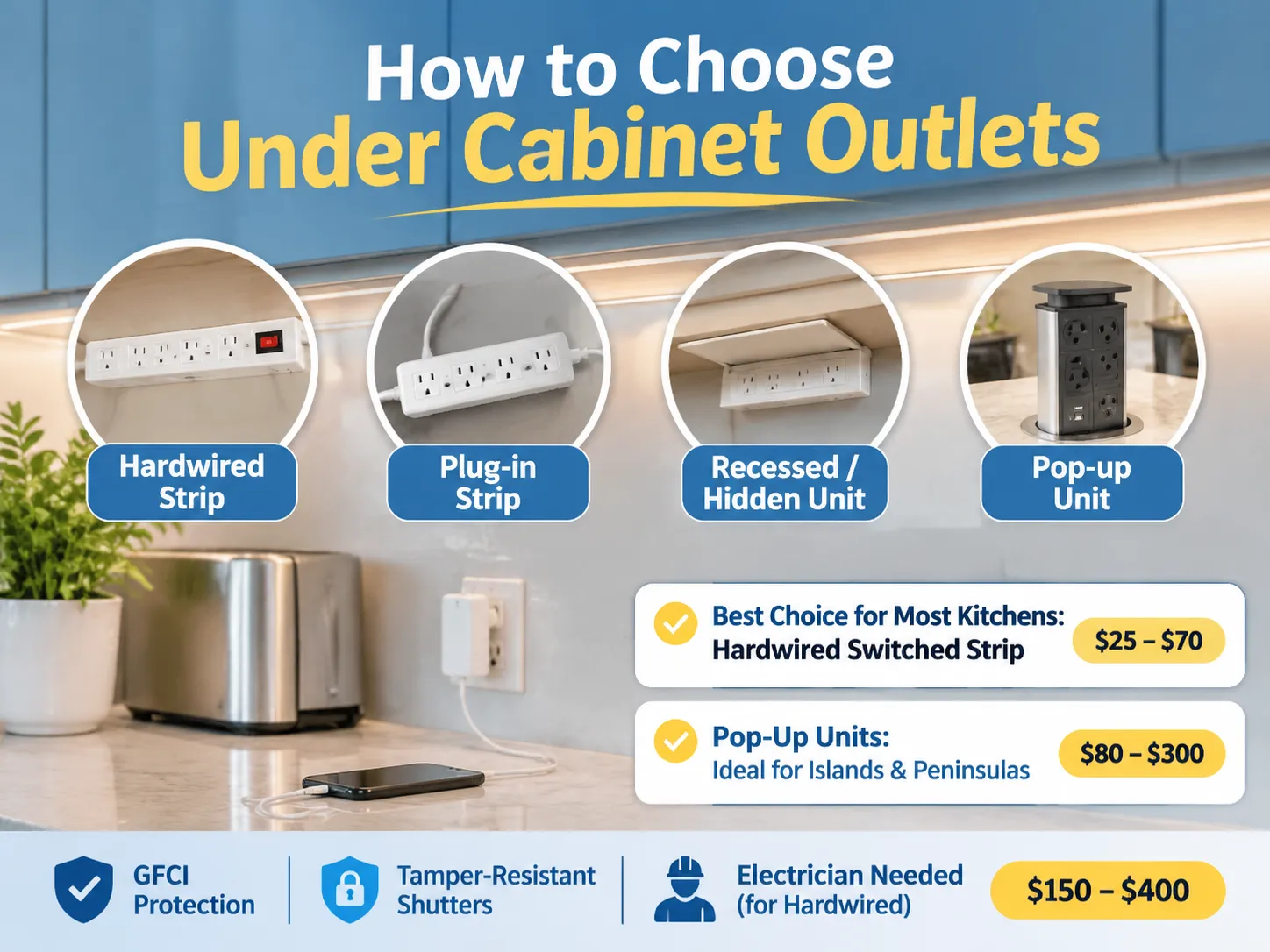
إجابة سريعة: الإجابة العامة على سؤال “مأخذ تحت الخزانة” هي أن هناك أربعة أنواع مختلفة متاحة: شريط طاقة ثابت موصل بأسلاك، شريط طاقة قابل للتوصيل، وحدة طاقة مخفية أو مدمجة تُركب تحت الخزائن، ومأخذ قابل للرفع مدمج في سطح العداد. يجب أن تلبي أغلب احتياجات المطابخ شريط طاقة محول موصل بأسلاك بسبب التوازن بين التكلفة، والامتثال للوائح الكود، والمتانة. تتراوح الأسعار من $25 إلى $70 لكل وحدة. العنصران المذكوران كخيارات (الشريط الموصل والوحدات القابلة للرفع) لهما نطاق سعري من $80 إلى $300 حسب النمط. تعمل الوحدات القابلة للرفع بشكل ممتاز على الجزر أو شبه الجزر حيث لا يكون وضعها تحت الخزانة ممكنًا. جميع مآخذ الكهرباء في المطابخ تتطلب حماية GFCI وحماية مصراع مقاوم للعبث, ، بينما تتطلب التركيبات الموصلية وجود كهربائي لإكمال العمل (مما يضيف بين $150 و $400 إلى التكلفة الإجمالية للتركيب).
ستغطي المناقشة العامة في هذا المقال كل من الأنواع الأربعة المتاحة، وأماكن تركيبها، والاعتبارات المتعلقة بالأغطية والتشطيبات، والخيارات التي يجب أن تفكر في دفع ثمنها وتلك التي لا يجب، ومتطلبات الكود التي تحدد أنواع التركيبات القانونية، وطرق التركيب وتكاليفها المرتبطة، والعلامات التجارية للمنتجات التي تستحق النظر في اختيارك النهائي لمطبخك. الأقسام الأكثر تأثيرًا فيما يتعلق بالنوع والتركيب ستحدد في النهاية ميزانية مشروعك.
ماذا يحل مأخذ تحت الخزانة؟
أولاً، الميزة الأكثر وضوحًا هي القدرة على إبقاء منطقة الظهرية خالية. في المطبخ الحديث، غالبًا ما تكون الظهرية 600 مم هي السطح المستمر الوحيد. ومع ذلك، عندما تضع مآخذ متعددة على الظهرية، فإنك تقطع هذا التدفق بسطر من المقابس المزدوجة. عندما تضع هذه المقابس تحت الخزانة، فإنك تستعيد الظهرية الناعمة وتزيل الحافة التي تتجمع عندها الدهون الناتجة عن الطهي.
ثانيًا، تساعد مخارج التيار تحت الخزائن في إدارة الأسلاك. غالبًا ما تكون الأجهزة الكهربائية على سطح العمل مزودة بأسلاك قصيرة. يعني وجود مخرج تحت الخزانة أن السلك يمر مباشرةً خلف الجهاز بدلاً من العبور عبر سطح العمل نحو أقرب مخرج على الحائط. هذا يقلل من احتمال الحاجة إلى استخدام سلك تمديد، وهو السبب الأكبر في تحميل الدوائر الكهربائية في المطابخ.
ثالثًا، مخارج التيار تحت الخزائن أكثر أمانًا من المخارج المثبتة على الحائط؛ فهي تعتبر أكثر ملاءمة من الأسلاك التي تتدلى عبر سطح العمل. مخرج التيار تحت الخزانة يكون بعيدًا عن متناول الأطفال وبعيدًا عن منطقة رذاذ الحوض. لأسباب تتعلق بالكود، لا تزال مخارج التيار تحت الخزائن تعتبر “مواقع رطبة”، لذا يجب حمايتها بواسطة GFCI. ومع ذلك، فإن موقعها يجعلها أكثر أمانًا من المخارج المثبتة على الحائط بارتفاع 100 مم.
المقابل هو أن شريط التوصيل السلكي يجب أن يتم توصيله بنظامك الكهربائي. إذا أردت نقله إلى موقع آخر لاحقًا، سيتعين عليك تحريك الكابل، لذا يجب أن تقرر مكان المخرج قبل تركيب خزائنك.
الأنواع الأربعة لأشرطة التوصيل السلكية المتاحة لك
شريط توصيل سلكي. شريط التوصيل السلكي يكون إما معدنيًا أو بلاستيكيًا ويتم تركيبه تحت الخزائن ويتم توصيله بدائرة مخصصة أو فرعية؛ وعادةً ما يحتوي على مخرجين إلى ستة مخارج قابلة للتبديل. الخيار الأكثر متانة للمطبخ هو الخيار المدمج، وهو الخيار الموصى به عمومًا من قبل الكهربائيين. تتراوح وحدات التوصيل المدمجة عادةً بين 300 إلى 900 مم طولًا و45 إلى 60 مم عمقًا.
أشرطة التوصيل القابلة للتوصيل تشبه في الشكل والتصميم الوحدات المدمجة، لكنها تأتي مع كابل وقابس. يمكن تركيب بعض أشرطة التوصيل القابلة للتوصيل على الجانب السفلي للخزانة أو تعليقها باستخدام الأقواس، في حين تتطلب الوحدات المدمجة كهربائيًا لتركيبها، مما يجعلها أكثر انتشارًا في سوق التحديث. أشرطة التوصيل القابلة للتوصيل محدودة بتصنيف مأخذ التيار الذي يتم توصيلها به. لذلك، قد تكون أشرطة التوصيل القابلة للتوصيل مناسبة لمطبخ يحتوي على جهازين صغيرين، لكنها غير موصى بها للمطابخ التي يتم توصيل غلاية وصانعة قهوة ومحمصة في نفس المخرج.
الوحدات المدمجة أو الوحدات المخفية توفر المظهر الأكثر أناقة وتكلف أكثر من الخيارات المثبتة على السطح لأن قاعدة الخزانة ستحتاج إلى قطع.
الوحدات المنبثقة تكون متساوية مع سطح العمل لكنها ترتفع عند الضغط عليها لتكشف عن مخارج كهربائية وغالبًا ما تحتوي على منافذ USB. تحل الوحدات المنبثقة مشكلة المطابخ التي لا تحتوي على خزائن مثبتة على الحائط تحت سطح العمل. لذلك، أكبر نقطة ضعف للوحدات المنبثقة هي آلية رفعها وخفضها. إذا تم تركيب وحدة منبثقة منخفضة التكلفة في منطقة رطبة، فمن المحتمل أن تحتاج إلى صيانة في مرحلة ما بسبب الفشل.
| النوع | أفضل موقع | السعر النموذجي | القيد الرئيسي |
|---|---|---|---|
| شريط موصل كهربائي ثابت | تحت خزائن الحائط، مطبخ جديد أو تجديد | $25 – $70 لكل وحدة | يحتاج إلى كهربائي ودائرة كهربائية |
| شريط قابس | تحديث، تأجير، تخطيط مؤقت | $15 – $45 | محدود بالمقبس الذي يتم توصيله به |
| وحدة مدمجة | حيث يهم التشطيب المسطح | $40 – $120 | يجب قطع قاعدة الخزانة |
| وحدة قابلة للظهور | جزر، شبه جزر، بار الإفطار | $80 – $300 | تآكل الآلية، تسرب الماء |
المخفية مقابل القابلة للظهور: أيهما يناسب أي مطبخ
حسنًا، إليك مثالًا مثاليًا لك: “ينقسم سوق منافذ الطاقة للمطابخ بين التكوينات المدمجة الموصولة بالكهرباء والتكوينات القابلة للظهور. اعتمادًا على احتياجاتك وكيفية استخدامك للمساحة، قد يؤثر موقع خزائنك على اختيار حل المنفذ الخاص بك.”
إذا كان مطبخك من نوع الممر أو تكوين الحائط الواحد مع خزائن فوق سطح العمل، فمن المرجح أن تكون الوحدة المدمجة تحت الخزانة هي الخيار الأفضل من بين الخيارات المتاحة. فهي عادةً الأقل تكلفة، والأكثر متانة، والأسهل في الصيانة من حلول المنافذ عند وضعها تحت الخزائن. كما أنها تسمح بالمرونة في تحديد موقع منفذ الطاقة في نفس المنطقة التي سيستخدمها الجهاز.
إذا كان مطبخك يحتوي على جزيرة أو شبه جزيرة أو بار إفطار ولا يحتوي على نوع من الخزائن المتدلية فوق سطح العمل، فإن الوحدة القابلة للظهور هي على الأرجح خيارك الأفضل. ومع ذلك، هناك بدائل أخرى يمكن النظر فيها عند استخدام هذا النوع من التكوين، بما في ذلك وضع مقبس كهربائي في جانب الجزيرة، أو استخدام صندوق توصيل مثبت على الأرض، أو استخدام تركيبة معلقة؛ ومع ذلك، لكل من هذه القيود الخاصة بها. يمكن أن يتم حجب منفذ اللوحة الجانبية غالبًا بواسطة كرسي بار أو كرسي عادي. يجمع الصندوق المثبت على الأرض الطعام والحطام ويشكل خطر التعثر عند رفع الغطاء. تتطلب التركيبة المعلقة تمرير سلك عبر سطح العمل، مما يشكل عقبة ويعيق استخدام سطح العمل. يعالج المنفذ القابل للظهور هذه الثلاثة مخاوف ولكنه يأتي بسعر شراء بالإضافة إلى ضرورة الصيانة الميكانيكية المحتملة في وقت ما.
إذا اخترت استخدام حل منفذ قابل للظهور في مساحة مطبخك، فهناك بعض التفاصيل التي يجب أخذها في الاعتبار. الاعتبار الأول هو ما إذا كان المنتج ذو ختم محكم: المنتج المصنف بـ IP44 أو أفضل سيكون قادرًا على تحمل الانسكابات، في حين أن المنتج الذي لا يحمل هذا التصنيف من المحتمل أن يفشل إذا حدث انسكاب. الاعتبار الآخر هو كيفية تدفق الماء عبر الوحدة: نظرًا لأن المنفذ القابل للظهور يتم تركيبه في فتحة في سطح العمل، فإن أي ماء يصل إلى تلك الفتحة سينساب إلى داخل الوحدة. لذلك، من المفيد تحمل التكلفة الإضافية لشراء منفذ قابل للظهور يحتوي على قناة تصريف وجسم قابل للإزالة، بدلاً من أن يكون مختومًا ببساطة على سطح العمل.
بالنسبة لمشروع يحتوي على كلا الخيارين (أي حيث تم إجراء تجديد)، سيكون من المنطقي تركيب شريط طاقة موصل بالكهرباء تحت خزائن الحائط الأمامية ووحدة قابلة للظهور واحدة على الجزيرة. بهذه الطريقة، يمكن توصيل جميع المعدات الصغيرة في المطبخ حيث سيتم استخدامها، وتقتصر تكلفة الوحدة القابلة للظهور على عنصر واحد فقط.
اختيار الغطاء والتشطيب
الغطاء هو الجزء من المنتج الذي يكون مرئيًا للعميل، وبناءً عليه، يمكن التعرف بسهولة على المنتجات ذات الجودة الرديئة.
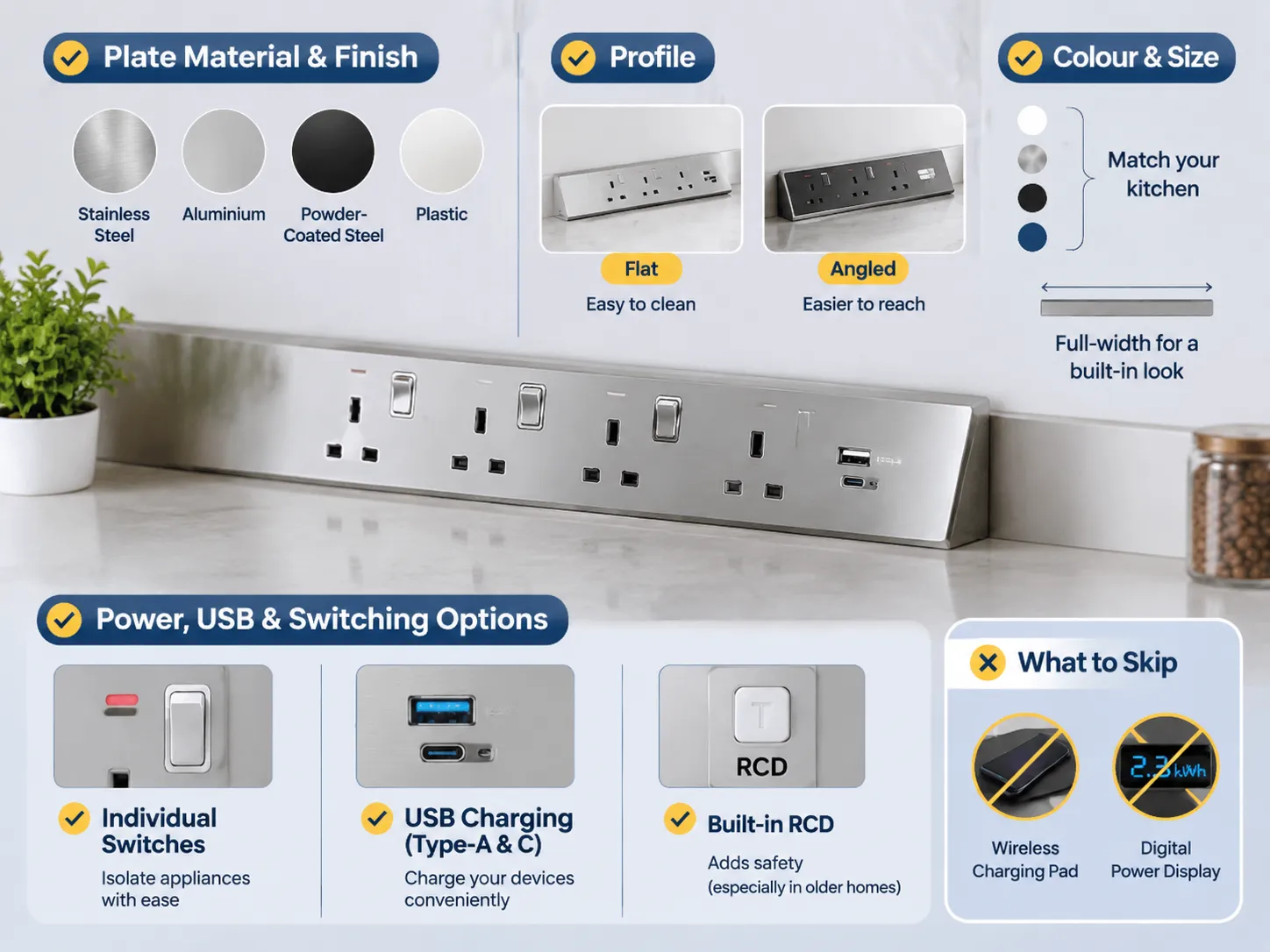
المادة. كل من الفولاذ المقاوم للصدأ والألمنيوم يتطابقان مع تشطيبات الأجهزة الأخرى للطهي ولديهما مقاومة جيدة للحرارة، ومع ذلك فإنهما يظهران بصمات الأصابع بسهولة كبيرة. غطاء من الفولاذ المطلي بالبودرة أقل تكلفة ومتوافر بلون يتطابق مع تشطيبات الخزائن الأخرى. الأغطية البلاستيكية هي الأقل تكلفة وتميل إلى تغير اللون بسبب الشحوم عند وضعها بالقرب من الأسطح الساخنة. الخيار الأفضل للمطبخ الذي يحتوي على ظهر من الفولاذ المقاوم للصدأ هو شريط طاقة من الفولاذ المقاوم للصدأ المصقول.
الملف الشخصي. الأغطية المسطحة تُركب بشكل متساوٍ مع قاعدة الخزائن وتميل إلى أن تكون الأسهل في التنظيف. الأغطية منخفضة الارتفاع/المائلة أسهل في الوصول إليها وأيضًا أقل عرضة لتجميع الحطام/الغبار على السطح. من الجدير أيضًا النظر في شريط طاقة مائل لوحدة توضع في الجزء الخلفي من سطح عمل عميق، لأن المقابس تواجه الشخص الذي يستخدمها بدلاً من أن تواجه الأرض.
اللون والتشطيب. العديد من المطابخ تتميز بتشطيبات الأجهزة البيضاء والفولاذ المقاوم للصدأ، في حين أن عددًا متزايدًا من تصميمات المطابخ يدمج اللون الأسود بسبب الشعبية المتزايدة للخزائن الداكنة. في معظم الحالات، عندما يتم اختيار تشطيب ليكمل الخزائن بدلاً من مطابقة الجهاز، فإنه يخلق مظهرًا مخصصًا أكثر يعطي انطباعًا بأنه جزء من الخزائن بدلاً من كونه فكرة لاحقة.
حجم شريط الأجهزة نسبي لحجم الخزائن؛ الشريط الذي يمتد على طول الخزانة سيبدو مدمجًا، في حين أن شريط الأجهزة القصير سيبدو كقطعة مضافة. أيضًا، طول شريط الأجهزة مهم لتحديد عدد الأجهزة التي يمكن توصيلها بالشريط دون الحاجة إلى إعادة ترتيب أو تحريك المقابس، وهو ما يمكن أن يكون محبطًا عند التعامل مع مطبخ صغير.
خيارات الطاقة وUSB والتبديل
هناك ثلاث خيارات تستحق الاستثمار بالتأكيد، وهناك اثنان لا يستحقان ذلك.
مفاتيح فردية لكل منفذ: شريط أجهزة يحتوي على مفاتيح فردية لكل منفذ يوفر القدرة على تشغيل وإيقاف الأجهزة، مثل ماكينة القهوة أو الغلاية، دون الحاجة إلى فصلها. كما يساعد في تقليل التآكل الناتج عن فصل وتوصيل الأجهزة؛ على عكس شريط الأجهزة القياسي الذي يحتوي على مفتاح واحد فقط، المفتاح الفردي لكل منفذ أقل تكلفة ولكنه يوفر فائدة أكبر.
شحن USB: منفذ شحن USB هو استثمار ممتاز لمساحة العمل في المطبخ حيث يستخدم العديد من الأشخاص مطبخهم كمكتب عمل. عند استخدام مزيج من Type-A و Type-C، يمكن شحن أجهزة مثل الهواتف الذكية والأجهزة اللوحية وأجهزة الكمبيوتر المحمولة من منفذ واحد. من خلال وجود منافذ USB مدمجة في شريط الأجهزة، لا حاجة لمحطة شحن تشغل مساحة على المنضدة. بالإضافة إلى ذلك، عند اختيار شريط أجهزة بقدرات منفذ USB، تأكد من أن وحدة USB لديها تصنيف تيار يدعم نوع الأجهزة التي سيتم توصيلها؛ حيث أن خرج مشترك بقوة اثنين أمبير سيشحن الأجهزة بشكل أبطأ بكثير من خرج بتيار أعلى.
جهاز التيار المتبقي المدمج (RCD): جهاز التيار المتبقي المدمج هو استثمار ممتاز لأشرطة الأجهزة التي يتم تشغيلها من دائرة منفذ غير مؤرضة. إذا كنت تشتري شريط أجهزة لا يحتوي على حماية GFCI مدمجة، فمن الحكمة الاستثمار في جهاز RCD مدمج لتوفير حماية GFCI وضمان أن يكون تركيبك متوافقًا مع الكود الكهربائي، دون الحاجة لإعادة توصيل الدائرة بأكملها.
الشريط الذي يحتوي على لوحة شحن لاسلكية مدمجة في الأعلى (بحيث تضطر إلى ترك هاتفك مستلقيًا على المنضدة لإعادة الشحن) هو عديم الفائدة. وينطبق نفس الأمر على الشريط الذي يحتوي على شاشة رقمية تعرض مقدار الطاقة التي تستهلكها أجهزتك المشغلة. على الرغم من أنك ربما ستنظر إلى الشاشة لمدة أسبوع على الأقل بعد شراء الشريط، فمن المحتمل ألا تنظر إليها مرة أخرى.
كما في المثال السابق، فإن مجموعة المقابس الكهربائية المتاحة خلف الشريط ستلعب دورًا رئيسيًا في اختيارك للشريط. ستساعد مساحة الوحدات في تحديد أي تركيبات من الوحدات ستناسب الشريط.
المتطلبات القانونية ومتطلبات السلامة
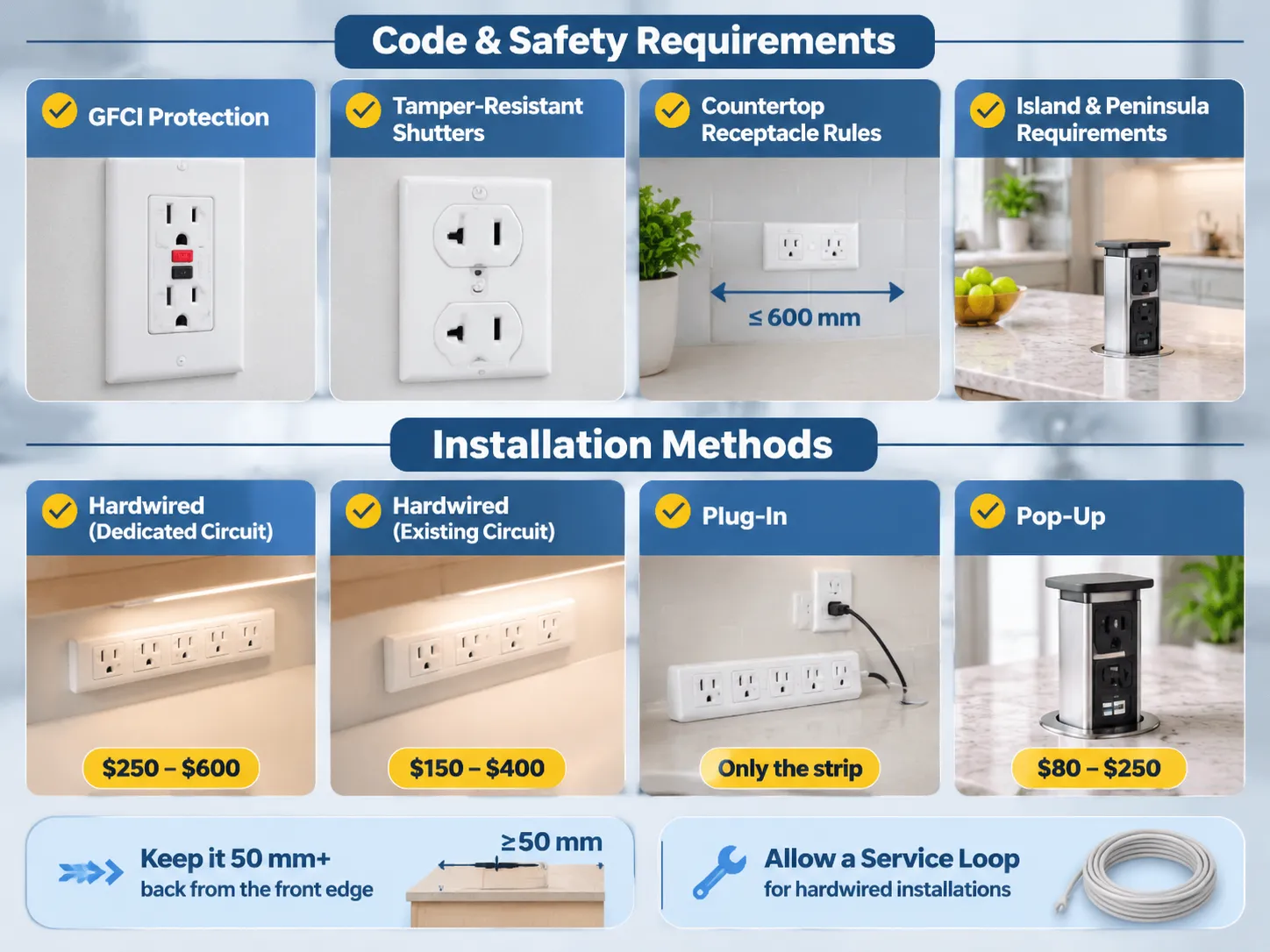
تنطبق نفس متطلبات الكود والسلامة الأربعة على الشريط كما هو الحال على منفذ الحائط. فيما يلي قائمة بمتطلبات الكود والسلامة لكل من الشريط الموصل بشكل ثابت ومنفذ الحائط:
حماية GFCI. يتطلب الكود دائمًا أن توفر مقابس سطح المطبخ حماية من خطأ الأرض. لذلك، إذا كان الشريط يغذى من دائرة غير محمية بجهاز GFCI، يجب عليك استخدام قاطع GFCI أو مقبس GFCI في الأعلى من الشريط. الشريط القابل للتوصيل بمقبس غير محمي لا يفي بمتطلبات الكود للاستخدام في المطبخ.
2. Tamper-resistant shutters. All receptacles in occupancy units (e.g., apartments, houses) must be designed to be tamper-resistant. If a strip does not have shutters, it is either an older version of the product or one that was made for a market that does not require shutters; therefore, it will be flagged.
3. Kitchen countertop receptacle requirements. Code requires that receptacles for countertops be located at specified spacing intervals along the countertop. Only receptacles that are intended to serve the countertop are counted; therefore, while a strip located under a cabinet will meet these requirements, the spacing requirements must still be met, and a single strip located in the middle of a long countertop will not meet the spacing requirements.
Designers most often disagree with inspectors at this stage of the project. Therefore, it is cheaper to address these issues before the cable is pulled.
Island and peninsula receptacles – The most recent code cycles have required at least one receptacle at islands and peninsulas. This also led to the widespread acceptance of pop-up receptacles. The receptacle must be in a readily accessible location, and typically cannot be below the countertop on the island itself, hence pop-up and side mount receptacles are most commonly used.
None of the above is difficult to understand, and it is much cheaper to get a design solution settled in the design phase. The guidelines for the spacing of kitchen receptacles and their locations include in-depth descriptions of the spacing rules, and the zones around sinks and hobs where receptacles should never be located.
Installation Methods and Costs
Installation types and costs associated with each option:
Hardwired from a dedicated circuit – The best and most expensive way to install a receptacle; a dedicated circuit runs 20 Amps from the panel to a junction box under the cabinets, and the receptacle strip receives power from the junction box; costs between $250 and $600, including material and labour and a new circuit breaker and usually more if the route is difficult or the panel is full.
Hardwired from an existing countertop circuit – A spur-off from a nearby receptacle or a refeed-off an existing circuit; costs between $150 and $400. If a kitchen has GFCI protection and the home runs hot and neutral for the outlet, then the load calculation allows the kitchen with the kettle, toaster and coffee maker to supply a maximum of 20 amps.
A plug-in unit can be installed by the homeowner in 20 minutes with only two screws and will only cost the price of the strip itself, barring the wiring of the outlet it is plugged into and the visible wire that runs to the unit. This is the reason they are so often used in rental properties, but not installed in new kitchen designs.
A pop-up unit requires the cutting of a 60-80 mm diameter hole in the countertop and then lowering the unit into place. The unit must then be secured to the underside of the countertop with clamps. If an electrician is required to make the cuts and electrical connections, then the cost of installation will be around $80-$250 and the cut is not reversible. You should cut the hole while the unit is on site; do not make cuts using only a drawing.
All pricing information is based on historical data.
This page provides an overview of the price range for electrical installations. The price of a hardwired installation will vary based on the number of required electrical connections and whether you require the services of an electrician to do the installation. Installation prices can frequently equal or exceed the cost of the hardware itself. For example, you might purchase a $40 power strip, but if you hire a $350 electrician to install it, your total investment is now $390. You could instead purchase a higher quality power strip that costs $390 and is easy to install on a pre-existing electrical circuit.
In addition to price, users will want to consider the style of the installation and how that will impact the amount of work required, as well as how much time you have available for the installation.
| البند | السعر النموذجي | Notes |
|---|---|---|
| شريط قابس، 2 إلى 3 مخارج | $15 – $45 | No electrician, limited by the host socket |
| شريط موصل سلكيًا، 2 إلى 4 مخارج مع مفاتيح | $25 – $70 | Best balance for a new kitchen |
| Hardwired strip with USB and built-in GFCI | $50 إلى $120 | Useful where the circuit has no GFCI |
| وحدة مدمجة | $40 – $120 | يجب قطع قاعدة الخزانة |
| وحدة الظهور المفاجئ، 2 مخارج بالإضافة إلى USB | $80 – $300 | حل للجزر والبرزخ |
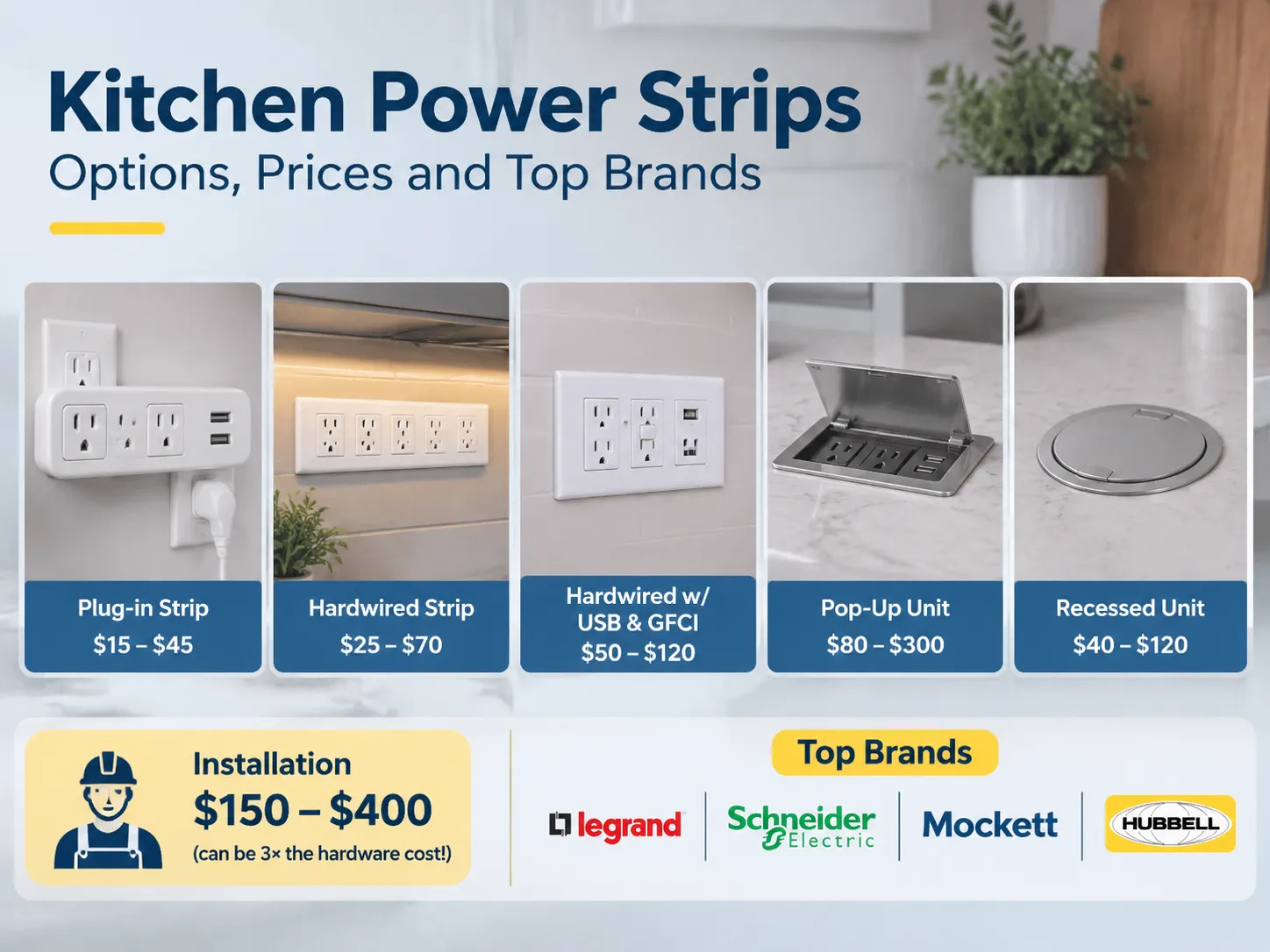
| فني كهرباء لتركيب موصل سلكيًا | $150 – $400 | المزيد مع دائرة جديدة أو عمل لوحة جديدة |
Manufacturers of Wiring Devices and Other Appliance Accessories
Wiring Device Manufacturers (Wiring Devices) provide the actual outlets for electrical devices, while other manufacturers of appliance accessories (i.e., Power Strips) make the cords that connect multiple devices to the electrical outlet.
Mockett specializes in all things desks and cabinets related to power, from pop-up power units to grommet-style power outlets and is the preferred brand for most furniture manufacturers. Hubbell specializes in products that are used primarily for commercial or laboratory environments and expect to last much longer than a residential kitchen’s worth of use.
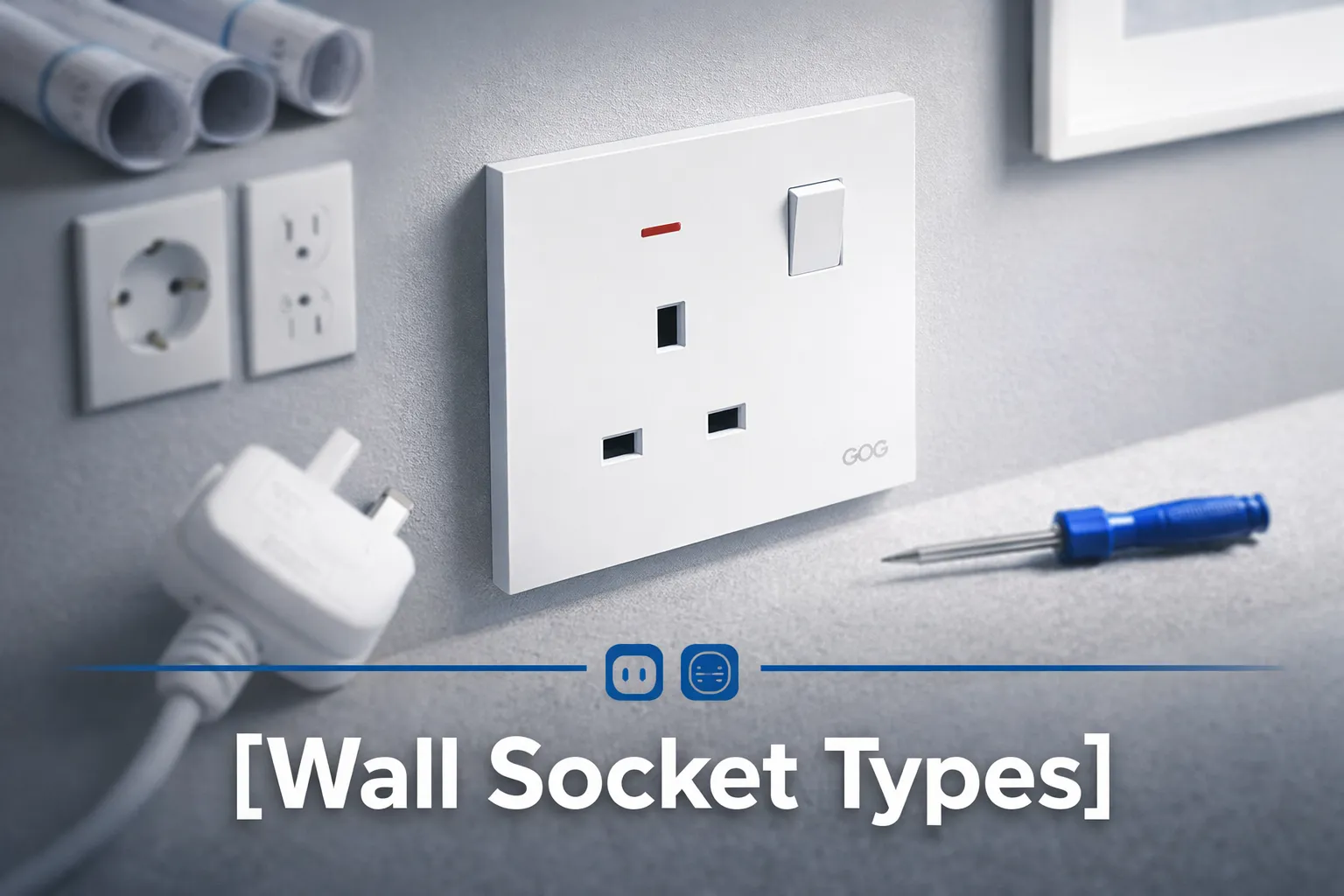
Mockett manufactures wiring devices using the same parts and wire as their under-cabinet strips. They have manufactured both switched and un-switched types and currently manufacture under-cabinet strip mounted socket/plate combinations to meet the switched pattern specifications of UK, Middle East, Southeast Asia, and Australia. The sockets will have tamper-proof shutters and will be constructed of both screw terminals and plates with an indicated amount of torque. The majority of their manufacturing volume comes from production of wall mounted sockets, with most fabricators purchasing the socket modules to build their own under-cabinet strips, rather than using the socket manufacturers to make their strips.
Where GOG Lies
GOG provides distributors, contractors, and developers with switch/socket products and provides sockets for under-cabinet work. Under-cabinet work is a small part of GOG’s sales volume, but is steadily increasing due to the similarity of socket products throughout the entire facility in which they are applied. Among the socket/plate combinations typically sold for kitchen applications, the plates will be similar in appearance and function to the sockets and the modules are the components of the socket/plate combination that must have the highest reliability in terms of performance.
Three items are critical to buyers who are specifying their kitchen mounted sockets: The socket module must incorporate silver alloy contacts as well as screw terminals with a clamping plate, since the kitchen mounted socket may power both a kettle and a coffee maker on an average daily basis; The socket/plate combination must be available in all of the same finishes that the kitchen is using (i.e., in actual usage, white, stainless steel or black).
A consistent batch will show any inconsistencies in colour or fit, as seen in the kitchen below, which has six sockets on one strip.
If you are ordering all the electrical sockets for your installation in one bulk order, you should ensure that your sockets can be produced with all the appropriate finishes and configurations (including plate systems and module sizes) to avoid having the strip arrive in a finish that no longer matches the rest of your installation (this is especially important for developers who typically order high volume runs of 13 A sockets from the production side of an electrical distributor).
الأسئلة المتكررة
What code requirements govern under cabinet receptacles?
In most jurisdictions throughout the US, the following four items must be met to comply with local codes: 1) under cabinet outlets (receptacles serving as counter top receptacles) must be GFCI protected; 2) residentially located receptacles must have tamper resistant shutters; 3) under cabinet receptacles must comply with spacing requirements as designated by code; and 4) all work surfaces or islands and peninsulas must have at least one easily accessible receptacle. The only exception to this is a hardwired receptacle strip that provides power to the countertop. This strip must still comply with the spacing requirements established within the code. Therefore, a single receptacle strip in the middle of a long run would not be able to cover the required spacing between multiple receptacles.
How much do under cabinet outlets cost?
The average cost of a plug-in receptacle strip is approximately $15 – $45. A hardwired receptacle strip may range from $25 – $70 depending on whether two, three or four of the receptacles are switched or dedicated. A hardwired receptacle strip with at least one USB outlet and built-in GFCI typically retails from $50 to $120. Recessed outlet units will cost approximately $40 – $120 and pop-up outlet units will cost approximately $80 – $300.
The installation of under cabinet outlets requires additional electrical work from an electrician and can be between $150-$400 for the electrician’s labour plus another $200-$600 for the new circuit.
كيف يتم تركيب مخارج تحت الخزائن؟
To install hardwired under cabinet outlets, you’ll need to do the following: cut the power to the circuit, run the required wire (approved for use with Ground-Fault Circuit Interrupter (GFCI)) from a GFCI source to a junction box located beneath your cabinets, secure the outlet strip to the underside of the cabinets with the outlet plugs facing down, connect the wires and verify that everything is working correctly.
If you want to install an outlet strip that is powered by plugging it into your wall outlet, you’ll need to secure the strip to the cabinet and plug it into your wall outlet. If you want to install a pop-up outlet strip, you should cut a 60-80 mm hole in the worktop while you have the unit onsite so you can drop it in, secure it with the clamps from underneath and connect it to a protected power supply.
ما هي اعتبارات التصميم لمخارج تحت الخزائن؟
Design considerations for under cabinet outlet placement include the positioning of the outlet in relation to the edge of the worktop, so that you will not inhibit the door of your cabinet from opening. You should also consider how many appliances you will need to connect to the strip. It is common to use multiple appliances (electrical kettle, coffee maker and toaster) from one outlet strip. You should consider what finish you would like for the outlet strip. If the outlet strip finish is similar to the finish of your cabinets, then it will be perceived as being more integrated into the kitchen design. The profile or angle of the outlet strip should also be considered. An angled unit is more accessible for use on the back of a deep worktop. Finally, if the outlet will be on an island, then you must choose between an outlet strip or a pop-up unit.
If you want to learn more, I suggest you take a look at the references below.
المراجع
- National Fire Protection Association (NFPA), National Electrical Code (NEC), Kitchen Receptacles
- UL Solutions — Standards for Receptacles and Relocatable Power Taps
- National Electrical Manufacturers Association (NEMA) — Wiring Devices & Kitchen Electrical Products
- Legrand — أنظمة أجهزة التوصيل المعيارية
- Mockett — Under Cabinet Power and Power Solutions for Desktops
الخاتمة
When deciding what type of under cabinet outlet to install, the three most significant factors are whether the cabinets will be above the worktop, how many different appliances will be used at once and whether the circuit is already protected. For most applications, a hardwired, switched outlet strip meets the first two factors while providing a lower cost alternative to other outlet types. A pop-up outlet is best for kitchen islands and should be selected based upon the quality of the sealing rather than appearance.
Three decisions that should be made prior to cabinet installation are: (1) the height of the outlet strip in relation to the edge of the worktop; (2) the number of appliances that will be plugged into the circuit; and (3) the finish of the outlet strip. All remaining aspects of the outlet strip can be decided after the cabinets have been installed, with the exception of the circuit protection requirements.