يشير المصطلح إلى نهاية سلك المصباح، شاحن الكمبيوتر المحمول، مروحة المكتب، جهاز التلفزيون وحوالي أربعة مليارات عنصر. نادراً ما يفكر أحد في ذلك، لذا ليس من المستغرب أن قلة قليلة من الناس يمكنها تفسير معنى الحروف أو سبب اتساع أحد الدبابيس عن الآخر. تصبح أهمية المعلومات حول الفجوة واضحة عندما يجب استبدال السلك، أو يجب تكييف المعدات للتصدير، وعندما يبدو أن القابس ساخن ويحتاج المرء إلى تحديد ما إذا كان ذلك طبيعيًا.
يحتوي القسم التالي على المعلومات لأولئك الذين يحتاجون إلى أكثر من مجرد نظرة عامة موجزة على الموضوع.
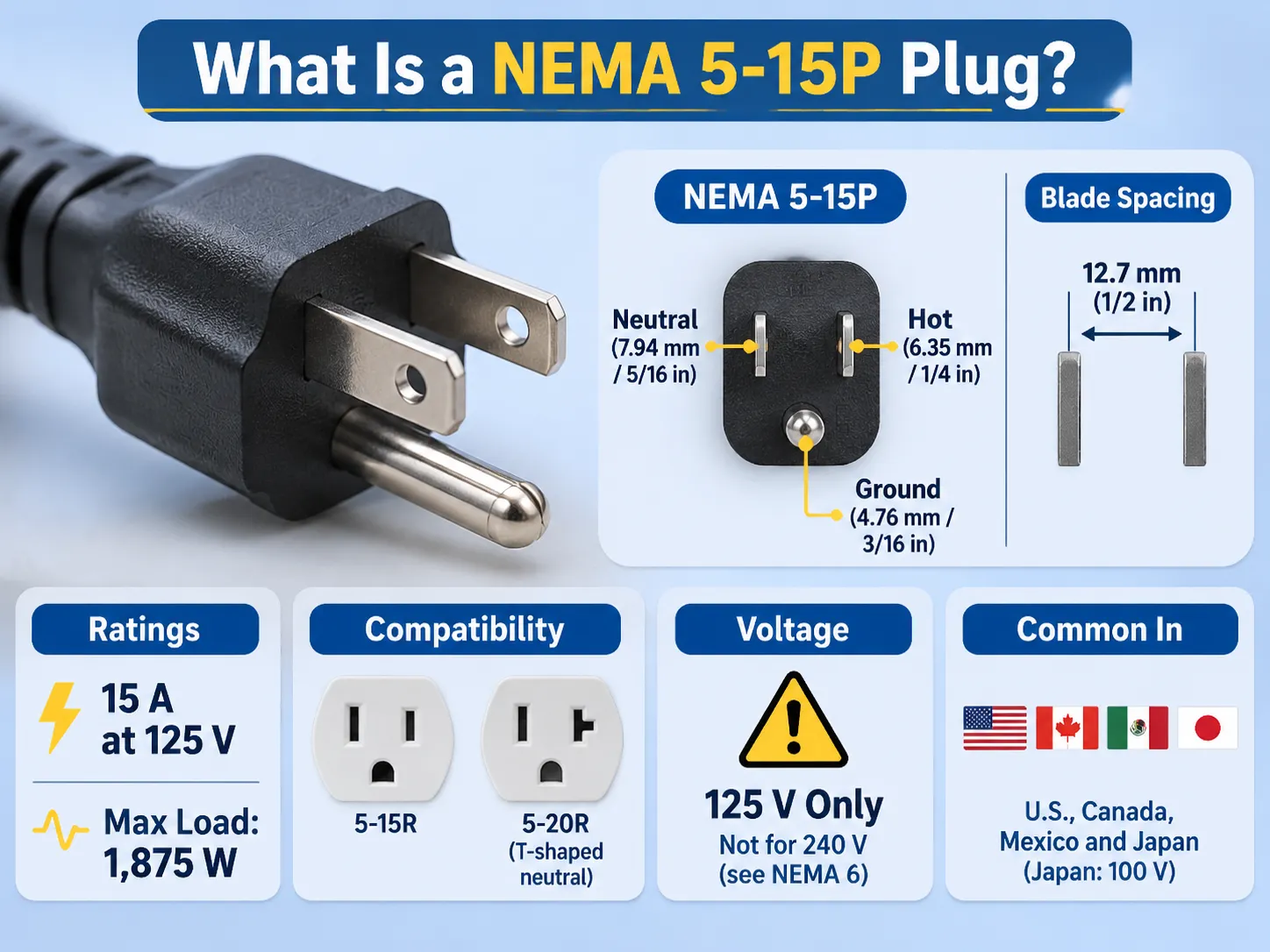
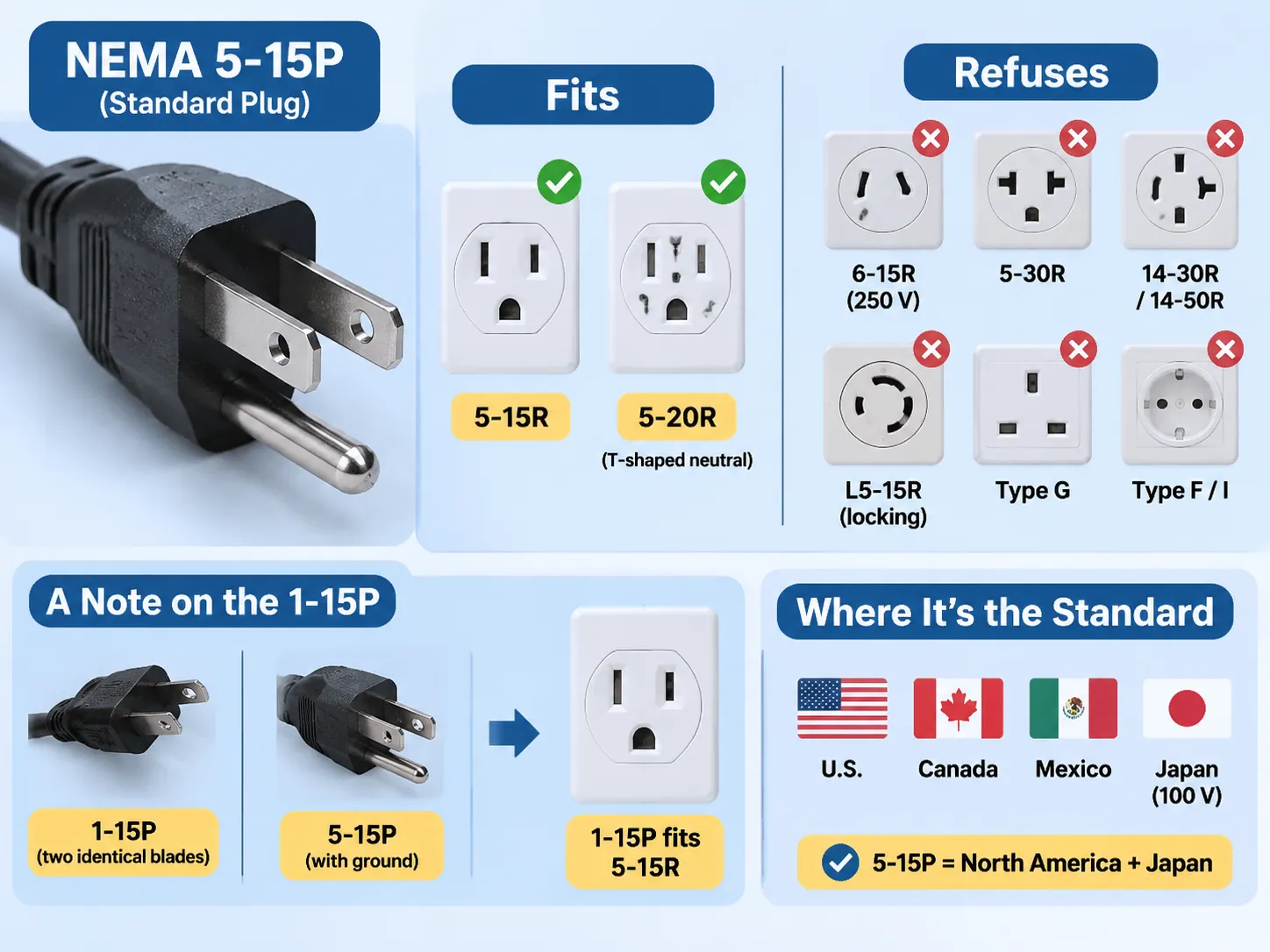
الرد المختصر: NEMA 5-15P هو القابس الشائع الاستخدام في أمريكا الشمالية بثلاثة دبابيس ومصنف لـ 15 أمبير عند 125 فولت. الدبوسان مسطحان ومتوازيان وأحدهما دبوس التأريض. تم تصميم NEMA 5-15P وفقًا لمعايير ANSI/NEMA WD-6 ومعتمد من UL 498. يمكن تركيبه في مقبس NEMA 5-15R ويناسب أيضًا مقبس NEMA 5-20R لأن كلا من قابس NEMA 5-15P و NEMA 5-20R لهما أشكال مختلفة لفتحات الدبابيس. الدبوس الحار في NEMA 5-15P عرضه 6.35 مم والدبوس المحايد عرضه 7.94 مم، بحيث يمكن إدخاله في القابس في اتجاه واحد فقط. المسافة بين الدبوسين هي 12.7 مم وقطر دبوس التأريض 4.76 مم. يمكن لـ NEMA 5-15P تحمل حمل أقصى قدره 1875 واط ويعمل عند 125 فولت. لا يمكن استخدام NEMA 5-15P في دوائر 240 فولت، ولكن تم تصميم قابس مختلف تمامًا من سلسلة NEMA 6 لهذا الغرض.
ما الذي يشفره الاسم فعليًا
تتبع أسماء الموصلات المختلفة المستخدمة من قبل NEMA نظامًا منظمًا، مما يجعلها سهلة التذكر. تتكون الأرقام الثلاثة الأولى قبل الشرطة من ثلاث معلومات: رقم السلسلة، عدد الاتصالات، وعدد الأسلاك. الرقم بعد الشرطة يشير إلى تصنيف الأمبير. وأخيرًا، الحرف في النهاية يوضح ما إذا كان الموصل قابسًا أو مقبسًا.
على سبيل المثال، يشير 5-15P إلى عنصر في السلسلة 5 مصنف لـ 125 فولت وله اتصالان وثلاثة أسلاك. من بين أشياء أخرى، يشمل موصلين مع سلك التأريض وله تصنيف 15 أمبير. المقبس 5-15R هو نفسه قابس 5-15P مع الفرق أن 5-15R هو مقبس. بنفس الطريقة، إذا اختار المستخدم توصيل نسخة L5-15P المعروفة بأنها قابلة للقفل، فلن يواجه مشاكل في استخدام القابس. بينما كلا نوعي الموصلات لهما نفس تصنيفات الأمبير، من المهم ملاحظة أن L5-15P يختلف عن 5-15P من حيث الهيكل.
للأسف، يميل الناس إلى الخلط بين أرقام السلسلة. الرقم 5 يشير إلى 125 فولت بينما الرقم 6 ينتمي إلى 250 فولت. يمكن بسهولة الخلط بين موصل برمز 6-15P و 5-15P، لكنه لن يناسب مقبس 5-15R بسبب الشكل المختلف. يتم تعريف مجموعة التكوينات الكاملة في ANSI/NEMA WD-6، و نظرة عامة على أنواع المقابس الكهربائية مفيدة لوضع 5-15 جنبًا إلى جنب مع العائلات غير الأمريكية الشمالية.
كيف يبدو NEMA 5-15P، حتى المليمتر
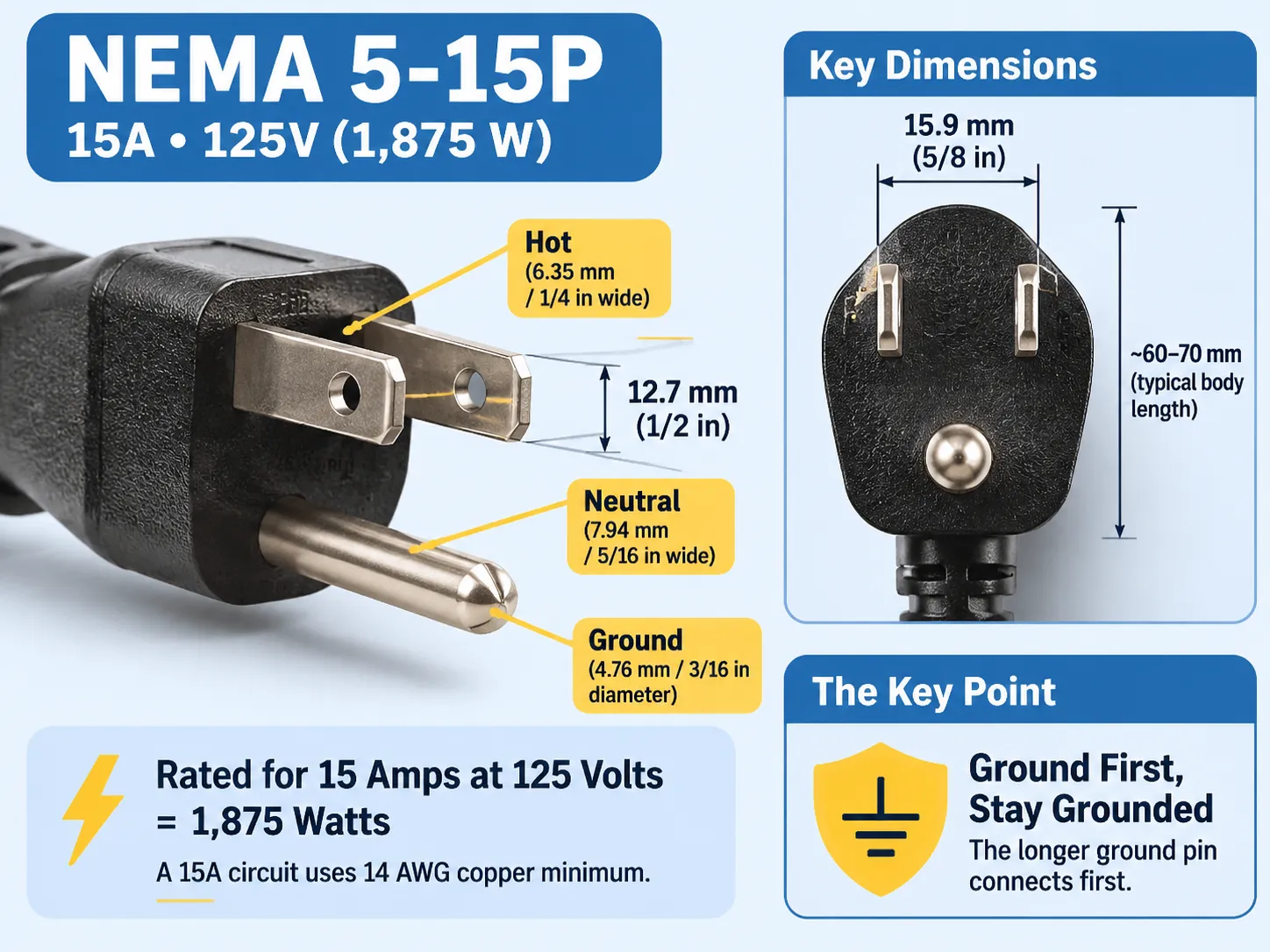
هناك ثلاثة موصلات وثلاثة مكونات معدنية مكشوفة. يتم ترتيب شفرات مسطحة اثنتين بنفس الطريقة ويوجد دبوس دائري تحتها. الدبوس الدائري أطول من الشفرات بحيث يلامس الاتصال قبل الشفرات. وبالتالي، فإن الغرض من الدبوس الأرضي الأطول هو ضمان تأريض الجهاز قبل تشغيل الطاقة، ويظل مؤرضًا حتى بعد فصل الطاقة.
| الميزة | الأبعاد | لماذا هو بهذا الحجم |
|---|---|---|
| عرض الشفرة الساخنة | 35 مم (1/4 بوصة) | شفرة قياسية، تتناسب مع الفتحة الضيقة |
| عرض الشفرة المحايدة | 94 مم (5/16 بوصة) | الشفرة الأعرض تجبر على اتجاه إدخال واحد |
| مراكز الشفرات | 7 مم (1/2 بوصة) | يثبت الهندسة بحيث لا تناسب أي سلسلة أخرى |
| طول الشفرة | 9 مم (5/8 بوصة) اسمي | مساحة الاتصال بالإضافة إلى عمق التداخل |
| قطر الدبوس الأرضي | 76 مم (3/16 بوصة) | دبوس دائري، أطول من الشفرات |
| الطول النموذجي للجسم | من 60 إلى 70 مم | الغلاف لمشبك الحبل والنهايات |
في بعض أنواع المقابس، يمكن العثور على فتحة صغيرة بالقرب من نهاية كل شفرة طرفية. هذه الفتحة هي أثر من عملية التصنيع؛ ومع ذلك، فهي مفيدة ولذلك تم الاحتفاظ بها. يمكن استخدام الفتحة لقفل المقبس. بالإضافة إلى ذلك، تستخدم عدة تصميمات للمقبس الفتحة للقفل. بينما وجودها ليس إلزاميًا، فإن حجمها ثابت في حالة وجودها.
ما هو تصنيفه، وماذا يعني ذلك بالواط
خمسة عشر أمبيرًا عند 125 فولت يعطي 1875 واط وهذا هو الحد لأي شيء على 5-15P. الحدود للدائرة موجودة في القاطع، ولكن ليست في المقبس. في حالة دائرة فرعية 15 أمبير، إذا كان هناك مقبس في حالة عادية، فإن نقطة الفصل للدائرة هي 15 أمبير. يجب تعديل كل مقبس إلى نقطة الفصل، وإلا إذا قمت بتوصيل 5-15P في دائرة 20 أمبير، سيصبح المقبس الحلقة الأضعف حيث يتم توصيله.
تعتمد قدرة الكابل على الدائرة وليس على المقبس. لدائرة 15 أمبير من الضروري وجود سلك 14 AWG وللدائرة 20 أمبير هو 12 AWG. المقبس المصمم لـ 5-15P مع سلك 16 AWG مناسب تمامًا، حيث أن الجهاز الذي يغذيه محدود. ومع ذلك، من الخطأ تركيب مقبس 5-15P على سلك بسماكة مثل دائرة 15 أمبير بسبب وجود مقبس 15 أمبير.
يجب ذكر أهمية الجهد المستخدم هنا لأنه يسبب الكثير من الالتباس. الجهد الاسمي هو 120 فولت ولكن معايير ANSI C84.1 توفر نطاق حالة ثابتة تقريبًا من 114 فولت إلى 126 فولت. لوحات أسماء الأجهزة التي تشير إلى 115 فولت و110 فولت لا تتحدث عن المقابس بل تعني قدرة الجهاز على الجهد المستخدم.
الاستقطاب: لماذا الشفرة المحايدة أوسع
الشفرة المحايدة الأعرض لا تمثل أي عيب في التصنيع. وظيفتها هي التأكد من أن مفتاح الجهاز الداخلي يقطع السلك الساخن بدلاً من السلك المحايد.
اعتبر ما قد يحدث في حالة عدم وجود ذلك. إذا كان بالإمكان إدخال القابس في كلا الاتجاهين، ففي نصف الحالات سيكون المفتاح الداخلي مرتبطًا بالخط المحايد. يؤدي تبديل الخط المحايد إلى قطع تدفق التيار مما يخلق وهمًا بأن الجهاز مغلق بينما لا تزال الأسلاك مشحونة بجهد 120 فولت بالنسبة للأرض. هذا يعرض أي شخص يقوم بإصلاح الجهاز ويلمس أيًا من الأسلاك التالفة لخطر أن يصبح جزءًا من الدائرة. تعني الاستقطاب أن المفتاح يتحكم فقط في الخط الحار وأن الجهاز يكون فعليًا مغلقًا عند فصله عن خط الطاقة.
لهذا السبب، فإن محول الغش الذي يتجاوز دبوس الأرضي والاستقطاب ليس مجرد انتهاك للوائح، بل هو خطر حقيقي لأنه يزيل مستويين من الحماية. تفسر نفس المنطق لماذا مأخذ الحائط التالف الذي يحتوي على فتحة محايدة متشققة أو مرتخية يجب استبداله، وليس تحمله: فتحة مهترئة تسمح للقابس بالجلوس بزاوية وتلغي الهندسة التي تحافظ على الاستقطاب الصحيح.
المقبس الذي يناسبه، والذي يرفضه
القابس 5-15P قادر بالفعل على التناسب مع المقبس المرافق 5-15R وأيضًا 5-20R، حيث يحتوي المقبس ذو التيار 20 أمبير على فتحة محايدة على شكل T يمكنها استيعاب كل من المحايد العريض 5-15 والمحايد الأفقي 5-20. لكن التوافق يعمل في اتجاه واحد فقط. القابس 5-20P بمحايده الأفقي لا يمكنه التناسب مع 5-15R.
يفشل التوافق مع العديد من الأنواع الأخرى، وهذا يساعد في فهم المفهوم. على سبيل المثال، لا يناسب المقبس من النوع 6-15R لأنه يحتاج إلى 250 فولت. كما أن 5-30R لن يقبله لأن تباعد الشفرات مختلف. وبالمثل، لن يقبل المقبس 14-30R أو 14-50R. علاوة على ذلك، يعمل المقبس القفل من النوع L5-15R، والنوع G، والنوع F، والنوع I بنفس الطريقة، وهذا هو السبب الكامل لمحولات السفر.
عادةً ما يبدأ الالتباس مع القابس ذو الدبوسين 1-15P الذي يحتوي على دبوسين متطابقين كما في نسخته الأصلية بدون دبوس أرضي. يناسب 1-15P المقبس 5-15R بسبب عرض فتحة المحايد، لكن العكس لا ينطبق هنا. ومع ذلك، في حال كنت تنوي استبدال مقبس عادي بمقبس مكافئ 5-15R مزود بحماية GFCI، يمكن التعامل مع المشكلة بشكل منفصل بالنسبة للقابس.
حيث يكون NEMA 5-15P هو القابس القياسي
بالتأكيد الولايات المتحدة الأمريكية هي أول ما يتبادر إلى الذهن، بينما تتبع كندا نفس النظام، وهو CSA C22.2 No. 42، ولهذا يمكنك استخدام جهاز تم شراؤه في تورنتو بدون مشاكل في بوفالو. تتبع المكسيك نفس النمط تحت NMX-J-163-ANCE، و دليل نوع المقبس الكهربائي الكندي يغطي تفاصيل ذلك السوق بما في ذلك المتغيرات 5-20 المستخدمة في المطابخ.
تقدم اليابان مثالًا مثيرًا للاهتمام. يستخدم كل من 100 فولت و50 أو 60 هرتز (اعتمادًا على المنطقة) نفس التصميم ذو الشفرات الثنائية، ويمكن العثور على مقابس 1-15 غير المؤرضة في جميع أنحاء المنازل اليابانية، بينما يظهر قابس 5-15 المؤرض فقط حيثما يكون ذلك ضروريًا. على الرغم من أن قابس 5-15P المتين يمكن أن يتناسب مع مخرج مؤرض في اليابان، إلا أن ثلث تصنيف الطاقة فقط للحمل المقاوم سيتم تحقيقه نتيجة لمشاكل الجهد الكهربائي. ونتيجة لذلك، قد تكون هناك مشكلة في سرعة المحرك وارتفاع درجة الحرارة. ليست المشكلة في القابس؛ إنها مسألة الجهد والقوابس فقط، حيث يجب الإجابة على مثل هذه الأسئلة بشكل منفصل.
In addition to Japan, some parts of Central America, the Caribbean, Colombia, Peru, Taiwan, and the Philippines have a mixture of plugs, with 5-15 sockets and plugs being used along with other types of plugs.
The Other NEMA Plugs People Confuse It With
Four examples explain the majority of practical situations.
- 1-15P. The plug has two blades, does not have a ground and is not polarized, amperage of 15 A at a voltage of 125 V. It is the plug for double-insulated cords and old lamps. It can fit into the 5-15R; the other plug cannot fit into the 1-15R plug.
- 5-20P. The same voltage of 125 V and higher amperage of 20 A with an additional neutral horizontal pin. It cannot fit into a 5-15R plug, while a 5-15P plug can fit a 5-20R socket. It is often seen in kitchens and workshops fitted with 20-ampere circuits.
- 6-15P. The plug comprises two blades as well as grounding and works at voltage of 250 V and 15 A. The specially designed plug can only fit into the right receptacle. The most common applications for this plug are air conditioners and other electrical devices which require 240 V.
- G type and F type plugs. The British rectangular plug and the European type Schuko plug. These two plugs have different configurations, different voltages and cannot be used together. In Britain, a plug with 13 A rating has a voltage of 250 V, while the other plug has a rating of 16 A at 250 V and requires a different socket.
Why Plugs Fail, and the Arithmetic Behind a Hot Prong
The contact resistance of a clean brass blade placed in a receptacle wiper is around 0.005 ohms and thus insignificant. Once the blade has bent, oxidized, or the wiper spring has worn out, the same contact can show resistance up to 0.5 ohms without changing its physical aspect.
Once 12.5 A is passing in each case, the difference in the heat dispersion is noticeable. 0.005 ohms mean that heat is 12.5 squared times 0.005 or 0.78 W that is harmlessly dispersed in brass. 0.5 ohms mean that heat would be concentrated at 78 W on the area smaller than a postage stamp inside an insulated plastic body. The body starts getting soft at more than 70 °C, the wiper loses spring force, resistance increases, and the process goes out of control which leads to scorching of the plug face and blackening of the receptacle.
The practical test does not cost anything: after the operation of the heavy appliance for twenty minutes, touch the plug with a hand. If it is warm, everything is fine. If it is hot, it means that there is a failure in the process that should be repaired not by pushing the plug stronger but by fixing the receptacle or the cord end. The contacts of the blades become corroded and discolored while the contact area is diminishing and need replacing.
Variants Worth Knowing: Hospital Grade, Watertight and Right Angle
Plugs and sockets used in hospitals are designed to comply with more stringent criteria than the industry standard for reliability against mechanical failure and grounding failure. The major difference in the specifications is in the retention force and ground contact integrity. The specification for medical plugs is of vital importance, as a plug that disconnects from a medical device would fall under a different category of failure from a lamp that goes out.
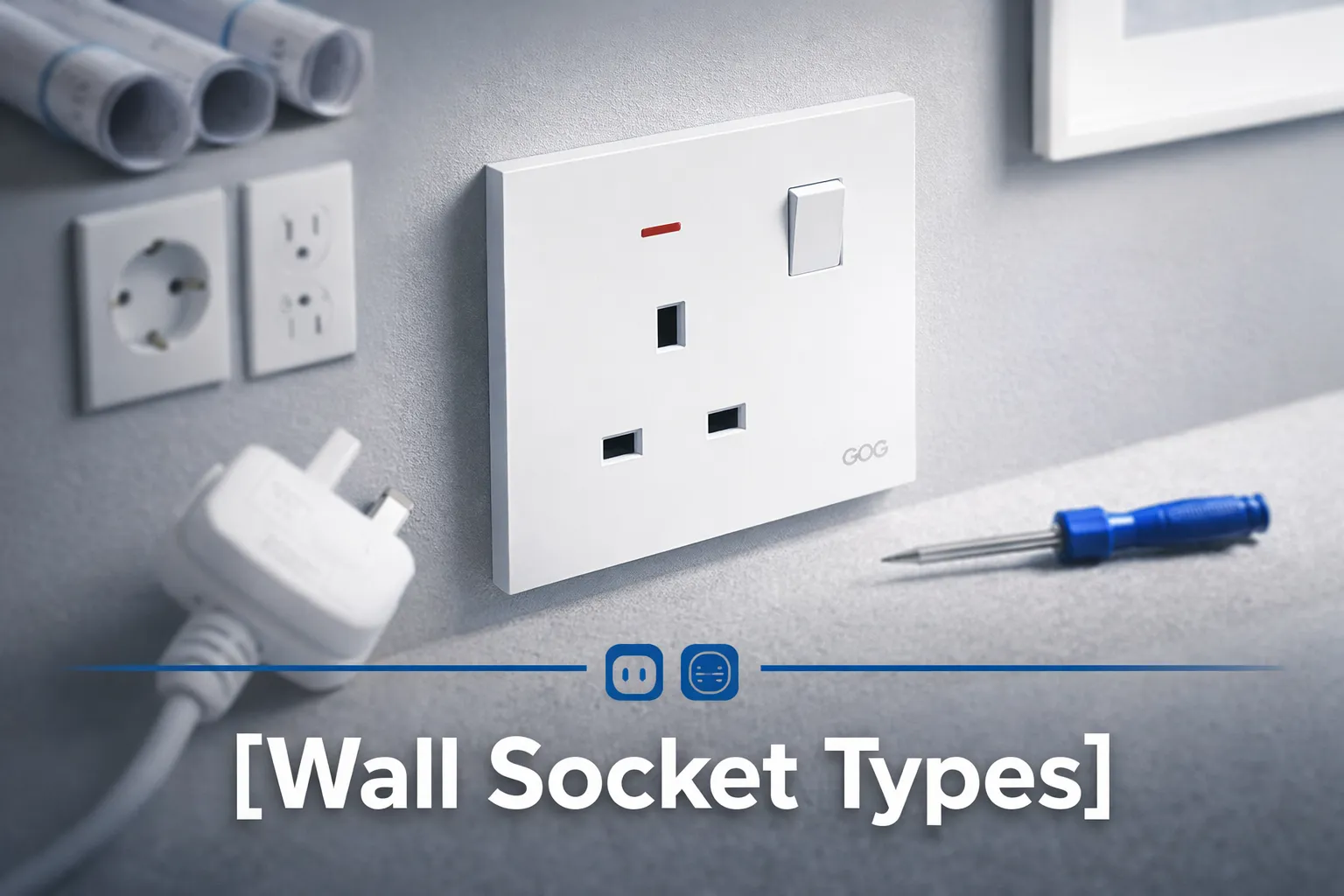
Water-resistant plugs are made to meet IP55 or higher standards as a result of utilizing a body with gasket and a cord entry and equipped with a matching firewall on the corresponding socket.The plug alone does nothing; both halves have to be the watertight type. A US three-pin socket in a switched plate assembly shows the receptacle side of the same standard in a residential format.
In instances where you have furniture items and televisions mounted on walls and in cases where you have limited clearance, both right-angle and low-profile plugs are available. The electrical rating stays the same; the only difference is the strain relief direction. You would want to specify these types of plugs if the cable is to be run flat against a wall, and people are often caught unaware until they try to move the furniture.
What to Check Before You Buy or Specify
In the case of an Original Equipment Manufacturer purchasing cord sets, there are five distinguishing features that set apart a compliant product from a convincing imitative product. The product marking must carry a proof marking from an established testing laboratory that is searchable with a testing laboratory’s file number. The dimensions of the blades must adhere to the WD-6 tolerances, which are precise enough to allow for minor errors in stamping. The cord grip should prevent the wire sheath from being pulled out of the plug during testing, compared to the terminals being pulled out. The terminal screws must be made with plated brass, which is necessary instead of using zinc-plated steel. Finally,the housing of the cord set must carry a flame rating, which is normally classified as UL 94 V-2 at the very minimum.
For the case of a product specifying receptacles there are also five comparable characteristics needed: interrupting capacity of the circuit, terminal capacity for wire gauge, mounting configuration, and whether or not a tamper resistant shut-off has to be used, which is now mandatory in every state for residential projects.
We build the plates and socket assemblies around these devices, not the plugs themselves, and the electrical socket manufacturing range covers the market-specific configurations that go with them: US, UK, European, Australian and the regional variants in between. If a project needs one plate standard across several markets with the correct device behind each, that is the conversation worth having before the drawings are frozen.
الأسئلة المتكررة
Is NEMA 5-15P a normal plug?
Yes. It is the commonplace three-prong plug that can be found on virtually all household appliances, lamps, chargers and power strips in the USA and Canada. The terminology is technical but the object is well-known: two flat prongs and a round grounding pin, rated for 15 A at 125 V. If you see a plug that has three prongs with the two flat ones being parallel and the round one under them, it is surely a 5-15P.
Is NEMA 5-15R standard?
The 15 A receptacle is common in North American homes and light commercial buildings. It can be used for either the 5-15P or also for the older version of the receptacle without the ground, called the 1-15P. The 5-20R will accept the 5-15P plug because of the T-shaped neutral opening, which explains why the 20 A kitchen circuit can also be used with standard appliances. New electrical installations in almost all jurisdictions require that these receptacles have tamper-resistant shutters.
What does a NEMA 5-15 plug look like?
The two flat metal plates are positioned parallel at a distance of 12.7 mm from each other and a round pin is located at their centre slightly extending ahead of them. The right plate is the neutral one and is visibly wider than the left plate. The body is made of plastic, which is commonly between 60-70 mm long. The wire goes into the body through the strain relief point. Some plates have a tiny hole in the tip. The plug has no shield or a round body and there is no fuse, hence for the person accustomed to the British or the European plugs it is a very easy task to distinguish this type of plug.
Can NEMA 5-15 handle 240 V?
No, the 5 series is rated 125 volts and has a physical key that prohibits it from being plugged into a 250 volts outlet. The proper connectors for plugging in a 240-volt appliance in North America are in the 6 series (e.g., 6-15P or 6-20P), along with connectors from the 14 series for devices that use both 120-240 volt appliances. Using a 5-15 device with 240 volts creates the possibility of fire or electric shock, as well as damaging any appliance plugged in on the other end of the circuit.
Will a 5-15P fit a 5-20R outlet?
Yes. The 20 A socket contains a T-shaped neutral slot which allows for the insertion of the neutral blade of a 5-15P or 5-20P plug. However, the other way around is not true since a 5-20P cannot fit into a 5-15R socket. This one-way compatability is designed so that a 20 A device cannot work in a circuit rated for 15 A.
What is the difference between NEMA 5-15P and 1-15P?
The 1-15P consists of two matching blades and does not have a ground pin. It is also not polarised. The 5-15P has received a pin for grounding and a wider blade slot for neutral. It is thus both creating a fault path and ensuring that the polarity is correct. 1-15P devices can be used with 5-15R as the neutral slot is wide enough for both blades to fit into. However, the reverse is not true when 5-15P tries to fit the ungrounded 1-15R. Ungrounded sockets are not used anymore and GFCI protected sockets have replaced them.
المراجع
- NEMA — ANSI/NEMA WD-6 Wiring Devices Dimensional Specifications
- Leviton — Straight Blade Plugs and Receptacles
- Hubbell — Wiring Device Configurations and Ratings
- Interpower — North American Cord Sets and Plug Standards
- UL Solutions — UL 498 Attachment Plugs and Receptacles
الخاتمة
The design known as the 5-15P serves three functions simultaneously. It transmits 15A of current, connects the appliance to ground, and prevents incorrect orientation and insertion. This is the main reason why we cannot substitute an imitation or copy whose appearance is correct, but whose dimensions differ from these described above.
Most reported problems related to the 5-15P do not concern electricity, but rather mechanical failures like a bent blade, wear of the wiper or burning marks. Please remember that when such a problem occurs, it is enough to change the element instead of the whole appliance. Moreover, it is always necessary to make sure that the socket of your destination country is of the required design before making the mould, as there are design differences between models and various types of adaptors.