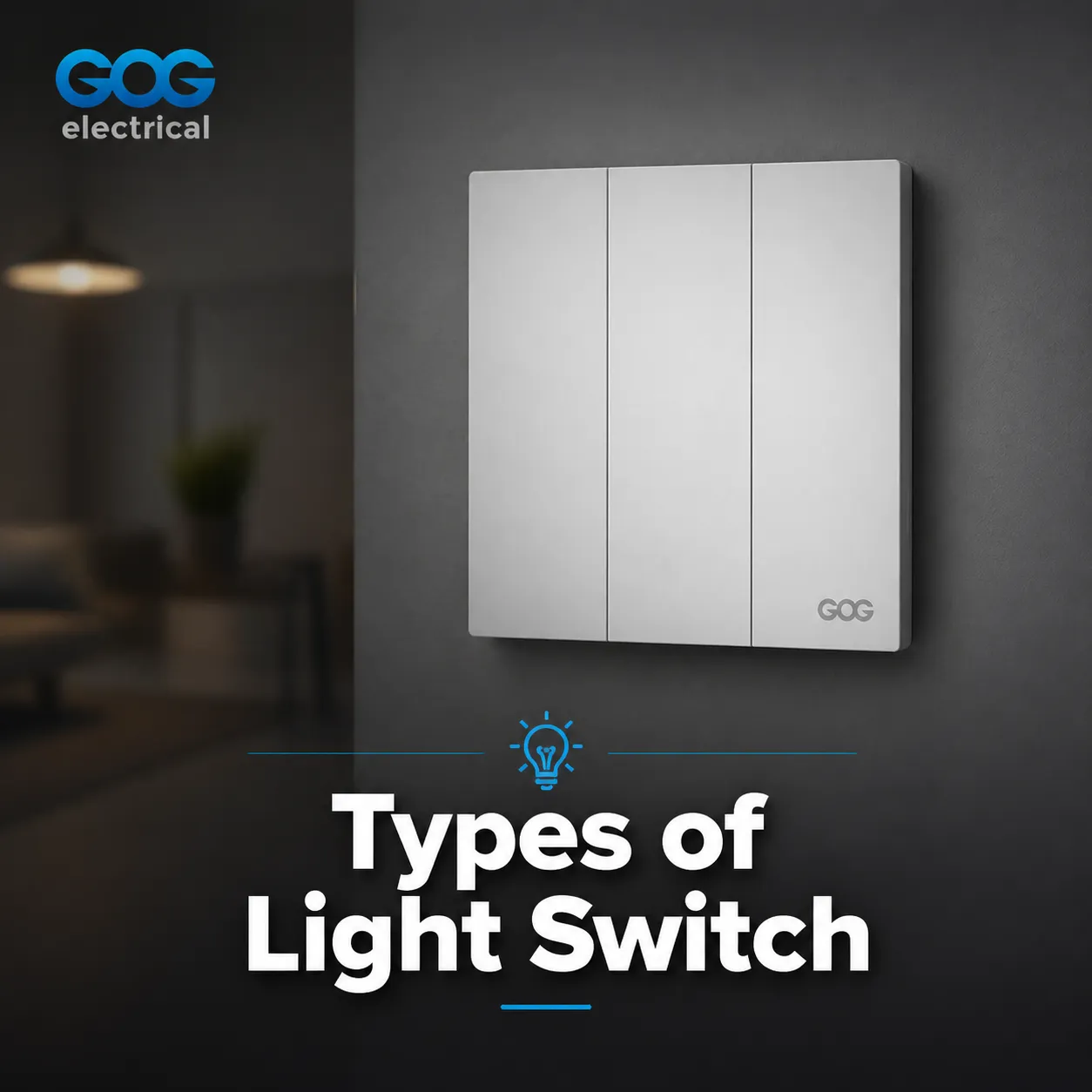
Light switches come in many forms today due to advances in the industry. Whether you are selecting a traditional (or antique) light switch to design your home with Old World charm, or going with the newest state-of-the-art wired lighting controls, having the information about all the various options of light switches can help you make better choices no matter if it is for your home decorating project or a business upgrade. Knowing what type of light switch will allow you to create beauty and function in the same space on a daily basis.
1. Toggle Switches
Toggle switches have been around for a very long time and are widely used as a type of light switch. Typically used on older-style light fixtures, toggles are typically operated by simply flipping the switch towards you for the on position, and away from you for the off position. For anyone with limited hand movement or difficulty flipping a toggle switch will be very challenging; however, toggles are a great value for your home since they are a timeless option for a classic look, and inexpensive. Toggle switches do have some limitations due to their lack of features such as dimming and automated light control versus some of the other modern styles of light switches on the market.
2. Rocker Switches
Rocker switches are flat surface mounted switches that tilt up and down instead of physically pivoting back and forth, thus making them easier to operate for those with limited hand dexterity. Rocker switches offer a very modern appearance, and due to their increased ease of use, they can be found in many different styles and colors. Rocker switches can be easily coordinated with your modern or contemporary style home or business and have become prevalent in today’s homes and businesses due to their usefulness and aesthetic properties.
3. Dimming Switches
Dimming switches provide you with the flexibility to adjust your lighting to create a mood or effect other than just on and off. When you need to have different levels of brightness in your home depending on what you are doing, you can use dimmers to control the level of light with either a knob or slider. Dimmers work best in spaces like living rooms and bedrooms, or dining areas that have lights you want flexibility on. The dimming capability of dimmers depends on the type of bulb(s) you are using because only particular bulbs, such as dimmable LEDs, can be used with a dimmer switch.
4. Smart Light Switches
Smart switches allow users to automate their home’s lighting, providing them with greater efficiency. Smart switches can be synced to your smartphone or smart assistant (such as Amazon Alexa or Google Assistant) so that you can turn your lights on remotely via a mobile app or by using voice commands. Smart switches are a great alternative to standard light switches, offering additional features such as scheduling lights to turn on or off at certain times, tracking energy consumption, and integrating with other smart devices in the house. Although smart switches may require an initial investment, over time you will see the savings from lower electric bills in addition to the convenience you receive from using a smart switch.
5. Motion Sensor Switches
Motion-activated switches conserve energy by using motion sensors to turn on lights whenever there is activity. As soon as motion is detected, the motion sensor switch turns on; and the light automatically turns off after there has been no activity for a specified amount of time. These types of switches work great in areas where the lights often are left turned on, including garages, hallways, and bathrooms. These switches are convenient on their own and can be easily integrated into your existing smart home system.
6. Three-Way and Four-Way Switches
Three-way and four-way switches are designed for controlling a single light fixture from multiple locations. These types of switches are often installed in long corridors, stairways, and large rooms. Despite having more intricate wiring, these types of light switches increase usability by helping to make it easier for users to navigate rooms that have many entrance ways.
7. Push Button Light Switch
Push button light switches have an old-school charm about them and make great additions to retro and vintage-style homes. These switches were often seen in older homes because they were fashioned with only a simple push button to toggle the light or lights on/off. Push button light switches have many newer type features such as dimmers, thus allowing the retro style to be updated with a more current style of control for the lighting used.
8. Touch Light Switch
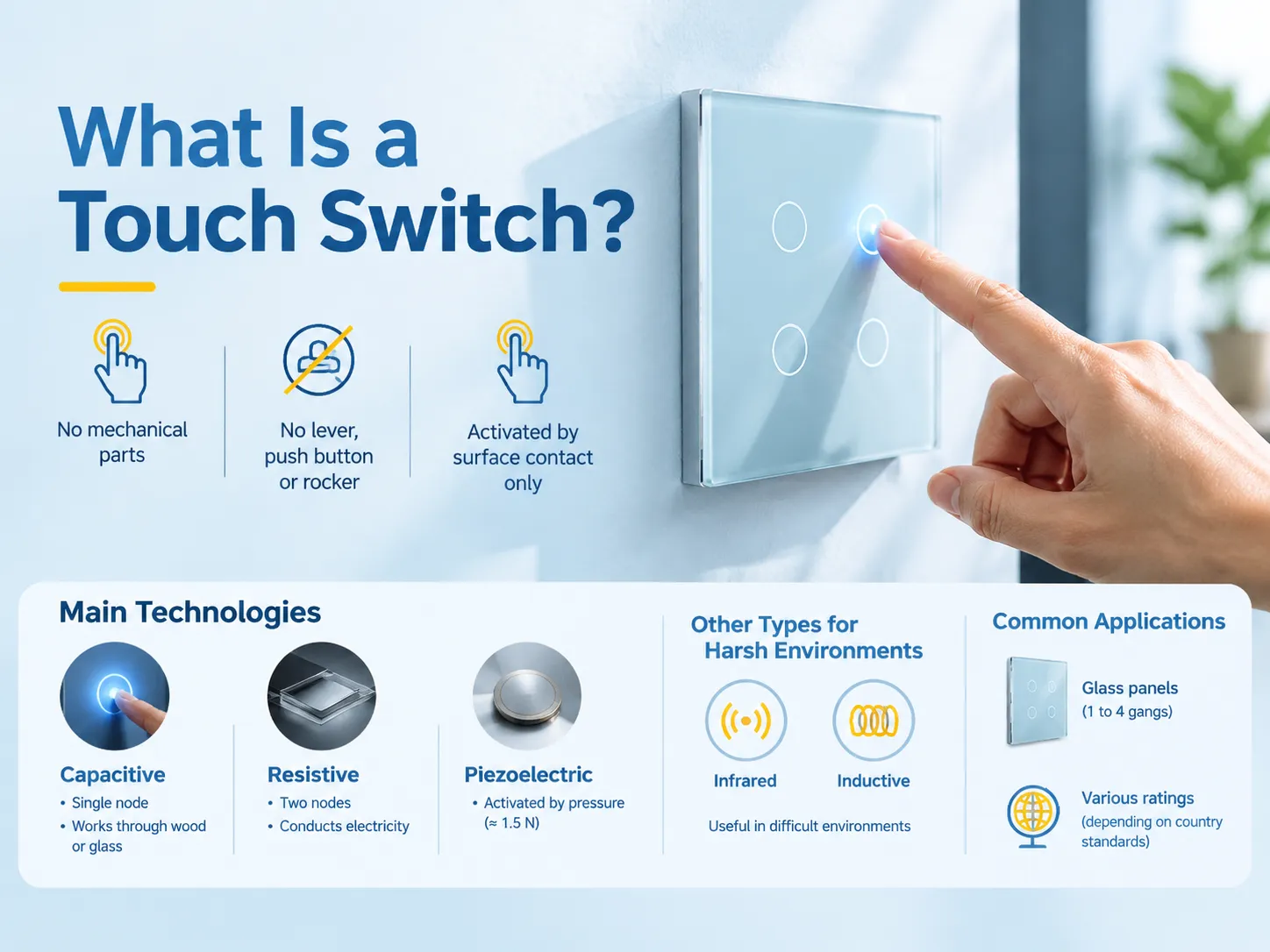
Touch Light Switches bring a modern look to the new age of home automation technology because they are operated with the touch of a single finger and, being touch activated, have great design appeal. They frequently have many new features like dimmers and are compatible with smart devices. Their sleek, modern design makes them a popular choice for individuals wanting to add visually appealing and functional lighting solutions for their homes.
Parts of a Light Switch
Being familiar with the parts of a light switch will assist you in determining the right switch for you. Here are the most significant components of a light switch:
- Actuator: The device used to operate the switch—toggle, rocker, push button, etc.
- Contacts: The parts of the switch which create or interrupt the flow of electricity to the circuit when the switch is turned on or off.
- Housing: The exterior covering which protects the inside working of the switch.
- Terminal Screws: The location where the switch connects to electrical wiring.
Advanced switches (smart switches) may contain many other materials that may be used for wireless communication and programmable features.
What to Evaluate When Selecting a Light Switch
When considering which light switch to purchase, evaluate the following considerations:
- Functionality: Determine if you need dimmable lights, automated lights, or if you only require light switches that operate as simple on/off switches.
- Compatibility: Make sure that your light switch is compatible with the existing wiring and lighting fixtures in your house.
- Design: Your new light switch should match the overall style of your room, whether it’s sleek and modern or traditional and vintage.
- Budget: Consider the complete cost of purchasing a light switch, including any accessories such as compatible light bulbs, installation costs, and smart home hub expenses.
FAQ Regarding Light Switch Styles
1. What Is the Ideal Switch Type for a Smart Home?
Smart Light Switches are the best option for a smart home because they connect easily with Wi-Fi networks and smart assistants, allowing you to control your lights through voice recognition and mobile apps.
2. Can I Install My Own Smart Light Switch?
If you have the right knowledge and skill set, you may be able to install your own smart switch; however, installing a smart switch often requires dealing with the internal wiring of your house. Hiring a licensed electrician to do this job is advised if you don’t know how to perform this type of work.
3. Which Type of Light Switch Is the Most Energy Efficient?
Dimmers and motion sensor switches are the most energy-efficient. Motion Sensor Switches automatically turn lights off when there’s no one in the room, while Dimmers reduce the amount of energy required by lowering the intensity of light output. Using these two switches and energy-efficient light bulbs such as LEDs will greatly increase the savings from energy use.
4. What Is the Difference Between a Three-Way and a Four-Way Switch?
A Three-Way Switch can control a fixture from two locations, whereas a Four-Way Switch can control the same fixture from an additional location. Three-Way and Four-Way switches are useful in areas with more than one way to enter a room.
5. Can You Use Dimmers with Any Bulb?
No; you can only use dimmers with dimmable bulbs; there are certain types of CFLs and LEDs that are dimmable. Using non-dimmable bulbs with a dimmer switch can cause flickering or damage to the bulb, so always refer to your bulb specifications.
6. Are There Eco-Friendly Light Switches?
Yes. Eco-Friendly Light Switches include Motion Sensor Switches, Dimmers, and Smart Light Switches. Using any of these types of switches will help conserve energy, particularly when used with LED or other energy-efficient light bulbs.
By carefully evaluating your needs, personal style, and available technology when selecting your light switch, you can find the best option to both functionally illuminate your room and look great while doing so.