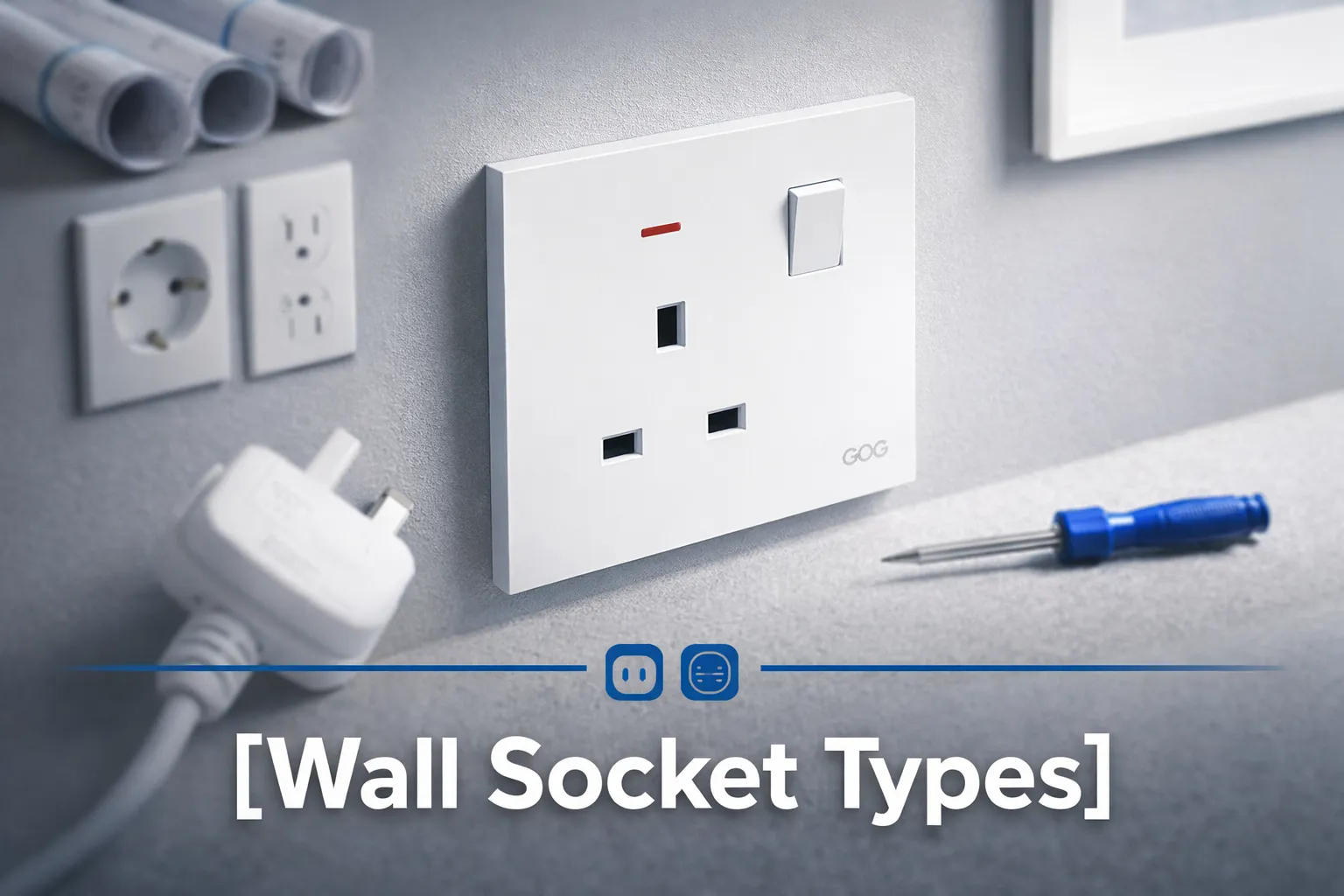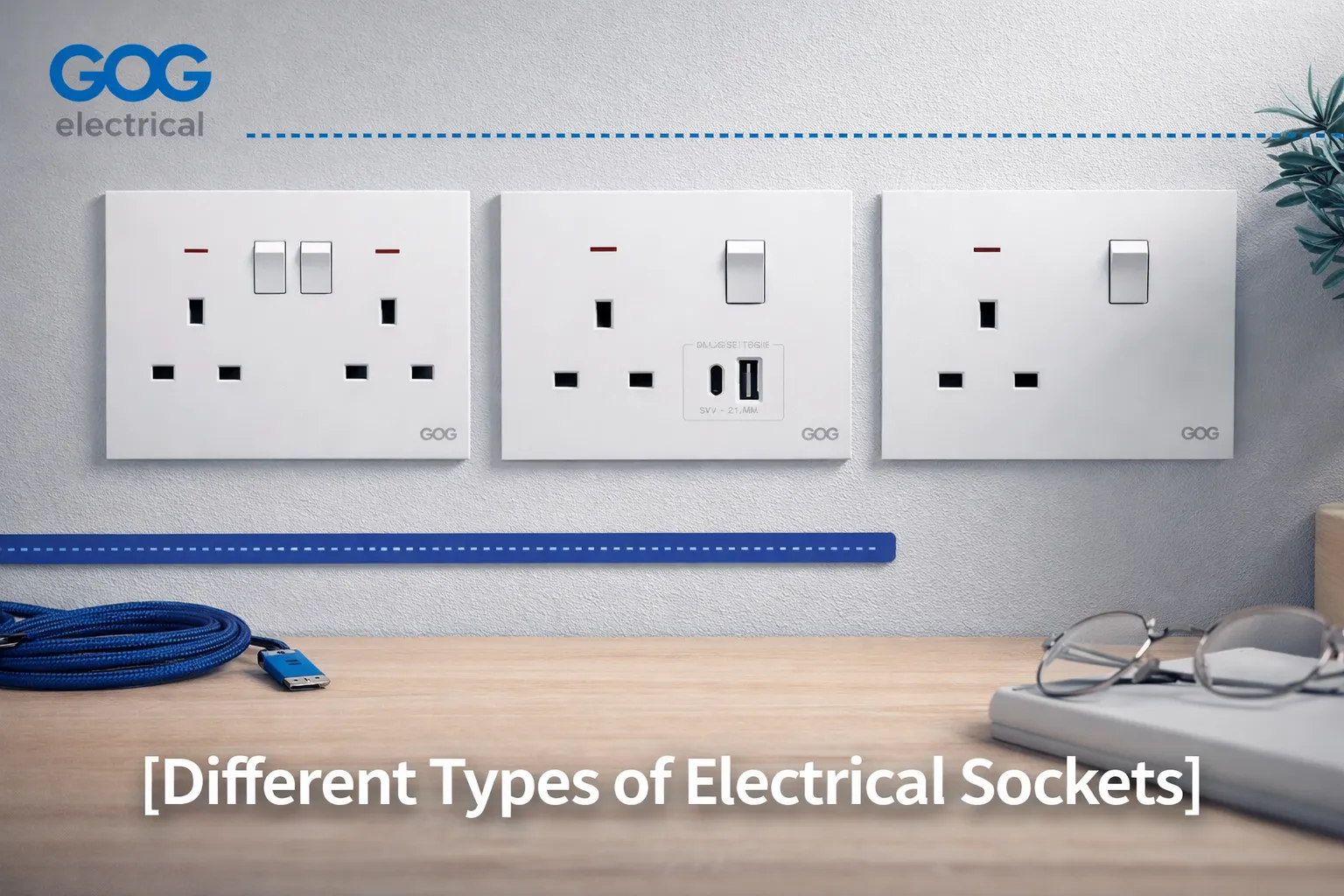

It isn’t unusual that kitchens need power supply in unexpected places. You may have set up the kitchen according to the walls, but find a coffee maker on the island, a blender where it was not expected, and an outlet that is underneath the toaster. A pop-up socket would help with the power supply trouble, however, it needs to be the correct design, to be installed the right way and comply with electrical codes. Here, we explain the importance of making these considerations before going ahead and drilling a hole for your pop-up socket.
The 20 amp pop-up outlet is the electrical outlet setup that utilizes springs to remain on the counter and becomes erect when pushed. It should be capable of holding the capacity of 20 amps when in use; it has to be GFCI protected against any water-related accidents; is to be tamper-resistant; must be connected with the 20 amp small appliances branch circuit; and include 12 AWG copper wire. The prices of the item may be approximately from 140 to 260 dollars.
Why a pop-up outlet earns its place on a counter
Two reasons, and none of them relate to looks. First of all, it places the socket where the equipment is instead of where there is a wall, which is what makes the island or the peninsula work without having a long cable on the counter. Second, it is hidden away when you are not using it, so you have a flat and easy-to-wipe surface instead of having a bunch of sockets above the countertop collecting flour and fat.
Moreover, the other socket option, that is placed in the side of the island cabinet below the countertop level, is not acceptable in most modern installations and is annoying to use on a daily basis — you have to bend down and reach out backward into the counter to connect a kettle.

What the code allows, and what it quietly rules out
The National Electrical Code lays down regulations concerning receptacles in countertops, leaving room for misunderstanding among many.
- Regarding receptacles installed in countertops, these must be part of a legally installed countertop assembly. A regular wall socket will not do, even if it is put into a hole measuring 4 inches in diameter. The assembly must be certified for such use.
- When it comes to islands and peninsulas, receptacles should be situated in or above the countertop, as opposed to being placed lower than 20 inches in height. For instance, mounting them in the side of the cabinetry beneath the countertop does not comply with the regulation.
- Face-up receptacles are allowed only if the device in question has been certified for such use. The safest solution is to invest in the pop-up or flip-up devices which place the socket at an angle when raised.
- Before draining the matter of calculating receptacles, it’s worth mentioning that counting is done based on the surface area of the countertop – the old requirement was about positioning so that no point would be more than 24 inches away from the socket. The code requirements have changed due to the increased importance of surface area boom.
In fact, most of the value lies in the layout. Placing sockets in such a way that they will be situated right where the appliance is going to be positioned is just as important as anything mentioned above. There is a good overview of where plugs and sockets belong in a kitchen if you are still at the planning stage — it is a shorter read than the code and covers the same ground.
The 20 amp part: circuit, cable and why it matters
Pop-up assemblies are available in both 15 A and 20 A models, with kitchens typically requiring the 20 A version. The 20 A is not necessary because kettles specifically require that amount of power, but because kitchen receptacles need to be supplied with energy from small-appliance branch circuit, which requires 20 A as a minimum.
The practical implications of this fact are that the wiring used is 12 AWG copper instead of 14 AWG, which makes the wiring less flexible and harder to complete. The circuit is capable of carrying 20 A continuously, which makes it possible to run high current loads on this circuit without problems. And if you are trying to work out what else can share the circuit, this piece on how many outlets a 20 amp circuit can serve puts realistic numbers on it.
One thing to keep in mind: do not assign a pop-up to a lighting circuit or a circuit meant for general use in its proximity. Kitchen small-appliance circuits are designed specifically to avoid a situation of a hair dryer in a bathroom or a lamp in a corridor that can interrupt a circuit to which a fridge is connected.
GFCI and tamper resistance are not optional
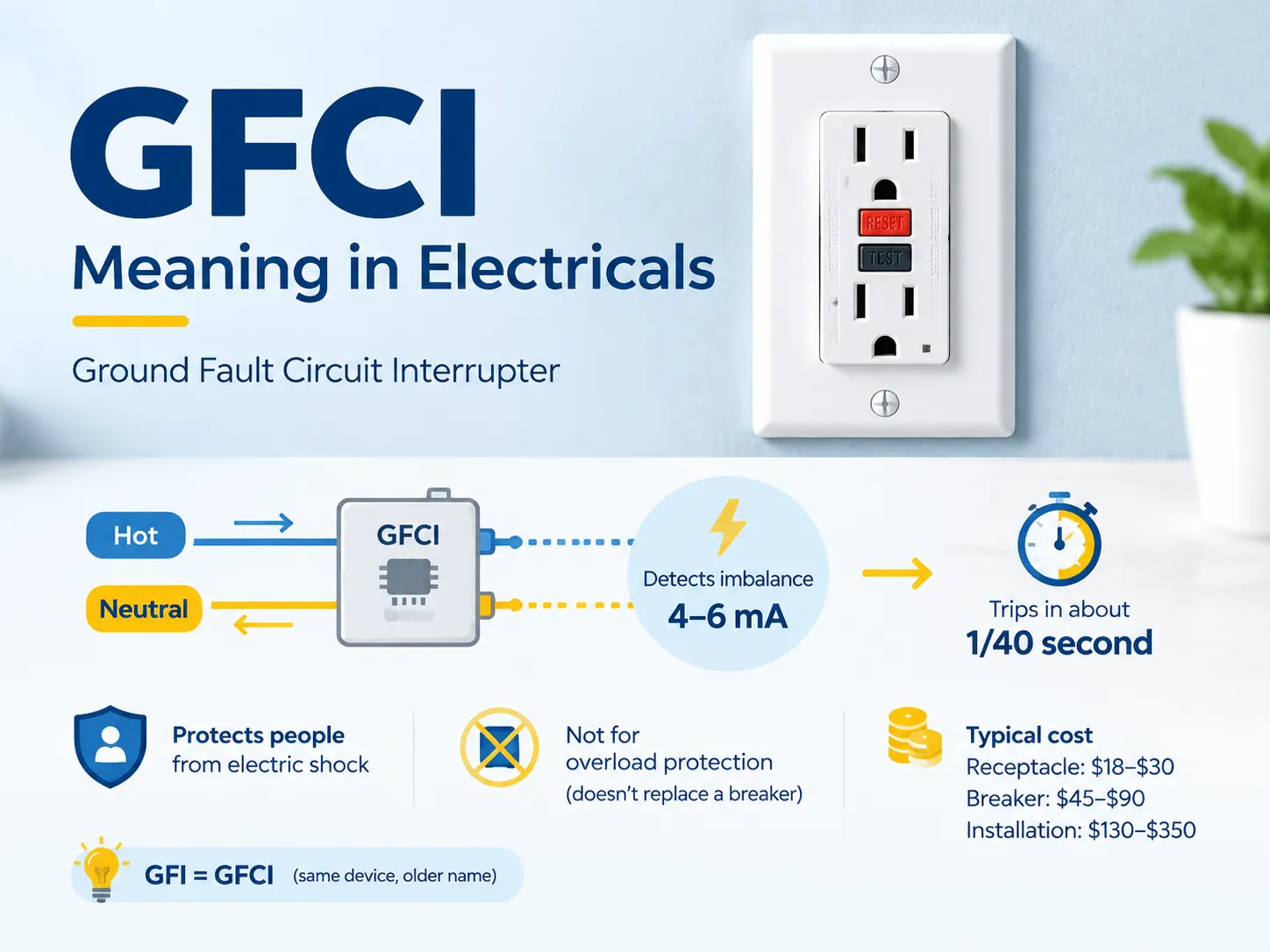
Every receptacle that supplies power to a kitchen countertop in a residence, operating at 125 to 250 volts must be protected by Class A Ground Fault Circuit Interrupter (GFCI). This requirement is not an option, which applies to receptacles that are located either on the wall or in the countertop. Ground Fault Circuit Interrupter devices are designed to switch off when there is a leakage current to the ground of about 6 milliamps, which is considered the difference between electrical shock and an accident.
In modern pop-ups, GFCI is built into the system. This is actually comfortable, though more expensive than dealing with the installation of GFCI at the breaker. GFCI protection can be installed at the breaker, which can be a sound idea if the whole circuit is built again from scratch. If the distinction between the two approaches is fuzzy, this comparison of GFCI and regular outlets explains where the protection actually sits in each case.
Tamper-proof shutters are the second key requirement to highlight. Every outlet within a home must contain a tamper-proof shutter, which is constructed as a part of the outlet and not as an accessory. Make sure to confirm that this is the case as product images may not make it clear.

Which form factors actually fit a kitchen
In the market, there exists four key designs, none of which can replace another.
- Countertop pop-up: embedded into the work surface and elevated with the assistance of a spring or motor. The best choice for islands and peninsulas.
- Flip-up/pop-up tower: a slender vertical structure that rotates up and presents sockets at an angle. Useful when the countertop is not thick or the cabinets beneath are not deep.
- Recessed floor socket: same principle as in case of the floor. Ideal for open-plan kitchens where the source of electricity is below the island.
- Countertop grommet with integrated power: a low-profile model. It is not very expensive but also has lesser capacity suitable for frequent stuffing.
For kitchen purposes countertop pop-up will probably prove to be the most optimal solution; if the cable path passes through a slab, then recessed floor type is the right one. However, no matter which type you select, look at the amperage first of all, since many cheap grommet models are rated for 10 A or 13 A, which does not comply with kitchen circuits rated for 20 A.
Which pop-up suits a kitchen counter
Two things separate a kitchen-worthy pop-up from a general-purpose one: the 20 A rating with built-in GFCI, and a sealed body that survives spills and wiping down. A dual-module recessed unit that gives you two socket positions and takes a proper gasket is the version that handles a working kitchen rather than an occasional one — the A66-1 dual module recessed pop-up outlet is the kind of assembly I mean.The dual module is more significant than appears: it’s regular for two devices to be on one pop-up in a kitchen, and you will be back to the extension lead using a single socket one in no time after a month.
Measure three dimensions before buying. First, measure the cut-out diameter of the device as there is no interchangeability between a hole of 3.75 inches and that of 4 inches once the worktop has been drilled. Second, take into account the depth of the body of the device under the level of the surface because a high construction won’t fit above the drawers. Lastly, there is the height of the device which, when raised, should not block the wall cabinets.
Materials, colours and finishes
The part that is seen visibly is called lid and it is subject to more wear than any other kind of fittings that can be found in the kitchen. The generally used material is stainless steel, and for most houses, it involves 304 grades while for salt-based environments or for usage with some aggressive cleaning products, 316 grade steel is used. Brushed brass and matte black can also be seen in many kitchens and are used often, but they can wear off in places of maximum contact. Aluminium gives an attractive finish but is much easier damaged. During manufacture of caps of lower quality, cheaper materials such as poly-carbonates or nylon are used, having decent performance, but wearing out sooner compared to more expensive materials.
Two things to remember: first, look for strainer or sealer that seals properly because if you have a pop-up that permits the liquid to get into the cupboard below, it will be even worse than not having a pop-up. Second piece of advice is to match lid colors with countertop material, as it looks better, instead of matching them with closet handles.
Installation and maintenance notes
Using a little forethought, you’re good to go.
- Make sure you cut out before doing worktop templating. Cutting a hole on-site leads to chipped edges in the quartz.
- Make sure there is room below. Many 20-amp power supplies need at least 8.5 inches of depth beneath the product, which prevents the use of the shallow drawer directly below.
- Make sure to seal around the edge and install the gasket. Use silicone to seal around the edge, not around the mechanism.
- Keep the cable routing away from the sink and dishwasher supply wires and leave a loop in the cable so that the unit can be lifted from underneath for inspection.
- Make sure to test the GFCI after installation and label the circuit box. If the pop up is on a dedicated circuit, this will make things easier for whoever has to reset it after.
Maintenance is very minimal: just wipe the cover, remove anything from the unit’s track and check the seal and GFCI test button yearly. The main failure mode will be that the mechanism will become sticky due to sugar or grease, and this is something that is very cheap and easy to prevent but can cause headaches later on.
What they cost
Rough figures from the budget for one unit:
20 A pop-up with GFCI built-in box, stainless lid is likely between $140 and $260 depending on the lid finish and whether it has one or two modules. $40 to $90 for a simple pop-up with one receptacle and no GFCI (this is ok for a home office application, not for a kitchen countertop). GFCI receptacle or use a GFCI breaker that is installed separately: about $22 to $28 for the receptacle, $40 to $80 for a 20 A breaker. Labor: if existing circuit is present, the electrician will spend about an hour or two on the job; otherwise, the job will take much longer in case the new circuit has to be installed through a finished kitchen.
The pop-up itself is not usually the most expensive component of the installation. The main cost comes from the running cable.
Frequently asked questions
Can I install a pop-up outlet in a kitchen island?
Certainly, that is generally the optimal option there. The outlet should be installed on or above the counter and not higher than 20 inches above it, thus a flush pop-up or flip-up installation meets the requirement where an outlet found in the cabinet does not. It must also be GFCI protected and tamper-proof.
Does a pop-up outlet need to be GFCI?
Yes, if the kitchen countertop is located in a residence, all 125 to 250 volt outlets must be Class A GFCI protected. Most 20 A pop-up devices contain a GFCI in the unit, otherwise, the protection comes from a GFCI breaker.
Is a 15 amp pop-up outlet enough for a kitchen?
It is seldom a good option. Kitchen countertop outlets are usually connected to 20 A small appliance branch circuits, which means using a 15 A device on a 20 A circuit creates a restriction and triggers a code question. Unless you want to have complications, go for 20 A.
How much clearance is needed under a countertop pop-up?
In the case of a dual-module assembly with amperage ratings of 20 A, the approximate free depth of 8.5 inches will be fairly standard. The cut-outs are in the region of 3.75 inches to 4 inches depending on the assembly model. Be sure to double-check the assemblies against your cabinet design before proceeding with the fabrication of the worktop, as you will not be able to make changes later.
Can a pop-up outlet get wet?
It will be splattered, and it is important that the assembly is sealed against this. You will need to check the rating of the IP housing and use the right flange gasket; position the device out of the spray area of the tap, and do not leave it open in a pool of water running under the sink. Properly sealed and covered, the device is made for wet conditions, and its proper functioning depends on that.
References
- NFPA 70 — National Electrical Code, Article 210 (branch circuits) and Article 406 (receptacles)
- Electrical Safety Foundation International — GFCI protection and kitchen receptacle safety
- UL Solutions — receptacle and countertop assembly listings and standards
- Legrand — countertop, floor and under-cabinet power solutions
- Hubbell — SystemOne countertop and floor box power solutions
Conclusion
Connecting a 20-amp pop-up outlet is one of the unique features in improving kitchen functionalities without compromising on aesthetics. The criteria for its installation and operating characteristics have been defined. They are 20A rating, GFCI protection, enclosure protection features, construction grade, and the fact that the unit will be installed on the small appliances branch circuit with the use of 12 AWG wire. When all stipulated above is taken into account, the only litigious point remaining is the size of the cut-out and finishing touches of the model.
If the selection constitutes a part of a larger project, it is necessary to know everything about ratings and finishes before the final choice of the required size. This is exactly the purpose of our electrical devices catalog containing information on the pop-up units and recessed electrical sockets along with the necessary data about their dimensions.