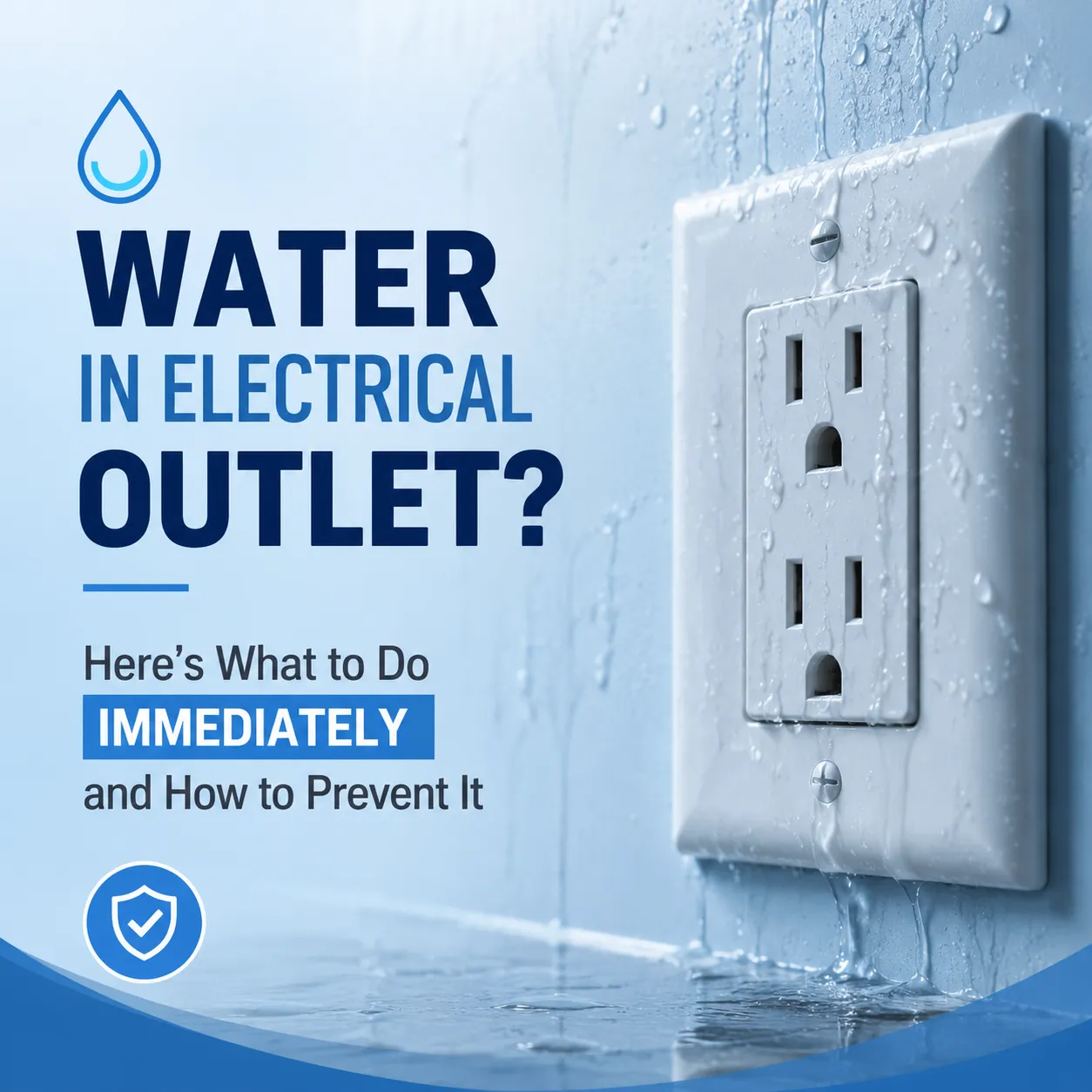
You can lose control in an instant with water and electricity; whether it be a cold drink spilling on a kitchen backsplash, a window left “open” during a summer storm causing rain to soak the wall behind the open window, or condensation rolling from a bathroom outlet after taking a shower; where water and electricity mix, there could be a fire or shock or damage from the wall or ceiling to the outside of your home. The proper response to a water and electrical outlet meeting during the first three minutes after water has entered an outlet will allow you to keep the environment safe, instead of panicking when you realize what is happening and how bad it could be.
What Happens When Water Enters an Outlet
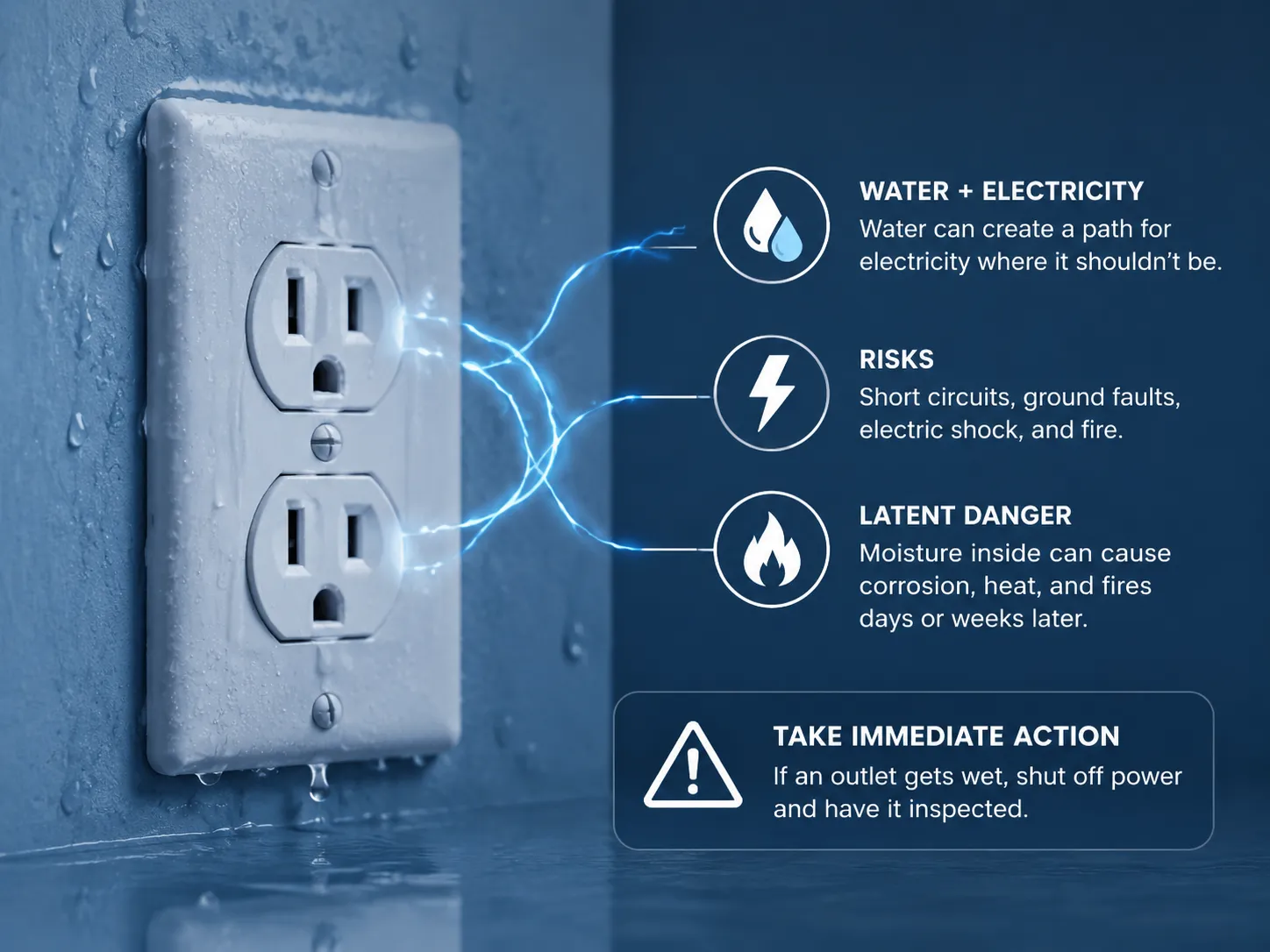
Water can create an electrical path between the hot and neutral pieces of an electrical outlet causing there to be a flow of electricity where there shouldn’t be. This may trip the breaker from a short circuit, but it can also create a slow, potentially dangerous condition known as a “ground fault.” This can occur if there is a low current flowing through the water to the grounded metal box or the screw that holds the faceplate, thus energizing surfaces that may be in contact with a person. Even if the breaker trips immediately, any residual moisture inside the outlet can create corrosion and build resistance, which produces heat; this combination of heat and moisture may create a fire days or even weeks after the water incident. The Electrical Safety Foundation International (ESFI) identifies water‑damaged wiring devices as a preventable cause of residential electrical fires and recommends immediate action whenever an outlet is exposed to water.
The wetness is determined by how much water has gotten into the equipment and where it went. Water droplets on an equipment face plate will usually dry with no ill effects, as those have not reached the electronic contacts. Water can cause shorts when travelling through electronics and hitting the metal electronic contacts. Also, Electronics are susceptible to latent faults, which occur when water enters from the back of the electrical enclosure either from a leaking wall or drips from above and saturates the wiring and damages the insulation but exhibit no outward signs of failure until it finally ignites.
What to Do the Moment You Discover Water in an Outlet
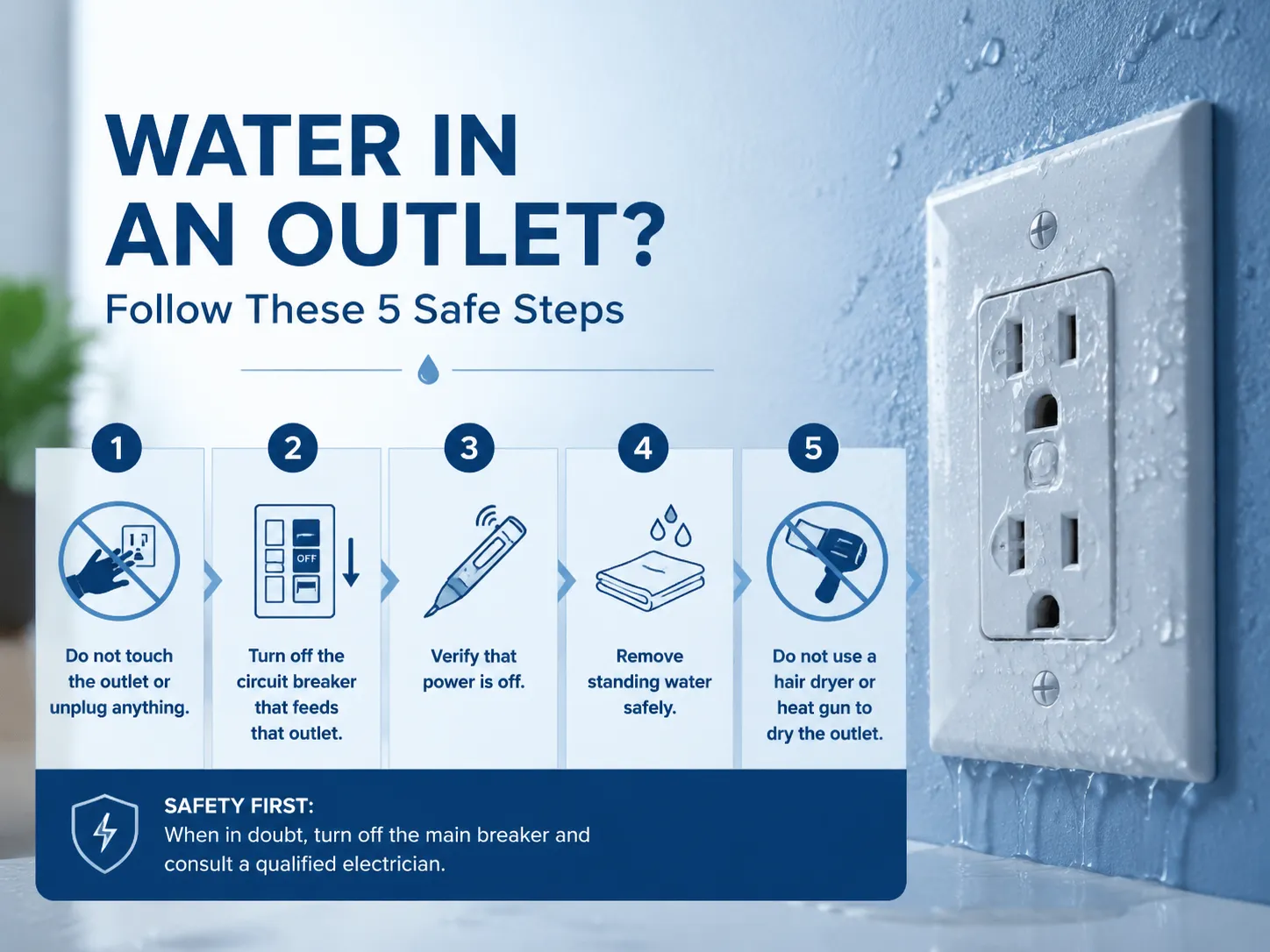
- Do not touch the outlet or attempt to unplug anything. Due to your body being conductive, if water has energised an electrical faceplate or plug body you could receive an electric shock from those devices. To safely approach the outlet if that occurs, stand on a non-conductive surface that is dry, and you should also wear rubber-soled footwear.
- Turn off the circuit breaker that feeds that outlet. At the main panel, turn off the appropriate circuit breaker to an outlet if you do not know which one services it; if you still do not know the circuit breaker panel is located in a wet area, then turn off the main circuit breaker to disconnect the entire house from the mains supply. This is the most important thing to do. Any wet electrical equipment must not be touched until all power has been cut off.
- Verify that power is off. If it is possible to utilize a noncontact voltage tester at the electrical outlet without making contact with the front face plate of the electrical outlet, do so. If you hear or feel a beep or light up on your non‐contact voltage tester at the outlet, there is still electrical energy in the circuit; therefore, return to the breaker panel, try another breaker, and/or turn off the main break.
- Remove standing water safely. After confirming the power has been turned off, use a paper towel or dry rag to wipe down the faceplate and the wall around it where there is visible water, but do not spray water or use any wet cloths.
- Do not use a hair dryer or heat gun to dry the outlet. The plastic case of the outlet could be melted due to heat, and the wire’s insulation could also be damaged because of heat and moisture. Turn off the breaker and leave the outlet to air dry for 24 – 48 hours or manually disassemble the outlet so it can dry and be inspected.
How to Inspect and Dry an Outlet After Water Exposure
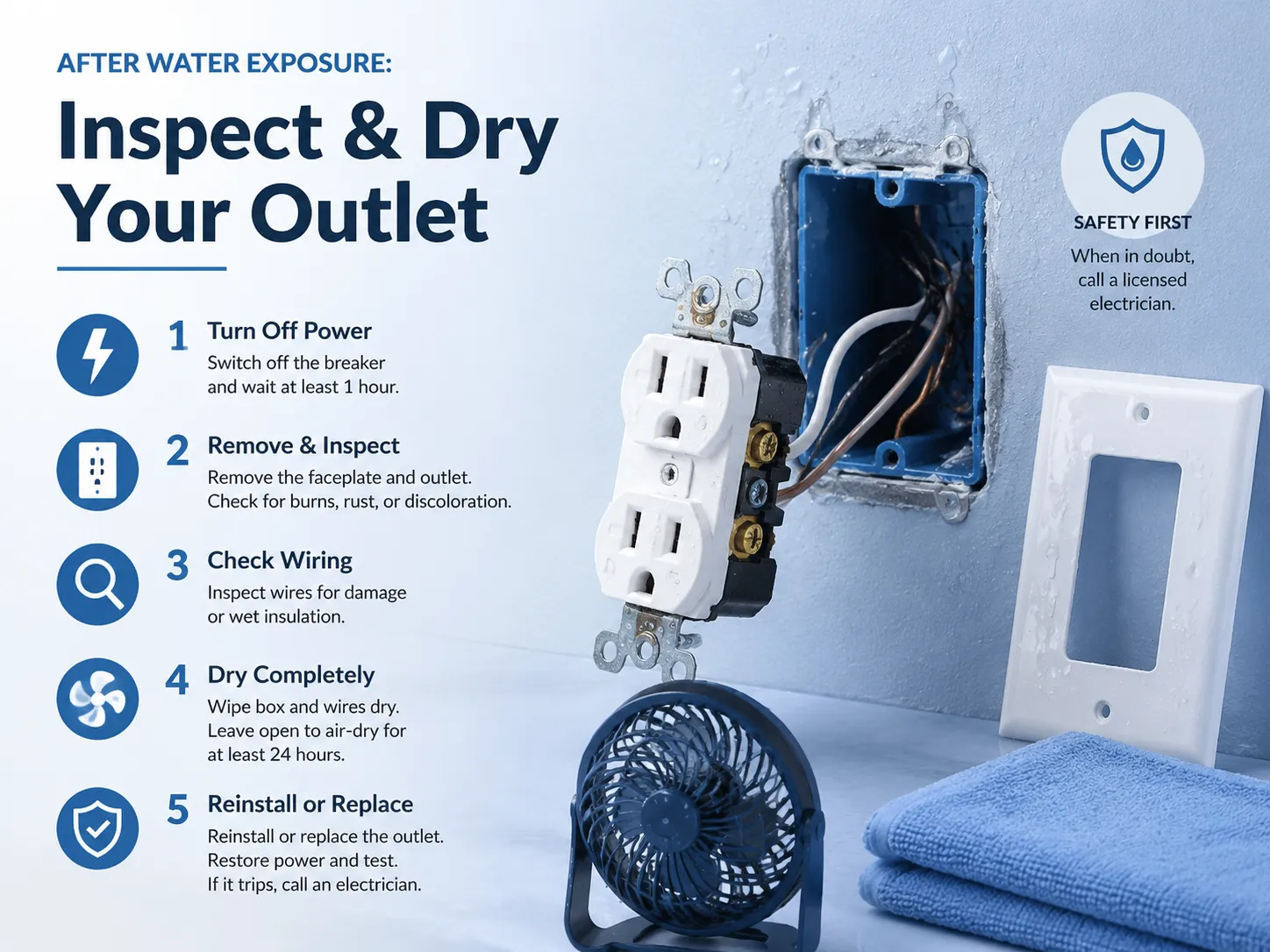
It is essential that you allow the breaker to be off for at least one hour to allow any charge to dissipate and allow for the immediate water to either drain or evaporate before attempting to inspect the outlet. A homeowner can inspect an outlet by themselves provided they feel comfortable working inside an electrical box however if there are any reservations, it is best to hire a licensed electrician to perform this task instead.
- Remove the faceplate and the outlet from the wall box. Turn the breaker off, remove the faceplate (unscrew) and then remove the outlet (unscrew) from the box gently (do not disconnect the wires) with your arrangement to keep the wires so that they are away from the box and wet/damp surfaces.
- Look for signs of damage. Inspect the outlet for burned areas, melted items, or discoloration. Look at the brass terminals for rust stains and/or damage. If you see any of these items, then you should replace the outlet — you should not try drying out or reusing the outlet. The cost of replacing the outlet is small compared to the cost of a fire.
- Check the wiring inside the box. If the water penetrated through the back, your wires insulation could be wet or have become damaged due to exposure. Inspect the insulation (the outer covering of a wire)(this is) for integrity; if the insulation appears to be cracked, dry rotted, or if your older cable appears to have a soggy paper wrapper, then contact an electrician. The entire length of wiring may need to be replaced.
- Dry the box and the wiring completely. A clean and dry piece of cloth can be used to wipe down both the inside of the electrical box, as well as the wires inside. Leave the electrical box and outlet hanging uncapped for a minimum of 24 hours with the circuit breaker in the OFF position. If desired, a small fan blowing across the box’s opening can provide additional air flow (to help speed up the drying process), but do not use any source of heat.
- Re‑install or replace the outlet. Once everything has dried out inside the box, you can connect back the outlet to the box’s wires and re-secure the outlet to the box with screws, and then add the new faceplate. If you restore power, you can test the outlet with a plug-in appliance. If you connect an appliance and the breaker trips immediately, this means there is still moisture or damage in the box. Turn off the breaker and call an electrician for further assistance.
If any part of this process is uncomfortable, or if the water damage extends into the wall cavity, a licensed electrician should perform the work. Our guide on how to replace a wall socket covers the safe replacement procedure for an outlet that has been damaged.
Can Water in an Outlet Start a Fire?
Simply put, when water connects two wires together to short out an electrical circuit, there is a possibility of generating a significant amount of heat at the site of that short circuit; that heat (either instantaneously, due to a short-circuit) or over time (through the continuous accumulation of heat generated by the electrical resistance created by corrosion), can be sufficient enough to melt plastics used to reinforce outlet bodies or cause the insulation surrounding wiring to ignite or nearby combustibles within walls. Even after the circuit breaker potentially trips, if there was an arc flash at the time of the short circuit, that arc flash may have generated enough heat to char some materials around where the arc flash occurred. On a slower basis, if water does not cause a short circuit, it can begin to corrode brass terminals and screws.
This corrosion increases resistance, and as such, as time goes on (i.e., days or weeks later), as the additional resistance continues to build as a result of that corrosion; the resistance will continue to create heat, even if the outlet was dried thoroughly after being exposed to water and now may not be considered a fire hazard until long after the event. According to statistics published by the National Fire Protection Association (NFPA), fire is one cause of structural damage caused by electrical distribution and lighting equipment, and damaged or wet electrical devices can make up a significant portion of these statistics.
Will an Outlet Work After Getting Wet?
A qualified individual can determine that a wet outlet is safe for use if the outlet has been completely dried and inspected; however, the outlet should not have been exposed to any kind of corrosion, scorching or damage to the insulation material. If water has been absorbed through flooding or by burst piping into any standard indoor outlet, the outlet must be replaced not dried and reused. Exposure of water to the internal components (especially the brass contacts) for long enough to begin the corrosion process will have occurred. In addition, moisture can be absorbed into the plastic body of the outlet. As the body heats up under load, the moisture will slowly be released as steam. Given the minimal cost of a new outlet, high quality replacement is the safer option than drying out the outlet.
How to Prevent Water from Entering an Outlet
It is easier and less costly to stop water from getting into an outlet than it is to fix the damage once it has occurred. Measures taken can vary by location.
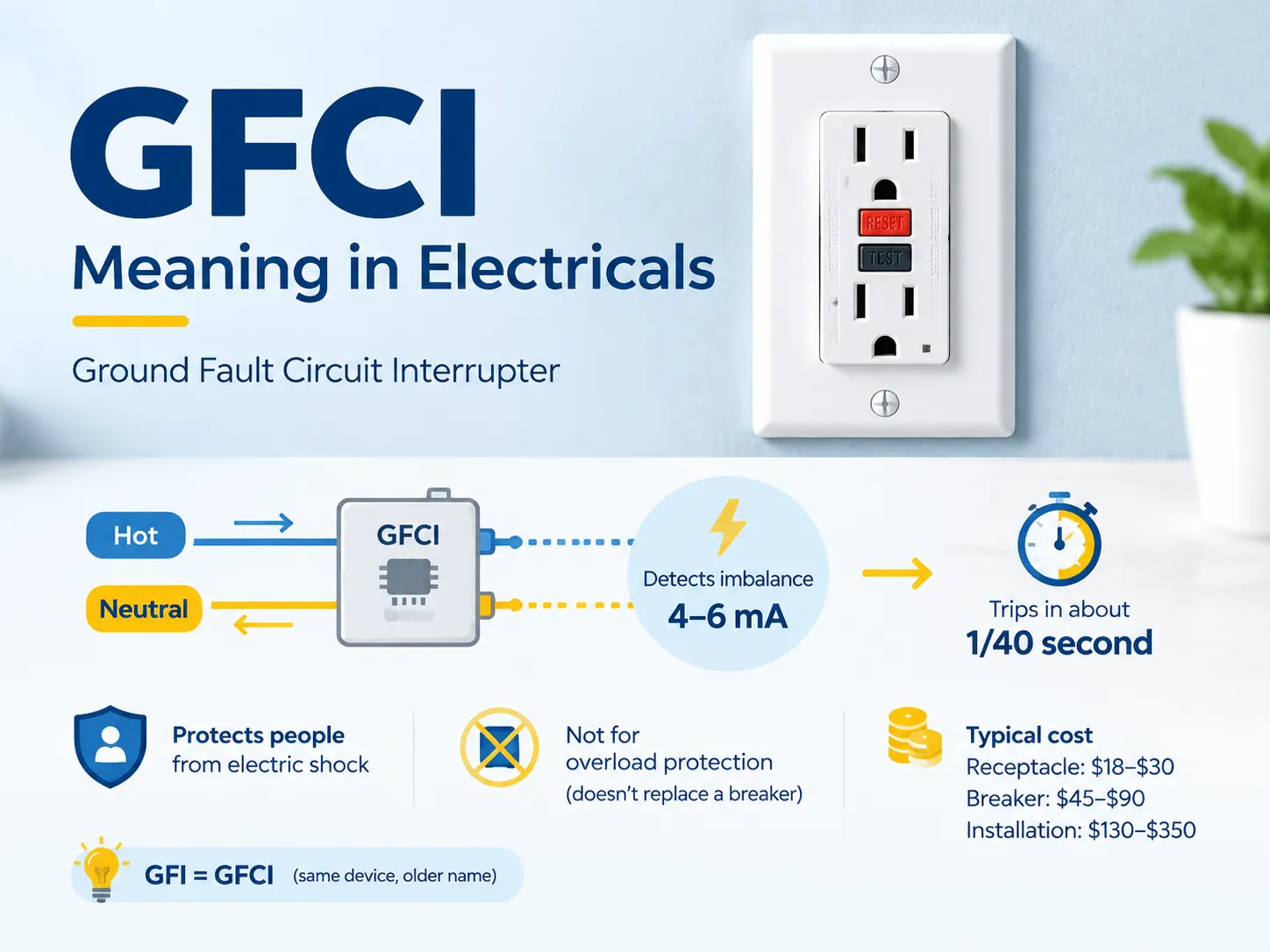
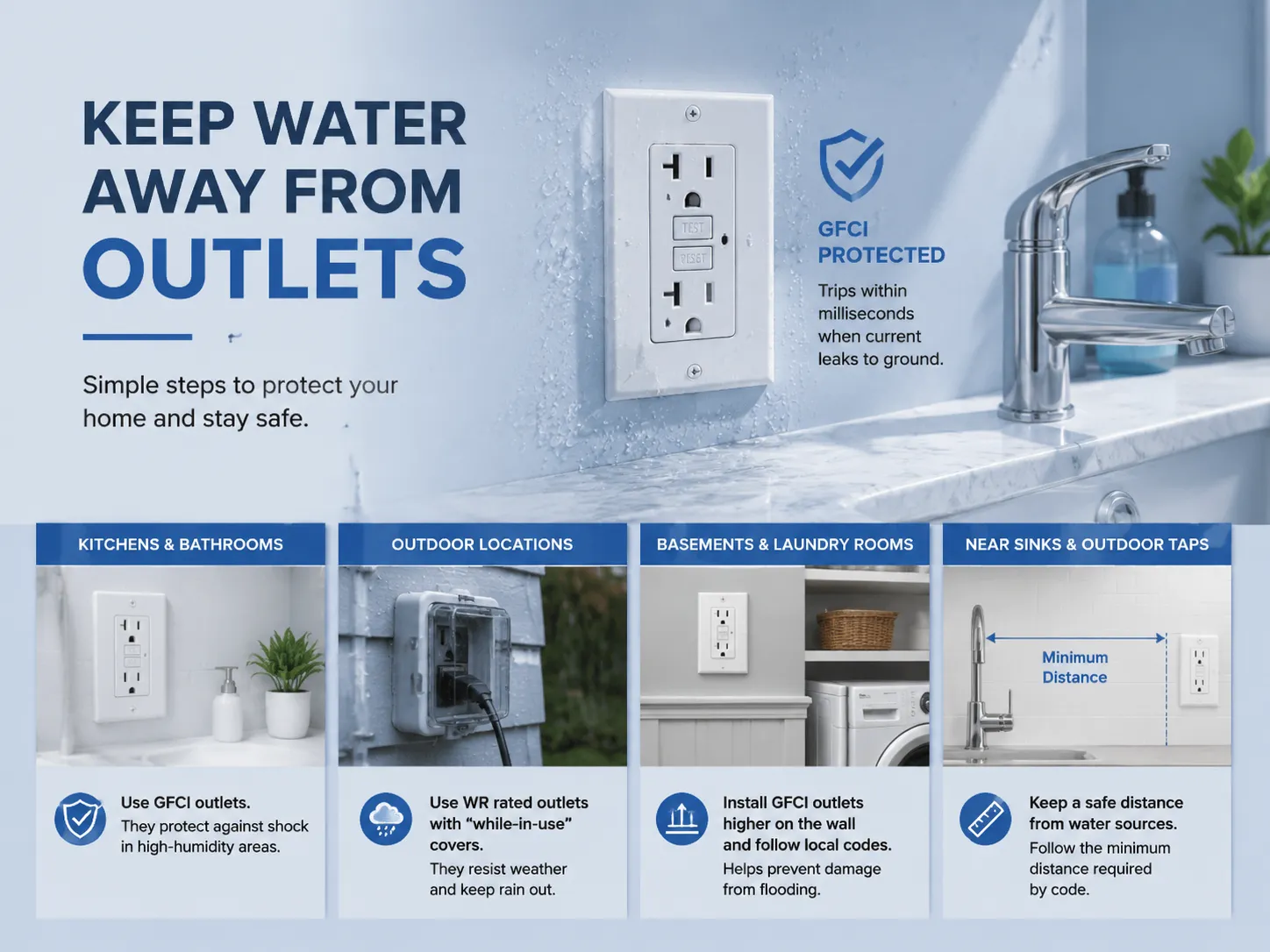
- Kitchens and bathrooms: Use outlets that have built-in GFCI (Ground Fault Circuit Interrupter) protection and will trip within milliseconds when current leaks to ground due to water. The National Electrical Code requires GFCI outlets to be installed in specific locations. The visible parts of GFCI outlets are TEST and RESET buttons. GOG Electric’s GFCI receptacles can be used in areas of high humidity, such as kitchens and bathrooms, due to their decorative design as well as their use of tamper-proof shutters and corrosion resistant terminals that need to be used in a bathroom or kitchen.
- Outdoor locations: Outlets for outside use should be WR rated and have a WR symbol. WR rated outlets have corrosion resistant internal components and UV stabilized plastic bodies and they are designed to withstand rain, snow and temperature variations. Outdoor outlets also need to have a weatherproof “while in use” cover that seals around an outlet when a cord is plugged in to prevent rain from entering the outlet even when the equipment is plugged into the outlet.
- Basements and laundry rooms: GFCI protected outlets must be installed in accordance with local regulations and at a minimum distance above ground level so they are not likely to be submerged or flooded. In addition, if the area is at risk of flooding (such as a basement with a history of flooding events), you may want to install your outlets higher on the wall, as well as with a weatherproof cover should they get splashed.
- Near sinks and outdoor taps: Keep a safe distance between the water source and the outlet, as building codes set the minimum distance for outlets that are near sinks, tubs, and outdoor water fixtures. These distances are put in place for a reason, so follow them when renovating.
Frequently Asked Questions
What happens if a little water gets in an electrical outlet?
Typically, if water droplets land on the face plate of an electrical receptacle (and the receptacle is not being used), they will dry up without any problems. The exception is if the water gets inside the receptacle openings and touches the energized parts of the device will cause a short circuit and could trip a breaker and possibly damage the outlet. If water has gotten inside an outlet, turn off power at the breaker and allow the outlet to fully dry out before turning power back on to it.
Can a fire start if an outlet gets wet?
A wet electrical outlet can create an arc, which can ignite the plastic housing or any other materials close to it. Even if a fire isn’t started immediately, corrosion from moisture can create a high-resistance connection that produces heat over a long period and could lead to a fire several days or weeks later. Outlets that have been exposed to water should be inspected for damage and replaced if necessary.
Will an outlet work after getting wet?
If you spill water on your electrical outlet, even after letting it dry, doesn’t mean your outlet is safe indefinitely. It’s possible to have arcing caused by corroded connections inside the outlet or short circuits in other parts of your home due to wet substances. If your outlet was splashed with very little water and dried quickly with the power turned off, you can expect your outlet to be safe most of the time. However, if floodwater or moisture pools were present around your outlet, your outlet is probably not secure enough to be used again without replacement.
What to do if you get water in a plug socket?
Immediately switch off the circuit breaker. Touching a plug or socket in an electrical circuit is dangerous. Use a non-contact voltage tester to check if there is no longer any voltage present. If there is standing water on the face plate of the outlet, remove it as soon as possible, and dry the outlet thoroughly for at least 24 hours prior to restoring power. Replace the outlet if it has any signs of charring or corrosion (example: burned or melted areas) or if the breaker trips again after restoring power; otherwise call an electrician.
Is it safe to use a wet outlet after it dries?
An outlet that has been completely dried, has passed a visual check for any moisture, made sure there is no corrosion, burning or physical damage, is then considered safe to use. If your outlet remains drenched for a long time, it’s best to replace it because even though the exterior appears intact, there may be hidden corrosion on the interior.
What type of outlet is best for wet locations?
GFCI outlets with a weather resistant (WR) designation are the safest option for a variety of areas including: bathrooms, kitchens, and outdoors. If there is a current leak to ground through water, a GFCI provides instantaneous shutoff of power (within milliseconds). Designed for these types of spaces, GOG Electric manufactures GFCI and WR rated receptacles.
References
- Electrical Safety Foundation International (ESFI) — Water and Electrical Safety — Guidance on preventing and responding to water‑related electrical hazards.
- National Fire Protection Association (NFPA) — Electrical Fire Causes and Prevention — Data and guidance on electrical fires in homes.
- This Old House — How to Deal with a Wet Electrical Outlet — Practical homeowner guidance on safe response and repair.
- Family Handyman — What to Do If an Outlet Gets Wet — Step‑by‑step guidance for homeowners.
Water in an electrical outlet is a hazard that demands immediate, correct action — turn off the power, dry the outlet, and inspect for damage before restoring the circuit. A GFCI‑protected, weather‑resistant outlet installed in the right location is the best defence against the inevitable splash, drip, or condensation that every home experiences. GOG Electric manufactures outlets that meet these safety requirements, because the socket on the wall should protect the people in the room as reliably as it powers their devices.