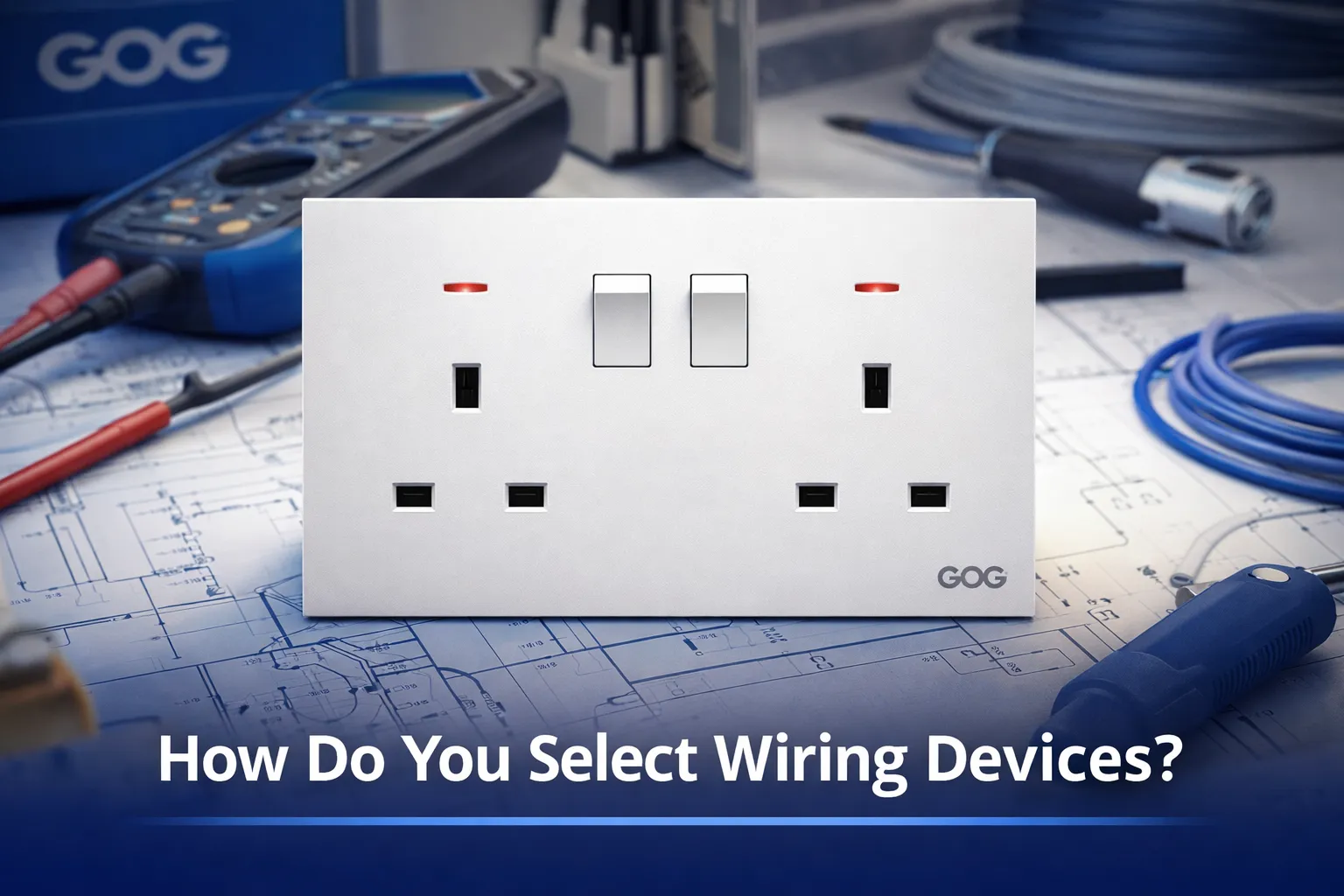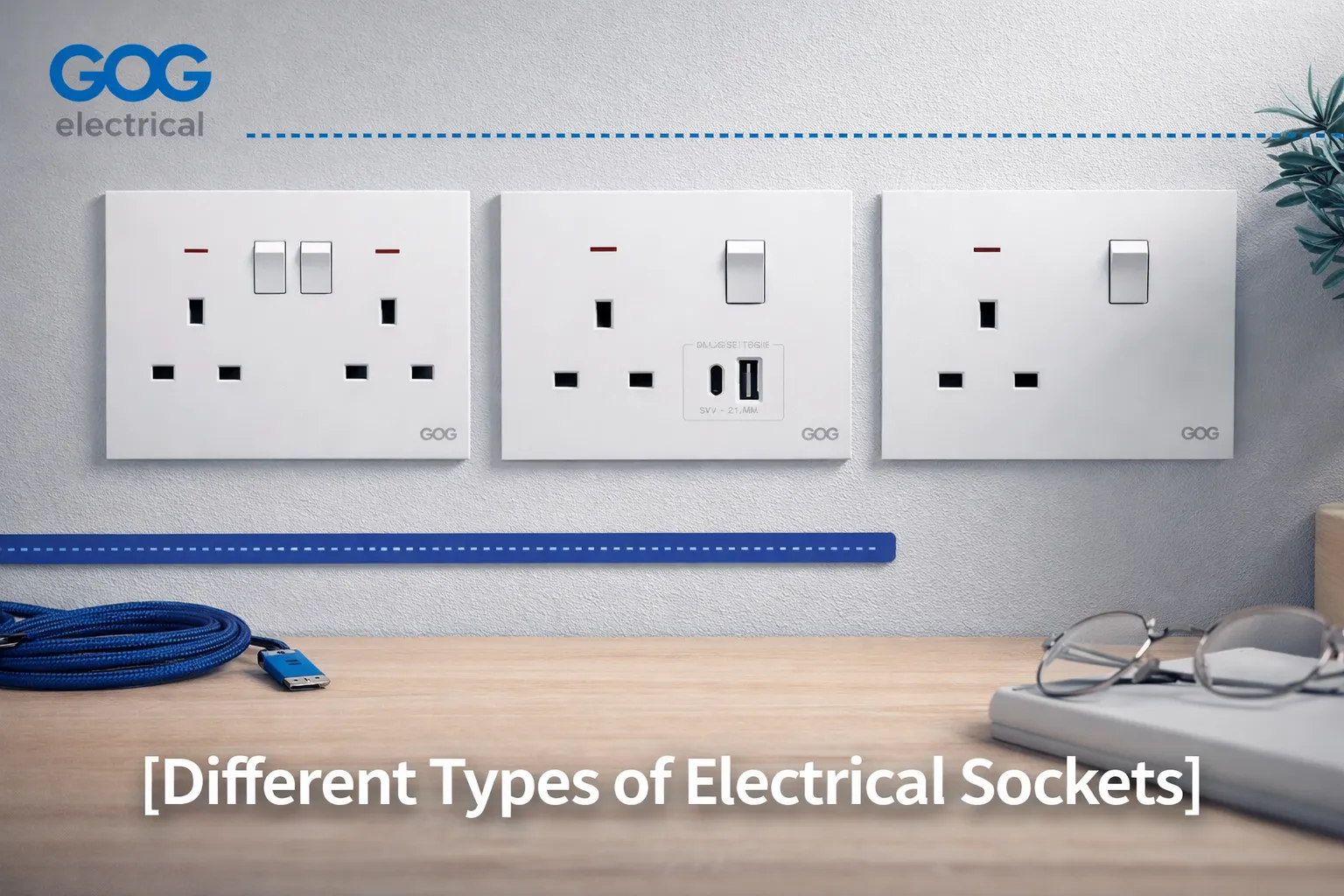
El nuevo tipo de habitaciones de hotel se abre al encender el panel de pared, que actúa como un interruptor de encendido y apagado para la habitación. De la misma manera, al encender y apagar el armario, que utiliza luces de gabinete, se abre el armario de la cocina. Siempre que te sientas en un automóvil, presionas el botón del panel de control, que es el botón de activación de la luz interior del vehículo. Así, todos estos casos muestran que los interruptores táctiles pueden usarse en lugar de interruptores mecánicos sin que los consumidores lo noten. Cuando hablamos de interruptores táctiles, abarcamos muchos dispositivos en la definición de interruptores táctiles. No todos los dispositivos que funcionan por contacto pueden clasificarse como interruptores táctiles. Esto se debe a que algunos dispositivos operan bajo los principios de sensores capacitivos, mientras que otros dispositivos cumplen con la mecánica básica al tener interruptores mecánicos bajo la superficie de vidrio. Por lo tanto, los principios de funcionamiento de los sensores capacitivos son diferentes de los principios de funcionamiento de otros dispositivos. Así, es necesario saber qué tipo de dispositivo se compra.
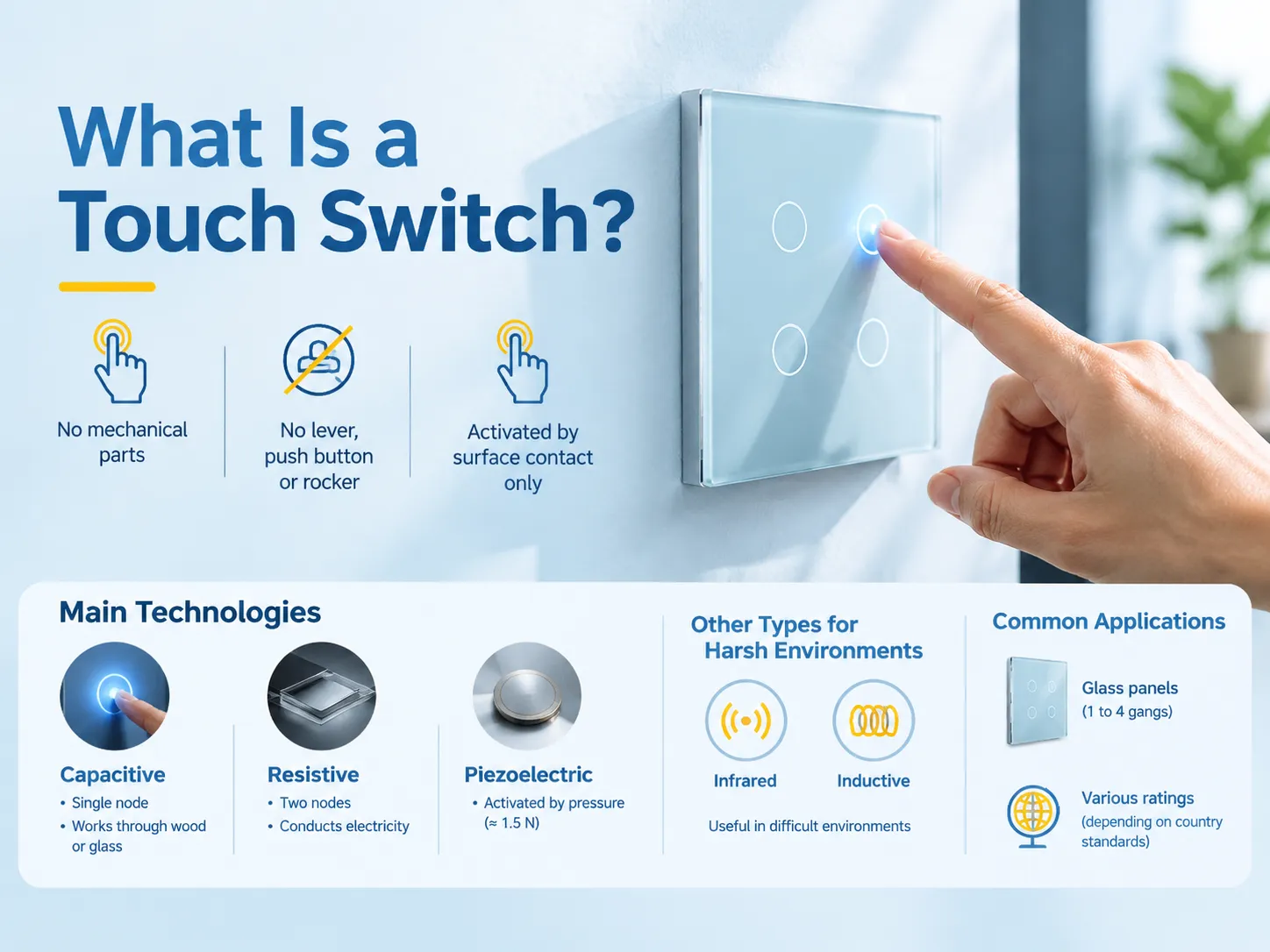
El término interruptor táctil se refiere a equipos que no tienen partes mecánicas para activarlos, ya que funcionan mediante la aplicación de contacto eléctrico y, por lo tanto, no se operan usando una palanca, botón pulsador o balancín, sino solo a través del contacto presente en la superficie externa del dispositivo. Los interruptores táctiles pueden clasificarse en tres categorías amplias según su tecnología: capacitivos (donde el interruptor se activa mediante la presencia de un dedo tocando el interruptor, tiene un solo nodo y puede funcionar a través de madera o vidrio), resistivos (utilizados en interruptores que tienen dos nodos y pueden conducir electricidad) y piezoeléctricos (utilizados en interruptores fabricados aplicando material piezoeléctrico bajo una presión de alrededor de 1.5 N). Además, debe mencionarse que los interruptores infrarrojos e inductivos pueden utilizarse en contraposición a ambientes difíciles. En términos generales, los interruptores táctiles se consideran mayormente del tipo capacitivo y pueden aplicarse en paneles de vidrio con uno a cuatro módulos. Además, los interruptores táctiles tienen diversas clasificaciones según las normas adoptadas en diferentes países.
Dónde Ya Has Encontrado Interruptores Táctiles
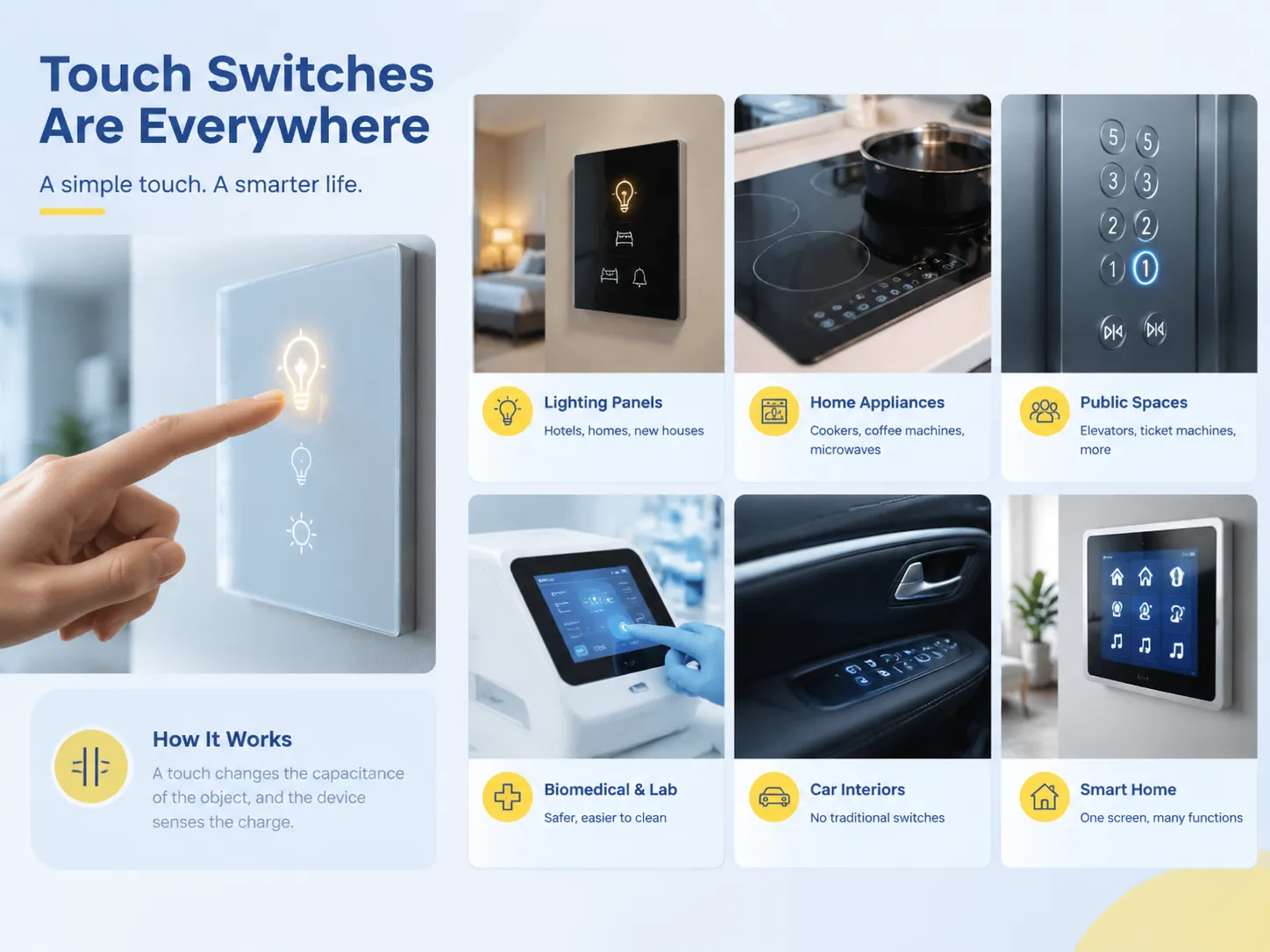
La tecnología de interruptores táctiles fue inventada hace mucho tiempo, antes de lo que la mayoría piensa. La tecnología de interruptores táctiles opera bajo el principio de que una carga indica variación en la capacitancia del objeto que se ha acercado al electrodo. Así, la forma más simple de tecnología de interruptores táctiles se puede encontrar en la “Lámpara táctil”, que es capaz de cambiar el brillo tres veces dependiendo del toque del interruptor de pie.
La tecnología de interruptores táctiles se ha implementado en diferentes dispositivos, tales como:
- Paneles de iluminación en hoteles, lugares residenciales y casas recientemente construidas, que usualmente están hechos de vidrio y presentan íconos que brillan desde el fondo.
- Electrodomésticos, cocinas de inducción, cafeteras y microondas de tipo moderno, que son más fáciles de limpiar al ser planos que los mandos.
- Controles remotos de ascensores, máquinas expendedoras de billetes y otros aparatos públicos, donde las superficies selladas ayudan a resistir tanto el vandalismo como la limpieza química.
- Dispositivos biomédicos y de laboratorio, donde la ausencia de cualquier espacio facilita el control de infecciones.
- Interiores de automóviles, donde la tecnología de interruptores táctiles ha eliminado los interruptores tradicionales de los paneles de las puertas y las consolas superiores.
- Paneles de control para hogares inteligentes, donde una pantalla de vidrio también puede servir como dispositivo de control para diversas funciones.
Existe una tendencia a utilizar la tecnología de interruptores táctiles en lugares donde la limpieza de la superficie o la facilidad de su limpieza prevalece sobre la ventaja de la retroalimentación táctil proporcionada por los interruptores mecánicos.
Lo que realmente hace un interruptor táctil
Un interruptor táctil realiza esencialmente el mismo papel que un interruptor mecánico, ayudando a abrir o cerrar circuitos. En cuanto a funcionalidad, no hay similitud entre ambos.
- Un interruptor mecánico consta de un actuador, un resorte y un contacto móvil. Un usuario presiona el actuador, haciendo que los contactos se unan o desconecten. El usuario escucha y siente un clic que le indica que la operación se realizó con éxito.
- Un interruptor táctil es un tipo de interruptor que no tiene actuador. El principio de funcionamiento de un botón táctil es que un circuito sensor monitorea la superficie requerida. Cuando la superficie es estimulada, se produce una señal que conduce al funcionamiento del relé de conmutación, triac o interruptor de estado sólido.
Esto conduce a tres resultados objetivos:
| Propiedad | Interruptor mecánico | Interruptor táctil |
|---|---|---|
| Partes móviles | Sí — actuador, contactos, resorte | Ninguna en un diseño capacitivo o piezoeléctrico verdadero |
| Retroalimentación | Táctil y audible, inherente al mecanismo | Debe diseñarse — LED, retroiluminación, pitido |
| Requisito de energía | Ninguno; puramente mecánico | Pequeña corriente de reposo para el circuito sensor |
| Limpieza de la superficie | Las grietas alrededor del actuador acumulan suciedad | Empotrado y sellado; se limpia con un paño |
| Mecanismo de desgaste | Desgaste mecánico de contactos y resorte | Envejecimiento electrónico; rayado de la superficie |
| Operación con guantes | Siempre funciona | Depende de la tecnología y el grosor del guante |
| Riesgo de activación accidental | Bajo | Mayor — mascotas, mangas, salpicaduras pueden activarlo |
Ese punto sobre la electricidad de reposo es más importante de lo que parece. Un interruptor táctil es un dispositivo electrónico y requiere tanto cables de fase como neutro que estén siempre activos en la caja del interruptor en la mayoría de los casos. En cableados eléctricos antiguos donde solo se lleva el cable de fase al interruptor, como es común en instalaciones británicas y algunas continentales, puede ser necesario usar un cable neutro para el interruptor táctil o un diseño “sin neutro” que obtiene su energía de la carga. El aspecto mencionado es un factor muy significativo en la instalación, que un buen proveedor seguramente verificará primero.
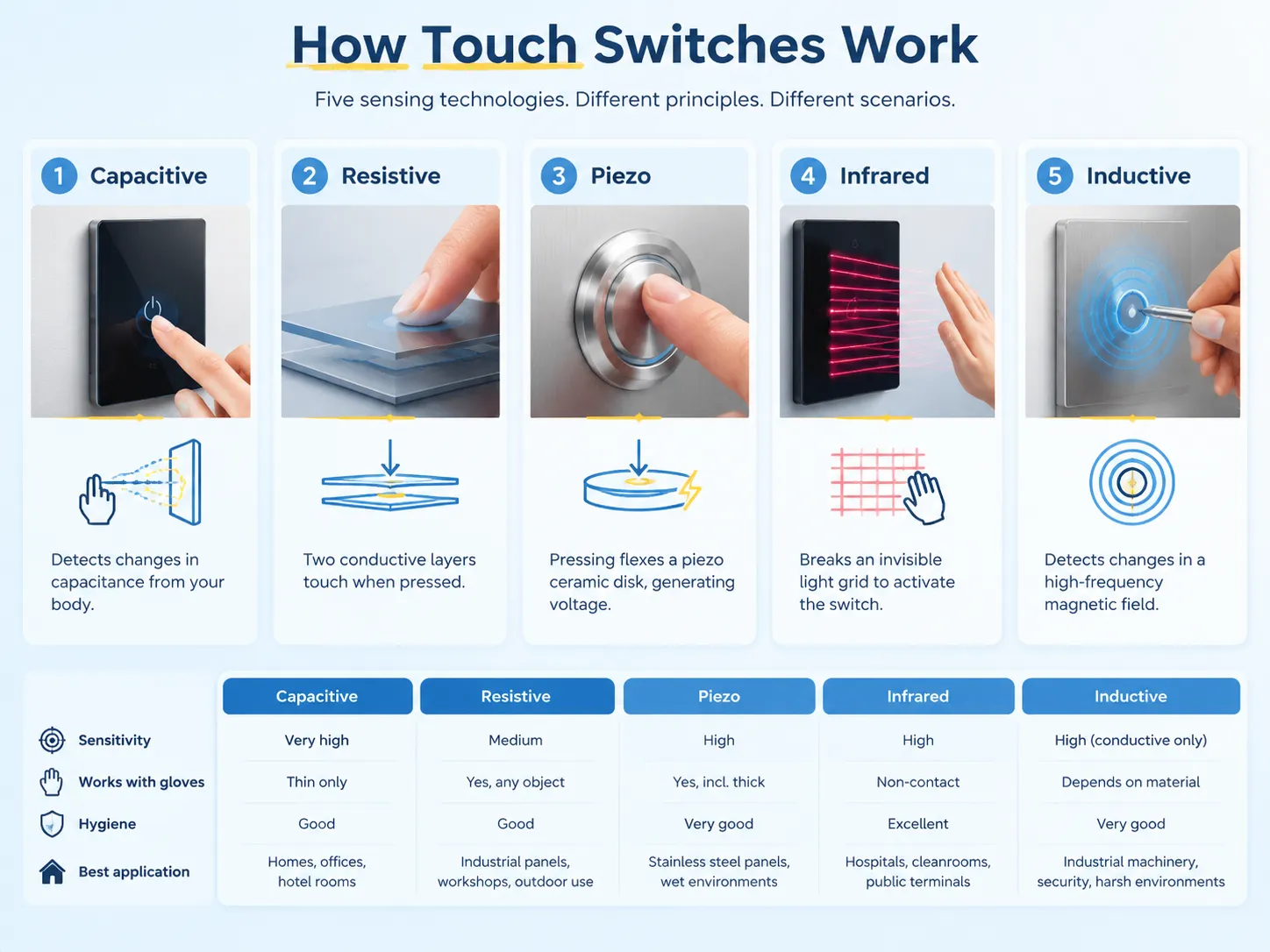
Cómo funcionan los interruptores táctiles
Hay cinco tipos diferentes de tecnologías de detección disponibles, y aunque funcionan de maneras muy diferentes, generalmente se selecciona la tecnología incorrecta para el entorno previsto.
- Los interruptores táctiles capacitivos son la tecnología más popular utilizada en hogares y oficinas. Este tipo de interruptor consta de un electrodo menor, que se coloca detrás de la cubierta y se carga y descarga continuamente para determinar la capacitancia. Debido a que la persona promedio tiene suficiente capacitancia para que su cuerpo haga contacto con el electrodo y cambie la lectura lo suficiente para cerrar el circuito, esta tecnología presenta algunas ventajas. La principal es que el tamaño del electrodo está oculto detrás de un panel no conductor, por lo que la superficie táctil puede estar hecha de plástico, vidrio, piedra, madera, etc. El concepto de auto-capacitancia significa usar un solo electrodo, mientras que la capacitancia mutua (o proyectada) implica el uso de un par de dos electrodos, lo que contribuye a una mayor compacidad y mejor diferenciación de los interruptores adyacentes, pero durante este proceso se genera ruido adicional. Los interruptores capacitivos se activan incluso cuando se usan guantes delgados, mientras que la influencia de la humedad, el polvo y otros factores es muy significativa.
- Los interruptores táctiles resistivos son dispositivos más simples y tradicionales. Consisten en dos capas de material conductor separadas por un pequeño espacio. Cuando se presiona la superficie del interruptor, las dos capas se tocan y la resistencia aumenta, con base en lo cual el circuito detecta la presión. Dado que este tipo de interruptor depende de la presión en lugar de la capacitancia del cuerpo del usuario, funciona bien con cualquier objeto. Sin embargo, el problema es que el interruptor debe presionarse sustancialmente y, debido a varias partes mecánicas móviles, el dispositivo se vuelve voluminoso. Los interruptores táctiles resistivos están presentes en la industria, talleres y lugares al aire libre, pero no en entornos domésticos.
- Los interruptores táctiles piezoeléctricos funcionan utilizando un disco cerámico piezoeléctrico, que se flexiona al presionarse, generando voltaje. The advantages of piezo switches include the ability to work through any material, including thick gloves or metal surfaces, reliability, and absence of mechanical parts. Piezo switches are somewhat more expensive than capacitive ones but are used in situations where such a premium is justified.
- Infrared touch switches generate a grid of invisible light beams with the help of LEDs and photodetectors, where breaking of the grid results in activation of the device. Thus, infrared switches are quite hygienic and suitable for various purposes but prone to influence from light, dust, and humidity.
- Inductive switches generate high-frequency electromagnetic field and detect changes in the field when any conductive object enters it. This type of switches is resistant to false triggering and humidity, but only conductive objects activate switches.
| Technology | Sensitivity | Works with gloves | Hygiene | Mejor aplicación |
|---|---|---|---|---|
| Capacitive | Very high | Thin only | Bueno | Homes, offices, hotel rooms, smart panels |
| Resistive | Medio | Yes, any object | Bueno | Industrial panels, workshops, outdoor use |
| Piezo | Alto | Yes, incl. thick | Muy bueno | Stainless steel panels, wet and industrial environments |
| Infrared | Alto | Non-contact | Excelente | Hospitals, cleanrooms, public terminals |
| Inductive | High, conductive only | Depends on material | Muy bueno | Industrial machinery, security, harsh environments |
The Main Types of Touch Switch
When the transition is made from the sensing technology to products, the types change once more. These are the types of touch switches that someone will actually be making decisions about.
- Wall touch switch (light switch): A capacitive panel made of either glass or acrylic that substitutes a standard lighting switch, selecting from 1 to 4 gangs. These can be a single-pole for a single light, a two-way device that lets users operate the light from two points, and an intermediate switch that is needed when there are three or more sites to operate the light from. This is the definition of the touch switch according to many people.
- Touch dimmer: The switch is the same as a regular switch but provides a combination of functions, namely turning the lights on and off by making short taps and adjusting brightness, i.e. using long taps, while the dimmer can even allow users to make sliding gestures along the surface of the product. The only problem with this device is that it has to be connected to a light load designed for dimming, i.e., to dimmable LED drivers or other similar devices instead of regular bulbs.
- Touch socket (outlet) switch: Such types of devices usually have a socket equipped with a touch-sensitive switch instead of a usual one and are combined with charging ports in USB or USB-C mode. The common example of such devices can be found in hotel rooms where both regular and touch sockets are used together, including USB ports.
- Smart touch panel: Smart touch panel refers to touch-switch equipped with Wi-Fi, Zigbee, Bluetooth, or Z-Wave technology and operated with help of dedicated applications and voice assistance devices. Also, in certain cases, these products can replace several switches that work together.
- Touch doorbell and signaling switches: The product can be used for signaling purposes and among its features operates as a push button.
- Industrial and panel mount touch switch: Such devices include piezoelectric devices, inductive or infrared switches used for the operation of equipment.
At the same time, it is important to get rid of a misconception that a lot of people have regarding the four standard types of switches. They are classified according to their functions but not according to their appearance. The first type is Single-pole, which is designed to operate one light from one position. Then comes Three-way switch, which can be used to run the same light from two points. Next goes four-way operating system that works with two three-way switches in order to allow operating the light from three or more spots. Finally, the last standard switch is a double-pole one, which allows working with two wires at the same time, which is mainly relevant for high-power appliances, such as, for example, water heaters. However, all these functions can be executed using either mechanical switch or touch-type switches, and this is why asking someone about a type of switch one should always clarify what type of switch they need according to their requirements. For the mechanical-versus-function breakdown in more detail, this guide to los cuatro tipos de interruptores de luz is a useful reference before you order anything.
Touch Switches vs Mechanical Switches
The choice of a touch switch or a traditional one is not easy. Its suitability depends on the room itself, meaning that it is pointless to give a definite answer to the question.
Touch switches have many advantages in terms of their appearance, cleanliness, and ability to integrate with other devices. Touch switches made of a glass panel do not consist of any parts that would need cleaning, which makes the process of their cleaning very easy. They look like a part of the design rather than a functional element. They can have various options such as nightlight indicators and dimmers and can perform the same functions as regular switches. In addition, touch switches do not have moving parts that could break down or get dirty.
Mechanical switches, on the other hand, can ensure certainty. Levers of these switches move, thus providing sound and tactile feedback. They are easy to use in any conditions and do not require electric power for their operation. Moreover, they are very cheap, too. If you want the mechanics of how that actuation works, this explanation of how a rocker switch works is a good short read, and it’s a useful contrast to a capacitive panel with no moving parts at all.
The most common practical divisions that most specifiers follow is based on the room of usage. Touch switches has to be placed where the surface is most important and the function is intentional: bedrooms, living rooms, hotel rooms, reception areas, kitchen, and places that need to be wiped. Mechanical switches remain where reliability is important and use is automatic: corridors, back of house areas, utility room, garages, workshops, and anywhere visitors may come with wet hands or gloves.
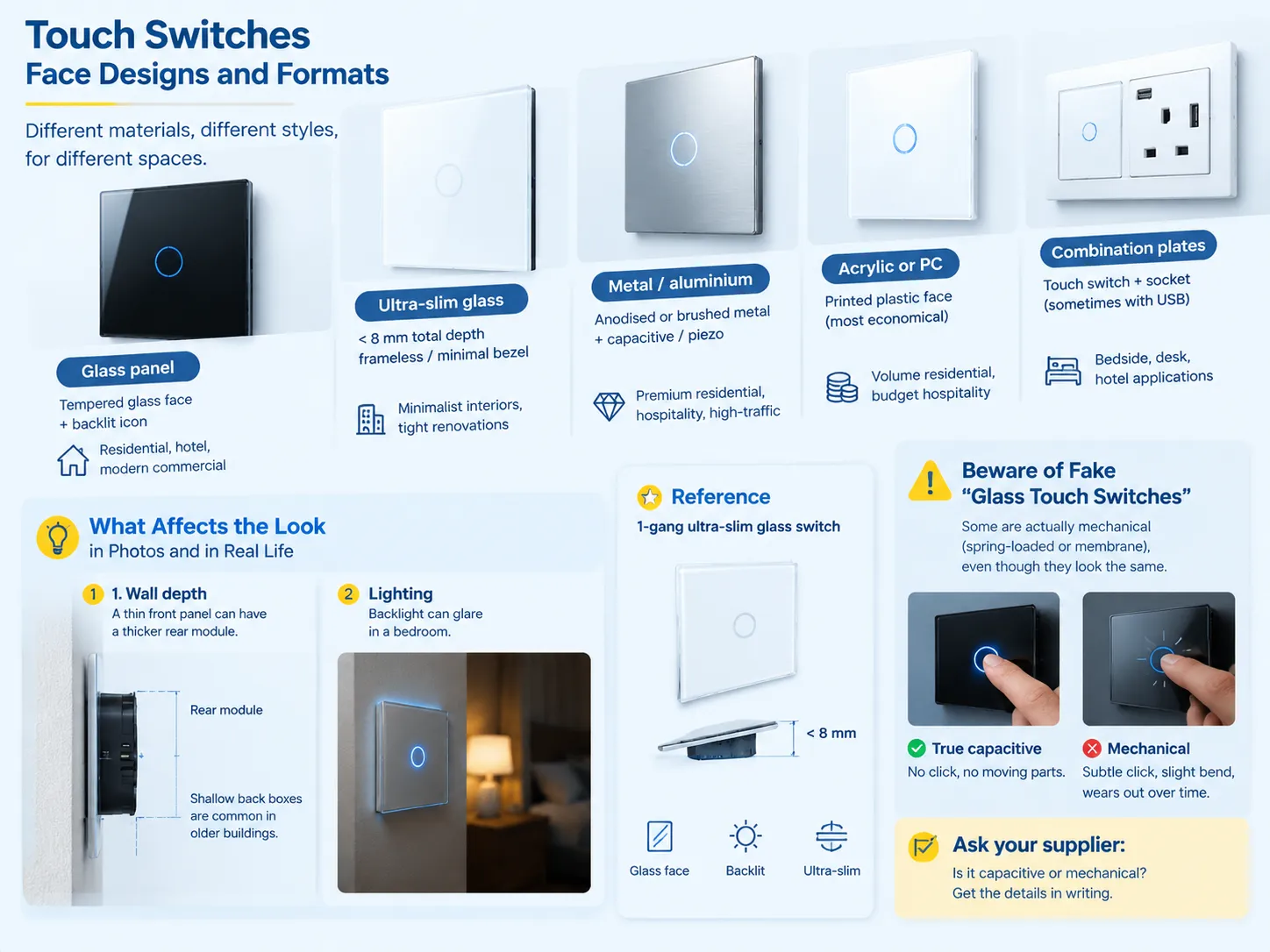
What They Look Like: Face Designs and Formats
Touch switches are mainly a design product, as this effect is most responsible for the price variation. The market is comprised of five main families.
| Face design | Descripción | Uso típico |
|---|---|---|
| Glass panel | Tempered glass face over a capacitive sensor; backlit icon or symbol | Residential, hotel, modern commercial |
| Ultra-slim glass | Thin profile — often under 8 mm total depth — frameless or minimal bezel | Minimalist interiors, renovation where depth is tight |
| Metal / aluminium | Anodised or brushed metal faceplate with piezo or capacitive sensing | Premium residential, hospitality, high-traffic commercial |
| Acrylic or PC | Printed plastic face, most economical option | Volume residential, budget hospitality, retrofit |
| Combination plates | Touch switch and socket on one plate; sometimes with USB charging | Bedside, desk and hotel applications |
There are two aspects that determine if a panel appears nice in a photo and nice in reality. The first aspect is the wall depth; a very thin front panel can have a fairly thick rear module, and shallow back boxes are typical for older buildings. Another aspect is the lighting; the backlight can glare in a bedroom. If you want to see how these variables come together in a specific product, a 1-gang ultra-slim glass wall switch is a fair reference point for what the current generation of residential panels looks like in terms of profile, face material and backlighting.
One piece of advice that can prevent returns is the fact that some so-called “glass touch switches” are not true touch-sensitive units. A considerable of many inexpensive switches are actually based on mechanical switching technology — commonly a spring-loaded rocker or a membrane — placed underneath the glass or acrylic cover. They may appear exactly the same in pictures. But while being used they make a subtle click, the face material bends minimally under the finger touch, and eventually these switches wear out like mechanical ones. If you care about having a switch with truly no moving parts, just ask the supplier whether the switch is of the capacitive or mechanical type and ask for the details in written form. If a supplier cannot answer these questions, he should be excluded from your selection list.
Do Standards Differ by Country?
Yes, it is often the case that a lot of international purchases end up failing at this point. A touch switch that is entirely okay in one country may not be acceptable in another, irrespective of the touch technology itself.
| Mercado | Key standards | What it means in practice |
|---|---|---|
| Estados Unidos | UL 20 (general-use snap switches), NEMA WD-1 and WD-6, NEC requirements | 120 V nominal; wall-box dimensions differ from UK/EU; UL listing usually required by inspectors |
| Canadá | CSA C22.2 series, cUL listing | Similar to the US but a separate certification mark |
| Reino Unido | BS EN 60669 (switches), BS 1363 (plugs and sockets), Building Regulations Part M for accessibility | 230 V nominal; 86 × 86 mm plate is the de facto standard; Part M sets mounting heights for accessibility |
| Unión Europea | IEC/EN 60669-1, EN 60669-2-1 for electronic switches, CE marking, RoHS and REACH | 230 V nominal; multiple national plate sizes and socket types still in use |
| Australia and New Zealand | AS/NZS 3133 (approval and test specification for switches) | 230–240 V; different plate dimensions again, and a distinct socket (Type I) |
| China | GB 16915.1, CCC certification | 220 V nominal; 86 × 86 mm plate |
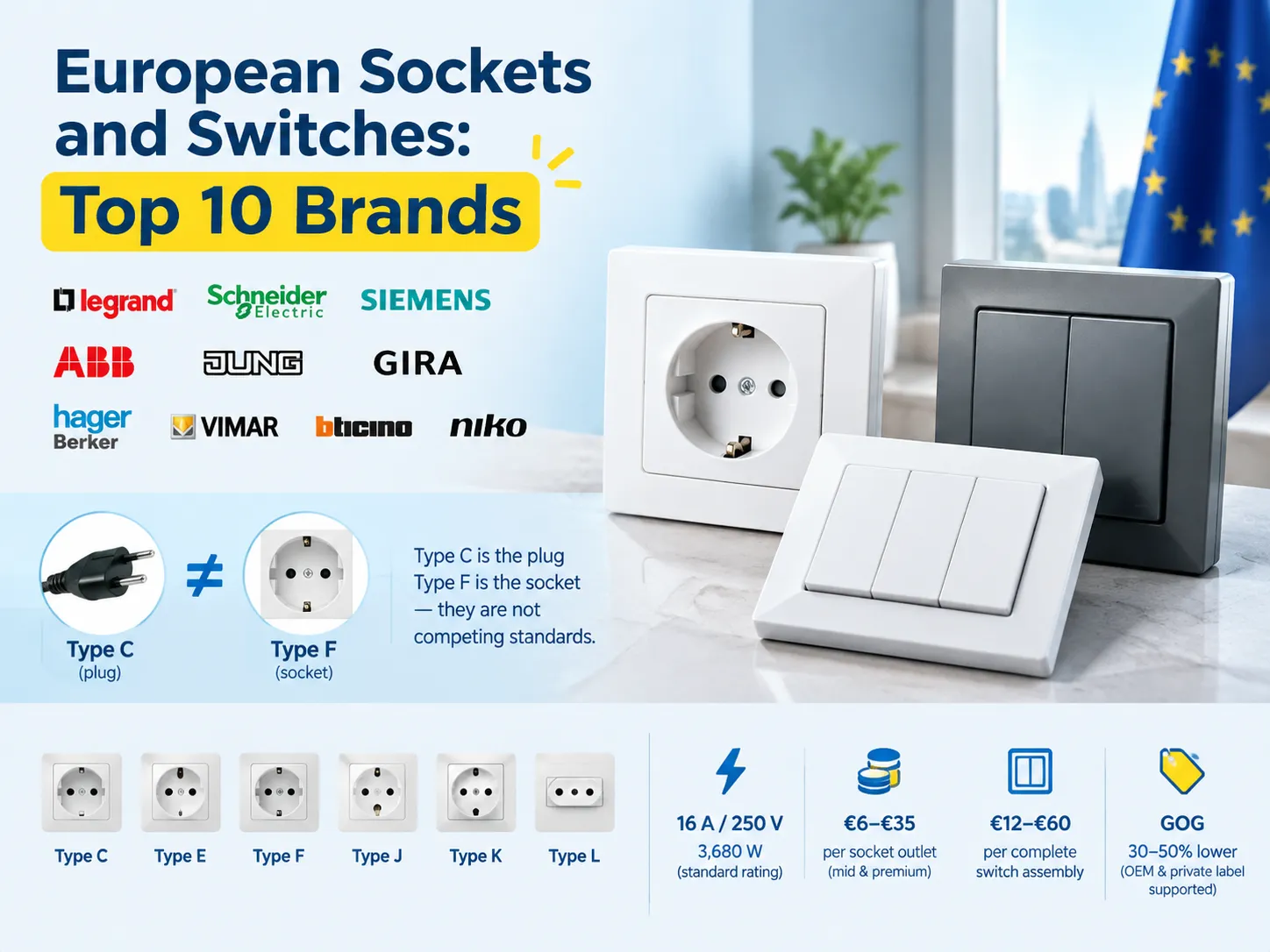
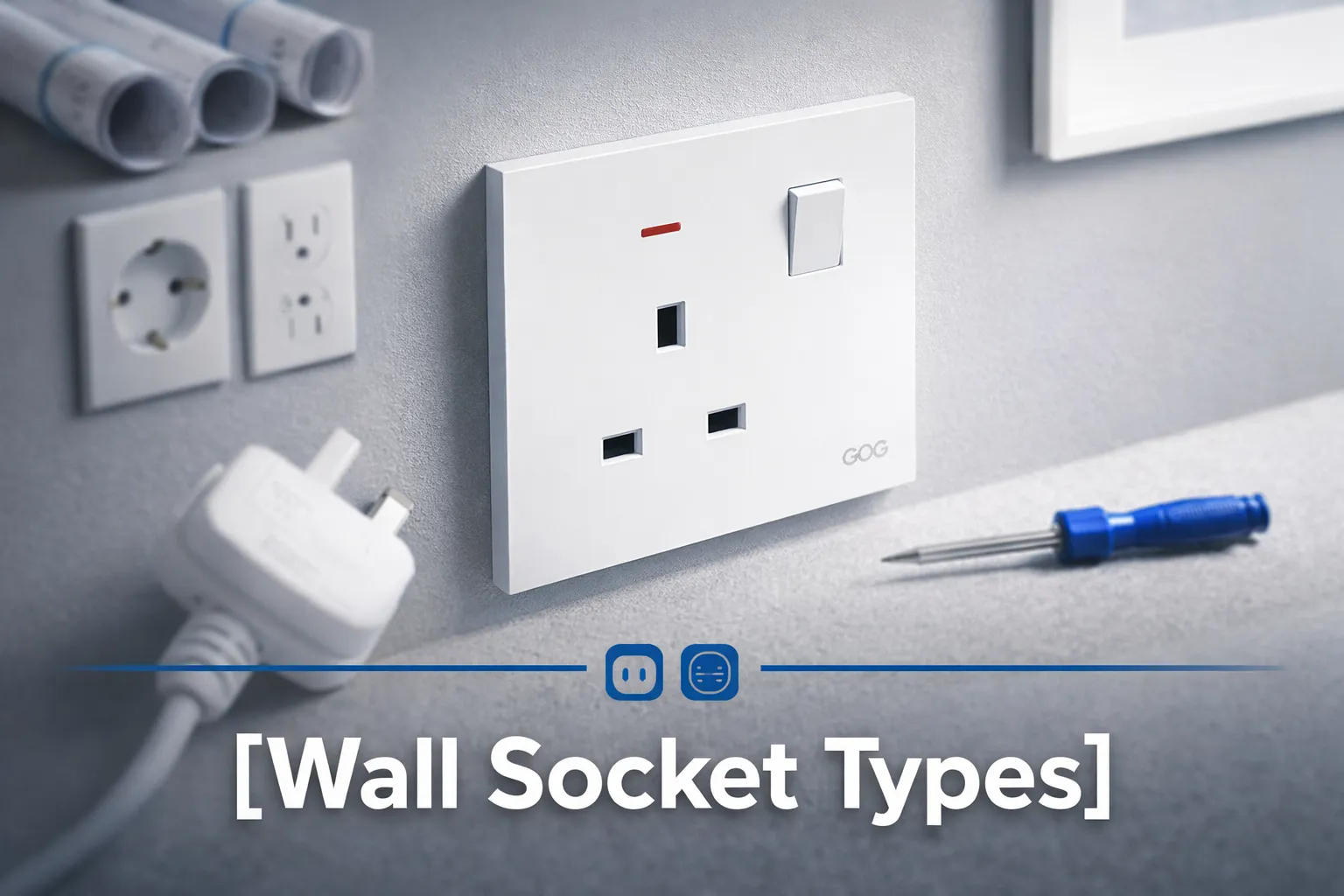
There are four most prominent differences. The most apparent difference is voltage, since operating a 120 V item in a 230 V circuit is a potential source of danger and not simply a minor inconvenience. The items may vary as for their plate sizes, since a device intended for the European market will not fit a US wall box without some form of adapter. The type of plug needs to be considered as well – the combination of the plug and the socket may not be standardized if the type of plug differs, which is true for many countries – A and B in the US, G in the UK, C and F in Europe, I in Australia, China, Argentina, and so on. Also, various standards and certifications are a topic for discussion: UL in the US, CSA in Canada, CE in Europe, UKCA in the United Kingdom, SAA in Australia, CCC in China, etc.
Everything said above suggests that decision makers should start with the market and then move to the product in question. In case a supplier wants to know the country where the product will be used, it means that they know what they are talking about.
Who Makes Touch Switches: Brands and What They’re Good At
The market can be segmented into four categories with each group competing differently. The figures below represent some of the average price ranges and positioning within the segment instead of actual quotes.
| Group | Ejemplos | Fortalezas | Typical price band | Main applications |
|---|---|---|---|---|
| Global electrical majors | Legrand, Schneider Electric, ABB, Siemens, Eaton, Leviton, Hubbell | Full wiring-device ecosystems, deep certification coverage, specification support, huge distribution | Premium to mid — £25–120 per plate | Commercial, hospitality, institutional, large residential |
| Specialist designer brands | Hamilton Litestat, Forbes & Lomax, Varilight, MK Electric | Decorative finishes, bespoke plate sizes, UK-register aesthetics, strong trade recognition | Premium — £40–150+ | High-end residential, heritage and hospitality projects |
| Value and trade brands | BG Electrical, Click Scolmore, Hager | Good compliance at accessible prices, wide trade availability, reliable supply | Value — £8–25 per plate | Residential, rental, volume new-build |
| Smart home specialists | Lutron, Philips Hue ecosystem, TP-Link Kasa, Aqara, Tuya-based brands | App, voice and scene control, ecosystem integration, wireless retrofit | £15–60 per plate | Smart homes, retrofit, connected apartments |
| Export manufacturers | GOG and comparable OEM/ODM producers | Full range manufacture across glass, slim and combination series; private-label and OEM programmes; multi-market certification support | Factory-direct, well below branded retail | Distributor and own-brand programmes, projects, export markets |
The export manufacturer group is one of the most underrated by customers and deserves some mention. The companies from this segment do not compete on the basis of being recognized by the consumers but rather on their depth of the range, their ability to tool, their consistency and their capability to be certified for different markets simultaneously. Thus, when it comes to cable design, GOG is one of the manufacturers abiding by the different socket and switch series — glass wall switches of slim and extra-slim designs made in 1-, 2-, 3-, and 4-gang forms, as well as a glass combined switch- and socket plate complying with UK, European, Italian, and Thai sockets, 45-amp double pole switches, doorbells, and USB-C sockets, which makes it distinct from a designer manufacturer focusing on the single aesthetic. In terms of the value for the distributor trying to create his/her portfolio or for the project in need of buying the sockets and switches from a single source, this wide range is extremely useful, but, when it comes to the home-owner wanting to have a single beautiful plate, it does not possess the same value.
Where a brand’s strength genuinely lies is often visible in how it handles the trade rather than in its catalogue. If you want a sense of how the manufacturing side of this market is structured — who makes what, and how the UK supply chain is organised — this overview of wall switch and socket factories serving the UK market is a useful orientation before you start contacting suppliers.
There is one important caveat on brand and place of manufacture: almost all wall switches and sockets in the world are produced in China, irrespective of the brand of the company on the label of the switch, even when it is an item sold through one of the well known European manufacturers. Hence, it is important to note that origin is not the determining factor when talking about quality of the product.
Price Ranges and What Drives Them
There are three primary factors contributing to the price of a touch switch. They are sensing technology, the profile and materials of the face, and the certification coverage.
- The first factor, sensing technology, is the most important one. A real capacitive sensing circuit costs more than the spring operated full plastic face. In this way, cheap alternatives gain a lot of savings, and this is the reason why two faces may seem identical yet differ drastically in price. Piezo is more costly than capacitive; infrared and magnetic technology are the most expensive types of sensing technology.
- The second factor is the materials and profile of the face. Whereas tempered glass with laser engraving and backlight provides quite expensive solutions, using print in acrylic face is less costly. Besides that, ultra-thin profiles imply that the design is more complicated and requires more money. Metal face is more expensive than acrylic as well.
- The third factor is efficiency of obtaining certifi9cates. The products that have a certificate of one market are cheaper than the same products having a certificate of 3 markets. The tests if the product complies with the requirement fo the markets take a lot of time and money. It is more cost-efficient to obtain a certificate of one market, and then after numerous compliance procedures obtain the certificate of other markets.
Some rough estimates may help you understand how much you should be prepared for when buying a plate – the cost of basic acrylic products starts from a couple of pounds, the price of glass products will be from a modest five pounds to about 25 pounds for branded products, smart plates from 15 to 60 pounds, and international branded products with the metal and glass surface will require investments from 25 to 120 pounds, designer plates will cost more than 40 pounds. The prices offered directly by manufacturers are less than the retail ones, however, it goes about volumes rather than one product only.What actually drives the number at the low end is easier to understand once you look at how glass switch pricing breaks down — face material, sensing type, gang count, backlight and certification are the visible variables, and the sensing circuit is the one that’s usually hidden.
Where Touch Switches Get Used
Applications map fairly cleanly onto the technology’s strengths and weaknesses.
| Aplicación | Why touch fits | Preferred technology |
|---|---|---|
| Residential bedrooms and living rooms | Appearance, dimming, night indicators, easy cleaning | Capacitive glass |
| Hotel guest rooms | Scene control, backlit icons for guests in the dark, high-end impression, robust against repeated use | Capacitive glass, often with combination socket plates |
| Cocinas | Wipeable flush surface, resistance to grease and frequent cleaning | Capacitive glass, or piezo under stainless |
| Offices and conference rooms | Scene and zone control, integration with building management | Capacitive or smart panels |
| Hospitals and clinics | Infection control — sealed surfaces with no crevices to harbour organisms | Infrared for non-contact; piezo under metal for gloved use |
| Cleanrooms and laboratories | Non-contact operation, resistance to chemical cleaning | Infrared, inductive |
| Public restrooms and terminals | Vandal resistance, hygienic non-contact operation | Infrared |
| Industrial machinery and panels | Dust, moisture, vibration and glove use rule out capacitive | Piezo, inductive, resistive |
| Wet or outdoor locations | Sealed surface, no actuator gap for water ingress | Piezo under metal, with an appropriately IP-rated enclosure |
It can be observed that there is a discrepancy between domestic wants and industrial demands. Domestic needs are related to appearance and sensitivity hence requiring capacitive technology; but industrial requirements for immunity against false triggers and waterproofing would make capacitive technology inappropriate. Between these two extremes lies hospitality with its needs very similar to domestic needs but with extra rigidity and interface capabilities.
The Honest Downsides
Touch switches do not possess superior characteristics as compared to mechanical ones. The trade-offs need to be mentioed openly.
- Accidental triggering. A capacitive surface can be activated by an animal walking by, a sleeve of clothing, spillage, or even by cleaning cloths. A mechanical switch and an intention must be present to activate them.
- Wet hands and gloves. The capacitive technology does not have the same performance as a standard stove. The resistive and piezoelectric technologies can overcome this problem, though.
- No tactile feedback. There is no certainty whether the switch worked. Feedback has to be built in with the help of LED signals or audio signals, and low-cost panels are often unsuccessful in doing that.
- Need for a neutral wire. Most devices are designed to require a permanent live and neutral wire.
- Ongoing power consumption. There will be current running through the device. At times it is virtually nothing compared to the overall project.
- Fragility of the device. Glass is more resistant to scratching as compared to plastic, but it can break due to pinching or heavy pressure during installation.
- Not easy replacement. Compatibility problems with dimming and usage limitations due to load and drivers mean that touch dimmers may be unsuitable for the already installed bundle of lamps.
- Failure of electronic devices. The switch will stop functioning in case of the operation of the sensing circuit. As for mechanical switches, they usually fail gradually.
- Cost matters. The original capacitive panel with additional certificates is expensive compared with mechanical switches and fake glass panels.
How to Choose
The selection of most devices comes down to five questions.
- Which voltage and country? This dictates the rating, weight, type of socket and certification of the device; make sure you answer this first before looking at anything else.
- Will it be used in a dry or wet environment? Wet, outdoor and industrial applications will rule out capacitive sensing and move towards piezo, inductive or even resistive techniques.
- Will the device be operated with bare hands or gloves? Average room temperature and using bare hands means capacitive. If using gloves, it has to be piezo. Clinical non-contact operation means infrared.
- Does the junction box contain a neutral wire? If not, you will need a special no-neutral design or additional wiring. Check that beforehand.
- Do you require dimming, scene control, or app control? Each one creates new conditions – dimmable loads, hub, network or other systems making it important to make the decision about the panel in advance, since it is the least expensive mistake here.
Last item to check with the supplier is whether the panel has a real touch sensing system or a mechanical one behind the glass.
Preguntas frecuentes
What are the disadvantages of touch switches?
The main drawbacks are false activation caused by pets, liquids or clothes, reduced sensitivity when using thick gloves or dry skin, lack of physical feedback (so some sort of signal must be provided for confirmation), requirement of a neutral wire at the switch location in most designs, small amount of continuous standby current, and failure mode where the dead sensing circuit leads to a complete failure of the switch instead of gradual degradation. Additionally, there’s a cost factor: a cheap capacitive switch is more expensive than a regular mechanical switch or an imitation of a glass switch with a spring inside.
What does “touch switch” mean?
Touch switches are actuators without any moving parts in their structure. Rather than using levers or push buttons to switch on or off, the switch occurs so when there is a change in capacitance as a result of touching the switch or the impact of pressure between the two conductive plates or even a voltage produced by bending the piezo ceramic element. Because of the absence of any switching elements, the outer shell can be unbreakable and flat which is what makes these switches popular for usage in kitchens or hospitals.
Are touch switches good?
Their effectiveness varies depending on different situations, which is why the right answer is “it depends on the room.” Touch switches are definitely better when aesthetic value, cleanability and installation are crucial, such as in bedrooms, hotels, kitchens, receptionists’ areas and any other places that are washed frequently. However, they are not the best option whenever unthinking reliability is needed, like in hallways, utility rooms and workshops, as well as the places where people operate switches with wet or gloved hands. Good quality capacitive touch switches using true capacitive technology can be good products, while glass panel mechanical switches would not. Therefore, the technology is more important than the brand.
What are the four types of switches?
In relation to the functions of electricity, the commonly used types of switches are single-pole (it controls one light), three-way (it controls one light at two locations), four-way (it controls one light at three locations or more, due to it being used together with two other switches) and double pole switches (it controls two electrical wires together in a single circuit). In relation to the form of the switch, the commonly used switches are toggle switches, rocker switches, push-button switches and slide switches.
Referencias
- Comisión Electrotécnica Internacional — IEC 60669 series for switches for household and similar fixed electrical installations
- BSI Standards — BS EN 60669 and BS 1363 standards for UK switches and socket outlets
- IECEE — international certification scheme covering electrical accessories
- UL Solutions — UL 20 and related certification for wiring devices in North America
- ISO — quality and environmental management system standards for manufacturers
- Electrical Safety First — UK consumer safety guidance on sockets, switches and RCDs
Conclusión
Touch switches have a number of advantages, but the main advantage of touch switches is that they do not feature moving components. The working of touch switches depends on how they react to finger touches as well as whether they are designed for use by people wearing gloves or operating in dry facilities.
There are three key features that can help distinguish a good touch switch from a bad one. To start with, you will need to conduct a thorough search for all brands of touch switches and their ratings according to size, design and certification. Secondly, you should investigate the technologies used to manufacture touch switches, whether it is capacitively charged technology, piezoelectric technology or anything else (for example, inductive). Thirdly, it is necessary to find out whether or not touch switches are able to work in humid atmospheres. For instance, whether a capacitive touch switch will work in a humid environment, what types of technology are able to operate properly under humidity or vibration as well as whether or not they are real touch switches. If they don’t fulfill any of the above stated criteria, then touch switches will be able to work in practice, though the user would not be able to explain why his or her bathroom light can switch on and off randomly.