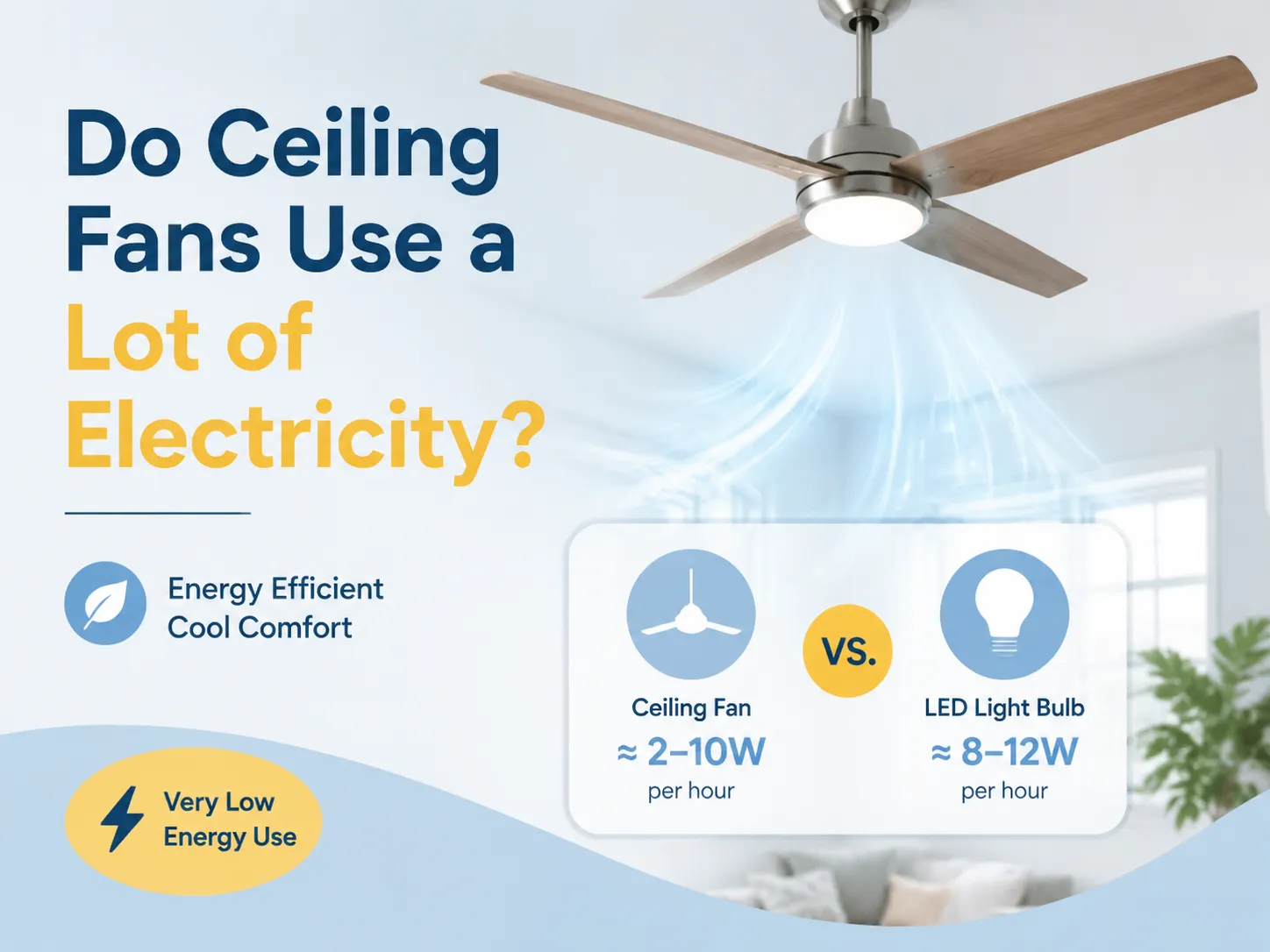
Жаркая летняя ночь, и в комнате с тех пор, как дети легли спать, работает потолочный вентилятор. Вопрос, который возникает, — увеличивает ли вентилятор счет за электроэнергию. Ответ положительный, так как исследования показывают, что потолочные вентиляторы — одни из самых доступных по стоимости приборов в доме. Однако принцип затрат на эксплуатацию потолочного вентилятора сложнее, чем просто сказать, что его дешево использовать. Тип мотора, уровень скорости, светильник и частота использования также играют свою роль.
Ответ: нет. Обычные потолочные вентиляторы потребляют 15-90 ватт, что меньше, чем у большинства другого оборудования. Вентилятор диаметром 52” использует около 40-70 ватт, в то время как новые вентиляторы создают тот же воздушный поток, потребляя всего 15-40 ватт (на 30-70% меньше). При цене электроэнергии в США около 16 центов за kWh использование такого вентилятора обходится в 1 цент в час (точнее 0,6-1,2 цента), 12-29 центов за 24 часа (3-9 долларов в месяц) и примерно 5-35 долларов при 8-часовом ежедневном использовании летом.
Сколько ватт потребляет потолочный вентилятор?
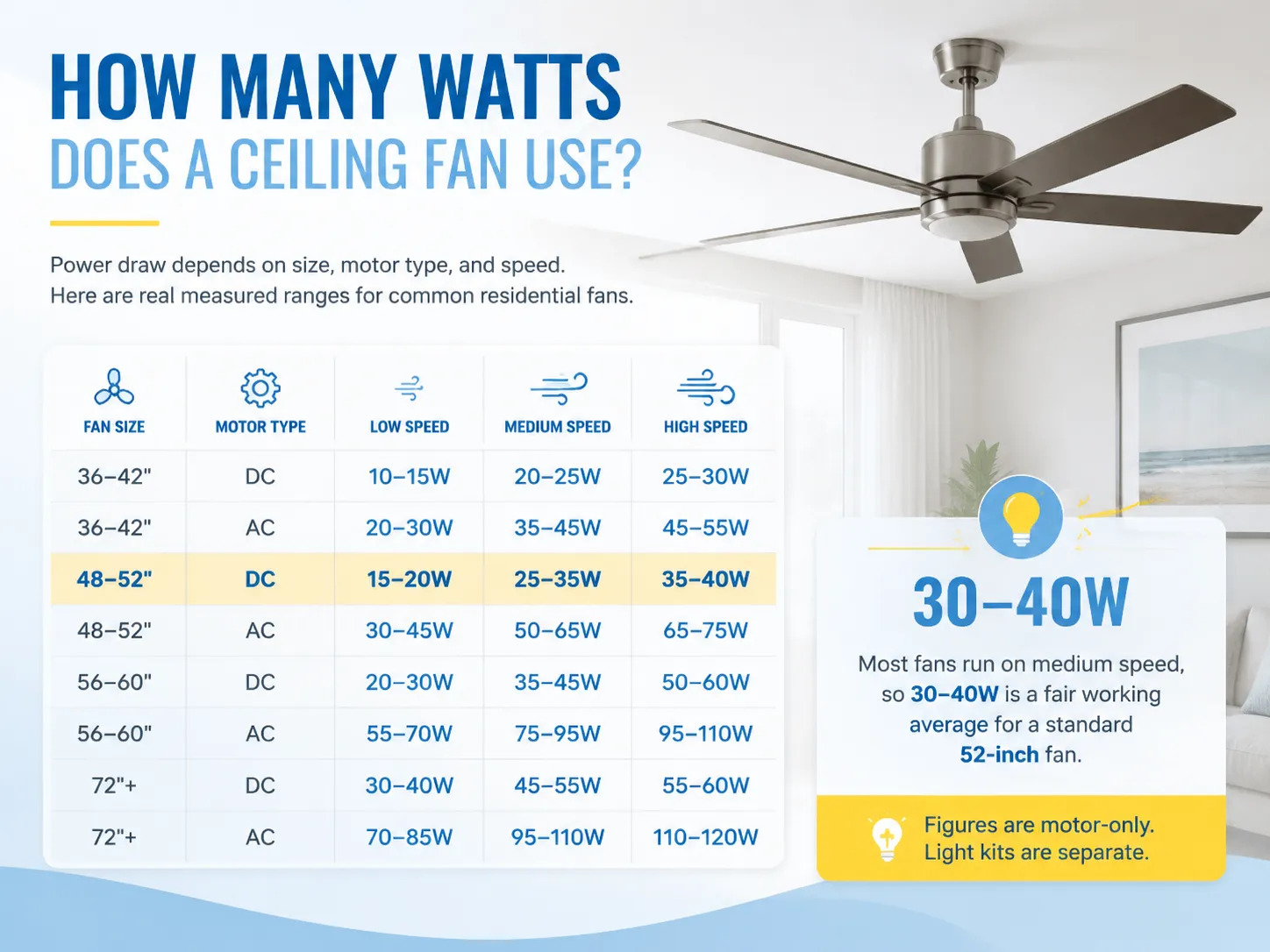
Количество электроэнергии, потребляемое потолочным вентилятором, определяется такими факторами, как высота, тип мотора и скорость. Электрические характеристики потолочных вентиляторов разных размеров следующие:
| Размер вентилятора | Тип мотора | Низкая скорость | Средняя скорость | Высокая скорость |
|---|---|---|---|---|
| 36-42″ | DC | 10-15 Вт | 20-25 Вт | 25-30 Вт |
| 36-42″ | AC | 20-30 Вт | 35-45 Вт | 45-55 Вт |
| 48-52″ (наиболее распространенный) | DC | 15-20 Вт | 25-35 Вт | 35-40 Вт |
| 48-52″ (наиболее распространенный) | AC | 30-45 Вт | 50-65 Вт | 65-75 Вт |
| 56-60″ | DC | 20-30 Вт | 35-45 Вт | 50-60 Вт |
| 56-60″ | AC | 55-70 Вт | 75-95 Вт | 95-110 Вт |
| 72″+ (большая комната) | DC | 30-40 Вт | 45-55 Вт | 55-60 Вт |
| 72″+ (большая комната) | AC | 70-85 Вт | 95-110 Вт | 110-120 Вт |
Поскольку большинство типов вентиляторов работают на средней скорости, типичный потолочный вентилятор диаметром 52 дюйма потребляет около 30-40 ватт энергии. Обратите внимание, что эти цифры относятся только к мотору вентилятора, а не к светильникам.
Вентиляторы с AC и DC моторами: главное отличие
Тип мотора — самый значимый фактор, влияющий на потребление энергии вентилятором.
| Характеристика | AC мотор (традиционный) | DC мотор (современный) |
|---|---|---|
| Типичная мощность (вентилятор 52″) | 40-75 Вт на средней скорости | 15-40 Вт на средней скорости |
| Потребление энергии по сравнению с AC | Базовый уровень | На 30-70% меньше |
| Потребление на низкой скорости | ~25-30 Вт | Всего 5-6 Вт |
| Настройки скорости | 3-5 скоростей | 6-9 скоростей, бесступенчатое управление |
| Шум | Умеренный шум | Очень тихо |
| Режим реверса зимой | Да (медленная реакция) | Да (плавная) |
| Срок службы | 10-15 лет | Более 20 лет |
| Первоначальная стоимость | $50-$200 | $150-$400 |
| Годовая экономия (использование 24/7) | — | $35-$49 против AC вентилятора |
Вентиляторы с DC моторами обычно окупают свою более высокую стоимость в течение 2-4 лет при регулярном использовании, кроме того, они обеспечивают регулировку скорости и относительно тихую работу. Если вы планируете использовать вентилятор только время от времени, модель с AC будет вполне подходящей, но если вы собираетесь использовать вентилятор каждый день в течение всего лета, выбор DC модели будет гораздо экономичнее.
Реальные цифры затрат: за час, день, месяц, год
Оплата электроэнергии производится в киловатт-часах (kWh), при этом средняя ставка для жилых домов в Америке в 2026 году составляет примерно $0.16/kWh. Расчеты для вентилятора диаметром 52 дюйма следующие:
| Сценарий | AC вентилятор (75 Вт средняя скорость) | DC вентилятор (30 Вт средняя скорость) |
|---|---|---|
| За час | 075 kWh ≈ $0.012 | 03 kWh ≈ $0.005 |
| За 8-часовую ночь | 6 kWh ≈ $0.10 | 24 kWh ≈ $0.04 |
| За 24-часовой день | 8 kWh ≈ $0.29 | 72 kWh ≈ $0.12 |
| За месяц (24/7) | 54 кВт·ч ≈ $8.64 | 6 kWh ≈ $3.46 |
| За сезон охлаждения (4 месяца, 8 часов в день) | ~73 кВт·ч ≈ $11.70 | ~29 кВт·ч ≈ $4.70 |
| За год (24/7) | 657 кВт·ч ≈ $105 | 263 кВт·ч ≈ $42 |
Среднее использование в доме — 8 часов в день (летний период), и стоимость составляет менее 3 долларов для AC вентилятора и еще меньше для DC вентилятора, что примерно равно 1 доллару в месяц. Эта цена сопоставима с тем, что человек тратит на кофе каждую неделю. Несмотря на то, что цена за kWh может достигать 0.25 долларов, что делает стоимость работы 40-ваттного вентилятора примерно 26 центов в день.
Фактор светильника, который нельзя игнорировать
Вот заблуждение, которое многие не замечают: светильник вентилятора может стоить дороже в эксплуатации, чем мотор вентилятора.
- Использование двух 60-ваттных ламп: +120 ватт, что даже больше, чем потребление мотора, и значительно увеличивает общее потребление вентилятора.
- Использование двух 9-ваттных LED ламп: +18 ватт, что не слишком существенно.
- Встроенные LED светильники: около +10-15 ватт.
- Старые лампы накаливания: +100-250 ватт.
Если у вас есть потолочный вентилятор с лампами накаливания, замена их на светодиодные позволит сэкономить больше энергии по сравнению с тем, что можно сделать с мотором, поскольку разница составляет более 100 ватт в целом.
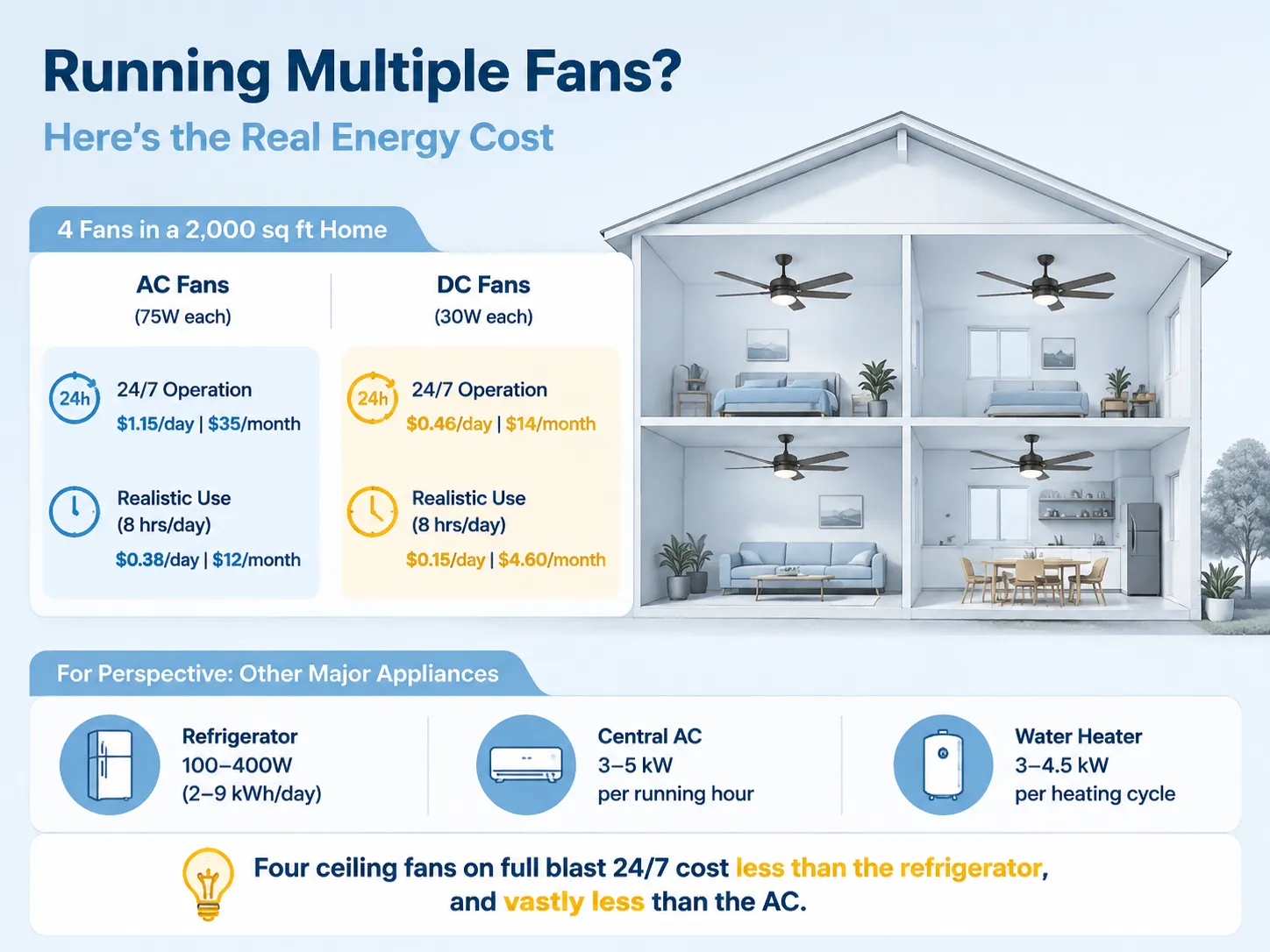
Несколько вентиляторов: общая картина по дому
Что если среднее домохозяйство использует несколько вентиляторов, скажем, четыре вентилятора в стандартном доме площадью 2000 кв. футов? Работа 24/7 на средней скорости:
- Четыре вентилятора с переменным током (по 75 Вт каждый): всего 300 Вт → 7,2 кВт·ч/день → около $1.15/день, $35 в месяц.
- Four DC fans (30W each): 120W in total → 2.9 kWh/day → around $0.46/day, $14 in a month.
- Pragmatic usage of four AC fans for 8 hours/day equals about $0.38/day ($12/month), and the same goes for the DC model which costs about $0.15/day($4.60/month).
For better understanding purposes: A refrigerator at the same household draws from 100W to 400W constantly (2-9 kWh/day). A central air-conditioner may use from 3 to 5 kW per hour, same as a water heating system that operates between 3 to 4.5 kW per cycle. Thus, having four fans running 24 hours per day costs less than running a refrigerator, and considerably less than the air conditioning. If you are trimming your electric bill, the ceiling fans are nearly the last thing to touch — while upgrading the lighting that runs alongside them is one of the first, as our Руководство по совместимости LED диммеров shows.
Ceiling Fan vs Air Conditioner
The comparative data that allow for making a judgment:
| Устройство | Typical Power | 1 Hour Cost | 24 Hours Cost |
|---|---|---|---|
| Ceiling fan (DC) | 15-40W | $0.003-$0.006 | $0.06-$0.15 |
| Ceiling fan (AC) | 40-90W | $0.006-$0.014 | $0.15-$0.35 |
| Window AC unit | 500-1,500W | $0.08-$0.24 | $1.90-$5.75 |
| Central AC | 3,000-5,000W | $0.48-$0.80 | $11.50-$19.20 (running) |
The ceiling fan consumes about 1-3% of what central air consumes. A fan can be operated without interruption for a whole day for spending less money than the costs of twenty minutes of compressor work. That is why fan is the equipment which allows in using more economically the expensive device.
Do Ceiling Fans Actually Reduce Your Electric Bill?
This is where the fan earns its value. A fan does not cool off the air — it cools you, thanks to the wind-chill effect, making you feel about 4°F cooler (with estimates varying from 3 to 8°F). As a result you can set the thermostat 4°F higher and still feel comfortable — because for every degree that you turn down the thermostat you save around 3% on cooling costs — so a 40W fan allows for a 4,000W AC unit to work less and you end up paying a nickel to save a dollar.To make this happen, consider the following recommendations:
- Use the fans only in the occupied rooms. Fans only cool people — in empty rooms, a fan does not bring any benefits and wastes money.
- Adjust the thermostat when the fan is on. The money-saving relies on the AC settings not on the fan.
- Switch off the fans when leaving the room. Use timers, smart switches or occupancy sensors if you tend to forget.
- In winter, using the reverse mode (clockwise rotation at low speed) can help circulate warm air and save on heating costs.
How to Calculate Your Own Fan’s Cost
If you need specific values rather than averages, utilize the formula below:
Cost = (Watts × Hours ÷ 1,000) × $/kWh
Example: 75W fan × 8 hours ÷ 1,000 = 0.6 kWh × $0.16 = $0.096 nightly.
To determine wattage, check the manual or exterior of the fan – wattage is typically noted on the device in watts or amps (watts = volts × amps). Find your energy rate on the electric bill which should state $/kWh, with an average of $0.16 in the US but it could range from $0.10 to $0.35.In case the fan is hardwired, a plug-in watt meter may not provide the accurate figure; you would have to rely on the label or use a clip-on current meter.
Buying the Most Efficient Fan
When you buy a new fan, make sure that you check for the following:
- DC motor (BLDC): the most important factor for the fan’s efficiency; it consumes between 30% and 70% less electricity than an AC motor but gives the same performance.
- ENERGY STAR rating: fans that have this mark have been tested independently and have been found to produce more air per watt of energy used; check for the CFM/W indicator (cubic feet per minute per watt). According to ENERGY STAR, it should be in the range of ~2.5-3.7+ depending on the fan type.
- LED integrated light kit: these lights use 10-15 watts in contrast to traditional incandescent kits requiring 100-250 watts.
- Multiple-speed remote controller: having more speed levels allows the fan to work at the lowest acceptable level; low speed requires about 30-40% less energy.
- Smart controls: having a timer and occupancy sensor or using an app to control the fan eliminates energy waste; having a smart wall switch combined with a fan allows for automatic operation.Our guide to top-rated smart switches covers the control options, the dimming switch advantages explain how modern controls manage lighting loads efficiently, and the руководство по нейтральным и безнейтральным умным выключателям helps you check whether your wall box can support smart control before buying.
Часто задаваемые вопросы
Does leaving a ceiling fan on all night use a lot of electricity?
No. A normal ceiling fan of 52-inch size, which usually draws a power consumption of about 40-75W (AC) or 15-40W (DC), costs roughly in the range of $0.04-0.10 in a single night (i.e., 8 hours) of operation at the average utility rate in the US. This translates to $0.12-$0.29 for a complete 24-hour period, and can be viewed in the perspective that the electricity consumed for running a ceiling fan for one night costs lesser than that consumed by a single incandescent bulb for the same night.
What runs up your electric bill the most?
Heating and Cooling (HVAC) usually account for about 40% to 50% of your total utility costs to operate a home. Water heating comes in second with about 15% of these costs. Refrigeration appliances run constantly; clothes driers, laundry, and lighting costs can also be significant especially if the lights used are incandescent ones. It is interesting to note that ceiling fans only use 1% or 3% energy.
Is it better to leave a ceiling fan in all the time or turn off?
If there are no people in the room, the fan should not be working. Fans are for people, not rooms — using the fan in an empty room consumes electricity and helps no one. Make sure to turn the fan off before you leave, or use a timer, occupancy sensor, or smart switch to support you. Having the fan working in occupied rooms is a great solution, as it allows you to turn up your AC by 3-4 degrees.
Do ceiling fans reduce the electric bill?
Correct, when used notably with thermostat strategy. The ceiling fan gives the sensation of reduction in room temperature by around 4° F, hence making it possible to crank the thermostat up by 4 degrees maintaining the level of comfort in the room. For every degree on the thermostat turned up one can save about 3 percent of the total cooling bills, which means that the very function of the cooling fan of 40W can induce savings several times higher than that of the current consumption of the fan. The basic ideas are to ensure that the thermostat is adjusted up when the fan is working and the fan should be switched off in vacant rooms.
Ссылки
- D&G Floors — How much power does a ceiling fan use (real watts and costs)
- Seus Lighting — Do ceiling fans use a lot of electricity? 2026 cost guide
- How Many Watts — Ceiling fan wattage and cost calculator by size/motor
- KBS Ceiling Fans — Energy consumption by motor type (AC vs DC vs EC)
- ENERGY STAR — Ceiling fan program requirements (CFM/W)
- US EIA — Electricity price data by region
Заключение
Ceiling fans are good with their energy use; they rank among the least energy-consuming devices in our home. A typical ceiling fan uses anywhere from 15-90 watts depending on the type of its motor, costing less than one cent an hour to run. You could run your fan for an entire day and pay between $0.12-0.29 in total. Even in an improbable case that you use several ceiling fans in each room of your house, you will spend more money for one hour of central heating than for using several fans during the whole day. Some important points to consider are: a DC motor saves anywhere between 30% to 70% of energy; illumination device might in some cases cost more than the motor in the fan (LED bulbs are better); and thermostat strategy can make your ceiling fan something that brings you profit rather than costs you money (cost about $0.05 to make $1 back).
Thus, it is advisable to follow some practical tips: choose a ceiling fan with a DC motor; better replace any incandescent bulbs that you have in your fan lights with LEDs; using ceiling fans only in the rooms where you are present; raise your A.C. thermostat by about 3-4 degrees; and employ a smart system/timer while heating.And if you are replacing fan wall controls while you are at it, our руководство по замене выключателя света walks through the wiring safely.