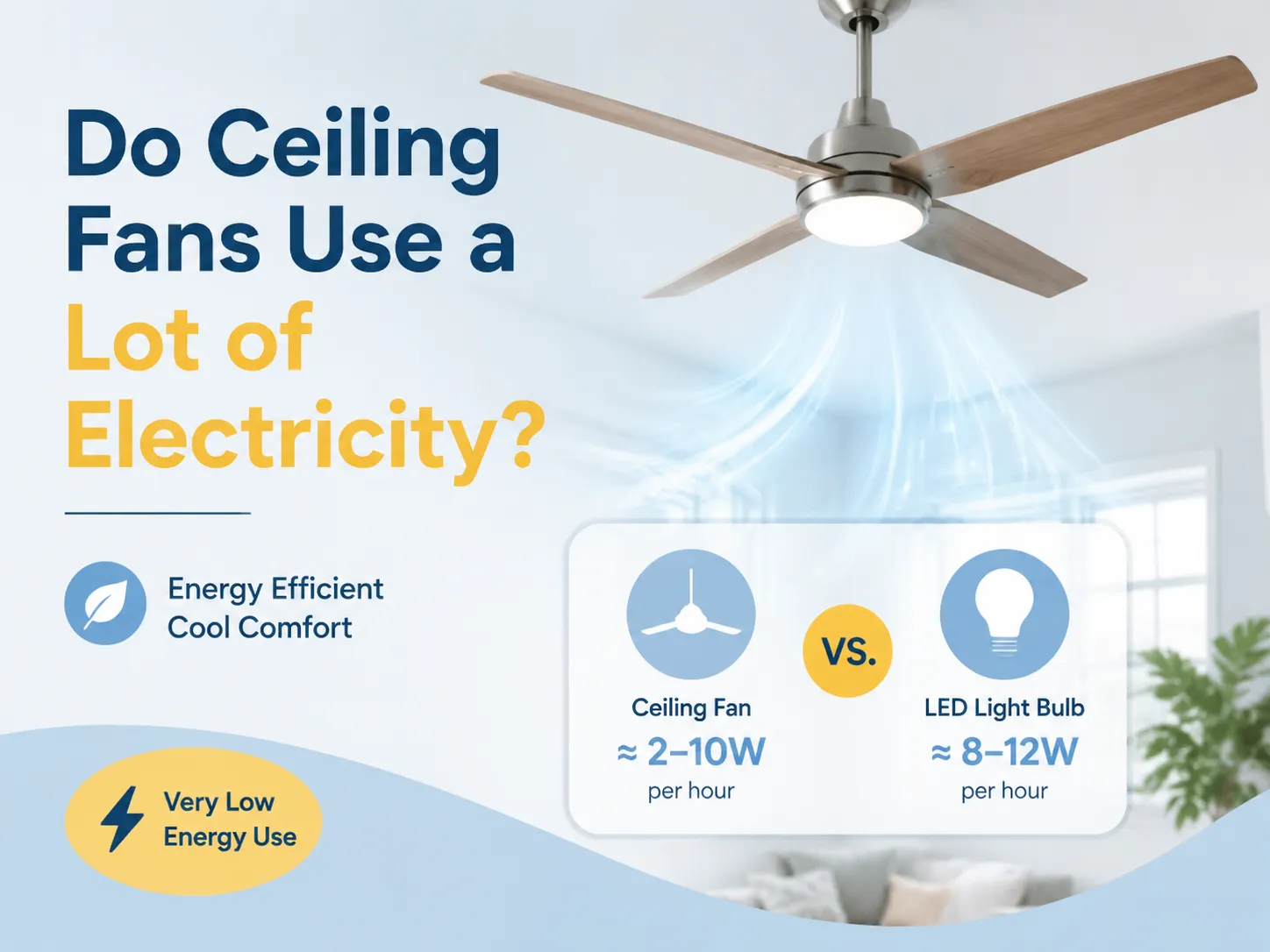
إنها ليلة حارة في الصيف، وهناك مروحة سقف تعمل في الغرفة منذ أن ذهب الأطفال للنوم. السؤال الذي يخطر في الذهن هو ما إذا كانت المروحة تزيد من فاتورة الطاقة. الجواب هو بالإيجاب حيث تظهر الدراسات أن مراوح السقف من بين الأجهزة الأكثر توفيرًا في المنزل. ومع ذلك، فإن مبدأ تكاليف تشغيل مروحة السقف أكثر تعقيدًا من مجرد القول بأنها رخيصة التشغيل. نوع المحرك، مستوى السرعة، مجموعة الإضاءة، وتكرار الاستخدام تلعب دورها أيضًا.
الجواب: لا. تستخدم مراوح السقف العادية من 15 إلى 90 واط، وهو أقل من معظم المعدات الأخرى. تستخدم مروحة بحجم 52 بوصة حوالي 40-70 واط، بينما تنتج المراوح الجديدة نفس تدفق الهواء باستخدام 15-40 واط فقط (أقل بـ 30-70%). بافتراض أن سعر الكهرباء في الولايات المتحدة حوالي 16 سنتًا لكل كيلوواط ساعة، فإن استخدام مثل هذه المروحة يعادل سنتًا واحدًا في الساعة (0.6-1.2 سنتًا، بدقة)، 12-29 سنتًا خلال 24 ساعة (3-9 دولارات شهريًا) وحوالي 5-35 دولارًا لتشغيل يومي لمدة 8 ساعات خلال الصيف.
كم واط تستهلك مروحة السقف؟
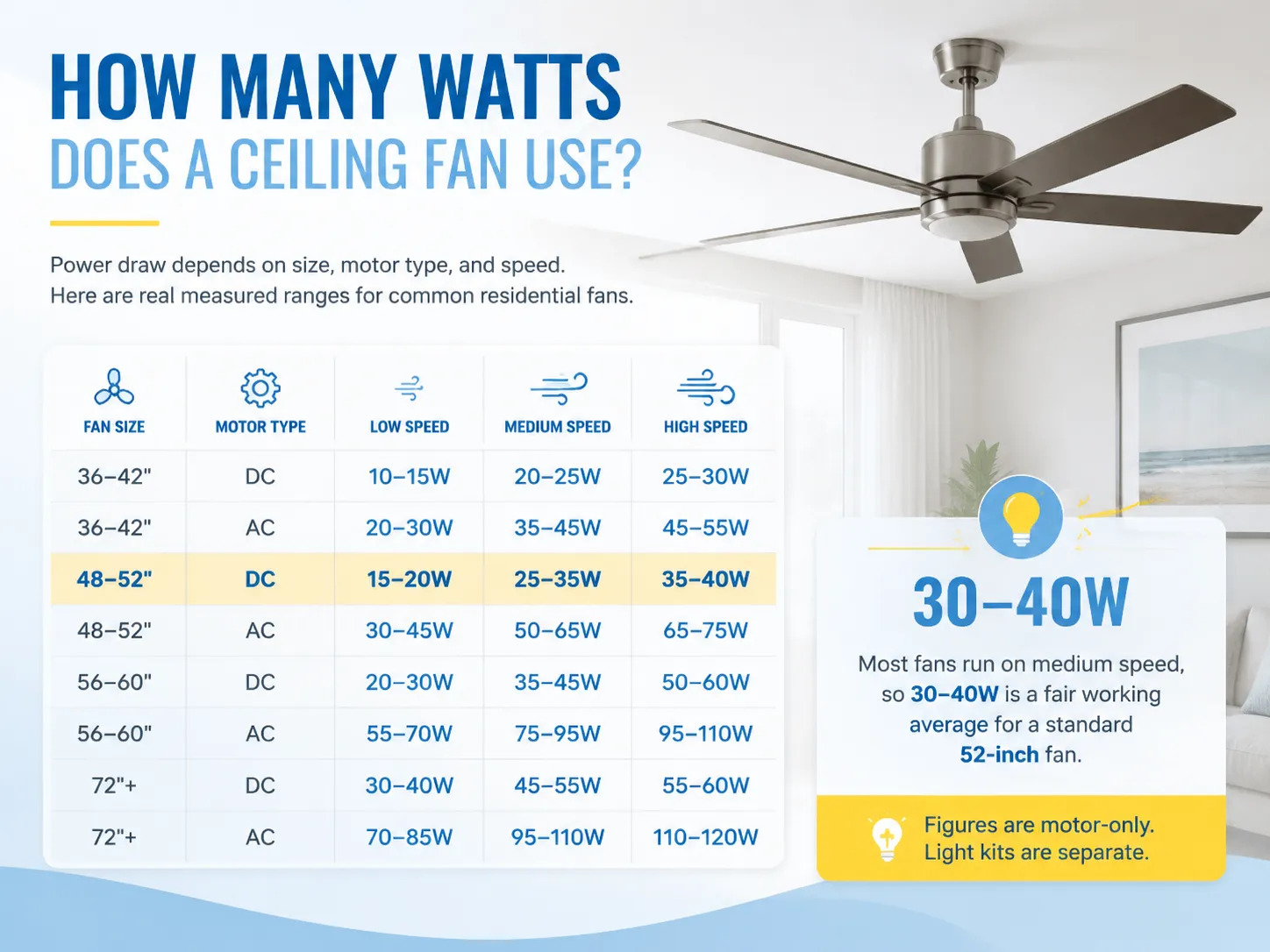
كمية الكهرباء التي تستهلكها مروحة السقف تحددها عوامل مثل الارتفاع، نوع المحرك والسرعة. التصنيفات الكهربائية لمراوح السقف بأحجام مختلفة هي كما يلي:
| حجم المروحة | نوع المحرك | سرعة منخفضة | سرعة متوسطة | سرعة عالية |
|---|---|---|---|---|
| 36-42″ | تيار مستمر | 10-15 واط | 20-25 واط | 25-30 واط |
| 36-42″ | تيار متردد | 20-30 واط | 35-45 واط | 45-55 واط |
| 48-52″ (الأكثر شيوعًا) | تيار مستمر | 15-20 واط | 25-35 واط | 35-40 واط |
| 48-52″ (الأكثر شيوعًا) | تيار متردد | 30-45 واط | 50-65 واط | 65-75 واط |
| 56-60″ | تيار مستمر | 20-30 واط | 35-45 واط | 50-60 واط |
| 56-60″ | تيار متردد | 55-70 واط | 75-95 واط | 95-110 واط |
| 72″+ (غرفة كبيرة) | تيار مستمر | 30-40 واط | 45-55 واط | 55-60 واط |
| 72″+ (غرفة كبيرة) | تيار متردد | 70-85 واط | 95-110 واط | 110-120 واط |
بما أن معظم أنواع المراوح تعمل على الوضع المتوسط، فإن مروحة سقف نموذجية بحجم 52 بوصة ستستهلك حوالي 30 إلى 40 واط من الطاقة. لاحظ أن هذه الأرقام تشير فقط إلى محرك المروحة وليس الأضواء.
مراوح بمحرك AC مقابل DC: الفرق الأكبر
نوع المحرك هو العامل الأكثر أهمية الذي يؤثر على استهلاك الطاقة للمروحة.
| الميزة | محرك AC (تقليدي) | محرك DC (حديث) |
|---|---|---|
| الطاقة النموذجية (مروحة 52″) | 40-75W على الوضع المتوسط | 15-40W على الوضع المتوسط |
| استهلاك الطاقة مقابل AC | الأساس | أقل بـ 30-70% |
| أقل استهلاك للسرعة | ~25-30 واط | منخفضة تصل إلى 5-6W |
| إعدادات السرعة | 3-5 سرعات | 6-9 سرعات، تحكم بدون خطوات |
| ضوضاء | همهمة معتدلة | هادئ كهمس |
| وضع الشتاء العكسي | نعم (استجابة أبطأ) | نعم (أكثر سلاسة) |
| العمر الافتراضي | 10-15 سنة | أكثر من 20 سنة |
| التكلفة المسبقة | $50-$200 | $150-$400 |
| التوفير السنوي (استخدام 24/7) | — | $35-$49 مقابل مروحة AC |
عادةً ما تسترد المراوح ذات المحركات DC تكلفتها الأعلى خلال 2-4 سنوات عند استخدامها بانتظام، بالإضافة إلى أنها توفر تنوعًا في السرعة وتشغيلًا أكثر هدوءًا نسبيًا. إذا كنت تنوي استخدام المروحة بشكل عرضي فقط، فإن نموذج AC سيكون مناسبًا، ولكن إذا كنت ستشغل المروحة يوميًا طوال الصيف، فإن اختيار نموذج DC هو أكثر اقتصادية.
أرقام التكلفة الحقيقية: لكل ساعة، يوم، شهر، سنة
يتم احتساب فاتورة الكهرباء بالكيلوواط ساعة (kWh)، مع متوسط سعر السكن في أمريكا في 2026 حوالي $0.16/kWh. الحسابات لمروحة بحجم 52 بوصة كالتالي:
| السيناريو | مروحة AC (75 واط متوسطة) | مروحة DC (30 واط متوسطة) |
|---|---|---|
| لكل ساعة | 075 kWh ≈ $0.012 | 03 kWh ≈ $0.005 |
| لكل 8 ساعات ليلية | 6 kWh ≈ $0.10 | 24 kWh ≈ $0.04 |
| لكل 24 ساعة يوميًا | 8 kWh ≈ $0.29 | 72 kWh ≈ $0.12 |
| لكل شهر (24/7) | 54 كيلوواط ساعة ≈ $8.64 | 6 kWh ≈ $3.46 |
| لكل موسم تبريد (4 أشهر، 8 ساعات/يوم) | ~73 كيلوواط ساعة ≈ $11.70 | ~29 كيلوواط ساعة ≈ $4.70 |
| لكل سنة (24/7) | 657 كيلوواط ساعة ≈ $105 | 263 كيلوواط ساعة ≈ $42 |
متوسط استخدام المنزل هو 8 ساعات يوميًا (فترة الصيف) وتكلفته أقل من 3 دولارات لمروحة AC وأقل من ذلك لمروحة DC، وهو ما يعادل حوالي دولار واحد شهريًا. هذا السعر مشابه لما يدفعه الشخص مقابل فنجان قهوة أسبوعيًا. بالرغم من أن سعر الكيلوواط ساعة قد يصل إلى 0.25 دولار، مما يجعل السعر المدفوع لمروحة تعمل بقدرة 40 واط حوالي 26 سنتًا يوميًا.
عامل مجموعة الإضاءة الذي لا يمكنك تجاهله
هنا سوء فهم كثيرون لا يدركونه: مجموعة إضاءة المروحة قد تكلف أكثر في التشغيل من محرك المروحة نفسه.
- استخدام لمبتين بقدرة 60 واط: +120 واط، وهو أكثر حتى من استهلاك المحرك ويزيد من الاستهلاك الكلي للمروحة.
- استخدام لمبتين LED بقدرة 9 واط: +18 واط، وهو ليس كبيرًا جدًا.
- مجموعات إضاءة LED مدمجة: حوالي +10-15 واط.
- مجموعات إضاءة متوهجة قديمة: +100-250 واط.
إذا كانت لديك مروحة سقف بمصابيح متوهجة، فإن استبدالها بمصابيح LED يسمح لك بتوفير المزيد من الطاقة مقارنة بما يمكنك توفيره من المحرك، حيث الفرق أكثر من 100 واط إجمالاً.
مراوح متعددة: صورة كاملة للمنزل
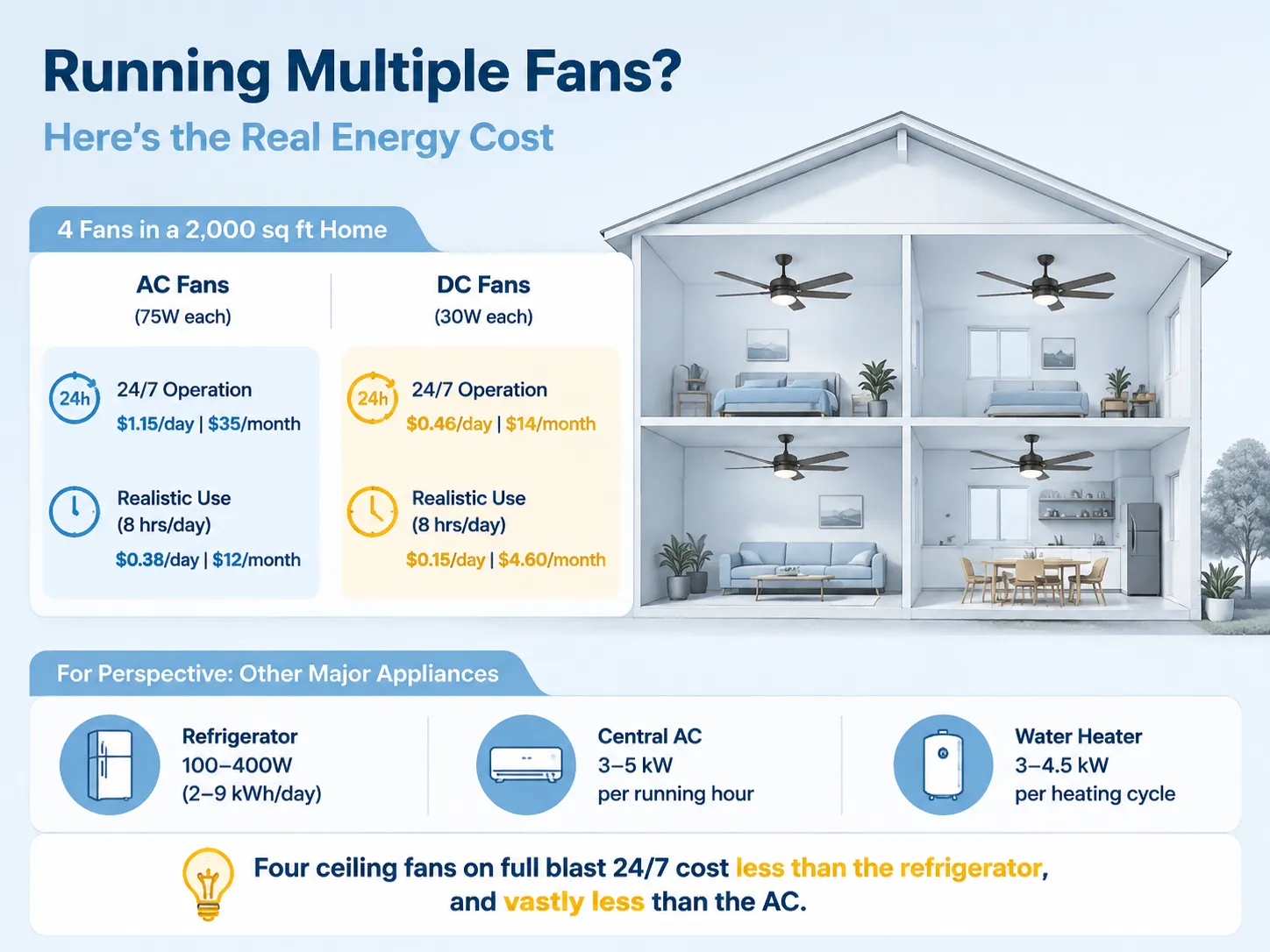
ماذا لو استخدم منزل متوسط عددًا من المراوح، مثلاً أربع مراوح في منزل قياسي بمساحة 2000 قدم مربع؟ تشغيل 24/7 بسرعة متوسطة:
- أربع مراوح AC (75 واط لكل منها): 300 واط إجمالاً → 7.2 kWh/يوم → حوالي $1.15/يوم، $35 في الشهر.
- أربع مراوح DC (30 واط لكل منها): 120 واط إجمالاً → 2.9 kWh/يوم → حوالي $0.46/يوم، $14 في الشهر.
- الاستخدام العملي لأربع مراوح AC لمدة 8 ساعات يوميًا يعادل حوالي $0.38/يوم ($12/شهر)، ونفس الشيء ينطبق على نموذج DC الذي يكلف حوالي $0.15/يوم ($4.60/شهر).
لأغراض الفهم الأفضل: يسحب الثلاجة في نفس المنزل من 100 واط إلى 400 واط باستمرار (2-9 كيلواط ساعة/يوم). قد يستخدم مكيف الهواء المركزي من 3 إلى 5 كيلوواط في الساعة، مثل نظام تسخين المياه الذي يعمل بين 3 إلى 4.5 كيلوواط لكل دورة. وبالتالي، فإن تشغيل أربعة مراوح لمدة 24 ساعة في اليوم يكلف أقل من تشغيل الثلاجة، وأقل بكثير من تكييف الهواء. إذا كنت تقلل من فاتورة الكهرباء الخاصة بك، فإن مراوح السقف هي تقريبًا آخر شيء يجب لمسه — بينما ترقية الإضاءة التي تعمل جنبًا إلى جنب معها هي واحدة من الأولويات، كما هو لدينا دليل توافق مخفت LED عروض.
مروحة سقف مقابل مكيف هواء
البيانات المقارنة التي تسمح باتخاذ حكم:
| الجهاز | الطاقة النموذجية | تكلفة ساعة واحدة | تكلفة 24 ساعة |
|---|---|---|---|
| مروحة سقف (DC) | 15-40 واط | $0.003-$0.006 | $0.06-$0.15 |
| مروحة سقف (AC) | 40-90 واط | $0.006-$0.014 | $0.15-$0.35 |
| وحدة تكييف نافذة | 500-1,500 واط | $0.08-$0.24 | $1.90-$5.75 |
| تكييف مركزي | 3,000-5,000 واط | $0.48-$0.80 | $11.50-$19.20 (تشغيل) |
تستهلك مروحة السقف حوالي 1-3% مما يستهلكه التكييف المركزي. يمكن تشغيل المروحة بدون انقطاع طوال اليوم مقابل إنفاق أقل من تكلفة عشرين دقيقة من عمل الضاغط. لهذا السبب المروحة هي الجهاز الذي يسمح باستخدام الجهاز المكلف بشكل أكثر اقتصاداً.
هل تقلل مراوح السقف فعلاً من فاتورة الكهرباء الخاصة بك؟
هنا تكمن قيمة المروحة. المروحة لا تبرد الهواء — بل تبردك، بفضل تأثير برودة الرياح، مما يجعلك تشعر بأنك أبرد بحوالي 4°F (مع تقديرات تتراوح بين 3 إلى 8°F). ونتيجة لذلك يمكنك ضبط منظم الحرارة 4°F أعلى وما زلت تشعر بالراحة — لأنه مقابل كل درجة تخفضها في منظم الحرارة توفر حوالي 3% في تكاليف التبريد — لذا تسمح مروحة 40 واط لوحدة تكييف 4,000 واط بالعمل أقل وتنتهي بدفع خمسة سنتات لتوفير دولار. لجعل هذا يحدث، ضع في اعتبارك التوصيات التالية:
- استخدم المراوح فقط في الغرف المشغولة. المراوح تبرد الأشخاص فقط — في الغرف الفارغة، لا تجلب المروحة أي فوائد وتضيع المال.
- اضبط منظم الحرارة عندما تكون المروحة قيد التشغيل. يعتمد التوفير المالي على إعدادات التكييف وليس على المروحة.
- أوقف تشغيل المراوح عند مغادرة الغرفة. استخدم المؤقتات، المفاتيح الذكية أو حساسات الإشغال إذا كنت تميل إلى النسيان.
- في الشتاء، يمكن أن يساعد استخدام الوضع العكسي (الدوران في اتجاه عقارب الساعة بسرعة منخفضة) على تدوير الهواء الدافئ وتوفير تكاليف التدفئة.
كيفية حساب تكلفة المروحة الخاصة بك
إذا كنت بحاجة إلى قيم محددة بدلاً من المتوسطات، استخدم الصيغة أدناه:
التكلفة = (الواط × الساعات ÷ 1,000) × $/كيلوواط ساعة
مثال: مروحة 75 واط × 8 ساعات ÷ 1,000 = 0.6 كيلوواط ساعة × $0.16 = $0.096 في الليلة.
لتحديد الواط، تحقق من الدليل أو الجزء الخارجي للمروحة – عادة ما يتم تدوين الواط على الجهاز بالواط أو الأمبير (الواط = الفولت × الأمبير). ابحث عن سعر الطاقة في فاتورة الكهرباء التي يجب أن تذكر $/كيلوواط ساعة، بمتوسط $0.16 في الولايات المتحدة ولكن يمكن أن يتراوح من $0.10 إلى $0.35. في حال كانت المروحة موصولة بشكل دائم، قد لا يوفر مقياس الواط القابل للتوصيل الرقم الدقيق؛ سيتعين عليك الاعتماد على الملصق أو استخدام مقياس تيار قابل للتثبيت.
شراء المروحة الأكثر كفاءة
عند شراء مروحة جديدة، تأكد من التحقق من التالي:
- محرك DC (BLDC): العامل الأكثر أهمية لكفاءة المروحة؛ يستهلك بين 30% و 70% أقل كهرباء من محرك AC لكنه يعطي نفس الأداء.
- تصنيف ENERGY STAR: المراوح التي تحمل هذه العلامة تم اختبارها بشكل مستقل ووجد أنها تنتج هواء أكثر لكل واط من الطاقة المستخدمة؛ تحقق من مؤشر CFM/W (قدم مكعب في الدقيقة لكل واط). وفقاً لـ ENERGY STAR، يجب أن يكون في نطاق ~2.5-3.7+ حسب نوع المروحة.
- مجموعة إضاءة LED مدمجة: هذه الأضواء تستخدم 10-15 واط مقارنة بمجموعات الإضاءة التقليدية المتوهجة التي تتطلب 100-250 واط.
- جهاز تحكم عن بعد متعدد السرعات: وجود مستويات سرعة أكثر يسمح للمروحة بالعمل عند أدنى مستوى مقبول؛ السرعة المنخفضة تتطلب حوالي 30-40٪ طاقة أقل.
- الضوابط الذكية: وجود مؤقت ومستشعر إشغال أو استخدام تطبيق للتحكم في المروحة يقضي على هدر الطاقة؛ وجود مفتاح حائط ذكي مع المروحة يسمح بالتشغيل التلقائي. دليلنا إلى أفضل المفاتيح الذكية تقييمًا يغطي خيارات التحكم، مزايا مفتاح التعتيم يشرح كيف تدير الضوابط الحديثة أحمال الإضاءة بكفاءة، و دليل المفتاح الذكي المحايد مقابل غير المحايد يساعدك على التحقق مما إذا كان صندوق الحائط الخاص بك يمكنه دعم التحكم الذكي قبل الشراء.
الأسئلة المتكررة
هل تشغيل مروحة السقف طوال الليل يستهلك الكثير من الكهرباء؟
لا. مروحة سقف عادية بحجم 52 بوصة، والتي عادة ما تستهلك طاقة حوالي 40-75 واط (AC) أو 15-40 واط (DC)، تكلف تقريبًا في نطاق 0.04-0.10 دولار في ليلة واحدة (أي 8 ساعات) من التشغيل بمعدل المرافق المتوسط في الولايات المتحدة. هذا يترجم إلى 0.12-0.29 دولار لفترة 24 ساعة كاملة، ويمكن النظر إليه من منظور أن الكهرباء المستهلكة لتشغيل مروحة سقف لليلة واحدة تكلف أقل من تلك التي يستهلكها مصباح متوهج واحد لنفس الليلة.
ما الذي يرفع فاتورة الكهرباء الخاصة بك أكثر؟
التدفئة والتبريد (HVAC) عادة ما تمثل حوالي 40٪ إلى 50٪ من إجمالي تكاليف المرافق لتشغيل المنزل. يأتي تسخين المياه في المرتبة الثانية بحوالي 15٪ من هذه التكاليف. الأجهزة التبريدية تعمل باستمرار؛ مجففات الملابس، الغسيل، وتكاليف الإضاءة يمكن أن تكون أيضًا كبيرة خاصة إذا كانت الأضواء المستخدمة متوهجة. من المثير للاهتمام ملاحظة أن مراوح السقف تستخدم فقط 1٪ أو 3٪ من الطاقة.
هل من الأفضل ترك مروحة السقف تعمل طوال الوقت أم إيقافها؟
إذا لم يكن هناك أشخاص في الغرفة، فلا يجب أن تعمل المروحة. المراوح مخصصة للأشخاص، وليس للغرف — استخدام المروحة في غرفة فارغة يستهلك الكهرباء ولا يفيد أحدًا. تأكد من إيقاف المروحة قبل المغادرة، أو استخدم مؤقتًا، مستشعر إشغال، أو مفتاح ذكي لدعمك. تشغيل المروحة في الغرف المشغولة هو حل ممتاز، حيث يسمح لك برفع درجة حرارة التكييف بمقدار 3-4 درجات.
هل تقلل مراوح السقف من فاتورة الكهرباء؟
صحيح، عند استخدامها بشكل ملحوظ مع استراتيجية منظم الحرارة. تعطي مروحة السقف إحساسًا بانخفاض درجة حرارة الغرفة بحوالي 4 درجات فهرنهايت، مما يجعل من الممكن رفع منظم الحرارة بمقدار 4 درجات مع الحفاظ على مستوى الراحة في الغرفة. لكل درجة يتم رفعها على منظم الحرارة يمكن توفير حوالي 3٪ من إجمالي فواتير التبريد، مما يعني أن وظيفة مروحة التبريد التي تستهلك 40 واط يمكن أن تحقق توفيرات أعلى عدة مرات من استهلاك المروحة الحالي. الأفكار الأساسية هي التأكد من ضبط منظم الحرارة للأعلى عندما تعمل المروحة ويجب إيقاف المروحة في الغرف الخالية.
المراجع
- D&G Floors — كم تستهلك مروحة السقف من الطاقة (الواط الحقيقية والتكاليف)
- Seus Lighting — هل تستهلك مراوح السقف الكثير من الكهرباء؟ دليل التكاليف 2026
- كم واط — حاسبة استهلاك الطاقة وتكلفة مروحة السقف حسب الحجم/المحرك
- مراوح السقف KBS — استهلاك الطاقة حسب نوع المحرك (AC مقابل DC مقابل EC)
- ENERGY STAR — متطلبات برنامج مراوح السقف (CFM/W)
- US EIA — بيانات أسعار الكهرباء حسب المنطقة
الخاتمة
مراوح السقف جيدة في استهلاك الطاقة؛ فهي من بين الأجهزة الأقل استهلاكًا للطاقة في منازلنا. تستخدم مروحة السقف النموذجية ما بين 15-90 واط حسب نوع محركها، وتكلف أقل من سنت واحد في الساعة للتشغيل. يمكنك تشغيل المروحة طوال اليوم ودفع ما بين 0.12-0.29 دولارًا إجمالاً. حتى في حالة غير محتملة باستخدام عدة مراوح سقف في كل غرفة من منزلك، ستنفق مالًا أكثر على ساعة واحدة من التدفئة المركزية مقارنة باستخدام عدة مراوح طوال اليوم. بعض النقاط المهمة التي يجب مراعاتها هي: يوفر المحرك DC توفيرًا في الطاقة يتراوح بين 30% إلى 70%؛ قد تكلف أجهزة الإضاءة في بعض الحالات أكثر من المحرك في المروحة (مصابيح LED أفضل)؛ واستراتيجية الترموستات يمكن أن تجعل مروحة السقف مصدر ربح بدلاً من تكلفة (تكلفة حوالي 0.05 دولار لتحقيق 1 دولار عائد).
لذلك، يُنصح باتباع بعض النصائح العملية: اختر مروحة سقف بمحرك DC؛ من الأفضل استبدال أي مصابيح متوهجة في أضواء المروحة بمصابيح LED؛ استخدم مراوح السقف فقط في الغرف التي تتواجد فيها؛ ارفع ترموستات مكيف الهواء بحوالي 3-4 درجات؛ واستخدم نظام ذكي/مؤقت أثناء التدفئة. وإذا كنت تستبدل وحدات تحكم الحائط للمروحة أثناء ذلك، فإن استبدال مفتاح الضوء يشرح التوصيل الكهربائي بأمان.