الجميع سمع عن هذا الاختصار المعروف باسم GFCI، لكن القليل من الناس يفهمون ما يعنيه فعليًا وما يفعله. وفقًا للمهنيين، يستخدم الكهربائيون هذه العبارة بحرية ويقتبسها المفتشون في تقاريرهم، بينما يكتفي غير المطلعين بالموافقة. يكمن السبب في ذلك في حقيقة أن كلمتين مختلفتين تُستخدمان للدلالة على نفس الجهاز، وكلاهما لا يوفر الكثير من المعلومات حول ما يفعله الجهاز فعليًا وكيف يعمل.
في هذا المقال، سنبدأ بتوضيح ما يعنيه المصطلح، ثم ننتقل إلى تفاصيل مهمة عن الجهاز مثل المعايير التي تجعل الجهاز مميزًا، بالإضافة إلى الأماكن التي يجب تركيب الجهاز فيها وفقًا لقوانين البناء، والاختلافات بين GFCI وأجهزة أخرى مثل GFI وAFCI وRCD، ومتوسط تكاليف الجهاز في عام 2026.
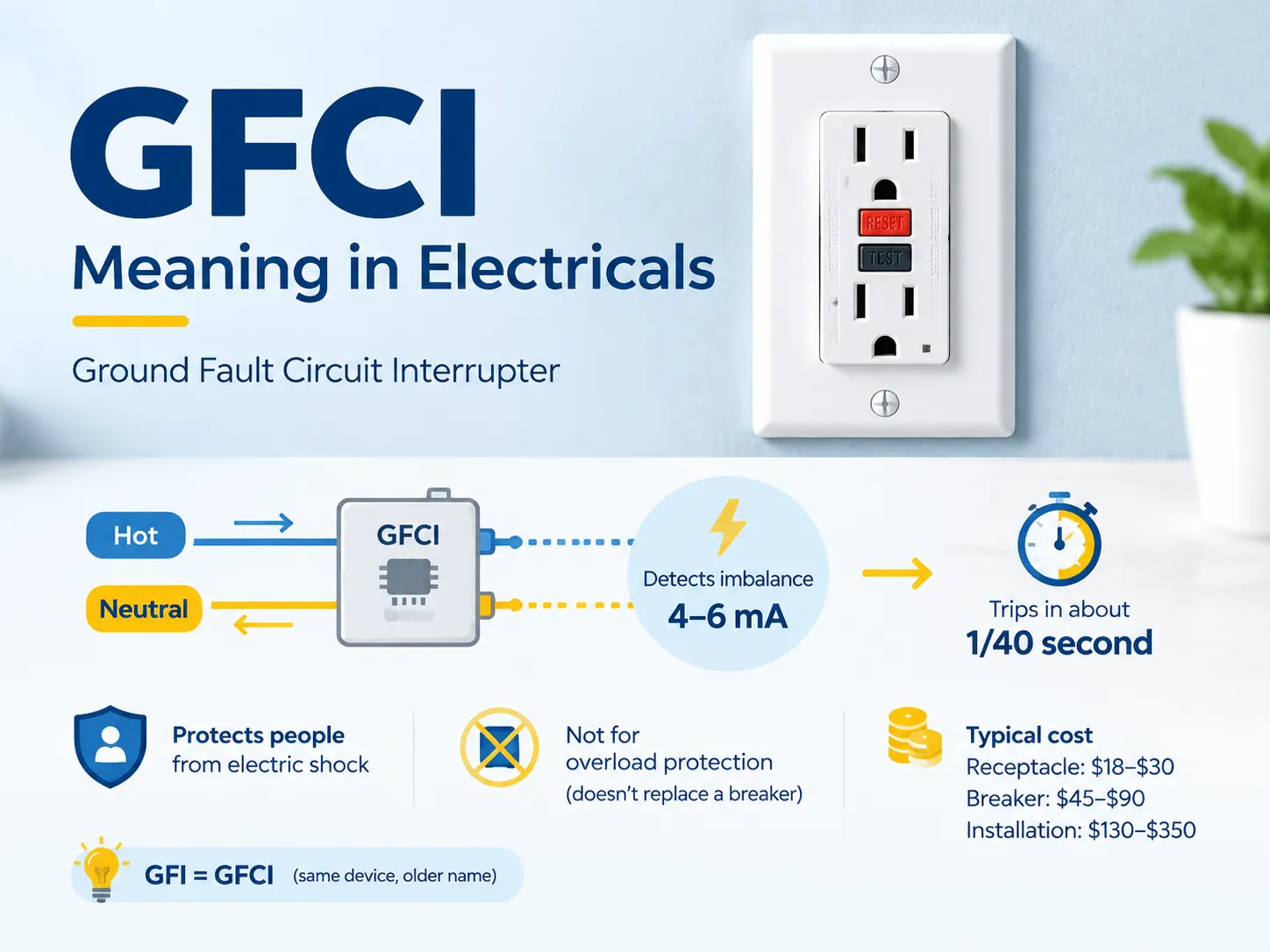
GFCI هو اختصار لـ Ground Fault Circuit Interrupter. هذا الجهاز مخصص للسلامة لأنه يتتبع الفرق بين كمية الكهرباء التي تسير في السلك الحار والتي تعود عبر السلك المحايد. عندما يقترب الفرق من حوالي 4 إلى 6 ميلي أمبير، يفتح GFCI الدائرة في حوالي 1/40 من الثانية، وهي سرعة استجابته للاختلاف في التيارات. على عكس قواطع الدائرة التي تحمي المعدات من التحميل الزائد، تحمي GFCIs الأشخاص من الصدمات الكهربائية. سعر مخرج GFCI هو $18–$30 وقاطع GFCI هو $45–$90؛ تكلفة تركيب GFCI هي $130–$350. GFI مرادف لـ GFCI لأنه يشير إلى نفس نوع الجهاز لكنه يحمل اسمًا أقصر قليلاً.
معنى GFCI في الكهرباء: الشكل الكامل، ببساطة
اسم GFCI وصفي؛ يعطينا ثلاث أفكار من أجزائه الثلاثة. “Ground fault” تعني أن التيار يقوم بأشياء غريبة، مثل الذهاب إلى الأرض عبر شخص، أو عبر بركة ماء، أو عبر موصل مكسور يلمس جسمًا معدنيًا مؤرضًا. الفعل “to interrupt” يشير إلى قطع الدائرة. يمكن أن يُسمى الجهاز ببساطة “مقطع الدائرة”، لأن هذا ما يفعله. ومن ثم، فإن GFCI هو الجهاز الذي يشعر بالتيار المتدفق حيث لا ينبغي أن يتدفق ويقطع التيار قبل أن يقتل شخصًا ما.
GFCI مميز في تصميمه بسبب مستوى التيار الذي يستجيب له. تعمل القواطع العادية عند مستوى 15 أمبير، وهذه القيمة كافية لحماية موصل 14 AWG. تعمل GFCIs عند مستوى 4-6 ميلي أمبير من تيار التسرب، وهو ما يعادل واحد من أربعمائة التيار اللازم لعمل قاطع صغير. سبب هذا الاختلاف هو كما يلي: كمية التيار في نطاق 10-30 ميلي أمبير التي تمر عبر جسم الإنسان تسبب انقباضًا عضليًا مستمرًا وحتى الرجفان البطيني. 50 ميلي أمبير يمكن أن تقتل الشخص فورًا. تعمل GFCIs عند مستويات تسرب أكثر أمانًا بحيث لا يموت الشخص الذي يتعرض لصعقة كهربائية.
يجب تذكر شيء أخير مهم عن أجهزة GFCI: هذه الأجهزة لا تعمل كأجهزة حماية من التيار الزائد. وبالتالي، فإن أجهزة GFCI لا تحمي الأسلاك من التحميل الزائد؛ فهي لا توقف الدوائر القصيرة ولا تحمي المحركات من سحب تيار زائد. بل إن أجهزة GFCI تكتشف توقيع التسرب الذي يسبق الصدمة الكهربائية، وهو طريقة فشل مختلفة تمامًا.
كيف يعمل جهاز GFCI فعليًا
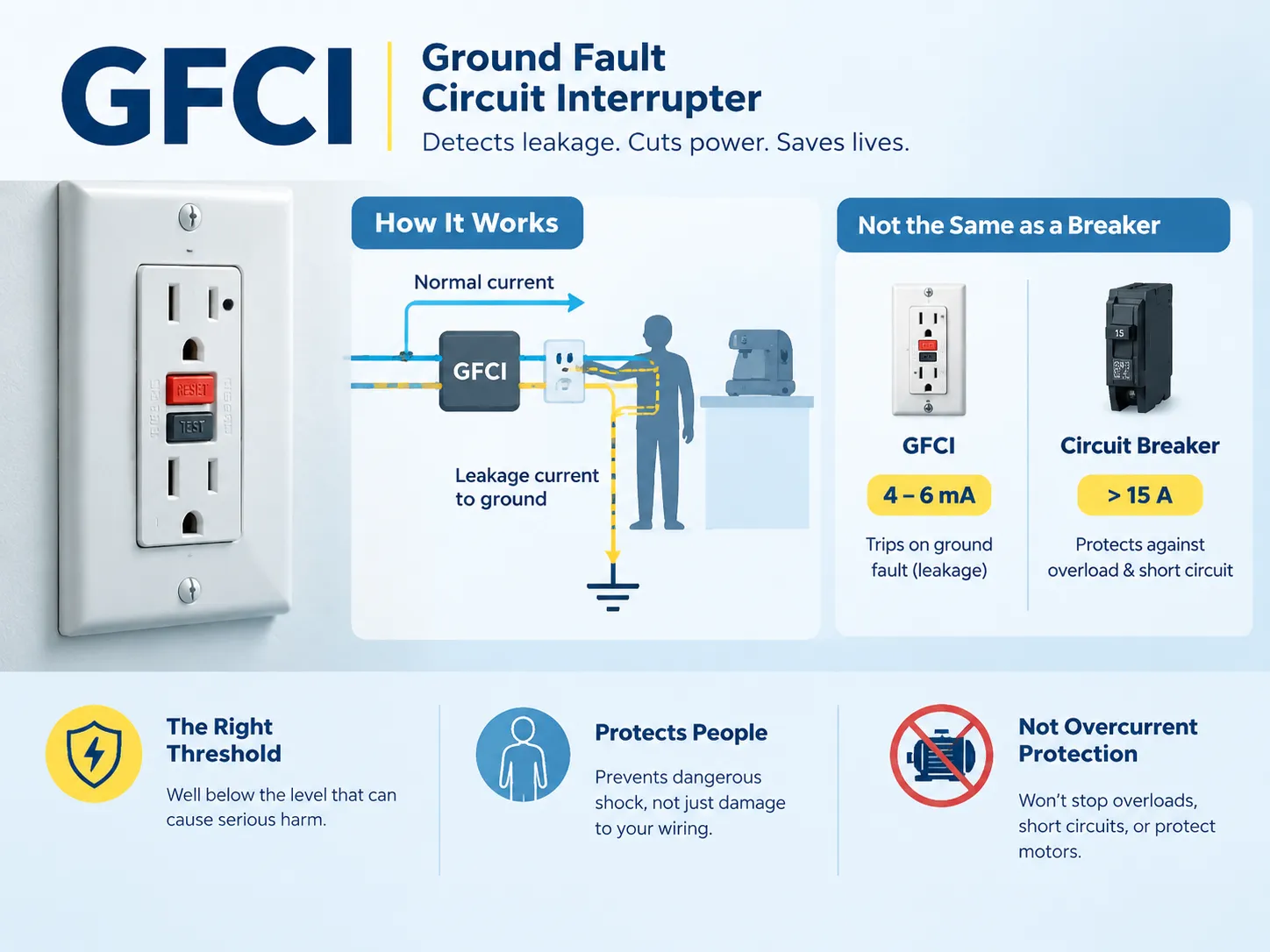
يحتوي كل قاطع دائرة تسرب التيار الأرضي (GFCI) على جهاز صغير يسمى محول التيار يمر من خلاله كل من السلك الحار والسلك المحايد. في الظروف العادية، يكون مقدار التيار المرسل عبر السلك الحار مساويًا لمقدار التيار العائد عبر السلك المحايد، مما يجعل المجالات المغناطيسية التي ينشئها كلا السلكين في المحول تلغي بعضها البعض، وبالتالي لا يتم اكتشاف أي تيار. هذه هي المبدأ وراء عمل جهاز GFCI.
بمجرد تسرب بعض التيار إلى الأرض عبر الجسم أو الماء أو العزل التالف، يختلف التيار المرسل عن التيار العائد عبر السلك المحايد. هذا يتسبب في تدفق التيار عبر الملف، مما ينتج إشارة قابلة للقياس يمكن مقارنتها بعتبة الفصل. إذا تجاوزت الإشارة حدًا معينًا، فإن ملفًا كهرومغناطيسيًا سيعمل، مما يفتح جهات اتصال السلك الحار والمحايد. في حالة قاطع دائرة GFCI، يستقبل عنصر الاستشعار نفس الإشارة ويشغل آلية القاطع. على عكس الفيوز، لا يحدث فصل الدائرة تلقائيًا ويسمح بإعادة تعيين الجهاز، وهو أمر ضروري بعد حدوث الصدمة الكهربائية.
لهذا التصميم دلالتان مهمتان. أولاً، يمكن لأجهزة قاطع دائرة التسرب الأرضي اكتشاف التيار الكهربائي الذي يمر عبر جسم الإنسان حتى في الحالات التي لا يكون فيها الشخص مؤرضًا على الإطلاق. وذلك لأن الشخص الذي يقف على أرضية مبللة وهو يرتدي أحذية مطاطية ويلمس السلك الحي لا يخلق دائرة كهربائية قصيرة، لكن جهاز GFCI يلاحظ ذلك. الدلالة الثانية هي أن أجهزة قاطع دائرة التسرب الأرضي لا تتطلب تأريض المعدات للعمل. هذا هو السبب في أنه يمكن تركيبها على دوائر قديمة ذات سلكين. هذه النقطة الأخيرة تحمل تحذيرًا مهمًا، ومن المفيد قراءة المزيد عن كيفية بناء أجهزة المقبس وما يفعله كل طرف توصيل في الجهاز فعليًا قبل أن تقرر أن جهاز GFCI هو اختصار لتجنب إعادة توصيل الأسلاك في المنزل.
جانب آخر يوضحه تصميم الاستشعار هو الفصل الخاطئ المتكرر. بسبب العتبة المنخفضة جدًا، فإن أي جهاز يصدر أكثر من مقدار التسرب المحدد سيؤدي فورًا إلى فصل جهاز GFCI حتى في حالة عدم اكتشاف أي عطل على الإطلاق. هذا ليس عيبًا بل هو عمل الجهاز بطريقة طبيعية.
الأماكن التي يتطلب فيها الكود حماية GFCI
وفقًا للمادة 210 من الكود الكهربائي الوطني، كانت متطلبات GFCI موجودة منذ أن تم طلب أجهزة GFCI لأول مرة للمقابس الخارجية في عام 1971. استمرت المواصفات التنظيمية لأجهزة GFCI في التوسع في السنوات التالية. وبناءً عليه، تم أيضًا فرض أجهزة GFCI للحمامات في عام 1975، ثم للمرائب في عام 1978، وهكذا حتى يومنا هذا. إذا كنت تعمل من أي نسخة سابقة من الكود، فقد تكون بعض المواقع مفقودة في معلوماتك.
تم تحديث NEC مرة أخرى في إصدار 2023، والذي يتطلب الآن حماية GFCI لجميع المقابس بجهد 125 فولت-250 فولت المعترف بها في فئة 50 أمبير. يشمل هذا جميع المقابس المستخدمة في مواقع وحدات السكن، والتي يمكننا ذكر الحمامات، المرائب والمباني الأخرى بالإضافة إلى المقابس الخارجية، مساحات الزحف، الأقبية، مناطق المطابخ، بيوت القوارب، وكذلك أي شيء موضوع داخل المباني ضمن ستة أقدام من حوض الاستحمام أو الدش، بالإضافة إلى المواقع الرطبة داخل المباني وكذلك غرف الغسيل. التوسع ليشمل مقابس 250 فولت هو التغيير الذي يفاجئ الناس، لأنه يعني أنه من الآن فصاعدًا، تحتاج مقابس 240 فولت في المرائب والخارج إلى حماية GFCI.
بالنسبة للمقابس التجارية، نشير إلى القسم NEC 210.8(B) وجميع أماكن الاستخدام، والتي تتعلق بمناطق المطابخ التجارية المذكورة أعلاه حيث لا تُدرج المقابس ضمن الأجهزة بسبب طبيعتها، إعدادات الأسطح، وكذلك الإعدادات الخارجية اعتمادًا على تلك المقابس.
| الموقع | 8(A) الوحدات السكنية | 8(B) غير السكنية | Notes |
|---|---|---|---|
| الحمامات | جميع المقابس | جميع المقابس | الغرفة بأكملها، وليس فقط بالقرب من الحوض |
| المطابخ | مناطق المطابخ | المطابخ التجارية | غير مطلوب للمقابس المدمجة في الأجهزة |
| المرائب / مداخل الخدمة | نعم | نعم | تم إزالة استثناء مقبس فتاحة باب المرآب في إصدار 2020 |
| في الهواء الطلق | جميع المقابس | جميع المقابس | استخدم أجهزة مقاومة للطقس (WR) |
| مناطق الغسيل | نعم (أضيف في 2023) | — | جميع المقابس في مساحة الغسيل |
| الأقبية / مساحات الزحف | نعم | مساحات الزحف عند أو تحت مستوى الأرض | تم توسيع التغطية في 2023 |
| ضمن 6 أقدام من الحوض | نعم | نعم | مقاسة من الحافة الخارجية للحوض |
| الأسطح | — | جميع المقابس | تصحيح شائع في الأعمال التجارية |
يتجاهل الكثيرون فكرة مهمة: التبني. NEC هو دليل جيد. وهو قابل للتطبيق فقط إذا اعتمدته جهة الاختصاص. تستخدم الولايات التي لدينا معظم إصداراتها من 2020 إلى 2023. حيثما تريد ذكر شيء كمتطلب أو غير متطلب بناءً على سلطة ما، تحقق من إصدار NEC الذي اعتمدته جهة اختصاصك. إذا كنت تقوم بتوريد الأجهزة لمشروع بدلاً من تفتيشه، ينطبق نفس الحذر على الأجهزة — مطابقة نوع الجهاز لتكوين المقبس المستخدم هي تخصص بحد ذاته، ومرجعنا حول أنواع المقابس المختلفة المستخدمة حول العالم وأين ينطبق كل منها هو فحص مفيد قبل تقديم طلب الشراء.
GFCI مقابل GFI مقابل AFCI مقابل RCD: توضيح الأسماء الأربعة
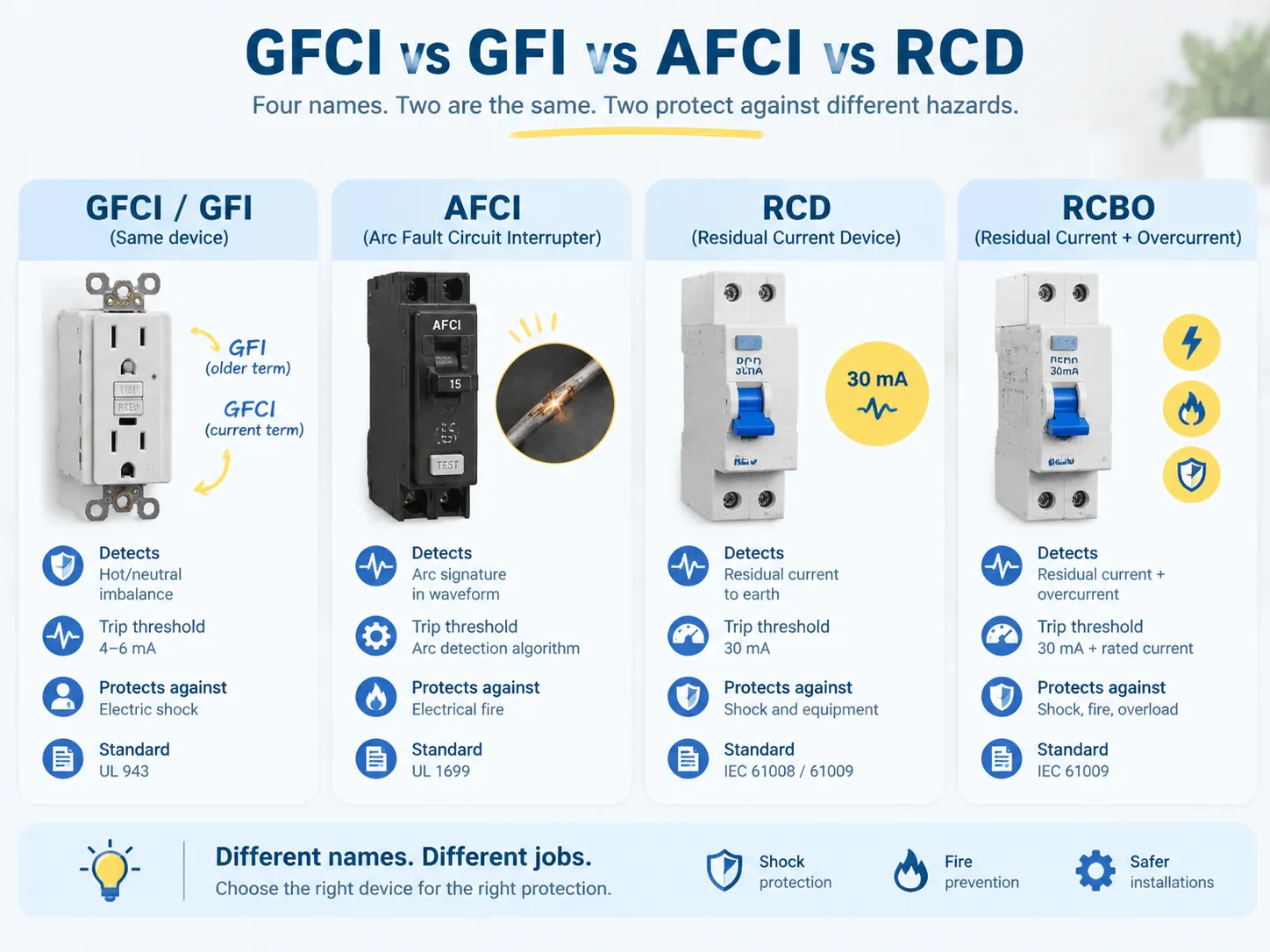
هناك أربعة مصطلحات هنا. اثنان منها يعنيان نفس الشيء، بينما الآخران يمنعان أشياء مختلفة تمامًا. إذا تمكنت من توضيح هذا الالتباس في ثلاثين ثانية، فسيوفر عليك الكثير من سوء الفهم.
في الواقع، GFCI و GFI تعنيان نفس الجهاز. GFI تعني Ground Fault Interrupter بينما GFCI تمثل Ground Fault Circuit Interrupter. الاختلاف في تهجئة الاختصارات جاء لأن الاختصار الأول دخل الاستخدام أولاً وظهر كاسم للأجهزة على مر السنين. لذا، على سبيل المثال، قد تجد المنتج الذي تصنعه Leviton أو Eaton يحمل GFI في اسمه و Ground Fault Circuit Interrupter مذكورًا في تفاصيل تغليف الجهاز. لا يوجد فرق بين الاثنين من حيث الوظيفة أو المعيار أو الشهادة. حقيقة أن البعض قد يقول إن GFI هو نسخة مبسطة من GFCI تعود إلى تغليف المنتج وليس الجانب الهندسي من المسألة.
أما بالنسبة لـ AFCI، فهو يمثل نوعًا آخر من الأجهزة. Arc Fault Circuit Interrupter مصمم للكشف عن قوس كهربائي خطير. أعني بذلك الكشف عن التوقيع الناتج عن القوس بسبب أسباب في الأجهزة التي قد تكون معطلة. على عكس GFCI، لا يمكنه منع الصدمة الكهربائية. إنه يوفر فقط الحماية اللازمة ضد خطر الحريق. يعمل جهاز AFCI بنفس طريقة عمل GFCI، مما يعني أن الدوائر ذات الوظيفة المزدوجة أكثر كفاءة من الأجهزة عالية التردد الأولى.
البديل الدولي لـ GFCI هو RCD. تطبق جميع البلدان تقريبًا باستثناء أمريكا الشمالية أجهزة التيار المتبقي Residual Current Devices. الحقيقة هي أن RCD يخضع لمعايير IEC61008 و IEC61009، بينما لديه مستوى حساسية قياسي حوالي 30 mA. للحصول على صورة أوضح لكيفية تطبيق هذه الاختلافات السوقية عمليًا،, كيف تقارن الأنظمة الكهربائية في المملكة المتحدة والولايات المتحدة من حيث الجهد والتردد واستراتيجية الحماية is worth a read before you specify.
| الجهاز | Detects | Trip Threshold | Protects Against | المعيار |
|---|---|---|---|---|
| قاطع الدائرة الأرضية (GFCI) | Hot/neutral current imbalance | 4–6 mA | Electric shock | UL 943 |
| GFI | Same device | 4–6 mA | Electric shock | UL 943 |
| AFCI | Arc signature in waveform | Arc detection algorithm | Electrical fire | UL 1699 |
| RCD (30 mA) | Residual current to earth | 30 mA | Shock and equipment | IEC 61008 / 61009 |
| RCBO | Residual current + overcurrent | 30 mA + rated current | Shock, fire, overload | IEC 61009 |
Where a GFCI Belongs and Where It Does Not
On one hand, code provides basic minimum requirements in terms of safety provisions. On the other hand, practical expertise tells you in which situations you would need to go beyond the code, and where doing so creates more problems than solutions.
You may want to consider installing GFCI protection regardless of whether you are required to do so or not: any receptacle that is in close proximity to aquarium, or humidifiers/dehumidifiers, but especially in old homes because a GFCI works on ungrounded circuits as it can detect leakage without any ground path and can be fitted into place in twenty minutes per location. Of course, it is not an alternative to rewiring and must be properly labeled for future reference.
There are also cases when having a dedicated circuit for a piece of large equipment presents a problem because this is the best example of a case where a person fights the equipment instead of trying to understand it.
What GFCI Devices Cost
While machinery costs little, the labour involved is expensive. This fact should dictate how you organize the job since labour costs are calculated on a per visit basis and not on the per device basis. Therefore it makes no sense to do the job one device at a time.
| البند | السعر النموذجي | Notes |
|---|---|---|
| Standard 15 A or 20 A GFCI receptacle | $18–$30 | Tamper-resistant versions add a few dollars |
| Tamper-resistant (TR) GFCI receptacle | $20–$35 | Required in dwelling units per NEC 406.12 |
| Weather-resistant (WR) GFCI receptacle | $25–$45 | Marked WR; required outdoors per NEC 406.9 |
| GFCI circuit breaker, 15–50 A | $45–$90 | Protects the whole circuit; needs panel space |
| Dual-function AFCI/GFCI breaker | $50–$110 | Covers two code requirements in one pole space |
| Professional installation, per device | $130–$350 | Roughly 1–2 hours; panel work costs more |
| Whole-house retrofit, 8–12 locations | $900–$2,500 | Batch the work to amortise the visit |
There truly is a pricing gap between brands, which is not terribly large, as it depends mostly on trip speed, light indication behavior, and the presence of test function. New GFCIs have to test themselves at regular intervals and signal their failure instead of just sitting there in dead silence, which is a function I wouldn’t overlook. If you are comparing device ranges at the supplier level rather than the retail shelf, how the major wiring-device brands position themselves on quality, price and market gives you a reasonable map of who sits where. Brands differ far more on decorative plates and finish options than on the protection electronics inside, which is worth remembering when someone tries to sell you a premium GFCI on safety grounds.
It is important to mention GOG’s position in the context of installations involving wiring devices. GOG develops various types of switches and sockets, which are partially visible when a circuit has been wired, and it sells those products to distributed network operators and OEM clients. Below protective devices lies the GFCI that has a special category as per the certifications. When it comes to North American projects, the correct approach is to buy the GFCI from a UL 943 manufacturer and the various socket outlets, plates, and switches from the manufacturer that provides the most acceptably fast lead times and consistency.
Installation and Maintenance Notes That Save Callbacks
Most issues concerning GFCIs do not occur due to device breakdowns. Instances of GFCIs malfunctioning can often be traced back to sloppy installation or lack of proper testing. There are five guidelines one needs to remember in order to avoid unnecessary nuisance tripping.
Keep GFCIs from daisy chaining. Installing a GFCI downstream from another unit means both units are dealing with the very same circuit so that if any of them trips, the other one may go off as well or partially reset. There should be at least one GFCI installed per circuit so that following its LOAD terminals you can connect regular outlets.
Check that you are connecting loads and line wires correctly. If you connect the wires incorrectly GFCI does not get damaged anywhere but it does not provide any protection either. Check your sockets with a plug-in device connected to the SUSPECTED socket, not just at the GFCI itself.If you are not confident reading the terminal markings, the same discipline applies as when wiring any device, and how to evaluate wiring devices on rating, listing and build quality covers the checks that keep you from installing something that will not hold up.
Tag the outlets that are protected. A tiny sticker that says “GFCI protected,” is a good way to let the next person know who doesn’t have to look around for the source of the nuisance. This is especially beneficial in case the GFCI has been placed upstream somewhere in the bathroom but is protecting the receptacle located in the hallway
Use weather-resistant devices outside, in an appropriate enclosure. It should be noted that just by calling a GACFI a weather-resistant device does not make it waterproof. It requires an in-use (bubble) cover if something is plugged in continuously and must be mounted in such a way as to avoid water pooling on the face. Most GFCIs outside fail not because of electronics but due to water ingress.
Perform manual testing each month. All you have to do is to press the TEST button and check that the device does trip and the downstream receptacles are dead, and then you press the RESET button. With the self-checking feature being available now you still cannot depend on the test made by the device. Making a manual test once a month is a good practice.
الأسئلة المتكررة
ما الذي لا يجب توصيله بمخرج GFCI؟
While there is no particular appliance designated to be installed on a GFCI receptacle according to the American electrical code, there is, instead, a practical list of appliances that, either because of their design or due to being old, cause frequent tripping of GFCIs by leaking electricity of more than 4-6mA. For example, refrigerators and freezers have always been on the list of “culprits” but dehumidifiers, sump pumps, treadmills and machinery with larger engines, high inrush laser printers and fluoros with old ballasts follow them close. It is interesting to note that the NEC has given a special consideration to the problem of the sump pump in the basement by allowing it to be plugged directly into the outlet without using GFCI. It would be good not to fight against GFCIs by removing them but to search for the leaking appliance by using a clamp meter on its cord.
What does a GFI outlet look like?
A GFI outlet appears to have two rectangular buttons, labelled TEST and RESET, usually with a small indicator light nearby. Most GFI outlets are of the standard duplex design and fit into a normal wall plate. However, decorator style GFI outlets are also popular and feature a wide rectangular opening and wider face. You can identify 20 A outlets by the T-shape in the left slot since 15A outlets have a square shaped slot. If you try to insert a probe into a tamper-resistant outlet, you will notice that there is a spring mechanism behind the openings. Furthermore, some outdoor GFI outlets have the WR inscription to show they are weather rated and come with a foam gasket. Most modern GFI outlets will show an indicator light to let you know that the protection is functioning. However, various brands of GFI outlets behave differently.
What does GFI mean in a text message?
There is not a fixed connotation for the phrase in question; in fact, the context dictates it. When texting casually, the phrase is most often read as a shorthand approval, but used more infrequesntly in British casual language where it can mean something more elaborate. Knowing this meaning is important if you’d like to use the phrase in a company of your English coworkers. In case of a group chat about DIY repair and electrical works, it will usually mean ‘device’. The only meaning that you shouldn’t take for granted is its technical usage: in case you are discussing the electrical project and someone uses the abbreviation, they can be referring to ground fault interrupter. What to do if one meaning does not suit your interpretation? In this case, just ask your colleague.
What does GFI stand for in government?
The term “government” does not have a singular interpretation since different agencies equate the abbreviation with various meanings. The term “government furnished information” is generally accepted in military procurement and defense contracting to mean that the term refers to the information that the government provides to any contractor in accordance with the Defense Industrial Base voluntary cyber security program, including cyber threat and security assurance practices (see 32 CFR 236.2). The same abbreviation has been used in DFARS 252.227-7023, which specifies what kind of restrictions apply to the confidential status of GFI information shared with an individual contractor, and you may have encountered different definitions like GFP that stands for Government Furnished Property. However, this abbreviation can mean different things depending on the organization that uses it such as when state, local, and federal authorities use GFI in relation to items related to general fund and grant funding instruments. In this case, the readers should check the definitions section of the document in order to see what this abbreviation actually means in a specific document.
المراجع
- NFPA — NFPA 70 National Electrical Code, Article 210.8 GFCI protection
- UL Solutions — UL 943, Ground-Fault Circuit-Interrupters
- UL Solutions — UL 1699, Arc-Fault Circuit-Interrupters
- International Electrotechnical Commission — IEC 61008 and IEC 61009, residual current devices
- OSHA — Electrical safety standards and ground-fault protection requirements
- eCFR — 32 CFR Part 236, definition of Government Furnished Information (GFI)
الخاتمة
GFCI stands for Ground Fault Circuit Interrupter, and one important figure you should remember is 4 to 6 milliamps — the insignificant imbalance that makes it trip and the reason why it helps save lives when circuit breakers can’t do anything at all. GFI is the same device under its older title, AFCI is the device that protects from fire as opposed to shock while an RCD quite likely performs a similar kind of action but at much less sensitive 30-mA threshold. It is the four titles that constitute 90% of confusion about the device.
There are two things I would do. First, if your home was built before the concept of grounding appeared, it is senseless to start rewiring — GFCIs should be installed for wet installations before the rewiring but the prices should be compared prior to the start of work; GFCI can work on a circuit without grounding. Second, if you have GFCIs that keep tripping, do not think of them as of a problem. A device tripping at 4mA just plays its role, and the only interesting thing is which device leaks current. 10 seconds a month on the TEST button is everything that is needed.