قد تبدو حاويتان دائريتان على رف متشابهتين من الأسفل لكن تحتويان على كميات مختلفة تمامًا من الكابل. لهذا السبب غالبًا ما يتحول تبديل الأضواء بسهولة إلى زيارة إضافية لتاجر الجملة. القطر هنا عادة ما يكون نفس الرقم، لكن العمق هو المكان الذي تُتخذ فيه القرارات المهمة. لقد جمعنا قائمة بأنواع الحاويات المتاحة، وسعاتها كما هو معرف في لوائح تعبئة الصناديق NEC، وكيف يختلف الوضع في بقية أنحاء العالم.
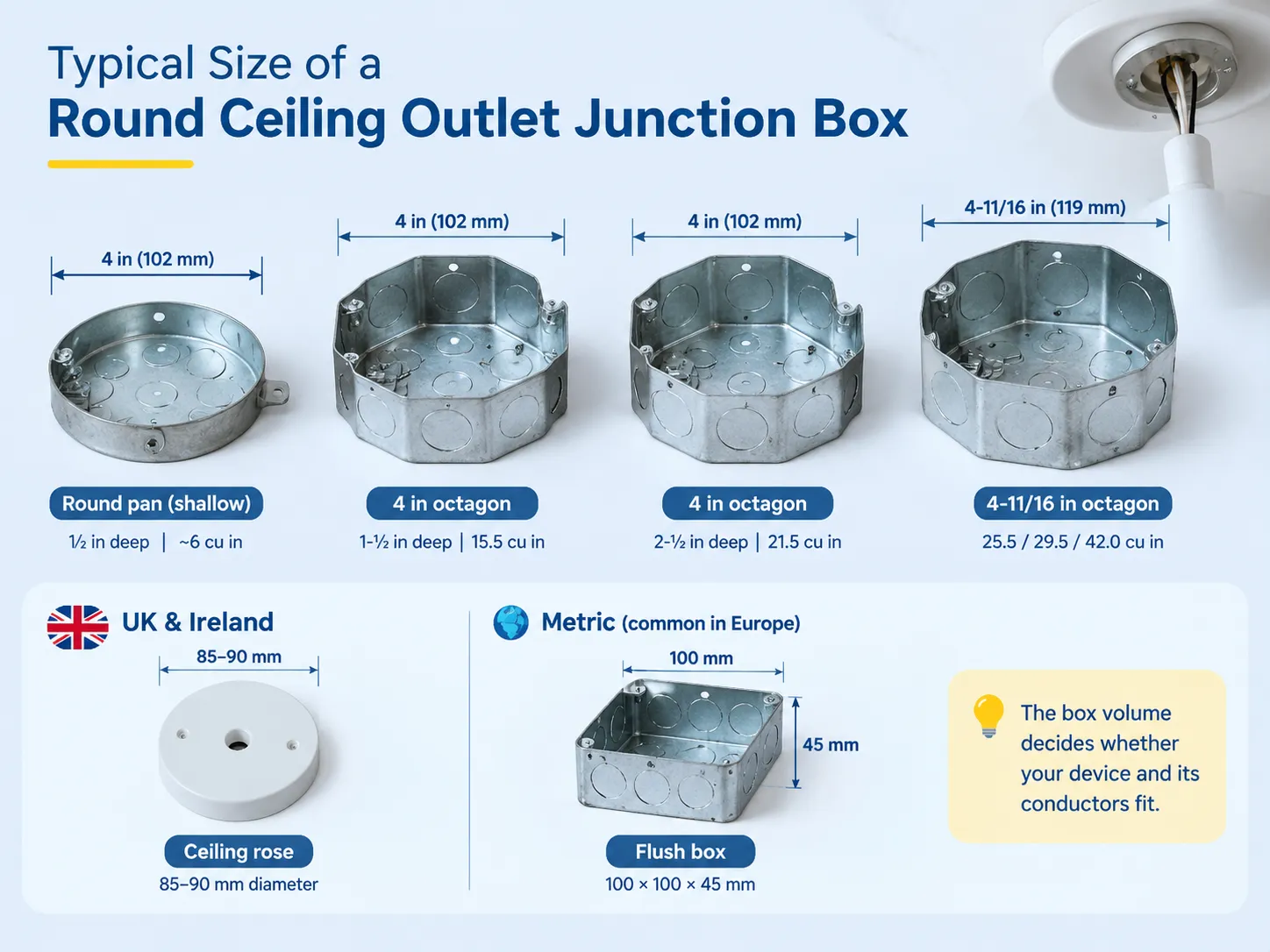
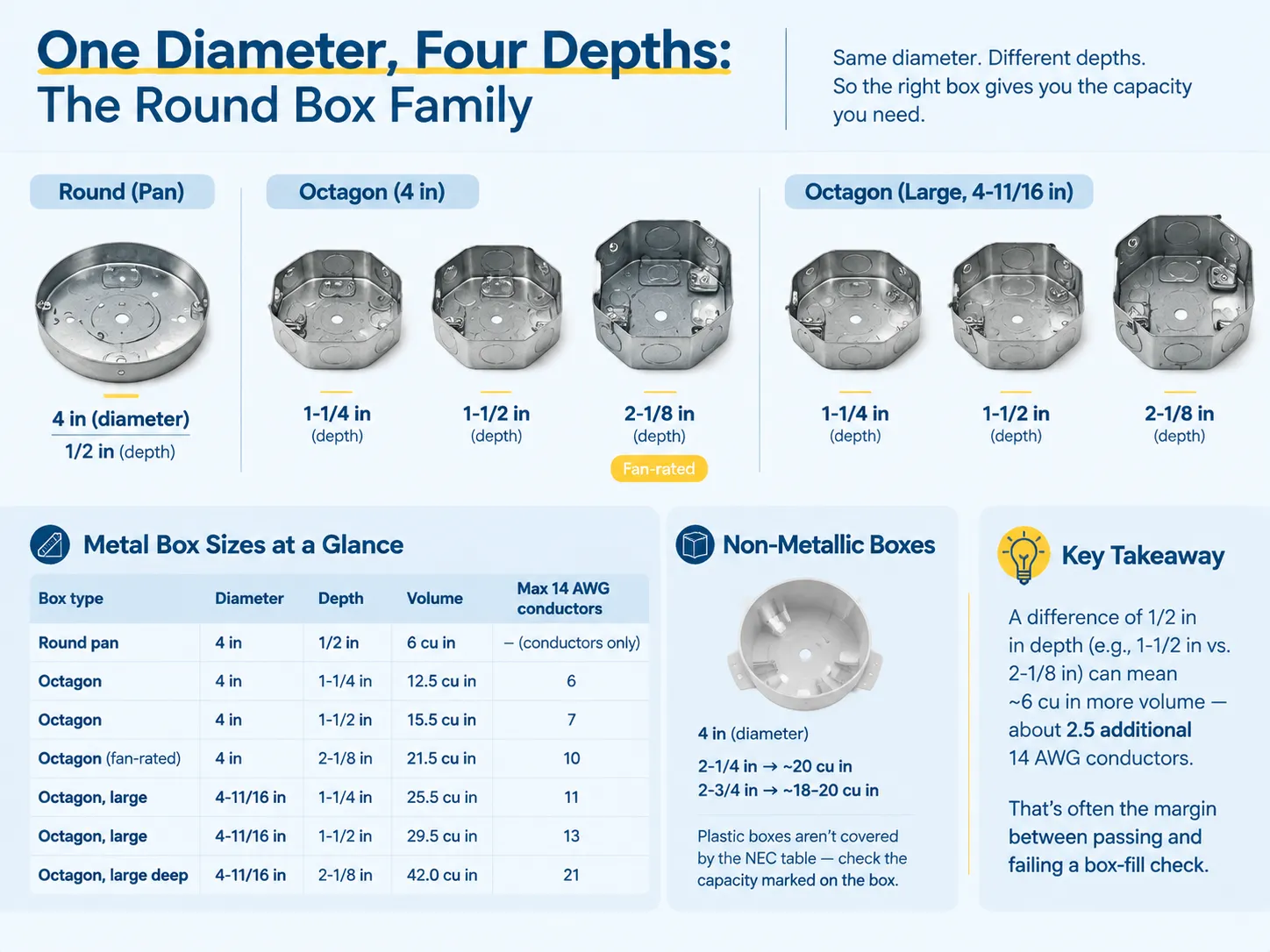
باختصار، يتم عادةً تحديد صندوق مخرج السقف الدائري بواسطة المعيار الأمريكي الشمالي بقطر 4 بوصات (10.2 سم). ومع ذلك، يمكن أن تختلف التباينات من حيث عمق وحجم الصندوق بشكل كبير، حيث تتراوح الأعماق من 0.5 بوصة للصندوق الدائري 4 بوصات (الذي له حجم إجمالي 6 بوصات مكعبة) إلى 1.5 بوصة أو 2.125 بوصة (صناديق ثمانية الأضلاع 4 بوصات) بحجم 15.5 بوصة مكعبة أو 21.5 بوصة مكعبة على التوالي. صندوق ثماني الأضلاع الأكبر 4-11/16 بوصة (11.8 سم) له حجم 25.5، 29.5 أو 42.0 بوصة مكعبة. كما تتوفر أيضًا صناديق ضحلة بعمق 3.5 بوصة (8.9 سم). ومع ذلك، في المملكة المتحدة وأيرلندا، يُطلق على نفس الشيء اسم ”ceiling rose” بقطر يتراوح بين 85-90 مم، أو صندوق شائع مسطح بقياس 100×100×45 مم.
قطر واحد، أربعة أعماق: عائلة الصناديق الدائرية
تأتي صناديق السقف بنوعين وعدة أعماق مختلفة. الأنواع يمكن أن تكون دائرية (نوع صينية أو صندوق دائري بعمق ضحل) وثمانية الأضلاع (نوع ثماني الأضلاع، وهو عادة ما يُشار إليه عندما يتحدث الناس عن صناديق السقف الدائرية). هناك أقطار في الخيارات المعدنية 3-1/2 بوصة أو 4 بوصات للصواني، وقطر 4 بوصات للصناديق ثمانية الأضلاع، و4-11/16 بوصة لأنواع ثمانية الأضلاع الأكبر المستخدمة في التطبيقات التجارية. التالي في القائمة هي صناديق مراوح السقف وصناديق التركيبات التي لها قطر 5 بوصات و6 بوصات على التوالي لأنها تنتمي إلى تصنيف مختلف من المنتجات.
العمق هو ما يهم من حيث السعة وفقًا لجدول NEC 314.16(A)، والفارق بين صندوق ثماني الأضلاع بعمق 1-1/2 بوصة و2-1/8 بوصة يبلغ 6 بوصات مكعبة، وهو تقريبًا الحجم اللازم لاستيعاب 2.5 موصل إضافي بحجم 14 AWG. عمومًا، يبقى هذا الفارق هو الفرق بين النجاح والفشل من حيث فحص تعبئة الصندوق.
| نوع الصندوق | القطر | العمق | الحجم | الحد الأقصى للموصلات 14 AWG |
|---|---|---|---|---|
| صينية دائرية | 4 بوصة (102 مم) | 1/2 بوصة (13 مم) | 6 بوصات مكعبة | موصلات فقط، بدون جهاز |
| ثماني الأضلاع | 4 بوصة (102 مم) | 1-1/4 بوصة (32 مم) | 5 بوصة مكعبة | 6 |
| ثماني الأضلاع | 4 بوصة (102 مم) | 1-1/2 بوصة (38 مم) | 5 بوصة مكعبة | 7 |
| ثماني الأضلاع (مصنف للمروحة) | 4 بوصة (102 مم) | 2-1/8 بوصة (54 مم) | 5 بوصة مكعبة | 10 |
| ثماني الأضلاع، كبير | 4-11/16 بوصة (119 مم) | 1-1/4 بوصة (32 مم) | 5 بوصة مكعبة | 11 |
| ثماني الأضلاع، كبير | 4-11/16 بوصة (119 مم) | 1-1/2 بوصة (38 مم) | 5 بوصة مكعبة | 13 |
| ثماني الأضلاع، كبير وعميق | 4-11/16 بوصة (119 مم) | 2-1/8 بوصة (54 مم) | 0 بوصة مكعبة | 21 |
بجانب هذه الصناديق توجد صناديق غير معدنية لها أرقام مختلفة قليلاً بسبب كونها مصبوبة بدلاً من مسحوبة. على سبيل المثال، صندوق سقف غير معدني بقطر 4 بوصات وعمق 2-1/4 بوصة سيكون حجمه حوالي 20 بوصة مكعبة، في حين أن الصندوق الذي عمقه 2-3/4 بوصة يتراوح حجمه بين 18 إلى 20 بوصة مكعبة، اعتمادًا على طريقة صبه وإذا كان يحتوي على مشابك مدمجة. جدول NEC لا يأخذ في الاعتبار استخدام الصناديق البلاستيكية لأنها مطلوبة لكتابة سعتها.
لماذا توجد صناديق دائرية وثمانية الأضلاع على الإطلاق؟
صندوق كهربائي ذو شكل مستطيل يعمل عادةً في السقف، مما يعني أن شكل الصندوق يتعلق أكثر بتصميم الجهاز. بالنسبة لجهاز الإضاءة، يوفر الصندوق الدائري أو المثمن سطحًا مستويًا لتركيب الغطاء عليه. عند استخدام صندوق مثمن، يكون من الممكن تدوير الغطاء وسيظل يغطي فتحة الصندوق. فائدة أخرى هي أن الصندوق المثمن أو الدائري يحتوي على براغي تثبيت 8-32 موضوعة على مسافة قياسية 2-3/4 بوصة أو 3-1/2 بوصة يمكن العثور عليها في أي حامل تثبيت للإنارات.
الشكل المثمن له ميزة إضافية حيث أن وجود جوانب مسطحة يتيح فتحات توجيه الأسلاك في الاتجاه الصحيح عند العمل مع شبكة السقف. هذا يعني أن الأسلاك يمكن أن تدخل الصندوق من الجانب الأنسب دون إحداث أي توتر في الأسلاك.
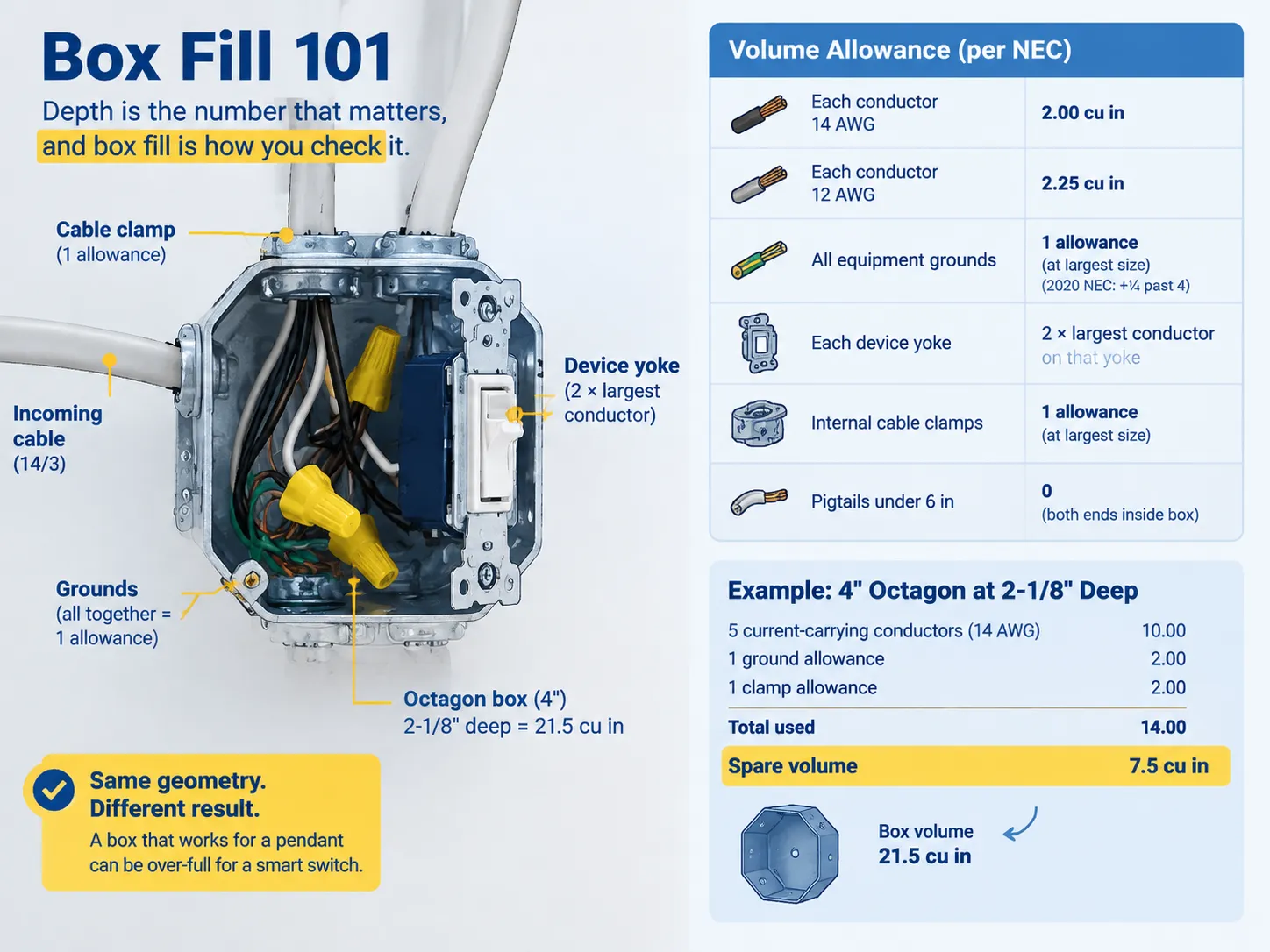
العمق هو الرقم المهم، وملء الصندوق هو كيفية التحقق منه.
جميع الأسلاك، عند مرورها عبر الصندوق للوصلات أو التوصيلات أو النهايات، تشغل مساحة. بالإضافة إلى الأسلاك، تستخدم الأجهزة، والأسلاك الأرضية، وأجهزة التثبيت أيضًا مساحة. يُحسب الجهاز بواسطة حامله وليس بعدد المقابس عليه، لذا فإن جهازًا مزدوجًا مقبس كهربائي يُعتبر بمثابة مخصص جهاز واحد، وليس اثنين. وفقًا للجدول 314.16(B)، يجب أخذ في الاعتبار أن سلك 14 AWG يشغل 2.00 بوصة مكعبة، بينما يشغل سلك 12 AWG 2.25 بوصة مكعبة. يُحسب الحامل كسلكين من الحجم الأكبر المستخدم، وجميع أسلاك التأريض معًا تُحسب كسلك واحد فقط، وأجهزة التثبيت تُحسب كواحدة أخرى.
الآن خذ صندوق سقف حقيقي. صندوق مثمن بأبعاد 4 بوصة في 2-1/8 بوصة له حجم 21.5 بوصة مكعبة. مع دخول كابل 14/3 واحد وخروج كابل 14/2 فقط لسلك المفتاح. وبالتالي، لديك خمسة موصلات تحمل التيار بسعة 2.00 لكل منها، واحد تأريض بسعة 2.00، وجهاز تثبيت واحد بسعة 2.00، ليصبح المجموع 14 بوصة مكعبة، مما يترك لك 7.5 بوصة مكعبة. ولكن ماذا لو استخدمت سلك 12 AWG وأضفت مخفت على الحامل؟ عندها ستُستهلك كل المساحة المتبقية بسرعة كبيرة. الحسابات نفسها التي تكفي لمصباح معلق قد لا تكون كافية لمفتاح ذكي إذا ثبت أن الصندوق غير كافٍ للأسلاك المستخدمة.
بجانب هذا الاعتبار يوجد سؤال آخر، يشير إلى القسم التالي من المصطلحات. مصطلح “gang” يشير إلى الأجهزة وليس إلى الفتحات، مما يعني أنه حتى إذا وُضعت العديد من الأسلاك في الصندوق، فإن صندوقًا واحدًا مع مخفت واحد يُحسب كـ gang واحد.
| العنصر المحتسب | مخصص الحجم | Notes |
|---|---|---|
| كل موصل 14 AWG | 00 بوصة مكعبة | يُحسب إذا تم إنهاؤه أو توصيله في الصندوق |
| كل موصل 12 AWG | 25 بوصة مكعبة | نفس القاعدة، مخصص أكبر |
| جميع تأريض المعدات | مخصص واحد بأكبر حجم | يضيف NEC 2020 وما بعده مخصص ربع بعد الأربعة |
| Each device yoke | 2 × largest conductor on that yoke | A dimmer or GFCI counts as one yoke |
| Internal cable clamps | مخصص واحد بأكبر حجم | External connectors need no allowance |
| Pigtails under 6 in | 0 | Both ends inside the box |
Octagon, round or square: telling them apart on sight
Study the corners carefully. A true octagonal structure features eight straight edges and angular breaks in angles; however, a round shape is called a circle featuring a shallow flange for not having any flat edges; a square box has four corners and is usually of size 4 × 4 inches. The square shape is the one very often confused with ceiling box, and it should not be neglected because the volume of the 4-inch square box is equal to 30.3 cubic inches, which is actually one and half times bigger than in octagon with the same diameter and height.
The mounting hardware also makes the distinction clearer. The octagons and pans made for ceilings are supplied with brackets or captive nails for mounting onto a beam or between the beams. The square boxes are installed usually through the sides and are mostly used as junction boxes or junction device boxes along with the mud ring that is also the method of converting square box to round mounting point for the fixture in case of need.That is where the single-gang and multi-gang distinction starts to bite, because a two-gang ring will not fit a 4 in octagon no matter how the wiring is arranged.
Fixture-rated versus fan-rated: the weight numbers
The fixture box must be capable of supporting the weight, and there are weight ratings that apply as well. Standard ceiling light fixture pans and octagonal boxes are rated only to support a 50 lb (22.7 kg) load, and they are explicitly not designed for ceiling fan use unless labeled otherwise. A ceiling fan installation box is either securely fastened to a joist or securely mounted and rated for fan support, usually at a maximum weight of 35 lb (15.9 kg) for fan weight plus 50 lb for fixture weight.
This is one of the most common mistakes in ceiling work: putting a fan in a box that was designed for a light fixture. The box may look the same and be the same size, but its classification is not the same, and careful wiring does not make up for the fact that the support weight rating was never assigned to the box.
Outside North America: metric sizes and the ceiling rose
In the United Kingdom and Ireland, they utilize the same device known as a ceiling rose. The standard size of loop-in is 85 or 90 mm in diameter and is made of white plastic material. It is regulated by BS 67, which takes care of the arrangement mechanism of terminals and strain relief, and it is rated with a 6 A capacity at 250 V — a sum that is suitable for a domestic light circuit heavily served by LEDs. Decorative ceiling roses made of brass, chrome, or plaster come with diameter ranging from 150 mm to 250 mm and are selected based on design and appearance rather than capacity.
There is another family of boxes that are characterized as metric flush boxes. One of the European round boxes can be marked with 100 mm of diameter and depth measurement of 46 mm having ten entrances for 25 mm conduit and are labeled as complying with BS EN 60670-1 and BS EN 60670-22. Such square boxes usually measure 100 x 100 x 45 mm. It is the same constraint that shapes UK wall socket and switch plate formats, which are built to a shallow back profile precisely because the boxes behind them are shallow.
| المنطقة | Typical part | Diameter / size | العمق | المعيار |
|---|---|---|---|---|
| US / Canada | Octagon ceiling box | 4 بوصة (102 مم) | 1-1/2 in or 2-1/8 in | NEC 314.16, NEMA OS-1 |
| US / Canada | Non-metallic ceiling box | 4 بوصة (102 مم) | 2-1/4 in or 2-3/4 in | NEMA OS-2, marked capacity |
| المملكة المتحدة / أيرلندا | Loop-in ceiling rose | 85-90 mm | Approx. 25-30 mm | BS 67, 6 A / 250 V |
| المملكة المتحدة / أيرلندا | Decorative ceiling rose | 150-250 mm | Fixture-dependent | Angled as decorative |
| Europe | Round flush connection box | Ø 100 mm | 45-46 mm | BS EN 60670-1 / -22 |
Brands, and why the dimensions differ anyway
All companies that we are familiar with, RACO (Hubbell), Carlon (Thomas & Betts), Steel City (Eaton), Arlington, Appleton and Southwire are happy to provide dimensional data, and for the case of steel octagons their dimensions are virtually in line with the above table since this box must fit the standard fitting canopies. The exception is with the moulded boxes since a 4 inch PVC ceiling box developed by one company can have a volume of 20 cu in at a depth of 2.5 in while another will have volume of 18 cu in, where the variation will depend not on the standard, but on the thickness of the box walls, integral clamps and knockout count.
This is the reason why the marked capacity is more important than the nominal size, and that is the reason NEC 314.16(A) dictates the necessity for marking boxes of less than 100 cu in by their volume. If the marking has been covered with paint use measuring tools instead: the internal diameter, the internal depth to the back of box should be measured and then compared against the values published in the manufacturer’s catalog.
How to size the replacement before you buy
The best way of achieving a successful installation is to perform four measurements and then make one verification. Begin by measuring the hole opening at the ceiling. This will give you the required size diameter for the fixture canopy. Next, measure the depth of the hole, using either a ruler or a stiff piece of wire. Next, have a count of electrical conductors that are already exiting the junction box, along with the wire gauge. Lastly, check the volume or the catalog volume. Based on this information, you can decide if you are dealing with a light or a fan, and it is essential to know this, as the choice will depend on the device type rather than its size.
In case of replacing the shallow pan with one that requires increased space for wiring, a 4 in octagon at 2-1/8 in provides 21.5 cu in of space while preserving the standard fixture spacing. If more space is actually required, a 4-11/16 box with a plaster ring will do the job.
Why we care about box sizes when we make switches and sockets
An important context about the position of GOG. We produce wiring devices i.e. switches, sockets, dimmers and smart switches in wholesale and OEM quantities, but we don’t manufacture junction boxes. Nevertheless, we are interested in the dimensions of junction boxes, because the majority of complaints of installers refer not to the device malfunction, but to the fact that the device does not fit the box. Smart switches are deeper than mechanical ones, and the dimmers are deeper than smart switches as they have rather large heat sinks. A 12 AWG installation occupies the box space faster than a 14 AWG one.
Hence, when someone asks us which dimmer to choose for a room with shallow ceiling boxes, we begin the answer with the volume.Pick the enclosure first, then the device that fits it — the same order we would suggest when اختيار أجهزة الأسلاك across a whole building, where box depths are rarely uniform from floor to floor.
الأسئلة المتكررة
What are the standard sizes for ceiling junction boxes?
The recognized standard for steel boxes is the 4 in round pan box that is half an inch deep (approximately equal to 6 cubic inches), the 4 in octagon box that can be 1-1/2 in, 2-1/8 in and finally, the 4-11/16 in octagon box which could have dimensions from 1-1/4 in, 1-1/2 in and then finally 2-1/8 in (having capacities of 25.5, 29.5 and 42.0 cubic inches) Non-metallic equivalents exist, which around 20 cubic inches in size while being 2-1/4 inch deep.
What is the diameter of a round junction box?
4 in (102 mm) is most frequently found in home and light commercial ceiling electromagnetic induction systems. Flattop lighting plates are also available in sizes of 3-1/2 in (89 mm). Larger commercial octagonal boxes measure 4-11/16 in (119 mm), while heavier installations can utilize boxes sized at 5 in and 6 in. The metric standard for circular boxes is Ø 100 mm.
What are the standard dimensions of a ceiling box?
The dimension corresponds to the product of diameter and depth, but depth would be variable. Thus, a 4 x 1.5″ octagon, a 4 x 2.125″ octagon, as well as a 4.6875 x 2.125″ octagon do exist to hold 15.5, 21.5, and 42.0 cubic inches correspondingly. Siempre provide both figures, because saying that it “is a 4 inches box” does not tell you how much wire it is able to hold.
Can you mount a ceiling fan in a round ceiling box?
Provided the rated box is used. Standard octagon boxes and the currently standard models are rated for fixtures up to 50 lbs (22.7 kg), which means they are not suitable for fan installations. The fan-rated boxes are designed to be braced and carry their own ratings for fans and fixtures, so be sure to check the labels first before attaching any ceiling fixture.
How do I find the volume if the box is not marked?
You can take a reading of the internal diameter and of the internal depth and then look this up in the manufacturer’s catalogue; it is the same 4 in diameter, which is present in several depths, and the volumes do not result from the measurements done from the outside. Non-metallic boxes are normally marked so a missing mark usually suggests paint, and then a quick scrape on the inside surface shows it usually.
المراجع
- NFPA — NFPA 70 National Electrical Code, Article 314 Outlet, Device, Pull and Junction Boxes
- NEMA — OS-2 Nonmetallic Outlet Boxes, Device Boxes, Covers and Box Supports
- NEMA — OS-1 Sheet-Steel Outlet Boxes and Box Supports
- UL Solutions — UL 514A Metallic Outlet Boxes
- BSI — BS 67 Specification for ceiling roses
- Hubbell RACO — Steel boxes and covers catalogue data
- Carlon — Non-metallic box capacity tables
الخاتمة
Regular round ceiling outlet boxes measure 4 inches in diameter and the key to this is their depth. Half Inch pan makes adjustments for only lighting fixtures and items of minor importance; 1 1/2 Inch octagon has volume of 15.5 cubic inches and is appropriate for pendant and downlight installations; standard octagon measuring 2 1/8 inches is good for 21.5 cubic inches and is usually applied when installing a fan and possibly any IoT-device and 4-11/16 boxes with a maximum volume of 42.0 cubic inches are needed when a ceiling outlet turns into a junction.Select a box to get started, determine the number of wires inside of it, state whether you have a fixture or a fan at hand and only then pick an appropriate box. Performing these steps in such order is the reason why some ceiling installations last not more than 20 minutes while others require three attempts.