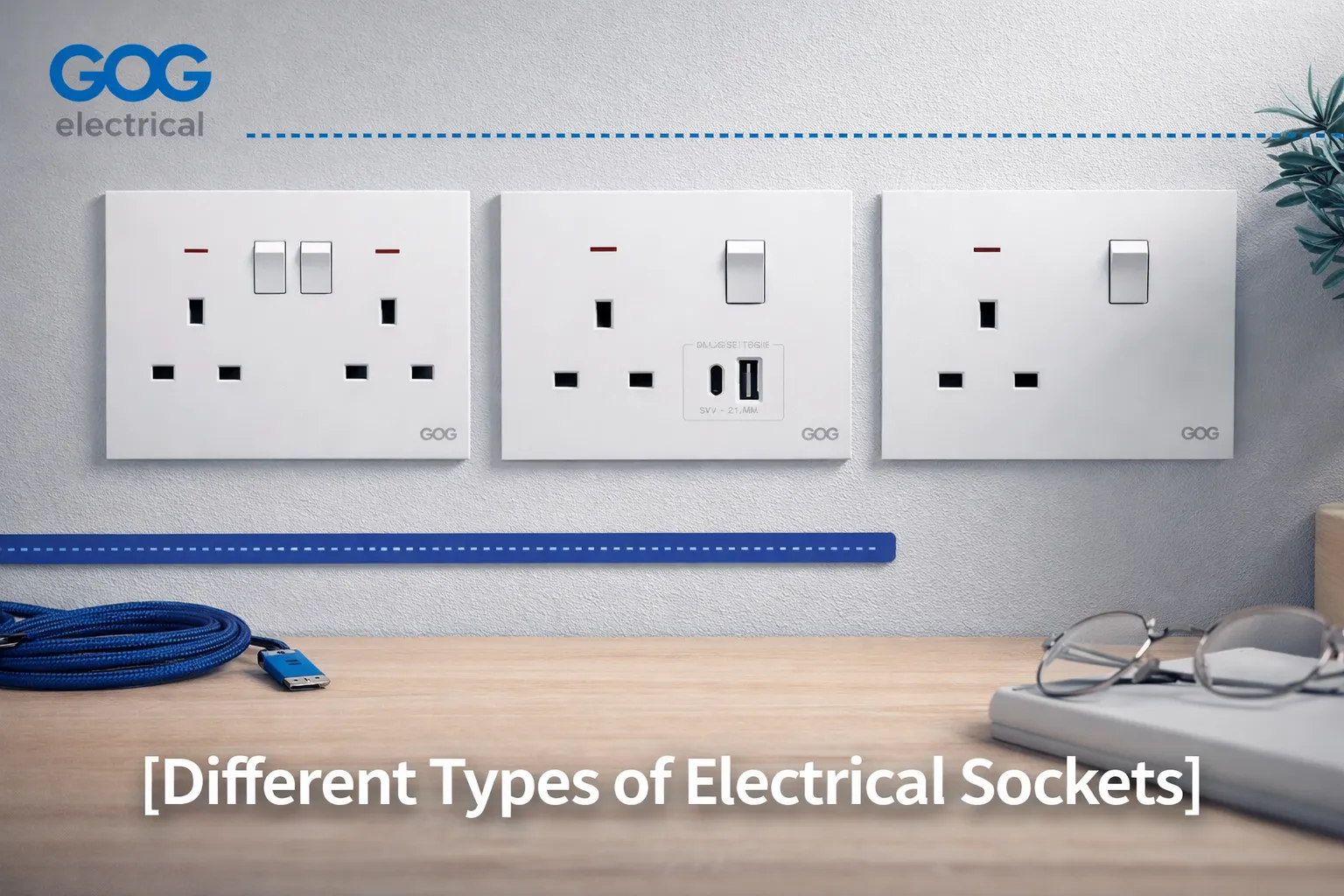
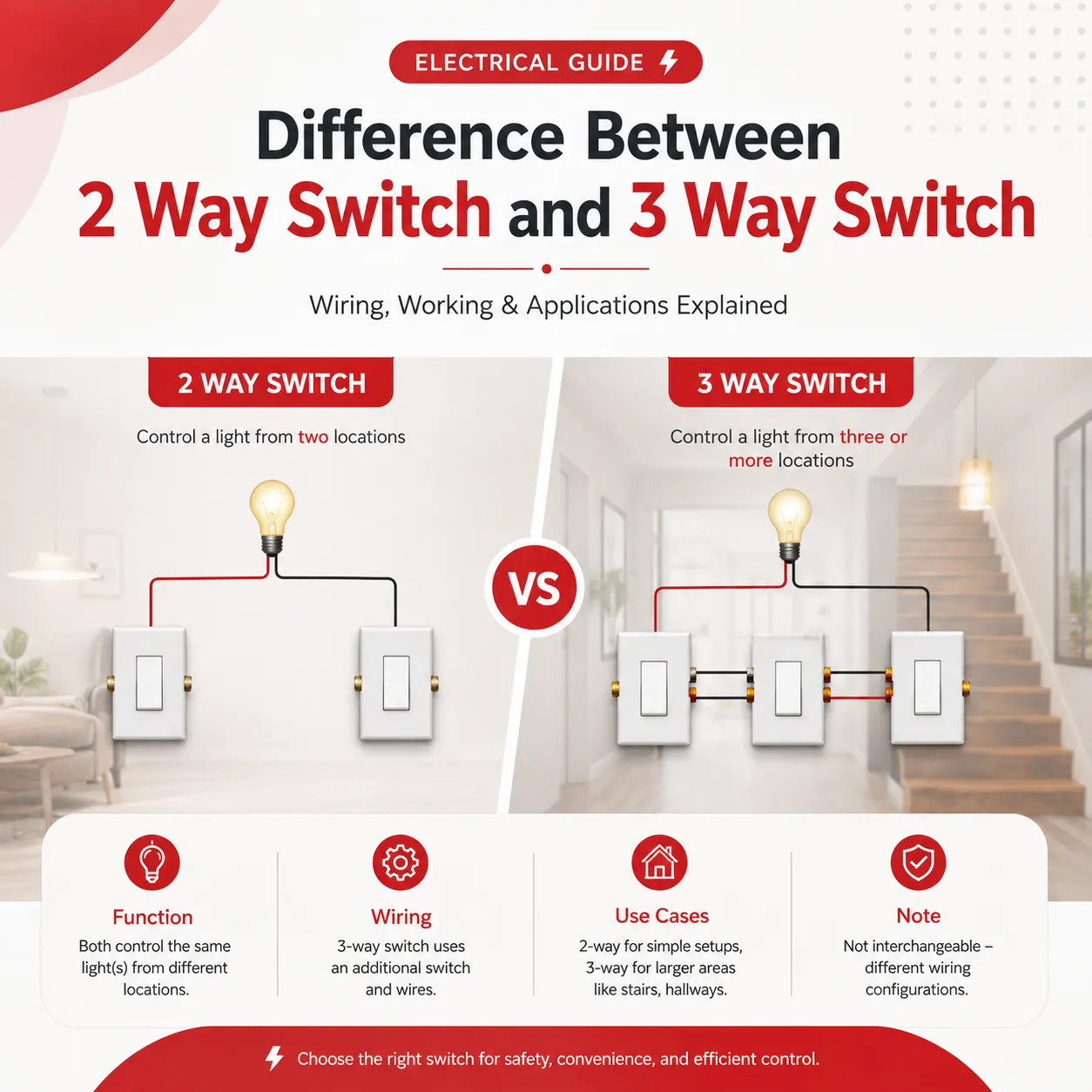
When shopping for light switches worldwide, you may find yourself confused by two different catalogues, one referring to it as a 2 way switch where as another refers to it as a 3 way switch, yet both describe something exactly the same; a switch that allows you to control one light from two different locations. In reality, there really is No functional difference – 2 way/3 ways switches work identically; however, since their terminology differs from country/region, understanding this will reduce errors when ordering the wrong product; misreading Diagrams;/or being left with incomplete installations.
What Is a 2 Way Switch?
In the UK, much of Europe and many countries that are part of the British Commonwealth, the term “2 way switch” refers to a switch with three terminals labelled COM, L1 and L2. The term is not a reference to controlling two different lights, but rather to having two paths (1) for the flow of current between the switch and light source. Two switches connected via the appropriate strapping cable will control the same light (or group of lights) from two locations, e.g., at the top or bottom of a staircase. The reason for this is that the COM terminal alternates between L1 and L2 depending on the position of the switch actuator (rocker).
What Is a 3 Way Switch?
An identical device in North America is known as a 3-way switch. A 3-way switch has three terminals, which are usually designated with one dark terminal (the common) and two light terminals (the travellers). The 3 in the name refers to the fact that the switches have three terminal points; it does not indicate that they can be used for multiple applications. A single 3-way switch cannot independently operate a light; therefore, for a 3-way switch to function, there must be two switches – as is the case with a two-way switch. The only distinction between a two-way switch in Europe and a three-way switch in North America is the terminology on the switch boxes: both are single-pole, double-throw (SPDT) switches and will share the same internal operation or wiring logic.
Side-by-Side Comparison
The table below makes the terminology and application differences crystal clear, so you can translate on the fly whether you’re reading a UK wiring diagram or a North American installation guide.
| Feature | 2 Way Switch (UK / IEC) | 3 Way Switch (North America / NEMA) |
|---|---|---|
| Number of terminals | 3 (COM, L1, L2) | 3 (Common, Traveller 1, Traveller 2) |
| Internal mechanism | SPDT | SPDT |
| Used for control from | 2 locations (requires 2 switches) | 2 locations (requires 2 switches) |
| Staircase/hallway lighting | Yes, standard solution | Yes, standard solution |
| Common wire labeling | COM, L1, L2 | Common, T1, T2 (or brass, brass, dark) |
Can You Use a 3 Way Switch for a Two Way Application?
Yes, absolutely. Because the underlying hardware is the same, a 3 way switch can be wired exactly like a 2 way switch in a circuit that controls one light from two points. The only thing you need to pay attention to is the terminal identification. On a North American 3 way switch, the common terminal is often a darker screw or marked “COM,” while the two traveller terminals are identical brass screws. On a UK 2 way switch, COM is clearly labeled, and L1/L2 are the travellers. Connect COM to either the live feed or the switched line to the light, and connect L1/L2 (or the brass travellers) to the corresponding terminals on the other switch. The wiring principle doesn’t change. If you want to see how these switches integrate into a broader smart home setup, our guide to top-rated smart light switches covers 3-way compatible models that work with existing wiring.
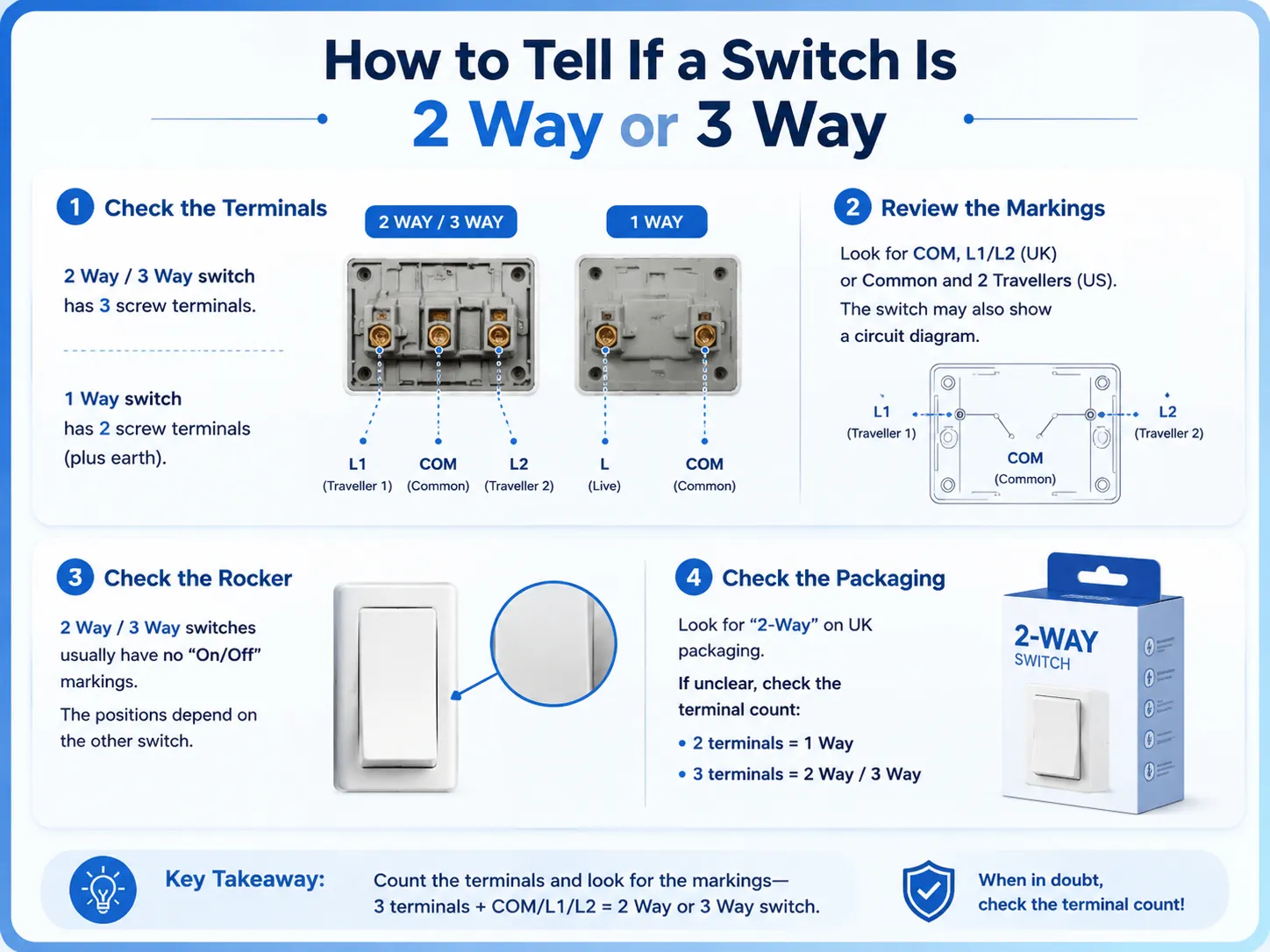
How to Tell If a Switch Is 2 Way or 3 Way
Identification is straightforward once you know what to look for:
- A 2 way or 3 way switch features three screw terminals. A 1 way (or single-pole) switch has two screw terminals only (plus earth). This means it cannot be used to control a light from more than one location.
- Review the markings – if there are a COM or L1/L2 in the UK or Common and 2 travellers in the United States, the body of the switch may also have a diagram showing the 2 circuits available.
- With the rocker: When using a two-way or three-way switch, no “On/Off” markings will be visible on the toggle as the two positions are not fixed and depend on a secondary switching mechanism to determine which of the two positions will be considered “On” or “Off.”
- Look for the words “2-Way” on the packaging if you have a UK switch, otherwise check the terminal count to see if there are 2 or 3 terminals. If the packaging does not contain any stated information about which of the two types of wall switch was to be used, then the terminal count will provide you with concrete confirmation.
Do I Need a Two-Way or Three-Way Switch?
In this case, your circuit design rather than just the names of the switches determines whether or not you’ll use a set of SPDT switch pair configurations to operate one light or outlet at multiple locations. Some examples would be:
- Staircases (switch at top and bottom)
- Long hallways (switch at each end)
- Large rooms with two entrances
- Garages with a switch by the interior door and another by the vehicle door
If you need control from more than two locations, you would need to add intermediate switches (called 4 way switches in North America, or crossover switches in the UK) between the two 2 way / 3 way units. But the basic building block remains the same SPDT switch. For help selecting the right physical style for your walls, our overview of types of light switches shows the full range of form factors available.
When Should a 3 Way Switch Be Used?
A 3-way switch is often referred to as a 2-way switch (depending on your country) and is typically used when there are multiple points of control over one light circuit. The use of 3-way switches for this purpose is not only for convenience, but in most areas the building code requires that stairways and some hallways be equipped with switches at both ends to provide additional safety for those using the stairs. To determine whether to use a standard single-pole switch (1 way) or 3-way / 2-way switch you need to answer the question: “Will anyone ever need to control this light from more than 1 entry point?” If the answer is yes, you will need the SPDT switch pair; otherwise, you will need only a single-pole switch.
Frequently Asked Questions
Can you use a 3-way switch for a two-way switch?
Absolutely! A 3 way switch is just another name for a 2 way switch. They are basically the same thing – they are both an SPDT switch. They can therefore be interchanged in two way lighting circuits, as long as the terminal functions are matched correctly; connect the common terminal of the switch to the line or load, and connect the two traveller terminals to the traveller wires from the other switch accordingly.
How to tell if a switch is 2 way or 3-way?
Count the amount of terminals there are – there will be three (for circuit connections) for either a 2 way switch or a 3 way switch (not including Ground/Earth); however, if the switch has only two terminals, it is simply a standard one way (or single pole) switch. Also check for the indicator on the body of the switch – either “2 WAY” or “3 WAY” will be printed thereon. If all else fails, then the best way to determine if it is a 3 way switch is to see if it has the three terminal configuration.
Do I need a two-way or three-way switch?
An appropriate two-way (or three-way, depending upon the geographical area) switch is called for when controlling one light or one appliance with two separate locations (for example, a staircase/long hallway or a room that has more than one entrance). If you are using only one location to control your light, you can use a standard single-pole (one-way) switch.
When should a 3-way switch be used?
Use a 3-way switch when you want two controls to turn one light on or off in a location. Common applications include stairways, hallways with doors at either end, and large areas that can be accessed on two sides. Safety in stairways often requires two point control as specified by building codes. In IEC and UK terminology this is referred to as a 2 way switch.
The only difference between a two-way switch and a three-way switch is how to label those switches. In their respective trade areas (the UK and North America), it is common to refer to their two switches differently, but they are actually both SPDT switches made with three terminals each. In both cases, they are intended to be paired together to control the same light from two separate locations. The method of wiring and configuration is the same, regardless of whether you have a two-way or three-way switch. When installing either type of electrical device, remember to count and use the appropriate terminal and wire to correspond with that terminal, and make sure to follow all applicable local code when wiring and installing a circuit using either device. GOG Electric provides a wide selection of both standard and smart-compatible switches, so whether you call your switch a two-way switch or a three-way switch, the key aspect of maintaining a reliable switching operation is built by the contact switch mechanism and terminal markings on the switch; therefore, your switches will provide you with many years of dependable operation when wired properly.