Last year, when they remodeled their 1960s ranch home, Sarah and Tom thought updated electrical work wouldn’t be a big deal. Then Sarah found herself standing in front of an electrical aisle full of outlets and switches with names that she couldn’t even pronounce: 15 amp, 20 amp, GFCI, AFCI, tamper-resistant, USB-C, smart Wi-Fi, brushed nickel, and screwless white. Contrary to those earlier days when it was either white or ivory, nowadays one has to think of many different types of products for different purposes. This is where she thought of talking to the electrician. The electrician’s advice was simple: you need to choose your electrical devices with reference to location and code requirements. This is the guide on how to choose electrical outlets and switches for your home, helping readers understand everything about the selection.
Amperage and Circuit Rating: The Foundation of Every Outlet Decision
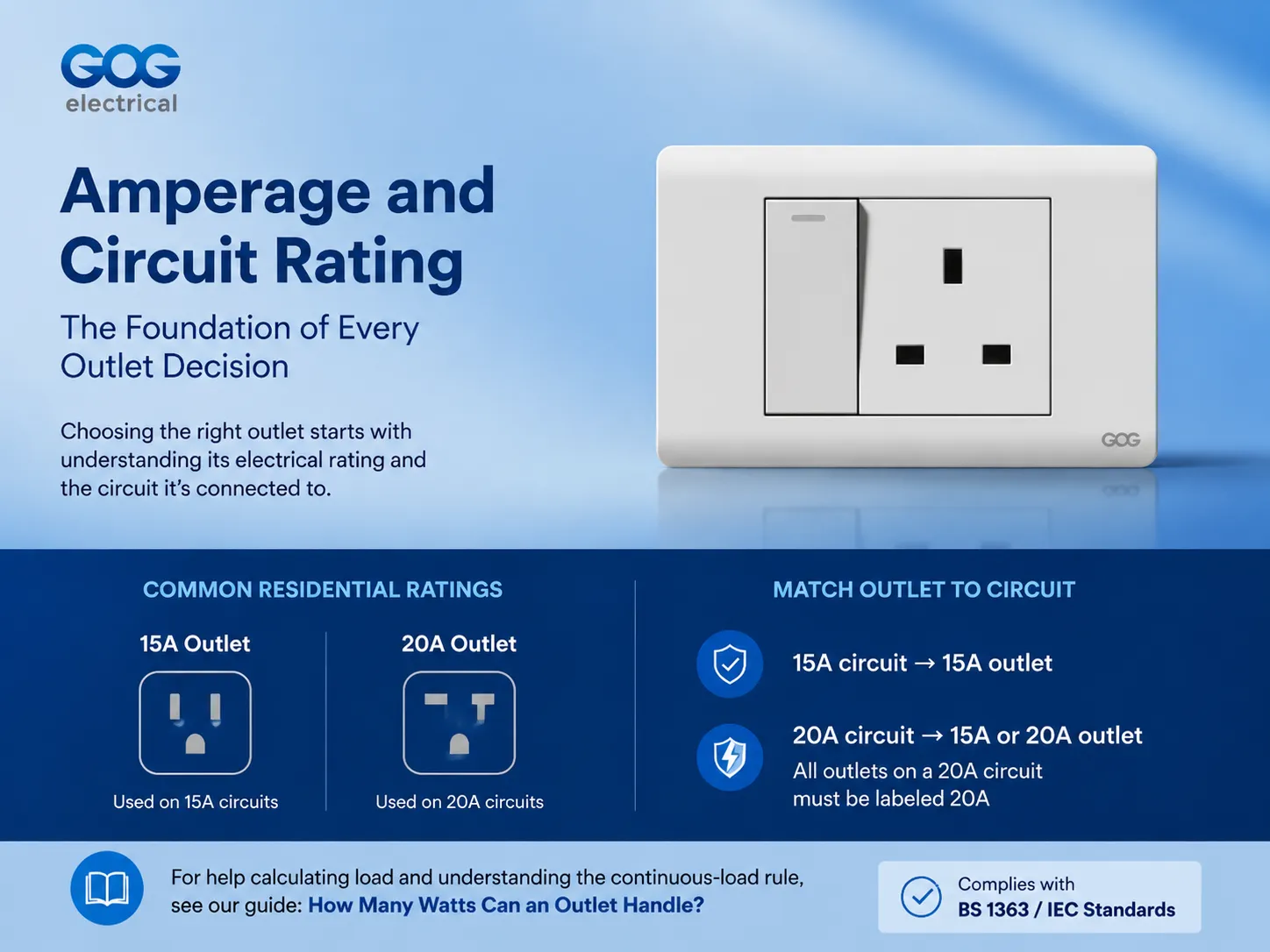
It is important to start by identifying its electrical rating before picking a colour or style. In North America, the most common outlet ratings for residential homes are 15 amps and 20 amps. Especially, a 15-amp outlet usually has two vertical openings in addition to a circular ground hole. On the other hand, a 20-amp outlet is generally similar but its neutral opening is T-shaped and is able to accommodate a 20-amp plug. Nonetheless, which outlet is used depends on the circuit breaker and wire size. In particular, a circuit designed for 15 amps must use a 15-amp outlet while a 20-amp one may have either a 15-amp or 20-amp outlet, but any outlet on a 20-amp circuit has to be labelled as 20 amps. For help calculating the load on any given circuit and understanding the practical limits, our guide on how many watts an outlet can handle explains the continuous‑load rule in detail.
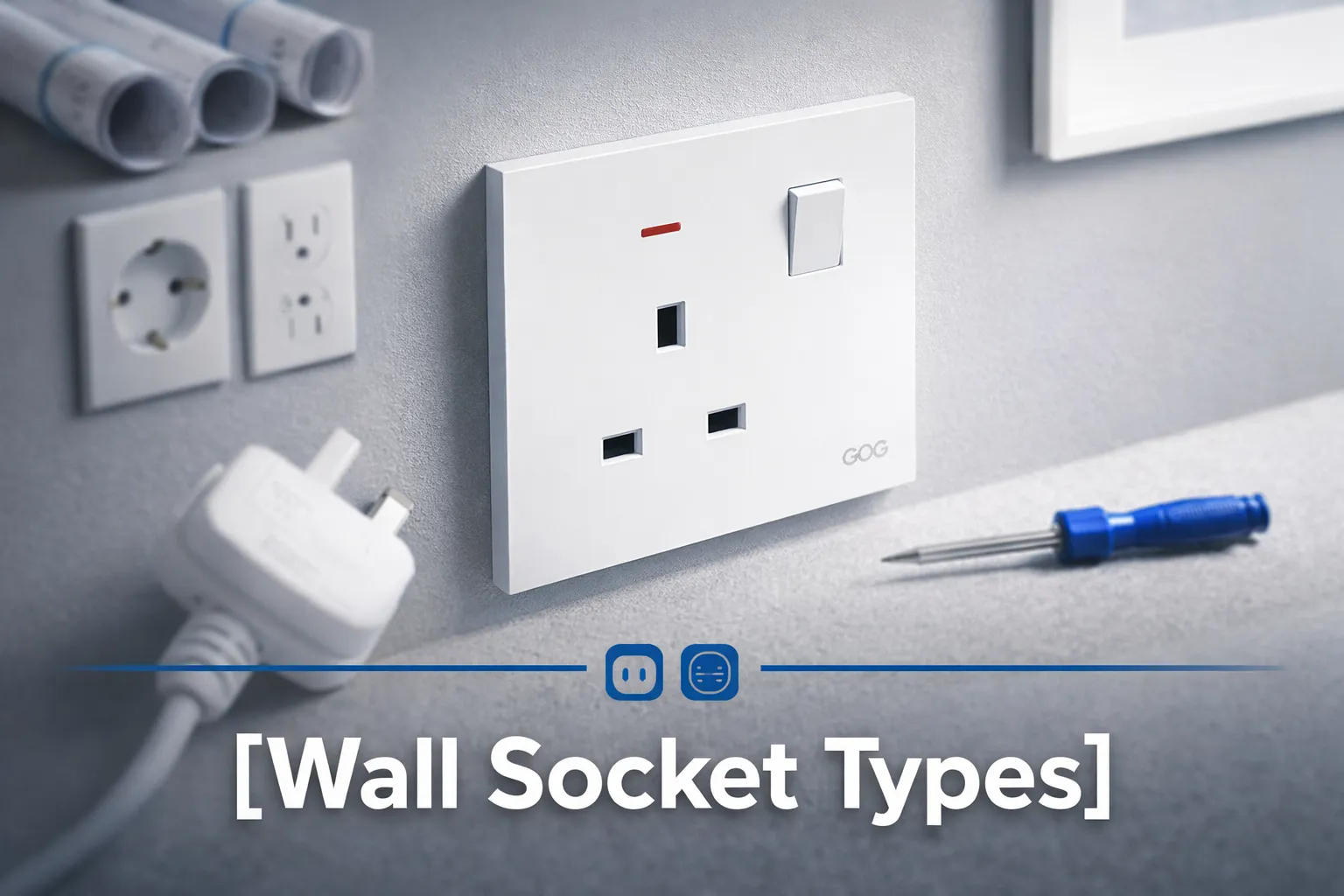
The BS 1363 standard defines the plug used – peculiar square-shaped proved feature of 13 amps – as typical for the British market and IEC in general. GOG Electric is one of the providers of such sockets complying with the standards.
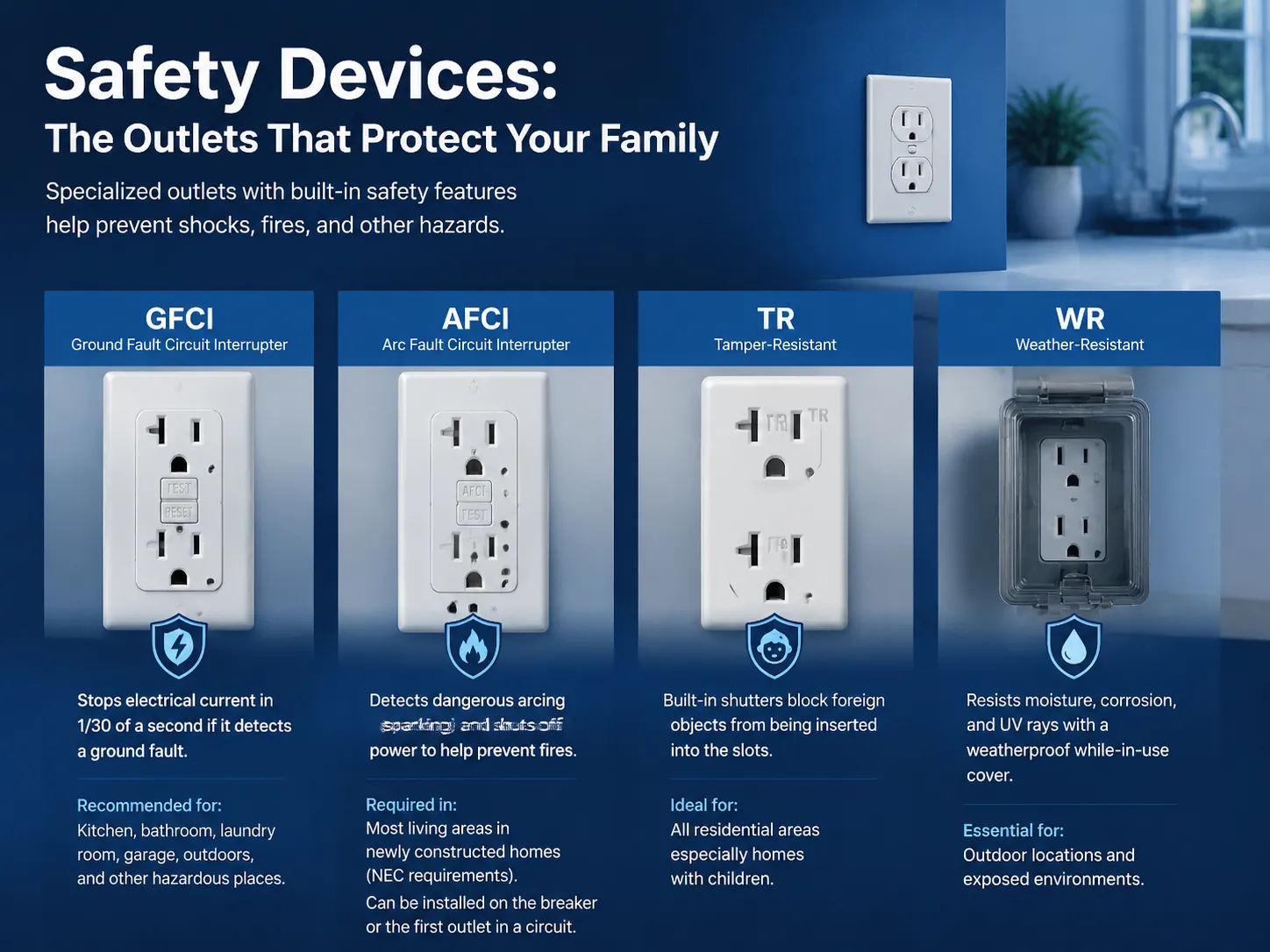
Safety Devices: The Outlets That Protect Your Family
Besides the basic outlet, several outlet types that provide safety features are required by the code in certain places and are advised wherever possible.
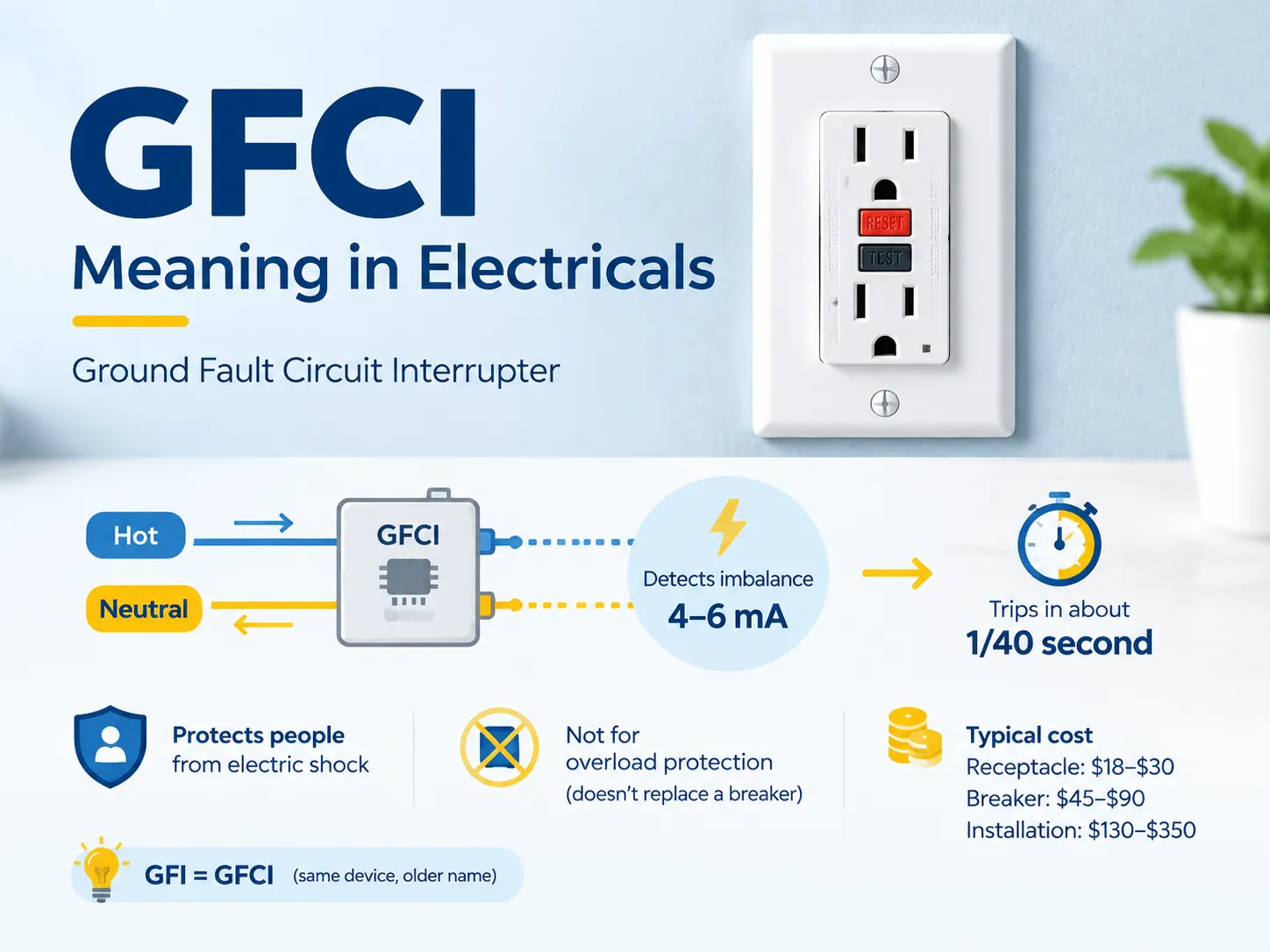
- GFCI (Ground Fault Circuit Interrupter). A ground fault circuit interrupter outlet continuously keeps an eye on the amount of electricity going through the hot wire to the neutral wire. If there is any indication that 5 milliamperes of electricity are in a motion somewhere else, the GFI outlet stops electrical current flow in 1/30 of a second. GFI outlets should be installed in the kitchen, bathroom, laundry room, garage, outdoors, and other hazardous places. They can be recognized by their TEST and RESET buttons on the front.
- AFCI (Arc Fault Circuit Interrupter). An AFCI outlet identifies the distinct electrical signature of an arc, which refers to the sparking that takes place when a wire is broken, a connection is loose, or a cable is compressed, and it disconnects immediately before the spark is able to ignite a fire. Based on NEC requirements, AFCI protection is mandatory in most of the living areas in newly constructed homes. It can be installed on the breaker or the first outlet in a circuit.
- Tamper‑Resistant (TR). A TR outlet incorporates spring-loaded shutters placed behind the slots in order to stop children from inserting any junk in one of the slots. As is the case with all electrical systems used in residential areas, the TR outlet is shaped completely like a standard outlet, except it has “TR” printed on it. For a deeper look at the internal mechanism and the code requirements, our article on what a tamper resistant outlet is explains how this invisible protection works.
-
- Weather‑Resistant (WR). Essential for outdoor use, a weather-resistant outlet features internal parts that resist corrosion and plastic that won’t be affected by UV rays together with a weatherproof “while-in-use” cover that closes around the plugged-in wire.
USB Integration: Power Delivery at the Wall
A USB charging socket makes it possible to dispense with using the large adapter that takes up one of the two electrical outlets. An internal switched-mode power supply transforms line voltage AC into the low-voltage DC electric power needed for mobile phones and tablets. Most of today’s USB sockets feature both USB-A and USB-C ports, which means that USB-C supports Power Delivery (PD) technology of 30 watts or above thereby charged your smartphone or laptop. Our article about USB charging outlets informs the reader about compatibility issues and safety and the differences between USB-A and USB-C charging plugs used in wall outlets. GOG Electric makes sockets with different types of USB, such as the R16491C device that features a traditional BS 1363 socket together with a USB-C port in the one-gang wall plate.
Switch Types: From Basic Toggle to Smart Dimmer
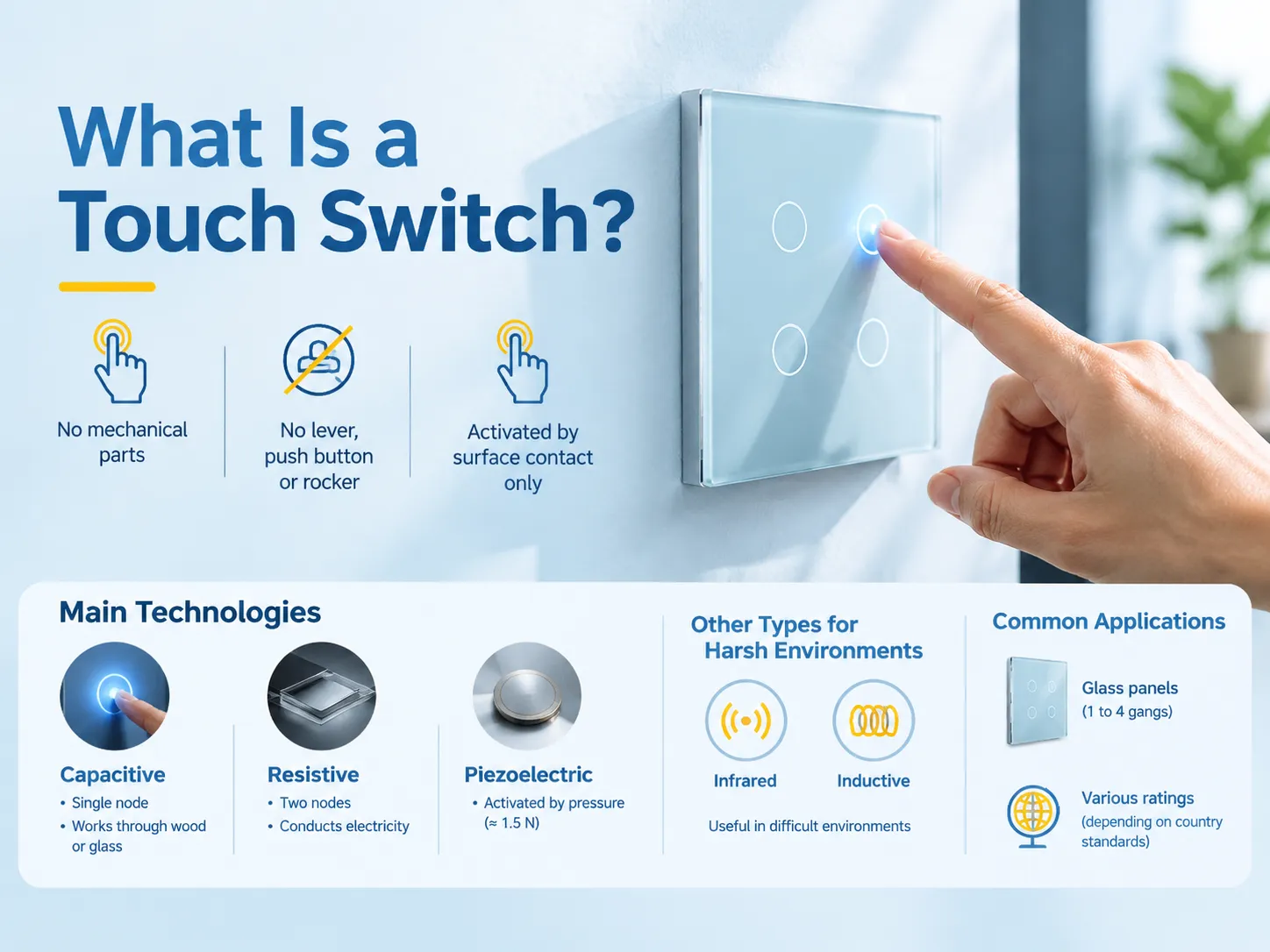
The traditional light switch on the wall has changed into many kinds of equipment, including rockers, dimmers, motion sensors, and smart switches that are controlled by a mobile phone or voice device. The regular toggle or rocker is used for bedrooms and utility rooms. Adding the dimmer gives full control of brightness; it offers energy savings and better functionality provided by trailing-edge technology, which means that LEDs can now be in the majority of rooms. A smart switch has Wi-Fi or Zigbee connection, which means remote access, scheduling, and integration with voice devices; however, the main problem at the installation is whether there is a neutral wire in the switch box or not. Our detailed comparison of neutral vs non‑neutral smart switches explains how to identify your wiring and choose the correct device.
The number of switches on a single wall plate is described by the term “gang.” A single switch is a 1‑gang; two switches side by side are 2‑gang; three are 3‑gang. GOG Electric’s smart switch range, including the C‑02 2‑gang smart light switch, supports both Tuya Zigbee and Wi‑Fi control in configurations from 1‑gang to 4‑gang, allowing a consistent finish across every room.
Finish, Material, and Aesthetic: What the Eye Sees
When it comes to the electrical specifications, the selection of faceplate material and finish transforms the faceplate from being merely functional to a design element. The typical material for a builder installation is white plastic, which is inexpensive, unobtrusive and easy to clean. Screwless flat plate designs are widely used in modern kitchens and living rooms where faceplates are fastened to a sub-frame. High-end residential and hospitality areas may use brushed stainless steel, shiny chrome or matte black for finishes. In addition, the finish has to withstand wear and tear, develops no tarnish and gives uniformity of appearance for all of the switches, sockets, dimmers and USB outlets. In open space situations like living areas there are pop-up sockets integrated in the floor allowing to provide power to the places of need under a table or into the center of the seating area.
Frequently Asked Questions
Who makes the best outlets and switches?
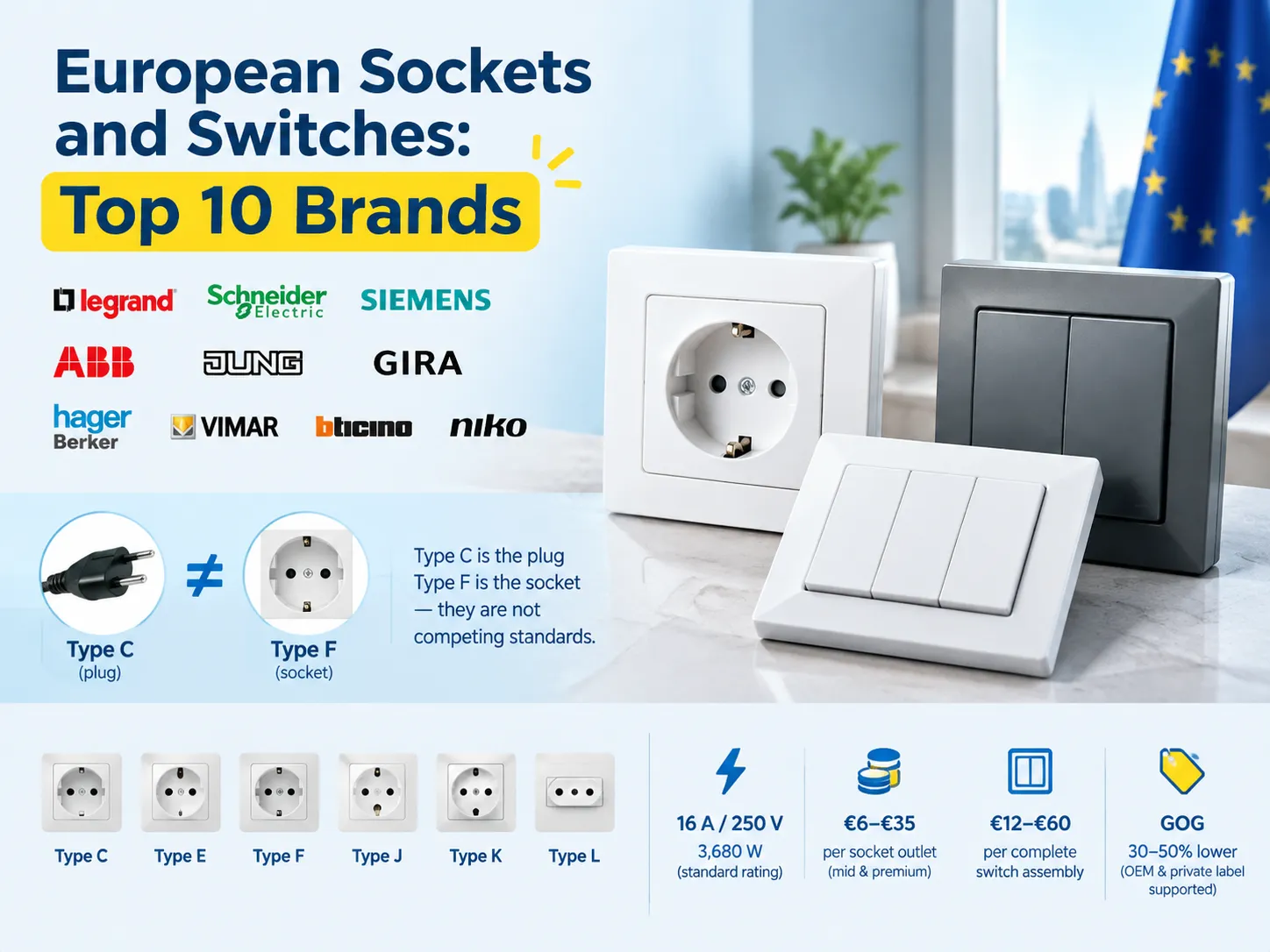
Superior outlets and switches usually are produced by companies who place a premium on material quality, contact reliability, and safety certification. Leviton and Eaton are leading in North America, while Legrand and Schneider Electric dominate in Europe. GOG Electric produces tamper-resistant, USB-integrated, and intelligent wiring devices with the necessary UL, CE, and BS 1363 certifications. These products serve as a lower-priced alternative to long-established global brands.
Do I need 15 or 20 amp outlets for my house?
Many home circuits consist of 15‑amp outlets. A 20 amp socket is mandated for a 20‑amp circuit only if it is a distinct receptacle on the circuit. 20‑amp circuits are used in laundry rooms, kitchens, and workspaces where 15 or 20‑amp sockets can be used depending on the load and local norms.
Which brand switches are best for home?
The ideal switch brand for homes relies on the needed certifications and area. For example, GOG Electric, MK Electric, and BG Electrical are popular brands in the UK. In North America, Leviton and Eaton will be the most used brands. The best switch is the one with a proper safety listing based on the region and has excellent terminal clarity and contact durability for years of daily use.
What is the 2 6 12 rule for outlets?
According to NEC 210.52, the 2-6-12 rule states that every wall greater than 2 feet wide must have a minimum of one receptacle, the farthest a point on a wall can be from a receptacle must be 6 feet, and there cannot be a space longer than 12 feet in between receptacles. This makes it possible for a 6-foot appliance cord to reach a receptacle from anywhere on a wall.
References
- NFPA 70 (National Electrical Code) — Articles 210 and 406. Requirements for receptacle spacing, GFCI and AFCI protection, and tamper‑resistant outlets in residential occupancies.
- Electrical Safety Foundation International (ESFI) — Home Electrical Safety. Consumer guidance on outlet types, GFCI testing, and tamper‑resistant technology.
- Leviton — Residential Outlets and Switches. Manufacturer of North American wiring devices, with installation guides and product specifications.
- Legrand — Wiring Devices and Smart Home Solutions. European manufacturer of switches, sockets, and smart home systems.
When selecting the right switch and outlet for a contemporary residence, it can be described as a multitude of choices, including the wattage of the circuit, the type of safety devices available, whether one needs a USB port or a smart feature, and the electrical fittings. Electrical outlets installed in kitchen countertops must have GFCI safety feature, USB port provisions and high enough capacity so that there is no need to connect many power strips together. The electrical outlet on a desk in a home office shall be a quad-type outlet. A dimmer used in a living room must be compatible with LED lights and harmonize with the interior design style.