The evening has grown chilly for the first time in this season. You go to the switch on the wall near the fireplace which has a flame sign nearby. You press it, but nothing happens. Did you make a mistake? Is the pilot light turned on at all? While gas fireplaces are the most convenient kind of fireplaces, there are many owners of gas fireplaces who don’t possess knowledge about their units. Some fireplaces need their pilot light to be on in order to be able to work. Others don’t need the pilot light, but their wall switch does not work until the right box is found.
In this article, you will find information about the wall switch method of igniting a fireplace – you will know how it works, and what other methods of ignition exist and how these methods work.Unfortunately, if nothing works, this article will tell you what you should do, and it will also inform you about some rules of using gas fireplaces.
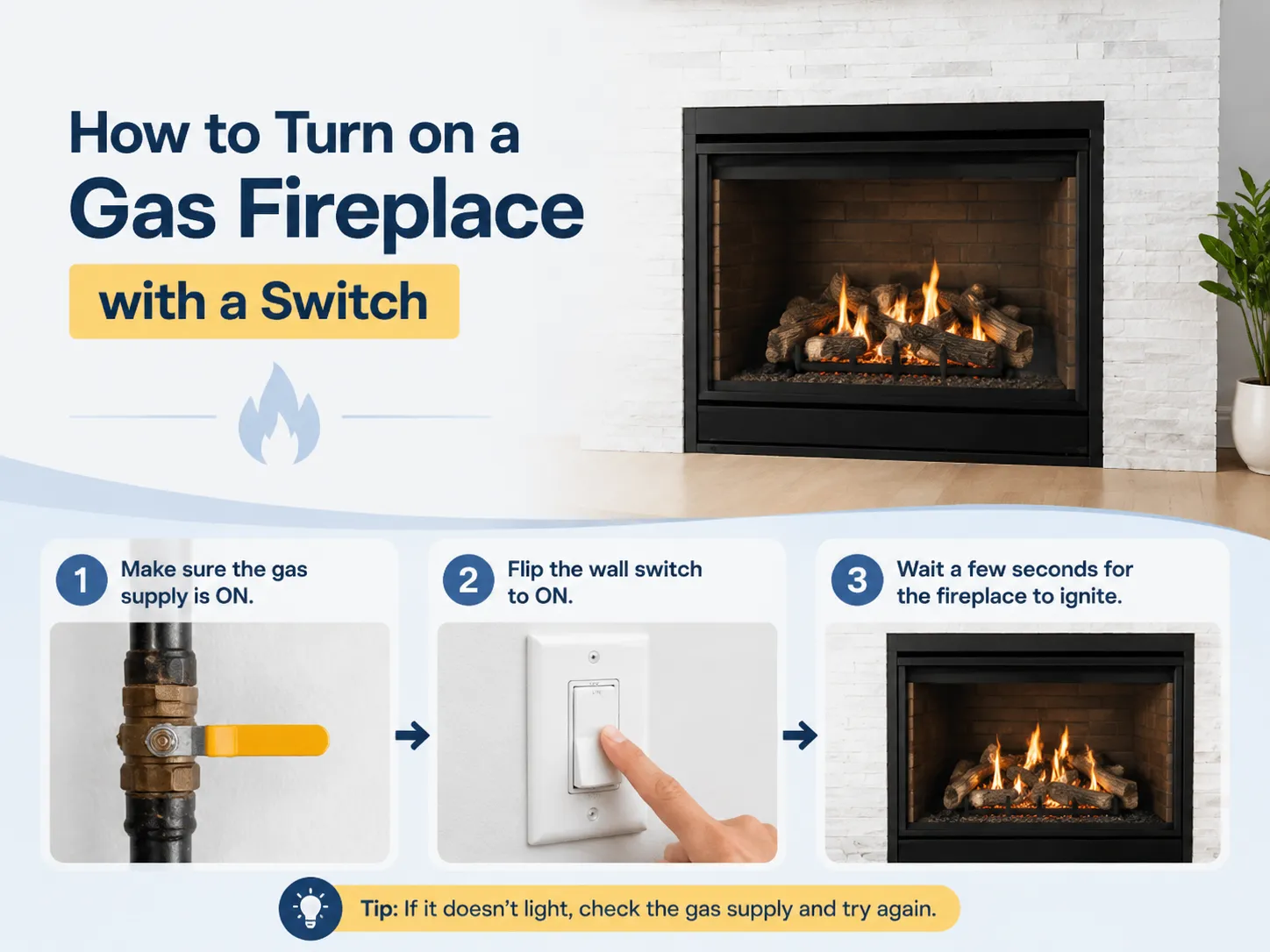
The response is affirmative. Most of today’s gas fireplaces can be used with the wall switch. If you are dealing with a millivolt-type system with a pilot light: you should have the fireplace control valve in the ON position (not in the PILOT position) before operating the switch. Once in the ON position, the switch connects the low-voltage circuit supplied with power from the thermopile, thereby enabling the burner to light. In terms of electronic ignition systems: you should set the control box to the ON/REMOTE position first and switch the switch on, which will lead the ignition system to light the pilot and turn the burner on, thus relieving the user of any pilot-light duties.
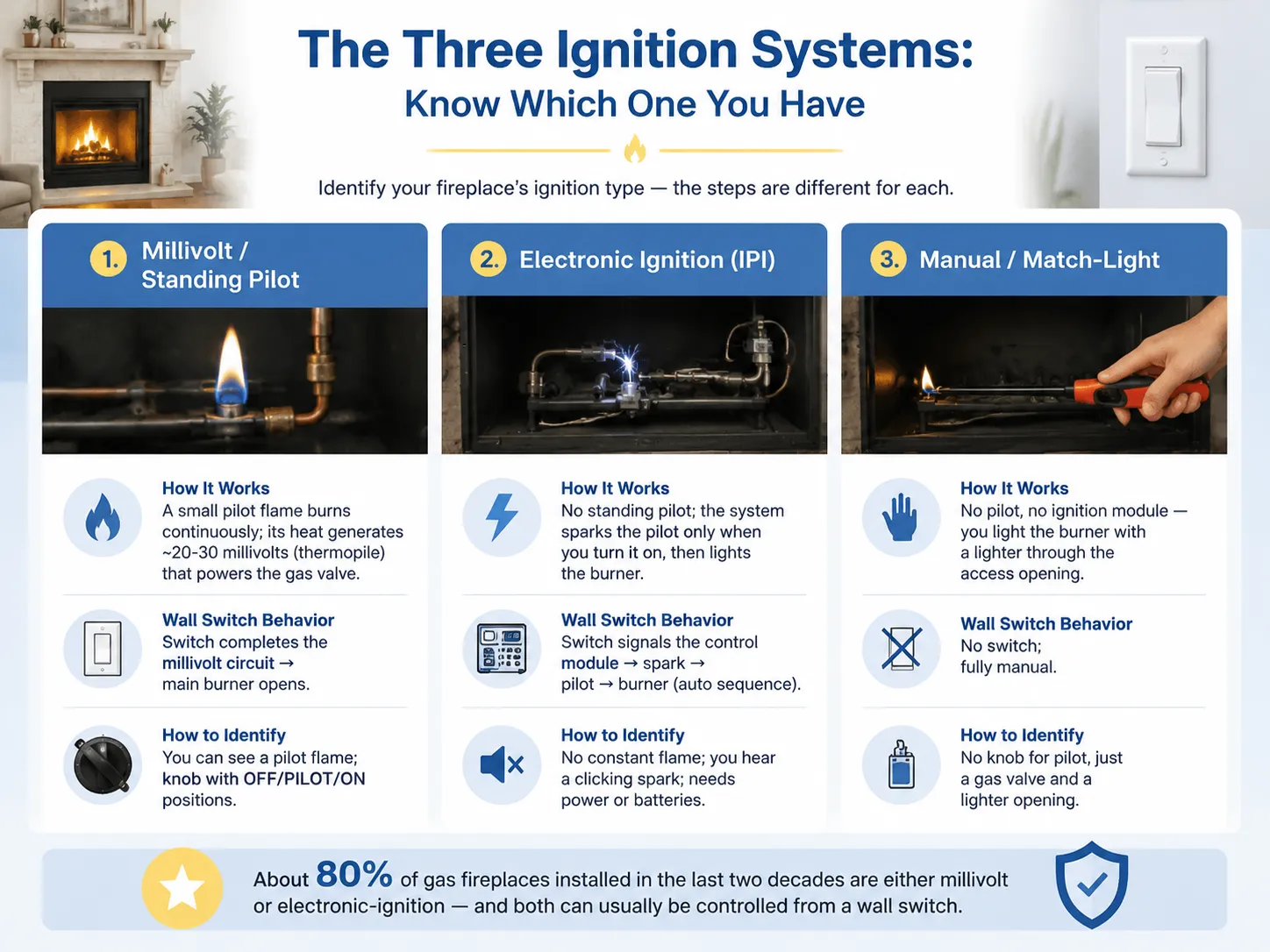
The Three Ignition Systems: Know Which One You Have
Before anything, identify the type of ignition used in your fireplace, as the procedure varies according to that type. Consult the owner’s manual, look for the gas control valve behind the lower louver or access panel, or check for the presence of a control panel wall switch.
| System | How It Works | Wall Switch Behavior | How to Identify |
|---|---|---|---|
| Millivolt / standing pilot | A small pilot flame burns continuously; its heat generates ~20-30 millivolts (thermopile) that powers the gas valve | Switch completes the millivolt circuit → main burner opens | You can see a pilot flame; knob with OFF/PILOT/ON positions |
| Electronic ignition (IPI) | No standing pilot; the system sparks the pilot only when you turn it on, then lights the burner | Switch signals the control module → spark → pilot → burner (auto sequence) | No constant flame; you hear a clicking spark; needs power or batteries |
| Manual / match-light | No pilot, no ignition module — you light the burner with a lighter through the access opening | No switch; fully manual | No knob for pilot, just a gas valve and a lighter opening |
Approximately 80% of gas fireplaces installed in the past twenty years utilize either the millivolt or electronic ignition technology, and in most cases can also be operated from a wall switch.
Millivolt Systems (Standing Pilot): Wall Switch Steps
For a fireplace that has a standing pilot, the wall switch is essentially a low voltage switch within the thermopile circuit. The whole sequence of operation is:
- Check for gas delivery by locating the gas shut off valve along the gas supply line (usually found near the fireplace or in the basement) and ensuring it is OPEN (handle must be parallel with the pipe).
- Check whether the pilot is on by peering through the glass or the access panel for the little flame of the pilot. If it’s out, relight it. A lit pilot is necessary in order for the wall switch to open the main burner since the thermopile needs the heat from the pilot in order to generate millivolts.
- Set the control valve to ON position. The gas controlling knob inside the fireplace can be found in three settings: OFF – PILOT – ON. Make sure it is on ON position (many old timers keep it at PILOT since they last lit the fireplace, which is just why the wall switch does not work).
- Flip the wall switch. Just one flip is enough to do everything. As the circuit is closed, the millivolt signal gets to the gas valve and the main burner lights up from the standing pilot in just a second or two.
- Use the flame height control in case it is present in your device.
Steps for relighting the pilot, if necessary: Turn the knob to OFF, wait 5 min for the gas to clear, turn the knob to PILOT and press it down, push the igniter button (usually, red) until the pilot flames up, continue pressing the knob for about 30 sec for the thermocouple to warm up, and release it once the pilot burns again. After that, turn the knob to ON and use the switch.
Electronic Ignition (IPI): Switch & Control Box Steps
Fireplaces that use electronic ignition do not keep the pilot lit, hence the process is simpler depending on the control box settings. The following happens:
- Turn on the gas valve (the valve handle is in line with the tube).
- There is a control box (most frequently located under the fireplace, at the back of the lower panel or inside the wall box behind the switch). It normally has a mode switch: OFF / ON / REMOTE.
- Set your control box to ON or REMOTE. The fireplace will respond to the switch in the ON mode, while it will receive commands from the remote control in the REMOTE mode. In case your wall switch does not produce any results, the most likely cause is the control box being in the OFF + REMOTE mode and not receiving any commands.
- Flip your wall switch (or press your remote control). The pilot is ignited (the clicks will be heard), as soon as the flame sensor confirms the presence of pilot flame, the main burner will ignite automatically.
- Adjust the flame using your remote control or control dial.
Importance of batteries: the majority of IPI systems come with backup batteries as part of the receiver unit (and also remote batteries). If the unit is not working, check to see if batteries need to be replaced. In most situations, dead batteries will be the main cause as to why an electronic fireplace “won’t turn on”.
Other Ways to Turn On a Gas Fireplace
Here are some additional controls you might have, depending on your model:
- Remote Control (RF or IR): Most modern fireplaces come with a remote to operate the ignition process exactly like the switch. Ensure that the control box is set to the REMOTE mode and that the remote is synchronized.
- Control panel on the unit: Most units’ control panels have buttons or a dial at the bottom — push the power or ignite button, or turn the dial. Many have the “ignite” position.
- Smartphone app / smart home: Contemporary systems come with Wi-Fi or smart features (with some compatible with Google Home and Alexa) and can be controlled from the app that goes with the brand.
- Thermostat mode: Some systems allow you to set a desired temperature while the fireplace will keep it for you.
- Manual (match-light): Older or less expensive systems do not use pilot lights. In this case, you would open the valve, and using a lighter ignite the gas flow through the opening.
If you have a remote and a switch on your fireplace then they generally work well together unless your control box is set a mode that allows its operation in only one system at a time.
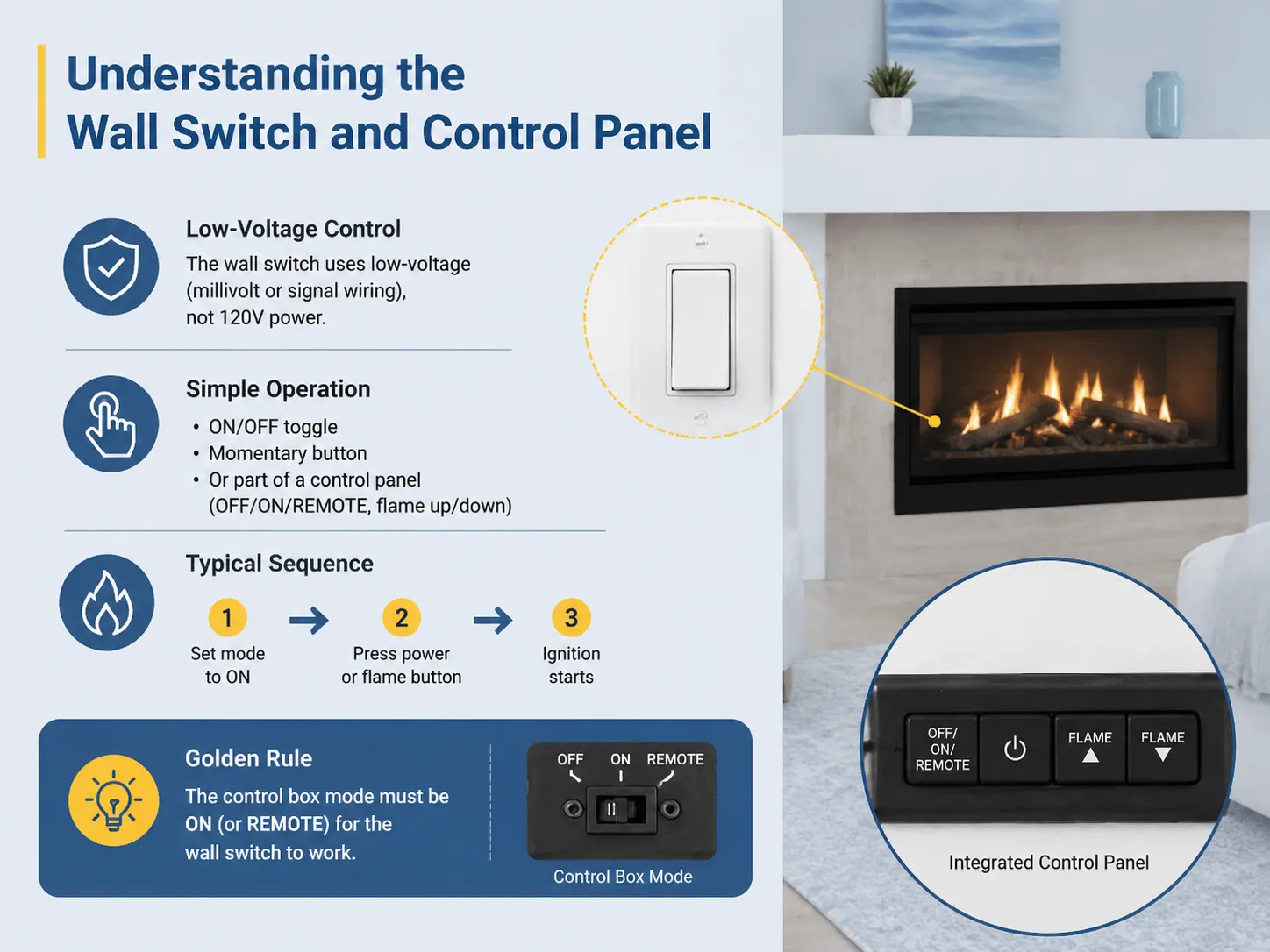
Understanding the Wall Switch and Control Panel
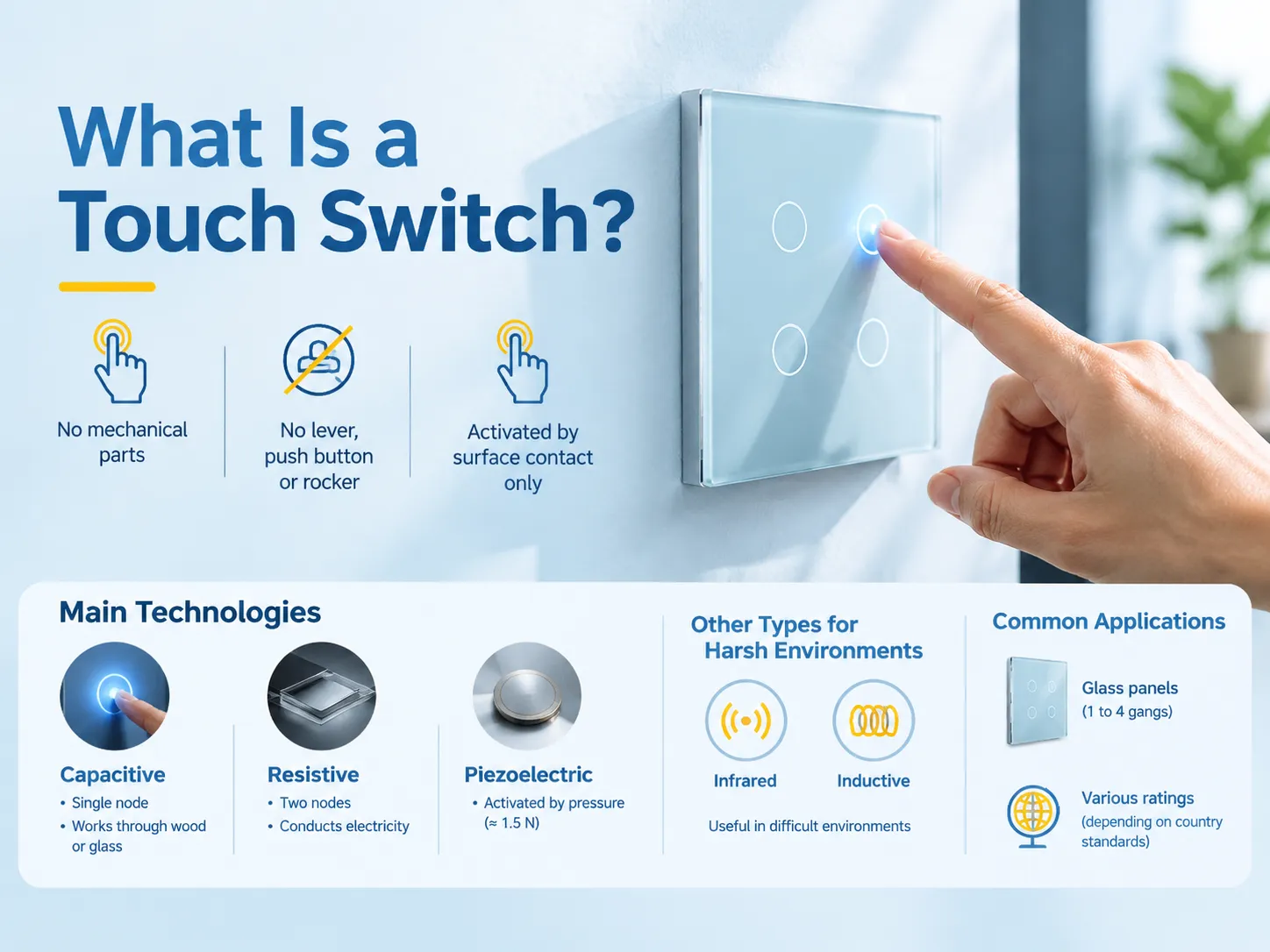
A gas fireplace wall switch is unlike a regular 120V light switch — it uses a low-voltage control switch (millivolt or signal circuit) that actually ignites the fireplace. In this way, it can appear as an everyday rocker switch but accomplish something else.If you are replacing or adding the switch itself, the same care that applies to any wall device — matching the right switch type and wiring it correctly — is covered in our light switch replacement guide and the LED dimmer compatibility guide.
There are three things that you should keep in mind about the switch and the panel:
- It does not carry household voltage — meaning that you will not get shocked by the switch itself, although you should still treat the wiring with care (because it connects to the fireplace control system).
- It might just be an ordinary ON/OFF toggle switch, a momentary switch, or part of a small control panel with commands (OFF/ON/REMOTE, etc.).
- Integrated control panels usually operate in the following way: you set the mode to ON → press the power or flame button → the ignition process will take care of itself.
If your fireplace has a wall switch but also a control box located under the cooking device, keep in mind that for the wall switch to work, the control box must be either set to ON or REMOTE mode.
Why Won’t It Turn On? Troubleshooting Table
| Symptom | Likely Cause | Fix |
|---|---|---|
| Switch does nothing, no sound | Control box in OFF/REMOTE; dead batteries; gas valve closed | Set control to ON; replace batteries; open gas valve |
| Clicking sound but no pilot | Air in gas line; dirty igniter; failed spark module | Cycle the switch a few times to purge air; clean the igniter; call a pro if it persists |
| Pilot lights but burner won’t light (millivolt) | Knob left in PILOT position; dirty thermocouple/thermopile | Turn knob to ON; clean the thermocouple with fine sandpaper |
| Burner lights then goes out | Flame sensor dirty or misaligned (IPI); thermocouple weak | Clean/adjust the sensor; replace thermocouple if worn |
| Remote works but switch doesn’t (or vice versa) | Control box mode locked to one input | Set the mode to the input you want to use |
| Nothing after multiple attempts | System lockout after repeated failed ignitions | Wait 5+ minutes for the lockout to reset; stop cycling the switch |
| Smell of gas | Leak or failed safety shutoff | STOP. Do not flip any switches. Ventilate, leave the room, and call the gas company or a technician. |
The single cause that occurs most frequently across the board is that the fireplace hasn’t been used since the last season, the control box or knob is in the wrong position, or the backup batteries are flat. Go through the table from top to bottom before calling in a technician.
Can I Use It During a Power Outage?
It relies on the type of ignition:
- Millivolt / pilot ignition: yes — this unit generates its own voltage, utilizing heat from the pilot light, so the unit will operate without power from home. The blower (if installed) will not function, but the heating will occur.
- Electronic ignition (IPI): quite probably yes — the vast majority of IPI devices come equipped with the battery backup that ignites the flame during the power problems. In the fall, insert the batteries and take them out when the power is back.
- Power-stoked devices with blowers: the exhaust fan and fan require power, and some power-vented models do not work properly without power supply.
If there is a control box, the heating system normally can also be controlled directly from there (for instance, switched ON) during a blackout — consult the instruction manual for details.
Safety Rules
- Do not tolerate any kind of gas odor. Turn off all switches, open the doors and windows to get rid of gas and call the gas repair. It is best to study the instruction manual before you will turn the appliance on for the first time, as different devices may differ in their parts.
- Avoid excessive manipulation — just flip the switch in order to get the device working; turning it on and off may cause it to malfunction or to receive gas but burn it.
- The device’s glass and vent should be kept clean and free of any fire hazards; keep the firebox in clean condition as well.
- Every producer recommends to use the services of professional technician at least once a year — it is to make sure that everything works properly and the warranty, if any, is still valid.
- If you have gas appliances installed, make sure you have detectors placed in the vicinity of bedrooms.
How to Turn It Off
Disabling the burner is far simpler than starting it:
- To disable the burner, put the light switch on the OFF position (or push the off switch on the remote), thereby stopping the main burner and extinguishing the flame.
- For the pilot: in the case of a millivolt burner, it can be perfectly safe to let the pilot flame burn throughout the winter season, or you could just turn it off during summer. But if you have an IPI burner, then you don’t have to worry as there is no pilot flame anyways.
- In case you are going away for a long period of time, or it is the time to stop using the burner, you should turn off the control knob and switch off the manual gas shutoff valve on the gas line to ensure safety.
Frequently Asked Questions
Can a gas fireplace be turned on with a switch?
Indeed. Nowadays, the operation of the majority of gas fireplaces relies on the wall switch mechanism. In the case of the operation of millivolt devices, the wall switch closes the low-voltage circuit that gets its power from the pilot thermopile — once the switch is pressed, the burner fires up. Electronic ignition systems operate in the opposite way: the wall switch gives the signal to the control module that sends the request to ignite the burner. It is important to remember that certain conditions must be fulfilled: open gas valve, ON/REMOTE control unit setting, activated pilot light (for the millivolt system), and working batteries (for the IPI system).
Why won’t my gas fireplace turn on with the switch?
Check the following items in order: 1) Is the gas shutoff valve closed? If so, open it. 2) Is the control box set to OFF or REMOTE? Change the setting to ON or to the desired remote mode. 3) Are the batteries in the remote or receiver dead? Get new batteries. 4) Is the pilot out (millivolts) or is the knob in the PILOT position? Relight the pilot and turn the knob to ON. 5) Is the thermocouple/flame sensor dirty? Clean it. If the pilot still won’t light and you smell gas, do not attempt to light it. Call an expert.
How do I get my gas fireplace to turn on?
To start with, you have to pinpoint your type of ignition. Millivolt/standing pilot system: Make sure the pilot is lit and the control knob is set to ON, after that simply turn on the switch found on your walls or push on the remote. Electronic (IPI): Have the gas valve open, put the control box on ON or REMOTE setting, ensure that the batteries can supply power, finally you turn on the switch or press the remote and the fire is lit automatically. Manual/match-light: Open the valve first and then light the burner with a long lighter. Always read through the instruction manual before proceeding.
Can I manually turn on my gas fireplace?
The method of lighting a fireplace depends on the model; match-light fireplaces have to be lit manually using a lighter and the gas valve has to be opened and the burner lit. However, millivolt and IPI models are not designed to be ignited manually; they are controlled by an ignition system and using the gas valve without the ignition sequence can be hazardous. On the other hand, during power outages, people can still operate millivolt systems and IPI systems that are battery backed; under no circumstances should pilots or electronic ignitions of fireplaces be “manually lit” unless the respective manual is properly consulted.
References
- The Torch Guys — How to light a gas fireplace with electronic ignition
- Fix It and Finish — How to turn on a gas fireplace with a wall switch
- AQVINA — How to light a gas fireplace: pilot, electronic & remote
- Heat Savers — How to turn on a gas fireplace
- Blazing Embers — Electronic ignition fireplace lighting guide
Conclusion
If you know which kind of ignition system it is, starting a gas fireplace through the wall switch usually only takes a couple of seconds. For example, when you have a millivolt ignition, the only requirements you need to meet are that the pilot flame is on and the control valve is set to on; after that, it is just a matter of switching the switch. With electronic ignition, on the other hand, you must first make sure that the gas is set to on, the control box is in the right mode, and that batteries are new; once that is done, ignition will happen automatically. In most cases, there are only four reasons why the fireplace may fail to start – the gas valve may be off, the control mode may be wrong, the batteries may have died, or the knob may still be in the PILOT position.