Consumers often choose a light switch as their most common electrical device, with many rushed decisions made from catalogs on site. That might not be logical, because the wiring of the switches, the switch plate design, and the number of gang sockets are determined by the architectural design of the building. This means that the alternative fitment option only becomes available after the switch wiring has been done, thus limiting the options available to the individual consumer.
The present guide gives some answers to the many queries one might have, thus helping to reduce the probability of mistakes.
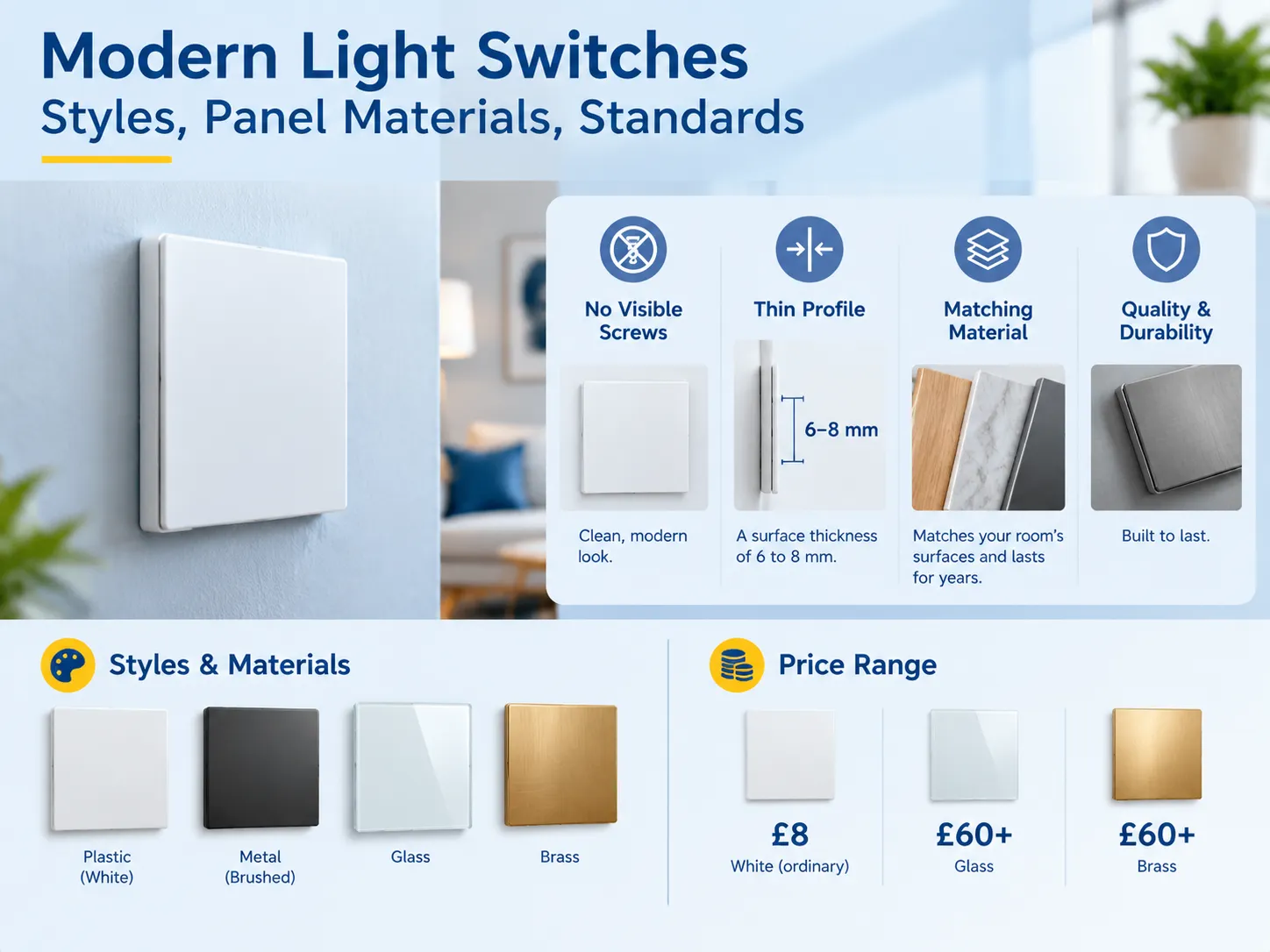
To summarize, when we choose modern light switches we tend to follow four criteria: we make use of those light switches featuring an even surface free of openly visible screw elements, a specific thinness of the light switch surface (i.e. 6 to 8 mm), a material used for the surface of the light switch that matches that of other surfaces in the room while also making the light switch capable of serving for a long time. The prices of light switches, however, vary and reach £8 for ordinary white switches and £60 or even higher for both glass and brass switches although their functional superiority over one another does not necessarily equal their price differences to a big extent.
What “Modern” Means in a Switch Today
In the past ten years, there have been some changes that can be noticed on every new installation.
First, the screw is gone. A visible screw head on the switch plate signals a commercial or out-of-date product because there have been a move in residential and hospitality installation towards clip-on plates with hidden fastening.
Second, the plate has become thinner. Traditional thermoset plates are 10 to 13 millimetres thick. Today, glass and metal plates can be only 6 to 8 millimetres thick, that is why it looks nearly flush if the wall painting is done well.
Finally, the finish is not white anymore. Although it used to be custom orders, finishes like matte black, brushed brass, bronze, smoked glass and coloured plates are standard now. Actually, the point is that the switch is becoming perceived as a design object to be chosen with a door handle and a socket, not with the consumer unit. That shift is behind most of the range growth in the category, and this overview of outlets and switches for modern interiors covers the socket side of the same decision.
The Formats Worth Knowing
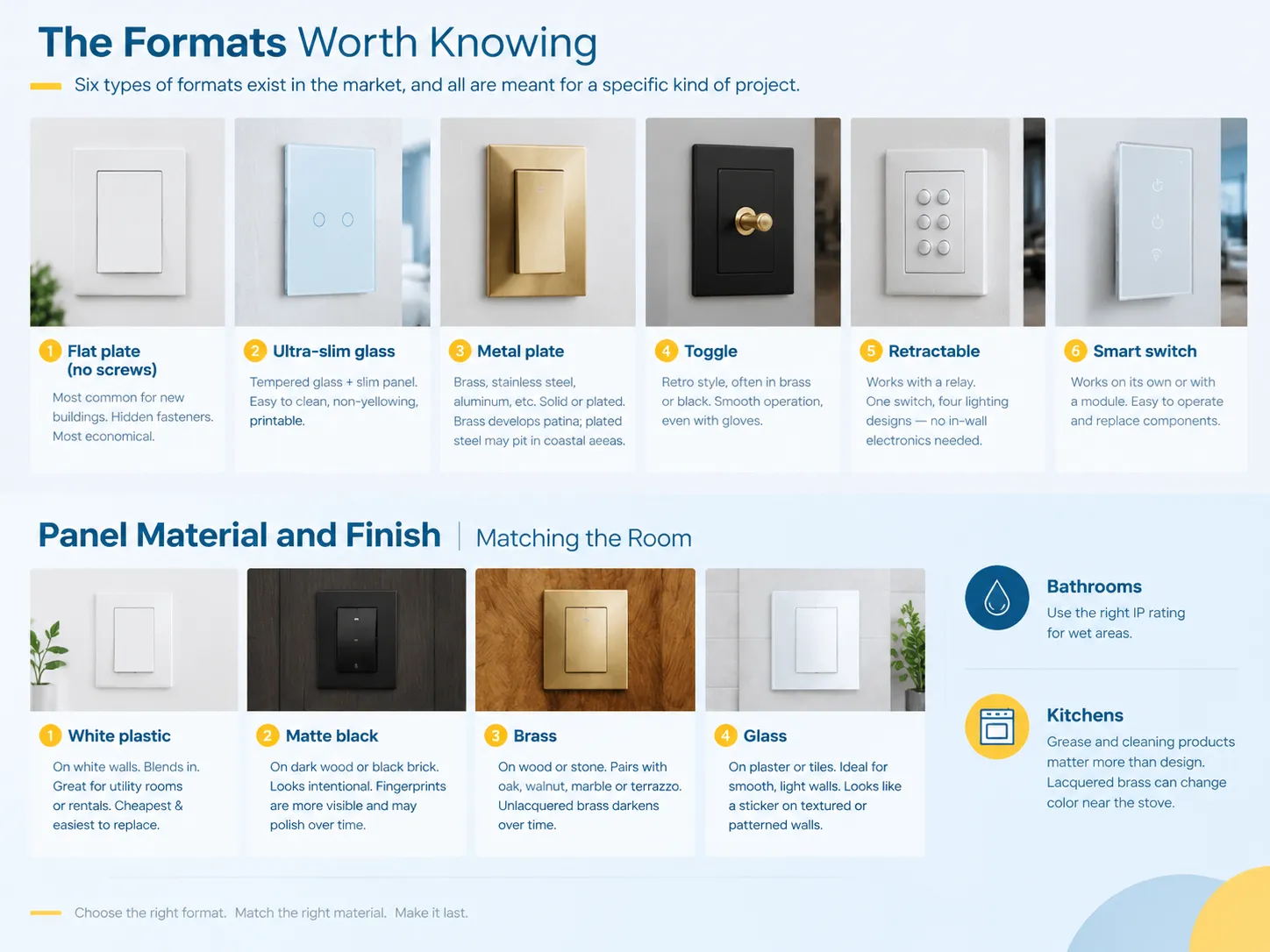
Six types of formats exist in the market, and all are meant for a specific kind of project.
- Flat plate with no screws. This is the most common for new buildings such as homes or hotels. It makes use of a cover with hidden fasteners as the basic component. This is the most economical style available.
- Ultra-slim glass. This is a piece of tempered glass attached to an extremely slim panel made from normal glass. It is popular for its easy cleaning and non-yellowing properties. It can also be printed with any design because of its good adhesion. A current example of the format is this ultra-slim glass wall switch, where the relevant specification is the total depth and the touch mechanism, not the colour range.
- The plate can be made from metal, and it can be solid or plated. A plate can be made from different metals such as brass and stainless steel or even aluminum. Solid brass plate is known to develop patina with time while lacquered brass plate remains unchanged till the lacquer wears off. If you are using a plate in coastal area, be careful to mention the right variety, because plated steel plates are known for pitting in a season.
- Toggle offers upper-class features. Earlier, toggle was considered old-fashioned, but nowadays it has come back as a choice in retro design trend, usually appearing in flat brass or black mounting plate. In fact, this is a very good design decision because toggle mechanism can be operated smoothly while wearing gloves, which makes it convenient to use.
- Note that retractable can be used with a relay. The principle behind using this type of switch lies in the fact that its design is very useful and the logic is activated in a different way. This is how a single switch can activate four different lighting designs without using electronics within the wall.
- Smart switch can work on its own. A smart switch is designed in such a way that either a smart switch is installed or regular switch works with a smart module. The design of a smart switch enables it to be easy to operate without any difficulties in replacing the components.
Panel Material and Finish: Matching the Room
The basic rule is for a plate to complement rather than compete with the existing metal finishes in the room. There are four designs that work without fail.
- White plastic on white walls. It melts in, which is vital for utility rooms or rental properties. It is the cheapest and easiest to replace.
- Matte black on dark wood or black brick. It reads as intentional. The problem is that fingerprints are more visible on matte black than on any other material, and the repeated cleaning of a matte surface may result in the gradual polishing of a spot.
- Brass on wood or stone. It is the most reliable expensive option, as brass goes with oak, walnut, marble, or terrazzo. Unlacquered brass will darken with the years, which many clients prefer but others do not. Be sure which option they have purchased before placing the order as the items have different product codes.
- Glass on plaster or tiles. The material is suitable for smooth and light walls. If the wall is heavily textured or patterned, the piece will look like a sticker due to the way glass behaves as a reflective surface.
There are two main practical limitations, aside from the design. In bathrooms plates need to have the appropriate IP rating for their location, and not all decorative metal plates have the rating for wet areas. In kitchens grease and cleaning products dictate the choice more than the design of the plate as a lacquered brass piece placed adjacent to the stove will change color after cleaning.
Function: What the Switch Has to Do
Determining the type of fixtures to be used is an aspect that comes to the customer and the electrician, together as the task involved in making the right choice before placing an order for electrical plates.
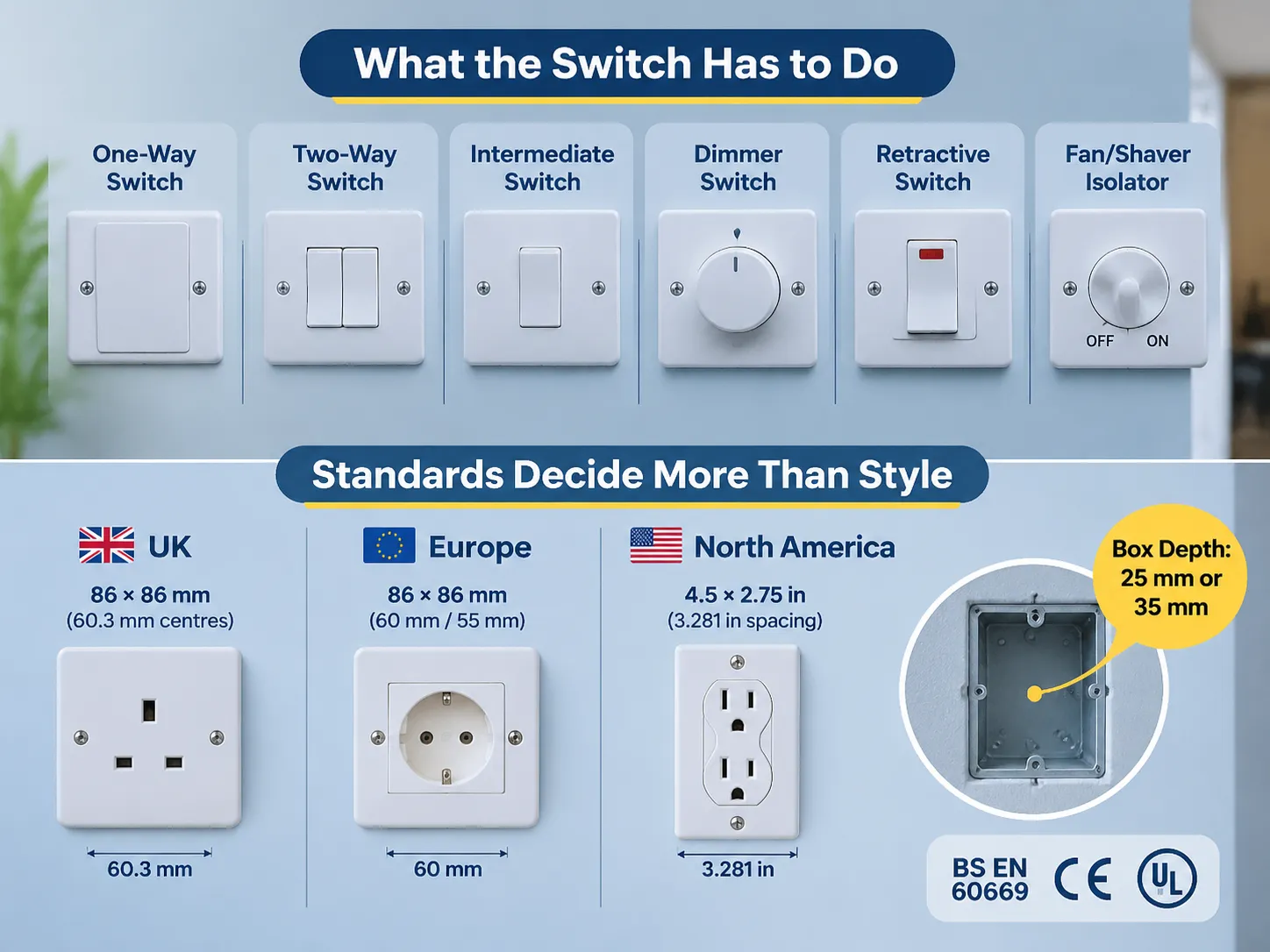
- The simplest of the types of switches available is the one-way switch. Most of the switches in a house are of this kind and therefore, it is the least expensive way of switching on different devices.
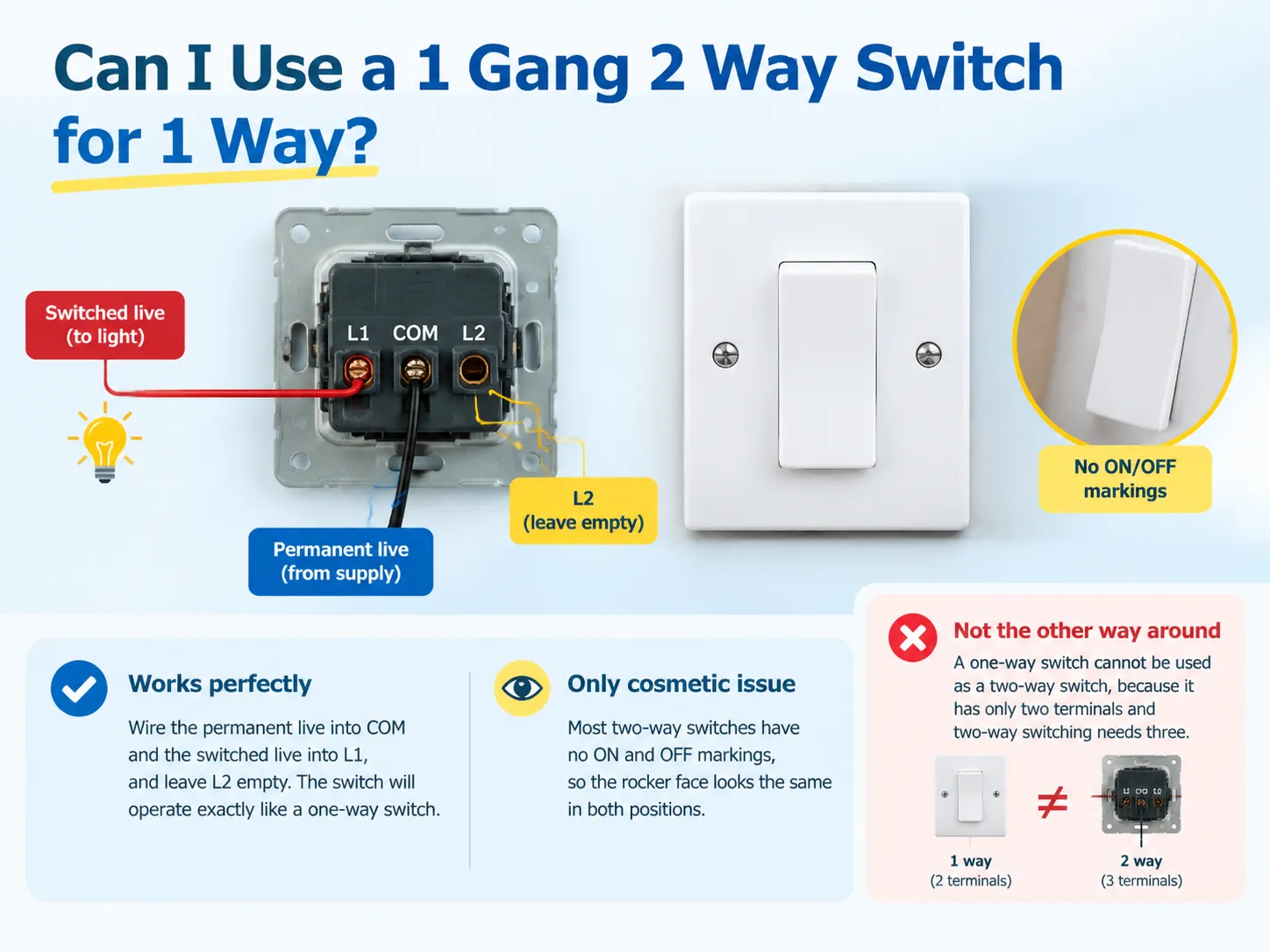
- The use of two-way switch allows control of a light from two points. So, two-way switch may be found at one end of the corridor and at the other one or upstairs and downstairs. The two-way switch has three terminals and it becomes one-way if one of the terminals is left vacant; this has to do with the circuit and not with any limits of the product.
- Intermediate switch can be installed to allow for control of three or more switch points. This means that a four-terminal switch should be used. In case of a wrong choice of this switch, it will be necessary to recreate the wiring completely.
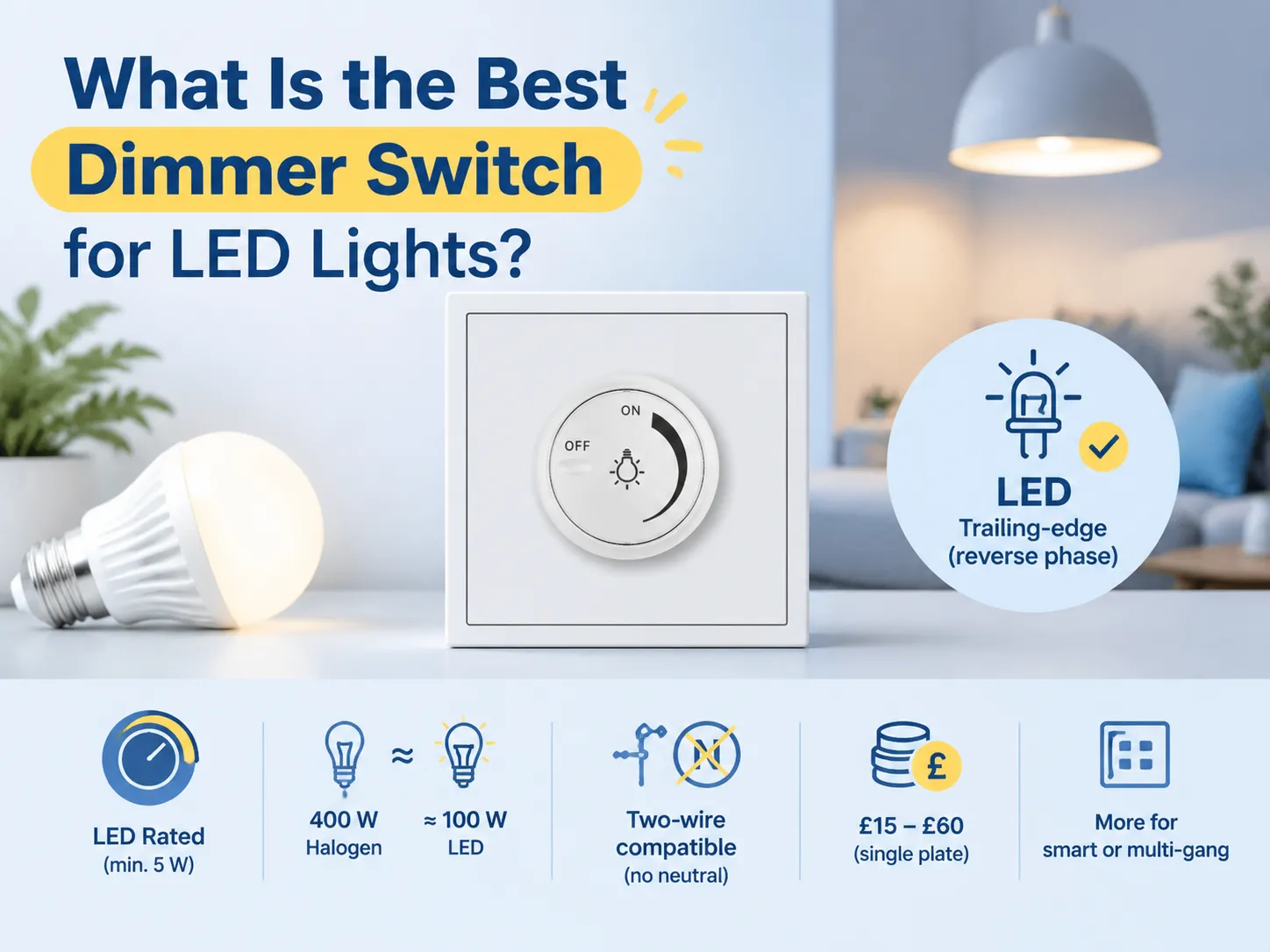
- Dimmer switch can be used for low frequencies only given that a switch should match the load; an LED lamp has its minimum load which is mostly between 10 and 25 W when using a 250 W module.
- Retractive switch is to be used with relay or smart module. It is helpful when controlling the light in a certain scene.
- When using fan or shaver isolators one has to be careful to choose the isolators as they are separate products with their own specifications and should not be confused with lighting switch.
Standards Decide More Than Style
This is the section most buyers skip and later regret. A plate is not a universal object, and the fixing centres are what actually constrain you.
| Market | Plate size | Fixing centres | Note |
|---|---|---|---|
| UK | 86 × 86 mm single, 146 × 86 mm multi | 60.3 mm | BS 4662 pattern; back box depth 25 mm or 35 mm |
| Europe | 86 × 86 mm common | 60 mm or module grid | 45 mm and 55 mm module grids both in use |
| North America | 4.5 × 2.75 in | 3.281 in device spacing | Device mounted to box, plate clips over |
| Australia and New Zealand | Local grid plate | Local pattern | Not interchangeable with UK plates |
The 86mm British plate 60.3mm center is the most replicated design worldwide thereby making it possible for many export varieties to claim compatibility with it. However, a claim does not equate preestablished compatibility therefore a plate that is 2mm off-center cannot fit snugly in an existing box.
The next factor is box depth, while a 25mm box can hold a simple switch alone. A dimmer, smart module, or retractable relay would be compatible with a 35mm box thereby making updating a completed wall into a 35mm installation a wall finishing task. Box depth must be counted before installation.
Both product standards follow market needs. In the UK, BS EN 60669 is commonly used for switches while BS EN 60669-2-1 is used for switches. US appliances have a UL certification and comply with NFPA 70 standard.
Price Bands, and What the Money Buys
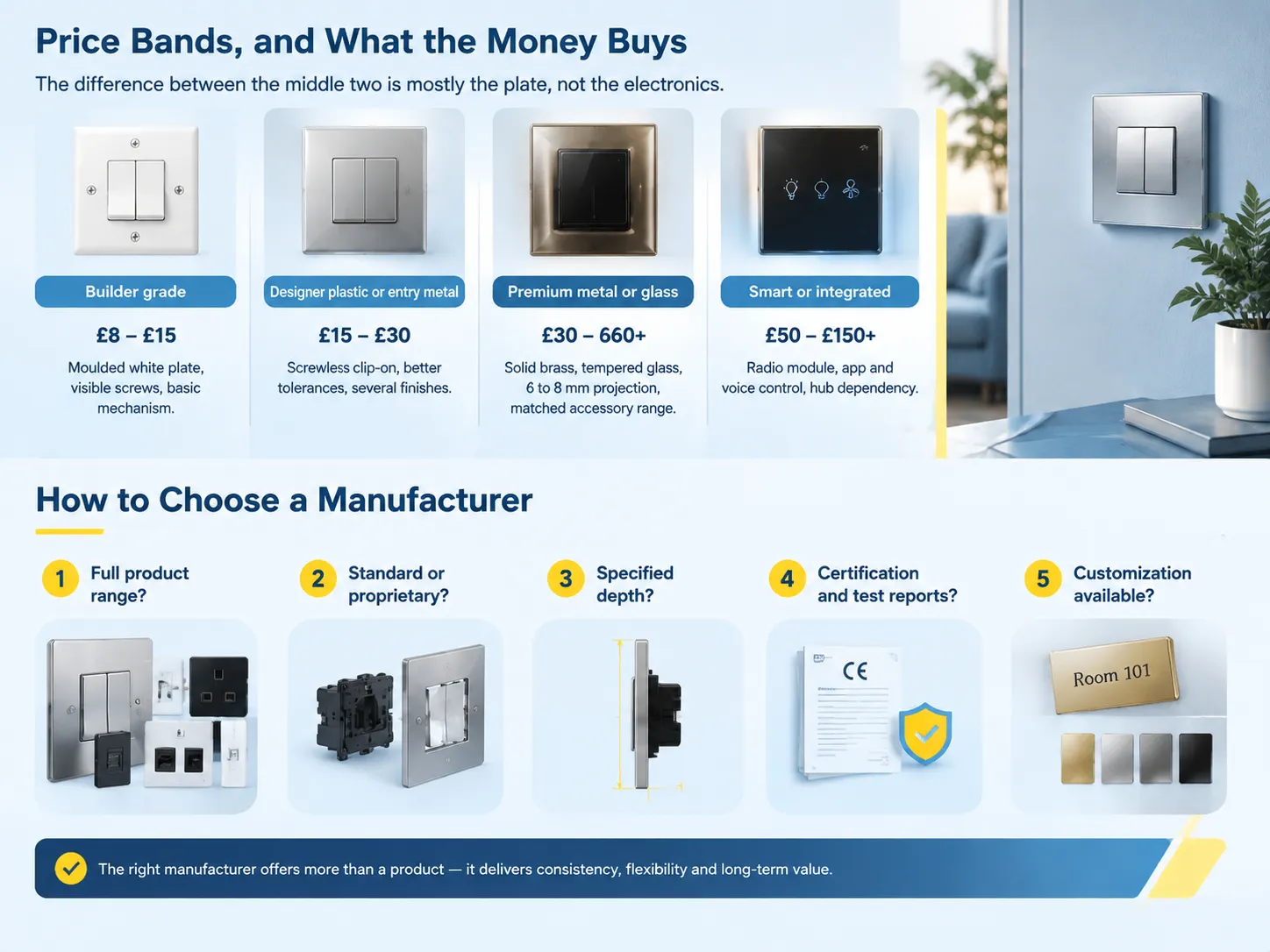
Four bands, with the honest observation that the difference between the middle two is mostly the plate, not the electronics.
| Band | Typical price, single plate | What you get |
|---|---|---|
| Builder grade | £8 to £15 | Moulded white plate, visible screws, basic mechanism |
| Designer plastic or entry metal | £15 to £30 | Screwless clip-on, better tolerances, several finishes |
| Premium metal or glass | £30 to £60+ | Solid brass, tempered glass, 6 to 8 mm projection, matched accessory range |
| Smart or integrated | £50 to £150+ | Radio module, app and voice control, hub dependency |
The two pricing effects can mislead people. First is the gang effect, which means that a four-gang plate is far more expensive than four single plates, as both the plate and the gang are growing. Second is the halo effect, where the use of a luxury finish in the visible rooms increases the total cost of the order because a customer who has booked a £45 living room plate will refuse to accept a £9 plate in the hallway right next to it. Full price detail, including how glass compares with metal at the same gang count, is set out in this look at what glass switch plates actually cost.
How to Choose a Manufacturer
Five questions arise, and the answers lead one from a product range to a catalog.
- Does the product range extend over the whole building or only one switch? The project is one where the specification calls for an entire plate family to have socket outlets, dimming controls, fan isolators, data outlets, and other equipment, and it is common for the socket plates to be matched to the plates of other equipment. Thus, if a supplier sells only switches, it necessitates having another product family in the same environment.
- Is the mechanism standard or proprietary? A proprietary mechanism means that if there is a need to replace a module, a plate has to be replaced too, whereas standard modules are not only boring but more user-friendly.
- What is the specified depth? One must provide the total depth of a plate, as well as the thickness of the glass.
- What certification covers the plate and the module, and is it possible to show the report on tests? The voltage tests are conducted on the load-bearing, adhesive, and terminals of the plate.
- Is it possible to customize the product range? For example, a hotel that needs a room number printed on a plate or a builder that wants to have his logo on his products requires a manufacturer capable of providing quality.That is a real differentiator, and it is what our lighting switch manufacturing operation is built around: more than fifty product families and over a thousand specifications across three automated production bases, which is what allows one plate dimension and one colour standard to be held across a whole building.
Pre-Order Checklist
In every project, there are eight specific items that necessitate re-ordering processes.
- The standards for plates and fixing points are dependent on existing mitigations, or no assumptions have been made. The depth of the back-box should be checked depending on the dimmer or the module being installed. The number of circuits should be defined in rooms and every circuit type must be highlighted.
- The minimum load on the circuit and the dimmer should be checked for each LED circuit design.
- The surface finish finishes must be confirmed in writing.
- The waterproofing requirement must be identified, especially for bathrooms, kitchens and any external walls.
- Market approval must be gained in the destination market and not the originating market.
- Spares should be accounted for at 5% to 10% of the order just in case of damages or changes in the future.
It is not uncommon for clients to refuse the line for spares and ask for it later. For instance, a discontinued finish two years into a staged refurbishment is the problem that results in losing money.Where the project has a house brand or a custom finish, the same logic applies to tooling: OEM and ODM production only makes sense when the volume justifies holding the tooling, so ask what happens to the mould if the programme pauses.
FAQ
Which light switches are more modern?
Flat plates, with a thickness less than 8 mm and a design that complements the metal accents in the room. At the moment, glass and solid brass seem to be the modern materials of choice, while matte black is the most widely used high-end material in home design. Apparent screws on white moldings appear to be cheap construction grade.
What are some of the best modern light switches?
The answer to the question of determining which brand is the best depends totally on the restrictions. I believe that Varilight and Hamilton cover the vast bulk of the market when it comes to the finish variety and availability in the UK, while the brass segment with its Forbes & Lomax brand is the best-known option. When it comes to glass materials, it is bonding techniques and edge treatment that should be taken into consideration, rather than the colors. When talking about a case when a building needs a single plate with specific marking, using a manufacturer with a wide range of products is more effective than using a well-known brand.
What are the trending switches for home use?
Ultra-thin glass available in smoked or matte looks, flush finishing plates made of metal with brushed brass finish and retractable switches that control smart modules allow one to have an ordinary wall unit, while the control happens through your phone application. Overall smart switches began to lose popularity during renovation work due to their function as a failure point.
How to modernize light switches without rewiring?
It’s possible to replace the existing box with a new one with screwless flat plates and switch without changing anything in the gang’s number and the way everything is connected. This job doesn’t involve any electrical work. If you need a dimmer or any smart module added to this box, the box may need to be deeper or there may be a need to run conductors to neutrals depending on the specific wiring requirements.
Do modern switches need a neutral wire?
References
- Legrand — Wiring Devices and Lighting Control
- Varilight — Dimmer and Switch Plate Ranges
- Red Dot — Product Design Award Database
- UL Solutions — Wiring Device Certification
- Signify — Lighting and Connected Lighting Control
Conclusion
Initially, you should settle on the standard and then determine the finish. The board’s type and fixing hole positions are defined by construction, while the finish type is a decision made later, as dictated by the standard. Following this, all other materials, glass or brass, slim or standard, can be replaced (in return for money); yet the depth of the box cannot be replaced.
Make an order for required materials with early delivery, remember the finish code, and buy materials from the company, the facilities of which will be accessible even after five years.