What appears to be a straightforward question, may turn out to be more difficult than expected when there is, for instance, a gap in the wall, a Cat6 cable, a keystone jack, and a plate which cannot match the back box. Actually, there are three questions to answer, and one of them relates to the nature of the plate only.
Thus, this paper will elaborate on the process by reviewing the jack type, standards of cables, type of the plate, shielding alternatives and verification of the installation in order of their importance.
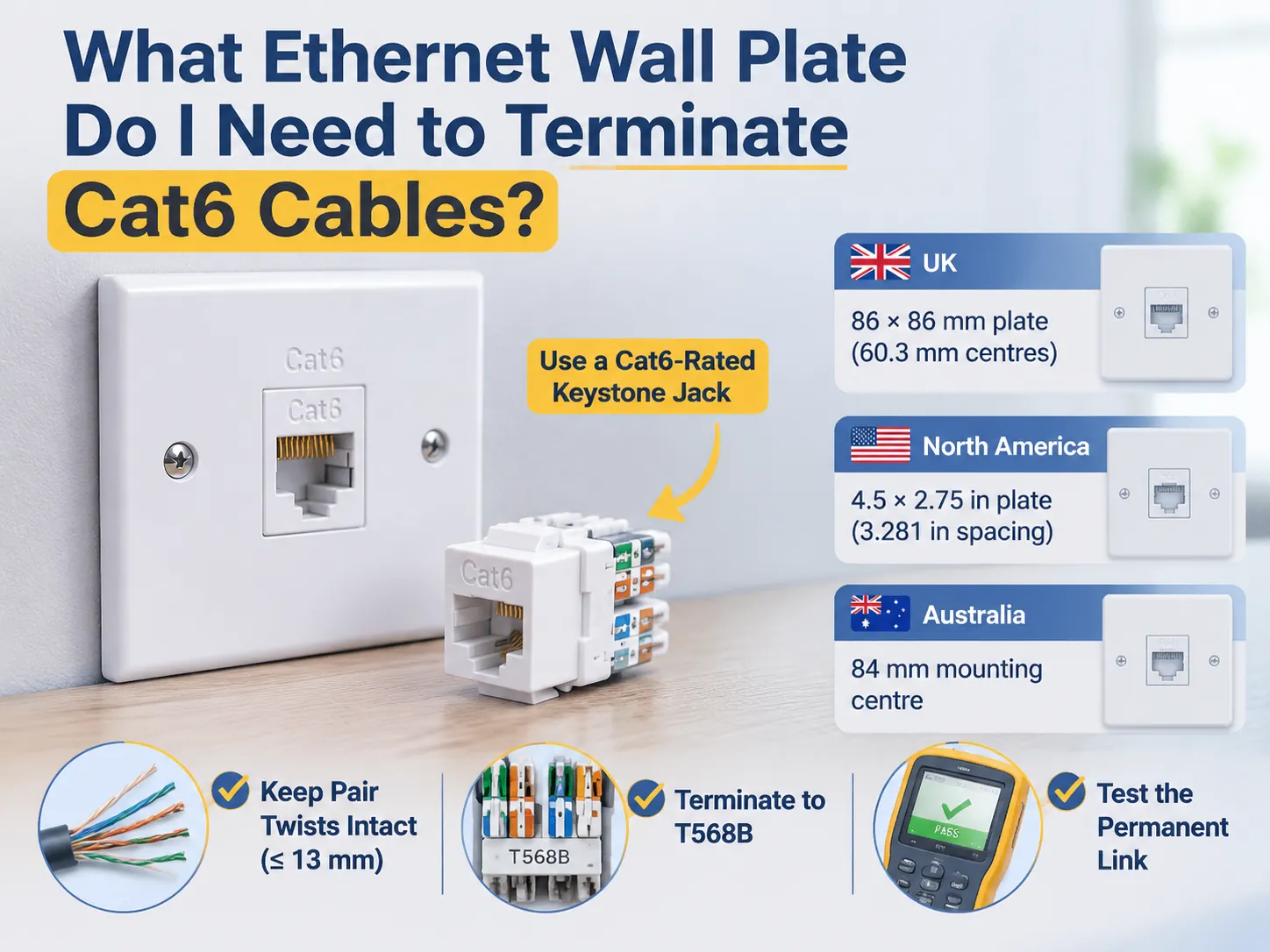
In conclusion, a keystone jack that is compatible with Cat6 should be used and it should fit the slot of the designated plate. In the UK, the plate size is 86 by 86mm whereas the holes are spaced at 60.3mm distance one from another. In North America, the plate dimension is 4.5 by 2.75 inches and holes distance is 3.281 inches. In Australia, a distance of 84mm is acceptable and the cables should be terminated according to T568B standards.
The Three Parts, and Which One Limits the Speed
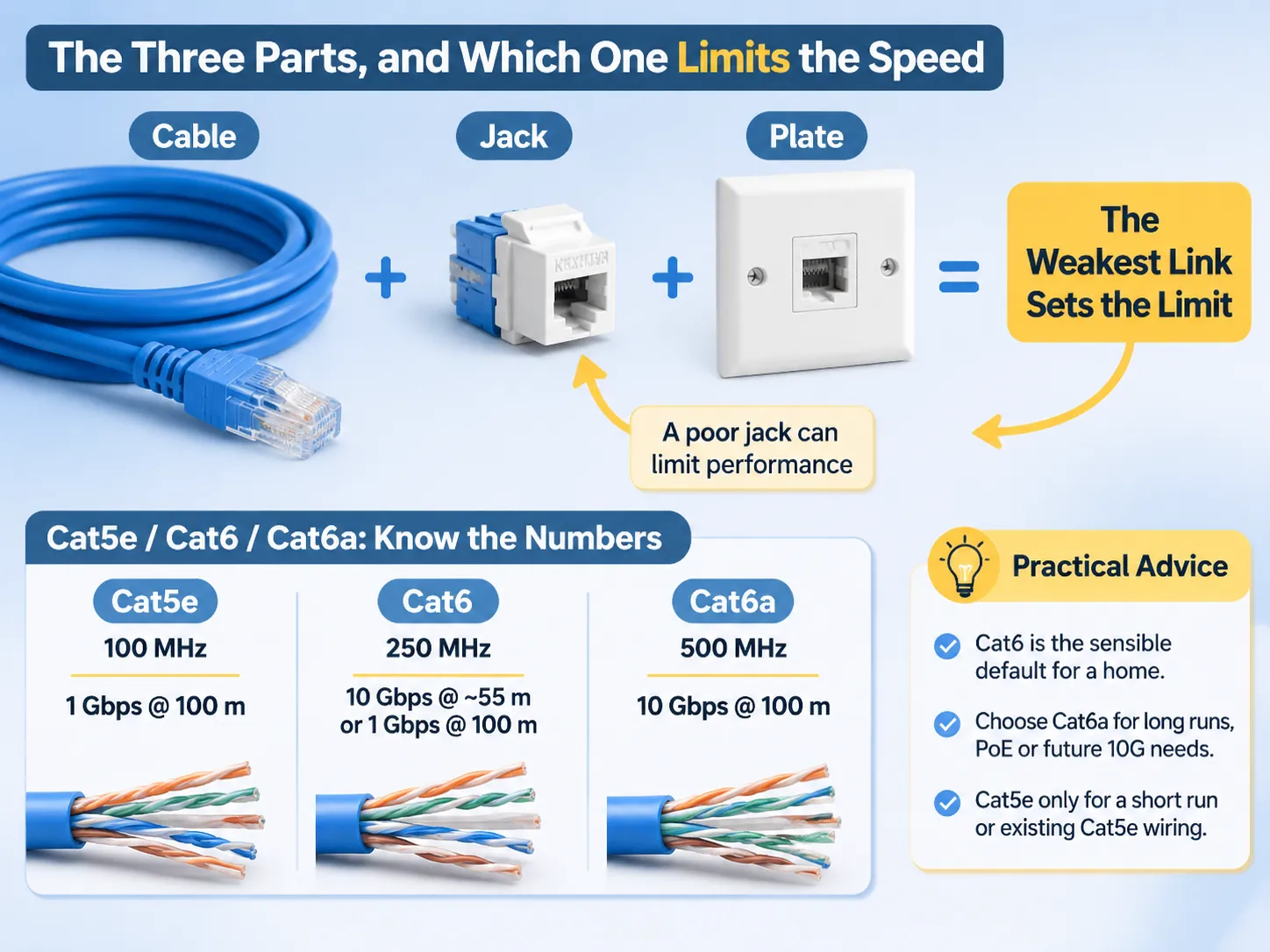
An Ethernet outlet consists of a cable, a jack, and a faceplate. The faceplate works both aesthetically and mechanical. The jack and the cable are responsible for transmitting the signal. In short, the quality of the installation has to comply with the lowest of both components.
This is the reason why a Cat 6a cable plugged through a Cat 5e jack is a Cat 5e Ethernet connection since the jack isn’t simply a hole. The jack has to keep the twists through transition, it has to be untwisted, and it has to have the proper impedance where the cable itself ends. Thus, a cheap jack with long strips will always fail the testing in terms of return loss at a frequency of 250 MHz even if everything is perfect as for the cable.
The keystone jack is a standard type used for Cat 6 installations, since it connects to a square hole with the help of a restoring element. The keystone type can be used for Cat 5 e, Cat 6, and Cat 6a networks, and has options for shielded/unshielded types of cable. In addition, the keystones are interchangeable with the help of a standardized faceplate in order to accomplish the task at hand. The fixed socket with the built-in jack can be also used, but it’s not as easy to upgrade.
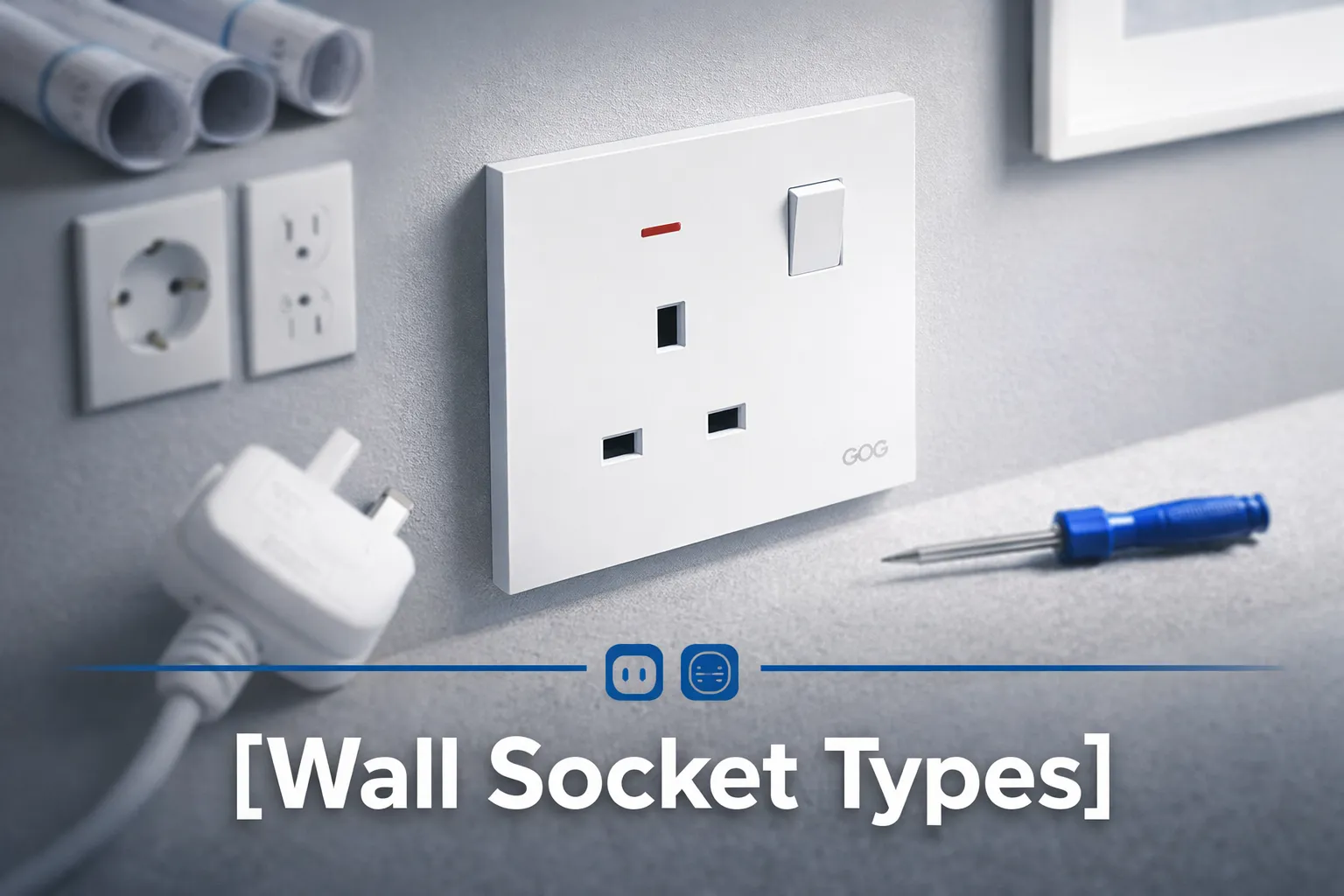
When talking about the types of plates with the as-lesg nt top and a built-in jack, the rating depends on the type of materials used by the manufacturer.A British-standard RJ45 data socket of the type shown in this R12 series data socket range is a single unit with the connector already mounted, which removes the keystone choice but fixes the rating at purchase.
Cat6 or Cat6a, and Why the Jack Has to Match the Cable
The categories categorize bandwidth while bandwidth denotes how long a cable can operate at a given speed.
Cat5e can transmit 1Gbps at 100m, while its rating is 100MHz. Cat6 has a bandwidth of up to 250 MHz, which means 10Gbps can be transmitted for 55m, although the cable can still provide 1Gbps for up to a distance of 100m. Cat6a has a rating of 500MHz, and it can provide 10Gbps for the full 100m. These are the figures that determine our purchase and must be taken into account since the distance of 20m in the house is far more different than 85m in the office.
Above the category, two limitations are present. The channel limit in ANSI/TIA-568 is 100 m in total, consisting of 90 m of installed cables plus 10 m of patch cords on both ends. The rating of the jack should be at least as high as the rating of the cable—this is the moment many home installers fail in their DIYs after spending money on the drum of cables and cheap modules.
In order to save money, it is reasonable to choose Cat6 for a house run, as it can easily cover almost every house run distance of 55m by providing 10G. Cat6a becomes more meaningful in an office or any newly constructed one, where long runs, PoE devices on the edge of a network, or the need of having 10G on every outlet in the next 15 years are expected. The use of Cat5e is reasonable only when it comes to fixing something on a short distance of a run and when the previous installation is Cat5e.
T568A or T568B, and When It Actually Matters
Each technology can be used separately. But when one tries to mix the two of them, it leads to failure.
The conventions differ in the pairs, which are used on the pins: T568B puts the orange pairs on pins one and two, while T568A does the same for green pairs. The pairs differ in the wiring, but they have to pass the certification test as long as they use the same wiring on both ends.
This is a problem of three types. One is the installation of two technologies: A at one end and B at the other. This setup could lead to the failure of the certification test, although the network could pass 100 mbps of work, which is really weird. The second part of the problem generates from the patch panel wired to B and outlets wired to A. In this case, the user would get a relay of some outlets working and others being out of order. The last issue is related to the problem that exists with a patch cable produced by someone else being connected to the network.
One should pick one convention for the site and note it on the plate. In Europe, B is the most common type of wiring used, while in USA, A and B are used depending on whether the installation is for commercial purposes or not.
Which Plate Format Fits the Wall You Have
This is where most orders go wrong, and it has nothing to do with Ethernet.
| Market | Plate size | Fixing centres |
|---|---|---|
| UK | 86 × 86 mm single, 146 × 86 mm multi | 60.3 mm |
| Europe | 86 × 86 mm common | 60 mm, or a 45 mm / 55 mm module grid |
| North America | 4.5 × 2.75 in | 3.281 in device spacing |
| Australia and New Zealand | Local plate pattern | 84 mm |
Before placing an order, be sure to take the measurements of the back box and the hole, so that you do not end up making an assumption. An incorrectly-designed plate can still be fitted but will create a twist, and a gap can easily appear in one of the edges. It would also make sense to take the measurement of the depth because a 25-mm box might be extremely tight for a keystone and a cable that requires bending radius, while 35 mm will offer enough cushion.
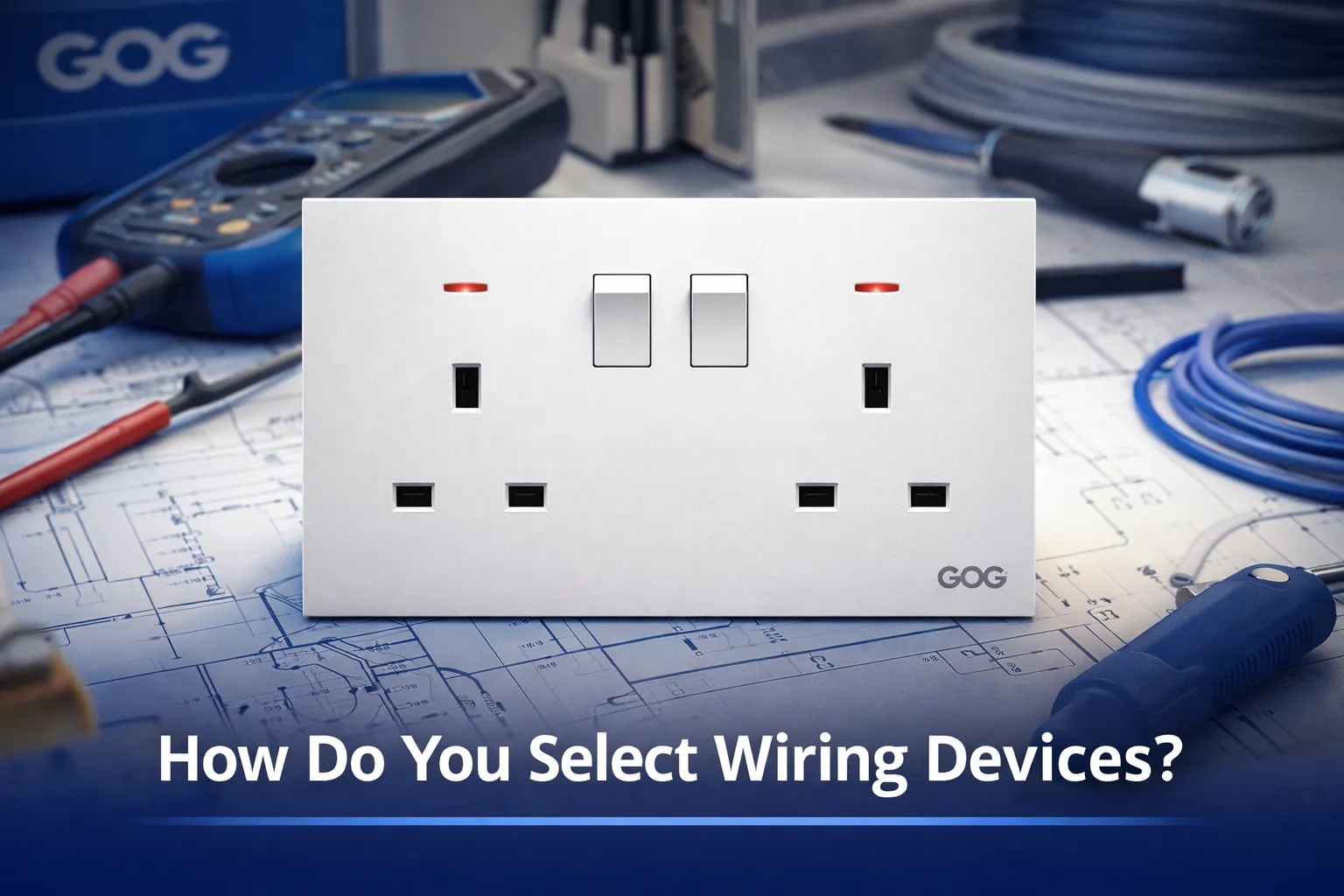
The second question refers to the aperture. A single aperture plate is designed for a single keystone and is the solution for a single outlet. Multi aperture plates may hold from two to six modules, so that a single installation can already supply a room with two data outlets and one telephone and TV outlet. Where the modules are supplied separately, the plate is just a carrier, and a modular blank plate of this type is the part that has to match the wall while the modules are chosen to match the cable.
Shielded or Unshielded, and When the Foil Actually Helps
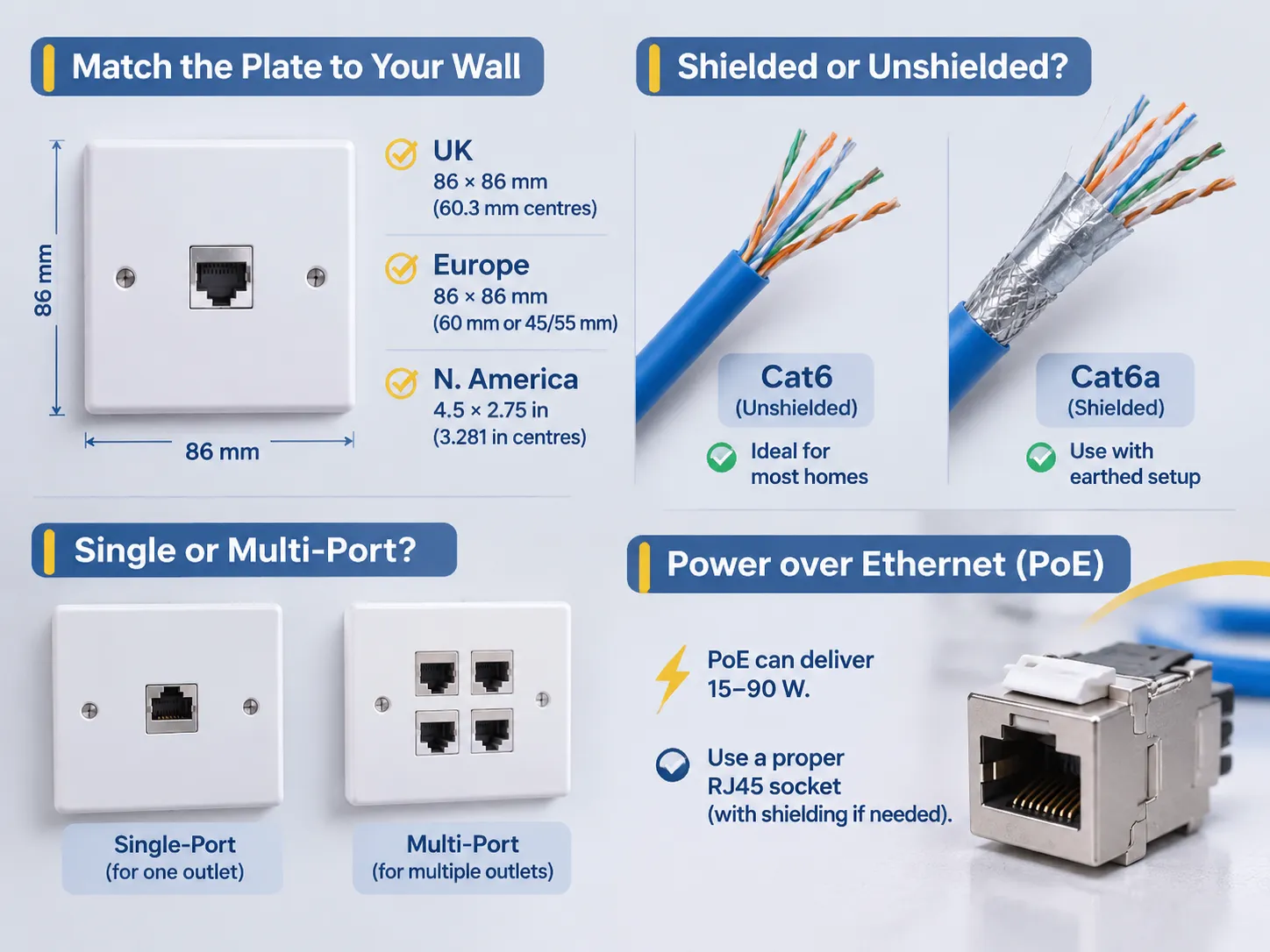
The Cat 6 category cable features a plastic separation between its pair of wires, while Cat 6a features a foil wrapping around the full cable. The foil wrapping only offers improvement in performance if it is properly grounded at one end point.
When you use a shielded cable in surroundings, using the unshielded cable could yield even better results, because the foil picks up all the interference along the cable and has no way of releasing it, which transforms the foil itself into an antenna with respect to electromagnetic fields. This only is valid if the foil is grounded to both ends, otherwise it does not serve its purpose of increasing the noise margin in areas with VFDs, welding equipment or long parallel runs alongside other electric wires.
When it comes to using it at home, using unshielded Cat 6 is the most suitable option. However, in industry, in laboratories, in buildings featuring long cable trays combined with motor wires would favor the use of shielded cables, which need proper grounding.
The use of Power over Ethernet would be competent in this case. PoE requires from 15 W to 90 W depending on the standard used, while the current from the PoE usage raises the temperature of cables. A shielded modular socket, such as this RJ45 data socket in a shielded format, is the part that has to bond the screen to the plate, so the choice of jack and the choice of cable are one decision, not two.
How to Verify the Termination Actually Works
A cable that lights up the switch is not the same as a cable that transmits data. Rather, there are two different levels of testing that measure different things.
- Continuity and wire mapping. A basic tester will check whether each pin connects to the correct pin at the other end, and whether any pair has not split. This type of tester will detect all errors: A/B mismatch, crossing wires, and open wires going into plugs, which make up almost all failed home-made terminations. These testers are also cheap, and sufficient for home installations.
- Certification. A certification tester calculates insertion loss as well as other parameters and compares outcomes to category requirements. Thus, this is the only test that shows the Cat6 cable will support 10G network operation, and this is what a business customer expects. Results of a test are calculated as a permanent link, meaning a cable without any patch cords, which makes the numbers of the 90 meters significant.
In any case, the test is done under conditions the cable would be running, because a cable that works when laid loose might fail when put in tight curves, that is why testing is carried out only after a cable is fixed in place.
The method of termination should be correctly applied before the test is carried out. It is necessary to strip a jacket about 25 to 50 mm (1 to 2 inches) long, to keep the wire twisting in a pair for the last 13 mm (half an inch) before contacts, to avoid nicks on insulation. Those three habits decide whether the link passes at 250 MHz, and the sequence is shown step by step in this guide to connecting Ethernet cable to a wall socket.
Installation Details That Decide Whether It Passes
Here are five factors that distinguish a reliable link from an unreliable link which may develop issues over time.
- Bend radius. A minimum bend radius of four times the thickness of a cable, especially at the point of entry into the box. A bent cable at the back of a shallow box is the main reason why a link may work at one point but fail at another.
- Support for strain and service loop. Have a service loop of 150 mm to 200 mm by coiling the cable inside the wall so that the plate is removable and can be terminated again without stretching the cable.
- Distance from electrical wires. The data cable should be installed at least 50 mm away from the electrical cable at all times with the cables crossing only at right angles. This is cheap to do at the time of initial installation but may cost a lot later.
- Marking. The ends of the cable should have similar tag numbers at the very least and you should keep a record of it. A cable with no tag at the end of the installation becomes an unknown cable soon after.
- Matching of finishes. A plate should match with any existing plates in the room.A white plastic data plate beside a brushed brass switch plate looks like an afterthought, and ranges that carry a matching data module solve it, such as the decorative plate families built around a glass telephone and data socket format.
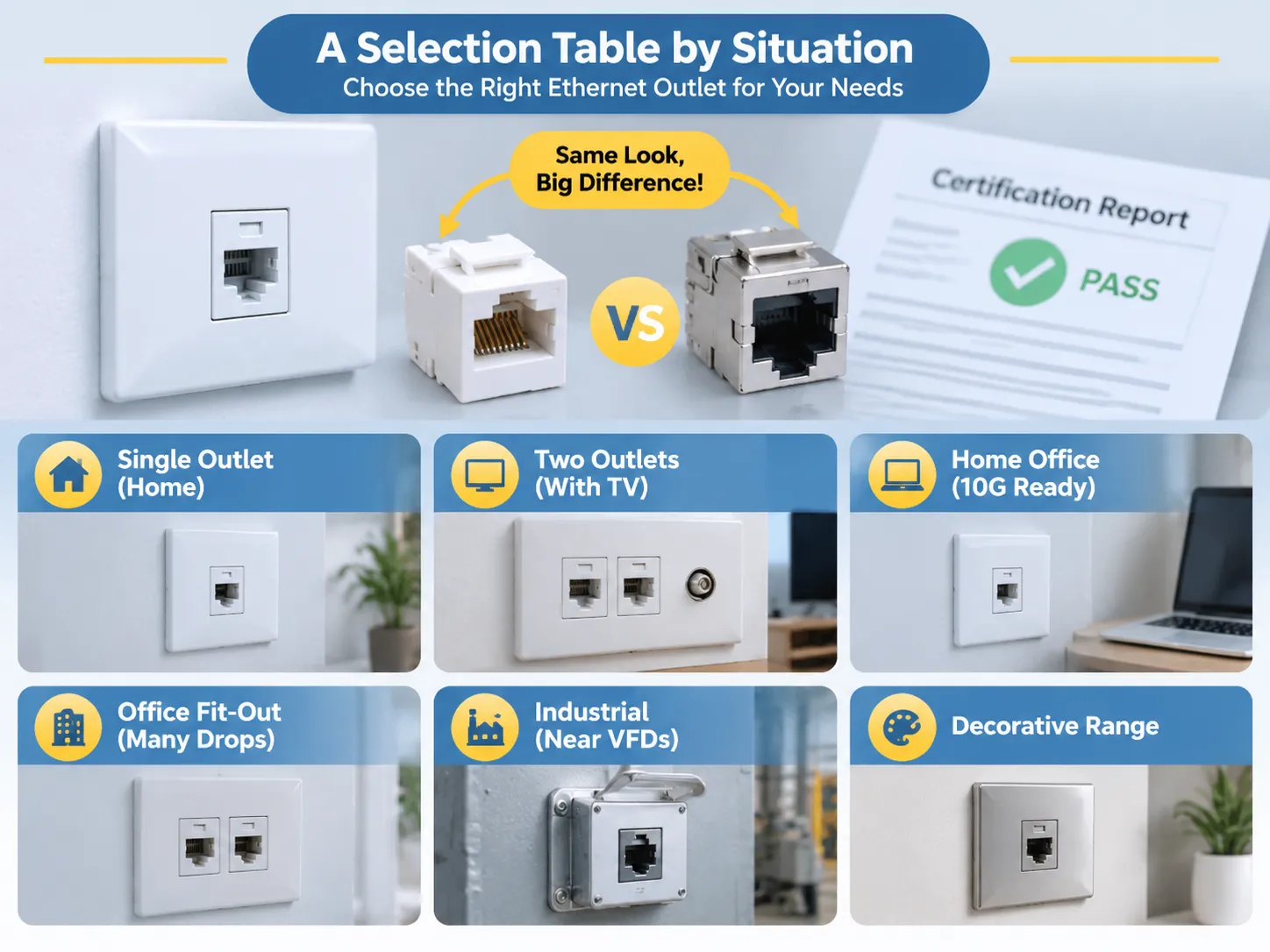
A Selection Table by Situation
Six common cases and what to buy for each. Prices are indicative retail bands.
| Situation | What to specify | Typical cost per outlet |
|---|---|---|
| Single outlet, domestic, existing 86 mm box | Unshielded Cat6 keystone, single-aperture plate | £6 to £15 |
| Two outlets beside a TV | Cat6 keystones, two-aperture plate, one coax module | £15 to £30 |
| Home office with 10G expectation | Cat6a keystone, Cat6a cable, certification test | £15 to £35 |
| Office fit-out, many drops | Cat6a keystone, modular plates, patch panel to match | £10 to £25 at volume |
| Industrial or near VFDs | Shielded Cat6a, bonded jack and panel | £20 to £45 |
| Room with a decorative plate range | Data module matched to the switch plate family | Depends on the range |
The spread shown in the table is mainly due to the jack rather than the plastic. In the same way, two outlets that appear identical from the front can vary in price by three times, one having a certified module and the other a cheap one, and such differences are visible in the certification report only.
FAQ
Can I use a Cat5e wall plate for Cat6 cable?
Yes, it would work physically, and it will usually operate at one gigabit speed. On the electrical level, it would not succeed: the Cat5e jack won’t satisfy the Cat6 requirements, which means that the connection would be identified as Cat5e regardless of the level of the cable in use. In case one has utilized the Cat6 cable, one should use the matching Cat6 jack.
Do I need a patch panel or can I go straight into the plate?
A sole outlet may be connected right onto the rear of the keystone. Multi-outlet system would require a patch panel at the other end for the labelling, testing, and adjustments in the future, and it acts in a joyful way that ensures that the entire 90 m permanent link is with the definite measurement.
Is an RJ45 socket the same as an Ethernet socket?
In practice, yes- although the correct name for the connector is an 8P8C and RJ45 is a standard of telephone wiring. An RJ45 data jack is an 8P8C keystone or fixed socket, and all that matters is the category rating, not the name.
Which wiring standard should I use, A or B?
As long as the terminations at both ends of the link are not mismatched, either cable should perform well. The T568B standard is the standard commercial specification used in the UK and Europe. A link with an A termination at one end and a B termination at the other will show a wiring error in the wire map, thus engaging minimally in transmitting data.
Will a wall plate slow down my internet?
Provided the rating and termination are done correctly, there is no loss. A plate consists of two connectors and each one adds small amounts of insertion loss which is already included in the standards. The reason behind the loss experienced is typically due to improperly rated Cat5e modules attached to what is supposed to be Cat6 cables or the lack of twist inside the jack feed.
References
- Fluke Networks — Cable Certification and Testing
- Panduit — Copper Systems and Keystone Jacks
- Legrand — Wiring Devices and Structured Cabling
- BICSI — Structured Cabling Installation Standards
- Newark — Network Cabling and Connector Distribution
Conclusion
Most of the time, people have to go through two rounds of decision-making, in which case, at first, they will have to connect the plug with the jack, only then will they have to connect the plate with a box, before taking the decision on the standards of wiring to be applied in the course of the given installation. Usually, everything will then depend on the technical details, which means that one should not untwist more than required. In case there is only one room to be provided with the cabling, a suitable Cat6 jack ought to be chosen together with a relevant plate. Only then does one have to test the connection, in order to ensure its success. In case the installation is massive, the only thing that customers will be able to check is the compliance of the jack with respect to its classification and testing.