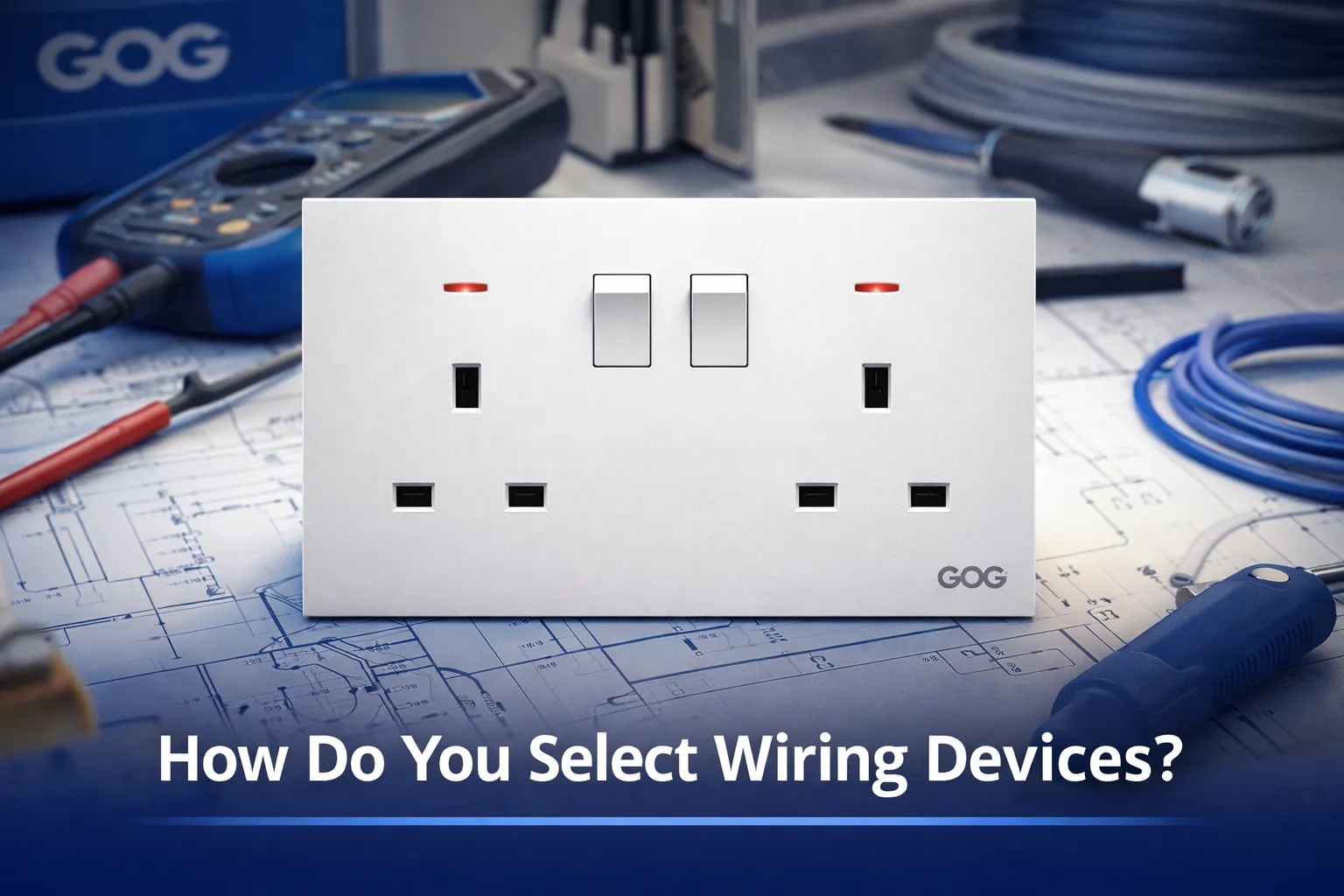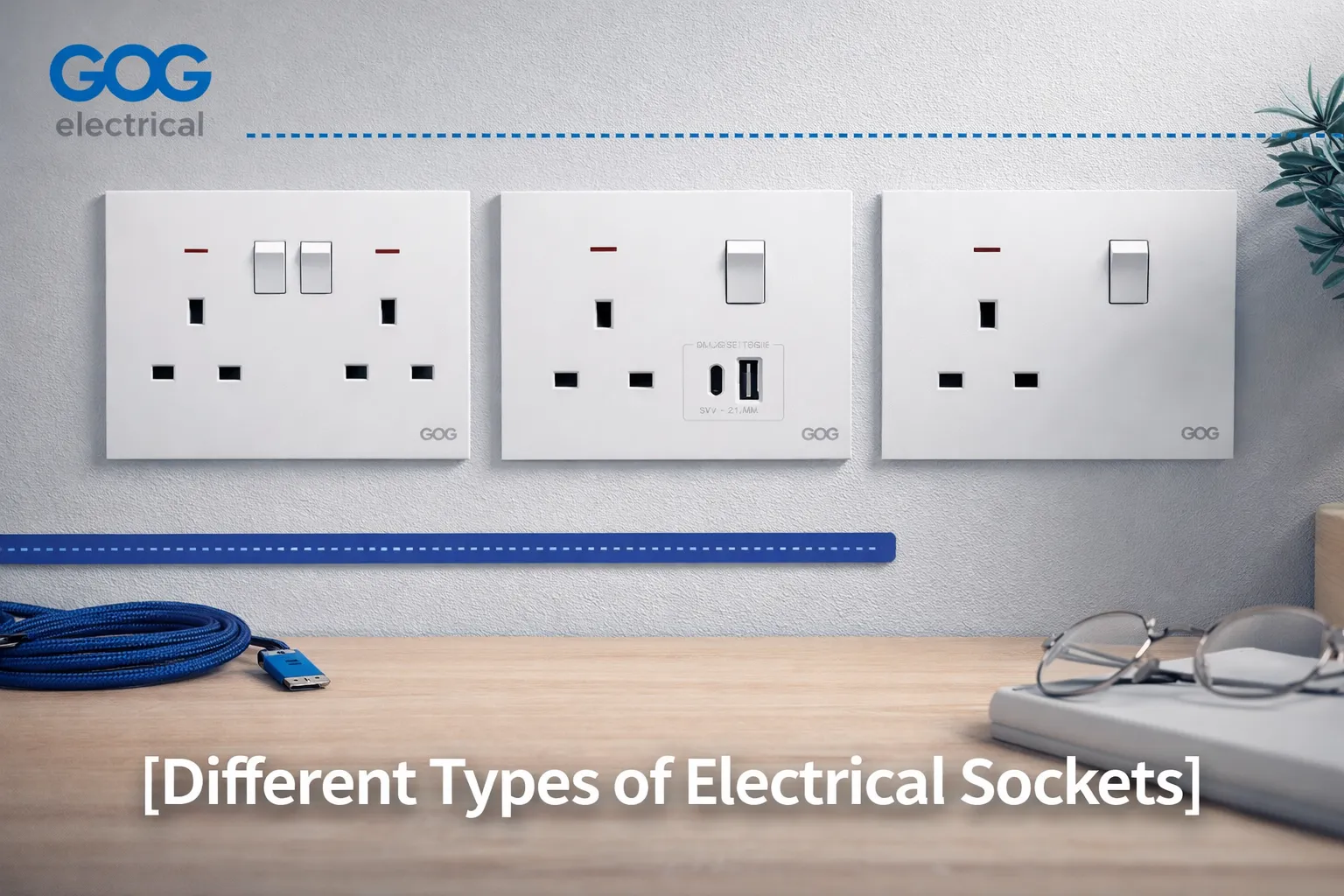
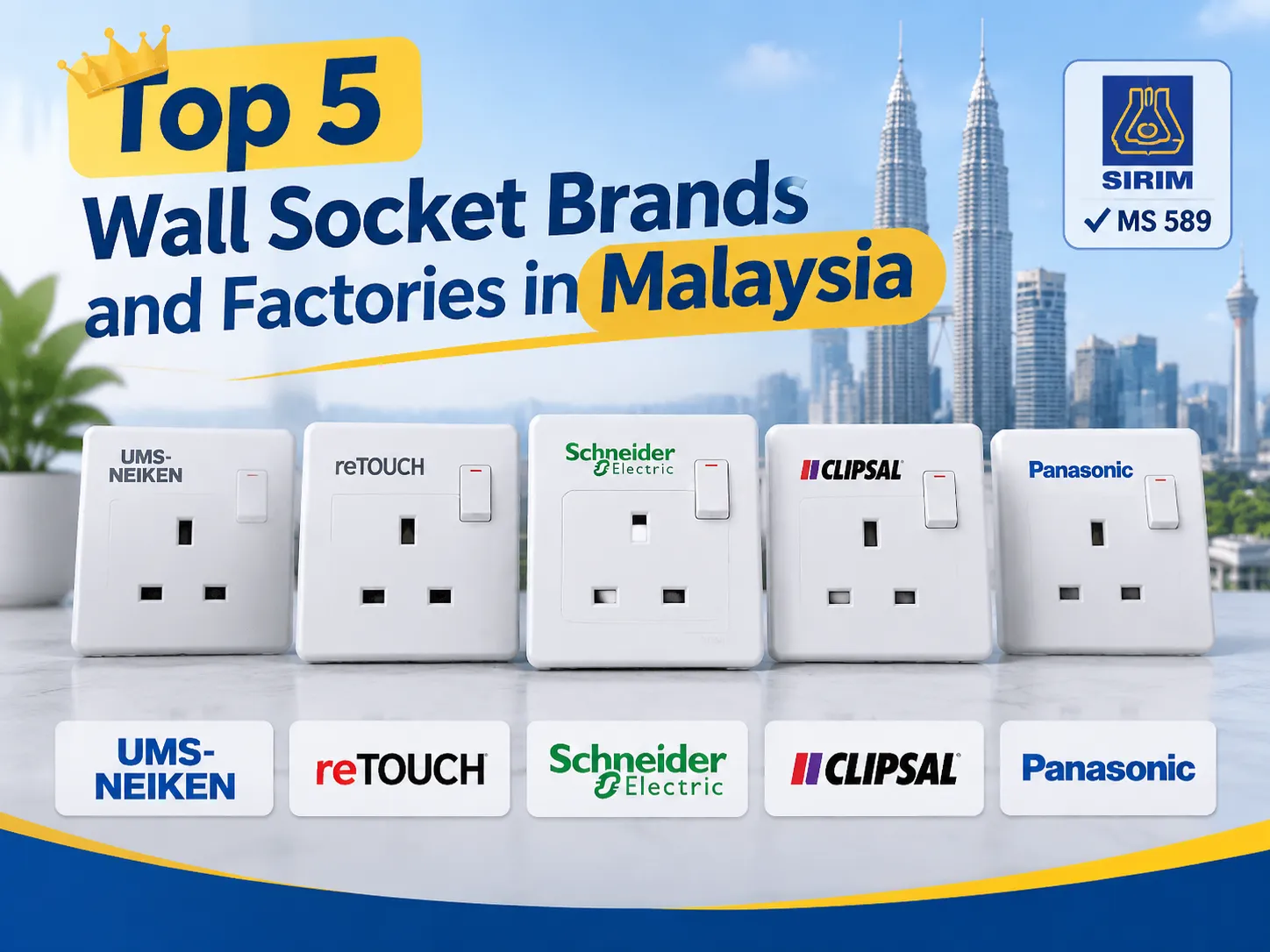
The sockets available in Malaysia are significantly different from the sockets found in most other countries nearby. Using a three-pin, British socket type; the use of a 240 volt power supply, and it must be SIRIM-certified in order to legally sell a socket in Malaysia are the critical components that limit the potential sources for suppliers of said sockets. This article will help you decide between the top five wall socket brands in terms of their manufacturing facilities, pricing and delivery timeframes.
Quick answer: the top five wall socket brands found in Malaysian specifications are UMS-Neiken (a local manufacturer located in Rawang, Malaysia), reTOUCH (a local brand based in Kuala Lumpur, Malaysia), Schneider Electric (their Vivace and AvatarOn ranges) and Clipsal/Panasonic.All five brands are certified by SIRIM with respect to MS 589. No one of these brands has the lowest price per unit versus the other four, however, the local manufacturers will generally provide a better stock level and lead time versus those manufacturers of the international brands who have an established market or customer base and therefore have developed design and/or specification inertia.
What a Malaysian wall socket actually is
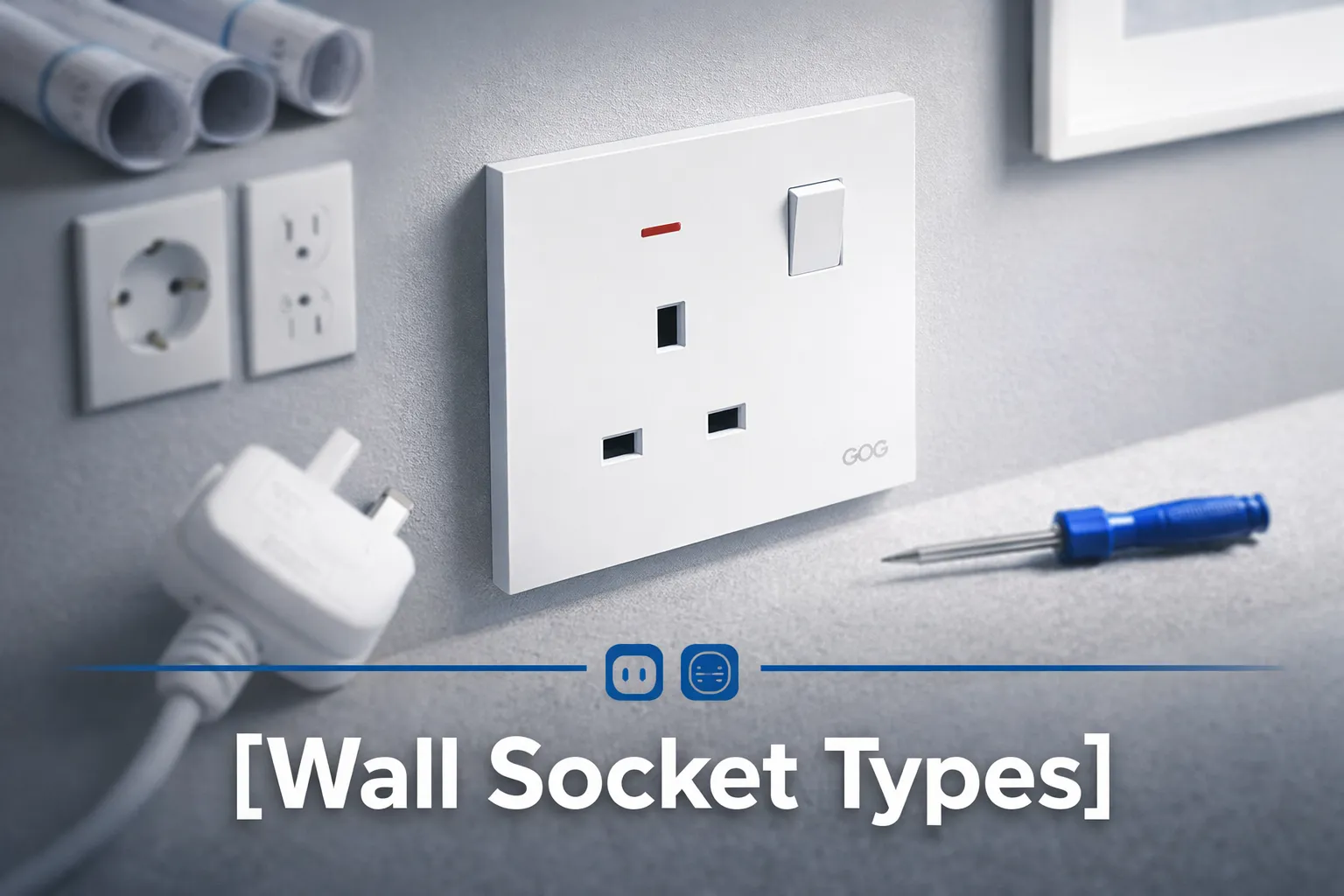
The three-pin plug system has a flat-blade configuration and an earth pin that is significantly longer than the other two pins so that the earth pin ‘opens’ the shunting mechanism in the socket before the live and the neutral make contact with the pins of the appliance about to be plugged in. Sockets with this system also have switched sockets alongside each outlet, which is not simply a decorative option. British practice is that the sockets should be switched and Malaysian practice follows the same philosophy.
The standard nominal supply voltage of the UK’s domestic electrical supply is 240 V ± 5 V, 50 Hz, while the voltage supplied actually falls between 230 & 240 V. As a result, using the 13 A circuit, this would allow for 3.1 kW (i.e., 3.2 kW) maximum per single outlet. This is also why a kettle and a rice cooker in a Malaysian kitchen must use different sockets and not share one double adapter.
The British Standard (B.S.) fitting for mounting sockets has an 86 mm × 86 mm Base Box dimension, and hence, a large number of imported sockets do not meet this specification. A socket designed to fit the European 60 mm or the Chinese 86 mm Box may look the same, however, will not fit the B.S. 86 × 86 mm box without an adapter, and vice versa, a Malaysian Socket taken to Singapore will fit as both countries have adopted the SS 145 and both have the same base box, thus the plugs are virtually identical save for their certifications.
This table compares values of certified plugs in Malaysia and how they differ from the plugs of neighbouring countries in terms of their voltage and plug types.
| Property | Malaysian value | Where it differs from neighbours |
|---|---|---|
| Plug type | Type G, BS 1363 | Indonesia and Thailand use round-pin types |
| Voltage | 240 V nominal, 230 V typical | Philippines uses 220 V, same plug family |
| Frequency | 50 Hz | same across the region |
| Rated current | 13 A per outlet | Schuko markets use 16 A |
| Box size | 86 × 86 mm | European 60 mm, US 4-inch |
| Switching | single or double pole | Schuko markets are unswitched |
| Standard | MS 589 (= BS 1363) | SS 145 in Singapore, equivalent |
The certification chain that decides who can sell
There are two separate bodies that govern certification for plugs in Malaysia, and each has a different role.
SIRIM QAS International (or “SIRIM”) is the body that certifies all products and is the only body in Malaysia that can certify plugs or electrical accessories sold in Malaysia. A socket sold in Malaysia under the Product Certification Scheme bears the SIRIM label, which has been tested against MS 589. Since the Product Certification Scheme licence is held by a company and not a factory, any socket imported into Malaysia is certified in the name of the importer or brand owner, not in the name of the Chinese factory that manufactured the socket.
The second body is Suruhanjaya Tenaga, the Energy Commission. Suruhanjaya Tenaga regulates all installations, including registered persons who perform the installations. Therefore, an installed electrical socket may have been certified by SIRIM, and thus it is fully compliant with MS 589; however, the installed electrical socket may not have been installed legally, irrespective of the certification. When it comes to the delivery of electrical installations, this factor is important. The Certificate of Fitness for the electrical installation is issued on the basis of work performed by registered persons, not on the basis of the quality of the components of the electrical installation.
For a buyer of such products, the important point is that the Certificate number of the product has to be verifiable and matched with the model number of the product being purchased. An example of the potential issue on tenders is that a certificate issued for one model is submitted in support of a visually similar model, with the main variance being the switch configuration or the presence of a neon indicator.
The five, compared
The first is the UMS-Neiken Group Berhad, which trades under the UMS and neiken names. It has the longest continuous operation as a manufacturer locally, having incorporated in December 1980, and was trading from 1981 from Batu Caves, and now from Rawang in Selangor, and is listed on Bursa Malaysia with the stock code of 7227. The full range of products is the UMS series 3, 6 & 9, bakelite series, metal-clad variants, and isolator switches also. It is an exporter to 26 countries with strengths in availability and pricing in volume; its market position is one of conservative design when compared to international brands.
The second is the reTOUCH brand, manufactured and distributed by Broadlink Marketing Sdn Bhd, a Malaysian company formed in 2014. The THIN5 series is a double-pole socket with 13 A switched capability and is certified under MS 589-2:2018 with a SIRIM licence PC013355. Independent test results have been published that have exceeded the standard: glow wire of 960°C compared to the requirement of 850°C; dielectric strength of 4 kV for 1 minute compared to the requirement of 2kV; and 69,400 plug insertion cycles on the best sample compared to a requirement of 15,000 cycles. Its strength is the independent testing data and its slim flat panel design; its weakness is that it has only been in the market for a short time and has a much narrower range of products than established names.
The third is Schneider Electric with Malaysian products Vivace and AvatarOn with dual 13A/250V switched socket options available (86 x 86mm) with MS 589, SS 145 and BS 1363 certifications; made from polycarbonate and come with safety shutters. AvatarOn has won an iF Design Award and offers a frameless plate with an interchangeable cover system — something of true benefit in a project fit-out when the finish will change at some time. Schneider Electric’s strength is due to consultants being comfortable with specifying Schneider Electric products after 20 years of good practice; however, the cost is typically 2–3 times that of local brands.
The fourth is Clipsal (part of the Schneider group) but still utilized and specified under its own name in Malaysian commercial projects; it is well-known to local contractors as the products are widely stocked, thus shortening the project delivery time. The limitation with Clipsal products is that some of the products’ designs in this region are old and therefore the plate aesthetics have not been modernised, keeping with the frameless trend.
The fifth is Panasonic, who have had steadfast success in the residential sector due to reliable products, not necessarily for the design. Panasonic’s Malaysian range is not extensive when compared to Schneider Electric’s, and it is positioned at a mid-price point between the local and premium brands; however, the local stock levels of Panasonic products are dependent on the distributor of the products, not a local factory.
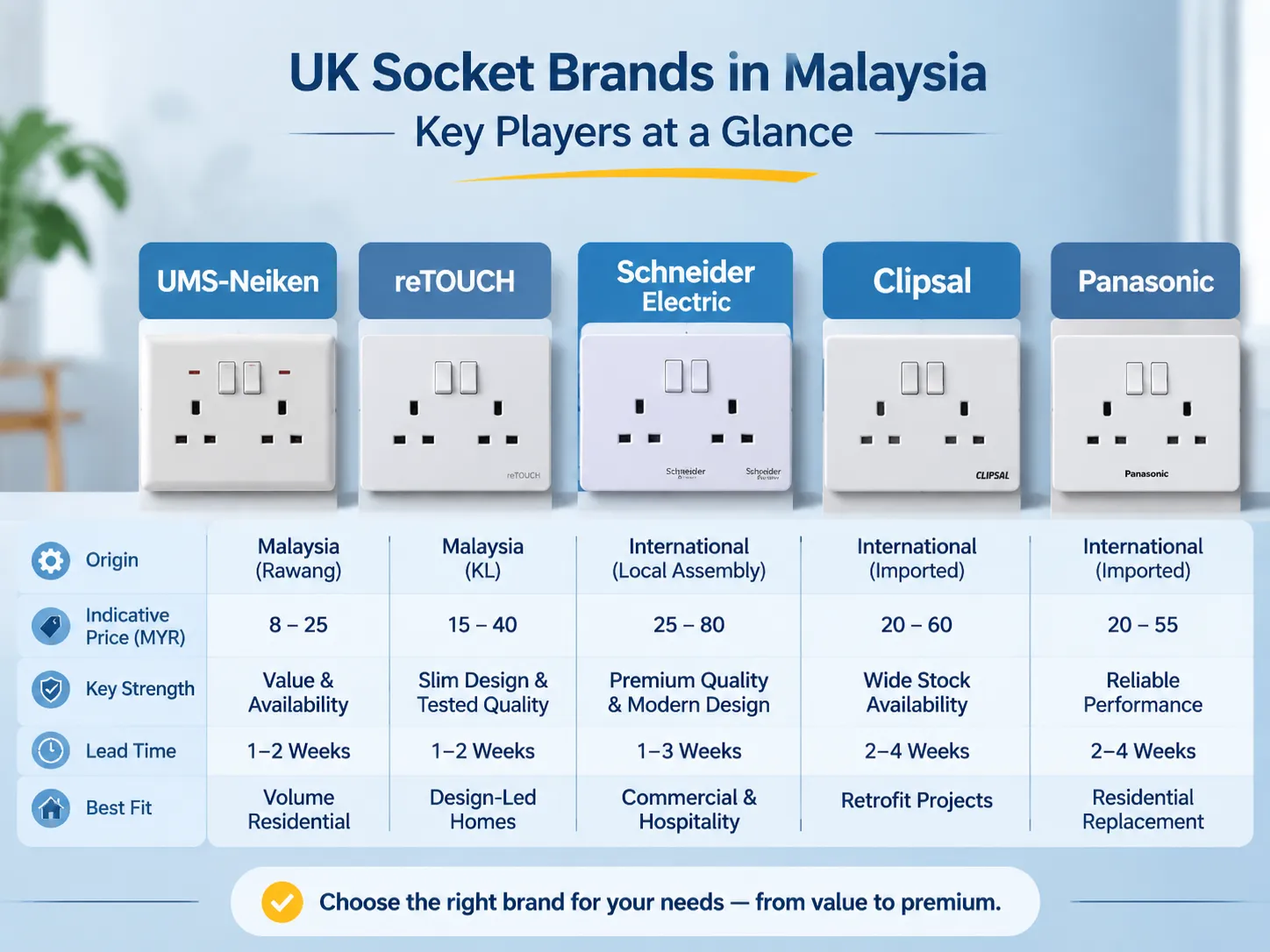
| Brand | Origin | Indicative price, 13 A single | Lead time | Best fit |
|---|---|---|---|---|
| UMS-Neiken | Rawang, Selangor | MYR 8–25 | 1–2 weeks from stock | volume residential, contractor packs |
| reTOUCH | Kuala Lumpur | MYR 15–40 | 1–2 weeks | design-led residential, show units |
| Schneider Vivace / AvatarOn | international, local assembly | MYR 25–80 | 1–3 weeks | specified commercial, hospitality |
| Clipsal | international, imported | MYR 20–60 | 2–4 weeks | retrofit where the range is already installed |
| Panasonic | international, imported | MYR 20–55 | 2–4 weeks | residential replacement, reliability-led |
Pricing is indicative for use in planning and can vary according to volume, finish and distribution channel. For example, buying a 1,000-piece project order will typically fall near the low end of the price band, whereas purchasing 10 pieces would usually be closer to the high end.
When comparing the UK socket brands with those available in other markets, similar principles may be applied as can be seen by the comparison of UK and Gulf and Southeast Asia positions of the same manufacturers.
Price bands and what actually moves them
What distinguishes a MYR 8 socket from a MYR 80 socket comes down to four characteristics, only one of which can be easily observed.
The first characteristic is the contact assembly. A heavy-duty brass contact block with an adequate amount of spring tension will cost more than just a folded brass strip and will also dictate whether the socket continues to maintain a connection after being inserted 10,000 times. As per the BS 1363 standard, a socket should be tested for 15,000 cycles; however, a socket that survives 69,000 cycles offers a greater margin of safety, while a socket that only survives 15,000 cycles does not.
The second characteristic is the switch mechanism. A double-pole switch usually comes at a greater cost than a single-pole switch because it contains double the quantity of contacts. Malaysia commonly requires a double-pole switch for both water heater and air-conditioning use; even though the price difference may not seem to be significant on a unit basis, it is definitely present and gives an indication of why two identical-looking sockets can be priced differently from one another.
Another reason for price differences between two identical sockets is the type of plate and finish used. A plain white moulded plate is inexpensive, while a matte black or brushed metal plate has a higher manufacturing cost due to the additional tooling required to produce them as well as their higher reject rates as opposed to using plain white plates.
A third reason is the certification and related documentation requirements associated with each type of electrical socket. A socket that has been certified by SIRIM, along with the associated test report(s) and declaration of conformity, will incur more costs in getting to market than will a socket that was self-declared to be compliant with the SIRIM standard, and therefore, regardless of whether or not a customer has a copy of this documentation, that additional cost will be included in the price of the socket.
Lead times: local stock versus factory order
Lead times are another important point of difference between local and international manufacturers. Local manufacturers have a lead time advantage over international manufacturers, and this advantage is usually the deciding factor for whom customers will choose to execute projects with.
Local manufacturers typically ship product from stock within one to two weeks. A contractor that runs out of stock on a Friday can easily purchase the needed product on Saturday. Whereas international manufacturers ship product from regional warehouses between two and four weeks later, which is great for new projects that have been planned ahead, but tricky for variation orders requiring product to be delivered within tight timeframes.
For a factory order from China: Production time can be 25 to 35 days, with an additional 7 to 14 days for shipping to Port Klang via container ship. When you add in the time it takes to unload the container at Port Klang and deliver it to the area you live in, you are looking at an estimated time of 5–7 weeks for a full container, and an even longer time for a mixed range order that has custom plates made. This timeframe would normally fit into a new project or building because many times the accessories needed for the electrical installation will be included in the first order, but if you are doing a refurbishment on a building, this shipping time would not work because the electrician would need the electrical boxes to start his work on Monday.
With that in mind, most developers will set up their order structure like this: place a factory order for the majority of the standard plates (common socket) and set up a local account with a supplier for those items that need to be replaced, or the occasional odd item. If a site requires a certain style of plate and runs out before the container ships, they can run into problems until the replacement items arrive at their site.
Where a Chinese factory fits, and where it does not
There are three situations where a Chinese manufacturing company would work. The first would be private labelling where owners can buy their product and have their brand put on the plate. The second situation is an order that is large enough to justify the cost of tooling and set up a specific production run. The third would be a price-driven tender process where the specifications allow for a product that is considered equal to a product of a different manufacturer.
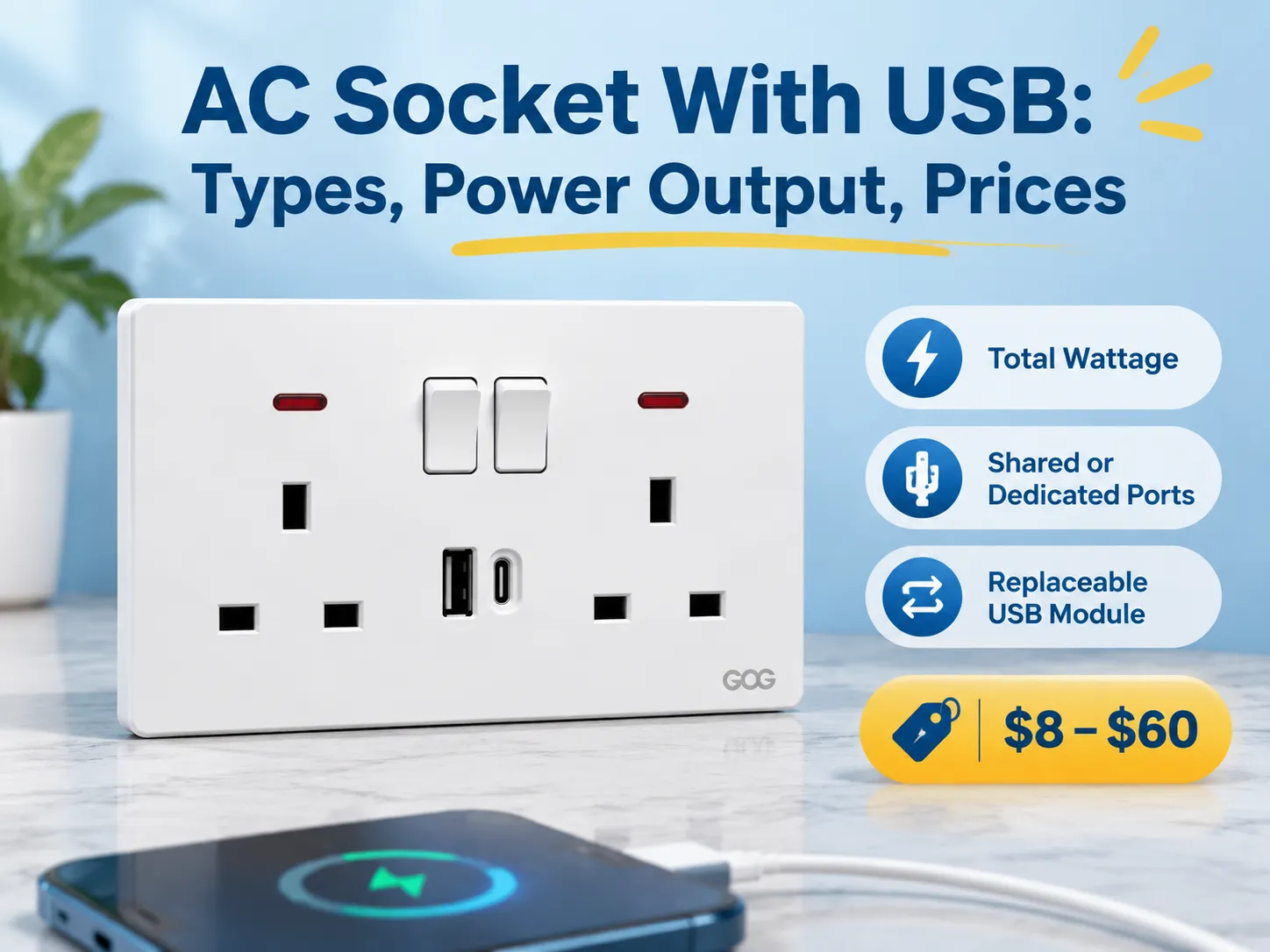
We do not position ourselves as a Chinese supplier in the above manner. The British Standard 13 A socket is produced in the 86 mm format by our production line in both single and double pole versions, and it comes with or without a neon indicator, a USB module, and a Type C module. All products that we supply from our production line are sold under the customer’s brand, and not under our own brand name, however, we do not advertise or claim to have a SIRIM licence for products we produce and distribute to customers under their company’s name. In Malaysia, the importer or brand owner holds the licenses and controls the certification process which involves taking samples, using a SIRIM approved laboratory for testing, and carrying out factory audits as part of the certification process. If an importer or brand owner is told differently than this, they either don’t understand the rules or are trying to mislead them in some way. The factory’s responsibility is to provide consistent samples for testing, keep the construction identical after receiving certification, and provide the required test affidavits for the license application.
The next limitation is box standards. A factory that makes products using the European 60 mm specification cannot export product to Malaysia without a separate mould. When a factory claims to supply Malaysia, they almost always refer to an adapter frame, which is visible, and unpopular with contractors who install them.
The final limitation is design. While there are manufacturers who can make product to replicate the shape of a plate, projects often specify brands for other reasons than the product itself, such as consultant practice, standardizing maintenance across multiple installations, or required by the lending institution (Bank). Competing on the basis of price against those factors would be a waste of time.
What to put in a specification
Most of the ambiguity in ordering Malaysian sockets can be resolved with only six lines.
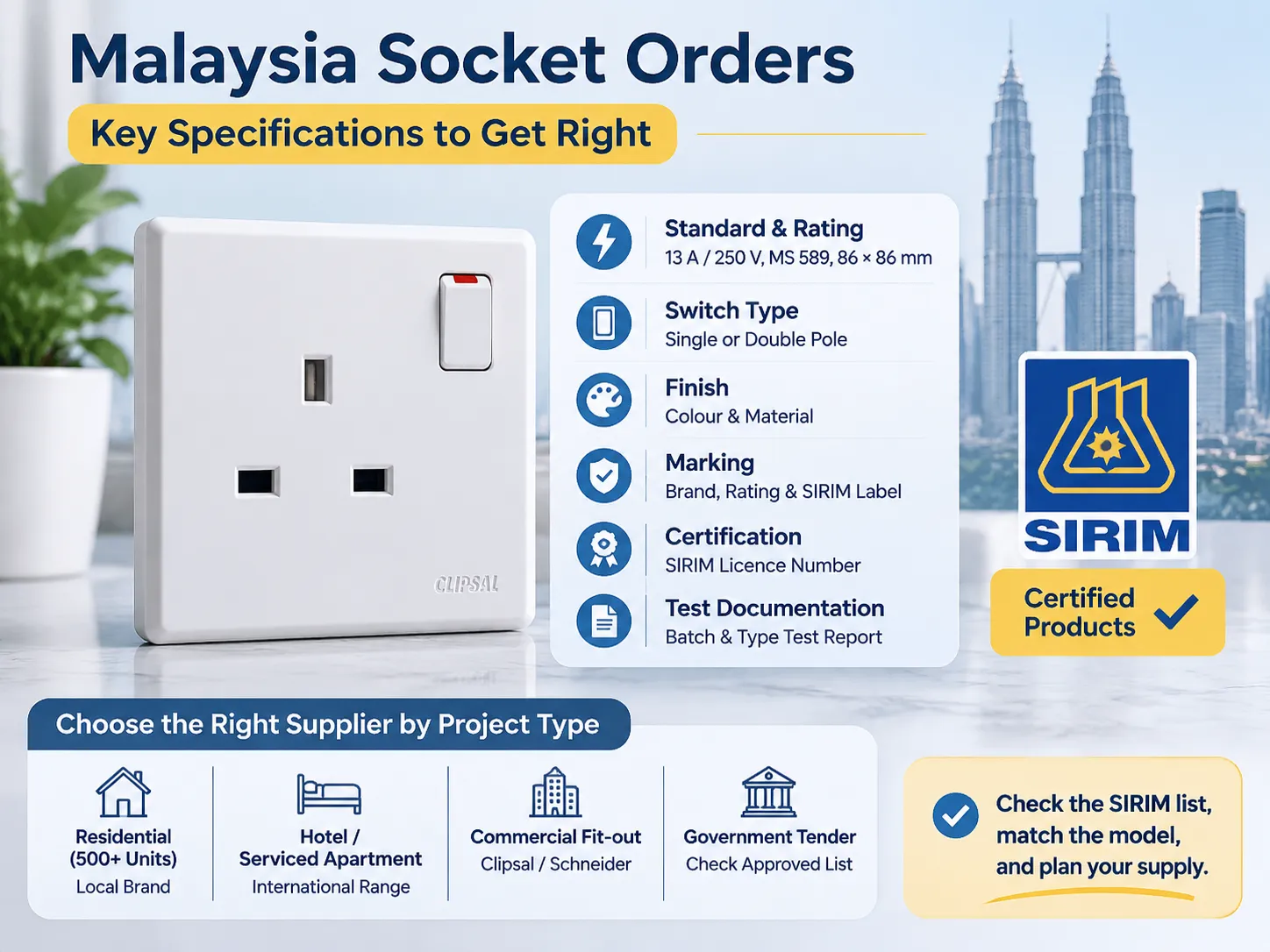
- Standard and rating: 13 A / 250 V to MS 589, in the 86 × 86 mm format.
- Type of switch: single pole or double pole, stated per location rather than as a general note, because water heaters and air-conditioners are usually specified as double pole switches.
- Finish: colour and material, submitted with a sample approved before production.
- Marking: brand, rating and SIRIM label on the product, not only on the box.
- Certification: licence number quoted in the submittal, with the model number matching.
- Test documentation: a routine test report per batch, plus the type test report for the design.
Once all major manufacturers have certified their products with the appropriate SIRIM label, local manufacturers can receive the SIRIM certification for the products they manufacture. In the case of products that have been certified by more than one manufacturer or those that fall under a different category, the certification should specify the exact product and that product must pass all applicable SIRIM tests. The SIRIM certification is also included in any project submission.
Prior to submitting your project submission you should check for the following items listed below.
All products must show the brand name, the model number and the SIRIM certification label either on the product or the packaging of the product at all times. The SIRIM certification number must also be included with the submission. The model number must match the one submitted in the project as well. The testing documentation must include both a test report for every batch produced and a test report for the overall design.
When you are providing a manufacturing order for any USB or Type-C outlet, please remember to provide an output rating per port, instead of output rating per device, as dual port units share their total current across both ports. As an example we will use the DN70 series 13 A sockets with switch, to show what a Malaysia order would typically include as far as modular plate and module configuration.
How to choose, by project type
When choosing a manufacturer by project type you can use the following table as a guide and select your manufacturer accordingly to both your budget and delivery time.
| Project | Route | Why |
|---|---|---|
| High-rise residential, 500+ units | local brand for common items, factory order for the balance | stock for variations, price for volume |
| Hotel or serviced apartment | specified international range | design consistency and brand expectation |
| Commercial fit-out | Clipsal or Schneider, via the incumbent contractor | maintenance standardisation |
| Private-label retail range | factory order with buyer’s SIRIM licence | margin and brand control |
| Single unit refurbishment | local stock, same series as installed | colour and fit continuity |
| Government or GLC tender | check the approved list first | a mandated brand list closes the question |
Commercial Project: Select from Clipsal or Schneider via the current contractor of record, in order to achieve standardisation for future maintenance of those products. There is also usually an additional cost involved when supplying factory order or common items from local manufacturers.
Government Tenders: Before submitting your tender for a project it is critical to first check the approved brand lists, as brand lists usually eliminate the questions regarding approved brands. Electricians can purchase private label product orders for 30–40% less per unit than regular product orders but will have to wait 6 weeks longer for delivery. Whether or not buying private label products vs standard product orders is a good trade-off depends on when the supplier needs the boxes (their due date). For those buyers building a range of products rather than just one order, it is as important to consider how the structure of supply relationships match their product ranges as it is to consider the product they purchased, and the switching/sockets manufacturer’s range provides clear evidence of how the different modules, sizes and certifications are grouped for export markets.
Frequently asked questions
What wall plug is used in Malaysia?
The wall plug in Malaysia is a Type G plug based on the British three-pin rectangular socket rated at 250V & 13A with a switch on the side of each outlet. This plug also has an earth pin that opens the shutters for insertion.
Is the US plug the same as Malaysia?
No. The United States uses Type A and Type B plugs that have 2 flat parallel blade plugs and work on 120V. A United States plug will not fit into a Malaysian socket without an adapter. Even if an adapter is used, you will still need to use a transformer for 120V appliances because all Malaysian products operate at 240V.
What plug adapter do I need for Malaysia?
Any visitor coming to Malaysia from Europe, North America or Australia will require a Type G Adapter. For dual voltage devices (USB chargers, laptop chargers, etc.) the adapter works because the device runs on 100V-240V, but for single voltage appliances (hair dryers) you will need both an adapter and a transformer.
Does a Malaysian socket need SIRIM certification?
Yes, for legal sale. SIRIM issues certification via its Product Certification Scheme based on MS 589, and the brand owner or importer holds the certificate. A certificate for another model does not apply to the model being supplied unless both models are identical.
References
- UMS-Neiken Group Berhad — Malaysian Switch and Socket Manufacturer
- reTOUCH — Malaysian Electrical Accessories Brand
- Suruhanjaya Tenaga — Energy Commission of Malaysia
- SIRIM QAS International — Product Certification
- Malaysian Investment Development Authority — Electrical and Electronics Sector
Conclusion
The type G market of Malaysia has a supply certification chain that determines which companies will be allowed to provide products to the customers and five companies are considered as major players in Malaysia. These companies incorporate two Malaysian manufacturers, two multinational companies and a well-recognized imported brand. The two Malaysian manufacturers tend to dominate the pricing and availability for large quantities of product. The multinational companies dominate in the areas of design and are specified in advance for a number of years.
For a purchaser to determine which manufacturer to use, typically, these three questions must be answered in order: Are SIRIM documents required to be issued in the name of the manufacturer? Is the time allocated on the programme for ordering from the factory at least five to seven weeks? Is the visible finish of the plate able to justify the additional cost of the product? In answering these questions in order, the purchaser should be able to limit their selection to one or two manufacturers without the need to negotiate on price.