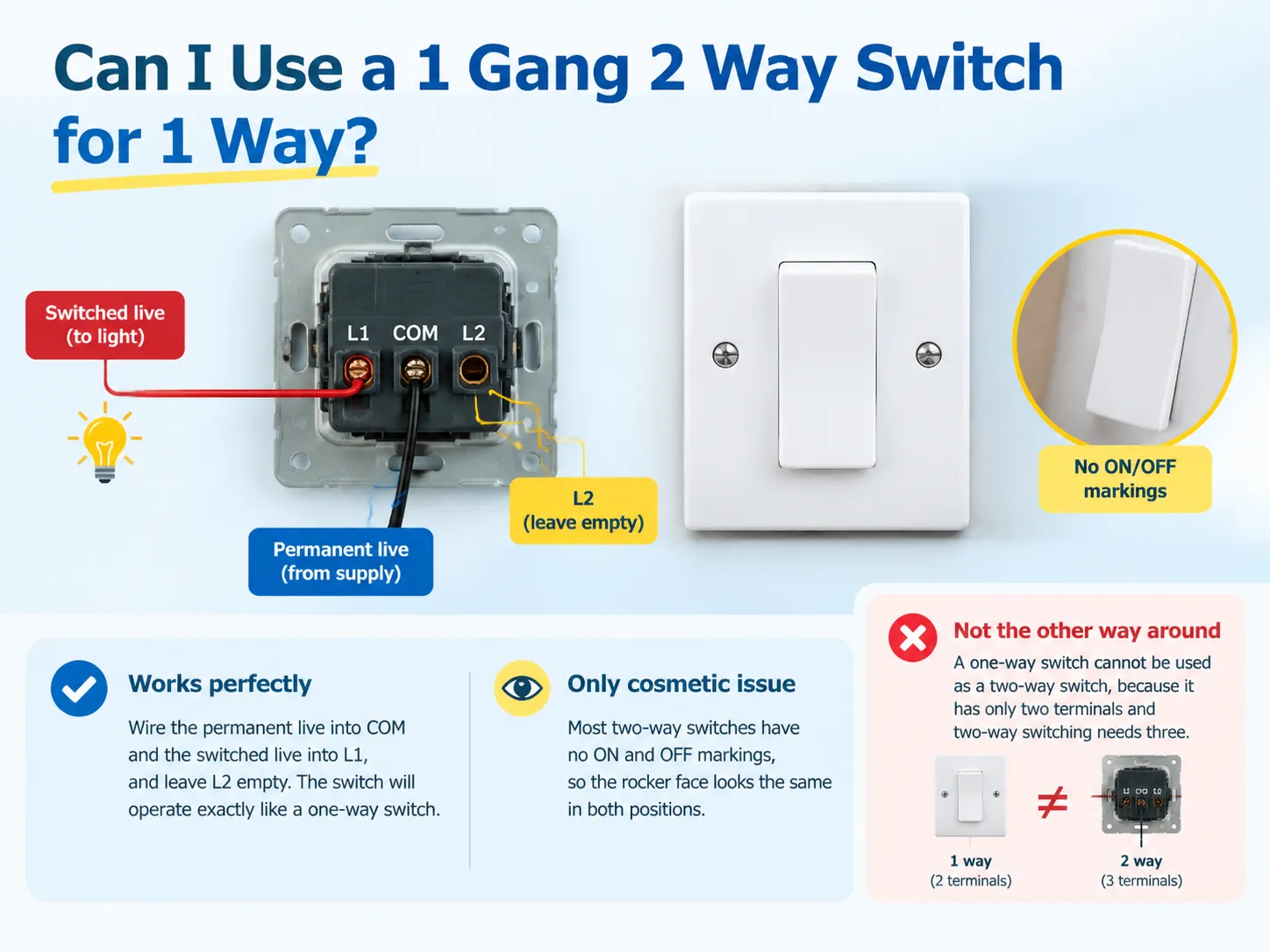
لقد حصلت على مفتاح ذو اتجاهين، أو لديك واحد من عملك السابق في ممر، وتريد استخدامه للتحكم في ضوء بسيط يمكن تشغيله وإيقافه. المفتاح يناسب المكان والاتصالات معروفة، والشيء الوحيد المتبقي هو معرفة ما إذا كان الطرف الإضافي له أي أهمية.
لا يفعل. يحتوي المفتاح ذو الاتجاهين على كل ما يوجد في المفتاح ذو الاتجاه الواحد، بالإضافة إلى طرف إضافي واحد سيتم تركه بدون استخدام.
باختصار، الإجابة إيجابية: بالفعل، يمكن استخدام مفتاح 1 gang 2 way كمفتاح 1 way بدون أي مشكلة. يجب توصيل التيار المستمر إلى COM والتيار المتحول إلى L1، مع ترك L2 بدون أي اتصال. في هذه الحالة سيعمل المفتاح بنفس طريقة المفتاح ذو الاتجاه الواحد. العيب الوحيد هنا يتعلق بالمظهر: معظم مفاتيح الاتجاهين تُصنع بدون علامات ON و OFF، لذا فإن وجه المفتاح يبدو متماثلًا في الوضعين.
Gang و Way هما شيئان مختلفان
يأتي معظم الالتباس في هذا المجال من التعامل مع “gang” و “way” كما لو أنهما يصفان نفس الخاصية. إنهما يصفان أشياء متعامدة.
| المصطلح | ما هو المهم | مثال |
|---|---|---|
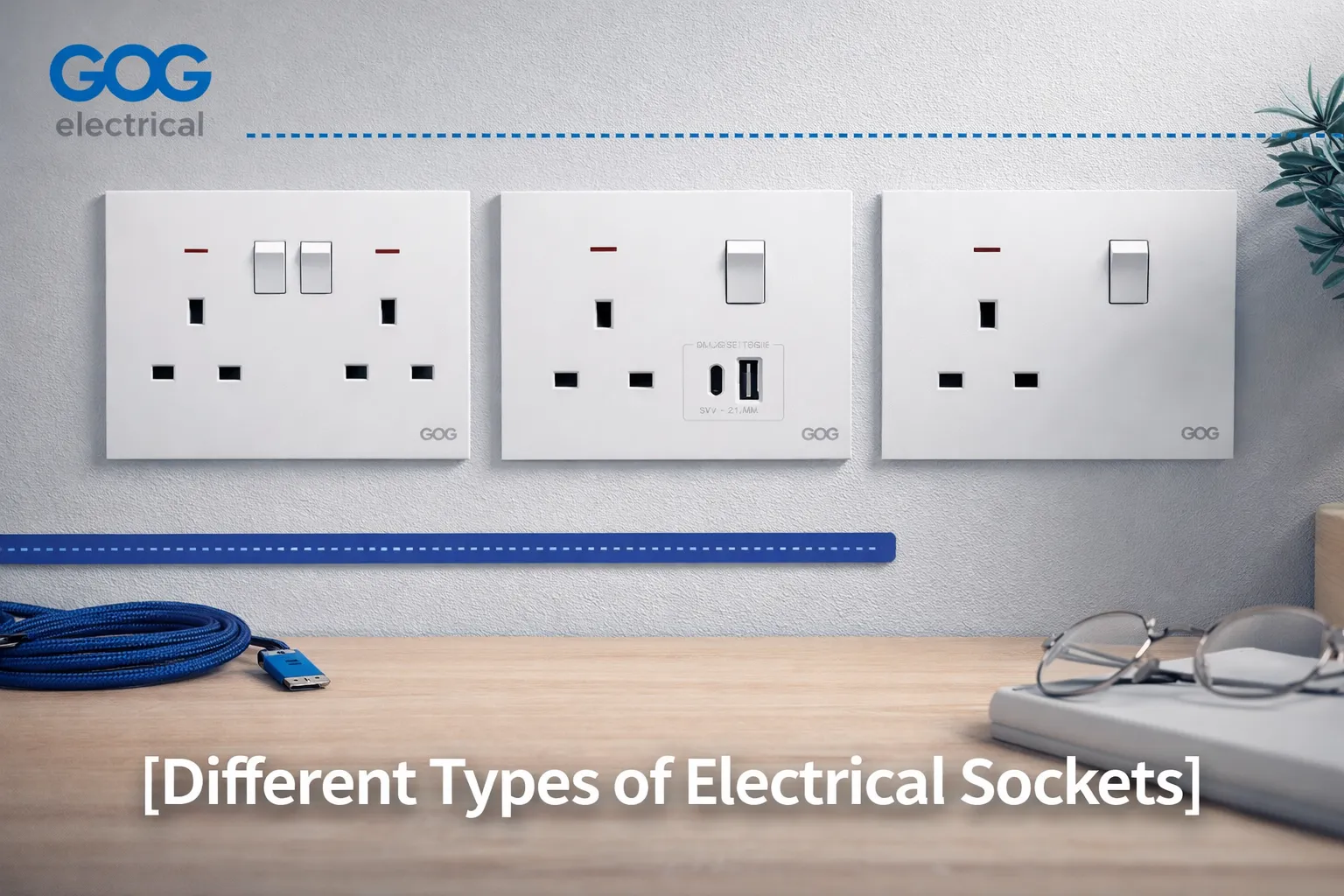
| عصابة | عدد المفاتيح الموجودة على اللوحة | 1 gang = مفتاح واحد، 2 gang = مفتاحان جنبًا إلى جنب |
| طريق | عدد أوضاع التبديل التي يمكن لمفتاح واحد خدمتها | 1 way = تشغيل أو إيقاف من مكان واحد، 2 way = تشغيل أو إيقاف من مكانين |
| 1 عصابة 1 طريق | مفتاح واحد، نقطة تحكم واحدة | ضوء غرفة النوم القياسي |
| 1 عصابة 2 طريق | مفتاح واحد، قادر على وظيفة التبديل المتبادل | ضوء درج يتم التحكم فيه من الأعلى والأسفل |
| 2 عصابة 2 طريق | مفتاحان مستقلان للتبديل المتبادل | دائرتان إضاءيتان، كل واحدة مع مفتاح ثانٍ في مكان آخر |
| متوسط | يُدرج بين مفتاحين ذوي اتجاهين لثلاثة أوضاع أو أكثر | ممر طويل مع مفتاح في كل نهاية وواحد في المنتصف |
يتكون مفتاح ذو اتجاهين من gang واحد من مفتاح واحد في لوحة حيث يعمل المفتاح كآلية تبديل متبادل. لا يوجد تغيير في اللوحة أو التركيبات. عملية التركيب مماثلة، الصندوق يبقى دون تغيير، واللوحة الأمامية تقيس نفس الحجم.
الأسوأ من ذلك، يمكن أن تؤدي المصطلحات المختلفة أيضًا إلى ارتباك لأي شخص يشتري المنتجات دوليًا. على سبيل المثال، يُسمى المفتاح ذو الاتجاهين في المملكة المتحدة مفتاحًا ثلاثي الاتجاهات في أمريكا الشمالية. وبالمثل، يشير المفتاح الوسيط في المملكة المتحدة إلى مفتاح رباعي الاتجاهات في أمريكا الشمالية. يشير المفتاح ذو الاتجاه الواحد في لغة المملكة المتحدة إلى ما يسمى مفتاح القطب المفرد في المصطلحات الأمريكية الشمالية. لذلك، إذا كنت تريد طلب مفاتيح من كتالوج دولة أجنبية، فإن عدد الأطراف هو الشيء الوحيد الذي يمكنك الاعتماد عليه. تم توضيح اتفاقيات التسمية وكيفية تطابقها في هذا الشرح لـ ما معنى 1 gang و 2 gang و 3 gang.
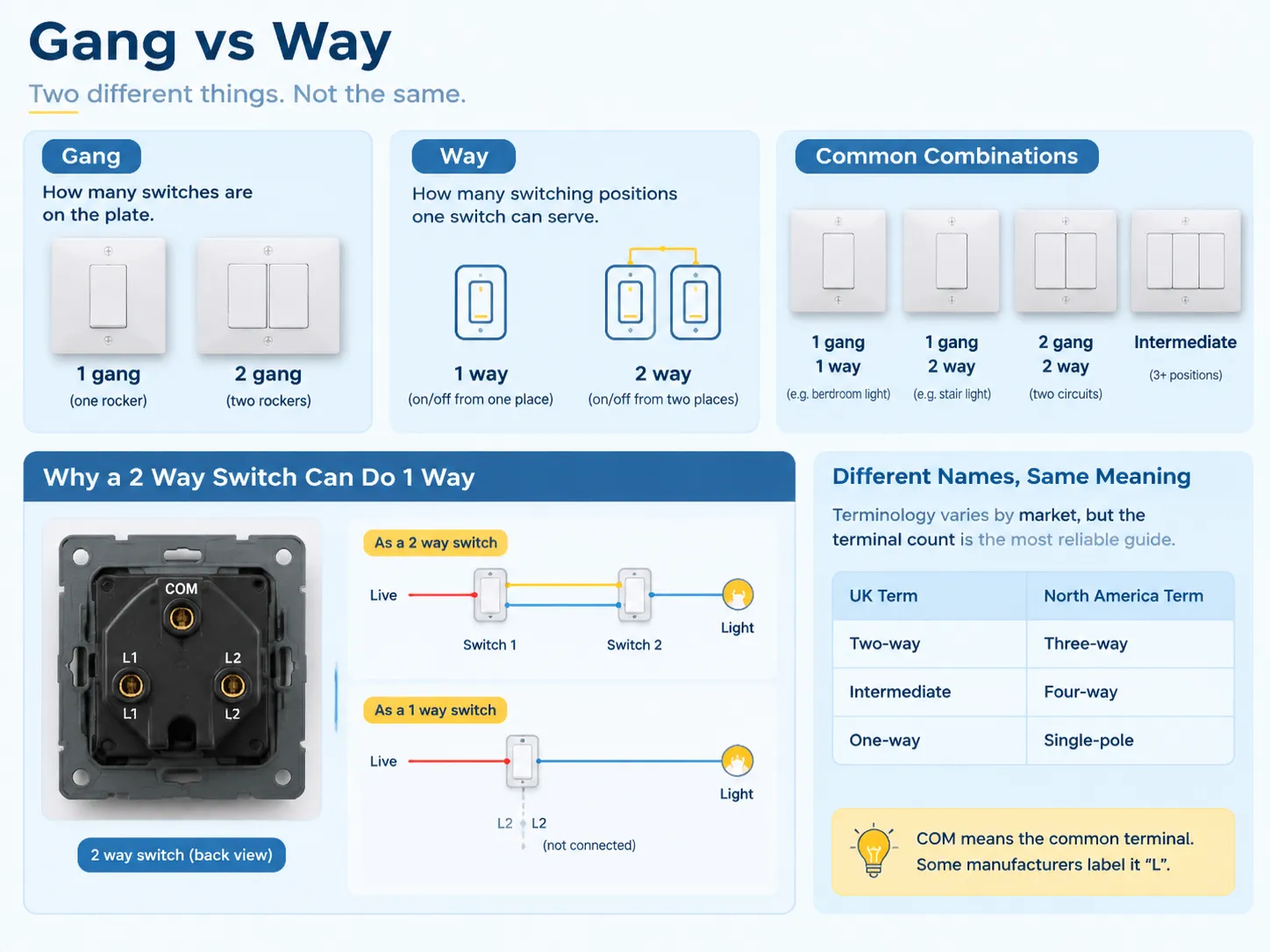
لماذا يمكن لمفتاح 2 Way أن يعمل كمفتاح 1 Way
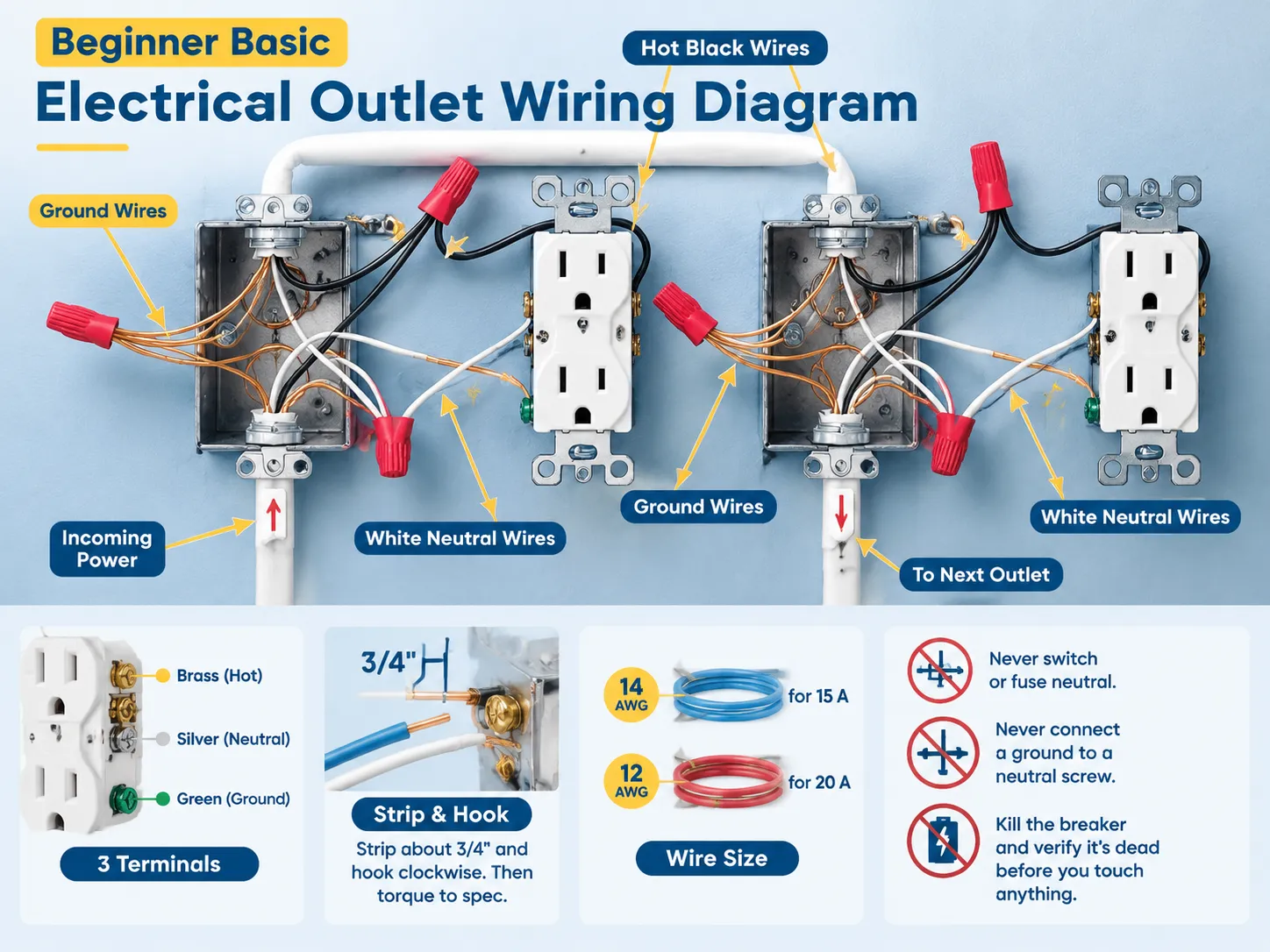
تحقق من المفتاح في الخلف. كجهاز ذو اتجاهين، يحتوي على 3 أطراف معنونة COM و L1 و L2. تتكون الآلية من مفتاح تحويل، حيث يتصل COM إما بأحد L1 أو L2 ولكن ليس كلاهما في نفس الوقت. وبالتالي، عن طريق تبديل الزر، تقوم بعمل الاتصال من أحد الأطراف إلى الآخر.
هذا السلوك مسؤول عن كلا تطبيقات المفتاح ذو الاتجاهين.
كمفتاح ذو اتجاهين، يتم توصيل سلك COM بالتيار الدائم بينما L1 و L2 هما موصلان للربط يذهبان إلى مفتاح آخر. يشكل المفتاحان دائرة حيث يمكن لأحدهما إكمال الدائرة. كمفتاح ذو اتجاه واحد، لا يزال سلك COM متصلاً بالتيار الدائم. ومع ذلك، يتصل L1 الآن بدبوس التيار المتحكم به للضوء ويترك L2 فعليًا غير متصل. لا يزال التحويل يحدث في هذه الحالة، ولكن بسبب كون أحد الخيارات غير صالح، يصبح مفتاحًا بسيطًا للتوصيل والفصل.
لا يوجد فرق كهربائي بين المفتاح ذو الاتجاهين والمفتاح ذو الاتجاه الواحد الذي يستخدم نفس البناء مع حذف أحد جهات الاتصال وربط طرفين فقط.
ما معنى COM على المفتاح، ولماذا يقوم بعض المصنعين بوضع علامة L على نفس الطرف بدلاً من ذلك، هو أحد أكثر نقاط الالتباس شيوعًا، ويُشرح في هذا التفسير لـ ما هو الطرف المشترك على مفتاح الضوء.
العيب الحقيقي الوحيد: عدم وجود علامات تشغيل وإيقاف
عادةً ما يكون المفتاح ذو الاتجاه الواحد قابلًا للتعرف عليه. سيكون لديه إما رمز “I” و “O”، أو ستحدد سطح المفتاح أي الطرف يشير إلى وضع “تشغيل”.
مع المفتاح ذو الاتجاهين، لا حاجة لوجود علامات توضيحية عليه. وذلك لأن المفتاح لا يحتوي على حالات محددة؛ في دوائر الاتجاهين، لا يكون وضع المفتاح للأعلى بالضرورة هو وضع “تشغيل”. بسبب ذلك، يمكن العثور على مفاتيح الاتجاهين إما بأزرار فارغة أو بأزرار معنونة 1 أو 2.
إذا تم استخدام المفتاح ذو الاتجاهين كمفتاح ذو اتجاه واحد، تظل وظيفته دون تغيير؛ ومع ذلك، قد يبدو غريبًا. سيعرف مالك الجهاز بالتأكيد أي وضع هو “تشغيل”، رغم أنه لن يتطابق مع جمالية بقية المعدات الموجودة في الغرفة.
يمكن اتخاذ التدابير الثلاثة التالية لحل الوضع:
- استخدم مفتاحًا ذو اتجاه واحد. إذا كانت الدائرة دائرة ذات اتجاه واحد، فمن الأفضل شراء مفتاح يتناسب مع التصميم. مفاتيح الاتجاه الواحد رخيصة جدًا.
- قم بتدوير الآلية. تسمح العديد من الأنظمة المعيارية بتدوير وحدة المفتاح داخل اللوحة، مما يجعل وضع المفتاح صحيحًا.
- اقبل الأمر. إذا تم تركيب الجهاز في منطقة غير معيشية، فسيعمل بشكل جيد، ولن يتذكر المالك التصميم بعد بضعة أيام.
لماذا لا يمكن للمفتاح ذو الاتجاه الواحد أن يعمل كمفتاح ذو اتجاهين
في هذه الحالة، يجب أن نقول لا، والوضع الذي وصفناه أعلاه هو في الأساس نفسه مرة أخرى ويجب أن نقول إنه اتصال بسيط للتوصيل أو الفصل. داخليًا، يحتوي المفتاح ذو الاتجاه الواحد على طرفين فقط متصلين ببعضهما البعض. تحدث عملية التبديل عندما يكون الطرفان إما متصلين ببعضهما البعض أو غير متصلين.
من ناحية أخرى، في حالة التبديل ذو الاتجاهين نحتاج إلى مفتاح تحويل في كل نهاية من الدائرة. هناك موصلان رابطان بين المفتاحين يكملان الدائرة عندما يختار كلا المفتاحين نفس الموصل الرابط. يمكن أن تتم هذه العملية فقط باستخدام جهاز بثلاثة أطراف في كل نهاية حيث يجب أن يذهب التيار الدائم الوارد إلى أحد الموصلين الخارجين.
في المفتاح ذو الاتجاه الواحد، نقص الطرف الثاني يعد عيبًا خطيرًا. لذلك يمكننا دائمًا تضمين مفتاح ذو اتجاه واحد في دائرة ذات اتجاهين لكنه سيعمل فقط كمفتاح تجاوز ولن يجعل النظام يعمل بشكل صحيح. منطق التحويل ذو الثلاثة أطراف، وعلاقته بالمفتاح الوسيط ذو الأربعة أطراف، موضح في هذا المقارنة بين التبديل ذو الاتجاهين والتبديل ذو الثلاثة اتجاهات.
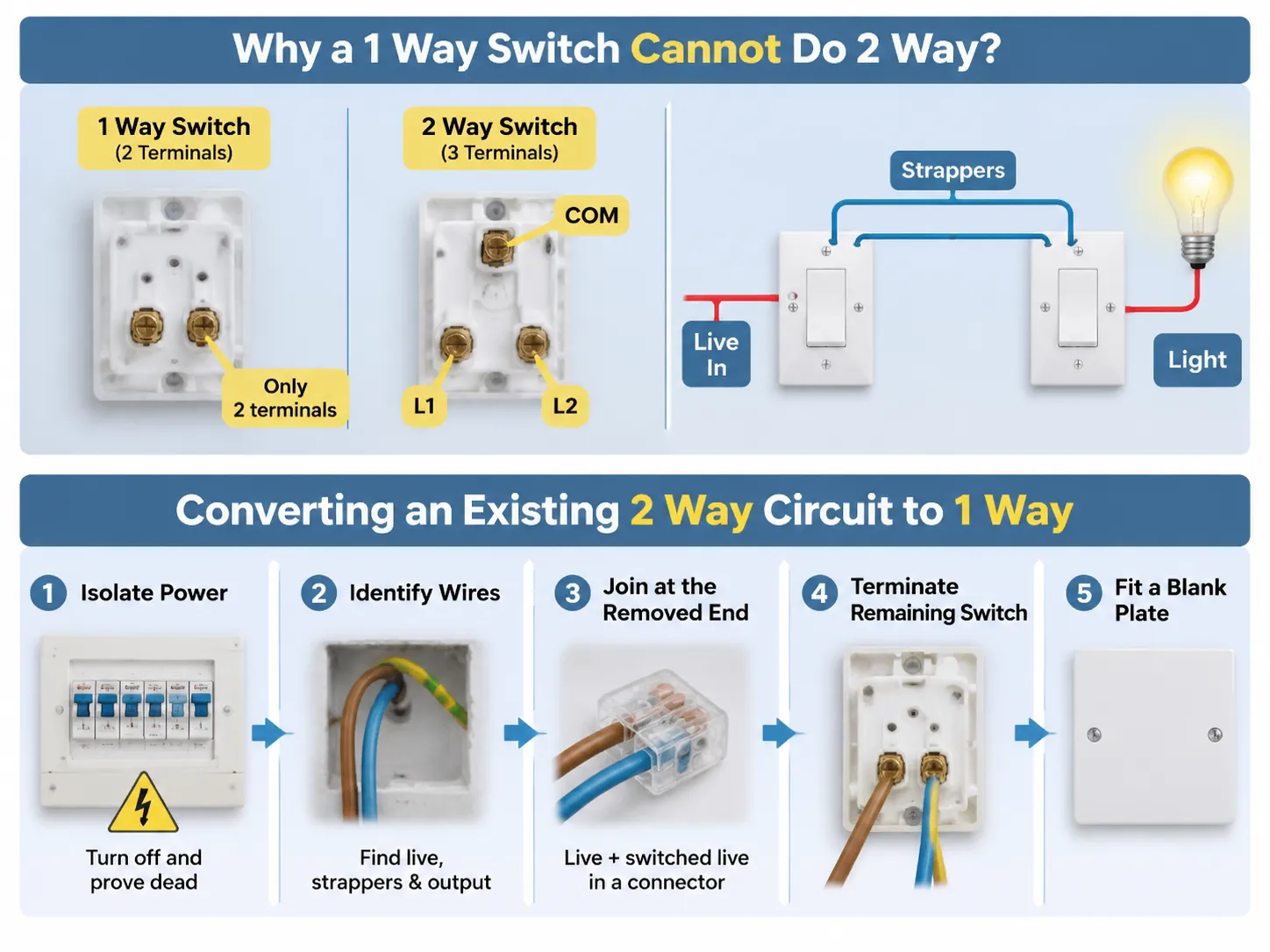
تحويل دائرة ذات اتجاهين موجودة إلى اتجاه واحد
إزالة مفتاح يمكن أن تكون مهمة فعالة، ولكن يجب تنفيذها بالطريقة الصحيحة.
- Deal with the consumer unit by isolating the electricity and checking that everything is dead. Most lighting circuits use 10 A or 6 A MCBs; thus, the circuit for the fixture that has just been switched off may be a different circuit.
- Determine which cable is the permanent live, which is the strapper and which is the switched live at the switch you’re using.
- Remove the second switch and remove its cable. The cable you removed connects the two switches. At the end where the cable was removed, you’re going to connect the permanent live with the switched live to provide current to the lamp.
- Terminate the working switch in a manner that the COM terminal gets constant live current and L1 takes the switched current to the fixture.
- If you kept the box, you’ll have to replace the switch with a blank cover; otherwise, you’ll have to take the box off and get the wires back in the wall if you do not need the room anymore. A blank cover is what most people do and is the most practical solution.
If the two-way circuit is made with three-core cable and the strapper can be easily identified, it’s easy to do. If two separate two-core cables were used, it would be impossible to tell which wire is which, and you may need to consult an expert. The wiring sequence for a switched lighting point is covered in this guide to wiring a light switch to UK conventions.
Double-Pole Switches on 1 Way Duty
A double-pole switch disconnects both the supply and neutral wires. It is used in places where isolation is needed, not regulation, for example, lighting located outside, shower pumps, or other devices that are meant to be switched off for maintenance.
In a single circuit, a double-pole switch only works if it is connected as a double-pole switch, meaning that one supply terminal handles the supply and one handles the neutral. Although, as noted, it may be allowed to use only one pole on the double-pole switch, it does not make sense to buy such a switch in the first place, otherwise, one terminal will stay useless.
Two things to keep in mind: a double-pole switch must be connected to the neutral in the location. Many circuit types do not have neutral conductors present as these circuit types usually have the neutral looping at the ceiling capping. Also, double-pole switches are typically deeper than normal switches and must be checked before buying.
Mixing Switches in a Multi-Gang Plate
In a two-gang plate, the two switches do not influence one another mechanically. One switch can be used in the one-way mode, while the other can either function in the two-way mode or in the one-way mode. The only restriction is physical, as certain modular ranges use a different module for a particular function, and the plate should be suitable for both types of modules.
Such flexibility makes modular ranges quite popular for retrofitting projects, as it is possible to create a plate consisting of a one-way module, another two-way module, and a dimmer module as needed, instead of making a complete change.The trade-offs of that system, including cost and availability, are worth understanding before committing to a whole house, as this comparison of gang switch configurations sets out.
What to Buy, and What to Check
- Ensure you verify the terminal count. A three terminal indicates that the switch can serve both functions, while if it features two terminals it can only serve the one function.
- Check the specification. 10AX is the normal specification for modern LED and fluorescent loads in the UK. Using a switch rated at 6A in a circuit with high inrush is a hazard that could trip the switch accidentally. The AX suffix suggests that the switch is rated for both capacitive and inductive loads rather than resistive loads only.
- Check the depth of the box. Two way and double pole mechanisms are generally thicker than the one way switches, so a 16mm box designed for the old switch might not accommodate the new one.
- Check the plate format. Having a two way switch in a one way position means there is a cosmetic mismatch which means trying to match up with what is already in the room will be more expensive that buying the correct switch for it.
- Avoid doing a very wrong thing: buying a two way switch simply because that is what you found at the store and then keeping terminal L2 connected to an unused wire. An unused terminal should not be connected to anything.
الأسئلة المتكررة
Can you use a 2 gang 2-way switch for 1 way?
That is correct. Every gang operates as an independent changeover switch, making it possible to connect it as a one-way switch through COM and L1, leaving L2 vacant. You can use both gangs as one-way switches, or one of them as a one-way while the other as a two-way one at the same time. The only restriction is that you have spent money on a second switch that may not really be necessary.
How do I convert a 2-way switch to 1-way switching?
Disengage the switch and then determine the position of the permanent live and switched live wires. For the second switch being removed connect the permanent live directly to the switched live wire and install a maintenance free enclosure to serve the lamp with power. Finally disconnect the other switch and connect it to the existing switches COM to connect to the permanent live and L1 on the switched live wire. Finally, cover the hole with a cover plate.
Can I use a 1-way switch as a 2-way switch?
A single-pole switch contains only two terminals and cannot transmit the continuous incoming current either to one of the two-way switch strappers that two-way control at every end requires. If it is used in a two-way circuit, a switch will function by cutting off the working principle of the device.
Can I use a 2-pole switch for 1-way switching?
In addition to this, it is essential to remember that this point must also be separated. Run the hot wire through one end and the neutral through the other so that both connections would be opened. It is also important to have the neutral at the switch location which may not be possible with all lighting circuits and also the junction box should be big enough.
المراجع
- Socket Store — Can I Use a 2 Way Switch for 1 Way?
- Electrical Safety First — Electrical Safety Guidance for Householders
- Legrand — Wiring Device Terminal Configurations
- UL Solutions — General-Use Snap Switch Standards
- Hubbell — Switches and Wiring Accessories
الخاتمة
By definition a one gang two way switch is a one way switch fitted with an extra contact and is no mark in “ON”. Connect COM and L1 and leave L2 unused; it will work just like one way switch.
The only rule that answers each incarnation of the problem is the terminal count. Three terminals make either one; two terminals can only perform one way task and one in a two way circuit gives you the light from one side and constant irritation from the other.