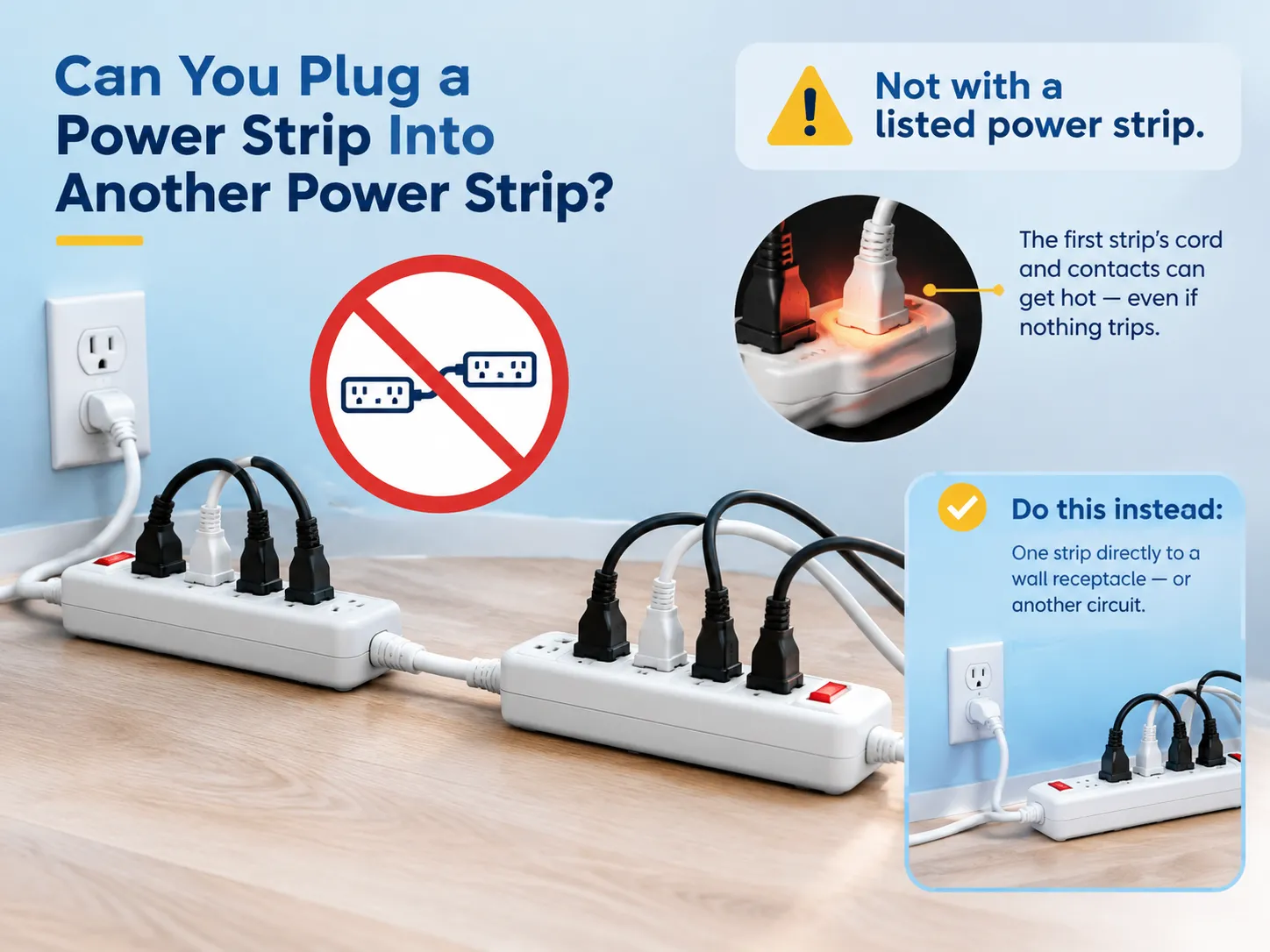
كل مكتب قد مر بهذا السيناريو: يتم توصيل شريط طاقة في شريط طاقة آخر، مما يؤدي إلى مكان ما حيث يزود جهازًا مثل الطابعة المتصلة به بالطاقة. على الرغم من أنه يعمل، ولا ينتج شررًا، ويمنع قاطع الدائرة من الانفصال، إلا أنه يؤدي إلى تساؤل مستمر حول حكمة استخدام أشرطة الطاقة بهذه الطريقة المذكورة. ستشرح هذه المقالة ما تقوله اللوائح بشأن استخدام أشرطة الطاقة بهذه الطريقة، ولماذا ليست الطريقة التي يعتقدها معظم الناس، وما يُسمح بتوصيله في شريط الطاقة، وكيفية التعامل مع الوضع إذا لم تكن هناك مقابس متاحة في المكتب.
باختصار، الجواب هو أن استخدام شريط طاقة مدرج للوظيفة لا يعمل. يذكر UL 1363 أن نقطة الطاقة القابلة للنقل التي تتصل عبر سلك ليست مصممة للاتصال. علاوة على ذلك، تعتمد OSHA على ما هو مذكور في 29 CFR 1910.303(b)(2). المظهر جيد لأن القاطع على الحائط تم تركيبه بناءً على مواصفات الدائرة وليس مواصفات الشريط، لذلك لا ينفتح القاطع حتى يسخن السلك واتصال الشريط الأول.
ما يعنيه فعليًا “التوصيل المتسلسل”
المصطلح الفني لشريط الطاقة هو نقطة طاقة قابلة للنقل، ويشار إليها أيضًا بـ RPT في مصطلحات UL 1363. التوصيل المتسلسل يعني توصيل شريط طاقة بشريط طاقة آخر، وكذلك توصيل سلك تمديد بشريط طاقة أو شريط طاقة بسلك تمديد لنفس النتيجة. في الصناعة، إذا كانت هناك أنواع مختلفة من الأجهزة، يُسمى ذلك سلسلة مختلطة.
في اللغة اليومية، يُشار إليه بـ “piggybacking”.
لا يتم التمييز بين التصنيفات أعلاه في الأكواد. السلسلة هي سلسلة في كل حالة.
ما تقوله المعايير، حسب ترتيب القوة
هناك أربعة مستندات تتعامل مع هذه المسألة، وهي تعزز بعضها البعض. إذا كان هناك مستند واحد فقط يجب أن تتذكره، فهو الأول:
UL 1363، القسم 1.7. تنص هذه المعيار، بعبارات واضحة، على أن نقطة الطاقة القابلة للنقل (RPT) غير مخصصة للاستخدام مع RPT آخر. يتم التأكيد على ذلك في كتاب UL الأبيض تحت فئة نقاط الطاقة القابلة للنقل، الذي يحدد أن RPT يجب توصيلها بمقبس ثابت وعدم استخدامها بالتسلسل مع RPTs أخرى أو أسلاك تمديد.
OSHA 29 CFR 1910.303(b)(2). تنص هذه اللوائح: “يجب تركيب واستخدام المعدات المدرجة أو الموسومة وفقًا لأي تعليمات مضمنة في القائمة أو الوسم.” نظرًا لأن كل شريط طاقة مدرج يحتوي على تعليمات تحظر توصيل الأشرطة بالتسلسل، فإن التوصيل المتسلسل ينتهك هذه اللوائح. قدمت OSHA تفسيرًا أكثر صرامة بمساعدة رسالة توضح موقفها بشأن نقاط الطاقة القابلة للنقل، مؤكدة أن RPTs المدرجة في UL يجب توصيلها فقط بمقابس الدائرة الفرعية الثابتة.
NFPA 1، الفصل 11. في قانون الحريق، هناك أيضًا ذكر مباشر لـ RPTs. يجب أن تحتوي على الاستقطاب، التأريض، الحماية من التيار الزائد، أن تكون مدرجة، متصلة بمأخذ ثابت، ولا يجب أن تمر الأسلاك خلف الجدران أو الأسقف أو الأرضيات، أو تحت الأبواب أو الأرضيات.
NEC 400.12. لا يمكن للأسلاك والكابلات المرنة أن تحل محل الأسلاك الثابتة للمبنى. لذلك، فإن سلسلة طويلة من الأسلاك التي تمتد عبر الغرفة غير قانونية تمامًا.
الفيزياء: لماذا لا ينقطع التيار حتى فوات الأوان
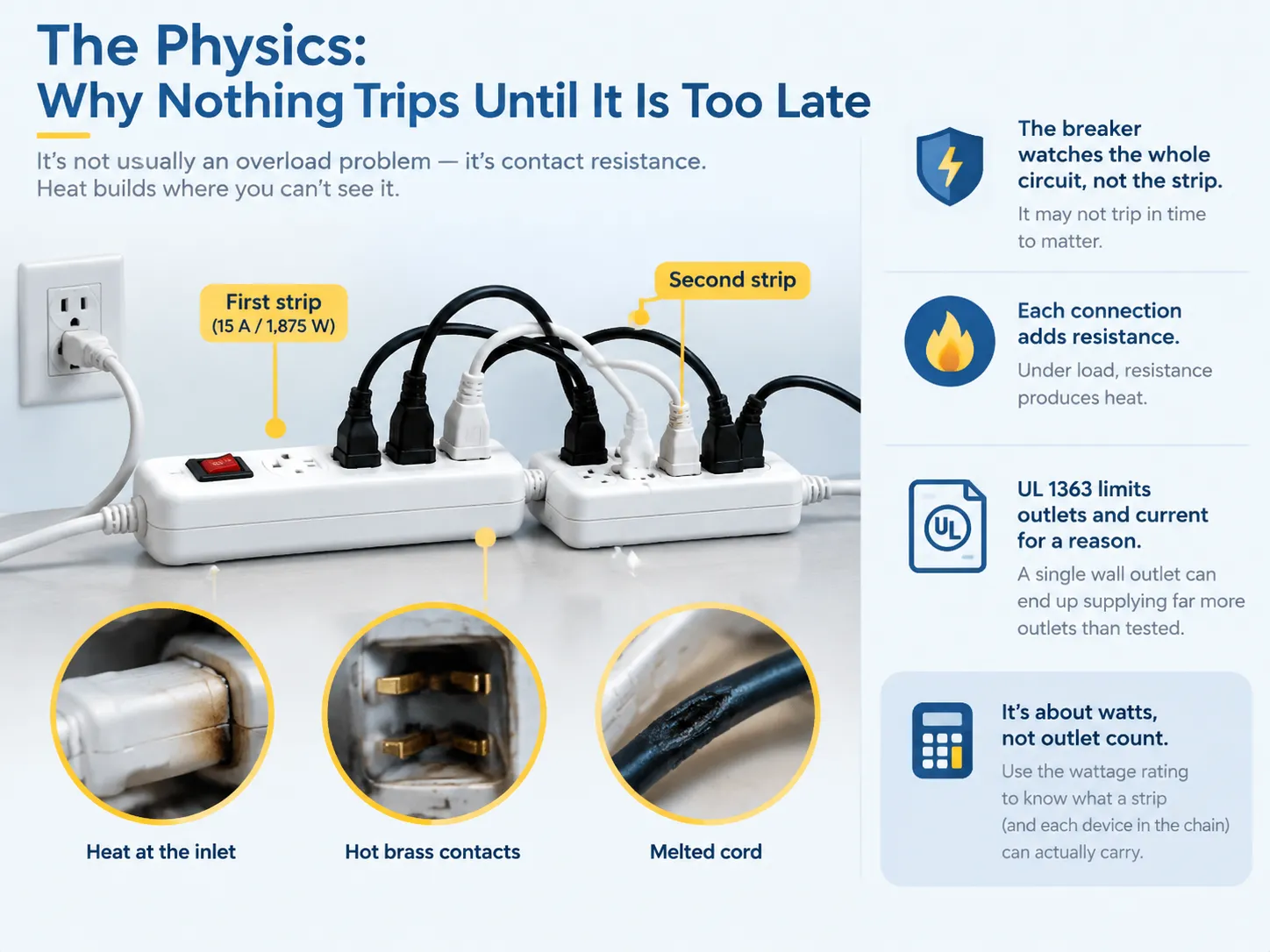
مفهوم daisy chaining مضلل جدًا. يعتقد الناس أن الخطأ يكمن في تحميل الدائرة بشكل زائد وأن قاطع الدائرة سيحميهم. لكن هذا على الأرجح ليس هو الحال.
عادةً، يمكن لدائرة فرعية في الولايات المتحدة أن تتحمل 15 أمبير أو 20 أمبير. من المحتمل أن يكون شريط الطاقة الذي خضع للاختبار مصنفًا لـ 15 أمبير عند 125 فولت بإجمالي 1875 واط. ومع ذلك، ينطبق هذا التصنيف على الشريط بأكمله: السلك والأسلاك الداخلية لشريط الطاقة. عندما تقوم بتوصيل شريط آخر بالشريط الأول، يبدو أن الحمل على الدائرة الأولى أكبر مما يمكن لقاطع الدائرة اكتشافه.
العملية التي تؤدي إلى هذه الظاهرة تسمى زيادة مقاومة الاتصال. يزيد اتصال القابس والمأخذ في الجهاز المضاف من المقاومة، مما يولد حرارة. ستتفاجأ بمعرفة أن الحرارة تتراكم في المرحلة غير المرئية من العملية: تلك التي تحدث داخل مدخل شريط الطاقة الأولي. يحدث نفس الوضع عند الاتصالات. تؤدي هذه الحرارة إلى ذوبان الأسلاك وتلف المآخذ بدلاً من تشغيل قاطع الدائرة.
لهذا السبب الحسابات مهمة أكثر من المظهر. حساب ما يمكن أن يحمله الشريط فعليًا يعتمد على الواط، وليس عدد المآخذ، ونفس الحساب المستخدم لـ عدد الواط الذي يمكن لمأخذ واحد تحمله ينطبق على كل جهاز في السلسلة.
متى يكون الأمر تقنيًا مقبولًا، ولماذا لا يزال هذا هو الجواب الخاطئ
سيجادل البعض بأن وجود شريطين للطاقة يزودان لابتوب، وشاشة كمبيوتر، وشاحن هاتف لا يجب أن يؤثر على النظام الكهربائي لأن استهلاكهم الكلي للطاقة لا يجب أن يتجاوز 200 واط، لكن هذا الجدل غير ذي صلة. في الأساس، تُكتب لوائح الكود لسيناريوهات تشمل الأحمال القصوى ولا توفر القائمة أي استثناءات للأحمال الصغيرة. لذلك، يمكن أن تتوقف السلسلة التي تعتبر آمنة عن كونها آمنة بمجرد توصيل سخان بها دون إعادة فحص شريط الطاقة.
هناك أيضًا جانب تأميني هنا حيث أن تصنيف UL ومتطلبات OSHA هي معيار المقارنة الذي تستخدمه معظم شركات التأمين وإدارة الإطفاء عند التحقيق في الحرائق الناجمة عن daisy chains في المنازل أو المنشآت.
ما يمكنك توصيله بأمان في شريط واحد
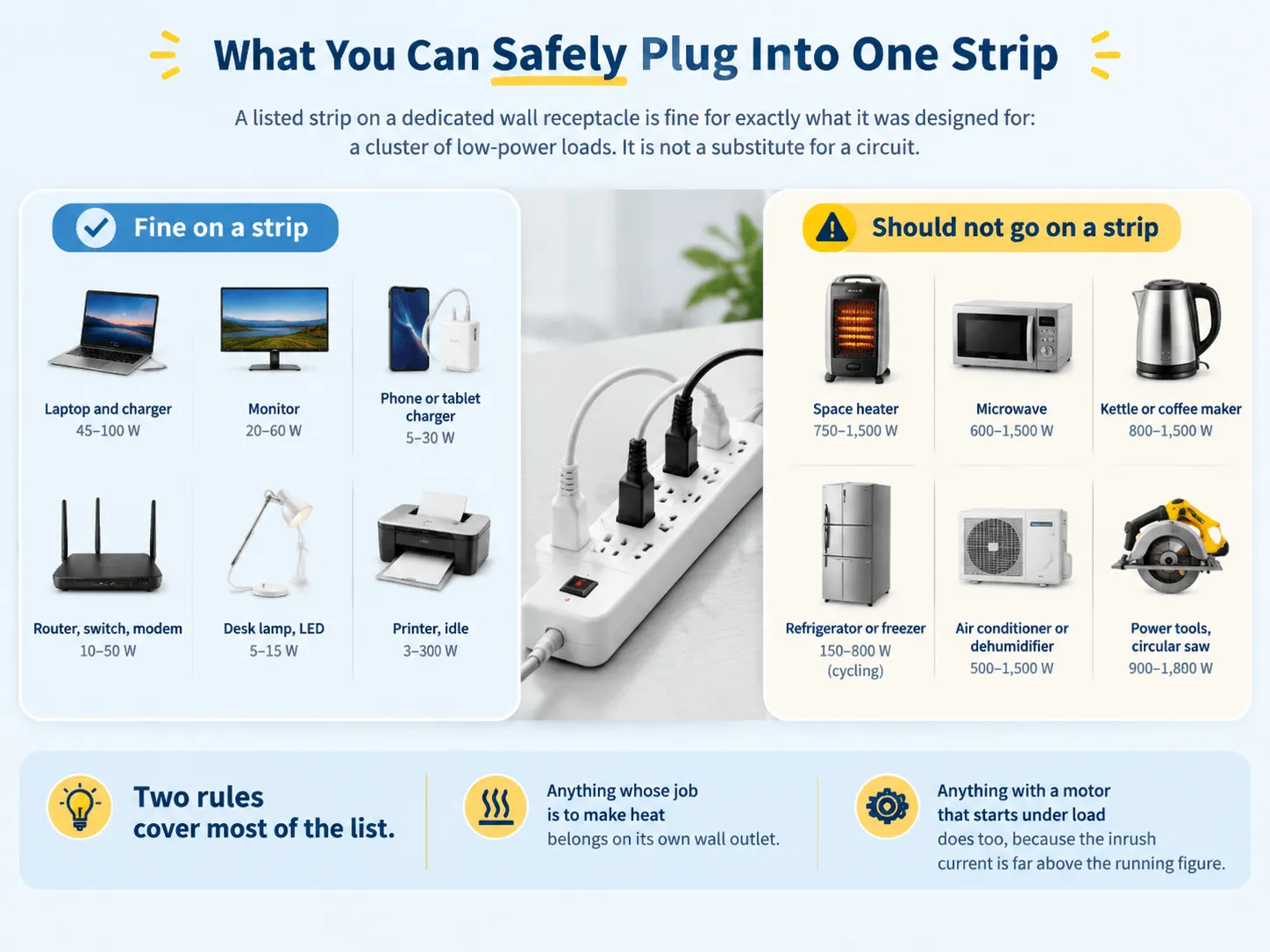
شريط مدرج على مأخذ حائط مخصص مناسب تمامًا لما صُمم من أجله: مجموعة من الأحمال منخفضة الطاقة. إنه ليس بديلاً عن دائرة كهربائية.
| مناسب على الشريط | السحب | لا يجب توصيله على الشريط | السحب |
|---|---|---|---|
| لابتوب وشاحن | 45–100 واط | سخان مساحة | 750–1500 واط |
| شاشة | 20–60 واط | ميكروويف | 600–1,500 واط |
| شاحن هاتف أو جهاز لوحي | 5–30 واط | غلاية أو ماكينة قهوة | 800–1,500 واط |
| راوتر، مفتاح، مودم | 10–50 واط | ثلاجة أو فريزر | 150–800 واط في دورة التشغيل |
| مصباح مكتب، LED | 5–15 واط | مكيف هواء أو مزيل رطوبة | 500–1,500 واط |
| طابعة، في وضع الخمول | 3–30 واط | أدوات كهربائية، منشار دائري | 900–1,800 واط |
يمكن التحكم بمعظم الباقي بمبدأين. يجب توصيل أي جهاز يولد حرارة بمأخذ كهربائي معزول. نفس الأمر ينطبق على الجهاز الذي يبدأ عمله تحت حمل بسبب التيار الابتدائي الأعلى من التيار التشغيلي.
ما هو التصنيف الفعلي لشريط الطاقة
Prior to making a purchase, it is important to look at three figures indicated on the label: the amp rating, wire gauge, and joule rating.
A strip rated for 15A/1875W with a 14AWG wire is the standard US requirement, and it is the wire gauge that provides the true limit; 14AWG copper is good for 15A, 16AWG for 13A, and thus if the strip specifies 15A on a 16AWG wire, it exaggerates. Strips that do not possess an internal circuit breaker do not provide any safety measure beyond that offered by the branch circuit breaker. Surge protection joule rating indicates how much energy is absorbed by the metal oxide varistor before it malfunctions; a varistor that absorbed its joule rating is inoperative and will not provide indication of that failure.
GOG builds in this category as a wiring-device manufacturer rather than a consumer brand, producing switched sockets, extension sockets and the receptacles they plug into for OEM and private-label programs. The range and the OEM terms are set out on the socket manufacturing page.
Better Answers Than a Second Strip
If one strip does not suffice, consider the items mentioned below, which resolve the situation at its source instead of piling the devices on themselves.
- Get a longer strip. One 10- or 15-foot strip can take over for a whole chain of power strips and put the entire load on the one cord.
- Use a second wall outlet circuit. It is common to find outlets at the opposite wall of the room on a different breaker. This will ensure that both circuits can handle the load of a high-current-consuming desktop.
- Install additional outlets. A circuit’s output limits the number of outlets it can support, and that is how many it can run.
- Use a rack PDU. When dealing with racks, rack-mount PDUs are the solution when power strips simply cannot work.
- Use a UPS with enough outlets for the workstation. It combines a battery backup and a surge protector in the single listed unit.
US, UK and EU Strips Are Not Interchangeable
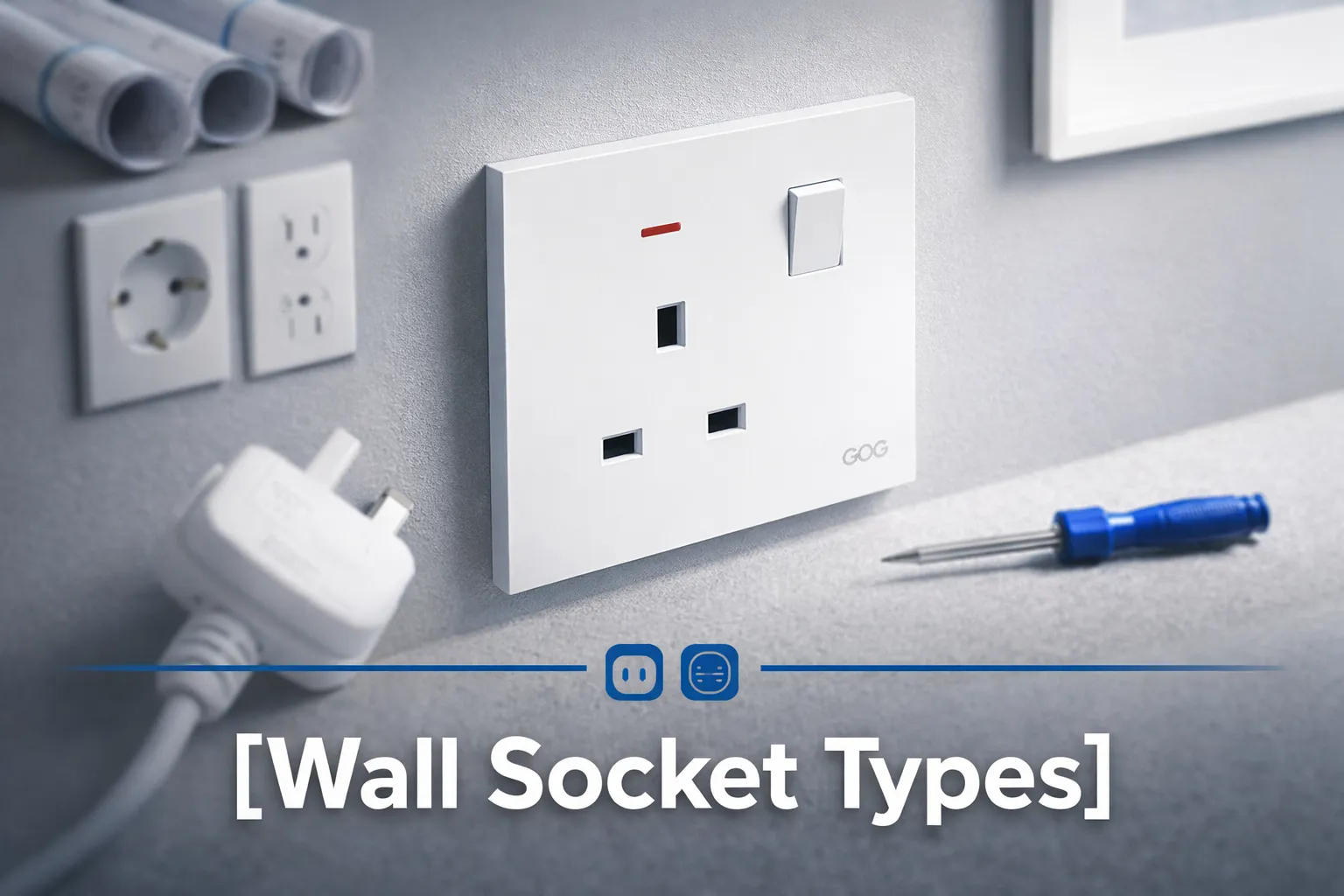
The daisy-chain concept is worldwide, but ratings are. This poses a threat to people buying online. The standard US strip is rated at 15 A and 125 V. In the UK, BS 1363 specifies 15 A and the strip is often included with a fuse also rated at 15 A. The European strip uses type F or Schuko plug; its rating is 16 A at 230 V and is usually not interrupted by any switches or circuit breakers. All British plugs are also fused.
Connecting a strip with the market where it will be used has a great value. If a 15 A US circuit is connected to a 16 A European strip using an adapter, the strip is rated higher than the fuse or circuit protection upstream of it.
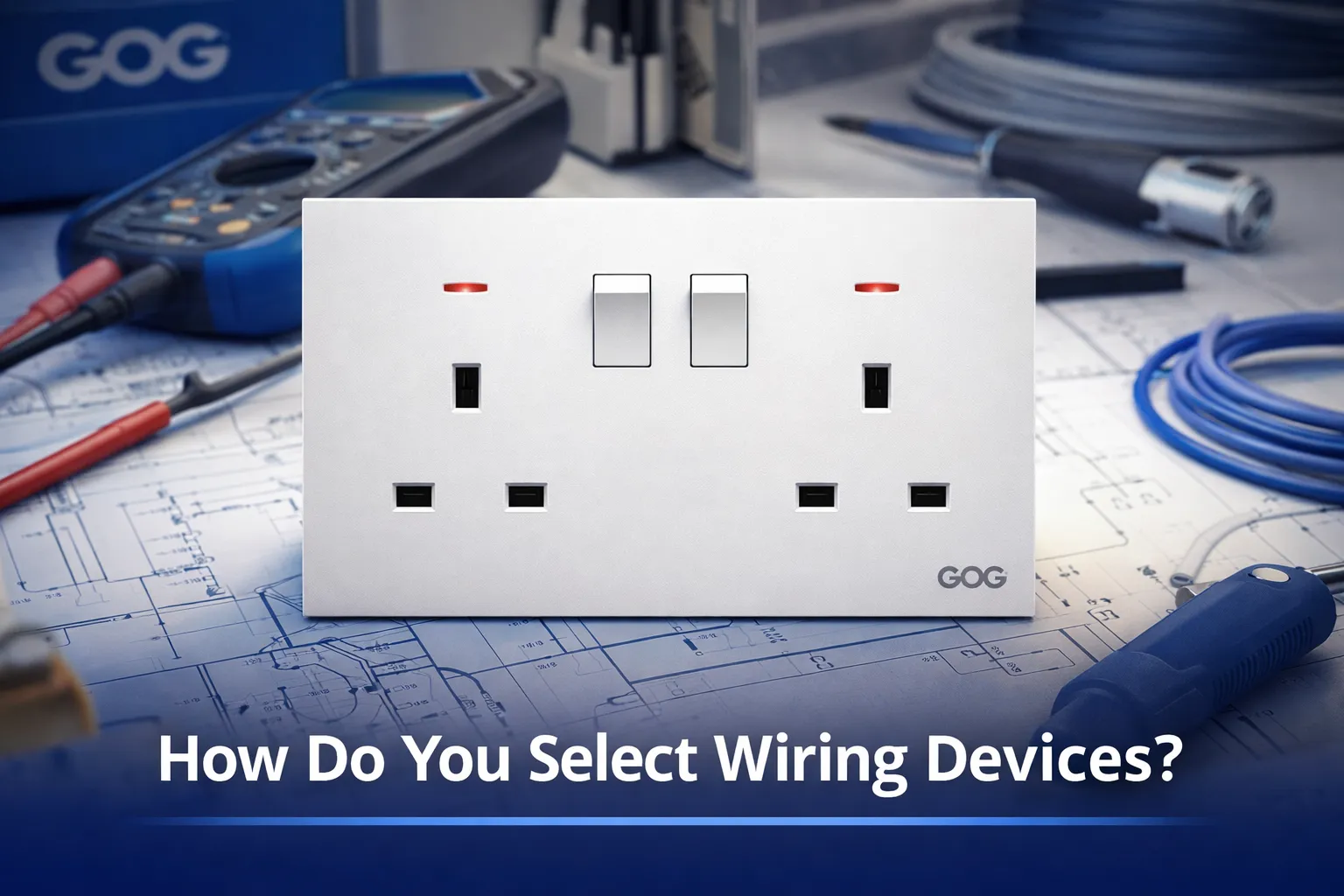
For UK and Ireland installations, a fused British Standard extension socket such as this 4-way BS extension socket with USB-C keeps the protection where the standard expects it, with the fuse in the plug rather than in the strip. In North America the same logic points to a strip with a 15 A / 125 V rating, a 14 AWG cord and its own integral breaker.
الأسئلة المتكررة
Can you connect a power strip to another power strip?
Certainly, not when dealing with a product that has received certification. The specifications of UL 1363, particularly Section 1.7, indicate that a relocatable power tap which is dependent on a cord is not supposed to be linked with another relocatable power tap using a cord, and this guideline has also been confirmed by the UL White Book. The guideline by UL has been implemented by OSHA through the enactment of 29 CFR 1910.303(b)(2), which obligates the use of equipment that has a listing according to its listing guidelines.
Is it okay to plug a power strip into a power strip?
In this case, one should keep in mind that the problem of circuit protection is not limited to the prospect of branch circuit breaker malfunctioning because the reality of the situation is that protection never kicks in until the condition becomes dangerous. Recent connections only intensify resistance, with the first power strip’s wires and contacts baring the responsibility for all devices connected downstream since they are exposed to the total current supplied to the circuit with the circuit breaker only breaking down if a single circuit has overloaded.
ما الذي يجب ألا تقوم بتوصيله أبدًا في شريط الطاقة؟
Any device that produces heat or comes close to the maximum capacity of the outlet: space heaters, kettles, coffee machines, microwaves, toasters, hair dryers, irons, and portable air conditioners. Be careful with heavy-duty motor devices that switch on while loaded, like circular saws and big compressors. These loads need separate dedicated outlets.
Is it okay to connect one power strip to another so you have enough outlets, or to make it long enough to reach your plug?
Regardless of the intention, the rule remains the same. If you seek to have additional plugs, buy either an extension cord of adequate rating or a long plug strip since using an extension cord together with a plug strip will result in a series connection which is against the rules. The solutions to having more plugs are additional outlets, another circuit, or a rack power distribution unit. Plug strips help create many outlets but do nothing in terms of power rating increase, which is the entire issue.
Do surge protectors make daisy chaining safe?
No. A surge protector is still an RPT under UL 1363 and therefore, the limitation on the listing remains the same. Even worse, if two surge protectors are connected together, the clamping behavior will be randomized, and no additional protection will be given, since the second device has nothing to protect that the first does not protect.
المراجع
- OSHA — Compliance requirements for relocatable power taps or “power strips” (Standard Interpretation)
- UL Standards & Engagement — UL 1363, Relocatable Power Taps
- NFPA — NFPA 1 Fire Code (Chapter 11, relocatable power taps)
- Interpower — Not Safe: Daisy Chaining Power Strips
- AZoM — Is Daisy Chaining Power Strips Safe?
الخاتمة
The regulations regarding power strips, which were created to allow the devices to be marketed in the first place, do not allow connecting one power strip to another due to the fact that even though the wall switches help with the circuit control, there is still heat in the first strip wires and contacts which does not have any supervision whatsoever.
As for the practical considerations, it is recommended to opt for either another longer strip or replace the cord with the one of the necessary specifications in order to get rid of any challenges. Besides, it is important to move the power-consuming loads from the power strip before getting connected to it. Finally, when buying a product check the amperage, the wire size and whether the strip is supplied with the required breaker for proper functionality and get the idea of the capacity far better than by counting the sockets mentioned on the box.