افترض مالك منزل في تكساس أن موقد كهربائي كان يشتريه سيكون جاهزًا للاستخدام بمجرد تثبيته في مكانه. ومع ذلك، عندما ذهب لتوصيله، اكتشف أنه على الرغم من أنه كان يحمل قابسًا بأربعة أسنان، كان هناك مخرج حائط يمكنه قبول قابس بسيط ذو سنين فقط. يعمل الموقد الكهربائي على 240 فولت. يمكن لمخرج الحائط توفير 120 فولت فقط. يمكن تثبيت كلا النوعين من المخرجين بشكل صحيح فقط وفقًا لتعليمات الشركة المصنعة، وإذا حاول شخص ما استخدام محول لتوصيلهما، فقد يكون ذلك خطيرًا للغاية. سيحتاج مالك المنزل إلى قاطع جديد، ودائرة جديدة، ومخرج جديد. السؤال عن الفرق بين مخرجات 120 فولت و240 فولت ليس مجرد سؤال عن شكل القابس. يتعلق الأمر بالتيار، والجهد، وسمك السلك، وأبعاد قاطع الدائرة، ومدونة السلامة، والفيزياء التي توفر عمل المخرجات.
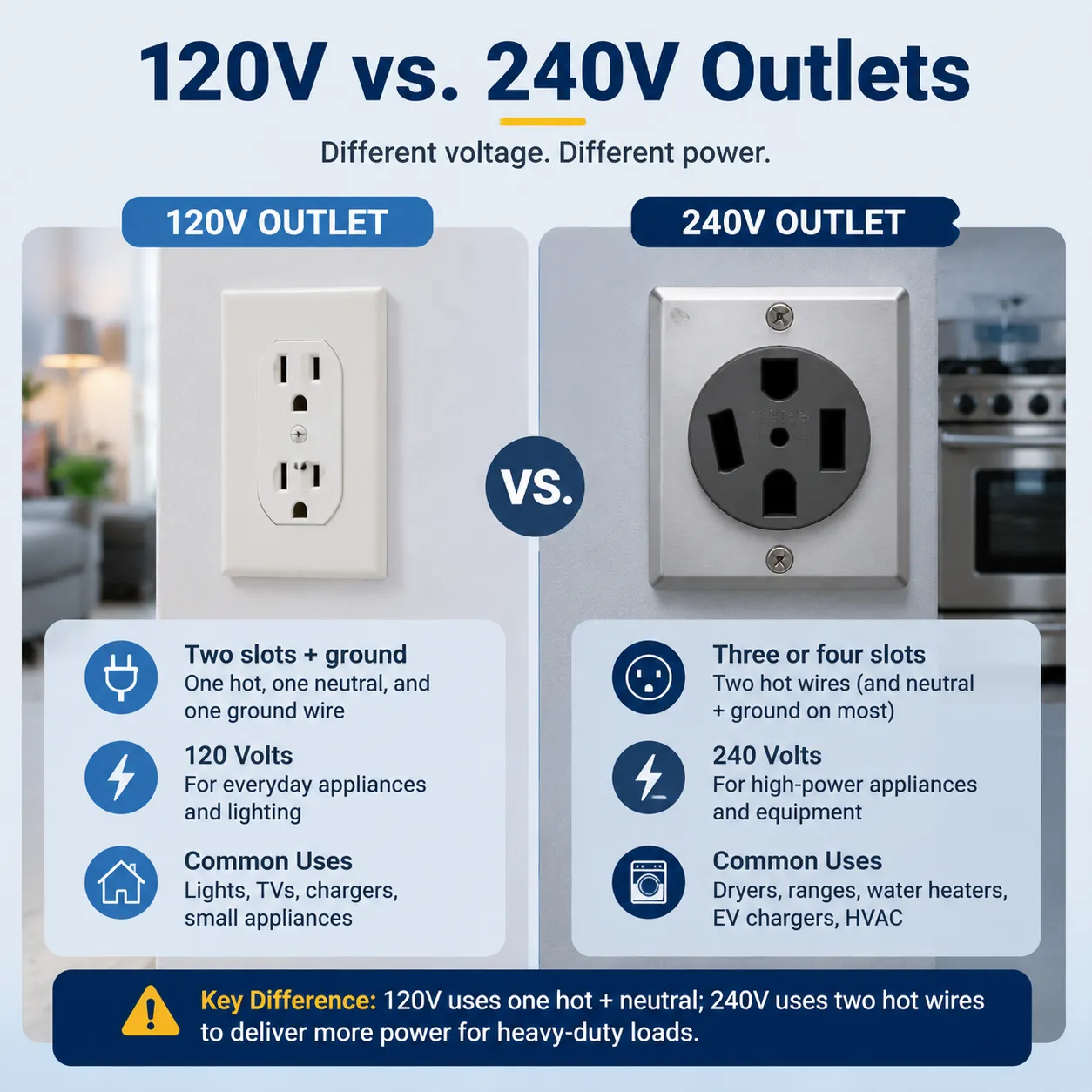
ملخص: يتم تجهيز مخرج 120 فولت العادي بسلك ساخن واحد وسلك محايد واحد يسهل نقل التيار الصحيح للإضاءة المنزلية، والمخارج، والعديد من الأجهزة الإلكترونية الصغيرة. في الوقت نفسه، يتصل مخرج 240 فولت بسلكين ساخنين، كل منهما يحمل تيارًا كهربائيًا بجهد 120 فولت ولكنهما متباعدان بمقدار 180 درجة عن السلك الآخر من حيث الطور. تتمتع النوعان من المخرجات بخصائص فيزيائية مختلفة، حيث يتميز مخرج 120 فولت بفتحتين موضعتين عموديًا وثقب دائري مصمم لتسهيل التأريض، بينما يحتوي مخرج 240 فولت على تصميمات متعددة حسب التيار ونوع الجهاز؛ على سبيل المثال، تعتبر NEMA 14-30 وNEMA 14-50 من أقدم المخرجات المستخدمة في المنازل للأفران الكهربائية وشواحن السيارات الكهربائية على التوالي. يجب أن تتوافق الفولتية، وأجهزة القياس، وسمك الأسلاك، وأنواع المخرجات مع بعضها البعض لأنه سيكون من الخطير محاولة توصيل جهاز مصمم لـ 240 فولت بمخرج مصمم لـ 120 فولت.
ماذا تعني 120 فولت و240 فولت فعليًا في نظام الكهرباء السكني
في أمريكا الشمالية، يوفر المحول الكهربائي الذي يغذي المنزل إمدادًا كهربائيًا بجهد 240 فولت بفازتين. يحتوي الملف الثانوي للمحول على نقطة مركزية وهو مؤرض عند مدخل الخدمة لإنشاء نقطة محايدة. الفروق في الجهد بين أي من السلكين الحارين بالنسبة للمحايد هي 120 فولت. الجهد بين السلكين الحارين هو 240 فولت. هذه ليست مسألة جهدين مستقلين؛ بل هي لفافة واحدة لمحول تحتوي على نقطة في مركزها. السبب في وجود 240 فولت بين السلكين الحارين هو أنهما متباعدان بمقدار 180 درجة – عندما يكون أحد السلكين عند +120 فولت بالنسبة للمحايد، يكون السلك الحار الثاني عند -120 فولت، مما يوفر فرق جهد إجمالي قدره 240 فولت. بهذه الطريقة، يحقق التصميم الذكي كل من 120 فولت و240 فولت المتاحة من خلال نفس المحول، مع تحقيق نفس انخفاض الخدمة ذو الثلاثة أسلاك الذي يستخدمه كل منزل. قامت NFPA بمساعدة NEC بتطوير المعايير لتركيب وحماية هذين النوعين من الجهد.
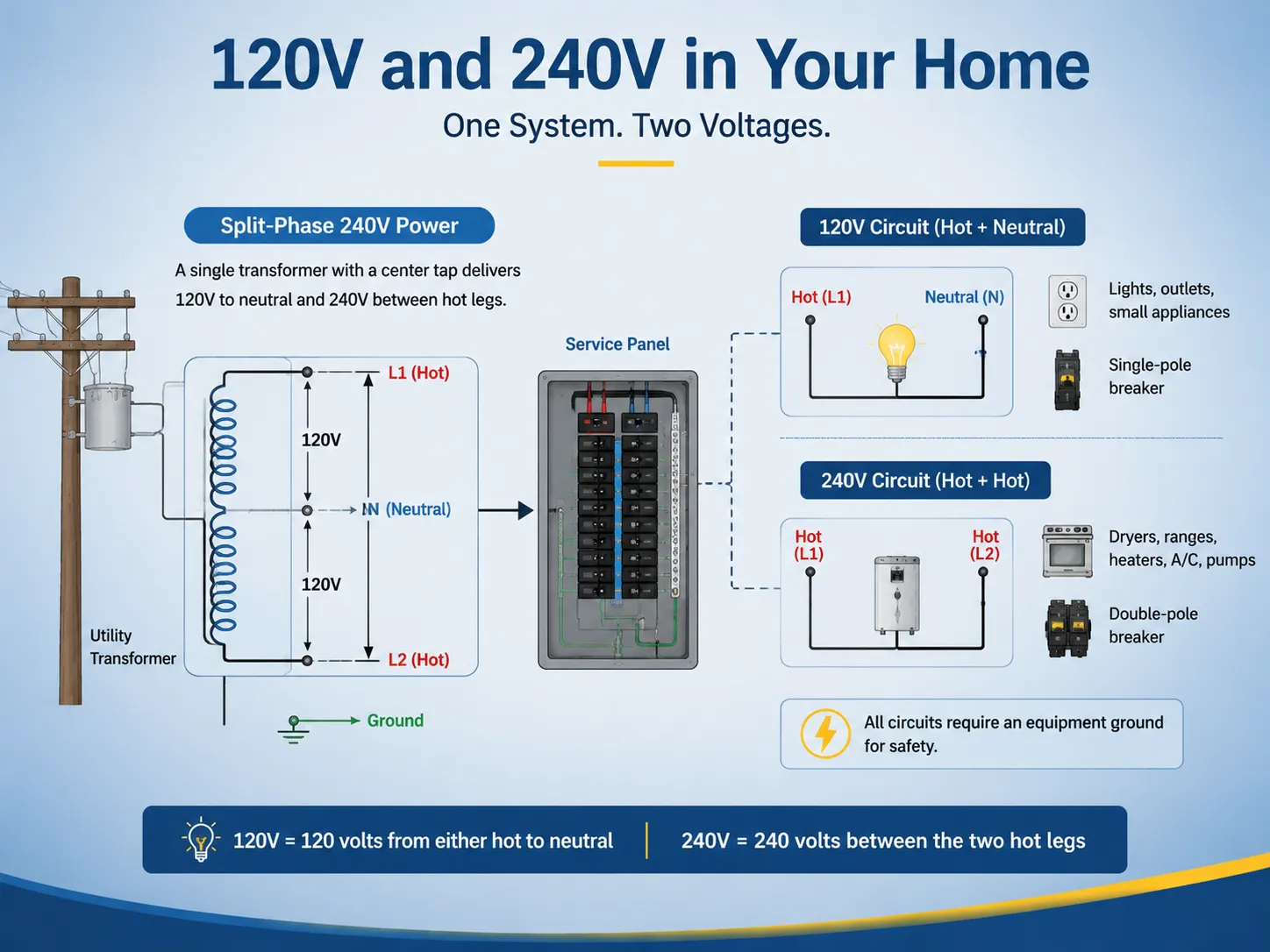
يتكون نظام 120 فولت من سلك حار وسلك محايد. يتصل السلك الحار بقاطع دائرة أحادي القطب في لوحة الكهرباء ويتدفق التيار الكهربائي من القاطع عبر السلك الحار إلى الحمل ويعود إلى اللوحة عبر السلك المحايد. هذه هي الدائرة الأساسية المستخدمة لتشغيل الأضواء، والمآخذ الشائعة، والأجهزة الصغيرة. من ناحية أخرى، يتضمن نظام 240 فولت سلكين حارين؛ واحد من كل شريط ناقل في لوحة الكهرباء. يتم توصيل السلكين الحارين بقاطع مزدوج القطب يشغل شغفين متجاورين في اللوحة.
في عملية إمداد الطاقة، يتدفق التيار الكهربائي عبر سلك حار، عبر الحمل، ويعود عبر السلك الحار الآخر. قد يختلف وجود سلك محايد اعتمادًا على نوع إمداد الطاقة المستخدم؛ على سبيل المثال، في جهاز 240 فولت النقي مثل سخان القاعدة أو المضخة، لا حاجة لسلك محايد، بينما في الأجهزة التي تعمل بجهد 120-240 فولت مثل المواقد الكهربائية والمجففات، يُستخدم المحايد للتحكم في المكونات التي تعمل بجهد 120 فولت. يجب أن يكون تأريض المعدات موجودًا في جميع هذه الحالات. للحصول على شرح كامل حول كيفية مقارنة جهد المنازل دوليًا، دليلنا عن جهد المملكة المتحدة مقابل جهد الولايات المتحدة يشرح الأسباب التاريخية وراء المعايير المختلفة وما تعنيه للأجهزة والسلامة.
الفروق الفيزيائية: كيفية التعرف على مأخذ 120 فولت مقابل مأخذ 240 فولت
A مأخذ 120 فولت و مأخذ 240 فولت متميزة فيزيائيًا، والفرق واضح على الفور بمجرد أن تعرف ما الذي تبحث عنه. تلخص الجدول أدناه الميزات الرئيسية المميزة لأكثر التكوينات السكنية شيوعًا.
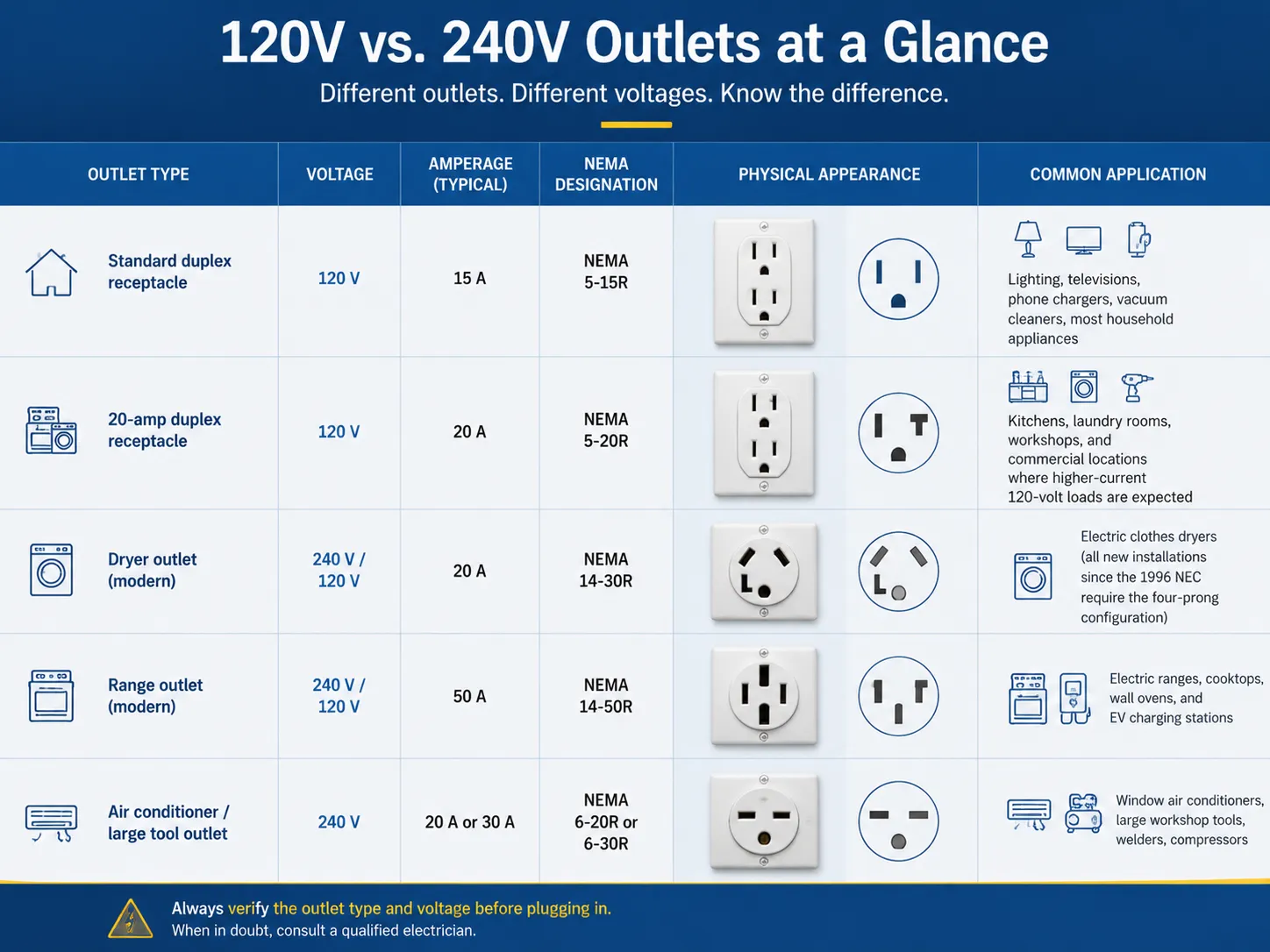
| نوع المأخذ | الجهد الكهربائي | الأمبير (نموذجي) | تعيين NEMA | المظهر الفيزيائي | التطبيق الشائع |
|---|---|---|---|---|---|
| مأخذ مزدوج قياسي | 120 فولت | 15 أ | نيمّا 5‑15R | فتحتان عموديتان (واحدة حارة ضيقة، واحدة محايدة واسعة) وثقب تأريض دائري. المأخذ المألوف على كل جدار. | الإضاءة، والتلفزيونات، وشواحن الهواتف، والمكانس الكهربائية، ومعظم الأجهزة المنزلية |
| مأخذ مزدوج 20 أمبير | 120 فولت | 20 أ | نيمّا 5‑20R | مطابق تمامًا لـ 5‑15R، ولكن الفتحة المحايدة على شكل T لقبول قابس 20 أمبير مع شفرات محايدة أفقية. يناسب قابس 15 أمبير؛ يتطلب قابس 20 أمبير الفتحة T. | المطابخ، وغرف الغسيل، وورش العمل، والمواقع التجارية حيث من المتوقع أن تكون الأحمال الكهربائية ذات التيار العالي 120 فولت. |
| مخرج المجفف (حديث) | 240 فولت / 120 فولت | 30 أمبير | نيمّا 14‑30R | أربع فتحات: اثنتان ساخنتان، واحدة محايدة (على شكل L)، وواحدة أرضية (دائرية). القابس كبير ومميز. | مجففات الملابس الكهربائية (جميع التركيبات الجديدة منذ NEC 1996 تتطلب تكوين الأربعة شفرات) |
| مخرج النطاق (حديث) | 240 فولت / 120 فولت | 50 أمبير | نيمّا 14‑50R | أربع فتحات، مشابهة لـ 14‑30R ولكن أكبر. نفس التكوين يستخدم للعديد من شواحن EV من المستوى 2. | النطاقات الكهربائية، وأسطح الطهي، وأفران الحائط، ومحطات شحن EV. |
| مخرج مكيف الهواء / أدوات كبيرة | 240 فولت | 20 أمبير أو 30 أمبير | NEMA 6‑20R أو 6‑30R | فتحتان أفقيتان وأرضية دائرية. لا توجد محايدة - هذا تكوين 240 فولت بحت. | مكيفات الهواء النوافذية، أدوات ورشة العمل الكبيرة، آلات اللحام، الضواغط. |
هل يمكنك استخدام مخرج 120 فولت لجهاز 240 فولت؟ (وعكس ذلك)
الإجابة بسيطة: لا. لا يمكنك استخدام مخرج 120 فولت لجهاز 240 فولت أو العكس دون أن يكون مصممًا خصيصًا للعمل باستخدام كلا الجهدين (مثل شاحن هاتف حديث أو شاحن لابتوب متوافق مع 100–240 فولت). لذا، عندما يتم توصيل جهاز 240 فولت بمخرج 120 فولت، فإنه لا يحصل على جهد كافٍ للعمل كما هو مقصود: سيولد جهاز التسخين حوالي ربع حرارته المقدرة (الطاقة تتناسب مع الجهد المربع)، وقد لا يدور المحرك أو قد يسخن بشكل مفرط. عندما يتم توصيل جهاز 120 فولت بمخرج 240 فولت باستخدام محول قابس، فإنه سيحصل على ضعف جهده المقدّر وسيتعطل خلال بضع ثوانٍ، ربما مع حريق و/أو انفجار. بالإضافة إلى ذلك، تم تصميم القوابس والمخارج خصيصًا لتجنب هذه الإمكانية.
هناك حالة خاصة يمكن فيها لدائرة 240 فولت واحدة أن تزود كل من الأحمال 240 فولت و120 فولت في نفس الوقت. هذا مفيد للنطاقات الكهربائية لتزويد وحدات التسخين بـ 240 فولت بينما توفر المؤقت والضوء بـ 120 فولت. الاختلاف الوحيد هنا هو أن الحمل 120 فولت متصل من خلال ساق واحدة والسلك المحايد بينما الحمل 240 فولت متصل من خلال الساقين. تصنيف المخرج لـ 240 فولت مهم لأنه يجب أن يتطابق مع تصنيف قاطع الدائرة وحجم السلك. وجود دائرة 240 فولت مع مخرج على دائرة 120 فولت يعد انتهاكًا للقانون لأنه يمكن أن يؤدي إلى حرائق كهربائية. للحصول على المساعدة في حساب الحمل الكهربائي الذي يحدد حجم الدائرة والقاطع الصحيح، دليلنا على عدد الواط الذي يمكن للمقبس تحمله يوفر الصيغ وقواعد الحمل المستمر.
اختلافات التركيب: متطلبات قياس السلك، القاطع، والصندوق
تركيب مأخذ 120 فولت وتركيب مأخذ 240 فولت هي وظائف مختلفة أساسياً، على الرغم من أن كلاهما يتضمن توصيل الأسلاك بمأخذ. تلخص الجدول أدناه الاختلافات الرئيسية في التركيب للدورات السكنية القياسية.
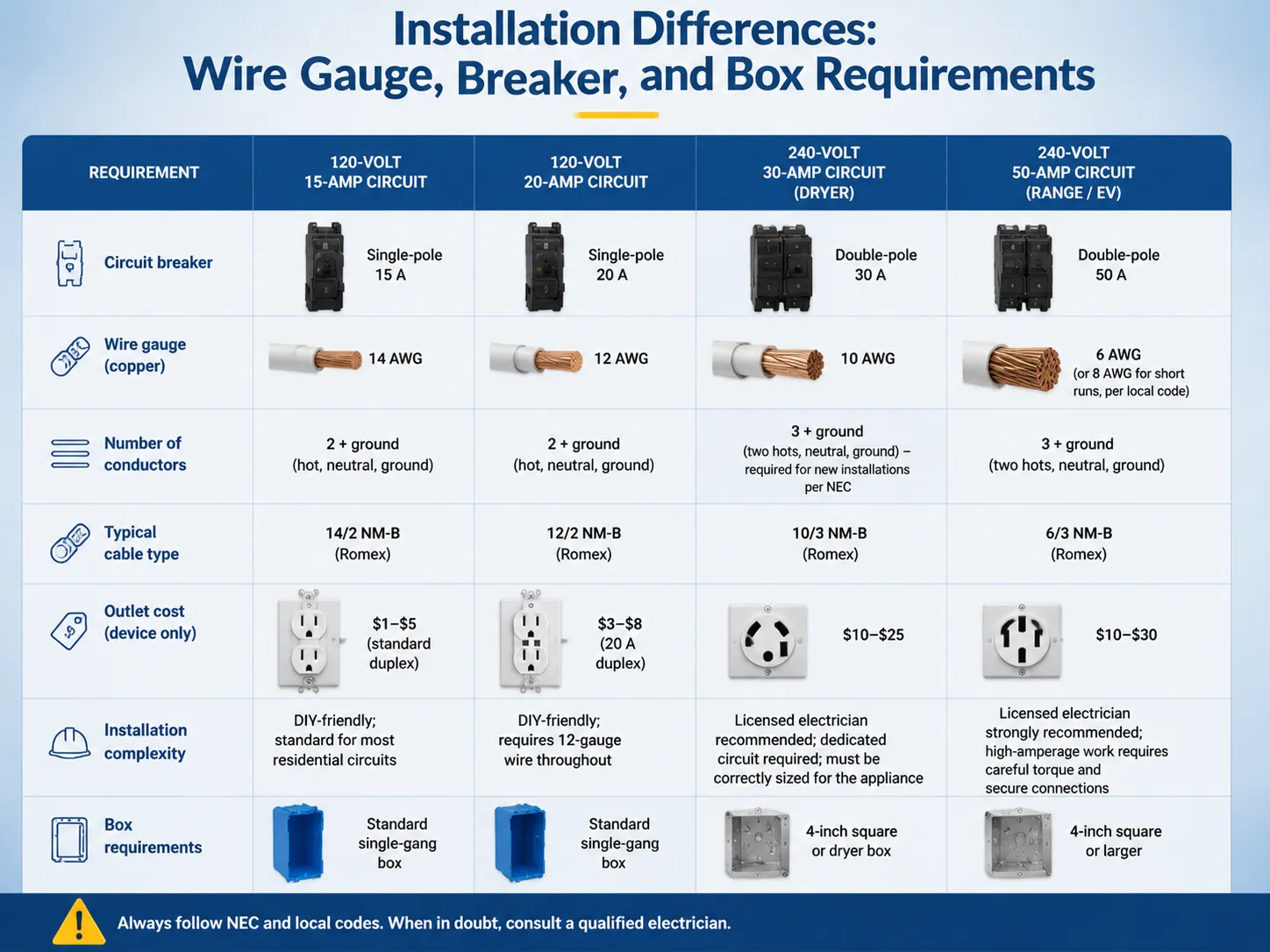
| المتطلبات | دائرة 120 فولت، 15 أمبير | دائرة 120 فولت، 20 أمبير | دائرة 240 فولت، 30 أمبير (مجفف) | دائرة 240 فولت، 50 أمبير (موقد / EV) |
|---|---|---|---|---|
| قاطع الدائرة | أحادي القطب 15 أ | أحادي القطب 20 أ | مزدوج القطب 30 أ | مزدوج القطب 50 أ |
| قياس السلك (نحاس) | 14 AWG | 12 AWG | 10 AWG | 6 AWG (أو 8 AWG للامتدادات القصيرة، وفقاً للقانون المحلي) |
| عدد الموصلات | 2 + الأرض (ساخن، محايد، أرض) | 2 + الأرض | 3 + الأرض (اثنان ساخنان، محايد، أرض) — مطلوب للتراكيب الجديدة وفقاً لـ NEC | 3 + الأرض (اثنان ساخنان، محايد، أرض) |
| نوع الكابل النموذجي | 14/2 NM‑B (رومكس) | 12/2 NM‑B | 10/3 NM‑B | 6/3 NM‑B |
| تكلفة المخرج (الجهاز فقط) | $1–$5 (ثنائي قياسي) | $3–$8 (ثنائي 20 أ) | $10–$25 | $10–$30 |
| تعقيد التركيب | مناسب للقيام به بنفسك؛ قياسي لمعظم الدورات السكنية | مناسب للقيام به بنفسك؛ يتطلب سلك قياس 12 طوال الوقت | يوصى بفني كهربائي مرخص؛ مطلوب دائرة مخصصة؛ يجب أن تكون بالحجم الصحيح للجهاز | يوصى بشدة بفني كهربائي مرخص؛ العمل عالي الأمبير يتطلب عزم دقيق واتصالات آمنة |
اختلافات التكلفة: سعر الشراء، التركيب، وتكلفة التشغيل
عند مقارنة مخرج 120 فولت بمخرج 240 فولت، ستأتي الاختلافات في التكلفة بشكل رئيسي من التركيب وليس من المعدات. يكلف مخرج ثنائي 120 فولت عادةً بين $1 إلى $5، بينما يكلف مخرج 240 فولت NEMA 14-50 بين $10 إلى $30. الاختلاف الفعلي في التكلفة يأتي من العمالة والمواد المطلوبة لتشغيل الدائرة. إذا كانت دائرة 120 فولت موجودة بالفعل، فإن الجهاز فقط هو الذي يجب تغييره، وهي مهمة تستغرق خمس عشرة دقيقة. بالمقابل، تتطلب دائرة 240 فولت جديدة يتم تشغيلها من اللوحة إلى الجهاز أن يقوم الكهربائي بتركيب قاطع مزدوج القطب وسحب الكابل بالقياس المناسب عبر الجدران أو الأسقف أو القنوات، وهي مهمة تستغرق وقتاً طويلاً، تتراوح بين ساعتين إلى أربع ساعات، بتكلفة تتراوح بين $300 إلى $800 للتركيب. لا تعتمد تكاليف التشغيل على الفولتية، بل على كمية الطاقة المستخدمة من قبل الجهاز. وبالتالي، فإن جهاز 240 فولت لا يكلف بالضرورة أكثر من جهاز 120 فولت من حيث الاستخدام، حيث ستعتمد فاتورة الكهرباء على الواط المستهلك ووقت الاستخدام، ما لم يكن الأمر يتعلق بدفع ثمن تيار خاطئ أو جهاز. لنفس الواط، يستخدم جهاز 240 فولت نصف تيار جهاز 120 فولت، مما يؤدي إلى توفير من انخفاض الفولتية. ومع ذلك، لا يحدث فرق كبير في المنزل.
كيفية معرفة الفولتية التي تحتاجها لجهاز معين
لوحة الاسم - إما مصنوعة من المعدن أو البلاستيك - تعرض الجهد المطلوب من قبل الجهاز. على وجه التحديد، يتم ذكر كمية الجهد المطلوبة (التي يمكن أن تكون إما 120 فولت، 240 فولت، أو 120/240 فولت) بالإضافة إلى الأمبير أو الواط والتردد (60 هرتز في أمريكا الشمالية). بالإضافة إلى ظهورها على لوحة الاسم المثبتة في الجزء الخلفي أو الجانبي من الجهاز، يمكن العثور على هذه المعلومات أيضًا في دليل التثبيت. في هذا الصدد، يوفر قابس سلك الجهاز دليلاً إضافيًا على جهد التشغيل - على سبيل المثال، إذا كان القابس NEMA 5‑15P، فهذا يعني أن الجهاز يتطلب 120 فولت، وقد تتطلب مقابس NEMA 14‑30P أو 14‑50P 240 فولت. إذا لم يكن نوع الاتصال مناسبًا للمأخذ في الجدار، فإنه يُحظر تركيب أي نوع من المحولات أو تعديلها بأي شكل آخر. وبالتالي، إذا لم يكن بالإمكان تركيب قابس عالمي، يجب على كهربائي محترف تركيب مأخذ جديد على دائرة مخصصة مع السلك المناسب وحجم القاطع المناسب. تنتج GOG Electric جميع أنواع المآخذ 120 فولت و240 فولت للسوق الأمريكية الشمالية وتقدم مجموعة كبيرة من المنتجات التي تشمل مآخذ مزدوجة مقاومة للتلاعب القياسية، ومآخذ GFCI، ومآخذ 240 فولت الثقيلة مع تكوينات NEMA 6‑20 و14‑30 و14‑50.
الأسئلة المتكررة
ماذا يحدث إذا وضعت 240 فولت على مأخذ 120 فولت؟
توصيل مصدر 240 فولت بمأخذ 120 فولت سيتطلب إعادة توصيل الأسلاك بالكامل لأن القابس والمأخذ غير متوافقين. سيتعرض المأخذ لجهد مضاعف. كل جهاز 120 فولت موصول بالمأخذ سيتعرض لجهد مضاعف وسيتم تدميره تقريبًا على الفور، ومن المحتمل جدًا أن تتسبب الأجهزة في نشوب حريق أو انفجار أو صدمة كهربائية. قد لا ينقطع قاطع الدائرة حتى لأن كمية التيار المتدفق قد لا تتجاوز تصنيف القاطع قبل تدمير الجهاز. هذه خطأ في الأسلاك خطير يجب ألا يحدث أبدًا.
هل يمكن استخدام مأخذ عادي لـ 240 فولت؟
المأخذ العادي 120 فولت مصمم لجهد أقصى قدره 125 فولت فقط. لم يتم تصنيعه أو تصنيفه لـ 240 فولت. تم تصميم العوازل، والمسافات بين المآخذ، والبناء داخل المأخذ مع وضع الجهد المنخفض في الاعتبار. استخدام المأخذ المزدوج القياسي في تيار 240 فولت قد يؤدي إلى إمكانية حدوث صدمة وحريق. يجب أن يحتوي دائرة 240 فولت على مأخذ متخصص فقط لتلك الدائرة.
كيف يمكنني معرفة ما إذا كان مأخذي 120 فولت أو 240 فولت؟
تحقق من تكوين المخرج. يتكون المخرج التقليدي بجهد 120 فولت من شقين عموديين وثقب دائري للأرض (NEMA 5-15R). يحتوي مخرج 240 فولت على تكوين مختلف وأنواع المخرج العادية في المنازل هي عادةً NEMA 14-30R (مجفف) وNEMA 14-50R (موقد، شاحن EV) أو NEMA 6-20R أو 6-30R (مكيفات الهواء، الأجهزة الكبيرة). في حال لم تكن متأكدًا، فإن قياس الجهد باستخدام المقياس المتعدد في وضع “AC” بين الشقين الساخنين يعطي قراءة تقريبية تبلغ 120 فولت في حالة المخرجات العادية و240 فولت إذا كان مخرج 240 فولت. يجب أن يقوم الأشخاص المؤهلون فقط بأخذ القياسات باستخدام المعدات المناسبة وتدابير السلامة.
هل تحتوي جميع المنازل على مخرج 240 فولت؟
جميع المنازل في أمريكا الشمالية لديها خدمة كهربائية بجهد 240 فولت متاحة في اللوحة الرئيسية. ومع ذلك، ليس جميعها تحتوي على مخارج مخصصة بجهد 240 فولت. يمكن توصيل النطاقات الكهربائية، والمجففات الكهربائية، وأنظمة تكييف الهواء المركزية بمخرج 240 فولت مثبت لهذه الأغراض. من ناحية أخرى، قد لا تكون المنازل التي تحتوي على أجهزة تعمل بالغاز مجهزة بمخرج مخصص بجهد 240 فولت. من الممكن تركيب مخرج بجهد 240 فولت في أي وقت بشرط أن تحتوي اللوحة الكهربائية على المساحة والقدرة اللازمة لمفتاح الدائرة المزدوجة المثبت.
المراجع
- الجمعية الوطنية للحماية من الحرائق (NFPA) — قانون الكهرباء الوطني (NEC) المواد 210 و422. متطلبات الدوائر الفرعية، تصنيفات المخرجات، ودوائر الأجهزة، بما في ذلك المواصفات لمخارج 120 فولت و240 فولت.
- الجمعية الوطنية لمصنعي المعدات الكهربائية (NEMA) — تكوينات المقبس ذات الشفرة المستقيمة والقفل. المعايير المحددة للتكوينات الفيزيائية للمقابس والمقابس الكهربائية بجهد 120 فولت و240 فولت، بما في ذلك سلسلة NEMA 5‑15، 5‑20، 6‑20، 14‑30، و14‑50.
- Leviton — مقابس سكنية: منافذ 120 فولت و240 فولت. مصنع لأجهزة الأسلاك في أمريكا الشمالية، مع أدلة التثبيت ومواصفات المنتج لكلا فئتي الجهد.
- Eaton — اختيار أجهزة الأسلاك للتطبيقات السكنية والتجارية. مصنع للمقابس والمفاتيح وقواطع الدائرة، مع إرشادات لمطابقة جهد ومقدار التيار للمقبس مع الدائرة والجهاز.
الـ الفرق بين منفذ 120 فولت ومنفذ 240 فولت ليس تمييزًا بسيطًا. الجهد، التيار، حجم الموصل، قاطع الدائرة، التكوين الفيزيائي للمقبس، وحتى الفيزياء تحدد قدرة وموقع المنفذ. يوجد منفذ 120 فولت للأحمال العامة مثل الإضاءة، التلفزيونات، وشواحن الهواتف، بينما للأجهزة الثقيلة مثل المجفف، الموقد، الثلاجة، أو شاحن المركبات الكهربائية، يجب استخدام منفذ 240 فولت. المقابس غير المتوافقة هي آلية أمان ولا يجب التنازل عنها باستخدام محول. يجب أن يتوافق المنفذ مع الجهد، التيار، والأحمال التي تم تصنيفه لها، وفقط عندها يمكن للجهاز العمل بشكل صحيح. تنتج GOG Electric كلا من منافذ 120 فولت و240 فولت للسوق الأمريكية الشمالية التي تلبي جميع المعايير واللوائح المعمول بها.