A Texas homeowner assumed that an electric range he was buying would be ready to use as soon as it was fixed in place. However, when he went to plug it in, he discovered that although he was holding a four-prong plug, there was a wall outlet that could only accept a simple two-prong plug. The electric range works on 240 volts. The wall outlet can only supply 120 volts. Both types of outlet can be installed only properly according to manufacturer’s instructions and if someone tries to use an adaptor to connect them, it can be incredibly dangerous. A homeowner would require a new breaker, a new circuit and a new outlet. The question what is the difference between 120V and 240V outlets is not a mere question of plug shape. It is about the amperage, the voltage, the wire gauge, the measurements of the circuit breaker, the safety code and the physics that provides the functioning of the outlets.
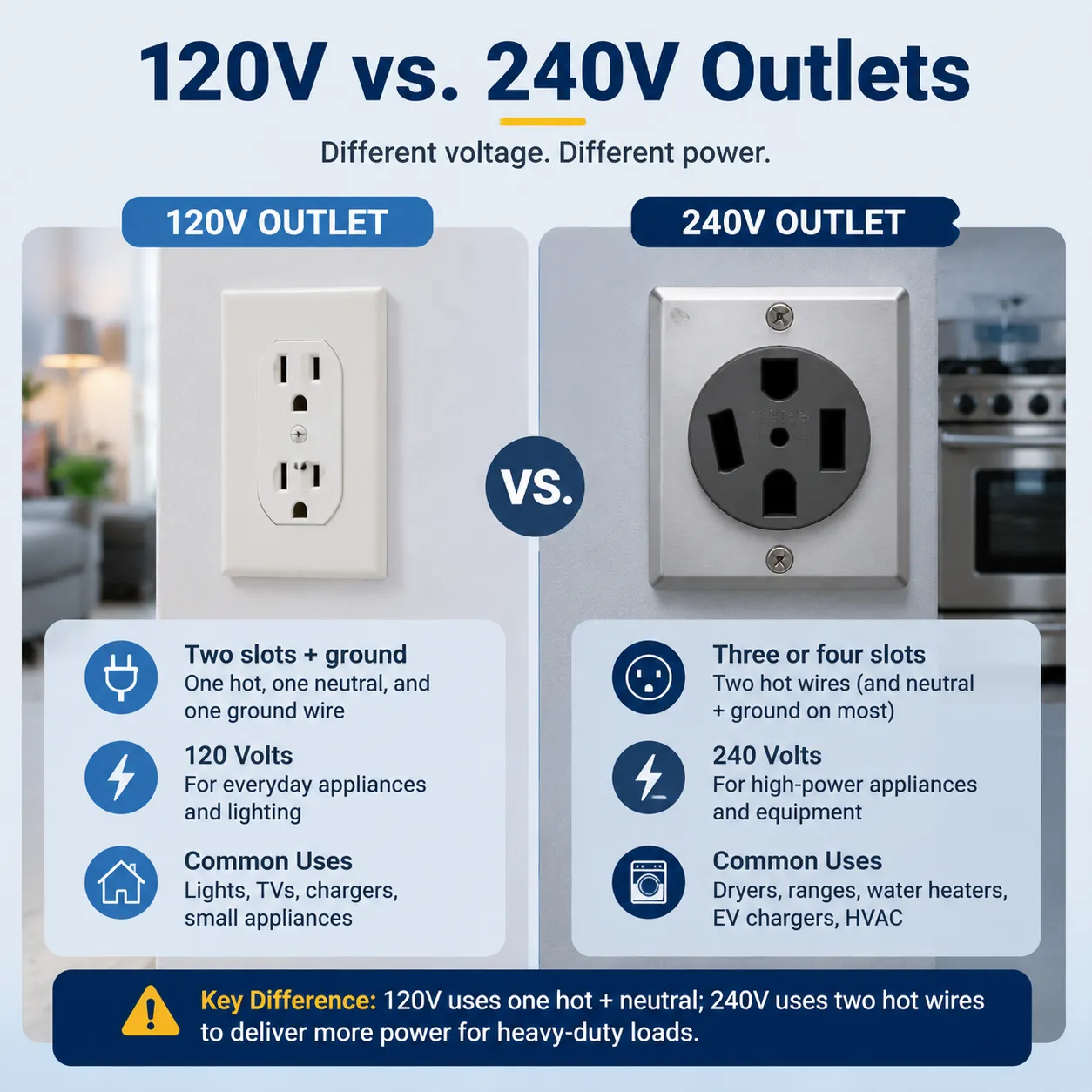
Summary: A regular 120-volt outlet is equipped with one hot and one neutral wire that facilitates the transmission of the correct current for household lighting, outlets, and many smaller electronic devices. At the same time, a 240-volt outlet connects two hot wires, each of which has a 120-volt electrical current but is 180 degrees apart from the other wire in terms of phase. The two types of outlets have different physical characteristics, with a 120-volt outlet featuring two slots positioned vertically and a circular hole designed to facilitate grounding, while a 240-volt outlet has multiple designs depending on the amperage and the type of device; for instance, the NEMA 14-30 and the NEMA 14-50 are the oldest outlets used in homes for electric ovens and EV chargers respectively. Voltages, ammeters, wire thickness, circuit breaker, and outlet types must correlate with each other since it would be dangerous to try plugging a device designed for 240 volts into an outlet designed for 120 volts.
What 120 Volts and 240 Volts Actually Mean in a Residential Electrical System
In North America, the utility transformer supplying a home gives a split-phase 240-volt power supply. The secondary winding of the transformer has a centre tap and is grounded at the service entrance to create a neutral point. The voltage differences between either of the hot legs with respect to the neutral are both 120 volts. The voltage between the two hot legs is 240 volts. This is not a matter of two independent voltages; rather, it is the single winding of a transformer that has a tap at its centre. The reason why there is 240 volts between the hot legs is that they are 180 degrees out of phase – when one leg is at +120 volts rated to the neutral, the second hot leg is at -120 volts, which provides a total voltage difference of 240 volts. This way, the clever design achieves both 120 volts and 240 volts available through the same transformer, along the way achieving the same three-wire service drop that every home uses. The NFPA with help of NEC has developed the standards for the installation and protection of these two types of voltages.
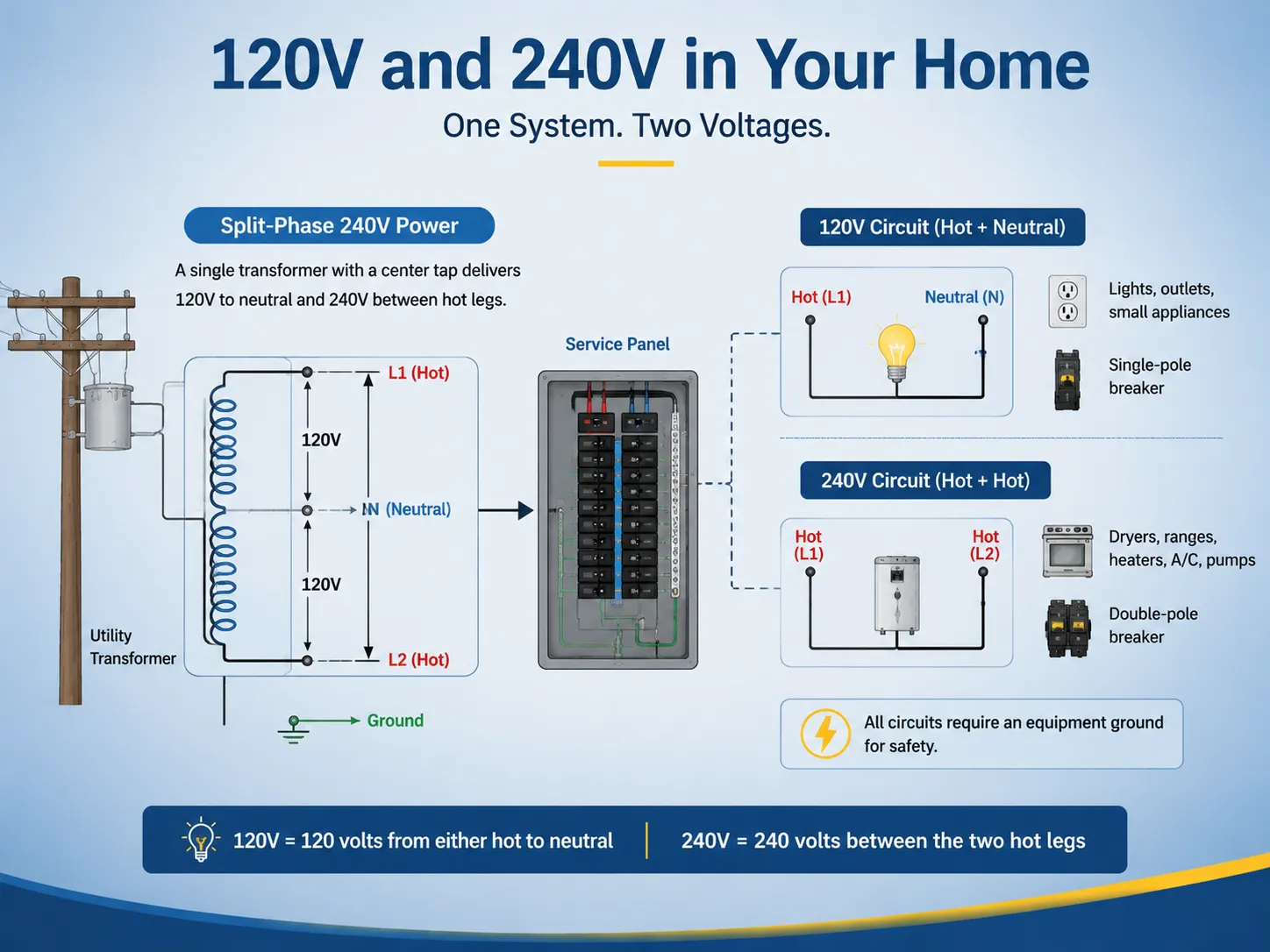
A 120-volt system consists of a hot wire and a neutral wire. The hot wire connects to a single pole circuit breaker in the electrical panel and electricity flows from the breaker through the hot wire to the load and returns to the panel via the neutral wire. This is the basic circuit used to power lights, common receptacles, and small devices. On the other hand, a 240-volt system includes two hot wires; one from each bus bar in the electrical panel. The two hot wires are connected to a double pole breaker that takes up two adjacent slots in the panel.
In the power supply process, the electricity flows through one hot wire, through the load, and returns via the other hot wire. The presence of a neutral wire could vary depending on the type of power supply used; for example, in a pure 240-volt appliance such as a baseboard heater or pump, no neutral wire is needed, while in 120-240-volt appliances like electric stoves and dryers the neutral is used for controlling the 120-volt components. The equipment grounding should be present in all such cases. For a complete explanation of how household voltage compares internationally, our guide on UK voltage vs US voltage explains the historical reasons for the different standards and what they mean for appliances and safety.
Physical Differences: How to Identify a 120V Outlet vs. a 240V Outlet
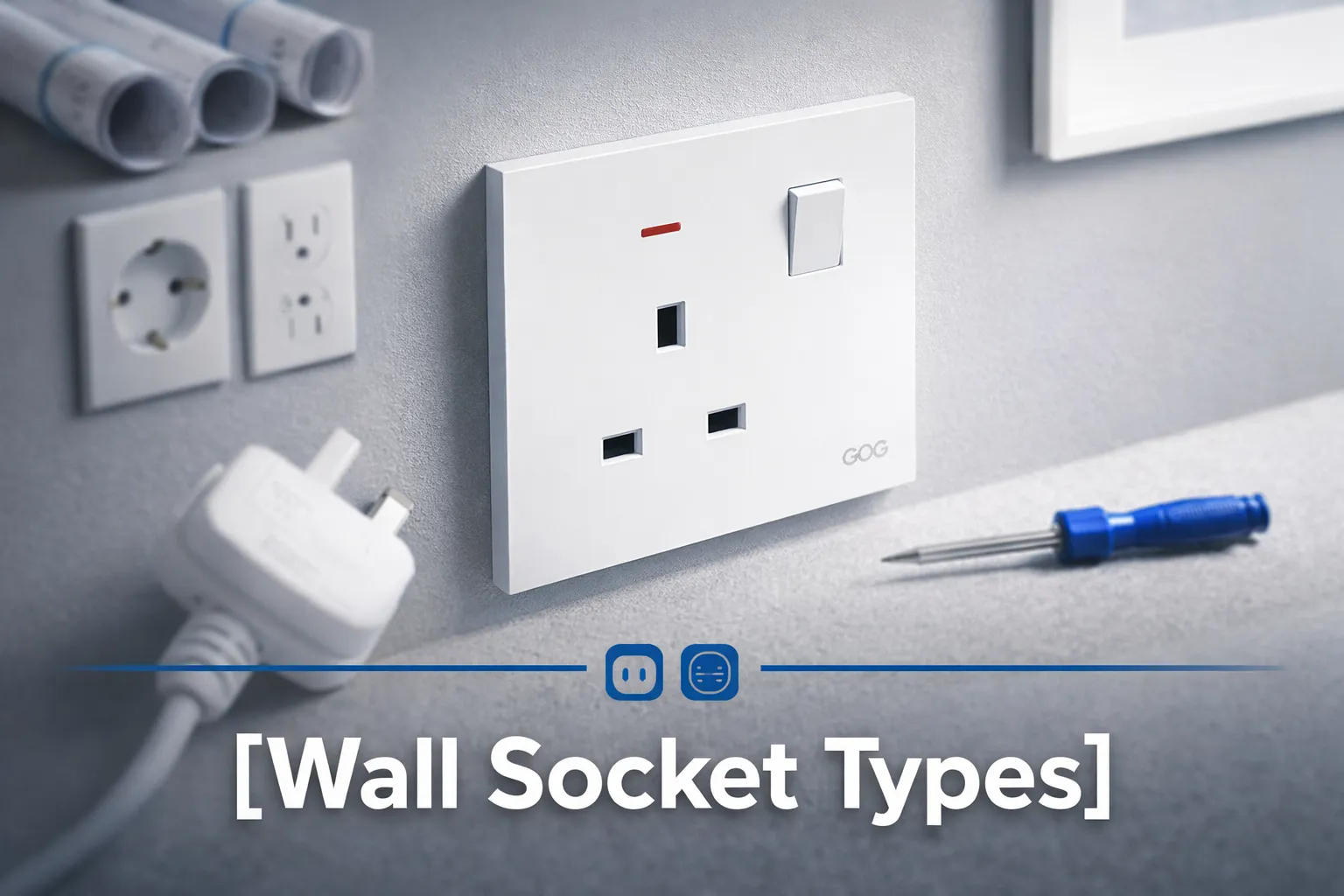
A 120‑volt outlet and a 240‑volt outlet are physically distinct, and the difference is immediately visible once you know what to look for. The table below summarises the key identifying features of the most common residential configurations.
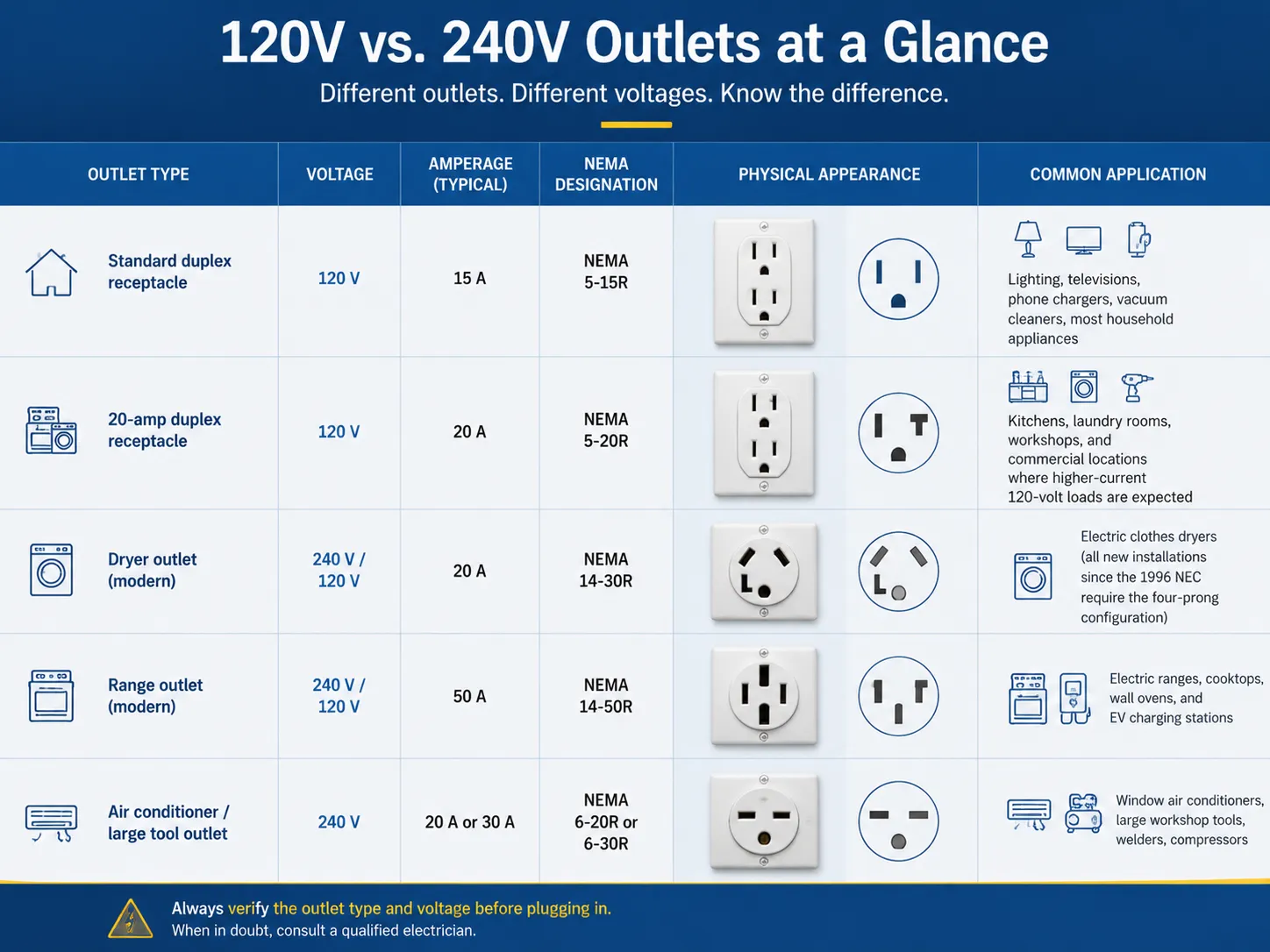
| Outlet Type | Voltage | Amperage (Typical) | NEMA Designation | Physical Appearance | Common Application |
|---|---|---|---|---|---|
| Standard duplex receptacle | 120 V | 15 A | NEMA 5‑15R | Two vertical slots (one narrow hot, one wide neutral) and a round ground hole. The familiar outlet on every wall. | Lighting, televisions, phone chargers, vacuum cleaners, most household appliances |
| 20‑amp duplex receptacle | 120 V | 20 A | NEMA 5‑20R | Identical to the 5‑15R, but the neutral slot is T‑shaped to accept a 20‑amp plug with a horizontal neutral blade. A 15‑amp plug fits; a 20‑amp plug requires the T‑slot. | Kitchens, laundry rooms, workshops, and commercial locations where higher‑current 120‑volt loads are expected |
| Dryer outlet (modern) | 240 V / 120 V | 30 A | NEMA 14‑30R | Four slots: two hots, one neutral (L‑shaped), and one ground (round). The plug is large and distinctive. | Electric clothes dryers (all new installations since the 1996 NEC require the four‑prong configuration) |
| Range outlet (modern) | 240 V / 120 V | 50 A | NEMA 14‑50R | Four slots, similar to the 14‑30R but larger. The same configuration is used for many Level 2 EV chargers. | Electric ranges, cooktops, wall ovens, and EV charging stations |
| Air conditioner / large tool outlet | 240 V | 20 A or 30 A | NEMA 6‑20R or 6‑30R | Two horizontal slots and a round ground. No neutral — this is a pure 240‑volt configuration. | Window air conditioners, large workshop tools, welders, compressors |
Can You Use a 120V Outlet for a 240V Appliance? (And Vice Versa)
The answer is simple: no. You cannot use a 120‑volt outlet for a 240‑volt appliance or vice versa without it being specifically designed to operate using both voltages (i.e., something such as a modern phone charger or laptop charger compatible with 100–240 V). So, when a 240‑volt appliance is plugged into a 120‑volt outlet, it does not get sufficient voltage to work as intended: a heating appliance will produce about a quarter of its rated heat (power is proportional to voltage squared), and a motor may not turn or may overheat. When a 120‑volt appliance is plugged into a 240‑volt outlet with a plug adapter, it is going to get twice its rated voltage and is going to get burned out within a few seconds, probably with fire and/or an explosion. Additionally, the design of the plugs and sockets is made specifically to avoid this possibility.
There is a special case in which a single 240-volt circuit can supply both 240-volt and 120-volt loads at the same time. This is useful for electric ranges to supply the heating units with 240 volts while providing the timer and light with 120 volts. The only difference here is that the 120-volt load is connected through one leg and the neutral wire whereas the 240-volt load is connected through the two legs. The outlet rating for 240 volts is important because it should match the circuit breaker rating and the wire size. Having a 240-volt circuit with an outlet on a 120-volt circuit is a code violation since it can lead to electrical fires. For help with the electrical load calculation that determines the correct circuit and breaker size, our guide on how many watts an outlet can handle provides the formulas and the continuous‑load rules.
Installation Differences: Wire Gauge, Breaker, and Box Requirements
Installing a 120‑volt outlet and installing a 240‑volt outlet are fundamentally different jobs, even though both involve connecting wires to a receptacle. The table below summarises the key installation differences for standard residential circuits.
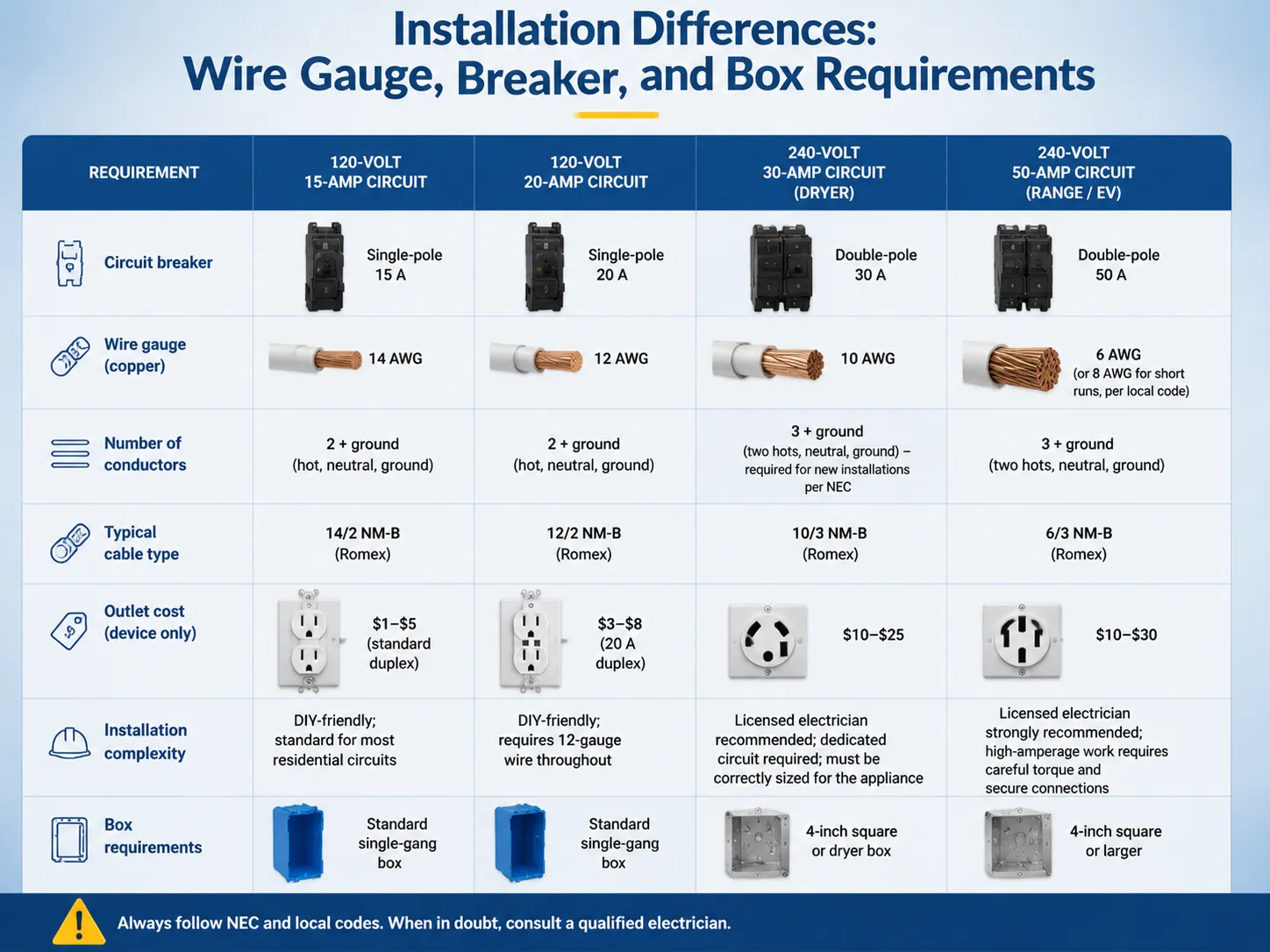
| Requirement | 120‑Volt, 15‑Amp Circuit | 120‑Volt, 20‑Amp Circuit | 240‑Volt, 30‑Amp Circuit (Dryer) | 240‑Volt, 50‑Amp Circuit (Range / EV) |
|---|---|---|---|---|
| Circuit breaker | Single‑pole 15 A | Single‑pole 20 A | Double‑pole 30 A | Double‑pole 50 A |
| Wire gauge (copper) | 14 AWG | 12 AWG | 10 AWG | 6 AWG (or 8 AWG for short runs, per local code) |
| Number of conductors | 2 + ground (hot, neutral, ground) | 2 + ground | 3 + ground (two hots, neutral, ground) — required for new installations per NEC | 3 + ground (two hots, neutral, ground) |
| Typical cable type | 14/2 NM‑B (Romex) | 12/2 NM‑B | 10/3 NM‑B | 6/3 NM‑B |
| Outlet cost (device only) | $1–$5 (standard duplex) | $3–$8 (20 A duplex) | $10–$25 | $10–$30 |
| Installation complexity | DIY‑friendly; standard for most residential circuits | DIY‑friendly; requires 12‑gauge wire throughout | Licensed electrician recommended; dedicated circuit required; must be correctly sized for the appliance | Licensed electrician strongly recommended; high‑amperage work requires careful torque and secure connections |
Cost Differences: Purchase Price, Installation, and Operating Cost
When comparing a 120-volt outlet to a 240-volt outlet, the difference in cost will come mainly from installation and not from equipment. A typical 120-volt duplex outlet costs anywhere between $1 to $5, while a 240-volt NEMA 14-50 outlet costs between $10 to $30. The actual difference in cost comes in the labour and materials required to run the circuit. If a 120-volt circuit already exists, then only the device must be changed, a job that takes fifteen minutes. In contrast to this, a new 240-volt circuit being run from the panel to the appliance requires the electrician to install a double-pole breaker and to pull the proper gauge cable through the walls, ceilings or duct, and is quite a time-consuming task, taking two to four hours, costing around $300 to $800 for the installation. The running costs do not depend on the voltage, but rather on the amount of power used by the appliance. Thus, a 240-volt appliance does not necessarily cost more than a 120-volt appliance usage-wise since the electricity bill will depend on wattage consumed and on time of use, unless it is a case of paying for wrong current or appliance. For the same wattage, a 240-volt appliance uses half the current of the 120-volt one, resulting in a savings from voltage drop. Nevertheless, it does not make much of a difference in a household.
How to Know Which Voltage You Need for a Specific Appliance
The nameplate — either made of metal or plastic — displays the voltage required by the appliance. Specifically, the requested amount of voltage (which can be either 120 V, 240 V, or 120/240 V) as well as the amperage or wattage and frequency (60 Hz in North America) is mentioned. In addition to appearing on the nameplate installed at the back or side of the appliance, this information can also be found in an installation manual. In this regard, the plug of the appliance cord provides additional proof of the operating voltage — for instance, if the plug is NEMA 5‑15P, it means that the device requires 120 volts, and NEMA 14‑30P or 14‑50P plugs may require 240 volts. If the type of connection will not fit the outlet in the wall, it is prohibited to install any kind of adapter or modify it in some other way. Thus, if no universal plug can be fitted, an expert electrician has to install a new outlet on a dedicated circuit with the right wire gauge and breaker size. GOG Electric produces all types of 120 volt and 240 volt receptacles for the North American market and offers a considerable choice of products that include standard tamper‑resistant duplex outlets, GFCI receptacles, and heavy duty 240 volt receptacles with NEMA 6‑20, 14‑30, and 14‑50 configurations.
Frequently Asked Questions
What happens if you put 240V on a 120V outlet?
Connecting a 240-volt supply to a 120-volt outlet would necessitate that the wiring be rewired entirely because the socket and plug are incompatible. The outlet will be subjected to double the rated voltage. Every 120V appliance plugged into the outlet will undertake twice the rated voltage and will be destroyed almost instantly, and the appliances are highly likely to cause fire, explosion, or an electric shock. The circuit breaker might not even trip because the amount of current flowing might not exceed the rating of the breaker before the appliance is destroyed. This is a dangerous wiring mistake that should never take place.
Can you use a regular outlet for 240V?
The regular 120-volt outlet is for a maximum voltage of 125 volts only. It was not manufactured or rated for 240 volts. The insulations, the spacing of the outlets and the construction inside the outlet have all been designed keeping in mind largely the lower voltage. Using the standard duplex receptacle in 240 volt current would lead to the possibility of shock and fire. A circuit of 240 volt should have a specialized receptacle solely for that circuit.
How do I tell if my outlet is 120V or 240V?
Check the configuration of the outlet. The conventional 120-volt outlet comprises of two vertical slots and a round hole for ground (NEMA 5-15R). The 240-volt outlet has a different configuration and the regular types in homes are commonly NEMA 14-30R (Dryer) and NEMA 14-50R (Stove, EV charger) or NEMA 6-20R or 6-30R (Air conditioners, large appliances). In case you are not sure, measuring the voltage through the multimeter in “AC” mode between the two hot slots gives a reading of approximately 120 volts in case of the regular outlets and 240 volts if it is a 240-volt outlet. Only qualified personnel should take the measurements using proper equipment and safety measures.
Do all houses have a 240V outlet?
All homes in North America have 240 volts electrical service available at the main panel. However, not all of them have dedicated 240‑volt outlets. Electric ranges, electric dryers, and central air conditioning systems can be connected to a 240‑volt outlet installed for those purposes. On the other hand, homes with gas appliances may not be equipped with a dedicated 240‑volt outlet. The installation of a 240‑volt outlet is possible at any time provided that the electrical panel has the space and the capacity for the installed double‑pole circuit breaker.
References
- National Fire Protection Association (NFPA) — National Electrical Code (NEC) Articles 210 and 422. Requirements for branch circuits, receptacle ratings, and appliance circuits, including the specifications for 120‑volt and 240‑volt outlets.
- National Electrical Manufacturers Association (NEMA) — Straight‑Blade and Locking Receptacle Configurations. The defining standards for the physical configurations of 120‑volt and 240‑volt plugs and receptacles, including the NEMA 5‑15, 5‑20, 6‑20, 14‑30, and 14‑50 series.
- Leviton — Residential Receptacles: 120V and 240V Outlets. Manufacturer of North American wiring devices, with installation guides and product specifications for both voltage classes.
- Eaton — Wiring Device Selection for Residential and Commercial Applications. Manufacturer of receptacles, switches, and circuit breakers, with guidance on matching the outlet voltage and amperage to the circuit and the appliance.
The difference between a 120‑volt outlet and a 240‑volt outlet is not a subtle distinction. The voltage, amperage, conductor size, circuit breaker, outlet physical configuration, and even the physics determine the capability and positioning of the outlet. There is a 120-volt outlet for general loads such as lighting, TVs, and phone chargers, whereas for heavy-duty devices like a dryer, stove, refrigerator, or EV charger, a 240-volt outlet must be used. Incompatible plugs are a safety mechanism and should not be compromised through the use of an adapter. An outlet must correspond to the voltage, amperage, and loads it is rated for, and only then can the appliance work properly. GOG Electric produces both 120-volt and 240-volt outlets for the North American market that meet all applicable standards and regulations.