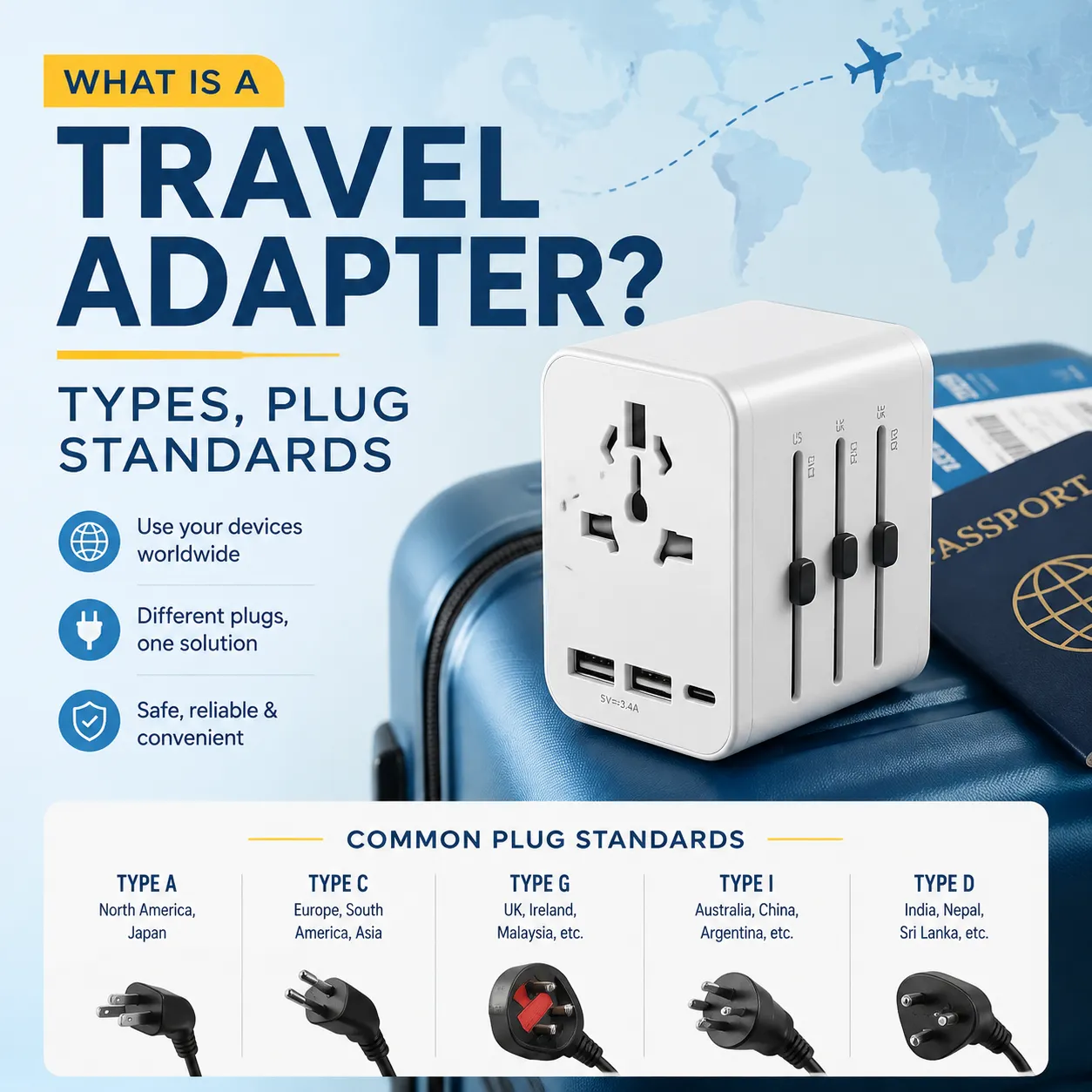
Al llegar a su hotel después de un vuelo largo, puede que esté deseando cargar su teléfono, solo para descubrir que el enchufe es totalmente diferente al que tiene. Las clavijas pueden ser redondas o triangulares, lo que genera confusión al intentar conectar su adaptador a la pared. Para eso sirven los adaptadores de viaje; le permiten usar el suministro eléctrico del país en el que se encuentra. Sin embargo, un adaptador no cambia el voltaje, solo adapta la forma física de su enchufe. En la guía a continuación, aprenderá todo lo que necesita saber sobre los adaptadores de viaje: qué hacen, cuándo necesita uno, qué tipos de enchufes existen y cómo elegir el adecuado para sus necesidades.
Respuesta rápida: Un adaptador de viaje se refiere a un pequeño conector utilizado para cambiar la configuración física del enchufe de su dispositivo para permitir que encaje en enchufes extranjeros. El adaptador de viaje solo cambia la configuración de las clavijas y no el voltaje. La Comisión Electrotécnica Internacional (IEC) reconoce un total de 15 tipos de enchufes internacionales. La mayoría de los viajeros deben usar un adaptador de viaje universal ($15-$35) que puede adaptar enchufes de los tipos A, B, C, E/F, G e I, ya que son suficientes para más de 150 países. Si el dispositivo funciona con un solo nivel de voltaje (por ejemplo, un secador de cabello de 120V de EE. UU.) y se viaja a un país con voltaje de 220V, es recomendable usar un convertidor de voltaje junto con el adaptador. No es necesario un convertidor de voltaje si el dispositivo opera en dos niveles de voltaje (100 – 240 voltios según lo especificado en el cargador del dispositivo).
¿Qué es un adaptador de viaje?
Un adaptador de viaje, también conocido como adaptador de enchufe, adaptador de enchufe de viaje o adaptador de corriente internacional, es esencialmente un dispositivo que le permite conectar su equipo eléctrico a una toma de corriente en otro país. Conecta el enchufe de su dispositivo con el conjunto adecuado de clavijas que pueden conectarse a la toma de corriente del lugar al que va.
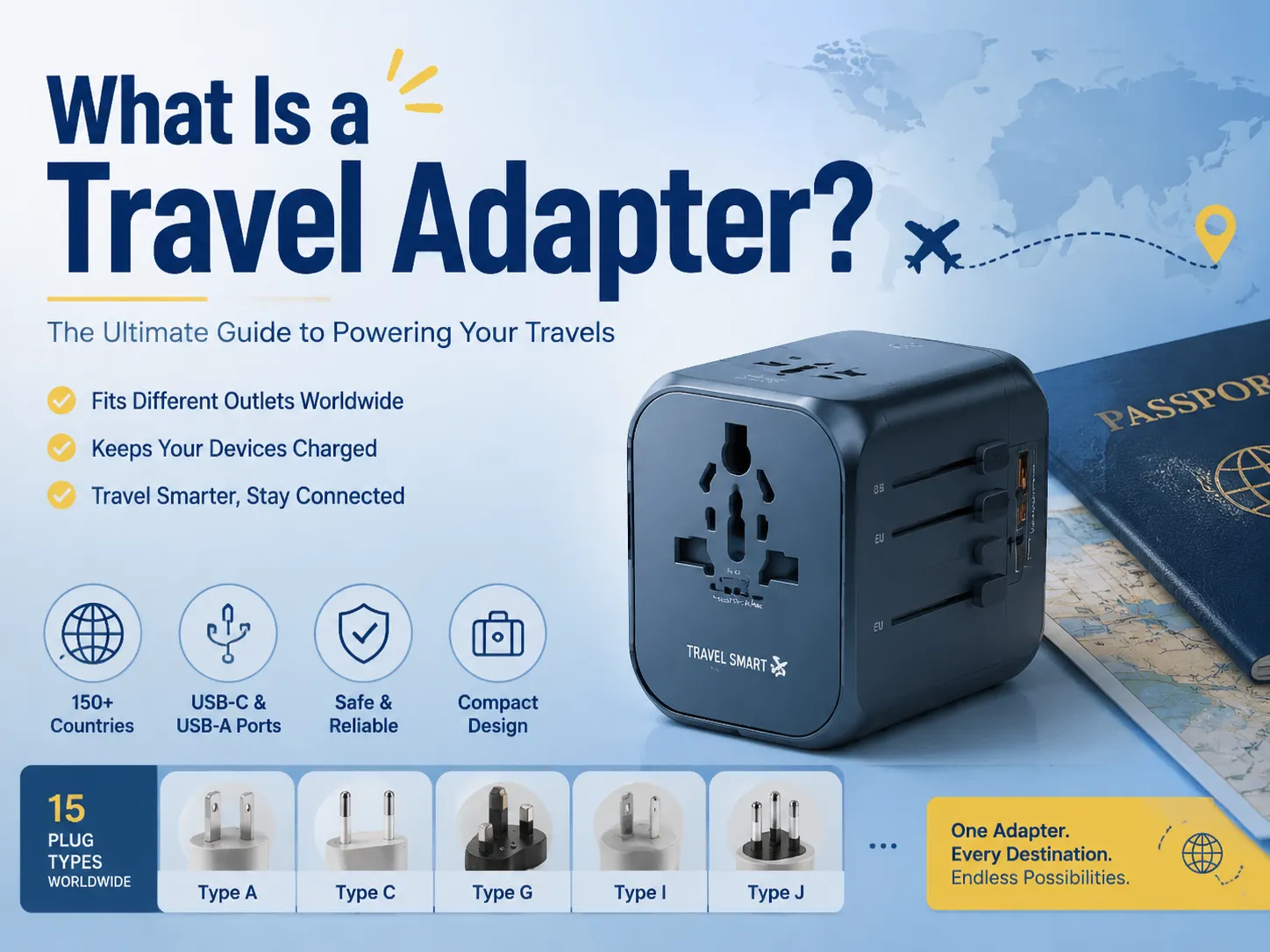
El punto importante a destacar es cómo no funciona un adaptador de viaje: no modifica el voltaje, la frecuencia ni la intensidad de la electricidad en la pared. El adaptador de viaje es simplemente un dispositivo diseñado para cambiar la conexión física — cambiando la forma de las clavijas, el espaciamiento y la conexión a tierra, para que el enchufe del dispositivo encaje en el tomacorriente. Para una comprensión más profunda de por qué diferentes países desarrollaron diferentes diseños de enchufes en primer lugar, nuestro artículo sobre por qué diferentes países tienen diferentes tomas eléctricas cubre las razones históricas y técnicas detrás de esta fragmentación.
Existen diferentes variedades de adaptadores de viaje.
- Adaptador para un solo país – incluye un solo tipo de enchufe para una ubicación y es la opción más económica. Es perfecto para viajes a un solo país.
- Juego de adaptadores multinacionales – consiste en varios tipos de enchufes y tiene varios enchufes para diferentes regiones. Está diseñado para personas que viajan constantemente.
- Adaptadores de viaje universales: representan un dispositivo que incluye pines móviles libres adecuados para diferentes tipos de enchufes. Esta es una buena opción para la mayoría de los viajeros.
- Adaptador universal con puertos USB: similar al anterior pero con puertos USB incorporados.
- Adaptadores universales con opción de cambio de voltaje: incluye adaptación de enchufe y cambio de voltaje, y es el tipo de adaptador de viaje más voluminoso.
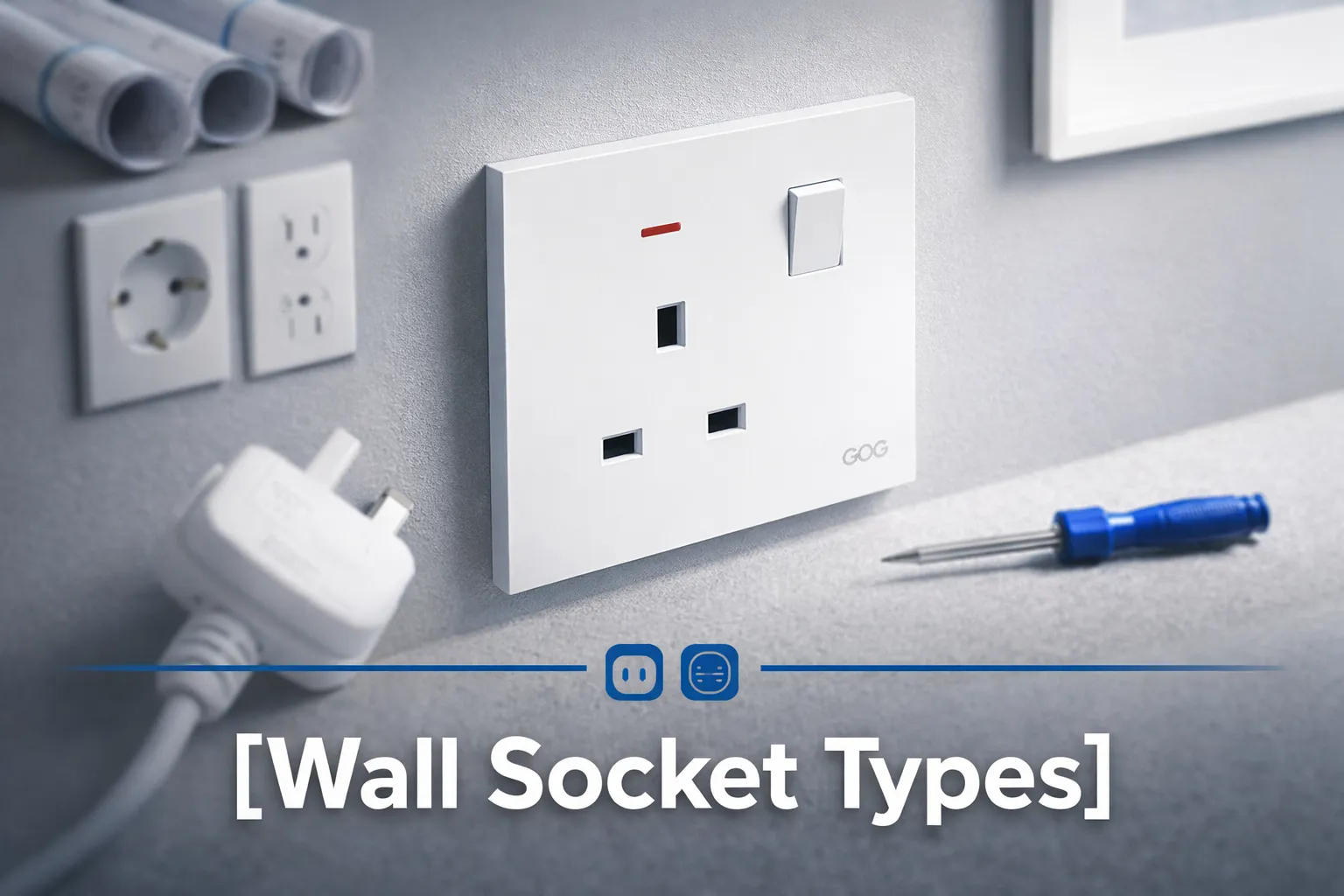
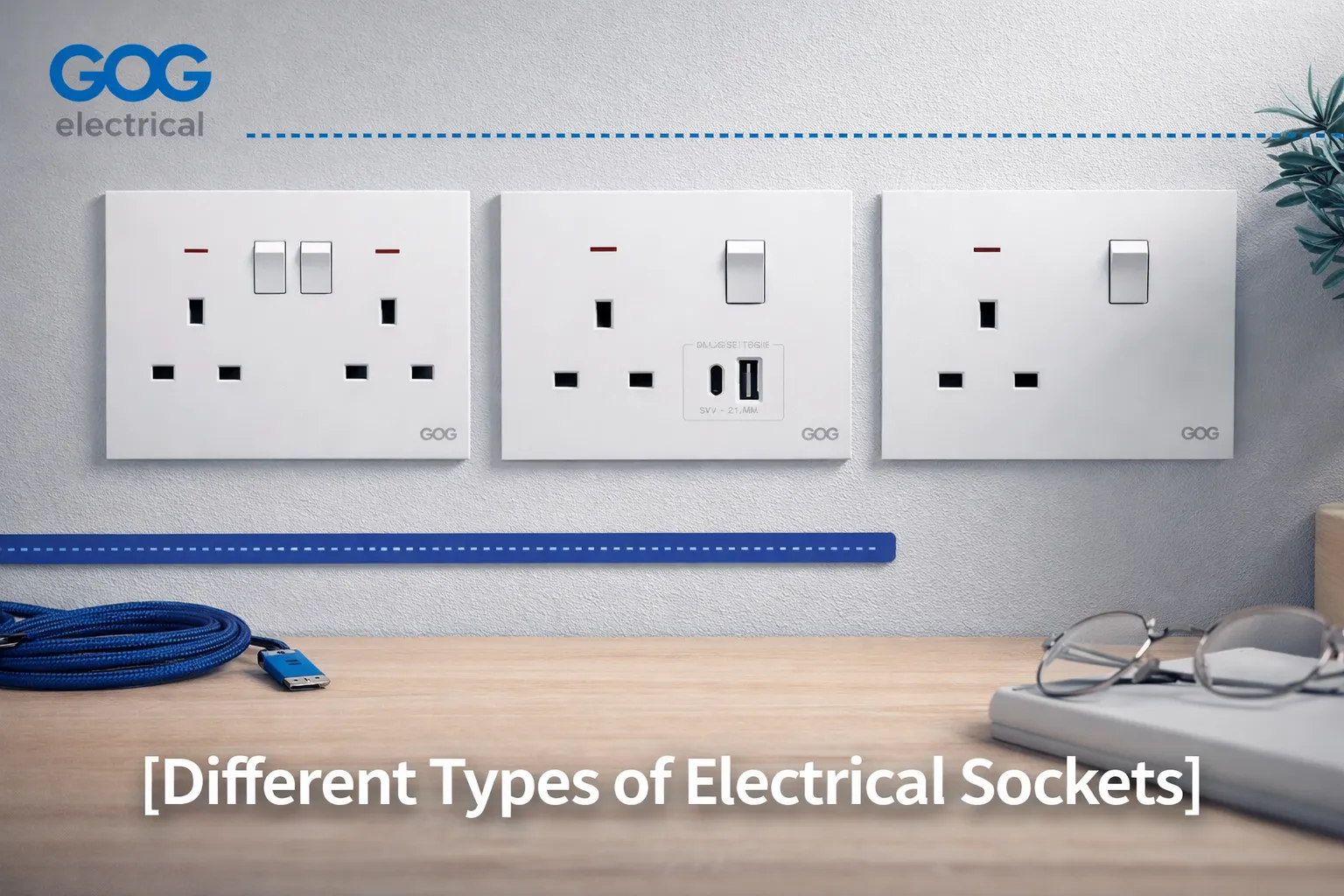
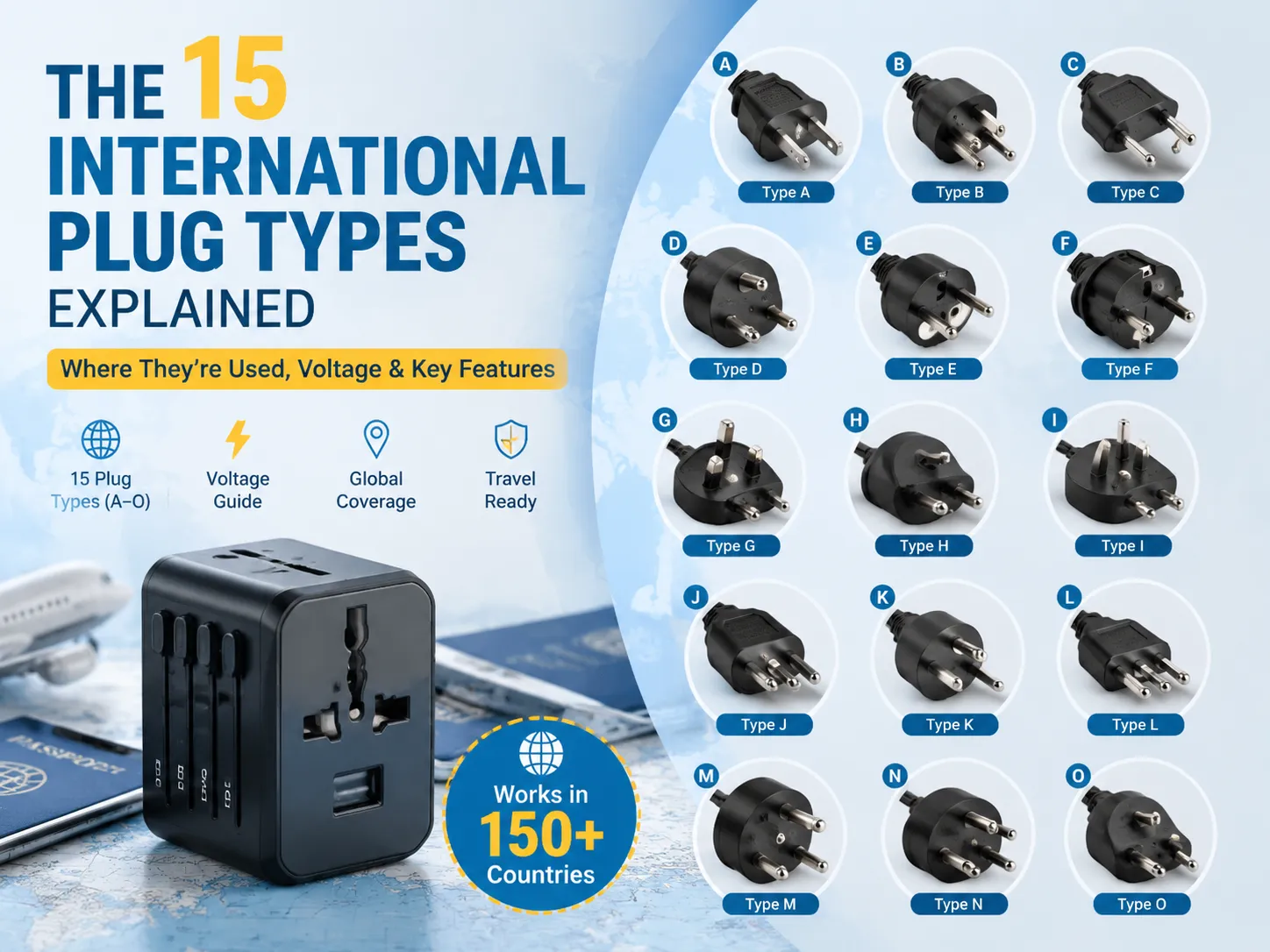
Según la información proporcionada por la International Electrotechnical Commission (IEC), existen 15 tipos de enchufes divididos en diferentes tipos y etiquetados de la A a la O. Para entender cómo estos tipos de enchufes se corresponden con las configuraciones de tomas de pared, nuestra guía sobre diferentes tipos de tomas eléctricas proporciona una referencia completa.
Adaptador de viaje vs. Convertidor de voltaje: La diferencia crítica
Esta es la única distinción que debe entenderse antes de comenzar a viajar, y es responsable de más dispositivos dañados y vacaciones arruinadas que cualquier otro error eléctrico cometido durante los viajes.
| Característica | Adaptador de viaje | Convertidor / Transformador de voltaje |
|---|---|---|
| Qué hace | Cambia la forma del enchufe para ajustarse a la toma extranjera | Cambia el voltaje (por ejemplo, 220V → 110V) |
| ¿Convierte voltaje? | No | Sí |
| ¿Convierte frecuencia? | No | No (la mayoría de los modelos para consumidores) |
| Costo típico | $8–$35 | $35–$120 |
| Tamaño / peso | Pequeño, ligero (2–5 oz) | Más pesado y voluminoso (8–20 oz) |
| Mejor para | Dispositivos de doble voltaje (teléfonos, laptops, cámaras) | Dispositivos de voltaje único (secadores de cabello, rizadores, algunas máquinas CPAP) |
| Capacidad de potencia | Hasta el máximo de la toma (usualmente 10–15A) | Típicamente 200W–2000W (verifique la clasificación cuidadosamente) |
Cómo saber si su dispositivo es de doble voltaje
El primer paso para determinar si su aparato es de doble voltaje es revisar la información impresa en la etiqueta del adaptador de corriente. Las siguientes indicaciones significan que el aparato es de doble voltaje y puede usarse casi en cualquier lugar sin necesidad de un convertidor de voltaje.
Por ejemplo, podría ver algo como “INPUT: 100–240V, 50/60Hz”. Esto significa que puede usar el aparato solo con un adaptador cuando viaje por el mundo. Si ve este tipo de indicación en el adaptador de corriente “INPUT: 120V, 60Hz” o “INPUT: 230V, 50Hz”, significa que tiene un aparato de voltaje único. El aparato no puede operarse de forma segura en un país con diferente voltaje sin un convertidor de voltaje.
⚠ Advertencia: Conectar un dispositivo de voltaje único clasificado para 120V en una toma de 220V (incluso usando un adaptador de viaje) podría causar la destrucción instantánea del dispositivo y posiblemente iniciar un incendio, electrocutarlo o disparar un interruptor. El adaptador puede permitir que el enchufe encaje físicamente en la toma, pero se entregarán 220V directamente a su dispositivo. Siempre lea la etiqueta de voltaje en los dispositivos para evitar accidentes.
Los 15 tipos internacionales de enchufes explicados
La IEC (International Electrotechnical Commission) introdujo 15 tipos de enchufes eléctricos, que incluyen enchufes conocidos como A a O. La tabla a continuación es la referencia completa para los diferentes tipos de enchufes y sus aplicaciones.
| Tipo de enchufe | Descripción del pin | Voltaje / Frecuencia | Principales países / regiones |
|---|---|---|---|
| Tipo A | 2 clavijas planas paralelas (sin conexión a tierra) | 100–127V / 50–60Hz | USA, Canadá, México, Japón, América Central |
| Tipo B | 2 clavijas planas + clavija redonda de tierra | 100–127V / 50–60Hz | USA, Canada, Mexico, Japan |
| Tipo C | 2 clavijas redondas (Europlug, sin conexión a tierra) | 220–240V / 50Hz | La mayor parte de Europa, Sudamérica, Asia, África |
| Tipo D | 3 clavijas redondas grandes en triángulo | 220–240V / 50Hz | India, Nepal, Sri Lanka, Namibia |
| Tipo E | 2 clavijas redondas + orificio de tierra (Francés) | 220–240V / 50Hz | Francia, Bélgica, Polonia, Eslovaquia, Túnez |
| Tipo F | 2 clavijas redondas + clips laterales (Schuko) | 220–240V / 50Hz | Alemania, España, Países Bajos, Rusia, Corea del Sur |
| Tipo G | 3 clavijas rectangulares en triángulo | 220–240V / 50Hz | Reino Unido, Irlanda, Singapur, Hong Kong, EAU, Malasia |
| Tipo H | 3 clavijas planas en forma de Y | 230V / 50Hz | Israel, Palestina |
| Tipo I | 2 clavijas planas anguladas + tierra opcional | 220–240V / 50Hz | Australia, Nueva Zelanda, China, Argentina |
| Tipo J | 3 clavijas redondas (tierra desplazada) | 230V / 50Hz | Switzerland, Liechtenstein |
| Tipo K | 2 clavijas redondas + clavija de tierra | 230V / 50Hz | Denmark, Greenland |
| Tipo L | 3 clavijas redondas en línea | 230V / 50Hz | Italia, Chile |
| Tipo M | 3 clavijas redondas grandes (como Tipo D, más grandes) | 220–240V / 50Hz | Sudáfrica, Botsuana, Lesoto |
| Tipo N | 3 clavijas redondas (2 + tierra) | 100–240V / 50–60Hz | Brasil, Sudáfrica |
| Tipo O | 3 clavijas redondas en triángulo | 220–240V / 50Hz | Tailandia |
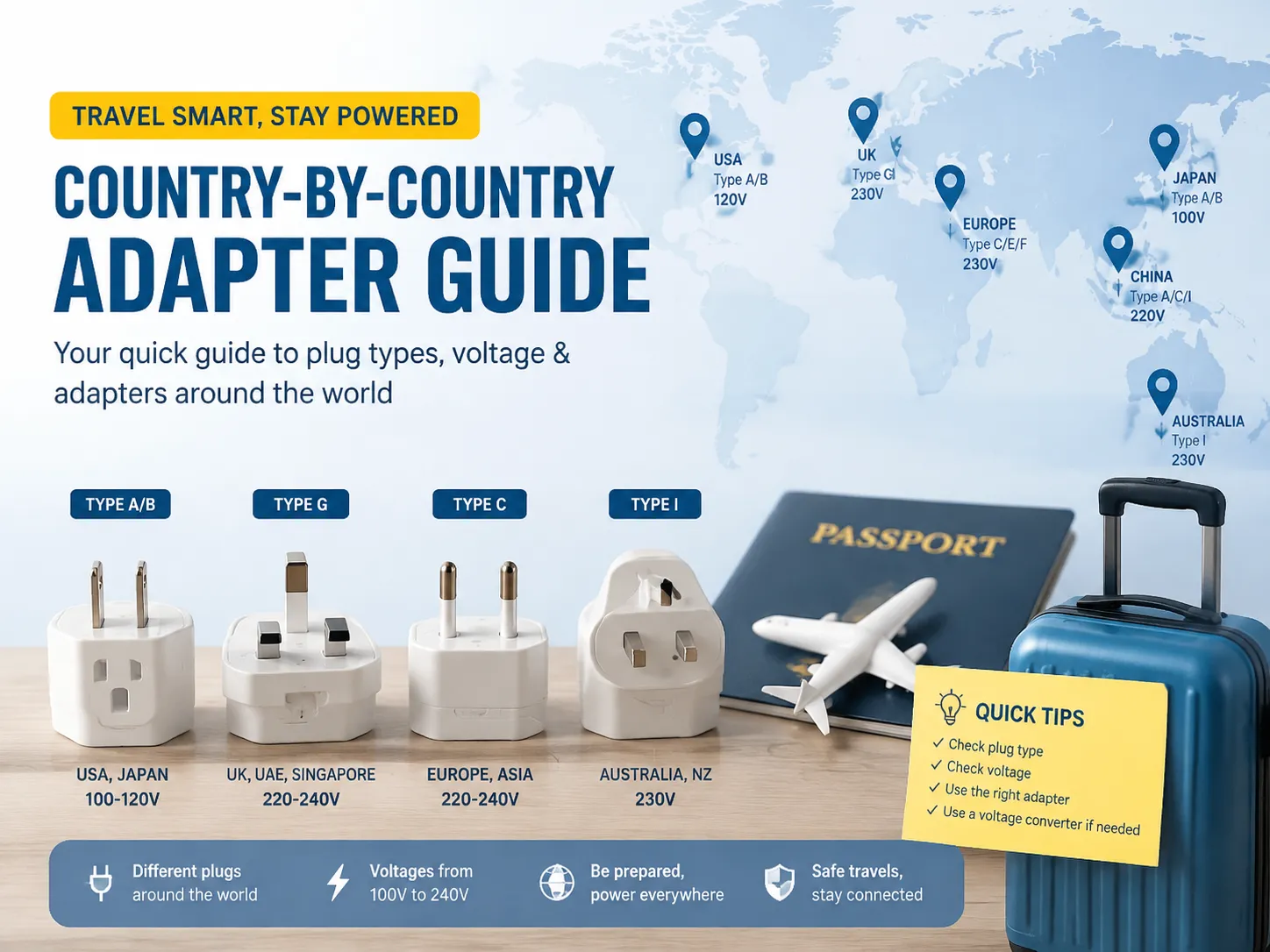
Para viajeros, los tipos más comunes que se encuentran son Tipo A/B (Norteamérica/Japón), Tipo C/E/F (Europa), Tipo G (Reino Unido y Commonwealth) y Tipo I (Australia/China). Un adaptador universal que cubra estos cuatro tipos de estándares funcionará en más de 150 países. Para una visión general de las principales categorías de enchufes, nuestro artículo sobre los cuatro tipos de enchufes eléctricos proporciona una referencia simplificada.
¿Cuándo Necesita un Adaptador de Viaje?
Un adaptador de viaje es imprescindible cuando la configuración del enchufe de su equipo difiere de los enchufes de la zona donde viaja. A continuación, las principales situaciones en las que necesita usar un adaptador de viaje:
Viajar de una zona de voltaje a otra
El mundo está clasificado en las siguientes zonas de voltaje: 100-127V (Norteamérica, partes de Japón y partes de Sudamérica) y 220-240V (Asia, Europa, África y Oceanía). Si viaja entre voltajes, probablemente se encontrará con enchufes completamente diferentes también.
Viajar dentro de una región de voltaje pero con diferentes tipos de enchufes
Incluso en la zona de 220-240V, hay muchos tipos de enchufes. Por ejemplo, el Reino Unido (Tipo G) y Europa continental (Tipo C/E/F) pertenecen a la misma clasificación de 230V, pero cuando va de Alemania al Reino Unido, necesitará usar un adaptador de viaje.
Viajar a países con tipos de enchufe especiales
Algunos países tienen diseños de enchufes únicos para esas naciones. India es un país con enchufe Tipo D, Sudáfrica tiene su Tipo M, Brasil es Tipo N e Israel pertenece a la categoría Tipo H. Incluso un enchufe universal puede no funcionar, así que asegúrese de que su adaptador de viaje incluya estos tipos únicos.
Cuando no está seguro de qué esperar en su destino
Algunos hoteles y aeropuertos proporcionan enchufes universales, pero no confíe en eso porque casas de huéspedes pequeñas y hoteles rurales pueden no tener un enchufe eléctrico que se adapte a su dispositivo. Siempre lleve un adaptador de viaje por si acaso.
Consejo:Si visita varios destinos en un solo viaje (por ejemplo, un recorrido por Europa que incluye Reino Unido y Suiza), sería mejor usar un adaptador universal en lugar de adaptadores individuales para cada país.
Guía de adaptadores país por país
Aquí hay una tabla de referencia rápida para destinos de viaje populares, que muestra qué tipo de enchufe necesitará y el voltaje local:
| Destino | Plug Type(s) | Voltaje | Frecuencia | ¿Se necesita adaptador desde EE. UU.? | ¿Se necesita adaptador desde el Reino Unido? |
|---|---|---|---|---|---|
| Estados Unidos | A, B | 120V | 60Hz | No | Sí (G → A/B) |
| Reino Unido | G | 230V | 50Hz | Sí (A → G) | No |
| Francia / Alemania / España | C, E, F | 230V | 50Hz | Sí (A → C/E/F) | Sí (G → C/E/F) |
| Italia | C, F, L | 230V | 50Hz | Sí (A → C/L) | Sí (G → C/L) |
| Suiza | C, J | 230V | 50Hz | Sí (A → J) | Sí (G → J) |
| Japón | A, B | 100V | 50/60Hz | No (el enchufe encaja) | Sí (G → A/B) |
| China | A, C, I | 220V | 50Hz | Sí (voltaje) | Sí (G → A/C/I) |
| Australia / Nueva Zelanda | I | 230V | 50Hz | Sí (A → I) | Sí (G → I) |
| India | C, D, M | 230V | 50Hz | Sí (A → D) | Sí (G → D) |
| Tailandia | A, B, C, O | 220V | 50Hz | El enchufe puede encajar (A/B) | Sí (G → C/A) |
| Brasil | C, N | 127/220V | 60Hz | Sí (A → N) | Sí (G → C/N) |
| Sudáfrica | M, N | 230V | 50Hz | Sí (A → M) | Sí (G → M) |
| EAU / Dubái | G | 220V | 50Hz | Sí (A → G) | No |
| Singapur | G | 230V | 50Hz | Sí (A → G) | No |
| Corea del Sur | C, F | 220V | 60Hz | Sí (A → C/F) | Sí (G → C/F) |
Nota importante: Algunos países (por ejemplo, Brasil, China y Tailandia) tienen diferentes tipos de enchufes que se utilizan según la región o la antigüedad del edificio. Por lo tanto, debe asegurarse del país de destino y sus requisitos.
Tipos de adaptadores de viaje en el mercado
No todos los adaptadores de enchufe de viaje están diseñados de la misma manera. Los diferentes tipos de adaptadores se enumeran a continuación con recomendaciones.
Adaptadores de enchufe para un solo país
El tipo más simple y económico, para usar en un destino en particular únicamente. Cuesta entre 5 y 12 USD y es más adecuado para viajar a un solo país. Muchos hoteles también los tienen disponibles para préstamo, pero no se debe depender de esto.
Adaptadores de viaje universales (todo en uno)
El tipo más utilizado y popular. Un dispositivo equipado con varios pines retráctiles que se adaptan a 4-6 tipos de enchufes. Casi todos los dispositivos modernos también cargan dispositivos LED y tabletas a través del puerto USB. Los precios fluctúan entre 15 y 40 USD. Las marcas populares incluyen Epicka, TESSAN, Ceptics y OREI.
Kits de adaptadores de enchufe
Un enchufe con muchos adaptadores en un solo estuche, además de un adaptador físico que recibe un tipo de enchufe. Las marcas populares de kits de enchufes son Ceptics y Kensington, entre otras. Este tipo se recomienda para quienes viajan con frecuencia y necesitan adaptadores de repuesto, además de tener algunos tipos de enchufe no cubiertos por adaptadores universales (como D, M o N).
Adaptadores con convertidores de voltaje
Este tipo puede adaptar un enchufe y convertir el voltaje (de 220V a 110V). Son más grandes y costosos (40-120 USD) pero necesarios para viajeros con dispositivos de un solo voltaje (por ejemplo, un secador de pelo). Las marcas BESTEK y TESSAN producen conjuntos muy útiles. Una cosa más: asegúrese de verificar la potencia nominal, ya que generalmente puede ser entre 200W y 500W, lo cual no es suficiente para un secador de pelo con la potencia adecuada (1500 W o más).
Adaptadores de viaje inteligentes con USB-C PD
El tipo más nuevo fabricado por las siguientes marcas – Anker y Zendure. Todos los dispositivos muestran USB PD (también conocido como USB Power Delivery) de alrededor de 65-75 vatios, lo que permite la carga rápida de laptops y dispositivos conectados al mismo tiempo a través de varias conexiones USB. Para viajeros que necesitan cargar teléfonos y laptops vía USB, nuestro Guía de enchufes para cargadores USB cubre las especificaciones clave a considerar.
Cómo elegir el adaptador de viaje adecuado
Con tantas opciones en el mercado, aquí están los factores clave para evaluar:
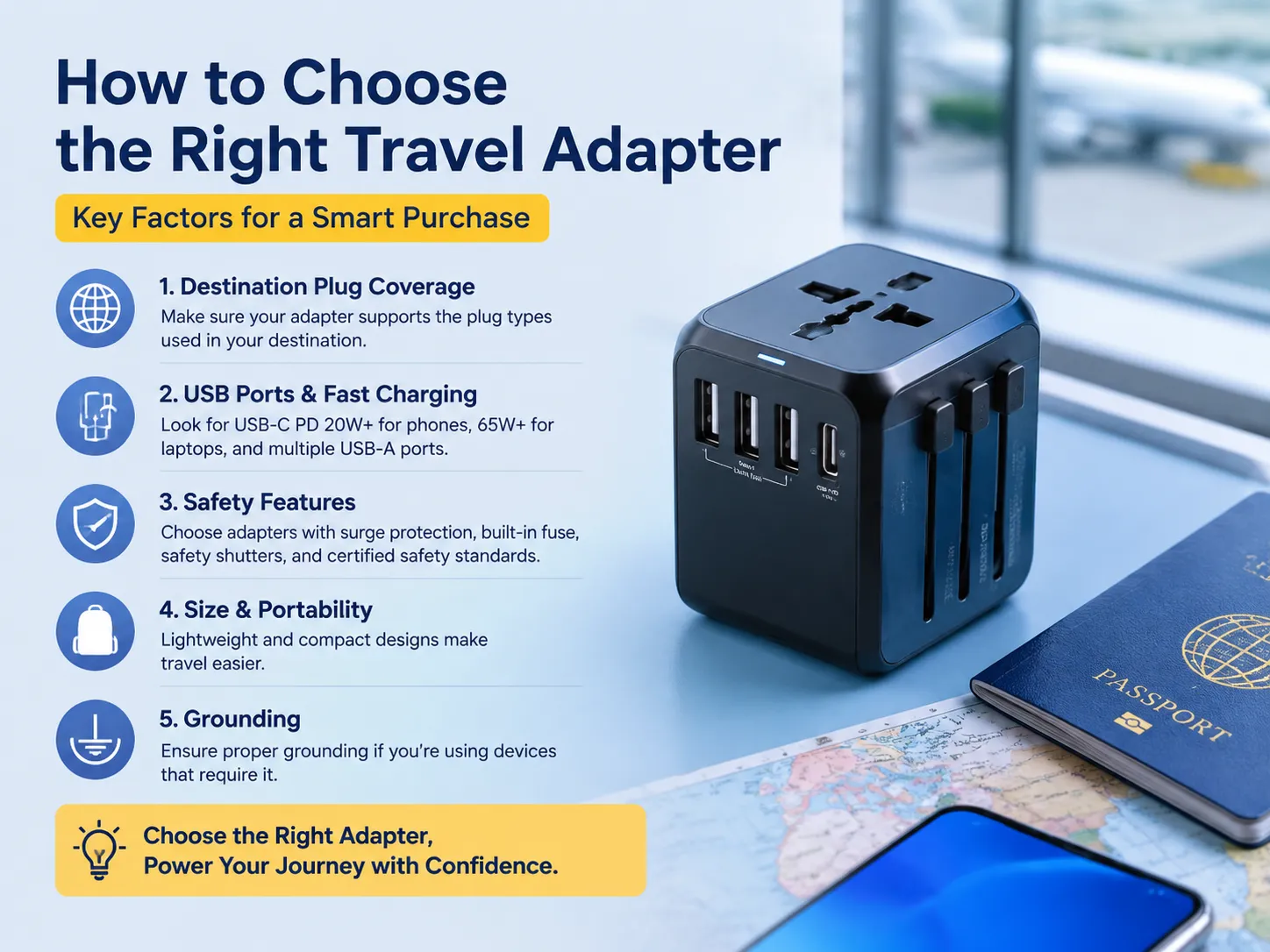
Cobertura de enchufes del destino
Antes de realizar una compra, primero debe identificar los tipos de enchufes en el país al que viaja (ver tabla arriba). Después de eso, debe asegurarse de que un adaptador coincida con esos tipos. Generalmente, los adaptadores universales son compatibles con los tipos A, B, C, E/F, G e I; pero varios tipos, como D (India), M (Sudáfrica) y N (Brasil), tienden a ser olvidados. En caso de que viaje a uno de esos países, asegúrese de revisar la lista de adaptadores de antemano o de comprar un adaptador adicional para un país específico.
Puertos USB y carga rápida
Si va a cargar teléfonos, tabletas o laptops, busque un adaptador con puertos USB integrados. Especificaciones clave a verificar:
| Característica | Qué buscar |
|---|---|
| USB-C Power Delivery | 20W+ para teléfonos, 65W+ para laptops |
| Puertos USB-A | 2+ puertos para carga simultánea de múltiples dispositivos |
| Salida total | Verifique la potencia combinada — algunos adaptadores limitan la potencia cuando se usan todos los puertos |
| Soporte Quick Charge | QC 3.0 o QC 4+ para dispositivos Android compatibles |
Características de seguridad
Busque adaptadores que cuenten con las siguientes certificaciones y características:
- Protección contra sobretensiones — protege los dispositivos contra picos de voltaje (común en edificios antiguos ubicados en países en desarrollo)
- Fusible integrado — clasificado en 6A o 10A; se funde en caso de exceso de corriente, protegiendo los dispositivos
- Obturadores de seguridad — previenen el contacto no deseado ya que cubren los orificios vacíos de los pines
- Carcasa ignífuga — usualmente hecha de policarbonato o ABS V-0
- Certificaciones — CE, FCC, RoHS y preferiblemente BS 8546
Tamaño y portabilidad
Cuando viaja solo con una mochila y lo esencial, cada gramo cuenta. Los adaptadores universales más livianos pesan menos de 85 gramos, lo cual es muy ligero en un contexto de viaje. Sin embargo, los adaptadores más pesados con convertidores de voltaje pesan entre 225 y 565 gramos. Por eso es importante verificar las dimensiones porque no todos encajan perfectamente en otros enchufes.
Puesta a tierra
Algunos adaptadores mundiales no tienen puesta a tierra; en cambio, solo tienen dos pines. Esto ofrece una ventaja cuando usa estos dispositivos con cargadores de teléfonos y laptops, que están doblemente aislados y no requieren puesta a tierra. Sin embargo, esto se convierte en una gran desventaja cuando su dispositivo necesita estar conectado a tierra. Asegúrese de obtener el tipo de adaptador que indique explícitamente que tiene puesta a tierra para todo tipo de enchufes.
Guía de precios de adaptadores de viaje: qué esperar
Los precios de los adaptadores de viaje varían ampliamente según el tipo, las características y la marca. Aquí hay un desglose por categoría:
| Tipo de adaptador | Rango de precios | Marcas y modelos populares | Mejor Para |
|---|---|---|---|
| Adaptador de enchufe para un solo país | $5–$12 | OREI, Ceptics tipo único | Viajes a un solo país |
| Adaptador universal básico (sin USB) | $10–$18 | OREI Universal, Ceptics básico | Viajeros con presupuesto limitado que usan cargadores USB |
| Adaptador universal con puertos USB-A | $15–$30 | Epicka TA-105 ($19.99), TESSAN ($19.99–$27.30) | La mayoría de los viajeros |
| Adaptador universal con USB-C PD | $25–$45 | Ceptics 70W ($31.99), Anker Nano ($25.99) | Carga de portátil + teléfono |
| Universal premium con PD de 65W+ | $45–$95 | Zendure Passport III ($69.99), MOMAX 170W ($67.93), TA-105 Max ($59.99) | Viajeros de negocios, nómadas digitales |
| Kit de adaptador modular (9+ enchufes) | $25–$40 | Kit Ceptics World ($35), Kensington | Viajeros frecuentes a múltiples países |
| Adaptador + convertidor de voltaje combinado | $35–$120 | BESTEK 250W ($55–$65), TESSAN 350W ($40–$50) | Viajeros con dispositivos de voltaje único |
Precio por región (adaptadores para un solo país)
| Región de destino | Tipo de enchufe necesario | Precio por adaptador individual |
|---|---|---|
| Europa (Tipo C/E/F) | C, E o F | $5–$10 |
| Reino Unido / Singapur / Hong Kong (Tipo G) | G | $6–$12 |
| Australia / Nueva Zelanda / China (Tipo I) | I | $6–$12 |
| India (Tipo D) | D | $8–$15 |
| Sudáfrica (Tipo M) | M | $8–$15 |
| Brasil (Tipo N) | N | $8–$15 |
| Japón (Tipo A/B) | A o B | $5–$10 |
Consejo: Para la mayoría de los viajeros, un adaptador universal con carga USB-C, con un precio entre $20 y $35, ofrece la mejor opción. El TA-105 de Epicka ($19.99) y el adaptador universal de TESSAN ($19.99-$27.30) son los mejor valorados en ese rango y pueden usarse en más de 150 países. Si necesita un dispositivo que pueda cargar un portátil rápidamente, puede optar por los adaptadores Ceptics 70W ($31.99) o Zendure Passport III ($69.99).
Consejos de seguridad: no dañe sus dispositivos
Usar un adaptador de viaje de forma incorrecta puede arruinar sus dispositivos, disparar el circuito en su hotel o incluso causar un incendio. Observe las siguientes reglas de seguridad:
Verifique primero la compatibilidad de carga
Antes de conectar cualquier cosa, revise el voltaje indicado en el cargador de su dispositivo. Si indica “100–240V”, puede usar solo un adaptador sin problemas. Sin embargo, si indica “120V only” (o “230V only”) y la toma tiene un voltaje diferente, deberá usar un convertidor de voltaje en lugar de solo un adaptador.
Nunca exceda la corriente nominal del adaptador
La mayoría de los adaptadores de viaje tienen una capacidad de 10A o 15A. La energía suministrada estará en el rango de 230-3450 vatios, suficiente para cargar teléfonos, computadoras o cámaras. Sin embargo, dispositivos de alta potencia como secadores de cabello (alrededor de 1500-2000W), hervidores eléctricos (1500-3000W) y calefactores no deben cargarse con un adaptador de viaje. De lo contrario, puede fundirse o disparar el circuito. Los aparatos de alta potencia siempre deben conectarse a una toma correcta y dedicada.
Tenga cuidado con las imitaciones
Se pueden encontrar fácilmente en Internet muchas imitaciones económicas de adaptadores. Generalmente están fabricados con materiales de baja calidad, no tienen protección contra sobretensiones y no están certificados. Vale la pena gastar un poco más y comprar dispositivos de fabricantes reputados (como Epicka, TESSAN, Ceptics, OREI, Anker y Zendure), además de verificar los certificados en la página web del fabricante.
No conecte adaptadores entre sí
Si conecta un adaptador a otro adaptador, luego a una regleta y después a la toma, los dispositivos seguramente fallarán y existe riesgo de incendio. Por lo tanto, si necesita más enchufes, utilice una regleta de viaje limitada a un solo adaptador, pero no múltiples adaptadores.
Tenga cuidado con el sobrecalentamiento
Si un adaptador está muy caliente después de haber sido usado, desenchúfelo. Esto significará que hay una conexión incorrecta, un circuito sobrecargado o un adaptador defectuoso. Aunque es normal que se calienten mientras cargan un teléfono, no debería derretir la carcasa.
Errores comunes a evitar
Confundir adaptador con convertidor
El error más común. Un adaptador altera la alineación física del enchufe. Un convertidor de voltaje altera la carga de corriente. Arruinará su dispositivo si no está diseñado para operar con diferentes voltajes y solo usa un adaptador. Siempre verifique primero las especificaciones de voltaje en su cargador.
Comprar un adaptador universal que no funciona en el país de destino
Muchos adaptadores “universales” no incluyen tipo D (India), tipo M (Sudáfrica), tipo N (Brasil) o tipo L (Italia). Al comprar uno, asegúrese de leer cuidadosamente las especificaciones técnicas. Si ninguno de ellos es el que va a usar para cargar dispositivos, considere comprar varios adaptadores para países individuales.
No llevar cables de carga USB
Incluso el mejor adaptador universal con puertos USB no le servirá si no ha empacado su cable USB C. Tenga un cable USB extra para cada tipo de dispositivo que lleve consigo.
Suponer que el hotel tendrá enchufes universales
Algunos hoteles tienen enchufes universales que permiten conectar diferentes tipos de cargadores. Sin embargo, muchos hoteles económicos, hostales y AirBnBs solo proporcionan a sus huéspedes enchufes locales. Asegúrese de tener su propio adaptador para no depender de que los hoteles los tengan en recepción.
Olvidar que diferentes regiones tienen diferentes frecuencias
Los dispositivos con motores y relojes (por ejemplo, afeitadoras eléctricas, relojes despertadores, tocadiscos, etc.) funcionan a diferentes velocidades cuando se usan en entornos con diferentes frecuencias (50Hz o 60Hz). Aunque la mayoría de los dispositivos electrónicos modernos no dependen de la frecuencia, asegúrese de revisar la etiqueta de su dispositivo si lleva un dispositivo electrónico con motor.
Preguntas frecuentes
¿Cuál es la diferencia entre un adaptador de viaje y un cargador de viaje?
Un adaptador de viaje es un adaptador de enchufe que permite que el enchufe de su dispositivo encaje en tomas eléctricas extranjeras. No convierte la energía ni carga nada; solo tiene un punto de conexión físico. Un cargador de viaje, en cambio, es un cargador que sí convierte la energía AC de la toma en energía DC para cargar su teléfono o computadora. Un cargador de viaje tiene su propia electrónica de potencia (regulador de voltaje, rectificador, puertos de salida USB) y puede tener, o no, adaptadores para diferentes países. Muchos adaptadores universales modernos incluyen capacidad de carga USB, por lo que claramente se debe distinguir entre un adaptador y un cargador; sin embargo, esta distinción es importante. Si su adaptador tiene puertos USB, funciona como cargador y adaptador. Si solo tiene un enchufe AC, tendrá que usar su cargador para convertir AC en USB. Simplemente encuentre un adaptador de viaje universal con puertos USB y USB-C, y funcionará como adaptador y cargador.
¿Cómo sé si necesito un adaptador o un convertidor de viaje?
Verifique la etiqueta del cargador de su dispositivo. Busque la información de “INPUT” en ella:
Si indica “INPUT: 100–240V, 50/60Hz” (u otras opciones de rango), entonces su dispositivo es de voltaje dual y solo necesitará un adaptador para que encaje en el enchufe del país extranjero, no se requiere convertidor para su funcionamiento. La mayoría de los cargadores más recientes de teléfonos, laptops, cámaras y tablets son de voltaje dual.
Si indica “INPUT: 120V, 60Hz” (solo para EE. UU.) o “INPUT: 230V, 50Hz” (solo para Europa), entonces su dispositivo es de voltaje único y necesitará un convertidor de voltaje (además del adaptador de enchufe). De lo contrario, si conecta un dispositivo de 120V en un enchufe de 230V solo con un adaptador, lo destruirá e incluso podría provocar un incendio.
Como regla general, casi todos los teléfonos, laptops, cámaras y tablets son de doble voltaje. Los secadores de pelo, rizadores, afeitadoras eléctricas y algunos dispositivos electrónicos antiguos suelen ser de un solo voltaje.
¿Cuál es la diferencia entre un convertidor de viaje y un adaptador?
Un adaptador de viaje y un convertidor de viaje tienen funciones totalmente diferentes.
Adaptador de viaje — Cambia la configuración de tu enchufe para que encaje en los tomacorrientes extranjeros y no cambia el voltaje, corriente ni frecuencia de la electricidad. El adaptador de viaje es un conector mecánico que es ligero y pequeño en tamaño (2–5 oz). Costo: $8–$35. Úsalo cuando tu dispositivo eléctrico sea de doble voltaje (100–240V).
Convertidor de viaje (también conocido como convertidor de voltaje o transformador) — Cambia realmente el voltaje de la electricidad. En un convertidor reductor, 220–240V se reduce a 110–120V, haciendo que los dispositivos de 120V sean utilizables en países de 230V. En un convertidor elevador, la operación es opuesta. Los convertidores son más grandes, pesados (8–20 oz) y más caros (desde $35 hasta $120). Deben tener una potencia (200W a 2000W) que supere el consumo de tu dispositivo. Usa un convertidor cuando tu dispositivo tenga un solo voltaje y el voltaje del destino sea diferente.
Hay algunos dispositivos que combinan ambas funciones — un adaptador con el convertidor reductor incorporado — pero esto es una excepción. En la mayoría de los casos, un viajero solo necesita usar un adaptador ya que los smartphones, computadoras y cámaras son dispositivos de doble voltaje.
¿Cómo es un adaptador de viaje?
El tipo de adaptador de viaje determina su apariencia.
Adaptador para un solo país: Este es un enchufe compacto que tiene un lado con la forma del diseño del enchufe del país de origen y otro según la forma del tomacorriente usado en el país al que se viaja. Usualmente mide entre 1.5 y 2.5 pulgadas, lo que significa que básicamente son enchufes con tomacorrientes en el otro extremo.
Adaptador universal: Tiene forma rectangular o cuadrada y mide aproximadamente entre 2 y 3 pulgadas. Contiene un botón deslizante o pulsador que permite acceder a los diferentes conjuntos de pines. La mayoría de estos adaptadores contienen tomacorrientes Tipo A y Tipo C en un extremo y de 2 a 5 puertos USB en el otro. Estos tipos de adaptadores tienen aproximadamente el tamaño de una baraja de cartas.
Adaptador universal con puertos USB: Idéntico al anterior, pero en lugar de puertos USB simples, tiene de 2 a 5 disponibles. Algunos modelos avanzados cuentan con luces LED y otro botón de reinicio para la función especial de seguridad del dispositivo.
Combo adaptador + convertidor: Este es más grande y pesado en comparación con los dos anteriores. Cuenta con un cable de entrada de CA junto con el transformador y los tomacorrientes de salida.
Referencias
- Comisión Electrotécnica Internacional (IEC) — Norma IEC 60083 que define los 15 tipos internacionales de enchufes (A–O) y sus especificaciones dimensionales.
- NEMA (Asociación Nacional de Fabricantes Eléctricos) — Normas NEMA 1 y NEMA 5 para enchufes Tipo A y Tipo B usados en Norteamérica.
- Travel-Adaptor.com Referencia de tipos de enchufe — Base de datos completa país por país de tipos de enchufes, voltajes y frecuencias para los 15 tipos de enchufes IEC.
- BSI (Instituto Británico de Normas) — Norma BS 8546 para adaptadores de viaje, que cubre requisitos de seguridad, resistencia mecánica y rendimiento térmico.
- UL (Laboratorios Underwriters) — Norma UL 498 para enchufes y receptáculos de conexión, y UL 60884-1 para enchufes y tomas de corriente para uso doméstico.
- Comisión de Seguridad de Productos del Consumidor de EE. UU. (CPSC) — Directrices de seguridad eléctrica para viajeros, incluyendo advertencias sobre desajustes de voltaje y adaptadores falsificados.
- Guía de Adaptadores de Viaje Anker — Referencia del fabricante sobre características de adaptadores universales, especificaciones USB-C Power Delivery y consideraciones de seguridad.
Un adaptador de viaje es quizás una de las herramientas más cruciales para viajar al extranjero, pero también uno de los accesorios más confusos. El punto principal a saber es que un adaptador de viaje solo convierte la forma de tu enchufe a una adecuada, pero no convierte el voltaje. Si tu dispositivo es de voltaje dual (o compatible con voltajes que van desde 100 a 240, como casi todos los teléfonos, laptops y cámaras modernos), un adaptador simple debería ser suficiente. Sin embargo, si llevas aparatos de voltaje único como secadores de cabello y rizadores, también necesitarás un convertidor de voltaje.
Un adaptador de viaje universal con puertos USB-C y USB-A en la gama de $20-$35 sería la mejor opción para la mayoría de los viajeros. Marcas como Epicka, TESSAN, Ceptics y Anker producen productos confiables que pueden usarse en más de 150 países y ofrecen protección contra sobretensiones así como carga rápida. Antes de comprar uno, debes verificar si el adaptador soporta el tipo de enchufe de tu destino.