O termo refere-se à extremidade de um cabo de lâmpada, carregador de notebook, ventilador de mesa, aparelho de televisão e cerca de quatro bilhões de itens. Quase ninguém pensa nisso, então não é surpreendente que poucas pessoas saibam o que as letras significam ou por que uma das pontas é mais larga que a outra. A importância da informação sobre a folga torna-se evidente quando um cabo deve ser substituído, o equipamento deve ser adaptado para exportação e quando um plugue parece estar aquecido e é necessário determinar se isso é normal.
A seção a seguir contém informações para aqueles que precisam de mais do que apenas uma visão geral breve do tema.
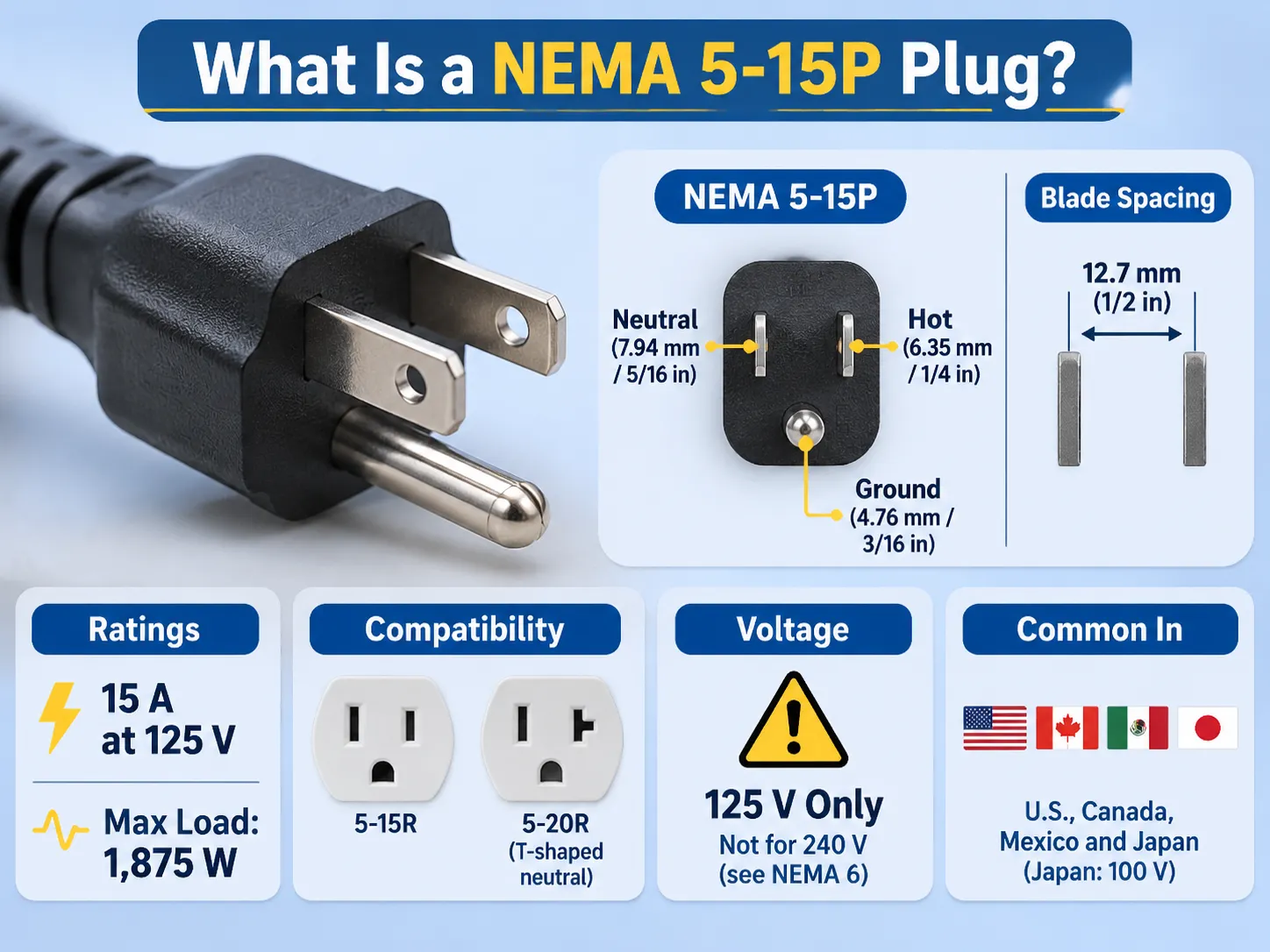
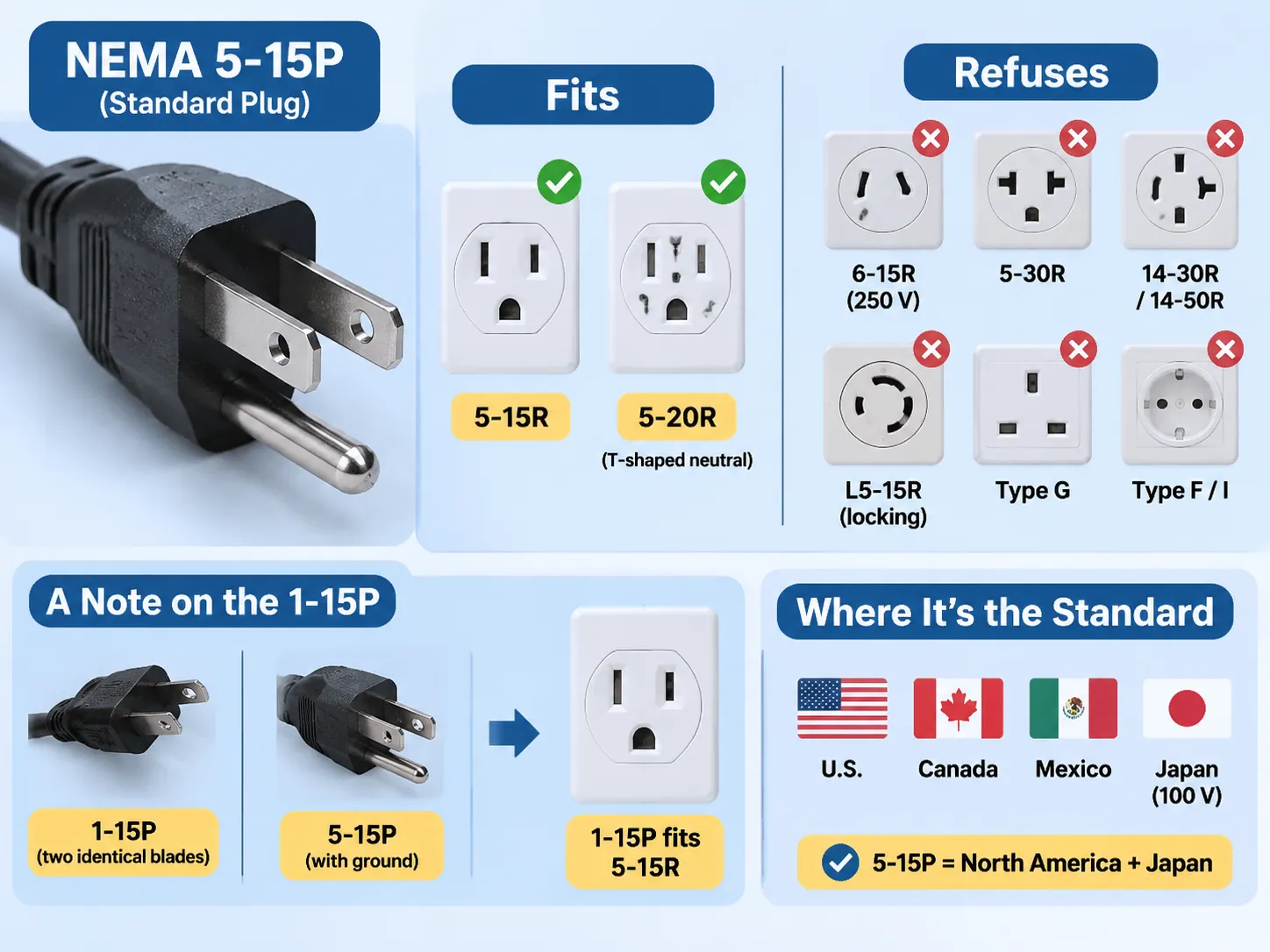
Resposta curta: NEMA 5-15P é o plugue norte-americano comumente usado, com três pinos e classificado para 15 A a 125 V. Os dois pinos são planos e paralelos e um pino é de aterramento. O NEMA 5-15P é projetado de acordo com as normas ANSI/NEMA WD-6 e aprovado pela UL 498. Pode ser encaixado em tomadas NEMA 5-15R e também é compatível com tomadas NEMA 5-20R porque ambos os plugues NEMA 5-15P e NEMA 5-20R possuem formatos diferentes para os encaixes dos pinos. O pino ativo do NEMA 5-15P tem 6,35 mm de largura e o pino neutro tem 7,94 mm de largura, de modo que só pode ser inserido no plugue em uma direção. A distância entre os dois pinos é de 12,7 mm e o diâmetro do pino de aterramento é de 4,76 mm. O NEMA 5-15P suporta uma carga máxima de 1875 W e opera a 125 V. O NEMA 5-15P não pode ser usado em circuitos de 240 V, mas uma série de plugues completamente diferente, a série NEMA 6, é projetada para essa finalidade.
O que o Nome Realmente Codifica
Os nomes dos vários conectores usados pela NEMA seguem um sistema organizado, tornando-os fáceis de lembrar. Os três primeiros dígitos antes do hífen são compostos por três informações: o número da série, o número de contatos e o número de fios. O número após o hífen indica a classificação em ampères. Finalmente, a letra no final informa se o conector é um plugue ou uma tomada.
Por exemplo, o 5-15P denota um item da série 5, que é classificado para 125 V e possui dois contatos e três fios. Entre outras coisas, inclui dois condutores junto com o fio terra e tem uma classificação de 15 ampères. A tomada 5-15R é igual ao plugue 5-15P, com a diferença de que o 5-15R é uma tomada. Da mesma forma, se o usuário optar por usar a versão L5-15P, conhecida por ser travável, não terá problemas ao usar o plugue. Embora ambos os tipos de conectores tenham as mesmas classificações em ampères, é importante notar que o L5-15P é diferente do 5-15P em termos de estrutura.
Infelizmente, as pessoas tendem a confundir os números das séries. O 5 corresponde a 125 volts, enquanto o 6 pertence a 250 volts. Um conector com o código 6-15P pode ser facilmente confundido com um 5-15P, mas não se encaixará em uma tomada 5-15R devido ao formato diferente. O conjunto completo de configurações está definido na norma ANSI/NEMA WD-6, e o panorama dos tipos de tomadas elétricas é útil para posicionar o 5-15 ao lado das famílias não norte-americanas.
Como é um NEMA 5-15P, até o milímetro
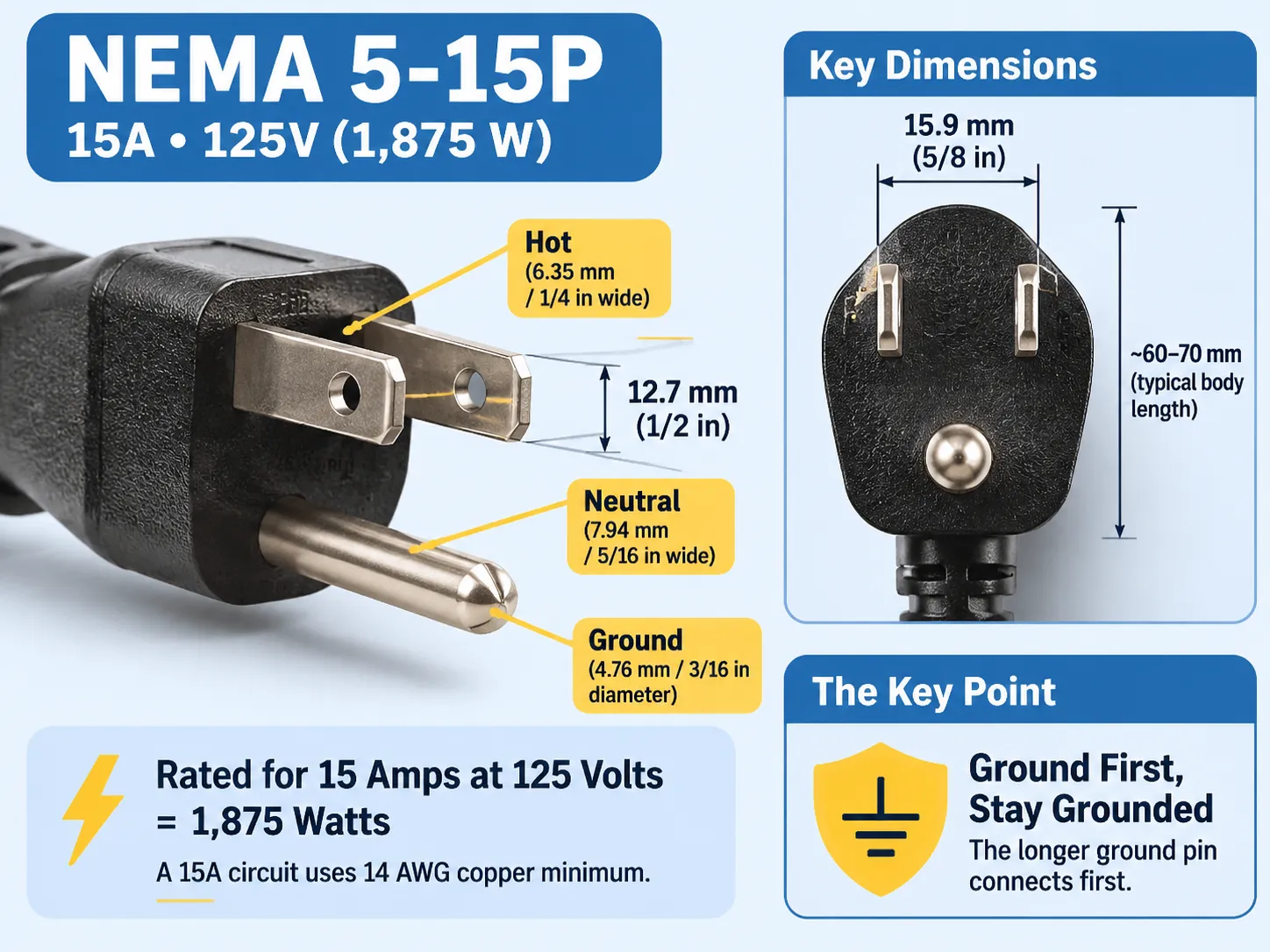
Existem três condutores e três componentes metálicos expostos. Duas lâminas planas estão dispostas da mesma forma e um pino redondo está localizado abaixo delas. O pino redondo é mais longo que as lâminas de modo que faz contato antes delas. Assim, o propósito do pino de aterramento mais longo é garantir que o equipamento esteja aterrado antes que a energia seja ligada, e permaneça aterrado até depois que a energia seja desligada.
| Característica | Dimensão | Por que é desse tamanho |
|---|---|---|
| Largura da lâmina quente | 6,35 mm (1/4 pol) | Lâmina padrão, encaixa com a ranhura estreita |
| Largura da lâmina neutra | 7,94 mm (5/16 pol) | Lâmina mais larga força uma orientação de inserção |
| Centros das lâminas | 12,7 mm (1/2 pol) | Fixam a geometria para que nenhuma outra série se encaixe |
| Comprimento da lâmina | 15,9 mm (5/8 pol) nominal | Área de contato mais profundidade de engajamento |
| Diâmetro do pino de aterramento | 4,76 mm (3/16 pol) | Pino redondo, mais longo que as lâminas |
| Comprimento típico do corpo | 60 a 70 mm | Carcaça para a fixação do cabo e terminações |
Em certos tipos de plugues, pode ser encontrada uma pequena abertura próxima à extremidade de cada lâmina terminal. Essa abertura é um artefato do processo de fabricação; no entanto, é útil e, portanto, mantida. A abertura pode ser usada para travar o plugue. Além disso, vários designs de receptáculos utilizam a abertura para um trava. Embora sua presença não seja obrigatória, seu tamanho é fixo caso esteja presente.
Para o que é classificado, e o que isso significa em watts
Quinze amperes a 125 volts fornecem 1.875 watts e essa é a limitação para qualquer coisa em um 5-15P. Os limites para o circuito estão no disjuntor, mas não no plugue. No caso de um circuito derivado de 15 A, se houver um plugue em uma situação normal, o ponto de ruptura para o circuito é 15 A. Todo plugue deve ser ajustado ao ponto de ruptura, caso contrário, se você conectar um 5-15P em um circuito de 20 A, o plugue se tornará o elo mais fraco onde estiver conectado.
A potência de um cabo depende do circuito e não do plugue. Para um circuito de 15 A é necessário ter fio 14 AWG e para um circuito de 20 A é 12 AWG. Um plugue projetado para 5-15P com fio 16 AWG é completamente adequado, pois o aparelho que alimenta é limitado. No entanto, é errado ter um plugue 5-15P instalado em um cabo que possui fio de bitola para circuito de 15 A devido à presença de um receptáculo de 15 A.
A importância da tensão utilizada precisa ser mencionada aqui porque causa muita confusão. A tensão nominal é 120 V, mas as normas ANSI C84.1 fornecem uma faixa de estado estacionário de aproximadamente 114 V a 126 V. As placas de identificação dos aparelhos mencionando 115 V e 110 V não se referem aos plugues, mas significam a capacidade do aparelho para a tensão a ser usada.
Polarização: Por que a lâmina neutra é mais larga
A lâmina neutra mais larga não representa nenhum defeito de fabricação. Sua função é garantir que o interruptor interno do aparelho interrompa o fio quente em vez do fio neutro.
Considere o que ocorreria na ausência disso. Se o plugue pudesse ser inserido em ambas as direções, então em metade dos casos o interruptor interno estaria ligado ao neutro. A comutação do fio neutro interrompe o fluxo de corrente, o que cria a ilusão de que o aparelho está desligado enquanto a fiação ainda está energizada a 120V em relação à terra. Isso coloca qualquer pessoa que esteja consertando o aparelho e tocando em qualquer um dos fios danificados em risco de se tornar parte do circuito. A polarização significa que o interruptor controla apenas o fio quente e o aparelho está realmente desligado quando é desconectado da linha de energia.
É por isso que o adaptador "gambiarra" que ignora o pino de aterramento e a polarização não é apenas uma violação das normas, mas um perigo real, pois remove dois níveis de proteção. A mesma lógica explica por que um tomada de parede danificada com uma fenda ou slot neutro solto deve ser substituída, não tolerada: um slot desgastado permite que o plugue fique inclinado e compromete a geometria que mantém a polaridade correta.
Em qual tomada ele se encaixa, e em qual ele se recusa
O 5-15P é de fato capaz de se encaixar em seu companheiro 5-15R e também no 5-20R, já que a tomada de 20 amperes possui o slot neutro em forma de T que pode acomodar tanto o neutro largo do 5-15 quanto o horizontal do 5-20. Mas a compatibilidade funciona apenas em um sentido. O plugue 5-20P com seu neutro horizontal não pode se encaixar no 5-15R.
A compatibilidade falha para muitos outros, e isso ajuda a entender o conceito. Por exemplo, uma tomada tipo 6-15R não se encaixa pois necessita de 250V. O 5-30R também não aceita, pois o espaçamento das lâminas é diferente. Da mesma forma, a tomada 14-30R ou 14-50R não aceita. Além disso, uma tomada com trava do tipo L5-15R, e os tipos G, F e I funcionam da mesma forma e essa é toda a razão para os adaptadores de viagem.
A confusão geralmente começa com o plugue bipino 1-15P que possui dois pinos idênticos como sua versão original sem pino de aterramento. O 1-15P se encaixa no 5-15R devido à largura do slot neutro, mas o inverso não se aplica aqui. No entanto, caso você pretenda substituir uma tomada normal por uma equivalente 5-15R com proteção GFCI, a questão pode ser tratada separadamente em relação ao plugue.
Onde o NEMA 5-15P é o plugue padrão
Os EUA certamente são o primeiro pensamento que vem à mente, enquanto o Canadá também segue o mesmo sistema, nomeadamente CSA C22.2 No. 42, razão pela qual você pode usar um dispositivo comprado em Toronto sem problemas em Buffalo. O México segue o mesmo padrão sob NMX-J-163-ANCE, e o guia de tomadas elétricas canadenses cobre os detalhes desse mercado incluindo as variantes 5-20 usadas em cozinhas.
Japan offers an intriguing example. Both 100 V and 50 or 60 Hz (depending on the region) employ the same two-bladed design, and ungrounded 1-15 plugs can be found throughout Japanese houses, with the grounded 5-15 plug appearing only where necessary. Although a robust, 5-15P plug can fit into a grounded outlet in Japan, only a third of the power rating of a resistive load will be attained as a result of voltage issues. As a result, there may be a problem with motor speed and overheating. It is not a plug issue; it is only a question of voltage and plugs, as such questions must be answered separately.
In addition to Japan, some parts of Central America, the Caribbean, Colombia, Peru, Taiwan, and the Philippines have a mixture of plugs, with 5-15 sockets and plugs being used along with other types of plugs.
The Other NEMA Plugs People Confuse It With
Four examples explain the majority of practical situations.
- 1-15P. The plug has two blades, does not have a ground and is not polarized, amperage of 15 A at a voltage of 125 V. It is the plug for double-insulated cords and old lamps. It can fit into the 5-15R; the other plug cannot fit into the 1-15R plug.
- 5-20P. The same voltage of 125 V and higher amperage of 20 A with an additional neutral horizontal pin. It cannot fit into a 5-15R plug, while a 5-15P plug can fit a 5-20R socket. It is often seen in kitchens and workshops fitted with 20-ampere circuits.
- 6-15P. The plug comprises two blades as well as grounding and works at voltage of 250 V and 15 A. The specially designed plug can only fit into the right receptacle. The most common applications for this plug are air conditioners and other electrical devices which require 240 V.
- G type and F type plugs. The British rectangular plug and the European type Schuko plug. These two plugs have different configurations, different voltages and cannot be used together. In Britain, a plug with 13 A rating has a voltage of 250 V, while the other plug has a rating of 16 A at 250 V and requires a different socket.
Why Plugs Fail, and the Arithmetic Behind a Hot Prong
The contact resistance of a clean brass blade placed in a receptacle wiper is around 0.005 ohms and thus insignificant. Once the blade has bent, oxidized, or the wiper spring has worn out, the same contact can show resistance up to 0.5 ohms without changing its physical aspect.
Once 12.5 A is passing in each case, the difference in the heat dispersion is noticeable. 0.005 ohms mean that heat is 12.5 squared times 0.005 or 0.78 W that is harmlessly dispersed in brass. 0.5 ohms mean that heat would be concentrated at 78 W on the area smaller than a postage stamp inside an insulated plastic body. The body starts getting soft at more than 70 °C, the wiper loses spring force, resistance increases, and the process goes out of control which leads to scorching of the plug face and blackening of the receptacle.
The practical test does not cost anything: after the operation of the heavy appliance for twenty minutes, touch the plug with a hand. If it is warm, everything is fine. If it is hot, it means that there is a failure in the process that should be repaired not by pushing the plug stronger but by fixing the receptacle or the cord end. The contacts of the blades become corroded and discolored while the contact area is diminishing and need replacing.
Variants Worth Knowing: Hospital Grade, Watertight and Right Angle
Plugs and sockets used in hospitals are designed to comply with more stringent criteria than the industry standard for reliability against mechanical failure and grounding failure. The major difference in the specifications is in the retention force and ground contact integrity. The specification for medical plugs is of vital importance, as a plug that disconnects from a medical device would fall under a different category of failure from a lamp that goes out.
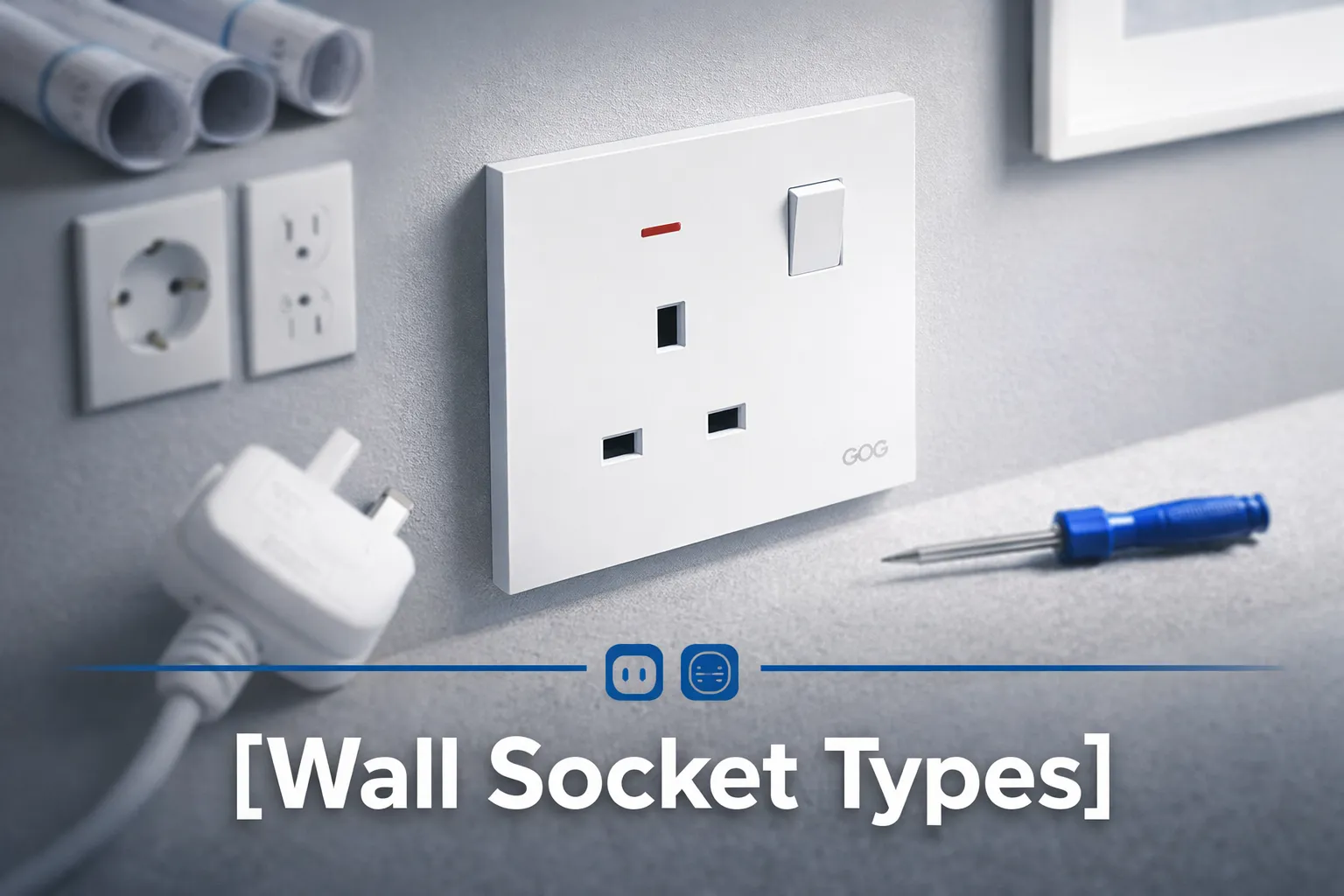
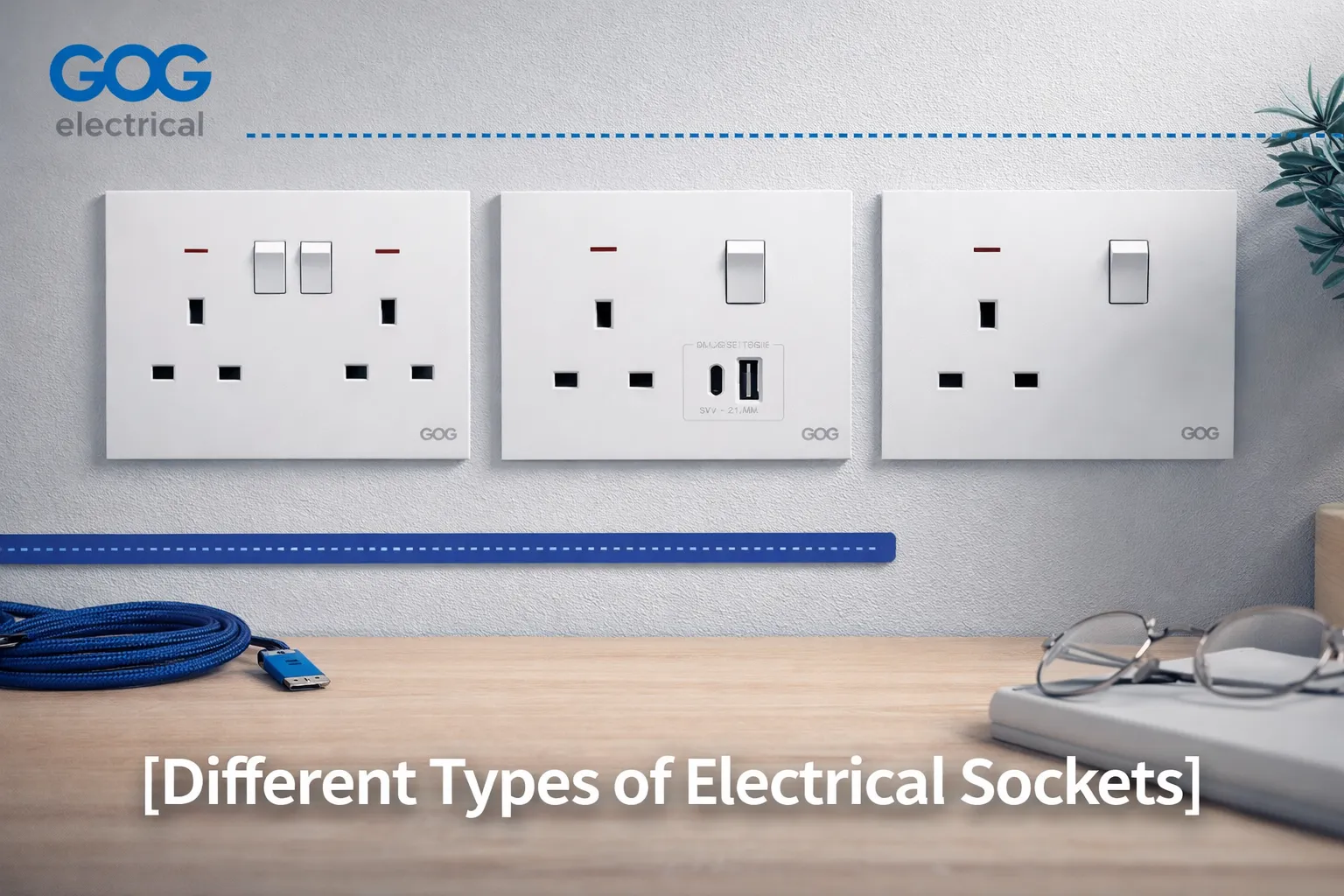
Water-resistant plugs are made to meet IP55 or higher standards as a result of utilizing a body with gasket and a cord entry and equipped with a matching firewall on the corresponding socket.The plug alone does nothing; both halves have to be the watertight type. A US three-pin socket in a switched plate assembly shows the receptacle side of the same standard in a residential format.
In instances where you have furniture items and televisions mounted on walls and in cases where you have limited clearance, both right-angle and low-profile plugs are available. The electrical rating stays the same; the only difference is the strain relief direction. You would want to specify these types of plugs if the cable is to be run flat against a wall, and people are often caught unaware until they try to move the furniture.
What to Check Before You Buy or Specify
In the case of an Original Equipment Manufacturer purchasing cord sets, there are five distinguishing features that set apart a compliant product from a convincing imitative product. The product marking must carry a proof marking from an established testing laboratory that is searchable with a testing laboratory’s file number. The dimensions of the blades must adhere to the WD-6 tolerances, which are precise enough to allow for minor errors in stamping. The cord grip should prevent the wire sheath from being pulled out of the plug during testing, compared to the terminals being pulled out. The terminal screws must be made with plated brass, which is necessary instead of using zinc-plated steel. Finally,the housing of the cord set must carry a flame rating, which is normally classified as UL 94 V-2 at the very minimum.
For the case of a product specifying receptacles there are also five comparable characteristics needed: interrupting capacity of the circuit, terminal capacity for wire gauge, mounting configuration, and whether or not a tamper resistant shut-off has to be used, which is now mandatory in every state for residential projects.
We build the plates and socket assemblies around these devices, not the plugs themselves, and the electrical socket manufacturing range covers the market-specific configurations that go with them: US, UK, European, Australian and the regional variants in between. If a project needs one plate standard across several markets with the correct device behind each, that is the conversation worth having before the drawings are frozen.
Perguntas Frequentes
Is NEMA 5-15P a normal plug?
Yes. It is the commonplace three-prong plug that can be found on virtually all household appliances, lamps, chargers and power strips in the USA and Canada. The terminology is technical but the object is well-known: two flat prongs and a round grounding pin, rated for 15 A at 125 V. If you see a plug that has three prongs with the two flat ones being parallel and the round one under them, it is surely a 5-15P.
Is NEMA 5-15R standard?
The 15 A receptacle is common in North American homes and light commercial buildings. It can be used for either the 5-15P or also for the older version of the receptacle without the ground, called the 1-15P. The 5-20R will accept the 5-15P plug because of the T-shaped neutral opening, which explains why the 20 A kitchen circuit can also be used with standard appliances. New electrical installations in almost all jurisdictions require that these receptacles have tamper-resistant shutters.
What does a NEMA 5-15 plug look like?
The two flat metal plates are positioned parallel at a distance of 12.7 mm from each other and a round pin is located at their centre slightly extending ahead of them. The right plate is the neutral one and is visibly wider than the left plate. The body is made of plastic, which is commonly between 60-70 mm long. The wire goes into the body through the strain relief point. Some plates have a tiny hole in the tip. The plug has no shield or a round body and there is no fuse, hence for the person accustomed to the British or the European plugs it is a very easy task to distinguish this type of plug.
Can NEMA 5-15 handle 240 V?
No, the 5 series is rated 125 volts and has a physical key that prohibits it from being plugged into a 250 volts outlet. The proper connectors for plugging in a 240-volt appliance in North America are in the 6 series (e.g., 6-15P or 6-20P), along with connectors from the 14 series for devices that use both 120-240 volt appliances. Using a 5-15 device with 240 volts creates the possibility of fire or electric shock, as well as damaging any appliance plugged in on the other end of the circuit.
Will a 5-15P fit a 5-20R outlet?
Yes. The 20 A socket contains a T-shaped neutral slot which allows for the insertion of the neutral blade of a 5-15P or 5-20P plug. However, the other way around is not true since a 5-20P cannot fit into a 5-15R socket. This one-way compatability is designed so that a 20 A device cannot work in a circuit rated for 15 A.
What is the difference between NEMA 5-15P and 1-15P?
The 1-15P consists of two matching blades and does not have a ground pin. It is also not polarised. The 5-15P has received a pin for grounding and a wider blade slot for neutral. It is thus both creating a fault path and ensuring that the polarity is correct. 1-15P devices can be used with 5-15R as the neutral slot is wide enough for both blades to fit into. However, the reverse is not true when 5-15P tries to fit the ungrounded 1-15R. Ungrounded sockets are not used anymore and GFCI protected sockets have replaced them.
Referências
- NEMA — ANSI/NEMA WD-6 Wiring Devices Dimensional Specifications
- Leviton — Straight Blade Plugs and Receptacles
- Hubbell — Wiring Device Configurations and Ratings
- Interpower — North American Cord Sets and Plug Standards
- UL Solutions — UL 498 Attachment Plugs and Receptacles
Conclusão
The design known as the 5-15P serves three functions simultaneously. It transmits 15A of current, connects the appliance to ground, and prevents incorrect orientation and insertion. This is the main reason why we cannot substitute an imitation or copy whose appearance is correct, but whose dimensions differ from these described above.
Most reported problems related to the 5-15P do not concern electricity, but rather mechanical failures like a bent blade, wear of the wiper or burning marks. Please remember that when such a problem occurs, it is enough to change the element instead of the whole appliance. Moreover, it is always necessary to make sure that the socket of your destination country is of the required design before making the mould, as there are design differences between models and various types of adaptors.