A young couple walked through their new house when they bought it. To make sure that the house is proper for living, they had to make a list of changes required; the carpet, the lights, the tops of the kitchen were among the things that had to be replaced. What they did not take into account is that the electric outlets would also need to be replaced. The sockets looked good, the design was no different from other plugs, and everything went well. But months later, one socket stopped functioning properly; it was a bedroom outlet. The next one to malfunction was the outlet in the kitchen which started buzzing loudly. The outlet in the bathroom was likely to be old and not very functional. Being able to figure out what the electrical socket is is an easy question. However, there exist multiple versions of these devices, including those that are different in terms of electricity and there are safety measures too, which allows making sure that all sockets work properly and are safe.
Summary: An electrical receptacle is a type of wiring device that is used to connect devices such as portable appliances to the building’s electrical wiring. It can also be called an outlet, wall socket or plug socket. One slot of the North American receptacle is vertical and the other is horizontal. NEMA 5-15R is a 125 V meter with a two slot duplex. There are many types of receptacles and they can differ in terms of their voltage, amperage and safety features.
The choice of receptacle type for a location is defined in the National Electrical Code.
What an Electrical Receptacle Is — and the Terminology That Surrounds It
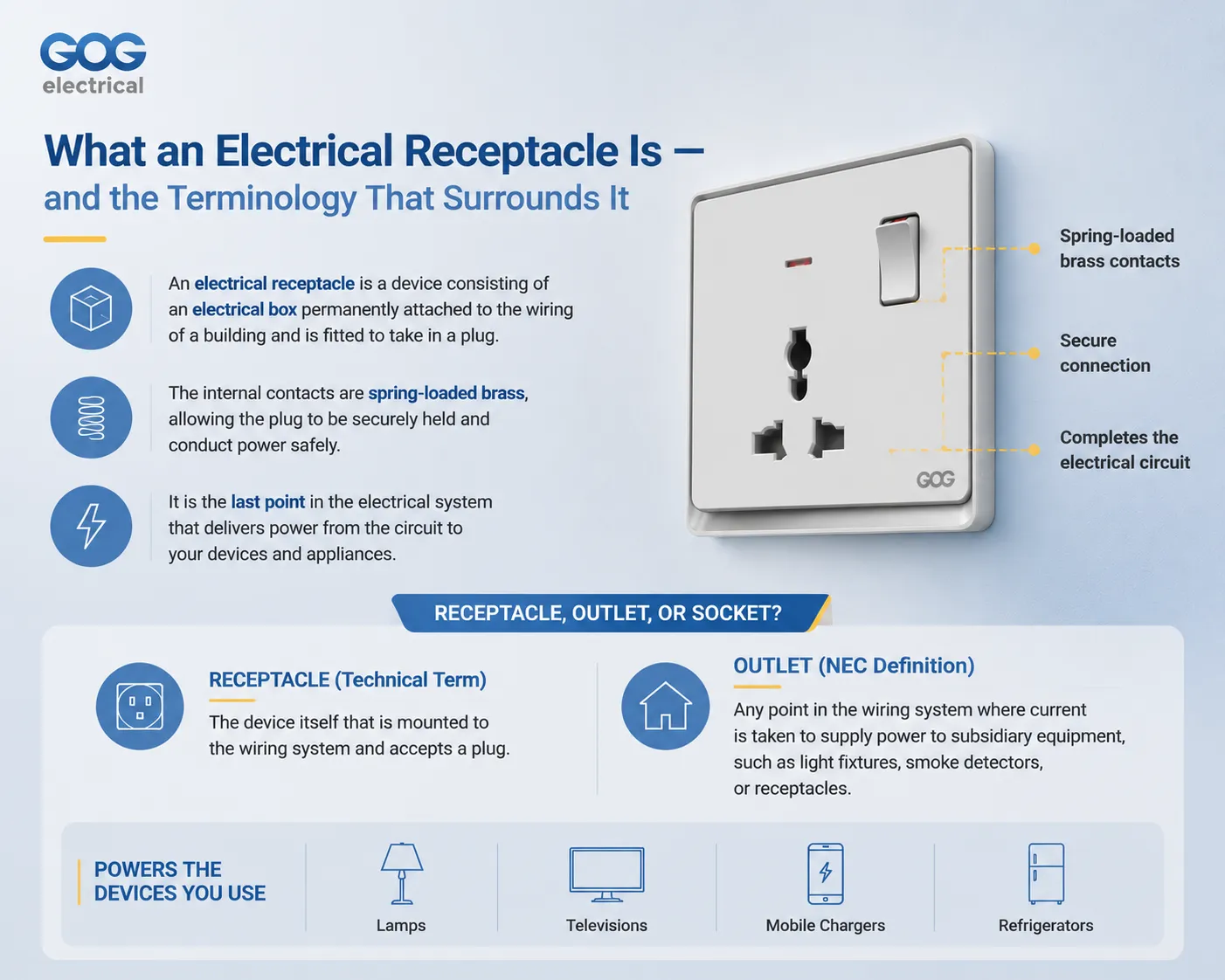
An electrical receptacle is a device consisting of an electrical box permanently attached to the wiring of a building and is fitted to take in a plug. The electrical contacts inside the receptacle are spring-loaded brass materials allowing it to comfortably fasten the plug in order to connect the appliance cord to the wiring of the building and finish the circuit. The receptacle happens to be the last point in the electrical system to the device which converts the power coming from the copper wire composed of the electrical circuit into energy for using different appliances, including lamps, televisions, mobile charger, and refrigerators. In technical terms, the electrical codes designate the use of the term “receptacle” as the name of the device, while from the point of view of common people, they would refer to it as an electrical outlet or a plug in socket. Even though these terms are widely used in the context of referring to the same thing, from a technical point of view, the NEC uses a more specific definition when defining outlet in terms of any point in the wiring system at which the current is dipped to generate power for the subsidiary equipment, such as light fixtures, smoke detectors, or receptacles. For a deeper look at the functional categories that every homeowner should know, our article on the four types of electrical outlets covers the standard, GFCI, AFCI, and USB‑charging types in detail.
The Standard Residential Receptacle: NEMA 5‑15R
The receptacle that is frequently used in North America is the NEMA 5-15R, which is a duplex receptacle consisting of two vertical slots and a round ground hole. The narrow slot refers to the hot wire, the wider slot refers to the neutral wire, and the round hole is for ground. This is the type of receptacle found in the bedroom wall, sitting room wall, and corridor. This type of receptacle can accept any two-prong or three-prong plug and has a rating of 15-amperes. The maximum watts that can be carried through this receptacle is 1,800 watts on a 120-volt line. For help calculating the load on any given circuit, our guide on how many watts an outlet can handle provides the formulas and the continuous‑load rules that apply to every receptacle.
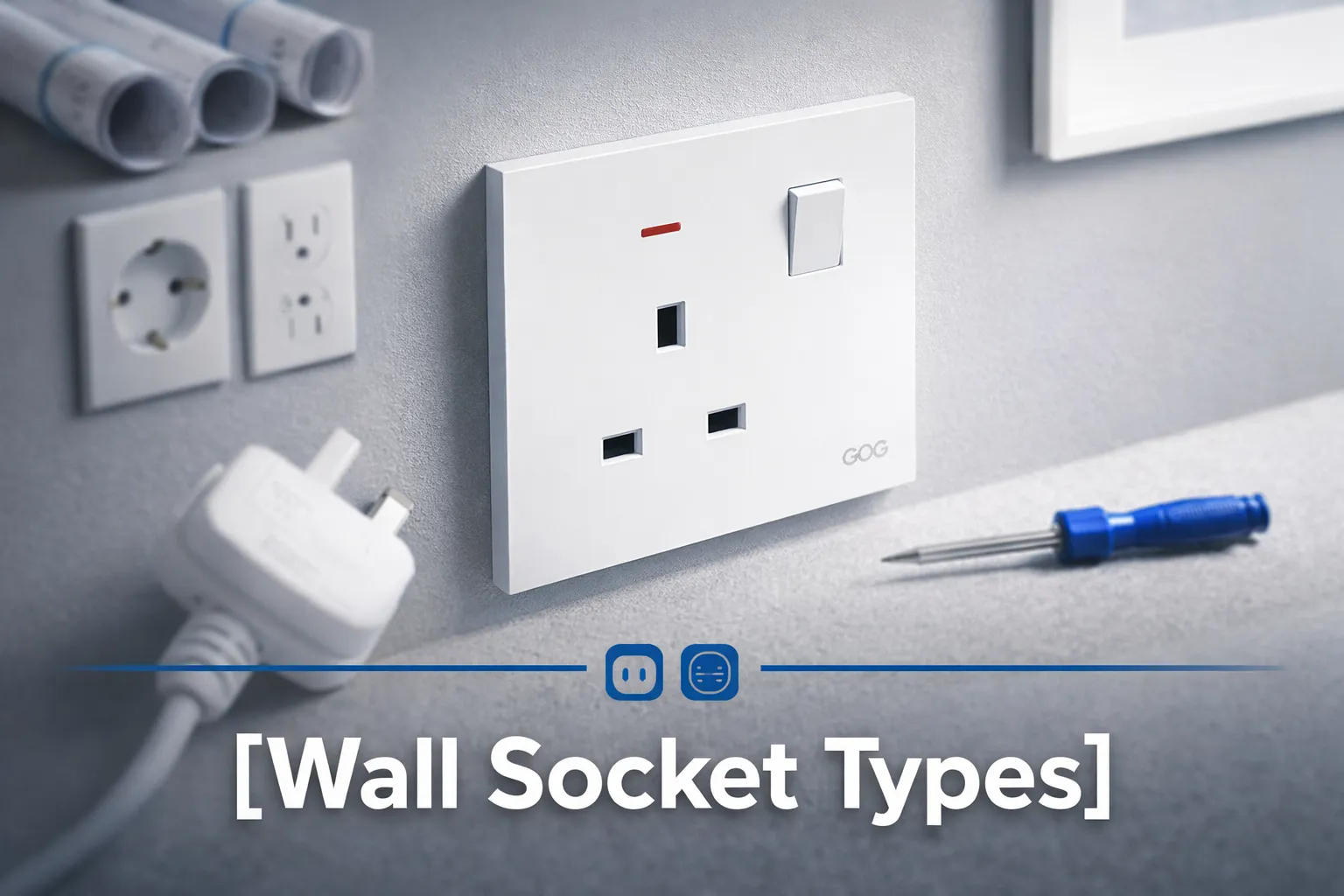
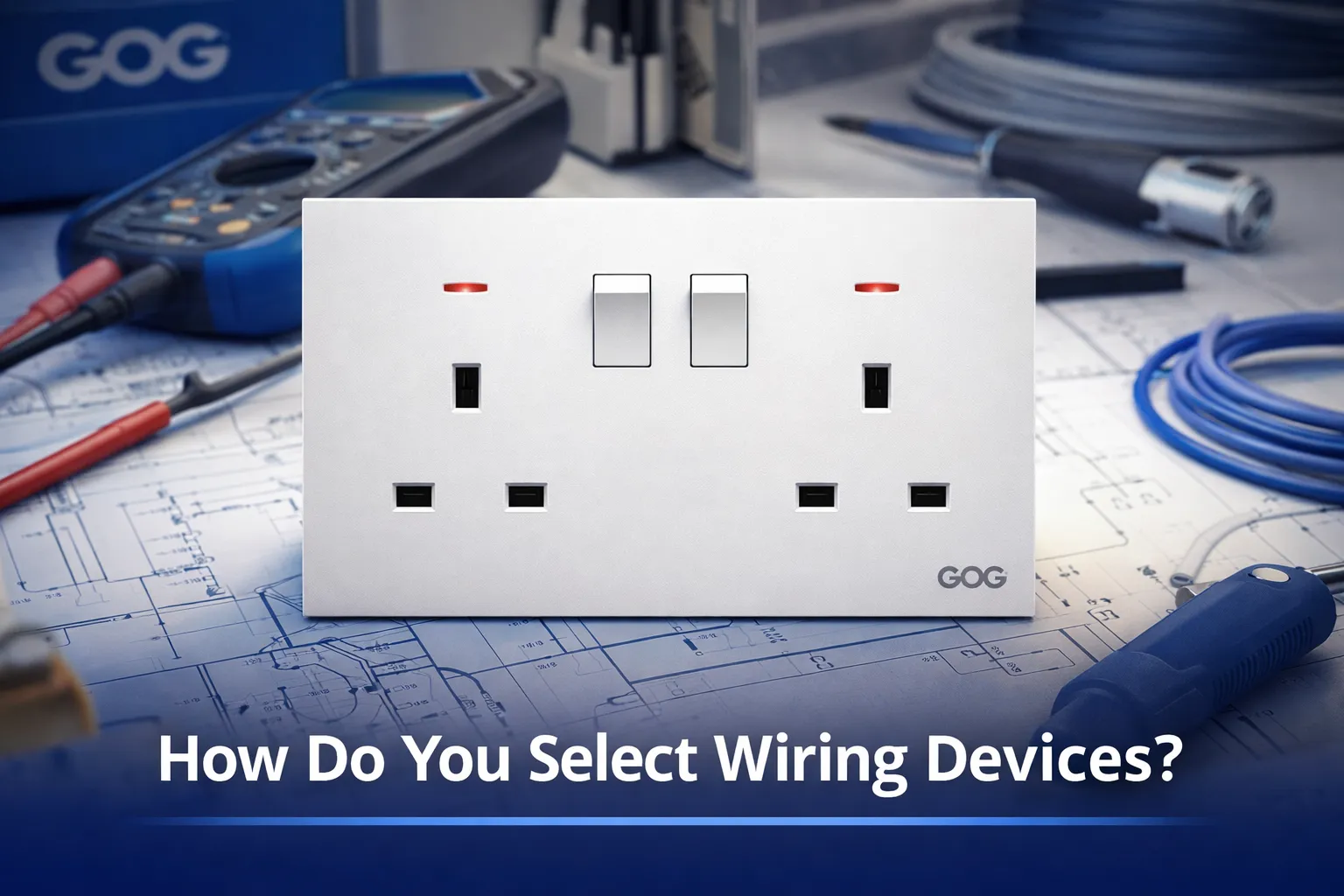
In the UK and IEC markets, the standard socket outlet is the BS 1363 13‑amp, 230‑volt, three‑pin square‑pin design. It includes an integral rocker switch and spring‑loaded shutters that block access to the live and neutral slots unless the longer earth pin is inserted first. The voltage and the plug type are fixed by the national standard; the choice for the buyer is in the finish, the USB integration, and the smart functionality. GOG Electric manufactures wiring devices for both the North American NEMA and the UK BS 1363 standards, with the correct voltage and current ratings for each market.
The Full Range of Receptacle Types: Safety, Function, and Environment
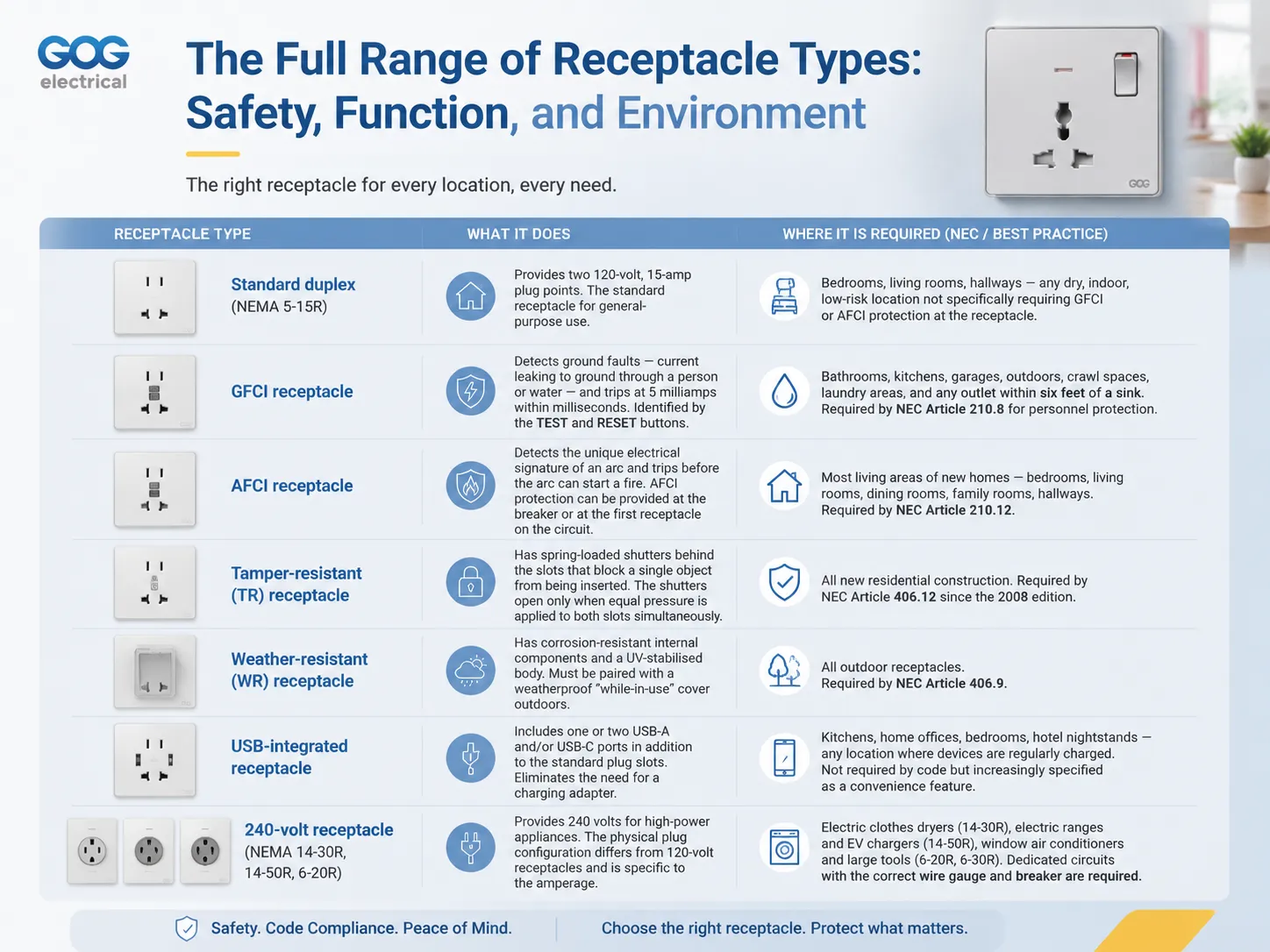
Beyond the standard duplex, a receptacle can incorporate a range of safety and convenience features that are required by code in specific locations — and are recommended by common sense everywhere else. The table below summarises the most important types and where they are required.
| Receptacle Type | What It Does | Where It Is Required (NEC / Best Practice) |
|---|---|---|
| Standard duplex (NEMA 5‑15R) | Provides two 120‑volt, 15‑amp plug points. The standard receptacle for general‑purpose use. | Bedrooms, living rooms, hallways — any dry, indoor, low‑risk location not specifically requiring GFCI or AFCI protection at the receptacle. |
| GFCI receptacle | Detects ground faults — current leaking to ground through a person or water — and trips at 5 milliamps within milliseconds. Identified by the TEST and RESET buttons. | Bathrooms, kitchens, garages, outdoors, crawl spaces, laundry areas, and any outlet within six feet of a sink. Required by NEC Article 210.8 for personnel protection. |
| AFCI receptacle | Detects the unique electrical signature of an arc and trips before the arc can start a fire. AFCI protection can be provided at the breaker or at the first receptacle on the circuit. | Most living areas of new homes — bedrooms, living rooms, dining rooms, family rooms, hallways. Required by NEC Article 210.12. |
| Tamper‑resistant (TR) receptacle | Has spring‑loaded shutters behind the slots that block a single object from being inserted. The shutters open only when equal pressure is applied to both slots simultaneously. | All new residential construction. Required by NEC Article 406.12 since the 2008 edition. Our detailed guide on what a tamper resistant outlet is explains the internal mechanism and the code history. |
| Weather‑resistant (WR) receptacle | Has corrosion‑resistant internal components and a UV‑stabilised body. Must be paired with a weatherproof “while‑in‑use” cover outdoors. | All outdoor receptacles. Required by NEC Article 406.9. |
| USB‑integrated receptacle | Includes one or two USB‑A and/or USB‑C ports in addition to the standard plug slots. Eliminates the need for a charging adapter. | Kitchens, home offices, bedrooms, hotel nightstands — any location where devices are regularly charged. Not required by code but increasingly specified as a convenience feature. Our guide on USB charger sockets covers the technology, the safety considerations, and the installation requirements. |
| 240‑volt receptacle (NEMA 14‑30R, 14‑50R, 6‑20R) | Provides 240 volts for high‑power appliances. The physical plug configuration differs from 120‑volt receptacles and is specific to the amperage. | Electric clothes dryers (14‑30R), electric ranges and EV chargers (14‑50R), window air conditioners and large tools (6‑20R, 6‑30R). Dedicated circuits with the correct wire gauge and breaker are required. |
Receptacle Amperage, Voltage, and the NEC’s Spacing Rules
The voltage rating and amp rating must correspond to the circuit in place and every receptacle must possess both ratings. In ordinary homes, a 15-amp receptacle is utilized on a 15-amp circuit equipped with 14-gauge wire. In bathrooms and laundry areas, a 20-amp receptacle is used on a 20-amp circuit. And flexible wiring makes it possible to use a 15-amp receptacle on a 20-amp circuit as long as there are multiple receptacles on the circuit. The rule underlines that when there’s one or more receptacles in use, the system has to be rated at 20 amps. The NEC’s regulations outline the rule of receptacle installation points regarding the distance from each wall. It states that every section of a wall more than 2 feet wide must have at least one receptacle, and no point along the wall could be situated more than 6 feet away from the receptacle, while receptacles should not be further away than 12 feet from each other. For the full details of this spacing rule, our guide on how many outlets on a 20 amp circuit explains the NEC’s requirements and the practical limits.
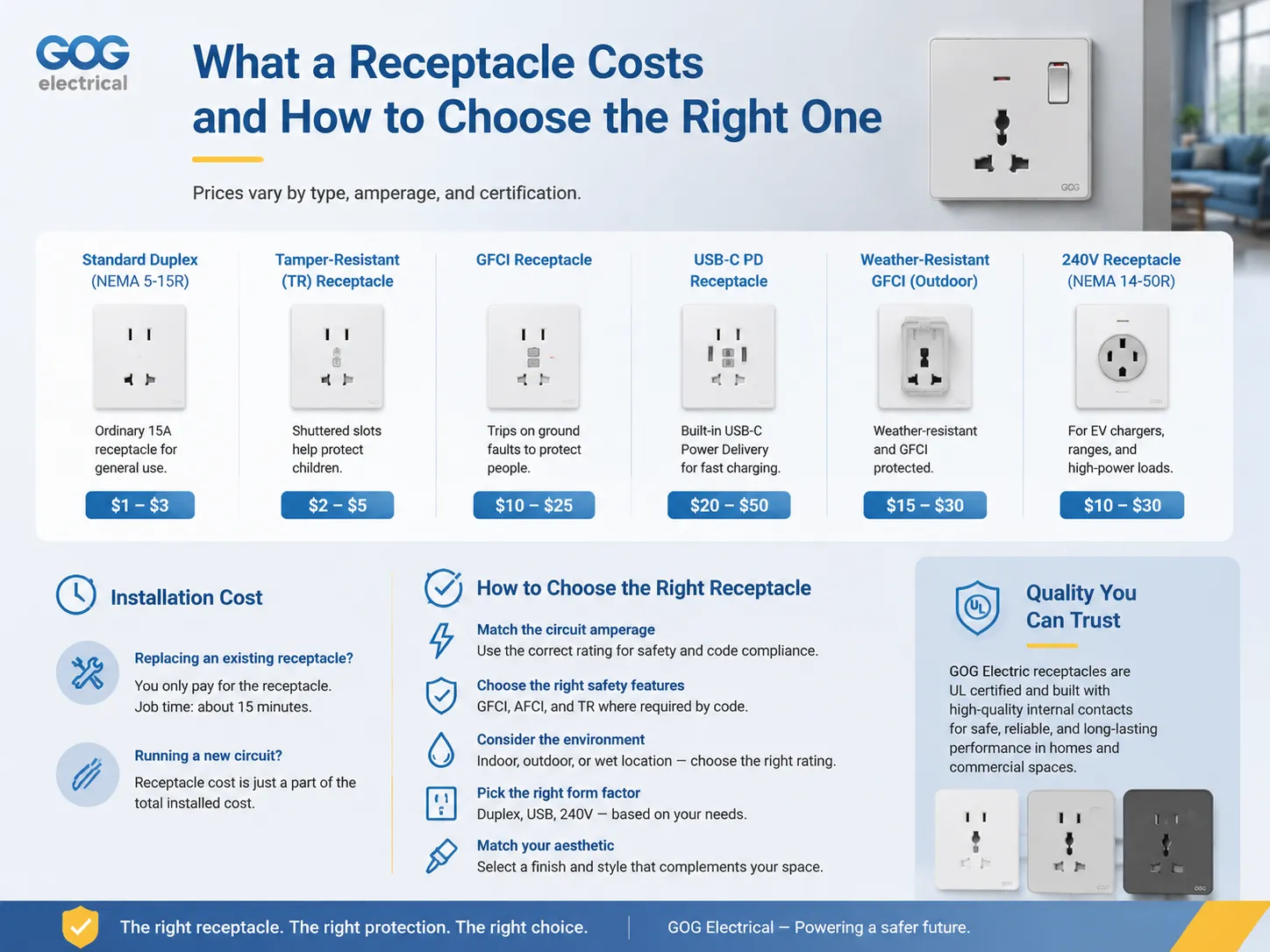
What a Receptacle Costs and How to Choose the Right One
The price of any type of receptacle will depend on its classification, its amperage, and its certification standard. For instance, the ordinary builder’s 15-amp duplex is priced at $1 to $3. The tamper-resistance version comes at the price of $2 to $5. The GFCI kinds of receptacles will cost about $10 to $25. The receptacle that is integrated with USB-C Power Delivery service will cost around $20 to $50. The weather-resistant GFCI receptacle for outdoor purposes can be obtained for about $15 to $30. As for the 240-volt NEMA 14-50 receptacle which is used for EV chargers, its price is about $10 to $30. If the receptacle is replaced (an old receptacle is substituted with a new one), the only cost you will incur is the cost of the receptacle itself while this task can be performed during 15 minutes. However, if you are planning on running a new circuit, then you need to understand that the cost of the hardly inexpensive receptacle is only a part of the total installed cost.
The most important aspects to consider while choosing the receptacle include the amperage of the circuit, the safety features that should be installed in accordance with the requirements of the efficient code, environmental rating (indoor, outdoor, or wet), form factor, and the aesthetics of the chosen device. GOG Electric has all kinds of receptacles that are available in various finishes and amperages in compliance with the recent trends in the manufacture of devices for residential and commercial use as they possess the UL certification and the solid internal contacts which guarantee safe and durable operation in your home for many years. For a broader look at the best devices for every room, our overview of the best outlets and switches for modern homes covers the complete range from basic to smart and USB‑integrated.
Frequently Asked Questions
What’s the difference between a receptacle and an outlet?
According to the definitions employed in the NEC, an outlet means any place in a wiring system where electricity is being drawn for the purpose of supplying electrical devices used. This would include a light fixture, a smoke detector, or any other types of wires leading to the electrical appliance. Receptacle refers to an outlet which is created for a particular type of device – i.e. a contact device at the outlet that has been specifically designed for plugging in one individual plug. However, in common usage, the two terms are used as synonyms for the wall device which you plug your devices into.
What does an electrical receptacle look like?
Regular electrical socket in North America consists of a rectangular-shaped plastic face approximately 2.75 inches high and 1.3 inches wide. The face has slots that are oval in shape and are arranged in two sets one over the other. In the middle of the face, there is a screw hole for the cover plate of the electrical socket.
What is an example of a receptacle?
A common example is the duplex receptacle, which can be found on a wall of the bedroom and is a NEMA 5-15R receptacle, meaning it contains two vertical prongs and a round hole for grounding. Another instance is the GFCI receptacle, which is discovered in bathrooms and comes equipped with buttons labeled TEST and RESET. Likewise, we can see a third example in the NEMA 14-50 receptacle, which is applied with electric vehicle chargers and has four big slots with a 240V and 50A rating.
What qualifies as a receptacle?
According to the definition provided by the NEC, receptacles are contact devices installed on outlets that allow the installation of one plug. A device that accommodates one plug is called a single receptacle. A device accommodating two plugs is called a double receptacle and consists of two receptacles mounted on one strap. What makes devices qualify as receptacles is the fact that they allow for the installation of plugs and the transfer of electricity through a contact mechanism.
References
- National Fire Protection Association (NFPA) — National Electrical Code (NEC) Articles 210 and 406. The defining requirements for receptacle spacing, amperage, GFCI and AFCI protection, tamper resistance, and weather resistance in residential and commercial occupancies.
- National Electrical Manufacturers Association (NEMA) — Receptacle Configurations and Standards. The standard that defines the physical configurations, voltage ratings, and amperage ratings of all plugs and receptacles used in North America.
- Electrical Safety Foundation International (ESFI) — Home Electrical Safety and Receptacle Types. Consumer and professional guidance on the types, ratings, and safe use of electrical receptacles.
- Leviton — Residential Receptacles and Wiring Devices. Manufacturer of North American receptacles, including GFCI, AFCI, tamper‑resistant, USB‑integrated, and smart‑controlled devices, with installation guides and product specifications.
An electrical receptacle is the final connection between the copper that runs through the walls and the appliance that powers your life. It is a deceptively simple device — a plastic body, a few brass contacts, a metal mounting strap — but the type, the rating, and the condition of that device determine whether the lamp lights safely, whether the hair dryer is protected from a splash, and whether a child with a stray object encounters a live contact or a closed shutter. The standard duplex in a bedroom, the GFCI in a bathroom, the USB‑integrated outlet in a kitchen, and the 240‑volt receptacle behind the range are all receptacles, and they all share a single purpose: to deliver power safely, reliably, and conveniently, every time a plug is inserted. GOG Electric manufactures the full range of receptacles for every room and every application, with the certifications, the finishes, and the internal engineering that a modern electrical system demands.