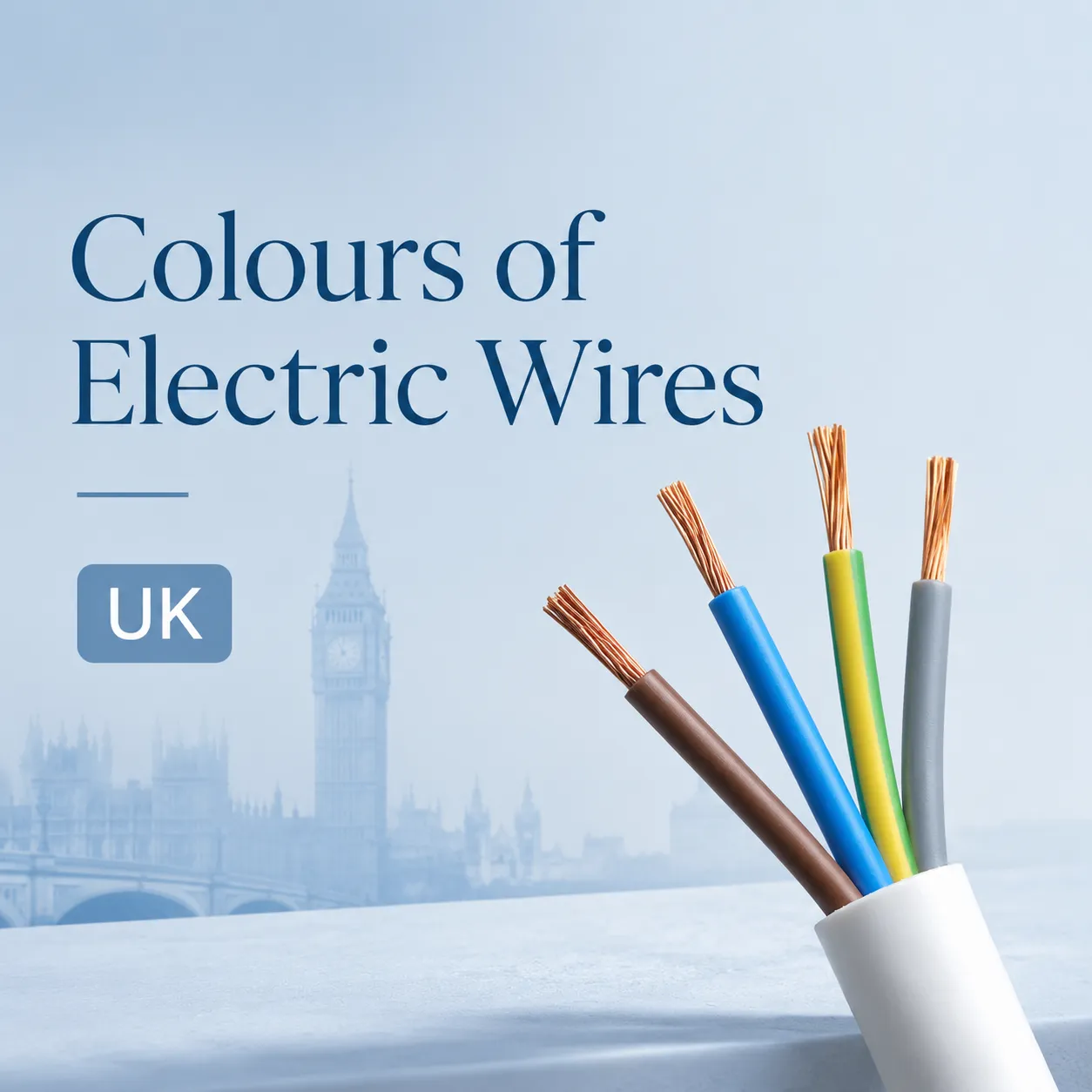
مؤخراً في مانشستر، قام كهربائي بتنفيذ مشروع إعادة تصميم مطبخ في منزل يعود لعام 1968. الصندوق الأول الذي فتحه كشف عن مزيج من الأسلاك الكهربائية القديمة والجديدة. أول ما لاحظه هو وجود قطعة من السلك الحديث ذات الموصلات الزرقاء/البنية متصلة بدائرة قديمة تحتوي على أزواج حمراء/سوداء أيضاً. يبدو أنه تم تمديدها إلى هذا الموقع من قبل مالك سابق، ولكن لم يتم في أي وقت تمييز الفرق بين الكابلات الجديدة والقديمة. بالإضافة إلى ذلك، قضى الكهربائي ساعة إضافية في تتبع جميع أنواع الموصلات المختلفة إلى مصدرها الأصلي قبل المتابعة؛ وكان حذره مبرراً. ألوان الأسلاك الكهربائية تغيرت في المملكة المتحدة في سنة واحدة (وليس عدة سنوات) — لذلك من المحتمل أن أي عمل كهربائي يحدث في منزل بُني قبل/بعد هذا الانتقال سيحتوي على نوعين مختلفين على الأقل من أنظمة الألوان (وربما أكثر). فهم كيفية التعامل مع هذه الأنواع المختلفة من الأسلاك عند التقاءها في صندوق التوصيل أمر حاسم لأداء عمل كهربائي آمن في أي منزل في المملكة المتحدة.
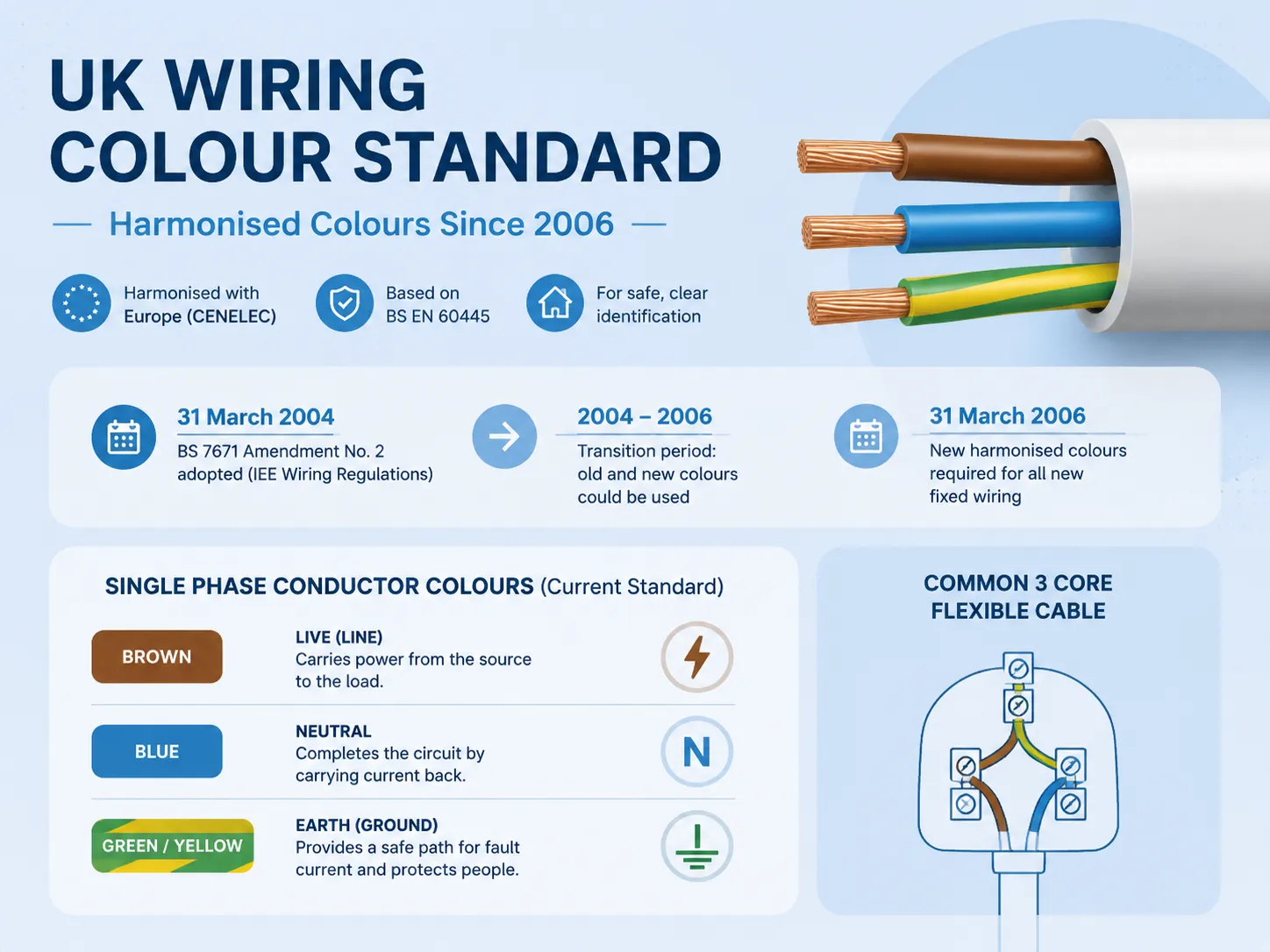
معيار ألوان الأسلاك الحالي في المملكة المتحدة: الألوان الموحدة منذ 2006
تم اعتماد معيار ألوان الأسلاك الموحدة لأوروبا في 31 مارس 2004 من قبل المملكة المتحدة، والذي نُشر كـ BS 7671 Amendment No. 2 (لوائح الأسلاك IEE). كانت هذه ألوان جديدة للأسلاك الثابتة للمباني لتتوافق مع الألوان الأوروبية. تم منح فترة انتقالية لمدة عامين من 31 مارس 2004 حتى 31 مارس 2006 يمكن خلالها استخدام الألوان القديمة والجديدة في نفس التركيب. يجب استخدام الألوان الموحدة الجديدة لجميع الأسلاك الثابتة الجديدة التي تُركب بعد 31 مارس 2006.
ليس من السهل على كهربائي ذو خبرة طويلة أن يغير عاداته حيث كان يطابق لونين من الأسلاك الكهربائية مع أطرافها المقابلة حيث كان الأحمر يستخدم للخطوط و الأسود للحيادي. الآن عليه إعادة برمجة ذهنه لمطابقة البني والأزرق على التوالي. هذا بسبب اتفاقية التغيير التي أقرها CENELEC (اللجنة الأوروبية للتوحيد القياسي في الكهرباء). التوحيد مطلوب ضمن BS EN 60445 في المعيار. توفر هذه المعايير الطريقة الصحيحة لتحديد الموصلات باستخدام اللون أو التعيين الرقمي.
وفقاً لمعيار الألوان البريطاني الموحد الحالي لأسلاك الكهرباء أحادية الطور، فإن رموز الألوان هي:
- بني: يُشار إلى السلك البني كموصل خط (المعروف أيضاً بالموصل الحي)، حيث كان مرتبطاً سابقاً باللون الأحمر. الموصل البني، وفقاً لاتفاقية الأسلاك الجديدة، يحمل الطاقة من مصدر الطاقة إلى الحمل المقصود.
- أزرق: السلك الحيادي. كان يُشار إليه سابقاً بـ ‘السلك الأسود’. السلك الأزرق الآن يُكمل الدائرة بحمل التيار العائد إلى مصدر الطاقة.
- مخطط أخضر وأصفر: في المملكة المتحدة، منذ عام 1977 كان هناك معيار ثابت للأرضي (الأرض) لم يتم تغييره أثناء التوحيد. يوفر موصل الأرضي مسارًا موصلًا لأي أعطال تحدث، ويرتبط بأي أجسام معدنية مكشوفة.
سيتم تعيين ألوان الموصلات في كابل مرن ثلاثي النوى شائع الاستخدام في الأجهزة الكهربائية وأسلاك التمديد كما يلي: سيكون الموصل الحي لونه بني، والموصل المحايد لونه أزرق، وموصل الأرضي (الأرض) لونه أخضر / أصفر.
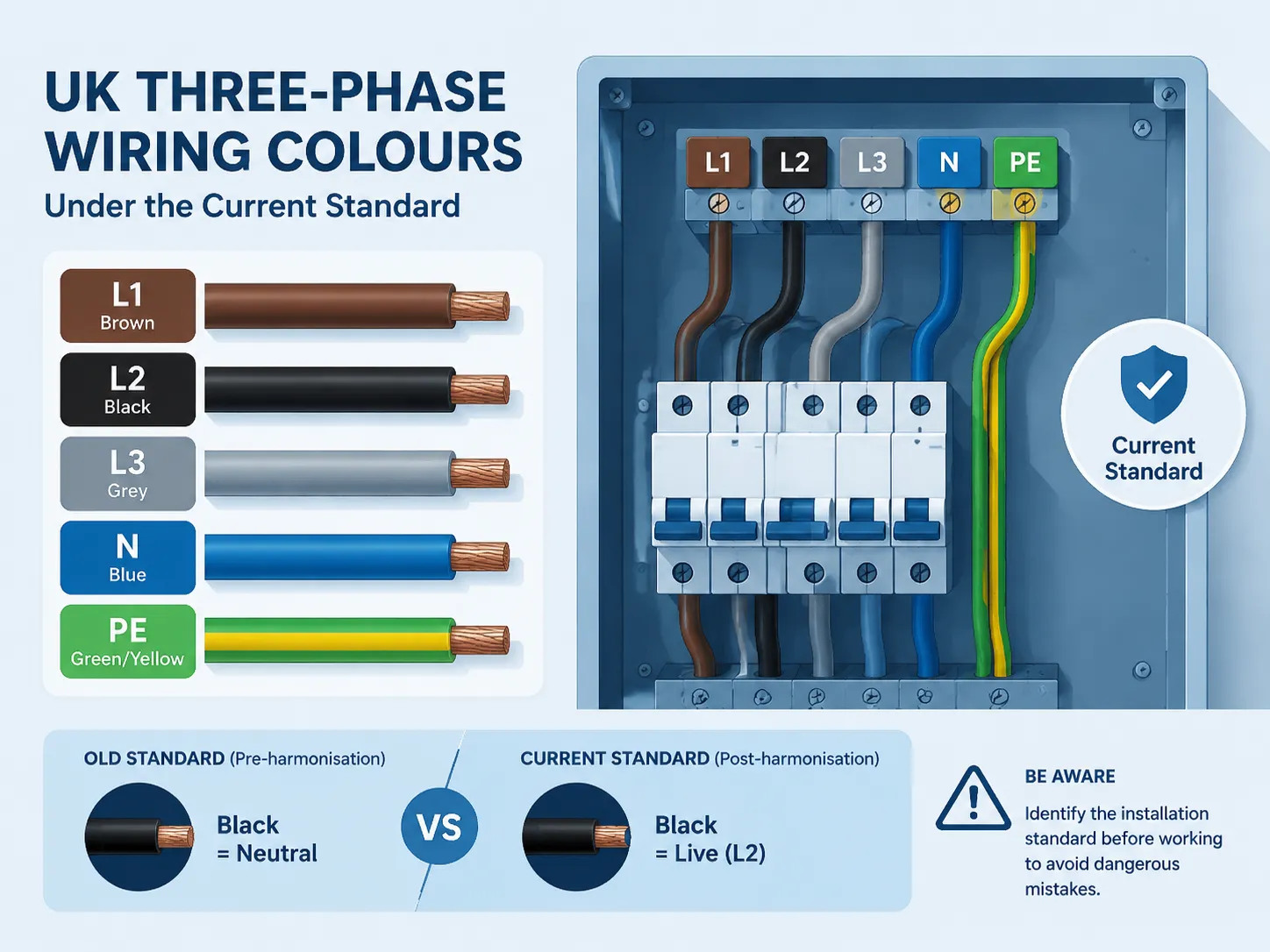
ألوان الدائرة ثلاثية الطور وفقًا للمعيار الحالي
بالنسبة للتركيبات ثلاثية الطور، يستخدم المعيار الحالي في المملكة المتحدة الألوان التالية ألوان الأسلاك:
- الطور L1: بني
- الطور L2: أسود
- الطور L3: رمادي
- المحايد: أزرق
- الأرضي الوقائي: مخطط بالأخضر والأصفر
أدى توحيد رموز ألوان الأسلاك إلى خلق ارتباك محتمل بسبب الاختلافات بين هذه الرموز. وفقًا للمعيار القديم، كان اللون الأسود يمثل السلك “المحايد”، بينما رمز اللون الجديد (الموحد) غيّر الأسود ليمثل “الساخن” في نظام كهربائي ثلاثي الطور. لذلك، يجب على الكهربائي تحديد ما إذا كان يعمل على تركيب قبل أو بعد التوحيد إذا واجه سلكًا أسود في لوحة كهربائية ثلاثية الطور / تقدم خدمة كهربائية لنظام ثلاثي الطور؛ وإلا فقد يخطئ الكهربائي في تصنيف السلك الأسود ويخلق دائرة قصر أو ينشط الأجزاء المعدنية المكشوفة عن طريق الخطأ.
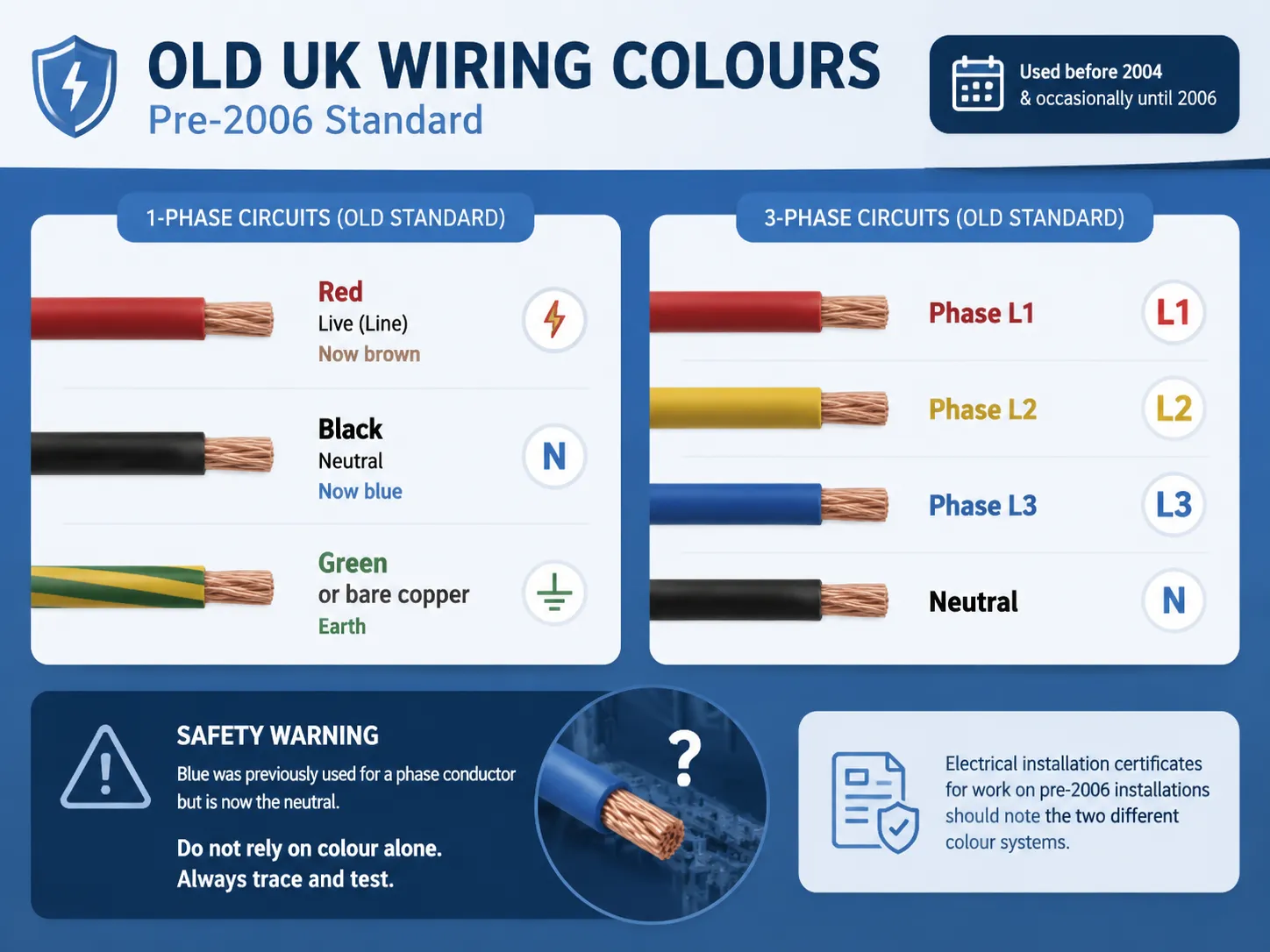
ألوان الأسلاك القديمة في المملكة المتحدة: المعيار قبل 2006
ألوان الأسلاك الكهربائية قبل عام 2004 والتي تم تركيبها أحيانًا في الفترة من 2004 حتى 2006 ستتبع المعيار البريطاني السابق وستحتوي على مجموعة الألوان التالية: دوائر الطور الواحد وفقًا للمعيار السابق للألوان:
- الأحمر: الحي (الخط). الآن بني.
- الأسود: المحايد. الآن أزرق.
- الأخضر أو النحاس العاري: منذ عام 1977، كان نظام الألوان المقبول عالميًا لموصلات الأرضي في أستراليا هو الأخضر والأصفر المخطط، لكن التركيبات السابقة قد استخدمت إما الأخضر فقط أو موصلات أرضي غير معزولة.
بالنسبة للتركيبات ثلاثية الطور وفقًا للمعيار القديم، كانت ألوان الطور كما يلي:
- الطور L1: أحمر
- الطور L2: أصفر
- الطور L3: الأزرق
- المحايد: أسود
يشكل النظام الثلاثي الطور القديم خطرًا محددًا من ألوان التوحيد؛ حيث كان اللون الأزرق مخصصًا سابقًا لموصل الطور ولكنه يُستخدم الآن كلون للسلك المحايد. لذلك لا يمكن تحديد سلك أزرق في لوحة ثلاثية الطور بناءً على اللون فقط. يجب تتبعه واختباره. أصدرت هيئة الصحة والسلامة وثيقة إرشادية تحتوي على معلومات حول إدارة هذا الخطر المحدد؛ ويجب أن تحتوي أي شهادة تركيب كهربائي للعمل المنجز على تركيب تم قبل 2006 على ملاحظة بخصوص وجود نظامي ألوان مختلفين.
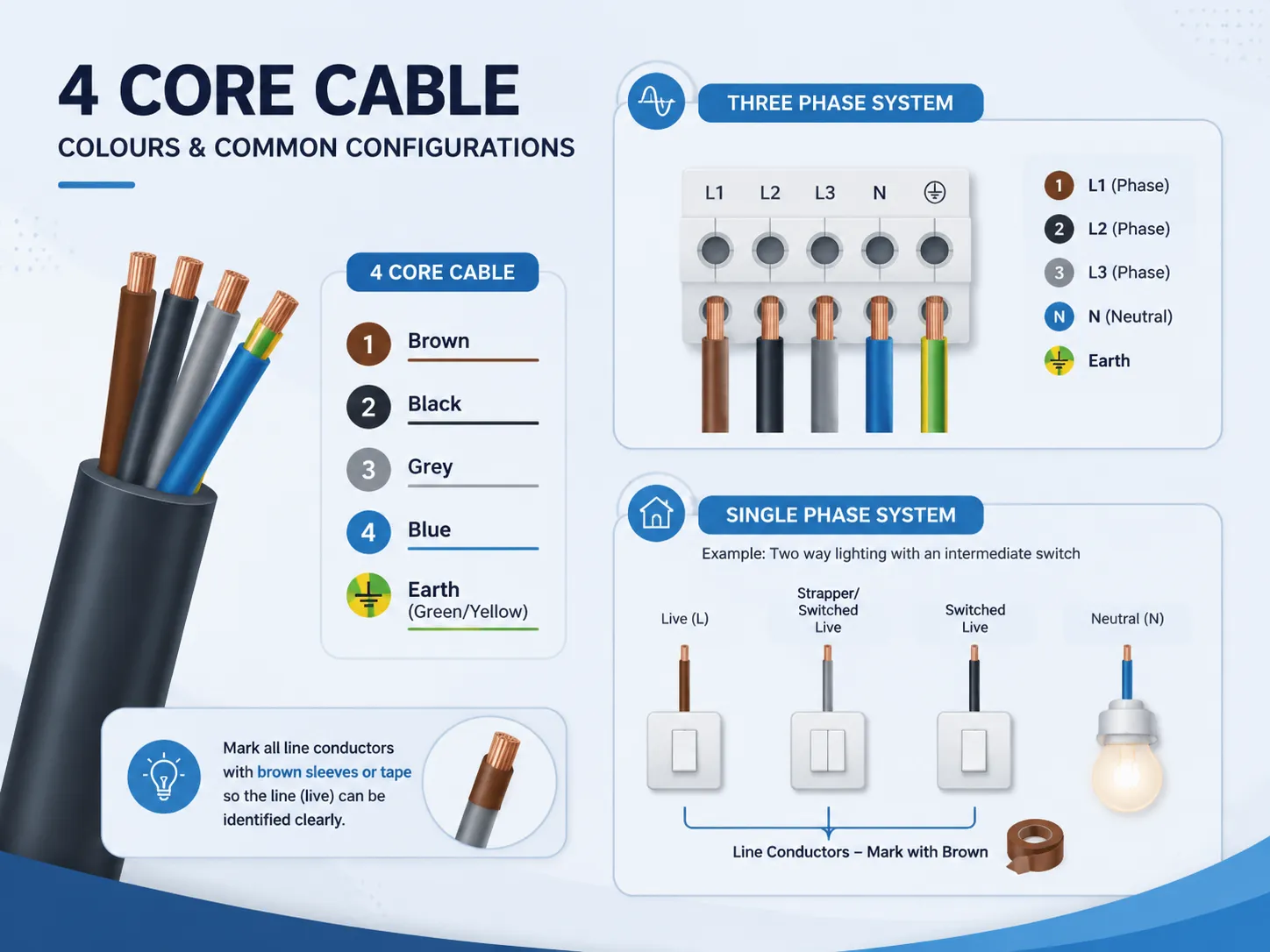
ألوان كابل رباعي النوى والتكوينات الشائعة الأخرى
بشكل عام، يتكون الكابل رباعي النوى من أربعة موصلات معزولة، وموصل أرضي غير معزول، أو بدلاً من ذلك، نواة أرضية خضراء/صفراء واحدة. تحتوي الموصلات الأربعة المعزولة على ترميز لوني كما هو موضح في المعيار الموحد:
- النواة 1: البني
- النواة 2: أسود
- النواة 3: رمادي
- النواة 4: الأزرق
في نظام ثلاثي الطور، يُستخدم اللون البني (B)، والأسود (B)، والرمادي (B) كموصلات الطور الثلاثة بينما يُستخدم اللون الأزرق (B) كموصل محايد. عند استخدام كابل بأربعة أسلاك في نظام طور واحد (على سبيل المثال، إضاءة ذات اتجاهين مع مفتاح وسيط)، يمكن للفني الكهربائي تعيين هذه الأسلاك بشكل مختلف. يجب على الفني الكهربائي وضع علامات على جميع الأسلاك المستخدمة كموصل خطي بأكمام أو شريط بني حتى يمكن تحديد الخط الثابت بشكل صحيح. على وجه الخصوص، غالبًا ما يتم وضع علامة على السلك الرمادي لأن وظيفته ليست واضحة للشخص الذي يستخدم السلك بسبب لونه.
الانتقال من المعايير القديمة إلى الجديدة يكون أسهل للفهم عند مقارنة المعايير القديمة مع الجديدة للموصلات التي تؤدي المهام الأكثر شيوعًا.
| وظيفة الموصل | اللون القديم في المملكة المتحدة (قبل 2004/2006) | اللون الموحد الحالي |
|---|---|---|
| الطور الواحد الحي (الخط) | أحمر | البني |
| الطور الواحد المحايد | أسود | الأزرق |
| ثلاثي الطور L1 | أحمر | البني |
| ثلاثي الطور L2 | أصفر | أسود |
| ثلاثي الطور L3 | الأزرق | رمادي |
| الأرضي الوقائي | أخضر أو عاري (أخضر/أصفر منذ 1977) | أخضر مخطط بالأصفر |
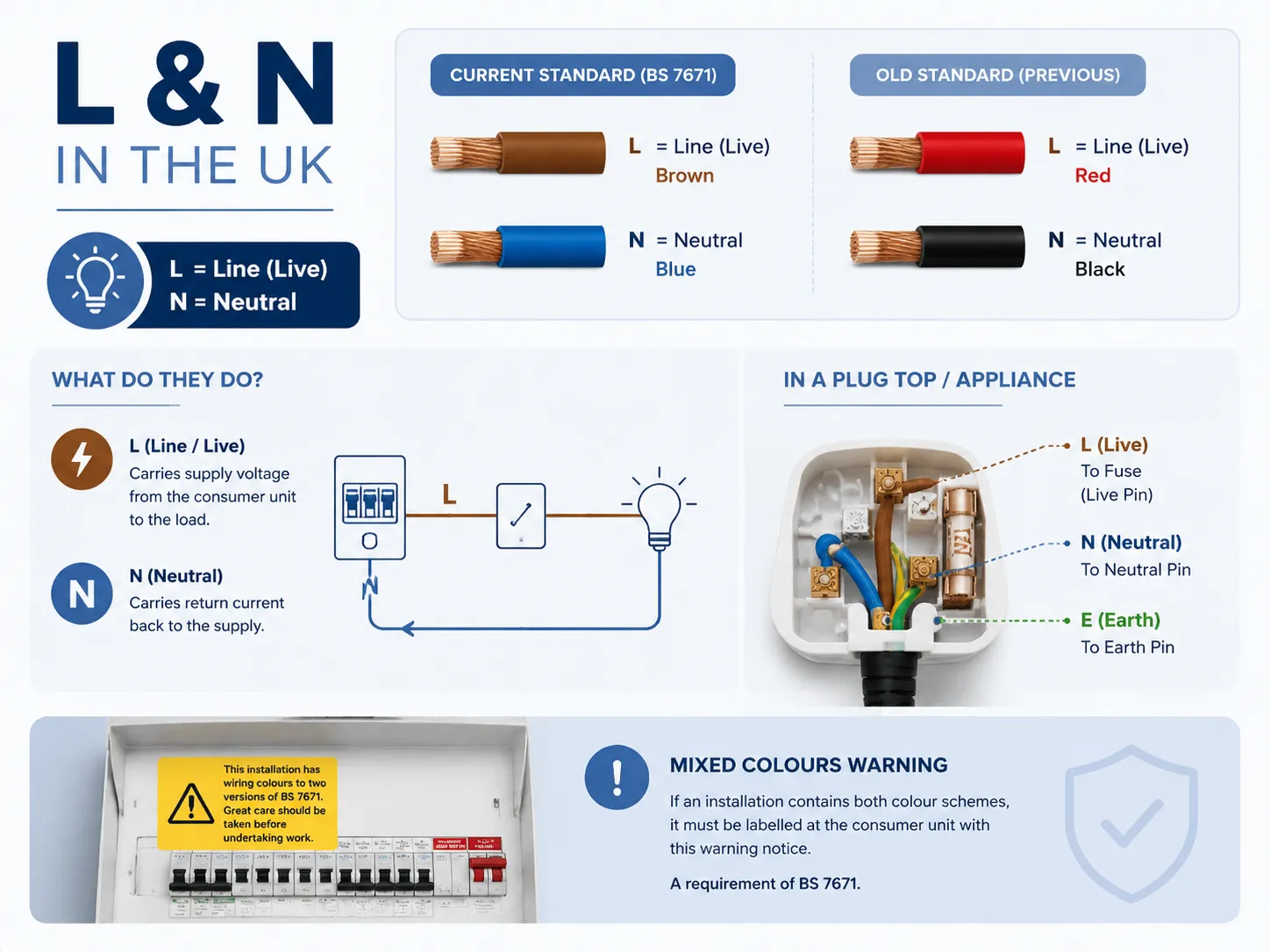
ما هي أسلاك L و N في المملكة المتحدة؟
في سياق التوصيلات الثابتة في المملكة المتحدة،, L و N هما الاختصارات القياسية للخط والمحايد. وفقًا للمعيار الموحد الحالي،, L هو بني و N هو أزرق. يحمل موصل الخط (البني) جهد الإمداد من وحدة المستهلك إلى المفتاح أو الضوء أو المقبس. يحمل موصل المحايد (الأزرق) التيار العائد إلى الإمداد. في قابس أو جهاز موصل بشكل صحيح، يتصل السلك البني بالصمام (دبوس الخط الحي)، ويتصل السلك الأزرق بدبوس المحايد، ويتصل السلك الأخضر/الأصفر بدبوس الأرضي.
وفقًا للمعيار القديم، كان L أحمر و N أسود. يجب أن تكون التركيبات التي تحتوي على كلا نظامي الألوان موضحة بوضوح في وحدة المستهلك بإشعار تحذيري، عادةً ما يكون نصه: “تحتوي هذه التركيبة على ألوان أسلاك لإصدارين من BS 7671. يجب توخي الحذر الشديد قبل القيام بأي عمل.” هذا الملصق التحذيري هو مطلب بموجب BS 7671 وهو أول شيء يبحث عنه الفني الكهربائي المسؤول عند فتح وحدة مستهلك غير مألوفة.
هل ألوان الأسلاك القديمة في المملكة المتحدة لا تزال آمنة؟
الألوان القديمة لأسلاك المملكة المتحدة ليست غير آمنة بطبيعتها. العزل البلاستيكي الأحمر والأسود المستخدم في الكابلات البريطانية من الستينيات وحتى أوائل الألفية الثانية عادةً ما يكون متينًا ويحافظ على خصائص العزل لعقود، بشرط ألا يتعرض لارتفاع حرارة مستمر أو ضرر مادي أو تعرض كيميائي. القلق الأمني لا يكمن في عمر العزل بل في خطر الخطأ في التعرف عند وجود الألوان القديمة والجديدة معًا.
عندما يواجه الفني الكهربائي موصلًا أحمر أو أسود في تركيب يحتوي أيضًا على بني وأزرق، فإن النهج الآمن الوحيد هو اختبار كل موصل باستخدام جهاز اختبار الجهد وجهاز اختبار الاستمرارية قبل إجراء أي توصيلات. لا يمكن الاعتماد على اللون فقط عبر الفجوة الموحدة. تناول منشور IET Wiring Matters هذا الموضوع بالتفصيل، وتؤكد التوجيهات الصناعية من جمعية المقاولين الكهربائيين (ECA) على ضرورة وجود علامات واضحة واختبارات في التركيبات ذات الألوان المختلطة.
إذا تم تمديد أو تعديل تركيب قديم، فإن أفضل الممارسات هي استخدام الألوان الموحدة الحالية للعمل الجديد وتطبيق ملصق تحذيري متين عند وحدة المستهلك. تغليف أي موصلات قديمة يتم إعادة استخدامها بالتعريف اللوني المناسب — تغليف بني على الموصل الحي الأحمر، تغليف أزرق على الموصل المحايد الأسود — يساعد في سد الفجوة البصرية ويقلل من خطر الخطأ في التعرف مستقبلاً.
إرشادات عملية لأصحاب المنازل والكهربائيين
بالنسبة لصاحب المنزل الذي يستبدل مفتاح إضاءة أو واجهة مقبس تالفة، لون الأسلاك الكهربائية في صندوق التوصيل هو أول ما يجب ملاحظته قبل فصل أي شيء. صندوق مفتاح يحتوي على بني وأزرق هو تركيب حديث؛ والصندوق الذي يحتوي على أحمر وأسود هو قبل 2006. إذا وجدت مزيجًا من الاثنين، توقف واتصل بكهربائي مؤهل. وجود مخططات ألوان مختلطة يشير إلى أن الدائرة قد تم تعديلها عبر تغيير المعيار، وخطر توصيل موصل بشكل خاطئ حقيقي.
بالنسبة للكهربائي، البروتوكول منهجي: تحديد عمر التركيب من وحدة المستهلك وأي شهادات اختبار متاحة. اختبار كل موصل. تطبيق التغليف المناسب حيث لا تتطابق الألوان مع التوقعات الحديثة. وضع علامة على وحدة المستهلك. وتسجيل وجود ألوان أسلاك مختلطة في شهادة التركيب الكهربائي أو شهادة الأعمال الكهربائية البسيطة. هذه الوثائق تحمي ليس فقط الكهربائي الذي قام بالعمل ولكن كل كهربائي وصاحب منزل يتبع.
المراجع
- BS EN 60445 — المبادئ الأساسية والسلامة لواجهة الإنسان والآلة، العلامات والتعريف — تعريف الموصلات بالألوان أو الأرقام. British Standards Institution.
- BS 7671 — متطلبات التركيبات الكهربائية (لوائح الأسلاك IET) بي إس إن 60445.
- Health and Safety Executive — السلامة الكهربائية في العمل — إرشادات لإدارة المخاطر الكهربائية بما في ذلك التركيبات ذات ألوان الأسلاك المختلطة.
- جمعية المقاولين الكهربائيين (ECA) — إرشادات الصناعة حول ممارسات التركيب الكهربائي الآمن وتحديد ألوان الأسلاك.
الأسئلة المتكررة
هل ألوان الأسلاك القديمة في المملكة المتحدة لا تزال آمنة؟
كان نظام الأسلاك التقليدي في المملكة المتحدة يتكون من أسلاك بألوان مختلفة. تلك الأسلاك القديمة — الأحمر والأسود — ليست بالضرورة خطيرة. غلاف السلك في الأسلاك القديمة عادة ما يكون متينًا جدًا. ومع ذلك، عند التوصيل بمزيج من الأسلاك القديمة والجديدة، من الممكن الخطأ في التعرف على الأسلاك، مما يخلق مشكلة أمان محتملة. من الضروري أن يكون أي تركيب يستخدم دوائر أسلاك قديمة (الأحمر والأسود) وجديدة (البني والأزرق) موضحًا بوضوح عند وحدة المستهلك. يجب التحقق من جميع الموصلات قبل التوصيل.
ما لون أسلاك L و N في المملكة المتحدة؟
السلك البني هو الخط (L)؛ السلك الأزرق هو المحايد (N) وفقًا للمعيار الموحد، بينما في المعيار القديم قبل 2006 كان السلك الحي (L) أحمر والسلك المحايد (N) أسود. كلاهما يحتوي على شريط أخضر وأصفر كالأرضي (موصل التأريض) لكن التركيبات القديمة لموصلات التأريض قد تكون خضراء صلبة أو عارية.
في أي سنة غيرت المملكة المتحدة ألوان الأسلاك؟
في 31 مارس 2004، نفذت المملكة المتحدة رسميًا معيار رمز ألوان الأسلاك الكهربائية. كان هناك فترة انتقالية يمكن خلالها استخدام كل من ألوان الأسلاك القديمة والجديدة حتى 31 مارس 2006. اعتبارًا من ذلك التاريخ، كان يجب أن تتوافق جميع التركيبات الكهربائية الجديدة مع نظام ألوان الأسلاك الجديد المكون من البني، الأزرق، والأخضر/الأصفر.
ما هي ألوان كابلات 4 النوى في المملكة المتحدة؟
وفقًا للمعايير الموحدة، تُصنع كابلات 4 النوى بأسلاك ملونة باللون البني، الأسود، الرمادي، والأزرق. بالإضافة إلى ذلك، يحتوي كابل 4 النوى على موصل أرضي إما أخضر/أصفر أو موصل أرضي عاري. في الحالات التي يُستخدم فيها كابل 4 النوى لنظام ثلاثي الطور؛ تكون الموصلات الثلاثة للطور تقليدية باللون البني، الأسود، والرمادي، مع الأزرق كموصل محايد. في حالة تقديم طور واحد، يجب أن تكون جميع موصلات الطور قابلة للتحديد بواسطة غلاف بني.
الـ ألوان الأسلاك الكهربائية في المملكة المتحدة ليست عشوائية. فهي تتبع معيارًا وطنيًا، يتماشى مع معيار أوروبي، يهدف إلى حماية الكهربائيين وأصحاب المنازل من عواقب توصيل موصل بشكل خاطئ. سواء كنت تستبدل واجهة مقبس في منزل شبه منفصل من السبعينيات أو تقوم بتوصيل تمديد جديد وفقًا للوائح الحالية، فإن لون السلك يروي قصة — لكنها قصة يجب التحقق منها باستخدام جهاز اختبار الجهد، وليس الاعتماد عليها فقط. في GOG Electric، نصنع ملحقات الأسلاك — مفاتيح، مقابس، وأجهزة المنزل الذكي — مصممة لتوصيلها بأمان ووضوح، مع علامات طرفية تتوافق مع ألوان الأسلاك الحالية في المملكة المتحدة، لأن الاتصال بين السلك والجهاز هو المكان الذي يتم فيه تأكيد السلامة أو تعريضها للخطر.