
Недавно в Манчестере электрик взялся за проект по ремонту кухни в доме 1968 года постройки. Первая коробка, которую он открыл, показала смесь как старой, так и новой электрической проводки. Первое, что он заметил, — это то, что кусок современного провода с синими/коричневыми жилами был подключён к старой цепи с красно/чёрными парами. Видимо, предыдущий владелец удлинил проводку до этого места, но при этом не отметил разницу между новыми и старыми кабелями. Кроме того, электрик потратил дополнительный час на отслеживание всех различных типов жил до их исходного источника, прежде чем продолжить работу; его осторожность была оправдана. Цвета электрических проводов изменились в Великобритании за один год (не несколько) — поэтому вероятно, что любая электромонтажная работа в доме, построенном до или после этого перехода, будет содержать как минимум два разных типа цветовых схем (а возможно и больше). Понимание того, как обращаться с этими разными типами проводки при их соединении в распределительной коробке, критически важно для выполнения безопасных электромонтажных работ в любом доме в Великобритании.
Текущий стандарт цветовой маркировки проводки в Великобритании: гармонизированные цвета с 2006 года
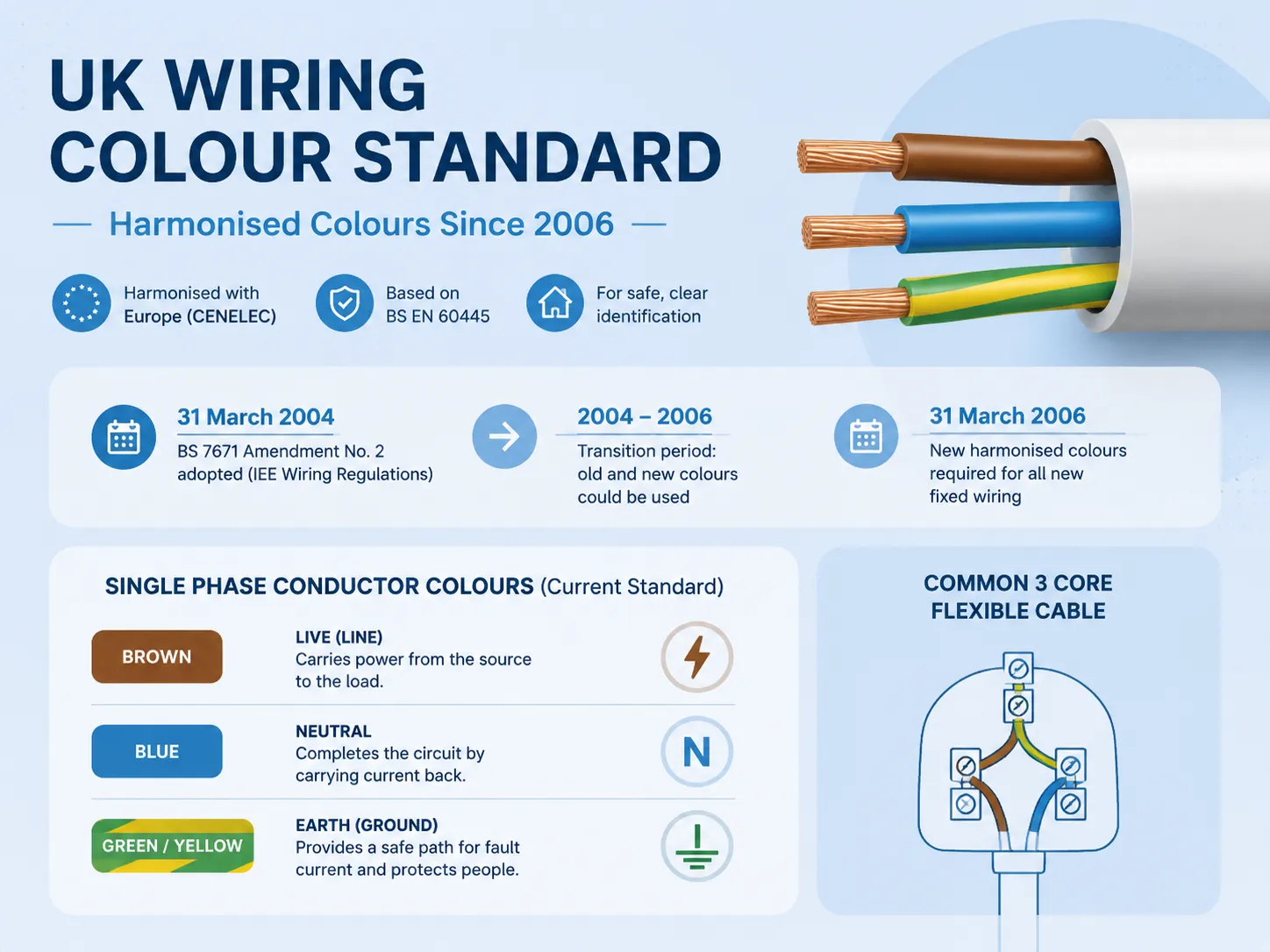
Гармонизированный стандарт цветовой маркировки проводки для Европы был принят 31 марта 2004 года Великобританией и опубликован как BS 7671 Amendment No. 2 (IEE Wiring Regulations). Это были новые цвета для стационарной проводки в зданиях, чтобы привести их в соответствие с европейскими цветами. Был предоставлен переходный период в два года с 31 марта 2004 по 31 марта 2006, в течение которого на одной установке могли использоваться как старые, так и новые цвета. Новые гармонизированные цвета должны использоваться для всей новой стационарной проводки, установленной после 31 марта 2006 года.
Это не простая адаптация для электрика с многолетним опытом, который привык сопоставлять 2 цвета электрического провода с соответствующими клеммами, где красный использовался для линии(й), а чёрный — для нейтрали. Теперь им приходится перенастраивать своё мышление, чтобы сопоставлять коричневый и синий соответственно. Это связано с соглашением CENELEC (Европейский комитет по электротехнической стандартизации) о гармонизации. Гармонизация обязательна в рамках стандарта BS EN 60445. Эти стандарты обеспечивают правильный способ идентификации жил с помощью цвета или числового обозначения.
Согласно текущему гармонизированному британскому стандарту, цветовые коды однофазных электрических проводов следующие:
- Коричневый: Коричневый провод называется проводником линии (также известным как фазный проводник), ранее ассоциировавшимся с красным цветом. Коричневый провод, согласно новой цветовой конвенции, передаёт энергию от источника питания к нагрузке.
- Синий: Нейтральный провод. Ранее назывался ‘чёрным проводом’. Синий провод теперь замыкает цепь, возвращая ток обратно к источнику питания.
- Зелёный с жёлтой полосой: В Великобритании с 1977 года существует единый стандарт для заземления (земли), который не изменялся в процессе гармонизации. Заземляющий проводник обеспечивает проводящий путь для любых возникающих неисправностей и соединён с любыми оголёнными металлическими объектами.
Цвета проводников в обычном трёхжильном гибком кабеле, используемом в бытовых приборах и удлинителях, распределяются следующим образом: фазный проводник окрашен в коричневый цвет, нейтральный проводник — в синий, а заземляющий (земля) — в зелёно-жёлтый.
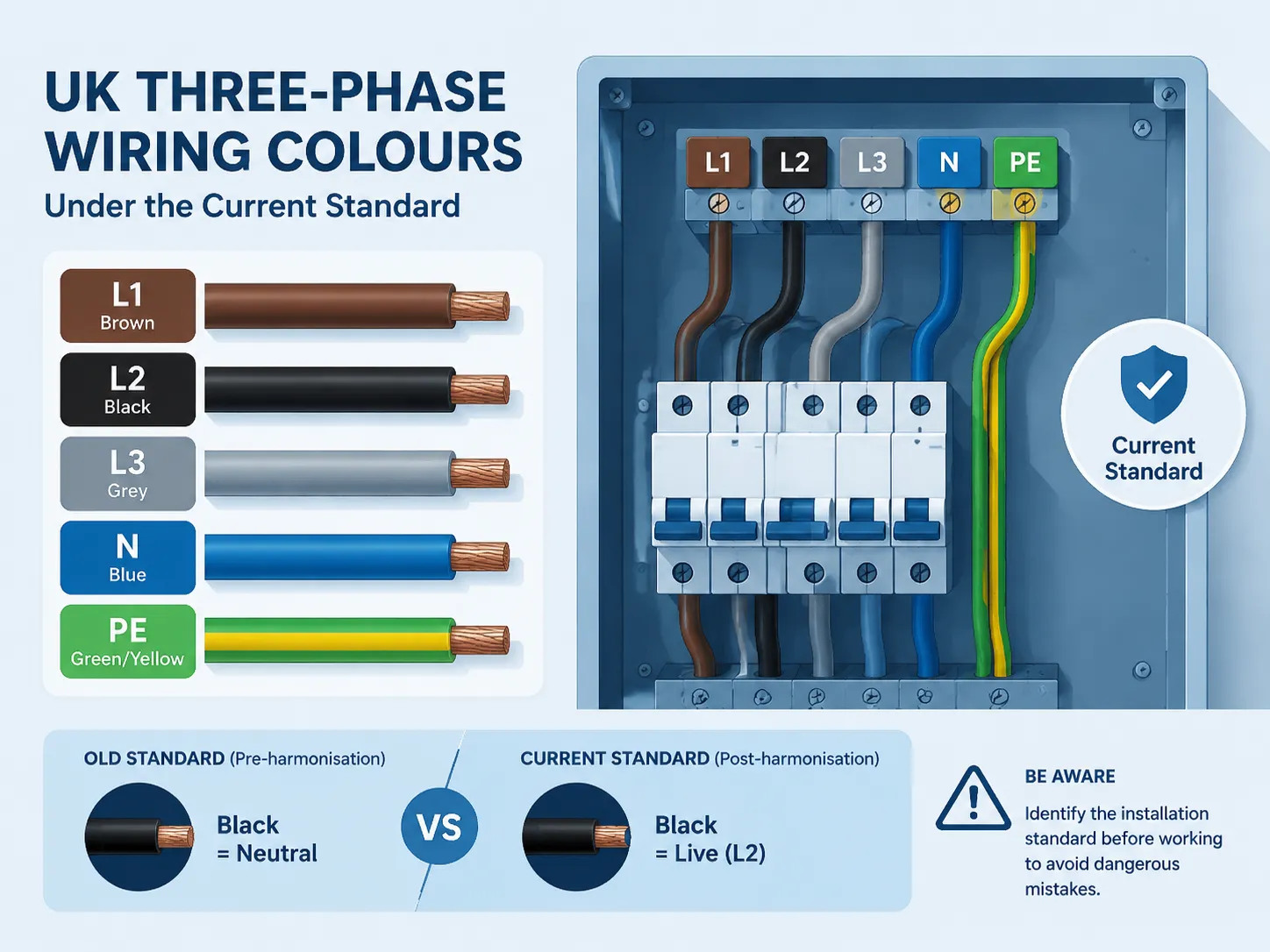
Цвета трёхфазных цепей по текущему стандарту
Для трёхфазных установок текущий стандарт Великобритании использует следующие цвета проводов:
- Фаза L1: Коричневый
- Фаза L2: Чёрный
- Фаза L3: Серый
- Фаза (входящий провод с напряжением, всегда под напряжением): Синий
- Защитное заземление: Зелёно-жёлтая полоска
Гармонизация цветовой кодировки проводки создала потенциальную путаницу из-за различий между этими кодами. По старому стандарту цвет чёрный обозначал “нейтральный” провод, тогда как новый (гармонизированный) цветовой код изменил чёрный цвет на обозначение “фазы” в трёхфазной электрической системе. Поэтому электрик должен определить, работает ли он с установкой до или после гармонизации, если он сталкивается с чёрным проводом в трёхфазном электрощите/обеспечивающем электроснабжение трёхфазной системы; в противном случае электрик может неправильно классифицировать чёрный провод и случайно создать короткое замыкание или подать напряжение на оголённые металлические части.
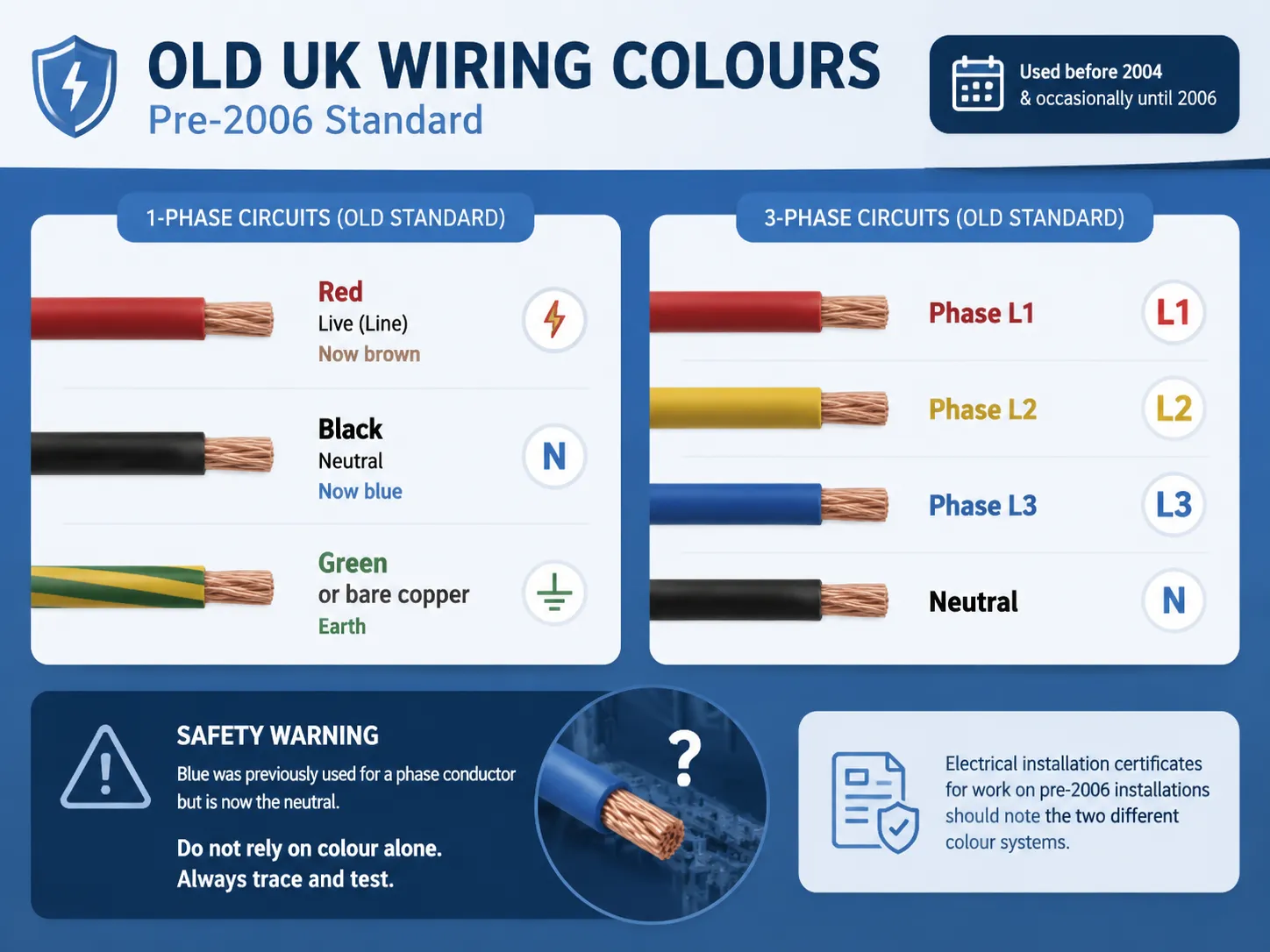
Старые цвета проводки Великобритании: стандарт до 2006 года
Цвета электрических проводов до 2004 года и иногда устанавливаемые в переходный период с 2004 по 2006 год соответствуют более раннему британскому стандарту и имеют следующий набор цветов: однопроводные цепи по предыдущему цветовому стандарту:
- Красный: Фаза (линия). Сейчас коричневый.
- Чёрный: Нейтраль. Сейчас синий.
- Зелёный или оголённая медь: С 1977 года универсально принятая цветовая схема для заземляющих проводников в Австралии — зелёно-жёлтая полоска, но в более ранних установках могли использоваться либо только зелёный, либо неизолированные заземляющие проводники.
Для трёхфазных установок по старому стандарту цвета фаз были:
- Фаза L1: Красный
- Фаза L2: Жёлтый
- Фаза L3: Коричневый
- Нейтраль: Черный
Старая трёхфазная система представляет особую опасность из-за гармонизированных цветов; цвет синий ранее назначался фазному проводнику, но теперь используется для нейтрали. Поэтому нельзя определить синий провод в трёхфазном щите только по цвету. Его необходимо проследить и проверить. Управление по охране труда и технике безопасности выпустило руководящий документ с информацией по управлению этим конкретным риском; и любой сертификат на электромонтажные работы, выполненные на установке до 2006 года, должен содержать примечание о существовании двух различных цветовых систем.
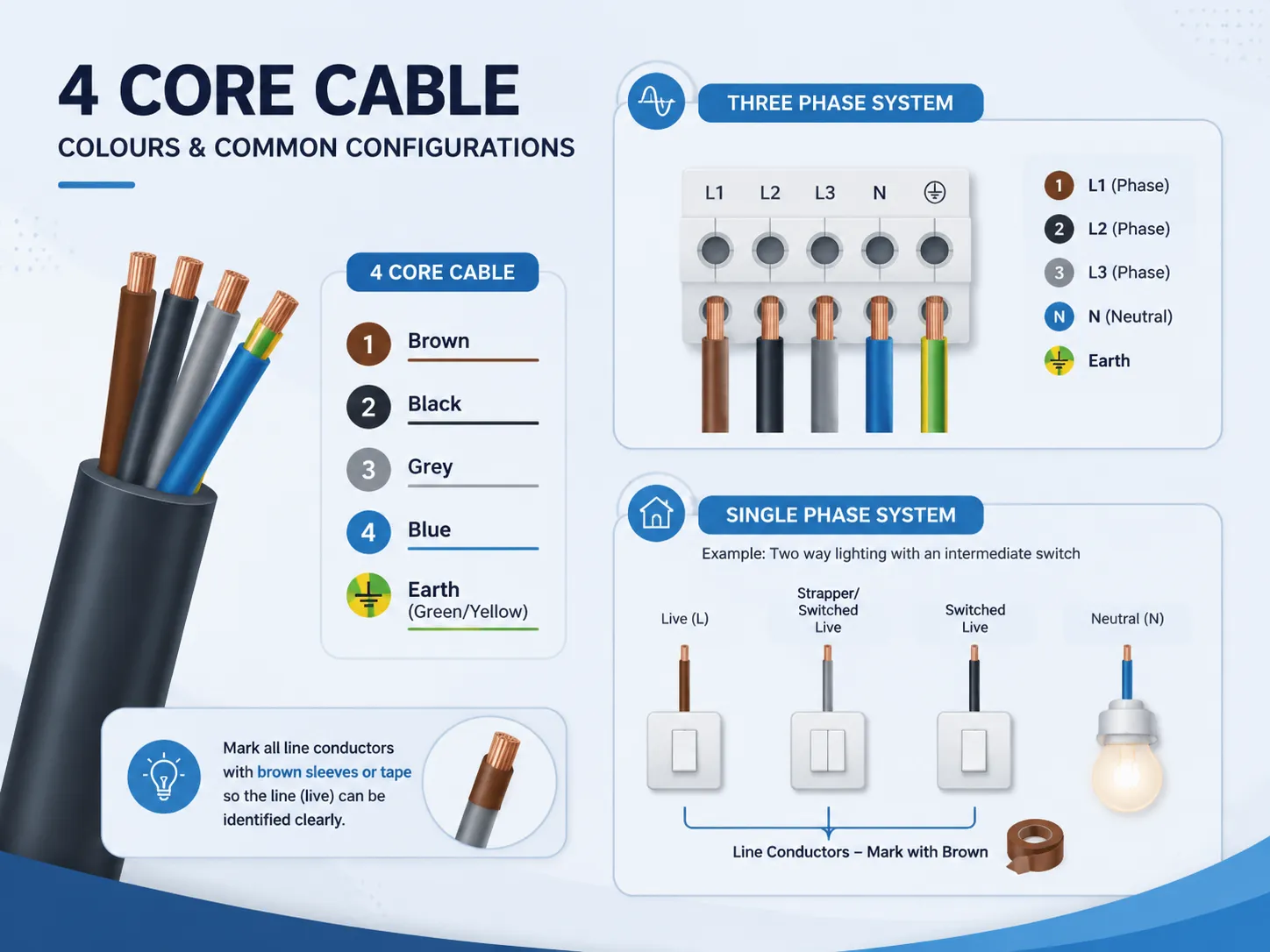
Цвета четырёхжильных кабелей и другие распространённые конфигурации
В общем случае, четырёхжильный кабель состоит из четырёх изолированных проводников и одного неизолированного заземления, либо, альтернативно, из одного зелёно-жёлтого заземляющего жилы. Четыре изолированных проводника имеют следующую цветовую маркировку согласно гармонизированному стандарту:
- Жила 1: Великобритания / IEC (BS 7671, текущая версия)
- Жила 2: Черный
- Жила 3: Серый
- Жила 4: Коричневый
В трехфазной системе коричневый (B), черный (B) и серый (B) используются как трехфазные проводники, в то время как синий (B) является нейтральным проводником. При использовании четырехжильного кабеля в однофазной системе (например, двухклавишное освещение с промежуточным выключателем) электрик может назначать эти жилы по-другому. Электрик должен маркировать все жилы, используемые как фазные проводники, коричневыми муфтами или лентой, чтобы правильно определить фазу. В частности, серая жила часто маркируется, поскольку её функция не очевидна для пользователя из-за цвета.
Переход от старых к новым стандартам легче понять при сравнении старых и новых стандартов проводников, выполняющих наиболее распространенные задачи.
| Что означают другие цвета в коробке выключателя света | Старый цвет в Великобритании (до 2004/2006 гг.) | Текущий гармонизированный цвет |
|---|---|---|
| Однофазный фазный проводник (Line) | Красный | Великобритания / IEC (BS 7671, текущая версия) |
| Однофазный нейтральный проводник | Черный | Коричневый |
| Трехфазный L1 | Красный | Великобритания / IEC (BS 7671, текущая версия) |
| Трехфазный L2 | Жёлтый | Черный |
| Трехфазный L3 | Коричневый | Серый |
| Защитное заземление | Зеленый или оголенный (зеленый/желтый с 1977 года) | Зеленый с желтой полосой |
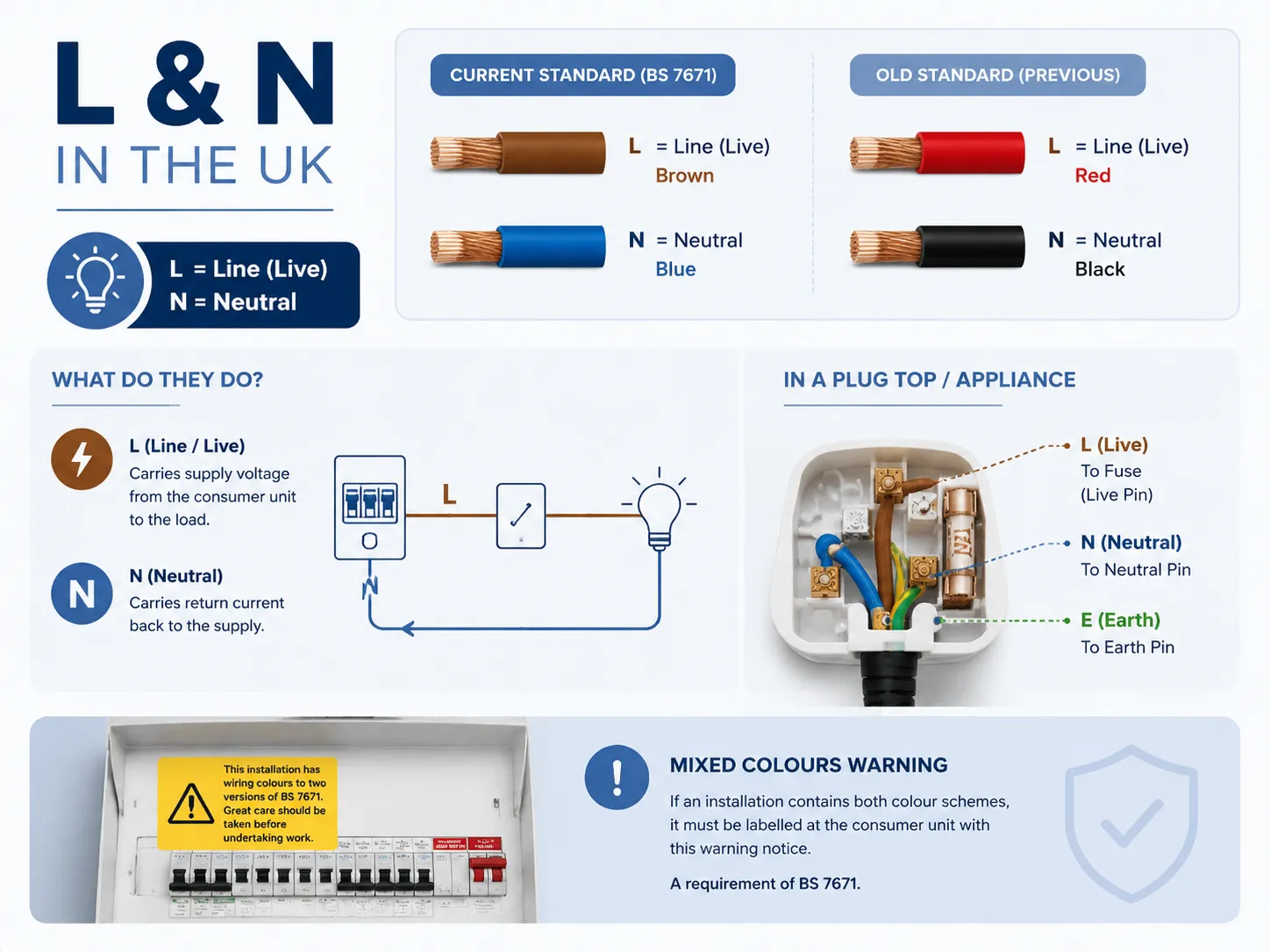
Что означают провода L и N в Великобритании?
В контексте фиксированной проводки Великобритании, L и N являются стандартными сокращениями для Line и Neutral. Согласно текущему гармонизированному стандарту, L — коричневый и N — синий. Фазный проводник (коричневый) передает напряжение от распределительного щита к выключателю, светильнику или розетке. Нейтральный проводник (синий) возвращает ток обратно к источнику питания. В правильно подключенной вилке или приборе коричневый провод соединяется с предохранителем (фазный контакт), синий провод — с нейтральным контактом, а зеленый/желтый провод — с заземляющим контактом.
По старому стандарту L был красным, а N — черным. Установка, содержащая обе цветовые схемы, должна быть четко обозначена на распределительном щите предупреждающей надписью, обычно следующего содержания: “В этой установке используются цвета проводов двух версий BS 7671. Перед выполнением работ необходимо проявлять особую осторожность”. Эта предупреждающая этикетка является требованием стандарта BS 7671 и является первым, на что обращает внимание ответственный электрик при открытии незнакомого распределительного щита.
Безопасны ли старые цвета проводов Великобритании?
Старые цвета проводов Великобритании не являются по своей природе небезопасными. Красная и черная ПВХ-изоляция, используемая в британских кабелях с 1960-х до начала 2000-х годов, обычно долговечна и сохраняет свои изоляционные свойства в течение десятилетий, при условии, что она не подвергалась длительному перегреву, механическим повреждениям или воздействию химикатов. Опасность заключается не в возрасте изоляции, а в риске неправильной идентификации при совместном использовании старых и новых цветов.
Когда электрик сталкивается с красным или черным проводником в установке, где также присутствуют коричневый и синий, единственно безопасным подходом является проверка каждого проводника с помощью индикатора напряжения и тестера непрерывности перед выполнением любых подключений. Полагаться только на цвет нельзя при переходе на гармонизированные стандарты. Публикация IET Wiring Matters подробно рассматривает эту тему, а отраслевые рекомендации от Ассоциация электромонтажных подрядчиков (ECA) подчеркивают необходимость четкой маркировки и тестирования в установках с разноцветной проводкой.
Если старое оборудование расширяется или модифицируется, лучшей практикой является использование текущих гармонизированных цветов для новых работ и нанесение прочной предупредительной этикетки на распределительном щите. Обмотка любых старых проводников, которые повторно используются, соответствующей цветовой маркировкой — коричневая обмотка на красном фазном проводе, синяя обмотка на черном нейтральном — помогает преодолеть визуальный разрыв и снижает риск будущей неправильной идентификации.
Практические рекомендации для домовладельцев и электриков
Для домовладельца, заменяющего поврежденный выключатель или лицевую панель розетки, цвет электрических проводов в монтажной коробке — первое, на что следует обратить внимание перед отключением чего-либо. Коробка с выключателем, содержащая коричневый и синий провода, является современной установкой; коробка с красным и черным — до 2006 года. Если вы обнаружите смесь обоих, остановитесь и вызовите квалифицированного электрика. Наличие смешанных цветовых схем указывает на то, что цепь была изменена в период смены стандартов, и риск неправильного подключения проводника реален.
Для электрика протокол методичен: определить возраст установки по распределительному щиту и имеющимся сертификатам испытаний. Проверить каждый проводник. Нанести соответствующую обмотку там, где цвета не соответствуют современным требованиям. Пометить распределительный щит. И зафиксировать наличие смешанных цветов проводки в Электрическом сертификате установки или Сертификате мелких электротехнических работ. Эта документация защищает не только электрика, выполнившего работу, но и каждого последующего электрика и домовладельца.
Ссылки
- BS EN 60445 — Основные и безопасные принципы взаимодействия человек-машина, маркировка и идентификация — Идентификация проводников по цветам или номерам. British Standards Institution.
- BS 7671 — Требования к электрическим установкам (IET Wiring Regulations) BS EN 60445.
- Health and Safety Executive — Электробезопасность на рабочем месте — Руководство по управлению электрическими рисками, включая установки с смешанными цветами проводки.
- Ассоциация электромонтажных подрядчиков (ECA) — Отраслевые рекомендации по безопасной практике электрических установок и идентификации цветов проводки.
Часто задаваемые вопросы
Являются ли старые цвета проводов в Великобритании по-прежнему безопасными?
Традиционная система проводки Великобритании использовала провода разных цветов. Эти старые провода — красный и черный — не обязательно опасны. Изоляция старой проводки обычно очень прочная. Однако при смешивании старых и новых проводов возможно неправильное определение проводов, что создает потенциальную проблему безопасности. Требуется, чтобы любая установка, использующая как старые (красный и черный), так и новые (коричневый и синий) цепи, была четко маркирована на распределительном щите. Все проводники должны быть проверены перед подключением.
Какого цвета провода L и N в Великобритании?
Коричневый провод — это фаза (L); синий провод — нейтраль (N) согласно гармонизированному стандарту, тогда как по старому стандарту до 2006 года фазный провод (L) был красным, а нейтральный (N) — черным. Оба стандарта используют зеленый с желтой полосой как заземляющий проводник, но в старых установках заземляющие проводники могут быть однотонно зелеными или оголенными.
В каком году Великобритания изменила цвета проводки?
31 марта 2004 года в Великобритании официально был внедрен стандартный цветовой код электропроводки. Был переходный период, в течение которого могли использоваться как старые, так и новые цвета проводки до 31 марта 2006 года. С этой даты все новые электрические установки должны были соответствовать новой цветовой схеме проводки: коричневый, синий и зелёный/жёлтый.
Какие цвета имеют 4-жильные кабели в Великобритании?
Согласно гармонизированным стандартам, 4-жильные кабели изготавливаются с проводниками коричневого, чёрного, серого и синего цветов. Кроме того, 4-жильный кабель содержит либо зелёно-жёлтый провод заземления, либо оголённый провод заземления. В случаях, когда 4-жильный кабель используется для трёхфазной системы, три фазных проводника традиционно коричневый, чёрный и серый, а синий является нейтральным проводником. В случае однофазного подключения все фазные проводники должны быть идентифицируемы коричневой изоляцией.
Четыре Цвета электрических проводов в Великобритании не являются произвольными. Они соответствуют национальному стандарту, который согласован с европейским стандартом и предназначен для защиты электриков и домовладельцев от последствий неправильного подключения проводника. Независимо от того, заменяете ли вы лицевую панель розетки в доме 1970-х годов или прокладываете новую проводку в соответствии с текущими нормами, цвет провода рассказывает историю — но эту историю необходимо проверять тестером напряжения, а не принимать на веру. В GOG Electric мы производим аксессуары для проводки — выключатели, розетки и устройства умного дома — которые разработаны для безопасного и понятного подключения, с маркировкой клемм, соответствующей текущим цветам проводки Великобритании, поскольку именно соединение провода и устройства определяет безопасность — подтверждена она или нарушена.