Recentemente em Manchester, um eletricista assumiu um projeto de remodelação de cozinha em uma casa de 1968. A primeira caixa que ele abriu revelou uma mistura de fiação elétrica antiga e nova. A primeira coisa que ele notou foi que havia um pedaço de fio moderno com condutores azul/marrom conectado a um circuito mais antigo com pares vermelho/preto também. Aparentemente, ele havia sido estendido para este local por um proprietário anterior, mas em nenhum momento eles marcaram a diferença entre os cabos novos e antigos. Além disso, o eletricista levou uma hora extra rastreando todos os diferentes tipos de condutores até sua fonte original antes de prosseguir; sua cautela foi bem fundamentada. As cores de fios elétricos mudaram no Reino Unido em um ano (não múltiplos) — portanto, é provável que qualquer trabalho elétrico que ocorra em uma casa construída antes/depois dessa transição contenha pelo menos dois tipos diferentes de esquemas de cores (e possivelmente mais). Entender como lidar com esses diferentes tipos de fiação quando se encontram em uma caixa de junção é fundamental para realizar um trabalho elétrico seguro em qualquer residência do Reino Unido.
O Padrão Atual de Cores de Fiação do Reino Unido: Cores Harmonizadas Desde 2006
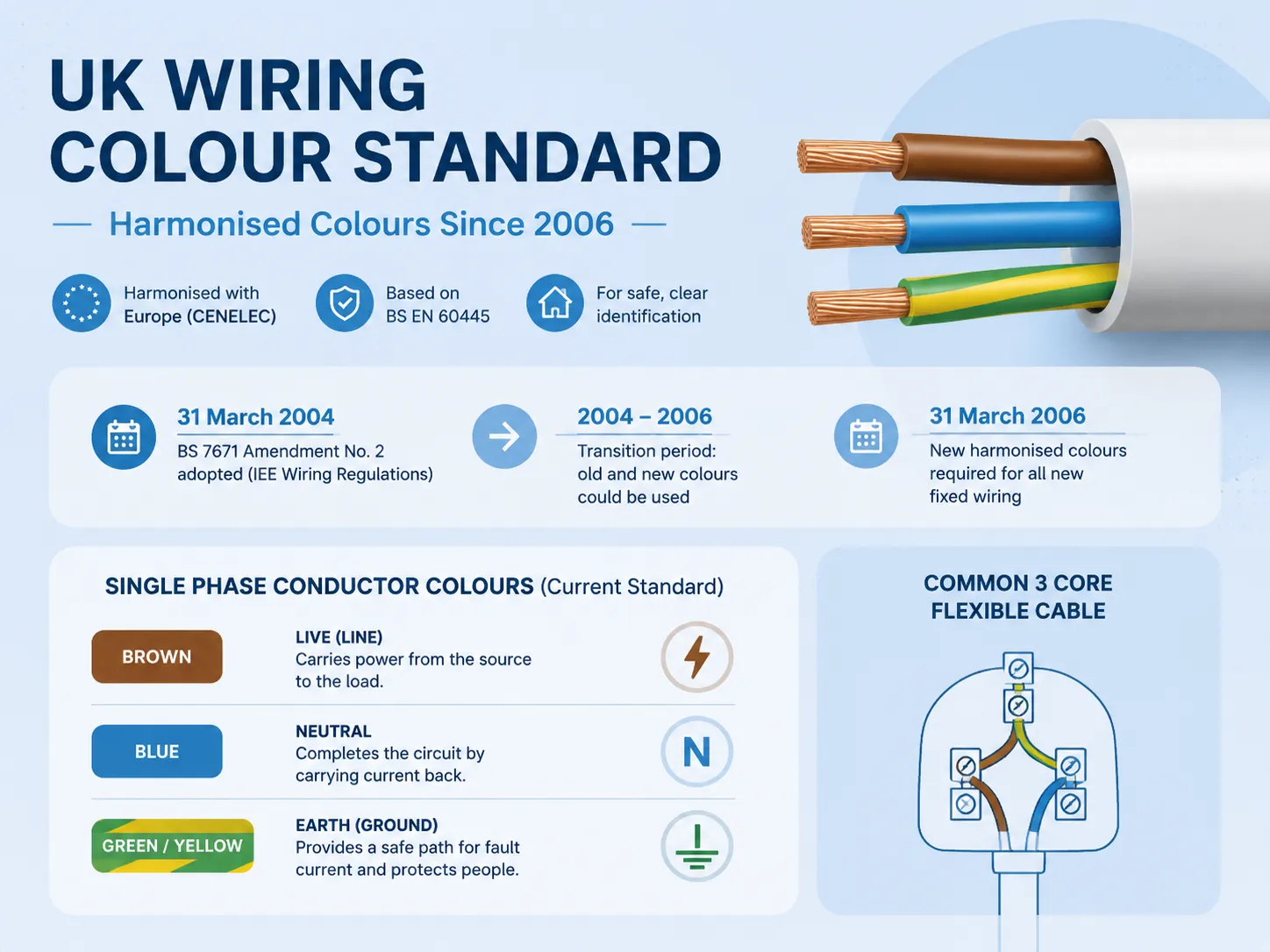
O padrão harmonizado de cores para fiação na Europa foi adotado em 31 de março de 2004 pelo Reino Unido, publicado como BS 7671 Emenda nº 2 (Regulamentos de Fiação IEE). Eram novas cores para fiação fixa em edifícios para alinhá-las com as cores europeias. Foi dado um período de transição de dois anos, de 31 de março de 2004 até 31 de março de 2006, durante o qual tanto as cores antigas quanto as novas na mesma instalação poderiam ser usadas. As novas cores harmonizadas devem ser usadas para toda fiação fixa nova instalada após 31 de março de 2006.
Não é um ajuste fácil para um eletricista com muitos anos de experiência associar 2 cores de fios elétricos com seus respectivos terminais, onde o vermelho era usado para linha(s) e o preto para neutro. Agora eles têm que reprogramar seu cérebro para associar marrom e azul, respectivamente. Isso se deve a um acordo de mudança pelo CENELEC (Comitê Europeu para Normalização Eletrotécnica) referente à harmonização. A harmonização é mandatada dentro da BS EN 60445 no padrão. Esses padrões fornecem a maneira correta de identificar condutores usando designação por cor ou numérica.
De acordo com o código de cores de fios elétricos monofásicos atualmente harmonizado pelo padrão britânico, são:
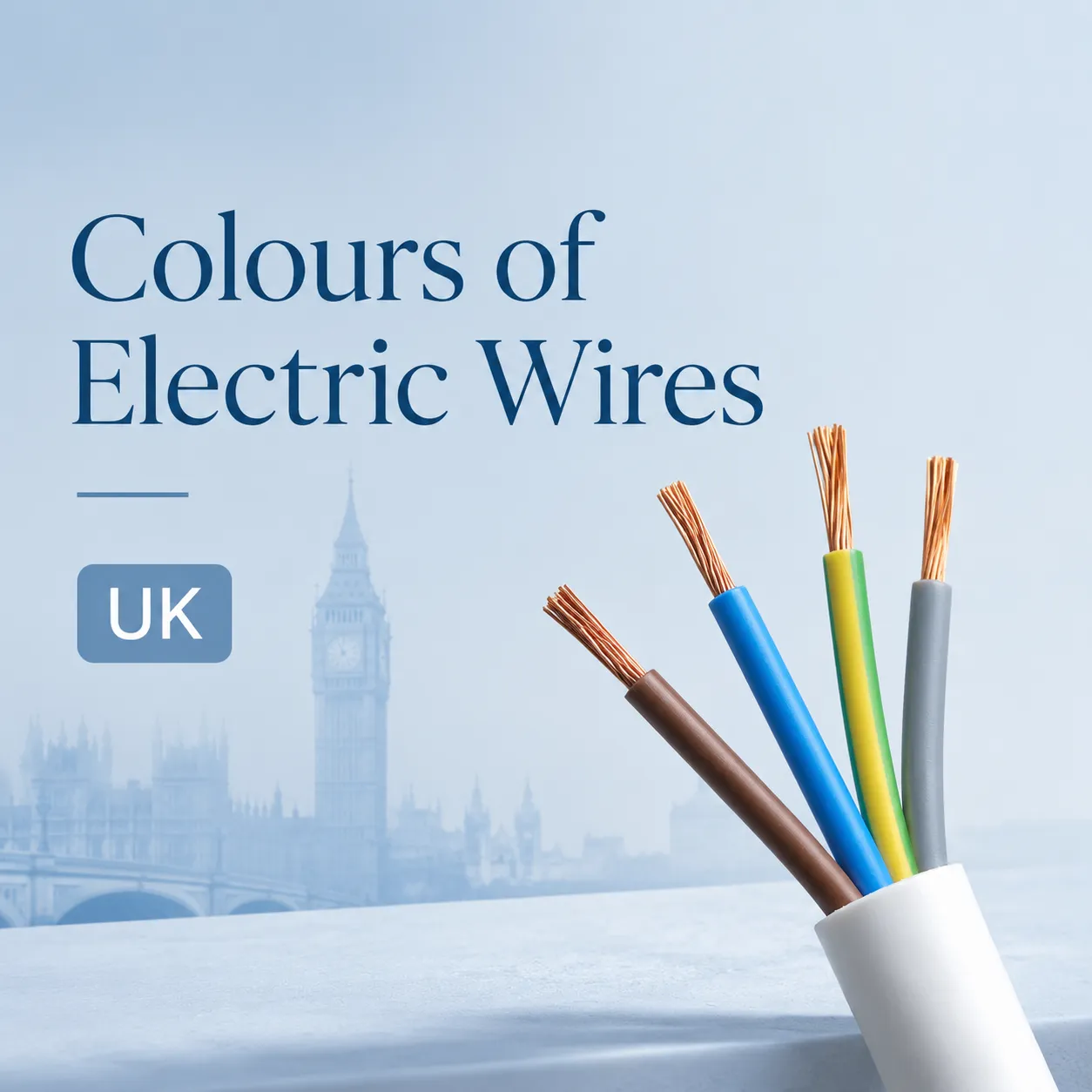
- Marrom: O fio marrom é referido como condutor de linha (também conhecido como condutor ativo), como era anteriormente associado ao vermelho. O condutor marrom, conforme a nova convenção de fiação, transporta energia da fonte de alimentação para a carga pretendida.
- Azul: O fio neutro. Anteriormente referido como ‘fio preto’. O fio azul agora completa o circuito transportando a corrente de retorno para a fonte de alimentação.
- Verde e amarelo listrado: No Reino Unido, desde 1977 existe um padrão consistente para terra (ground) que não foi alterado durante a harmonização. O condutor de terra fornece um caminho condutivo para quaisquer falhas que ocorram, e está ligado a quaisquer objetos metálicos expostos.
As cores dos condutores em um cabo flexível comum de três núcleos usado em aparelhos e extensões serão atribuídas da seguinte forma: o condutor fase será de cor marrom, o condutor neutro será de cor azul e o condutor terra (ground) será de cor verde / amarelo.
Cores do Circuito Trifásico Sob o Padrão Atual
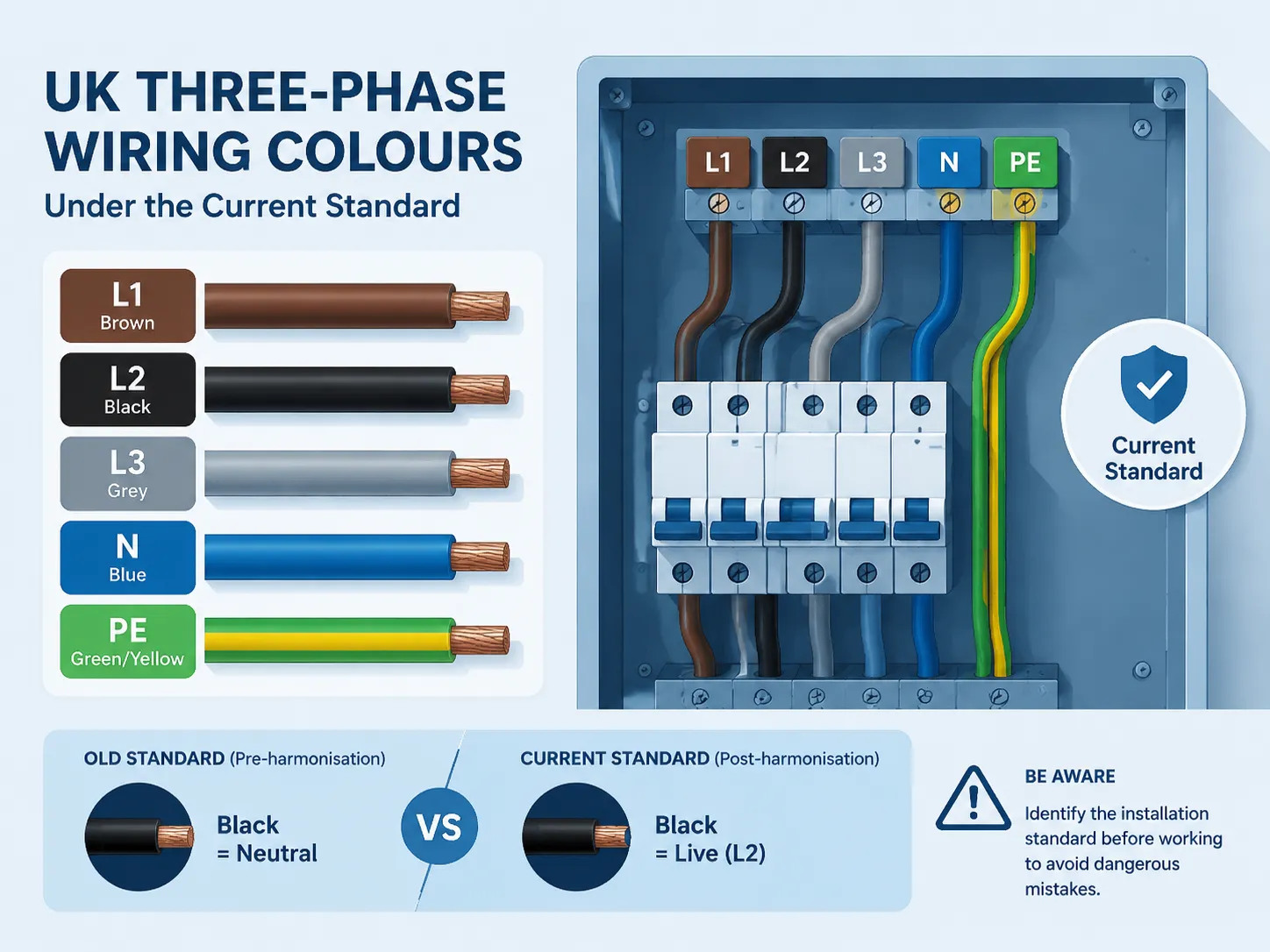
Para instalações trifásicas, o padrão atual do Reino Unido utiliza as seguintes cores de fios:
- Fase L1: Marrom
- Fase L2: Preto
- Fase L3: Cinza
- Linha (fase de entrada, sempre viva): Azul
- Terra de Proteção: Verde com listra amarela
A harmonização dos códigos de cores de fiação criou potencial confusão devido às diferenças entre esses códigos. Sob o padrão antigo, a cor preta representava o fio “neutro”, enquanto o novo código de cores (harmonizado) mudou o preto para representar “fase” em um sistema elétrico trifásico. Portanto, um eletricista deve determinar se está trabalhando em uma instalação pré ou pós-harmonização ao encontrar um fio preto no painel elétrico trifásico/fornecendo serviço elétrico a um sistema trifásico; caso contrário, o eletricista pode classificar incorretamente o fio preto e criar um curto-circuito ou energizar a estrutura metálica exposta.
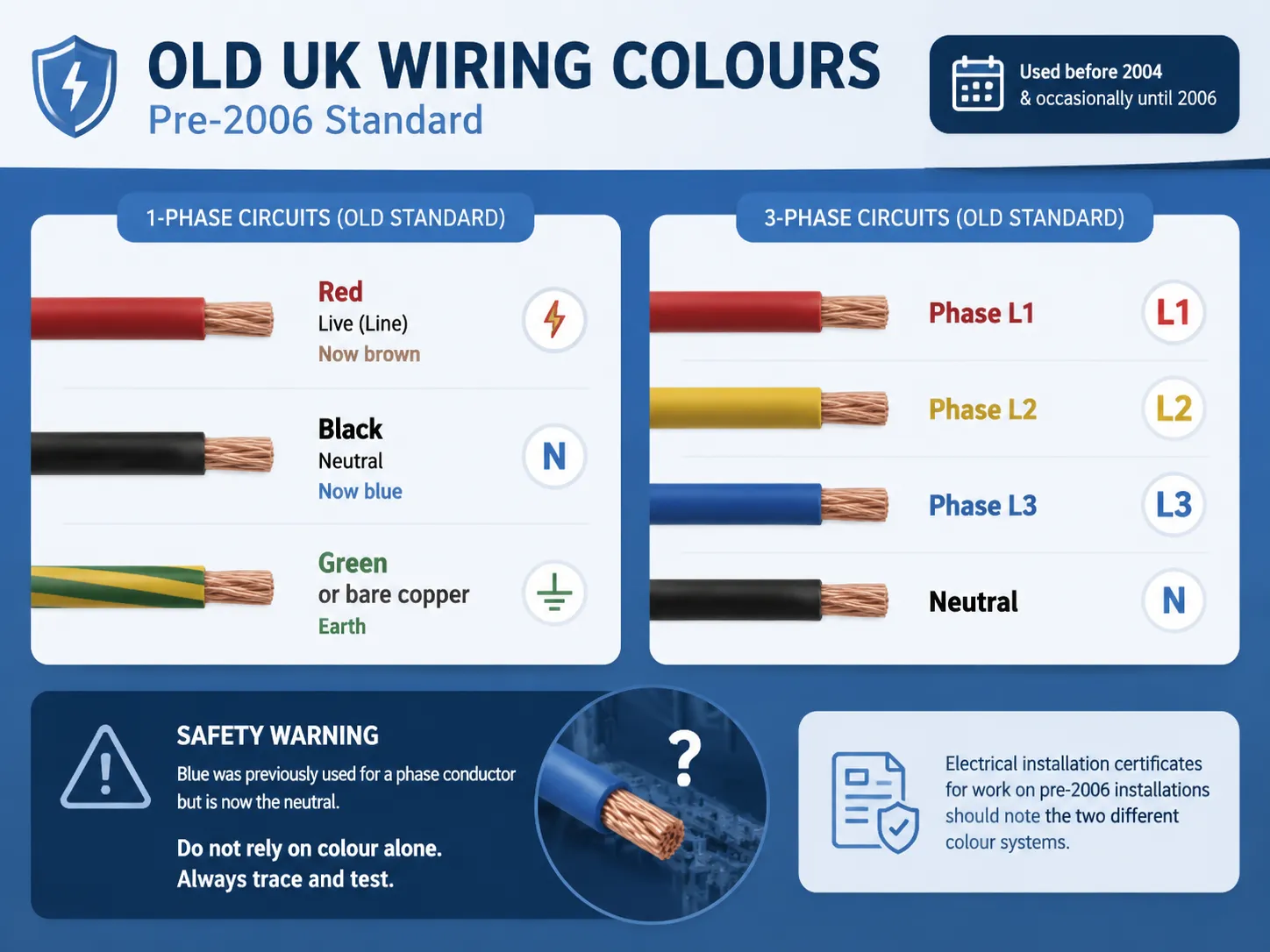
As Cores Antigas da Fiação no Reino Unido: Padrão Pré-2006
As cores dos fios elétricos anteriores a 2004 e ocasionalmente instaladas no período de 2004 até 2006 seguirão o padrão britânico anterior e terão este conjunto de cores: padrão de cores para circuitos monofásicos anteriores:
- Vermelho: Fase (linha). Agora marrom.
- Preto: Neutro. Agora azul.
- Verde ou cobre nu: Desde 1977, o esquema de cores universalmente aceito para condutores de terra na Austrália é verde com listra amarela, mas instalações anteriores podem ter usado apenas verde ou condutores de terra não isolados.
Para instalações trifásicas sob o padrão antigo, as cores das fases eram:
- Fase L1: Vermelho
- Fase L2: Amarelo
- Fase L3: Marrom
- Neutro: Preto
O antigo sistema trifásico apresenta um perigo específico devido às cores harmonizadas; a cor azul era anteriormente atribuída ao condutor de fase, mas agora é usada como cor para o fio neutro. Portanto, não é possível identificar um fio azul em um quadro trifásico apenas pela cor. Ele deve ser rastreado e testado. O Health and Safety Executive emitiu um documento de orientação contendo informações sobre a gestão desse risco específico; e qualquer certificado de instalação elétrica para trabalho realizado em uma instalação concluída antes de 2006 deve conter uma nota sobre os dois sistemas de cores diferentes que existem.
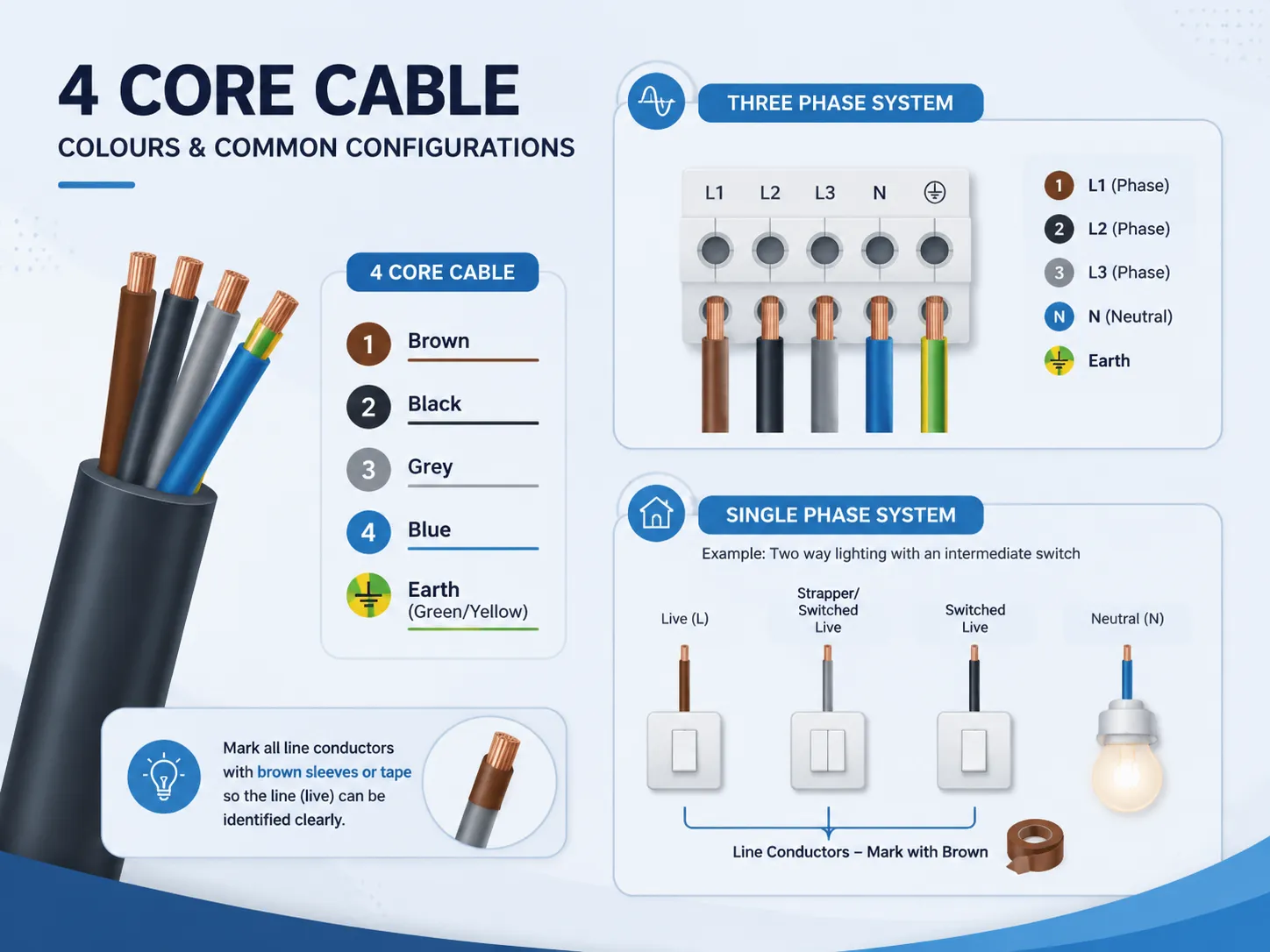
Cores de Cabo de Quatro Núcleos e Outras Configurações Comuns
De modo geral, um cabo de quatro núcleos consistirá em quatro condutores isolados e um terra não isolado, ou alternativamente, 1 núcleo terra verde/amarelo. Os quatro condutores isolados possuem a seguinte codificação de cores conforme a norma harmonizada:
- Núcleo 1: Reino Unido / IEC (BS 7671, Atual)
- Núcleo 2: Preto
- Núcleo 3: Cinza
- Núcleo 4: Marrom
Em um sistema trifásico, o Marrom (B), o Preto (B) e o Cinza (B) são usados como os 3 condutores de fase enquanto o Azul (B) é o condutor neutro. Ao usar um cabo de quatro núcleos em um sistema monofásico (por exemplo, iluminação de dois sentidos com um interruptor intermediário), um eletricista pode atribuir esses núcleos de forma diferente. O eletricista deve marcar todos os núcleos usados como condutor de linha com mangas ou fita marrom para que a constante da linha possa ser determinada corretamente. Em particular, o núcleo cinza é frequentemente marcado porque sua função não é evidente para a pessoa que usa o núcleo devido à sua cor.
A transição dos padrões antigos para os novos é mais fácil de entender ao comparar os padrões antigos com os novos de condutores que desempenham as tarefas mais comuns.
| O que as Outras Cores Significam em uma Caixa de Interruptor de Luz | Cor Antiga do Reino Unido (Pré‑2004/2006) | Cor Harmonizada Atual |
|---|---|---|
| Fase Monofásica (Linha) | Vermelho | Reino Unido / IEC (BS 7671, Atual) |
| Neutro Monofásico | Preto | Marrom |
| Trifásico L1 | Vermelho | Reino Unido / IEC (BS 7671, Atual) |
| Trifásico L2 | Amarelo | Preto |
| Trifásico L3 | Marrom | Cinza |
| Terra de Proteção | Verde ou nu (verde/amarelo desde 1977) | Verde com listras amarelas |
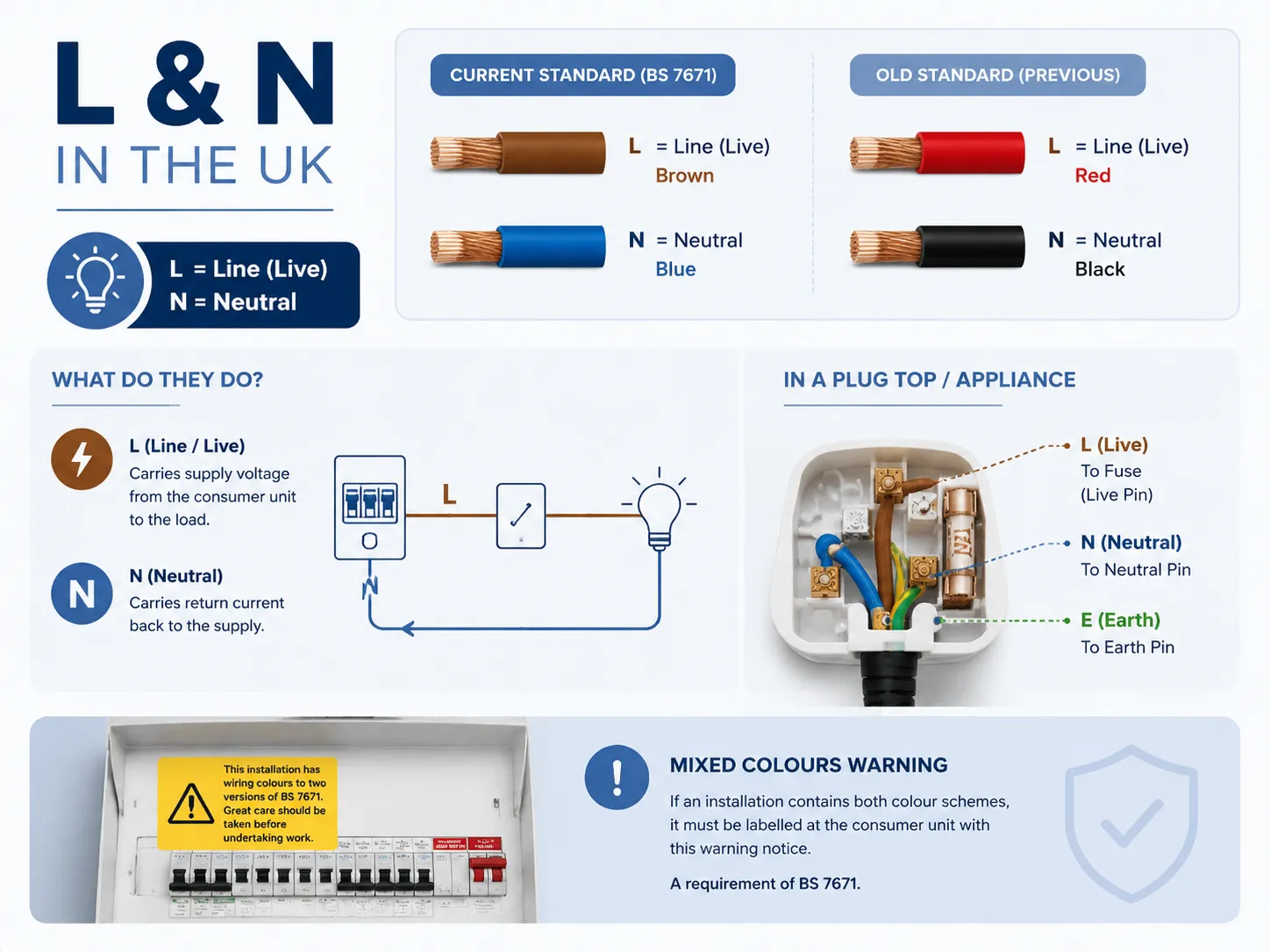
O que são os fios L e N no Reino Unido?
No contexto da fiação fixa do Reino Unido, L e N são as abreviações padrão para Linha e Neutro. Sob o padrão harmonizado atual, L é marrom e N é azul. O condutor de linha (marrom) transporta a tensão de alimentação da unidade de consumo para o interruptor, luz ou tomada. O condutor neutro (azul) transporta a corrente de retorno para a alimentação. Em um plugue ou aparelho corretamente ligado, o fio marrom conecta-se ao fusível (pino fase), o fio azul conecta-se ao pino neutro e o fio verde/amarelo conecta-se ao pino terra.
Sob o padrão antigo, L era vermelho e N era preto. Uma instalação que contenha ambos os esquemas de cores deve ser claramente rotulada na unidade de consumo com um aviso, normalmente dizendo: “Esta instalação possui cores de fiação de duas versões da BS 7671. Deve-se ter muito cuidado antes de realizar qualquer trabalho.” Esta etiqueta de aviso é um requisito da BS 7671 e é a primeira coisa que um eletricista responsável procura ao abrir uma unidade de consumo desconhecida.
As cores antigas dos fios do Reino Unido ainda são seguras?
As antigas cores dos fios do Reino Unido não são inerentemente inseguras. O isolamento de PVC vermelho e preto usado em cabos britânicos desde a década de 1960 até o início dos anos 2000 é geralmente durável e mantém suas propriedades isolantes por décadas, desde que não tenha sido submetido a superaquecimento contínuo, danos físicos ou exposição química. A preocupação de segurança não é a idade do isolamento, mas o risco de identificação incorreta quando cores antigas e novas coexistem.
Quando um eletricista encontra um condutor vermelho ou preto em uma instalação que também contém marrom e azul, a única abordagem segura é testar cada condutor com um testador de tensão e um testador de continuidade antes de fazer qualquer conexão. A cor sozinha não pode ser confiável através da divisão da harmonização. A publicação IET Wiring Matters abordou este tópico em detalhes, e a orientação da indústria da Associação de Empreiteiros Elétricos (ECA) reforça a necessidade de rotulagem clara e testes em instalações com cores mistas.
Se uma instalação antiga estiver sendo ampliada ou modificada, a melhor prática é usar as cores harmonizadas atuais para o novo trabalho e aplicar uma etiqueta de aviso durável na unidade de consumo. Envolver quaisquer condutores antigos que sejam reutilizados com a identificação de cor apropriada — revestimento marrom em um fio vivo vermelho, revestimento azul em um neutro preto — ajuda a preencher a lacuna visual e reduz o risco de identificação incorreta futura.
Orientação Prática para Proprietários e Eletricistas
Para um proprietário substituindo um interruptor de luz ou frente de tomada danificada, a cor dos fios elétricos na caixa de embutir é a primeira coisa a observar antes de desconectar qualquer coisa. Uma caixa de interruptor contendo marrom e azul é uma instalação moderna; uma contendo vermelho e preto é pré-2006. Se encontrar uma mistura de ambos, pare e chame um eletricista qualificado. A presença de esquemas de cores mistos indica que o circuito foi modificado durante a mudança de padrão, e o risco de um condutor mal conectado é real.
Para um eletricista, o protocolo é metódico: identificar a idade da instalação pela unidade de consumo e quaisquer certificados de teste disponíveis. Testar cada condutor. Aplicar revestimento apropriado onde as cores não correspondem às expectativas modernas. Rotular a unidade de consumo. E registrar a presença de cores de fiação mistas no Certificado de Instalação Elétrica ou no Certificado de Pequenas Obras de Instalação Elétrica. Esta documentação protege não apenas o eletricista que realizou o trabalho, mas todos os eletricistas e proprietários que vierem depois.
Referências
- BS EN 60445 — Princípios básicos e de segurança para interface homem-máquina, marcação e identificação — Identificação de condutores por cores ou números. British Standards Institution.
- BS 7671 — Requisitos para Instalações Elétricas (IET Wiring Regulations) — Instituição de Engenharia e Tecnologia.
- Health and Safety Executive — Segurança Elétrica no Trabalho — Orientação sobre gerenciamento de riscos elétricos, incluindo instalações com cores de fiação mistas.
- Associação de Empreiteiros Elétricos (ECA) — Orientação da indústria sobre práticas seguras de instalação elétrica e identificação de cores de fiação.
Perguntas Frequentes
As cores antigas dos fios do Reino Unido ainda são seguras?
O sistema tradicional de fiação do Reino Unido costumava ser composto por fios de cores diferentes. Esses fios mais antigos — vermelho e preto — não são necessariamente perigosos. A capa do fio na fiação antiga é geralmente muito durável. No entanto, quando fiação antiga e nova são misturadas, é possível identificar incorretamente os fios, criando um potencial problema de segurança. É obrigatório que qualquer instalação que utilize circuitos com fios antigos (vermelho e preto) e novos (marrom e azul) seja claramente rotulada na unidade de consumo. Todos os condutores devem ser verificados antes da conexão.
Qual é a cor dos fios L e N no Reino Unido?
O fio marrom é fase (L); o fio azul é neutro (N) segundo o Padrão Harmonizado, enquanto que no antigo Padrão Pré-2006 o fio fase (L) era vermelho e o fio neutro (N) era preto. Ambos possuem verde e amarelo listrado como terra (condutor de aterramento), mas as instalações antigas podem ter condutores de aterramento verde liso ou nu.
Em que ano o Reino Unido mudou as cores da fiação?
Em 31 de março de 2004, o Reino Unido implementou oficialmente o código padrão de cores para fiação elétrica. Houve um período de transição durante o qual tanto as cores antigas quanto as novas podiam ser usadas até 31 de março de 2006. A partir dessa data, todas as novas instalações elétricas deveriam estar em conformidade com o novo esquema de cores de fiação marrom, azul e verde/amarelo.
Quais são as cores dos cabos de 4 núcleos no Reino Unido?
De acordo com as normas harmonizadas, os cabos de 4 núcleos são fabricados com condutores nas cores marrom, preto, cinza e azul. Além disso, um cabo de 4 núcleos conterá um condutor terra verde/amarelo ou um condutor terra nu. Nos casos em que o cabo de 4 núcleos é usado para um sistema trifásico; os três condutores de fase são tradicionalmente marrom, preto e cinza, sendo o azul o condutor neutro. No caso de apresentação de uma única fase, todos os condutores de fase devem ser identificáveis com manga marrom.
Os cores dos fios elétricos no Reino Unido não são arbitrárias. Elas seguem um padrão nacional, alinhado com um padrão europeu, que existe para proteger eletricistas e proprietários contra as consequências de um condutor mal conectado. Seja substituindo a frente de uma tomada em uma casa geminada dos anos 1970 ou instalando uma nova extensão conforme as regulamentações atuais, a cor do fio conta uma história — mas é uma história que deve ser verificada com um testador de voltagem, não aceita como verdade absoluta. Na GOG Electric, fabricamos acessórios de fiação — interruptores, tomadas e dispositivos para casas inteligentes — projetados para serem conectados de forma segura e clara, com marcações nos terminais que correspondem às cores atuais da fiação do Reino Unido, porque a conexão entre o fio e o dispositivo é onde a segurança é confirmada ou comprometida.