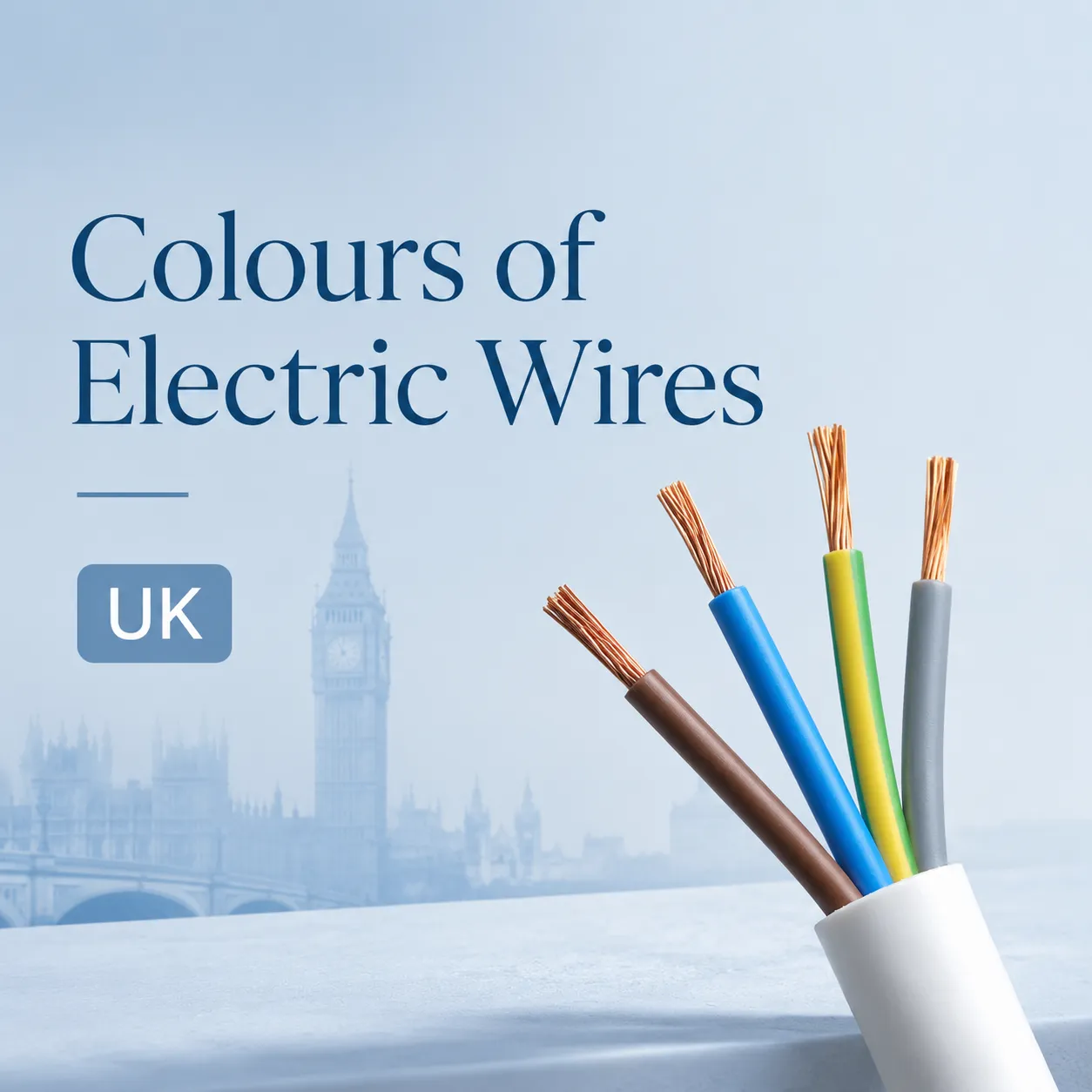
Récemment à Manchester, un électricien a entrepris un projet de rénovation de cuisine dans une maison datant de 1968. La première boîte qu'il a ouverte révélait un mélange de câblage électrique ancien et nouveau. La première chose qu'il a remarquée était qu'il y avait un fil moderne avec des conducteurs bleu/marron relié à un circuit plus ancien avec des paires rouge/noir également. Il avait apparemment été prolongé jusqu'à cet emplacement par un propriétaire précédent, mais à aucun moment ils n'ont marqué la différence entre les câbles neufs et anciens. De plus, l'électricien a pris une heure supplémentaire pour tracer tous les différents types de conducteurs jusqu'à leur source d'origine avant de continuer ; sa prudence était justifiée. Les couleurs des fils électriques ont changé au Royaume-Uni en une seule année (et non plusieurs) — il est donc probable que tout travail électrique effectué dans une maison construite avant/après cette transition contiendra au moins deux types différents de schémas de couleurs (et possiblement plus). Comprendre comment gérer ces différents types de câblage lorsqu'ils se rencontrent dans une boîte de jonction est essentiel pour réaliser un travail électrique sûr dans toute maison au Royaume-Uni.
La norme actuelle des couleurs de câblage au Royaume-Uni : couleurs harmonisées depuis 2006
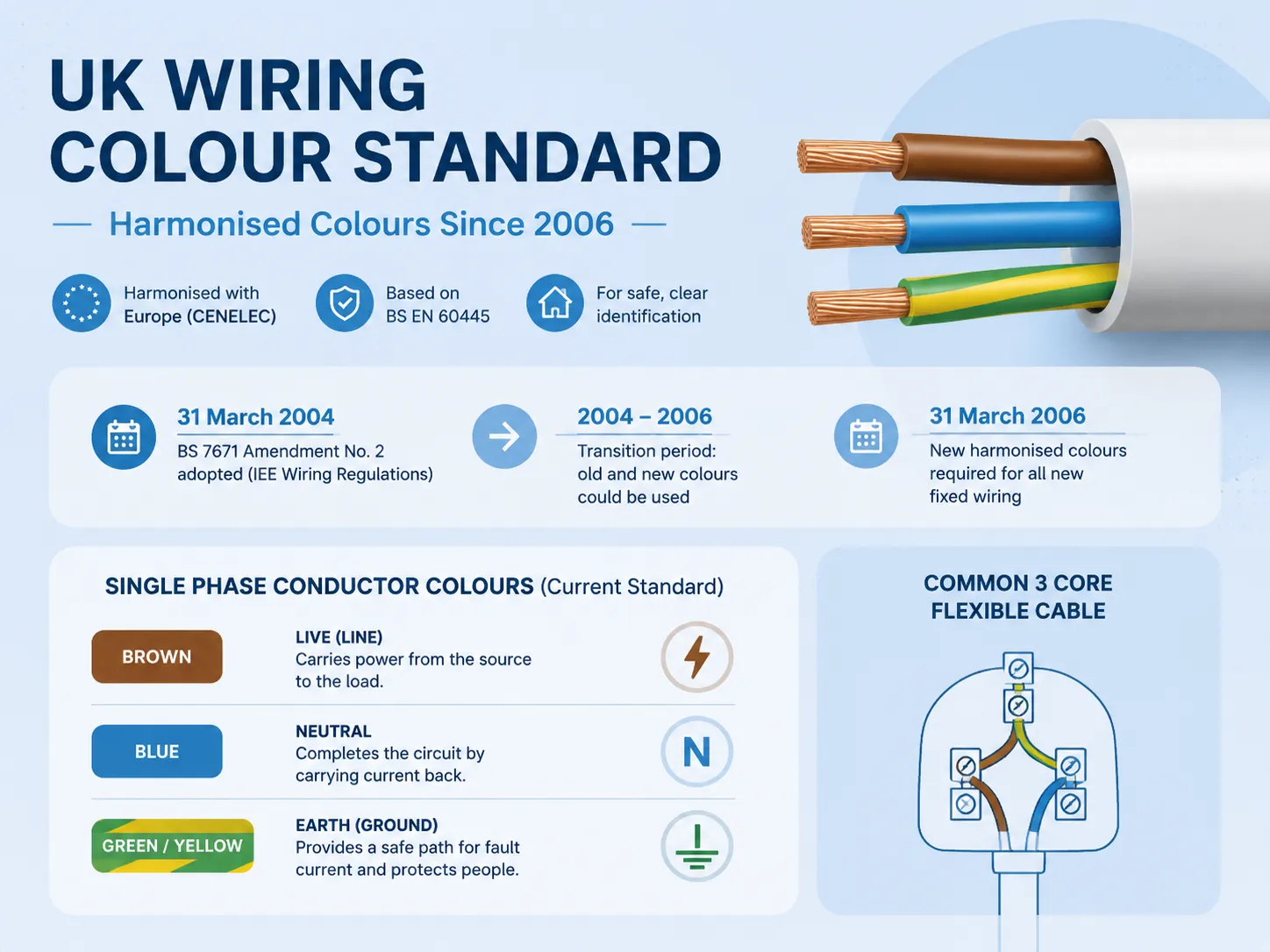
La norme harmonisée des couleurs de câblage pour l'Europe a été adoptée le 31 mars 2004 par le Royaume-Uni, publiée sous la référence BS 7671 Amendment No. 2 (IEE Wiring Regulations). Il s'agissait de nouvelles couleurs pour le câblage fixe des bâtiments afin de les aligner sur les couleurs européennes. Une période de transition de deux ans a été accordée du 31 mars 2004 au 31 mars 2006, durant laquelle les anciennes et nouvelles couleurs pouvaient être utilisées sur la même installation. Les nouvelles couleurs harmonisées doivent être utilisées pour tout nouveau câblage fixe installé après le 31 mars 2006.
Ce n'est pas un ajustement facile pour un électricien avec de nombreuses années d'expérience qui associait auparavant 2 couleurs de fils électriques à leurs bornes respectives, où le rouge était utilisé pour la phase et le noir pour le neutre. Ils doivent désormais reprogrammer leur cerveau pour associer respectivement le marron et le bleu. Cela est dû à un accord de changement par le CENELEC (Comité Européen de Normalisation Électrotechnique) concernant l'harmonisation. L'harmonisation est imposée dans la norme BS EN 60445. Ces normes fournissent la méthode correcte pour identifier les conducteurs en utilisant soit la couleur soit une désignation numérique.
Selon la norme britannique harmonisée actuelle, les codes couleurs des fils électriques monophasés sont :
- Marron : Le fil marron est désigné comme conducteur de phase (également appelé conducteur actif), comme il l'était auparavant avec le rouge. Le conducteur marron, selon la nouvelle convention de câblage, transporte l'énergie de la source d'alimentation vers la charge prévue.
- Bleu : Le fil neutre. Précédemment appelé ‘ fil noir ’. Le fil bleu complète désormais le circuit en ramenant le courant de retour vers la source d'alimentation.
- Vert et jaune rayé : Au Royaume-Uni, depuis 1977, il existe une norme constante pour la terre (ground) qui n’a pas été modifiée lors de l’harmonisation. Le conducteur de terre fournit un chemin conducteur pour toute défaillance qui se produit, et est relié à tout objet métallique exposé.
Les couleurs des conducteurs dans un câble flexible tripolaire courant utilisé dans les appareils et les rallonges seront attribuées comme suit : le conducteur actif sera de couleur marron, le conducteur neutre sera de couleur bleue et le conducteur de terre (ground) sera de couleur vert / jaune.
Couleurs des circuits triphasés selon la norme actuelle
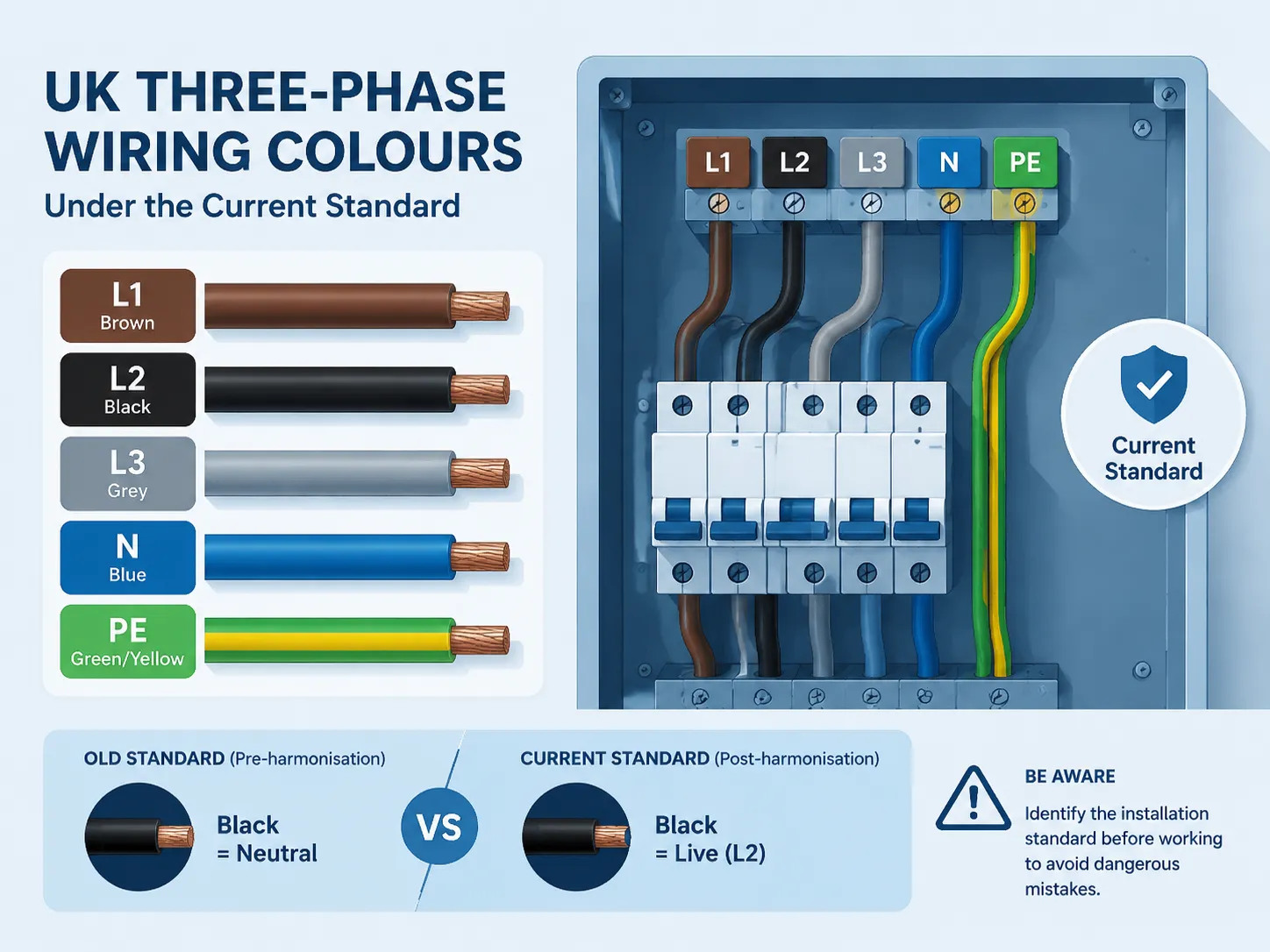
Pour les installations triphasées, la norme britannique actuelle utilise les couleurs de fils suivantes:
- Phase L1: Marron
- Phase L2: Noir
- Phase L3: Gris
- Neutre: Bleu
- Terre de protection: Rayé vert et jaune
L’harmonisation des codes couleurs de câblage a créé une confusion potentielle en raison des différences entre ces codes. Selon l’ancienne norme, la couleur noire représentait le fil “ neutre ”, tandis que le nouveau code couleur (harmonisé) a changé le noir pour représenter le “ phase ” dans un système électrique triphasé. Par conséquent, un électricien doit déterminer s’il travaille sur une installation pré- ou post-harmonisation s’il rencontre un fil noir dans le tableau électrique triphasé/fournissant le service électrique à un système triphasé ; sinon, l’électricien pourrait mal classer le fil noir et créer par erreur un court-circuit ou mettre sous tension une partie métallique exposée.
Les anciennes couleurs de câblage au Royaume-Uni : norme pré-2006
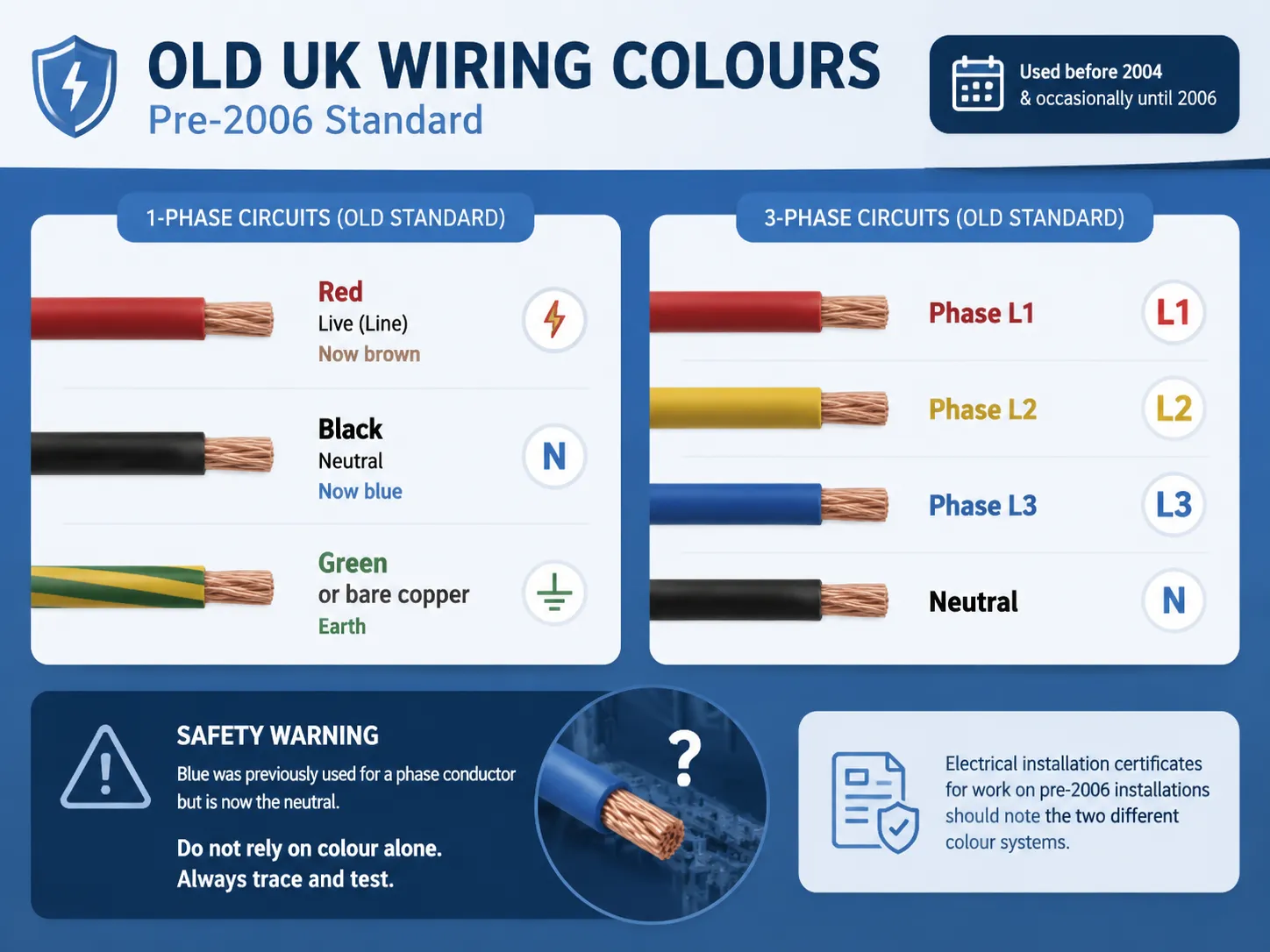
Les couleurs des fils électriques avant 2004 et parfois installées entre 2004 et 2006 suivent l’ancienne norme britannique et auront cet ensemble de couleurs : circuits monophasés norme couleur précédente :
- Rouge : Phase (ligne). Maintenant marron.
- Noir : Neutre. Maintenant bleu.
- Vert ou cuivre nu : Depuis 1977, le code couleur universellement accepté pour les conducteurs de terre en Australie est rayé vert et jaune, mais les installations antérieures peuvent avoir utilisé soit uniquement du vert soit des conducteurs de terre non isolés.
Pour les installations triphasées selon l’ancienne norme, les couleurs des phases étaient :
- Phase L1 : Rouge
- Phase L2 : Jaune
- Phase L3 : Bleu
- Neutre : Noir
L’ancien système triphasé présente un danger spécifique lié aux couleurs harmonisées ; la couleur bleue était auparavant attribuée au conducteur de phase mais est maintenant utilisée pour le conducteur neutre. Par conséquent, on ne peut pas identifier un fil bleu dans un tableau triphasé uniquement par la couleur. Il doit être tracé et testé. Le Health and Safety Executive a publié un document d’orientation contenant des informations sur la gestion de ce risque particulier ; et tout certificat d’installation électrique pour des travaux réalisés sur une installation achevée avant 2006 doit contenir une note concernant les deux systèmes de couleurs différents qui existent.
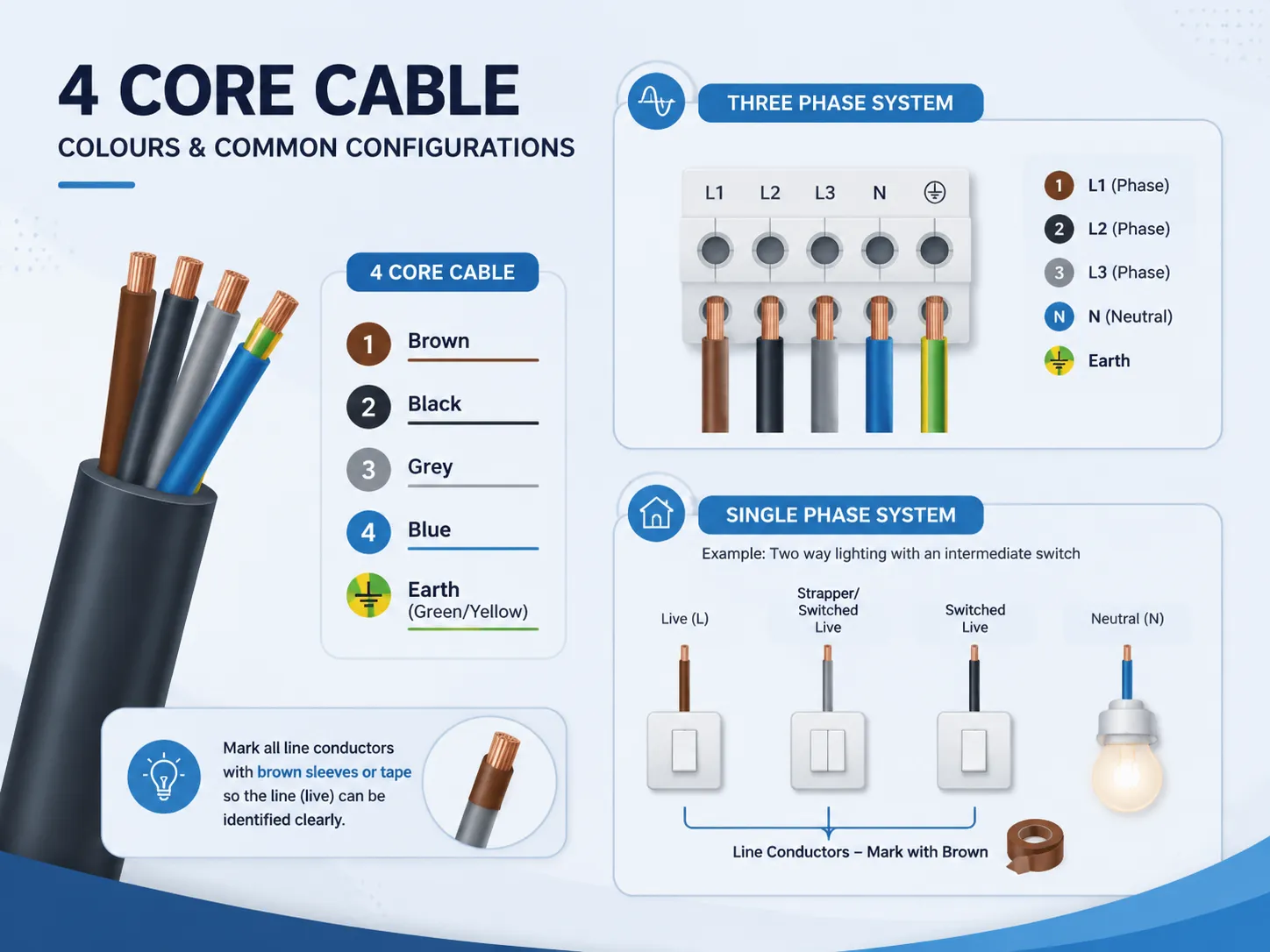
Couleurs des câbles quatre conducteurs et autres configurations courantes
De manière générale, un câble à quatre conducteurs se compose de quatre conducteurs isolés, et d'une terre non isolée, ou alternativement, d'un conducteur de terre vert/jaune. Les quatre conducteurs isolés ont le code couleur suivant selon la norme harmonisée :
- Conducteur 1 : Marron
- Conducteur 2 : Noir
- Conducteur 3 : Gris
- Conducteur 4 : Bleu
Dans un système triphasé, le marron (B), le noir (B) et le gris (B) sont utilisés comme les 3 conducteurs de phase tandis que le bleu (B) est le conducteur neutre. Lors de l’utilisation d’un câble à quatre conducteurs dans un système monophasé (par exemple, un éclairage à deux directions avec un interrupteur intermédiaire), un électricien peut attribuer ces conducteurs différemment. L’électricien doit marquer tous les conducteurs utilisés comme conducteur de phase avec des manchons ou du ruban marron afin que la phase constante puisse être correctement déterminée. En particulier, le conducteur gris est souvent marqué car sa fonction n’est pas évidente pour la personne utilisant ce conducteur en raison de sa couleur.
La transition des anciennes aux nouvelles normes est plus facile à comprendre en comparant les anciennes et les nouvelles normes des conducteurs effectuant les tâches les plus courantes.
| Fonction du conducteur | Ancienne couleur UK (avant 2004/2006) | Couleur harmonisée actuelle |
|---|---|---|
| Phase monophasée (ligne) | Rouge | Marron |
| Neutre monophasé | Noir | Bleu |
| Triphasé L1 | Rouge | Marron |
| Triphasé L2 | Jaune | Noir |
| Triphasé L3 | Bleu | Gris |
| Terre de protection | Vert ou nu (vert/jaune depuis 1977) | Vert et jaune rayé |
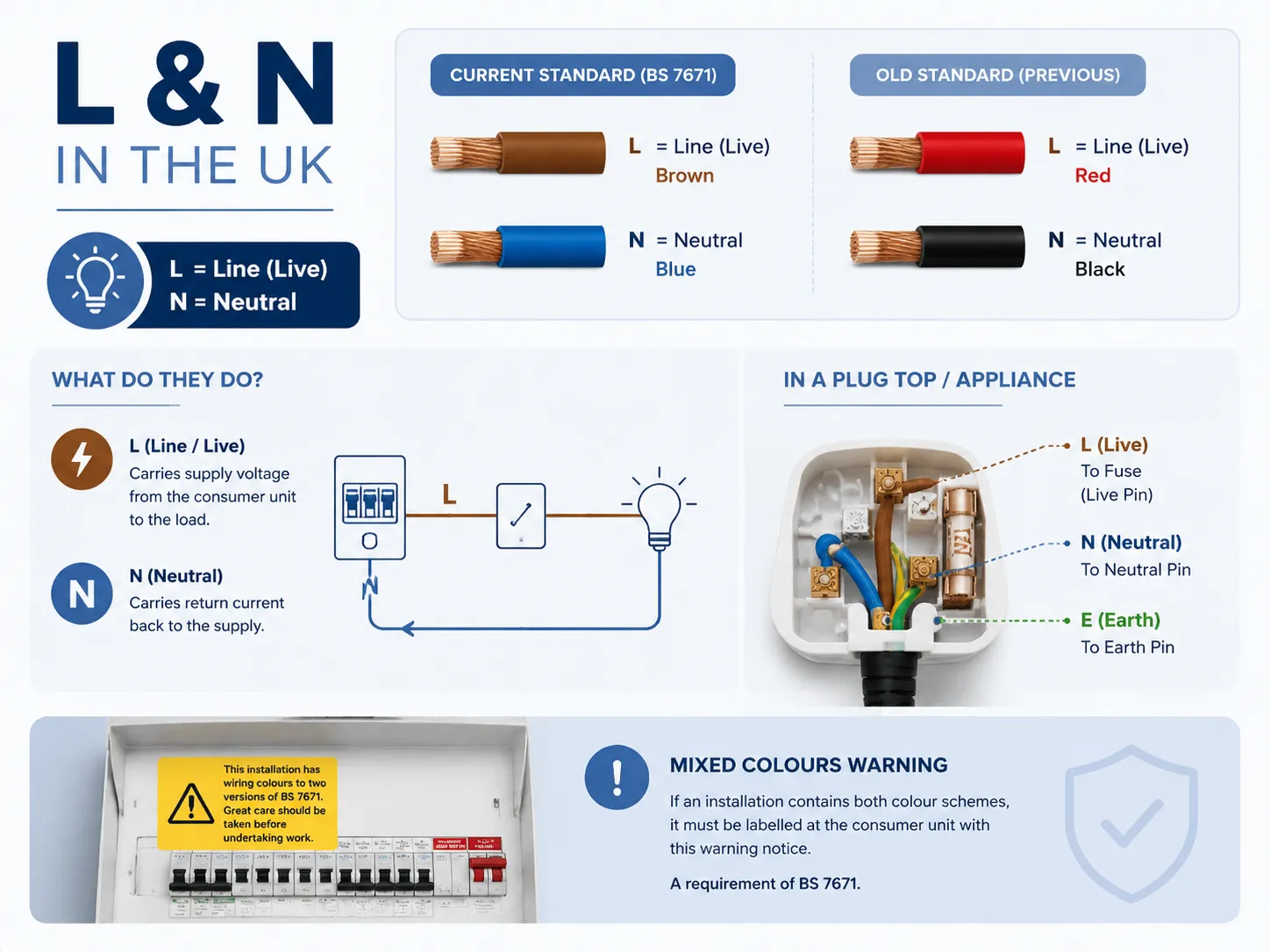
Que sont les fils L et N au Royaume-Uni ?
Dans le contexte du câblage fixe au Royaume-Uni, L et N sont les abréviations standard pour Ligne et Neutre. Selon la norme harmonisée actuelle, L est marron et N est bleu. Le conducteur de phase (marron) transporte la tension d’alimentation depuis le tableau de distribution vers l’interrupteur, la lampe ou la prise. Le conducteur neutre (bleu) transporte le courant de retour vers l’alimentation. Dans une fiche ou un appareil correctement câblé, le fil marron se connecte au fusible (broche phase), le fil bleu se connecte à la broche neutre, et le fil vert/jaune se connecte à la broche de terre.
Selon l’ancienne norme, L était rouge et N était noir. Une installation contenant les deux schémas de couleurs doit être clairement étiquetée au tableau de distribution avec un avis d’avertissement, généralement libellé : “ Cette installation comporte des couleurs de câblage selon deux versions de la norme BS 7671. Une grande prudence doit être exercée avant d’effectuer des travaux. ” Cette étiquette d’avertissement est une exigence selon la norme BS 7671 et est la première chose qu’un électricien responsable recherche lorsqu’il ouvre un tableau de distribution inconnu.
Les anciennes couleurs de fils UK sont-elles toujours sûres ?
Les anciennes couleurs de fils UK ne sont pas intrinsèquement dangereuses. L’isolation en PVC rouge et noir utilisée dans les câbles britanniques des années 1960 jusqu’au début des années 2000 est généralement durable et conserve ses propriétés isolantes pendant des décennies, à condition qu’elle n’ait pas été soumise à une surchauffe prolongée, à des dommages physiques ou à une exposition chimique. La préoccupation de sécurité ne concerne pas l’âge de l’isolation mais le risque de mauvaise identification lorsque les anciennes et nouvelles couleurs coexistent.
Lorsqu’un électricien rencontre un conducteur rouge ou noir dans une installation contenant également du marron et du bleu, la seule approche sûre est de tester chaque conducteur avec un testeur de tension et un testeur de continuité avant de réaliser toute connexion. La couleur seule ne peut pas être fiable à travers la division de l’harmonisation. La publication IET Wiring Matters a traité ce sujet en détail, et les recommandations de l’industrie de Association des entrepreneurs électriciens (ECA) renforcent la nécessité d’un étiquetage clair et de tests sur les installations à couleurs mixtes.
Si une ancienne installation est étendue ou modifiée, la meilleure pratique consiste à utiliser les couleurs harmonisées actuelles pour les nouveaux travaux et à apposer une étiquette d’avertissement durable sur le tableau de distribution. Le gainage de tout conducteur ancien réutilisé avec l’identification couleur appropriée — gainage marron sur un conducteur rouge sous tension, gainage bleu sur un conducteur noir neutre — aide à combler le fossé visuel et réduit le risque de mauvaise identification future.
Guide pratique pour les propriétaires et les électriciens
Pour un propriétaire remplaçant un interrupteur ou une prise endommagée, la couleur des fils électriques dans la boîte d’encastrement est la première chose à noter avant de déconnecter quoi que ce soit. Une boîte d’interrupteur contenant du marron et du bleu est une installation moderne ; une contenant du rouge et du noir est antérieure à 2006. Si vous trouvez un mélange des deux, arrêtez-vous et appelez un électricien qualifié. La présence de schémas de couleurs mixtes indique que le circuit a été modifié lors du changement de norme, et le risque de connexion erronée d’un conducteur est réel.
Pour un électricien, le protocole est méthodique : identifier l’âge de l’installation à partir du tableau de distribution et de tout certificat de test disponible. Tester chaque conducteur. Appliquer un gainage approprié lorsque les couleurs ne correspondent pas aux attentes modernes. Étiqueter le tableau de distribution. Et enregistrer la présence de couleurs de câblage mixtes sur le Certificat d’Installation Électrique ou le Certificat de Travaux Électriques Mineurs. Cette documentation protège non seulement l’électricien ayant réalisé les travaux, mais aussi tous les électriciens et propriétaires qui suivent.
Références
- BS EN 60445 — Principes de base et de sécurité pour l’interface homme-machine, marquage et identification — Identification des conducteurs par couleurs ou numéros. British Standards Institution.
- BS 7671 — Exigences pour les installations électriques (IET Wiring Regulations) — Institution of Engineering and Technology.
- Health and Safety Executive — Sécurité électrique au travail — Guide sur la gestion des risques électriques incluant les installations avec couleurs de câblage mixtes.
- Association des entrepreneurs électriciens (ECA) — Guide industriel sur les pratiques sûres d’installation électrique et l’identification des couleurs de câblage.
Questions fréquemment posées
Les anciennes couleurs de fils au Royaume-Uni sont-elles encore sûres ?
Le système traditionnel de câblage britannique utilisait des fils de différentes couleurs. Ces fils plus anciens — rouge et noir — ne sont pas nécessairement dangereux. La gaine des fils anciens est généralement très résistante. Cependant, lorsqu’ils sont câblés avec un mélange de fils anciens et nouveaux, il est possible de mal identifier les fils, créant un risque potentiel pour la sécurité. Il est obligatoire que toute installation utilisant à la fois des circuits câblés anciens (rouge et noir) et nouveaux (marron et bleu) soit clairement étiquetée au tableau de distribution. Tous les conducteurs doivent être vérifiés avant connexion.
Quelle est la couleur des fils L et N au Royaume-Uni ?
Le fil marron est la phase (L) ; le fil bleu est le neutre (N) selon la norme harmonisée, tandis que selon l’ancienne norme pré-2006, le fil de phase (L) était rouge et le fil neutre (N) était noir. Les deux ont un conducteur de terre rayé vert et jaune, mais les anciennes installations de conducteurs de terre peuvent être vert uni ou nu.
En quelle année le Royaume-Uni a-t-il changé les couleurs de câblage ?
Le 31 mars 2004, le Royaume-Uni a officiellement mis en œuvre le code couleur standard pour le câblage électrique. Il y a eu une période de transition pendant laquelle les anciennes et les nouvelles couleurs de câblage pouvaient être utilisées jusqu'au 31 mars 2006. À partir de cette date, toutes les nouvelles installations électriques devaient se conformer au nouveau schéma de couleurs de câblage composé de brun, bleu et vert/jaune.
Quelles sont les couleurs des câbles 4 conducteurs au Royaume-Uni ?
Selon les normes harmonisées, les câbles 4 conducteurs sont fabriqués avec des conducteurs de couleur brun, noir, gris et bleu. En plus de cela, un câble 4 conducteurs contiendra soit un conducteur de terre vert/jaune, soit un conducteur de terre nu. Dans les cas où le câble 4 conducteurs est utilisé pour un système triphasé ; les trois conducteurs de phase sont traditionnellement brun, noir et gris, le bleu étant le conducteur neutre. Dans le cas de la présentation d’un monophasé, tous les conducteurs de phase doivent être identifiables par une gaine brune.
Les les couleurs des fils électriques au Royaume-Uni ne sont pas arbitraires. Elles suivent une norme nationale, elle-même alignée sur une norme européenne, qui existe pour protéger les électriciens et les propriétaires des conséquences d’un conducteur mal connecté. Que vous remplaciez une façade de prise dans une maison jumelée des années 1970 ou que vous câbliez une nouvelle extension selon les réglementations actuelles, la couleur du fil raconte une histoire — mais c’est une histoire qui doit être vérifiée avec un testeur de tension, et non prise pour argent comptant. Chez GOG Electric, nous fabriquons des accessoires de câblage — interrupteurs, prises et dispositifs domotiques — conçus pour être connectés de manière sûre et claire, avec des marquages de bornes correspondant aux couleurs de câblage actuelles du Royaume-Uni, car la connexion entre le fil et l’appareil est l’endroit où la sécurité est soit confirmée, soit compromise.