As the hotel guest entered her room for the first time in Singapore, she turned on a light by the entrance. Just one push resulted in her curtains automatically closing, bedside lamps turning on in a dimmed light, and the temperature being reduced by a couple of degrees. Her single action activated a program, composed of lighting, curtains movement, and air conditioning settings, that the hotel created specifically for its guests. The switch on the wall might have appeared to be an ordinary switch, but it went well beyond simple on/off transitions. The switch was, in fact, instructing the building automation system for various processes. It has become obvious that modern light switches do much more than activating the lights. Various switches help to create a pleasant atmosphere, save energy, put heavy equipment into a safe maintenance mode, control lights from different entrances, and indicate that the room is occupied.
The Basic Function: Switching a Single Light from One Location
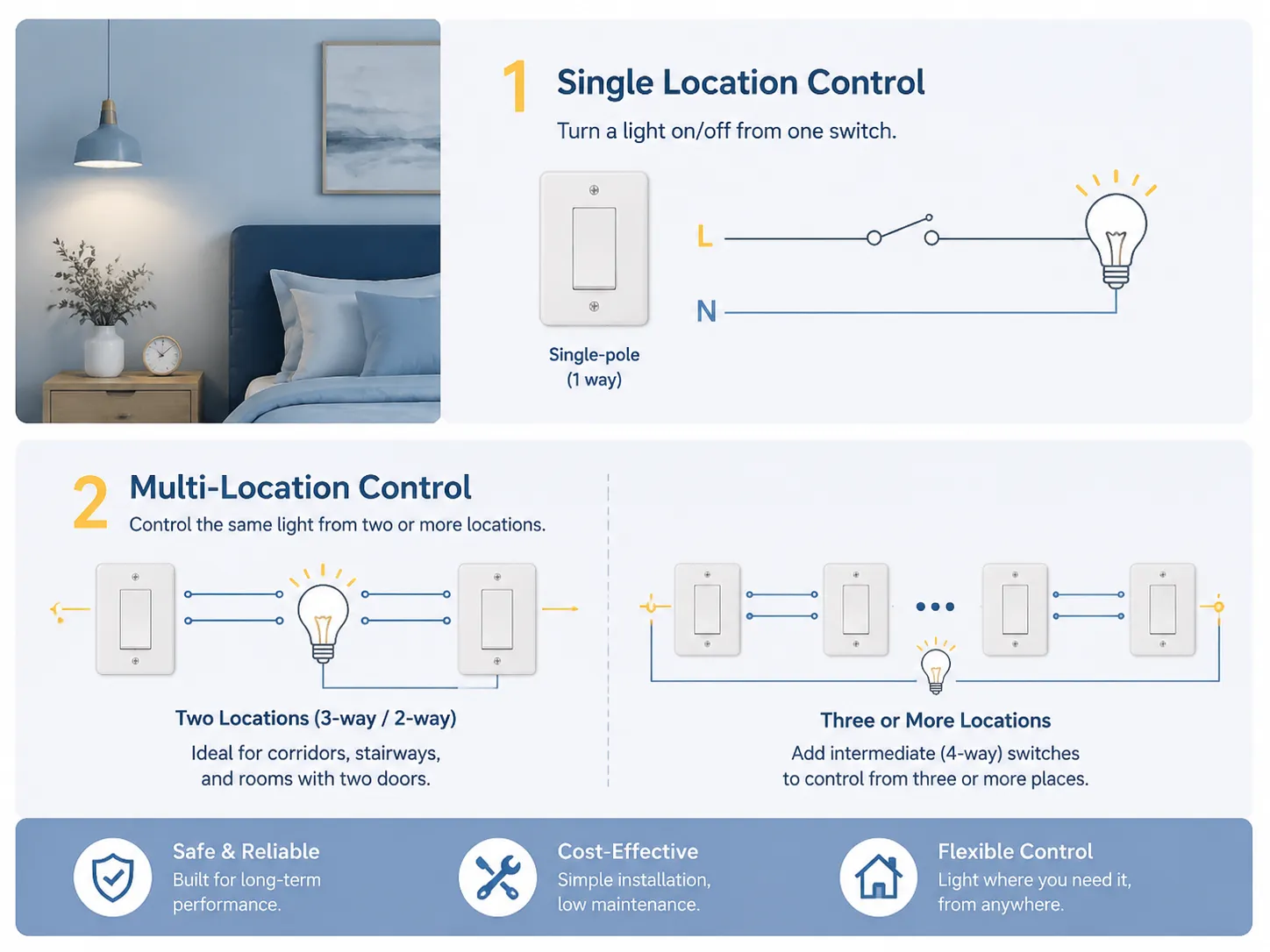
The most frequent function of a light switch is to turn it on and off from a single location. A single-pole switch, i.e., the most typical toggle or rocker switch with two brass terminals, has the function of connecting or disconnecting the hot wire of any light fixture, whether it be a ceiling light, a wall lamp, or a series of recessed downlights. This equipment is used in the bedroom, bathroom, and corridor. It is a simple, cost-effective, and highly common device able to perform its function for many years with no need for maintenance except for a rare replacement in case of contact failure. For a step‑by‑step guide through the replacement process, our article on how to replace a light switch covers the wiring, the safety checks, and the terminal identification for a standard single‑pole installation.
Multi‑Location Control: Switching the Same Light from Two or More Places
A single switch cannot control lights in places like a corridor, stairway, or a room with two doors. The function of controlling light with switches at opposite ends of a corridor or balcony requires a special two-way system (known as three-way in the US). This type of system uses different switches, which are connected to each other by traveler wires in such a way that the light can be turned on and off regardless of the state of the switch. Our guide on the difference between a 2 way and 3 way switch explains the wiring logic and the terminal identification for both UK and North American configurations. For control from three or more locations — a very long corridor, an open‑plan office, a multi‑entry garage — a four‑way switch (called an intermediate switch in the UK) is added between the two two‑way switches. There is no practical limit to the number of intermediate switches that can be installed, and a single lighting circuit can be controlled from as many doorways as the building requires.
Heavy Loads and Full Isolation: The Double‑Pole Switch
Not all switch types work for illumination purposes. A double-pole switch has four terminal points and controls two different circuits simultaneously or both hot wires and neutral wires on a single circuit. In homes and businesses, the double-pole electrical switch fulfills the purpose of a local disconnecting switch for 240 volts water heater, air-conditioning equipment, or machines in workshop. When the switch is switched off, both hot wires are disconnected and equipment is safely de-energized, which is impossible with a single-pole switch. For a complete explanation of where this device belongs and how it differs from a standard single‑pole, our article on what a double pole switch is covers the wiring, the applications, and the code requirements.
Variable Light Levels: The Dimmer Switch
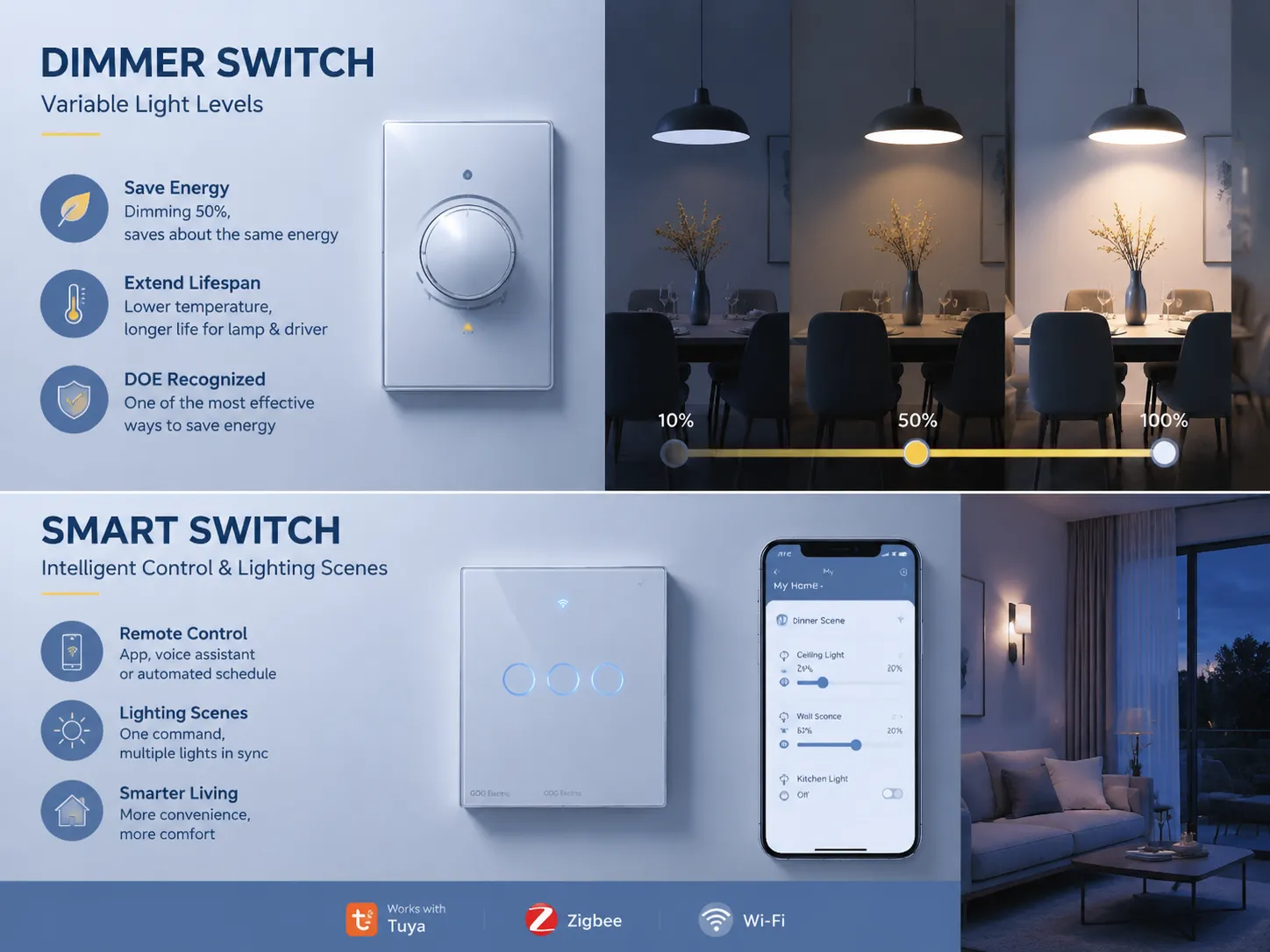
Instead of the conventional on-off function of a regular switch, a dimmer switch offers variable brightness adjustment. A dimmer switch is the option that transforms a dining room from work to romance because of the reduction in the amount of electrical power supplied to the lamp which positively influences convenience and financial parameters. One of the recent developments in this sphere is the modern LED dimmers that incorporate the trailing-edge technology allowing smooth operation of all available dimming programs. The main advantage of dimmers is significant energy saving; a lamp dimmed by 50% consumes approximately the same amount of the energy. Moreover, the decreased level of temperature extends the lifespan of both the lamp and the driver. The Department of Energy has registered the dimmer switches as one of the most effective ways to save energy in residential and commercial lighting.
Intelligent Control: The Smart Switch and the Lighting Scene
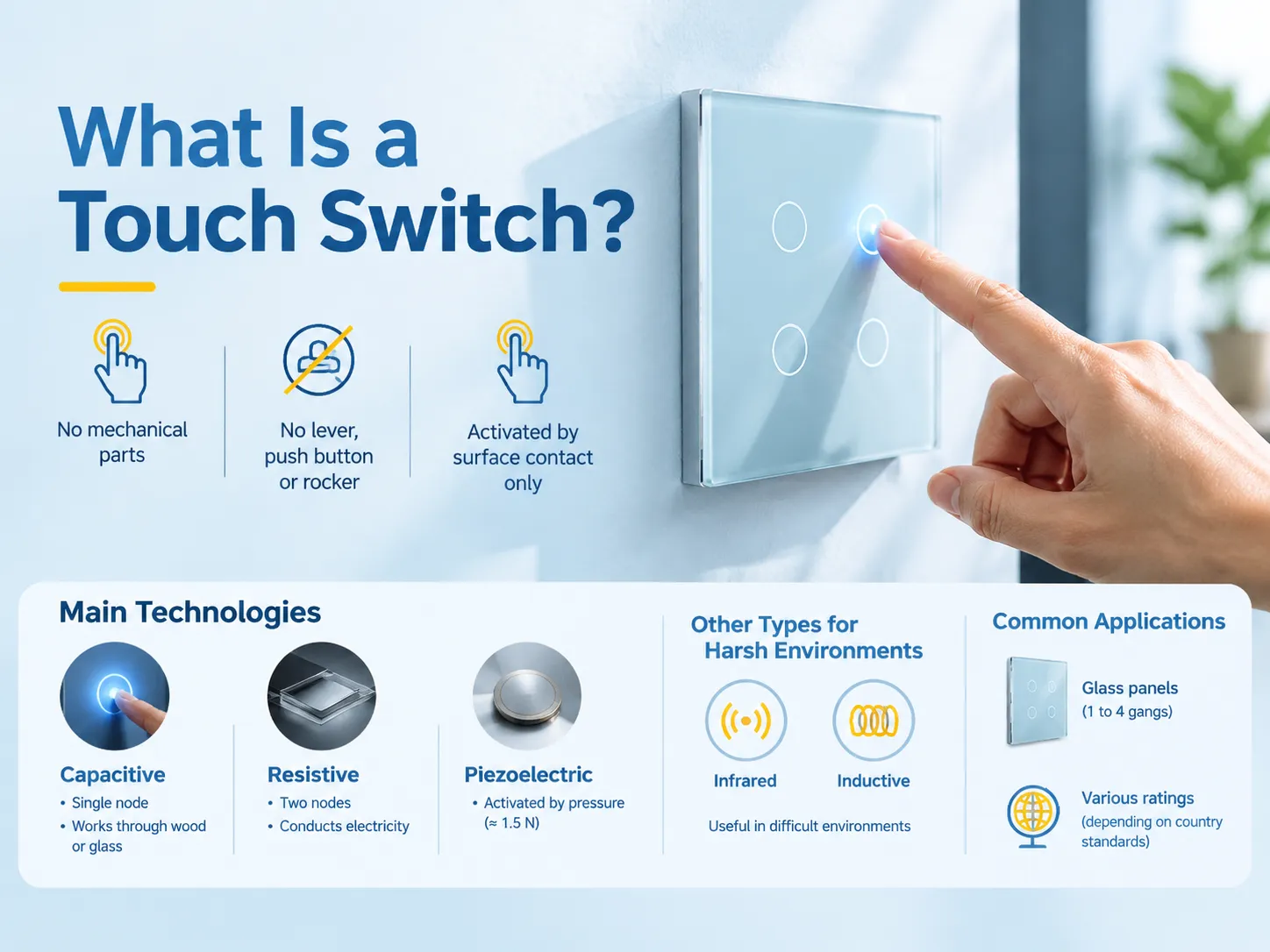
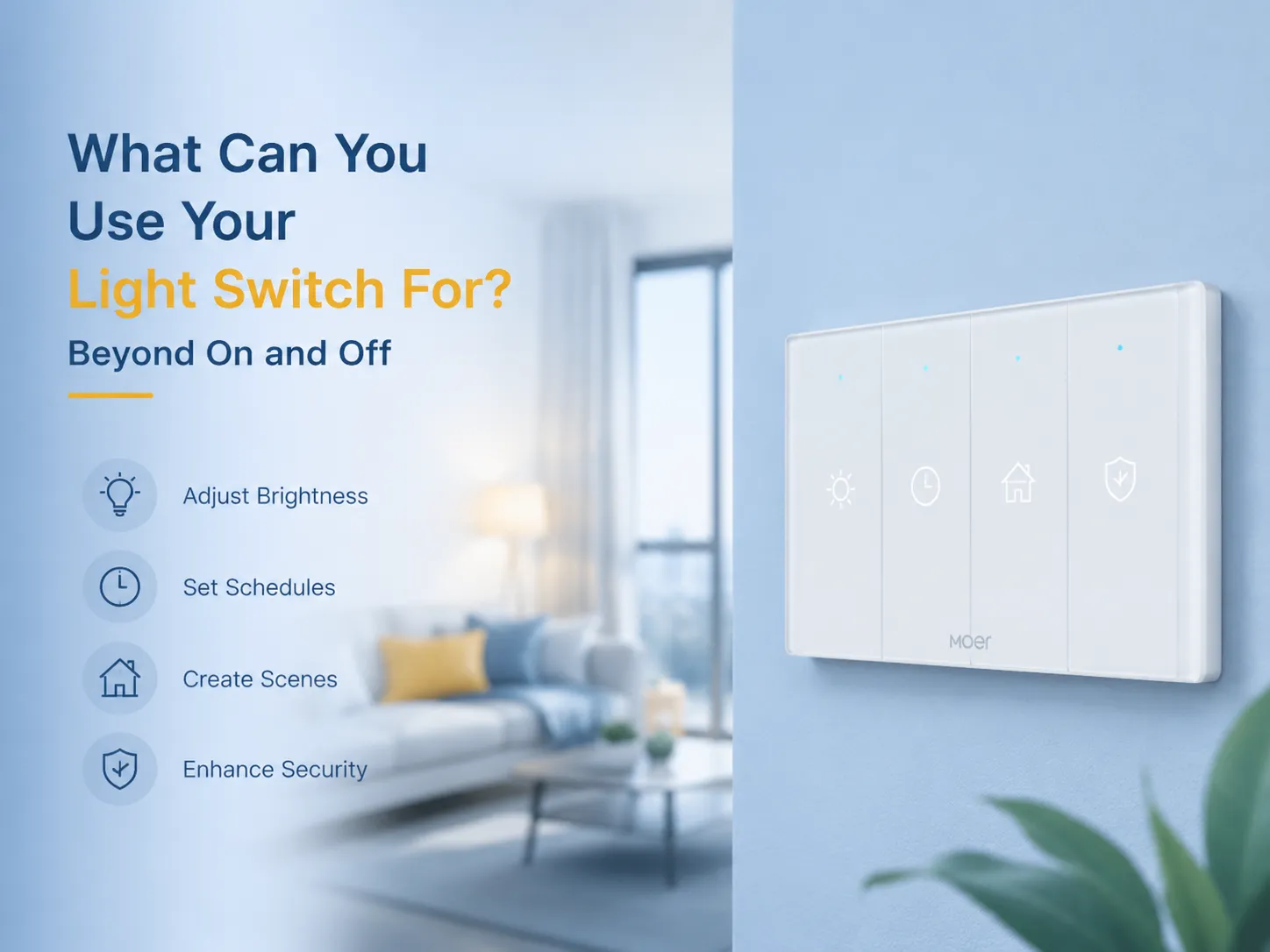
A smart light switch adds wireless connectivity to the conventional operation of a switch and allows it to be controlled via a smartphone application, voice assistant, or an automated schedule. The switch can turn on the porch light at sunset and turn it automatically at sunrise, switch the hallway lights to 30% brightness so as to provide a safe passage and not spoil the sleep of others during midnight, or even follow the command “Good night” by turning all the light on. The smart switch can contribute to a lighting scene: just by issuing a command from a switch, a phone, or a keypad the number of circuits is set simultaneously to the appropriate levels. For instance, a “Dinner” scene switches the lights directly overhead into the dimming regime at 20%, sets the wall sconces to maximum luminescence of 60%, and turns off the lights in the kitchen. The essential point when installing a smart switch is whether the switch box has a neutral wire which is a determining factor for most smart installations. If the house was built before the 1990s, there are usually so-called switch loops which don`t have a neutral wire. Our comprehensive comparison of neutral vs non‑neutral smart switches explains how to identify your wiring and choose a compatible device. GOG Electric’s smart switch range supports both neutral and no‑neutral configurations, with 1‑gang through 4‑gang models that integrate with Tuya, Zigbee, and Wi‑Fi control platforms.
Combined Switch and Socket: The Two‑in‑One Wall Plate
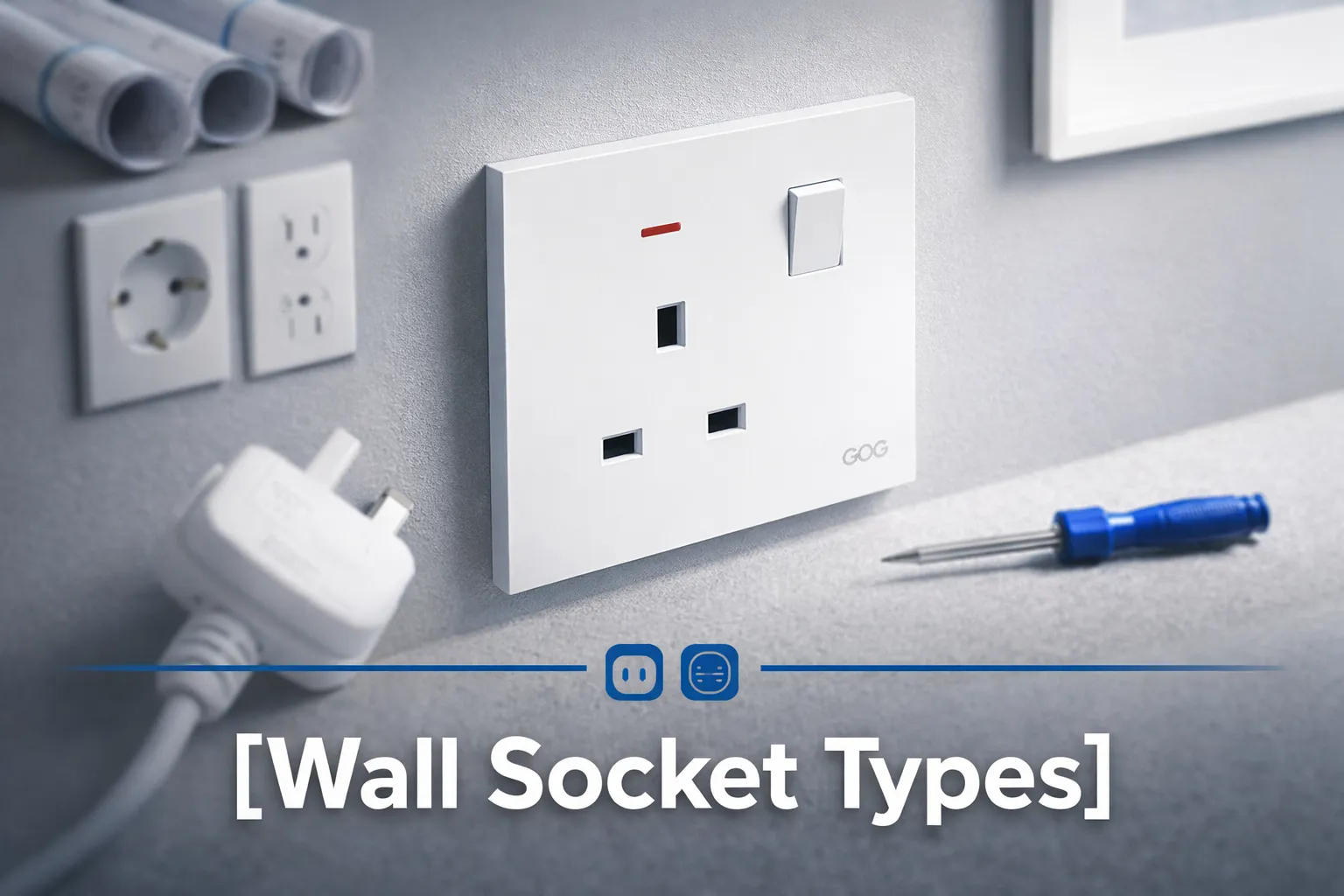
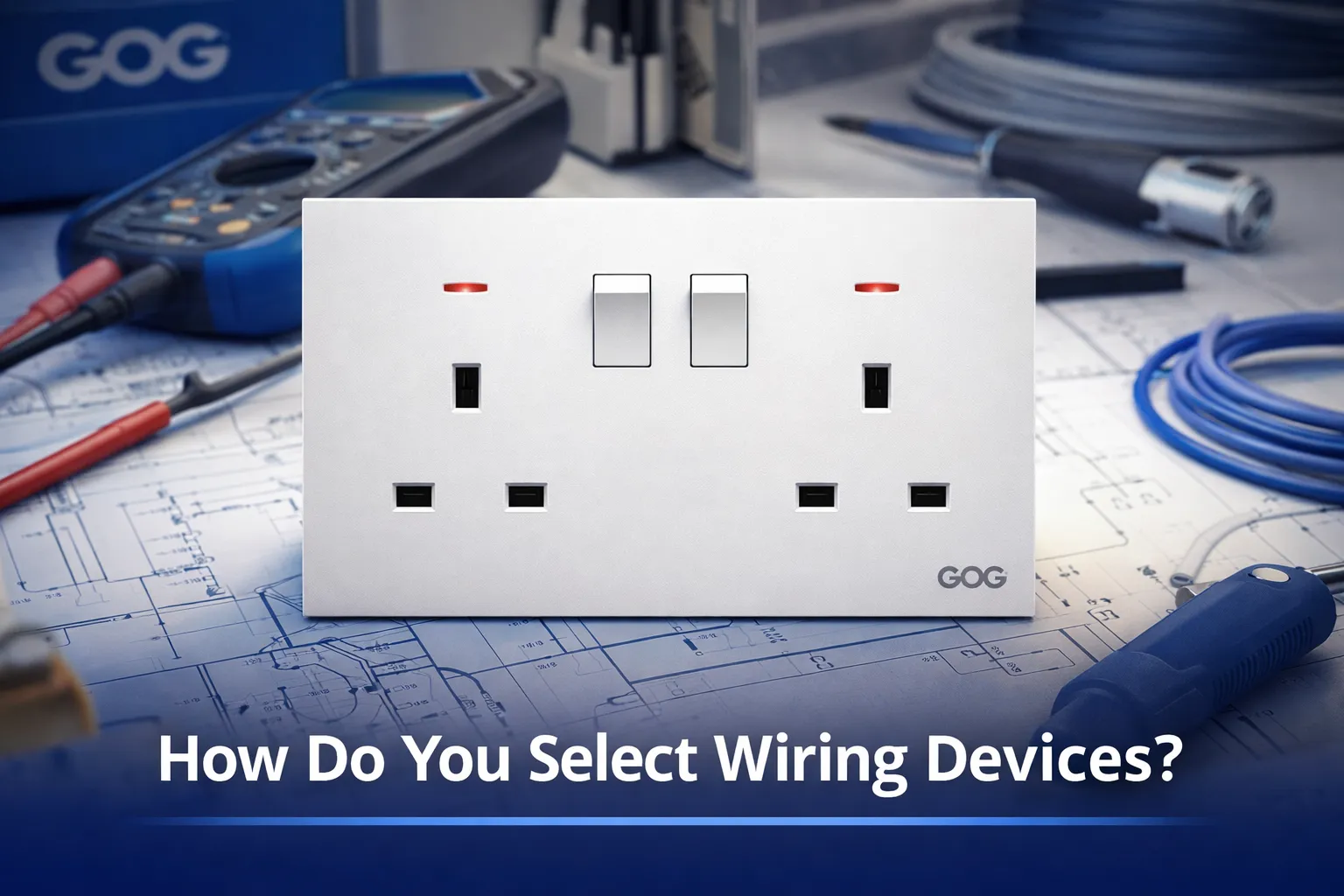
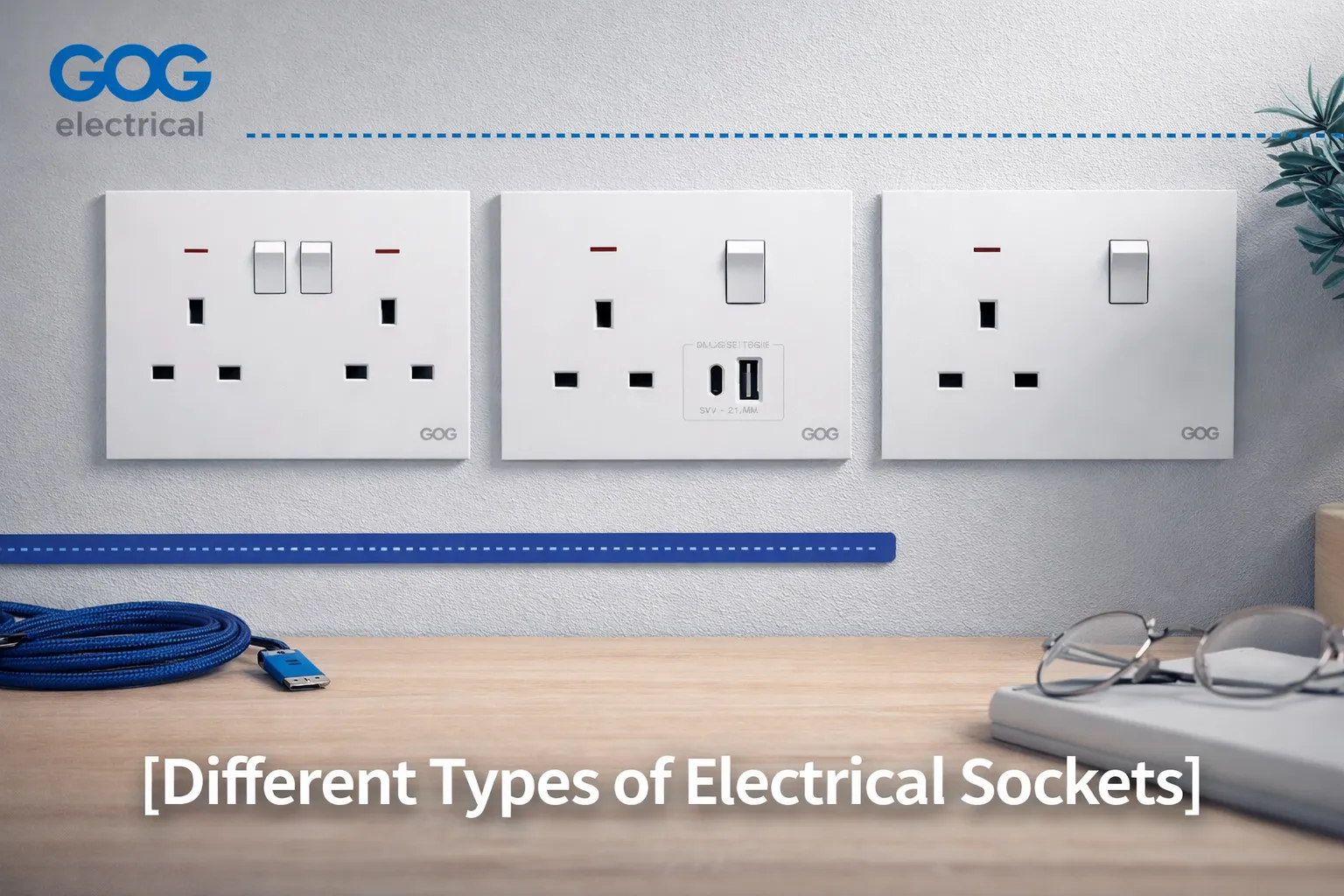
A combination of a power outlet and a lighting switch is known as a switch and socket all in one which is made of several different devices which function together and carry out different functions. In the kitchen, a combination of a Power switch of 20 amperes which is used with another switched outlet of 13 amperes is recommended and used in order to conserve space while allowing one stop solution to both power and control the devices. In the home office, the combination of the overhead rocker switch and the socket which can be used to charge devices such as laptops and mobile phones helps one to declutter his/her table. When it comes to the partnership between a switch and a socket, even though their wall box and faceplate are the same or multiplied, that does not mean that these two devices acquire any electrical dependence. Several combinations of socket types and switches can be made according to the capacity of the code requirements. GOG Electric devices product line that consists of several standard models such as R series offers a product which has high-quality installation level to meet the needs of the consumers.
Switching Scenes Across Different Building Types
The purpose of the light switch is different in different types of buildings. In homes, the switch acts as a personal control device. It could be a dimmer in a dining room or a smart switch in a baby nursery, or it could be a double-pole disconnect in a garage. Such switches reflect the preferences and patterns of the inhabitants of a home. In a hotel, the switch contents are designed to provide an experience for the guests. For instance, when entering a room, a master switch located by the door provides a ready cascade scene; and a guest can use the bedside switches, which are meant for controlling reading lights, blackout curtains, etc., not knowing how sophisticated the building automation system is. Such switches usually include multiple buttons or are sensitive touch screens and have to be intuitive for a guest who has never seen them before. In commercial buildings, a switch can be a vacancy sensor, which turns off lights if, for example, no one is in the room, exterior light controller, which dims lights that are near windows, or a network switch, which sends energy consumption information to the whole building control system. A switch thus becomes a sensor node in a data network. In the manufacturing environment, however, a switch is simply a safety device. It may be a double-pole disconnect located next to the machine or a lockable isolator for maintenance purposes, or it may refer to an emergency switch that cuts energy supply of a particular section.
Frequently Asked Questions
What is commonly used for on a light switch?
Most often a light switch is employed to toggle a single light on or off in one location. However, a switch can dim lights, manage lights at different entry points, disconnect heavy appliances for repairs, activate a preset lighting scenario, or command the entire automation system of a building. The kind of action performed is determined by the type of switch used — single-pole switch, two-way switch, dimmer switch, smart switch, or double-pole switch — as well as the type of circuit controlled.
What are the 4 types of lighting switches?
There are four different types of switches, classified according to their wiring configuration. These are the single pole switches (one location, two terminals), the double pole switches (one location, four terminals, full isolation or two circuits), the three-way / two-way switches (two locations, three terminals), and the four-way / intermediate switches (three or more locations, four terminals). Each switch can also be made in the toggle, rocker, dimmer, or smart physical configuration.
What are the two types of light switches?
There are two major types of light switches: mechanical switch (toggle and rocker switches function by slightly switching on and off the circuit, such as single-pole, two-way, double-pole types of switches) and electronic switch (dimmers and smart lights control loads by means of solid-state electronics technology). Mechanical switches are less expensive and more practical than electronic devices, while electronic switches provide possibilities of controlling the circuit from distance and automatic operation.
What to put in place of a light switch?
Instead of using a standard switch, one can opt for a dimmer, smart switch, combined switch-and-socket device, vacancy switch, or a blanking plate if the switch is no longer required. Each of these options has different functions, i.e. brightness generation, use of remote controls, socket use, etc. The installed equipment must be compatible with voltage, current, and wiring configuration.
References
- Lutron Electronics — Lighting Control and Dimming Solutions. Manufacturer of residential and commercial dimmers, smart switches, and lighting control systems, with extensive technical documentation.
- U.S. Department of Energy — Lighting and Dimming Controls. Information on the energy‑saving benefits of dimming and automated lighting control in residential and commercial settings.
- Leviton — Residential Switches, Dimmers, and Smart Controls. Manufacturer of North American wiring devices, with installation guides and product specifications for every switch type.
- Legrand — Wiring Devices and Smart Home Solutions. European manufacturer of switches, sockets, and smart home systems for residential and commercial applications.
A light switch is no longer just a switch. It is a dimmer that saves energy and extends bulb life. It is a smart controller that responds to a voice command or a sunset schedule. The double-pole disconnect brings safety to a workshop. Multi-gang combination supplies a kitchen counter. In-room keypad creates a welcoming atmosphere with curtains drawn. Switch on the wall is not just an electromechanical device anymore; it is a control point for energy, comfort, safety, and automation as its development is still in progress. GOG Electric manufactures all types of switches, dimmers, smart controls, and multi-gang combinations with optimal functionality, reliability, and attractive appearance that modern buildings have. After all, the switch on the wall should effectively work as the hand wants it to — no matter if that is switching on one lamp or taking control over the entire building.