When you connect your electricity to an electrical outlet, there is a flash of light that you see, resulting in an electric arc or spark. At this point, you probably start wondering about the concerns you should have, including whether or not it could lead to a fire in your home and if you need to contact an electricity provider about your issues. You experience the spark in one of two possible ways, either as an everyday event that happens thousands of times around the world where no one is bothered about it, or as a legal notice due to malfunctioning system. This guide gives you information about the two types of occurrences and the causes of each. More importantly, there is an explanation about what you need to do in either case and how to avoid any future incidents of this nature.
A small blue spark when plugging in an appliance is common. When the plug is inserted in an outlet, the appliance draws electricity due to the closing of contacts. It is only when there has been a big spark, loud noise, white/yellow sparks, ongoing sparking even after the plug is fully inserted, spark with smoke or burnt odor, or blackening of the outlet that there is a potential problem. In this case, you could have worn contacts in the receptacle itself, internal damage to the plug! You may have loose wires behind the plate, internal moisture, or even short circuiting in your appliance. The best thing to do in this case is to immediately unplug the appliance and turn off the corresponding circuit breaker before getting a qualified electrician to evaluate the problem.
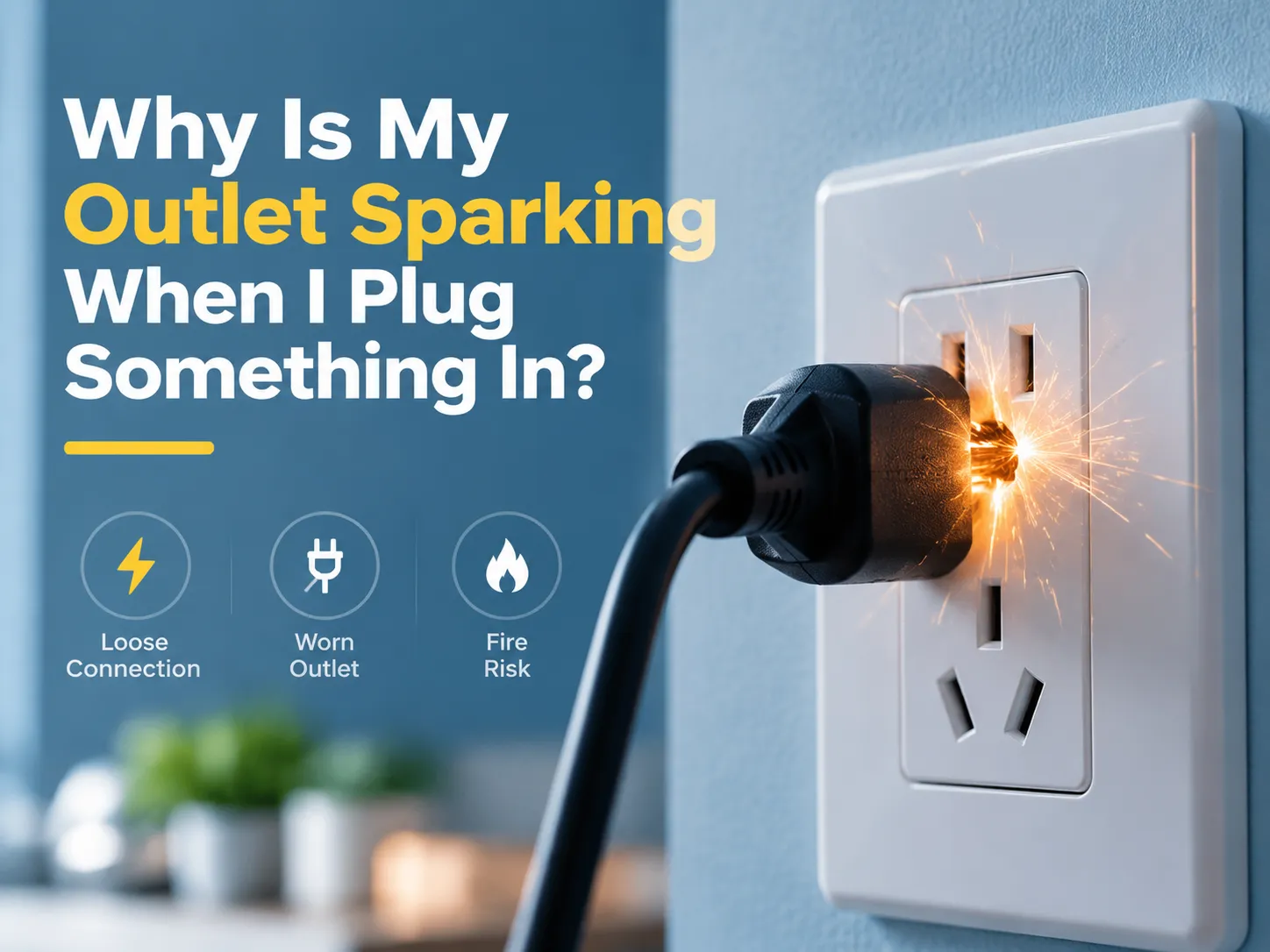
First, the question that matters: is this spark normal or not?
The physics is the same in all cases. Every time a live plug blade comes close to a live outlet contact, the air between the two causes electrical arcing for a brief period of time before the metal touches. Whether this arcing is a problem or a danger depends on three things: the amount of energy being used by the appliance, how badly the outlet has been used, and if the arcing stops once the plug is in place.
| Characteristic | Normal (routine) spark | Warning (fault) spark |
|---|---|---|
| Appearance | Tiny, brief, blue | Large, bright yellow/white, or with visible flame |
| Sound | Silent or a faint click | Loud snap, crack, or buzzing |
| Timing | Only during the first instant of insertion | Continues after the plug is fully inserted, or happens every time |
| Smell / marks | None | Burning smell, smoke, black scorch marks on the outlet face or plug |
| Device type | Motor or capacitor loads (vacuum, fridge, drill, charger) | Any device — especially low-draw ones like lamps |
Most electricians have a rule: when a vacuum cleaner or refrigerator plug creates a small spark, and the spark immediately disappears after plugging in, this is the normal power-on arcing that will happen as appliances are first turned on. If the spark happens with a charger or bedside lamp, or happens each time no matter what plug is applied, or if it causes a sound or a smell, this is a sign that the outlet is getting closer to failure. The danger of sparks when a plug is only partially removed or after being completely inserted into the outlet is a sign that there is no secure connection being made, and a secure connection is the only thing preventing the spark from becoming a continuous arc.
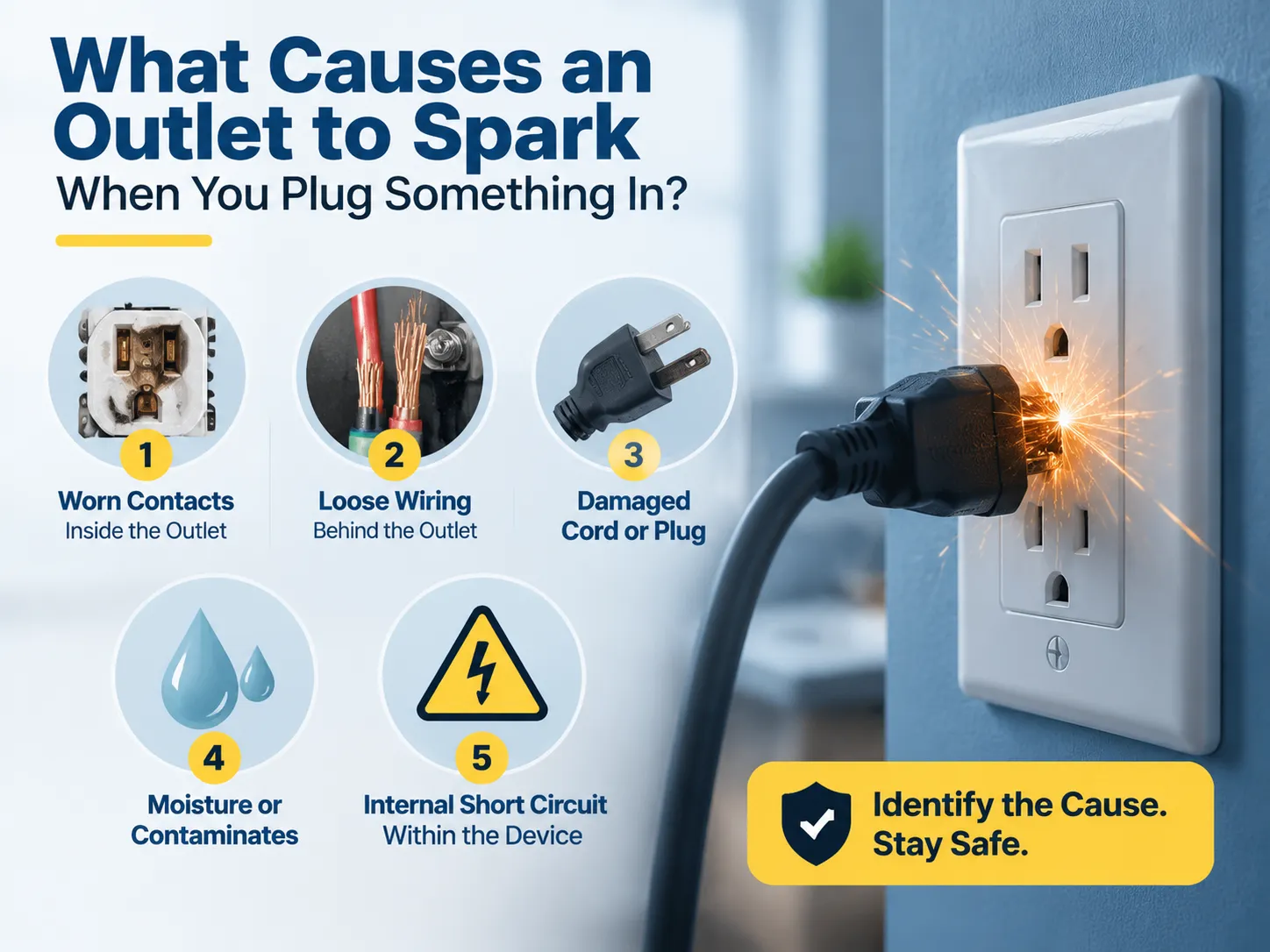
What causes an outlet to spark when you plug something in?
Five possible causes are responsible for a spark becoming dangerous:
- Worn contacts within the outlet. The insertion of any electrical plug causes wear on the internal contacts of the outlet. If heavy loads, such as space heaters, have been plugged into the outlet for years, the contacts have worn to the point of creating a poorly fitting connection. When the metal plug of the electrical device is unable to properly connect with the internal contacts of the outlet, arcing occurs. This is the most common problem and it is also the easiest to correct; simply replace the outlet.
- Loose wiring behind the outlet. The outlet could be fine in itself, however the wires leading to the outlet may be loose or have become loos over the years. Any loose wiring behind the wall leading to the outlet will create arcing and heat without being noticed. Any outlet that feels warm to the touch or has a history of sparking should be checked behind the plate.
- A damaged cord or plug. If the sparking appears to be confined to the use of one electrical device, investigate that device. Bent or darkened prongs, a broken plug or a frayed or stiff cord can all create arcing.
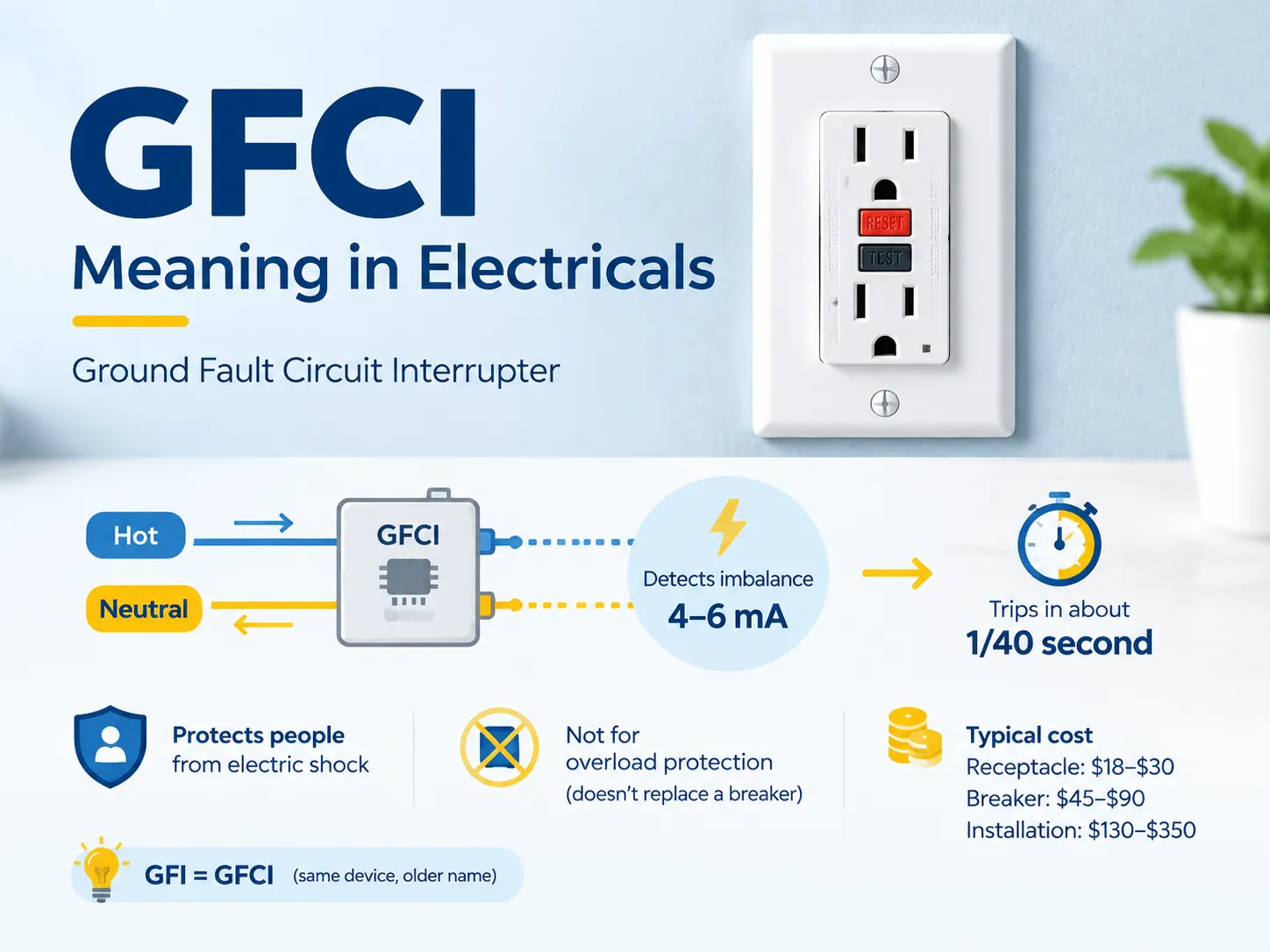
- Moisture or contaminates. Moisture present near electrical outlets, such as from a bathroom or kitchen or from a leak behind the box may potentially create a tracking path near the outlet..outlet arcing will occur because it has moisture present so it is important to use an outlet protected by a GFCI in wet areas.
- An internal short circuit within the device. If arcing occurs as the electrical breaker in tripping, then it means there is probably an internal fault present causing the output voltage to increase. Testing the device on a different circuit may also assist in determining the nature of the electrical problem.
The anatomy behind these failures — how an outlet’s contacts, terminals, and grounding work together — is explained in our electrical receptacle guide, which is worth reading once so that terms like “hot,” “neutral,” and “ground” mean something concrete when an electrician explains the problem.
The wider family of wiring-device failures is catalogued in our most common switch and socket problems article, which covers several issues — loose terminals, arcing contacts, and failing receptacles — that show up first as sparks.
What should you do when an outlet sparks?
Follow these steps below, realizing that most of them relate to stopping use of the outlet, rather than actually diagnosing the problem through trial and error:
- Unplug the device immediately, unless it is continuously sparking or is warm, in which case turn off the circuit vert and then unplug it. Pulling a live, arcing outlet cord will cause burns.
- Turn off that circuit at the panel. This critical step converts a potential fire hazard into a simple bother. Switch off the breaker for that outlet and keep it that way until you learn otherwise.
- Look at the outlet and the plug itself. Check for scorching, melting, cracking or discoloration on the outlet, as well as darkened or marked prongs on the plug. It is useful to take a picture of it to show the electrician when explaining the situation.
- The pattern determines the danger. If the outlet experienced a spark with a high-inrush appliance without general damage marks, it may be just a common flash. However, if the outlet is damaged from a low-draw device or contains burning odors or any markings, do not use the outlet again until a professional technician addresses the situation.
- Contact a certified electrician for anything beyond the common or insignificant spark. Electrical outlet replacement is inexpensive; the technician will assess the situation to determine whether any underlying circuitry was also damaged.
How do you stop an outlet from sparking?
Preventative measures consist of good equipment quality and some good practices:
- Replace old outlets early. If an outlet’s contact will not hold a plug firmly, you are in danger of an arc occurring. How can you tell? Use the “tug test” to help you determine when a plug should be replaced — does it hold the plug in or does it fall out when lightly pulled.
- Use specification-grade or hospital-grade outlets in high-volume areas. The cheap home-grade outlet in your kitchen has seen thousands of uses; specification-grade outlets are rated for much more. They cost an additional few dollars.
- Do not use excessive force to insert a plug or use a combination of adapters to make the plug loose in its receptacle. A plug that rocks when inside the receptacle will lose contact each time it moves. Always make sure that a 3-prong plug is in a 3-prong receptacle — the grounding explanation of this rule will be discussed in our 2-prong vs 3-prong outlets.
- Put GFCI protection on wet areas. Kitchens, bathrooms, garages, and outdoor outlets should be equipped with GFCI devices, so that any moisture-related problem will trip the circuit instead of creating a high-voltage arc. You can find the different outlet types and the required installation sites in our electrical outlet type guide.
- Do not plug high-current-drawing appliances into the same outlet. Space heaters, microwaves, and refrigerators produce the most initial current; when multiple appliances share a legacy circuit, the risk of both continuous arcing and circuit overload is exponentially increased.
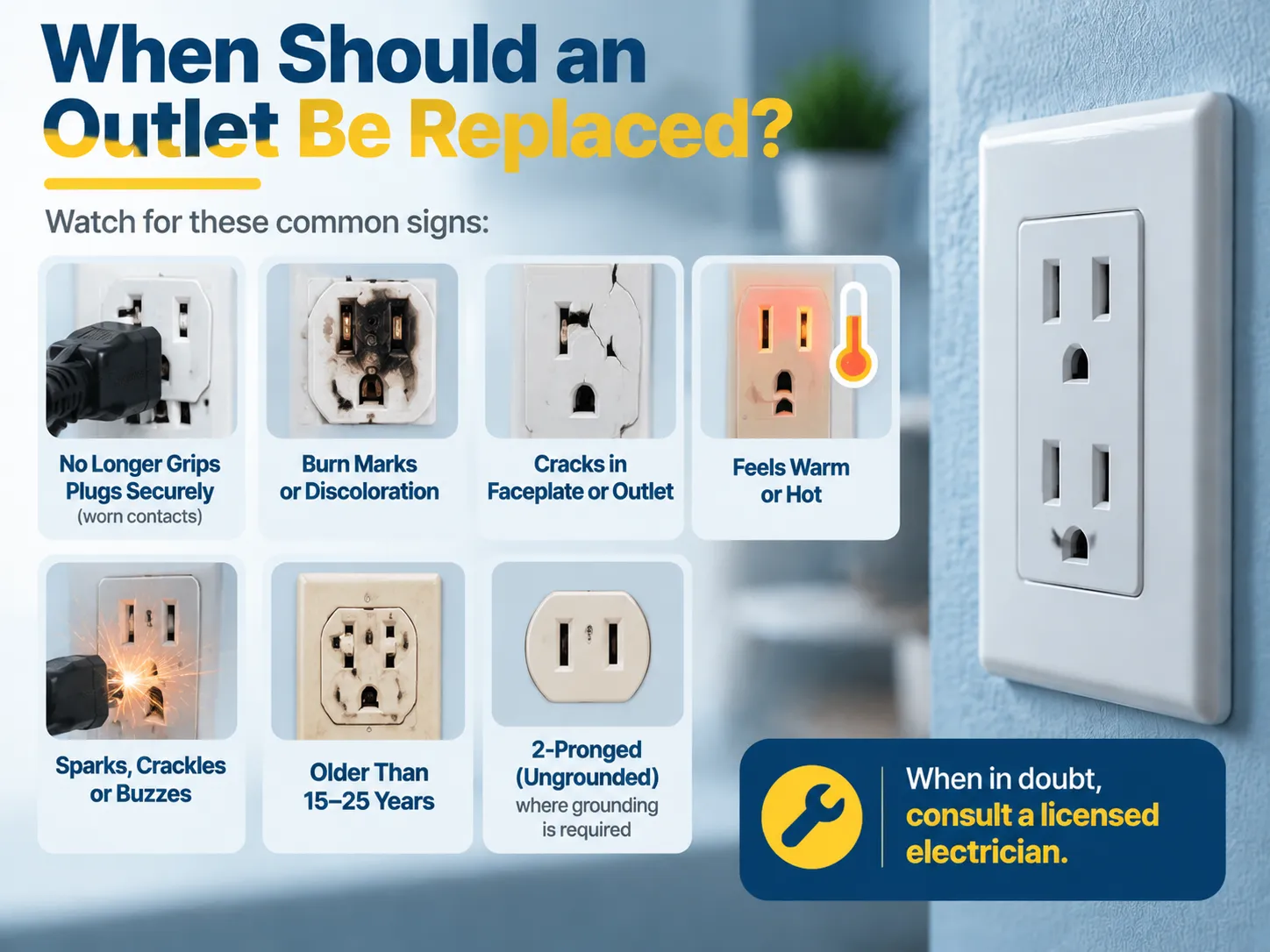
When should an outlet be replaced?
Outlets have a lifespan, and there are several signs that indicate when it is time to replace an outlet — aside from monitoring them:
- The outlet no longer grips plugs securely (the contacts are worn out).
- There are black burn marks, melting, or discoloration around the holes and/or screws.
- The faceplate or outlet itself has cracks — cracks allow moisture and dirt to get in and lower insulation quality.
- The outlet feels warm or hot after being used normally.
- It sparks, crackles, or buzzes every now and then.
- It is older than around 15-25 years (the contacts and the insulating material become weaker over time because of the usage of the outlet itself).
- It is a 2-pronged ungrounded outlet in an area where a grounded outlet is needed according to local codes.
If you’ve determined that your outlet is in need of replacement, you should be aware that it is a very simple task for a competent homeowner to perform when the power is off and space is available in the junction box. However, if you have any doubts about the outlet’s wiring or placement inside the kitchen or bathroom, employment of a professional electrician is advised for safe installation.
FAQ
Is it normal for an electrical outlet to spark when you plug something in?
The appearance of the blue spark when powering some device with a motor or a capacitor, for example, a vacuum cleaner, fridge, drill, or battery charger, is considered to be normal. This is simply the process of arcing caused by the device starting up. But you have something to worry about if you witness an electrical spark which is too bright, or loud; a spark that lasts after insertion of the plug; or one that appears every time you use an electrical fitting.
How do I stop my outlet from sparking?
Replace those sockets that no longer hold a plug with firm grip; use standard specification type receptacles in high-use locations; ensure that plugs are completely in place without any pressure; have wet places fixed with GFCI; and ensure all high consumption electrical devices have special electrical circuits. If an electrical fitting is sparking excessively at all times, please stop using it and get it checked, and this will probably be resolved with a $20 electrical receptacle.
What makes a plug spark when you plug it in?
Arcing happens at the time when the space between the blade of the plug and the electrical fitting is not in contact and continues until contact is established. The problem arises with poor contact which creates arcs all the time, and then arcing becomes a problem since there is power and heat generated at the point of contact.
Is it bad if a charger sparks when plugged in?
It is dangerous if one experiences spark production when charging a phone or a laptop through the electrical outlet as it indicates that the point of contact with the electrical fitting is worn out or the electricity connection is bad.
References
- Electrical Safety Foundation International (ESFI)
- NFPA — National Electrical Code (NEC)
- Family Handyman — Electrical Repair Guidance
Conclusion
A sparking outlet is your electrical system’s way of telling you that something is not right, and it’s up to you to interpret that message. A small blue flash when using a refrigerator or vacuum cleaner is just a normal circuit closure, but a large, loud spark means that there is a problem somewhere along the way. Reasons for sparking include a weak outlet, loose wire behind the wall, faulty wiring in the appliance, wetness or moisture, and rust on the plug; these issues could result in burnt wires and lead to an electric fire. Electricians say that the solution is an easy one: stop using the outlet immediately, disconnect it from the breaker panel, and check for any black marks or burn patches around the outlet and on the walls that may indicate whether the outlet needs replacing or if the appliance is faulty. Outlets do wear out, and you will be glad that you spent the $20 to have your outlet replaced if it means you won’t have a potential fire risk in your home. Listen to what your outlet is telling you; have it fixed, and it may work properly for another 10 years without further problems.