One of the harshest weather conditions in the U.S. is the one that pertains to the external outlets of Las Vegas, where the summer maximum temperatures reach 115 degrees Fahrenheit, and one can count hundreds of sunrays or rainstorms occurring within an hour or longer. Unfortunately, ordinary covered outlet covers, or even more old-fashioned flipping outlet covers used outdoors, cannot withstand such an assault from nature. This article describes the way weather – proof outlet covers operate, why the utilization of extra-heavy-duty outlet cover is a must in Las Vegas, who produces and sells them in the city, what their prices are, and how to choose, install and care for them properly so that the outlet continues being used for dozens of summers in a row after the purchase.
The short version: At outdoor outlets in Las Vegas, you will need the weatherproof type of extra-duty while-in-use covers — the special “bubble” covers that keep their protective properties while a cord is plugged in, as stated in NEC Article 406.9(B)(1) which applies to wet locations. The cover must be GFCI protected and made of weather-resistant (WR) material. A few reputable brands that you can find at an electrical supply store in Las Vegas are TayMac, Hubbell/Bell, Leviton, Arlington, Pass & Seymour/Legrand.
What is a weatherproof outdoor outlet cover?
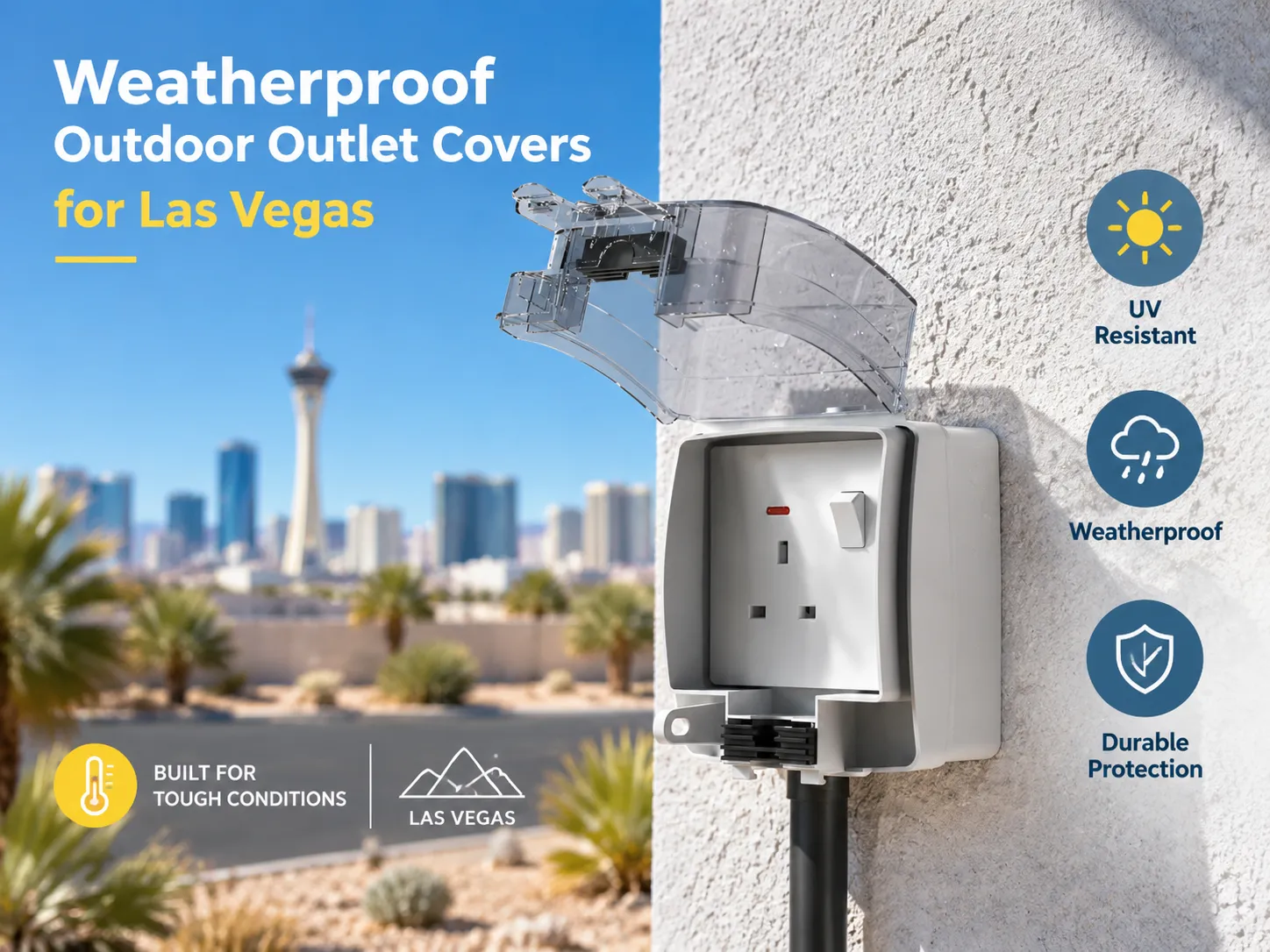
A weatherproof outlet cover is that enclosure, which safeguards an external socket from rain, snow, dirt, and UV rays when nothing is connected to it and, in the case of its modern form, while a cord is fixed to the outlet and the cover is secured. The second part is exactly what is asked in the present code. Previous flip lids could protect the socket only when it is not in use; once you plugged in something important like holiday lights, a water timer, or a swimming pool pump, the lid had to be opened, thus exposing the socket.
The modern-day answer is the while-in-use cover. It has a massive lid and can be either spherical Shaped like or flat-shaped on commercial unit cases, which has some notches or flexible layer at the bottom allowing the cord to be plugged while the cover is locked. According to the National Electrical Code (NEC), all outlet that is installed outdoors is recognized as a “wet location”, and NEC 406.9(B) letter H stipulates it has to be protected by a weatherproof enclosure, which is still effective when the cable is plugged in. The cover itself must be “extra duty”, which means that it underwent special testing guaranteeing its strike resistance and was UL-approved for being used in wet locations. So, be sure to check the packaging sticker rather than simply grabbing any box on the shelf.
There are two more rules concerning the cover. The receptacle it covers has to be GFCI-protected (NEC wants it to be true for all 15 and 20 amperes 125-volt outlets installed outside) and has to be weather-repellent (WR) starting from 2008.The anatomy of the outlet underneath the cover — and why WR and tamper-resistant versions matter outdoors — is explained in our electrical receptacle guide.
Why Las Vegas is a special case
Las Vegas (and the larger Clark County area) has three environmental conditions that work in combination to cause inexpensive outdoor electrical equipment to wear out much faster there than in almost any other part of the country.
- Unprecedented UV rays: Sitting at around 3,600 feet above sea level and with more than 300 sunny days per year, the valley is subject to extreme amounts of sunlight. Violations of UV-stabilized plastic cause yellowing, cracking, and brittleness in a matter of couple of seasons; seals dry out and crack. Polycarbonate with UV stabilizers or die-cast aluminum differentiate between the cover with a life of a decade and the one which shatters when opened.
- Heat: Triple digits in summer as well as black top asphalt and concrete around cause surface temperatures to be much higher than the actual air temperature. Cheap thermoplastics become soft and misshaped while seals suffer, too. The materials of the covers for sun-exposed walls must be specially designed to withstand the heat.
- Monsoon storms and dust: From July to September North American monsoon occurs with the downbursts, torrential rains, and windborne sand. After the rains dust settles on the surfaces in the hot sun, which is kind of why weep holes and clean seals are so important here compared to other places.
Then there is the regulatory aspect: every outdoor outlet located in the vicinity of swimming pools and spa-uses must comply with proper rules according to NEC Article 680 laws; inspections of new installations and renovation work is carried out according to the latest proper NEC edition; Southern Nevada’s regulations strictly mandate covers for wet places because the main reason for GFCI to be triggered is water getting into a live outlet, which is why the practical rule for Las Vegas says: wet location covers and WR/GFCI are required at the outdoor outlets including those located under the patio’s roof.
The types of weatherproof covers
Familiarity with the three families helps make it easier to read the shelf (or the online listing):
| Type | Materials | Best for | Las Vegas verdict |
|---|---|---|---|
| While-in-use “bubble” cover, residential grade | UV-stabilized polycarbonate | Patio outlets, garage exterior, holiday lighting, anywhere a cord stays plugged in | Best value for most homes; replace if the plastic ever yellows or crazes |
| Extra-duty while-in-use cover, metal | Die-cast aluminum with powder coat and foam gasket | Commercial properties, pool equipment, high-traffic areas, coastal-grade corrosion resistance | The commercial standard; the impact rating is genuinely useful near pools and backyards |
| Auto-close / flip covers (old style) | Metal or plastic, spring or gravity close | Only for damp locations where no cord remains plugged in | Avoid for wet exposures — fails code once a cord is in use |
There are also surface-mounted boxes (for outlets that must stand above lap siding) and in-wall “pop-up” and recessed units for patio and deck applications. For most homes in Las Vegas, a UV-stabilized polycarbonate 1-gang or 2-gang weatherproof cover is the proper choice; for pools and spas, and in commercial applications, go with heavy-duty metal or the specially marked “heavy-duty” plastic version. The full set of outlet types and the code context around each is mapped in our types of electrical outlets guide.
Which brands and suppliers serve Las Vegas?
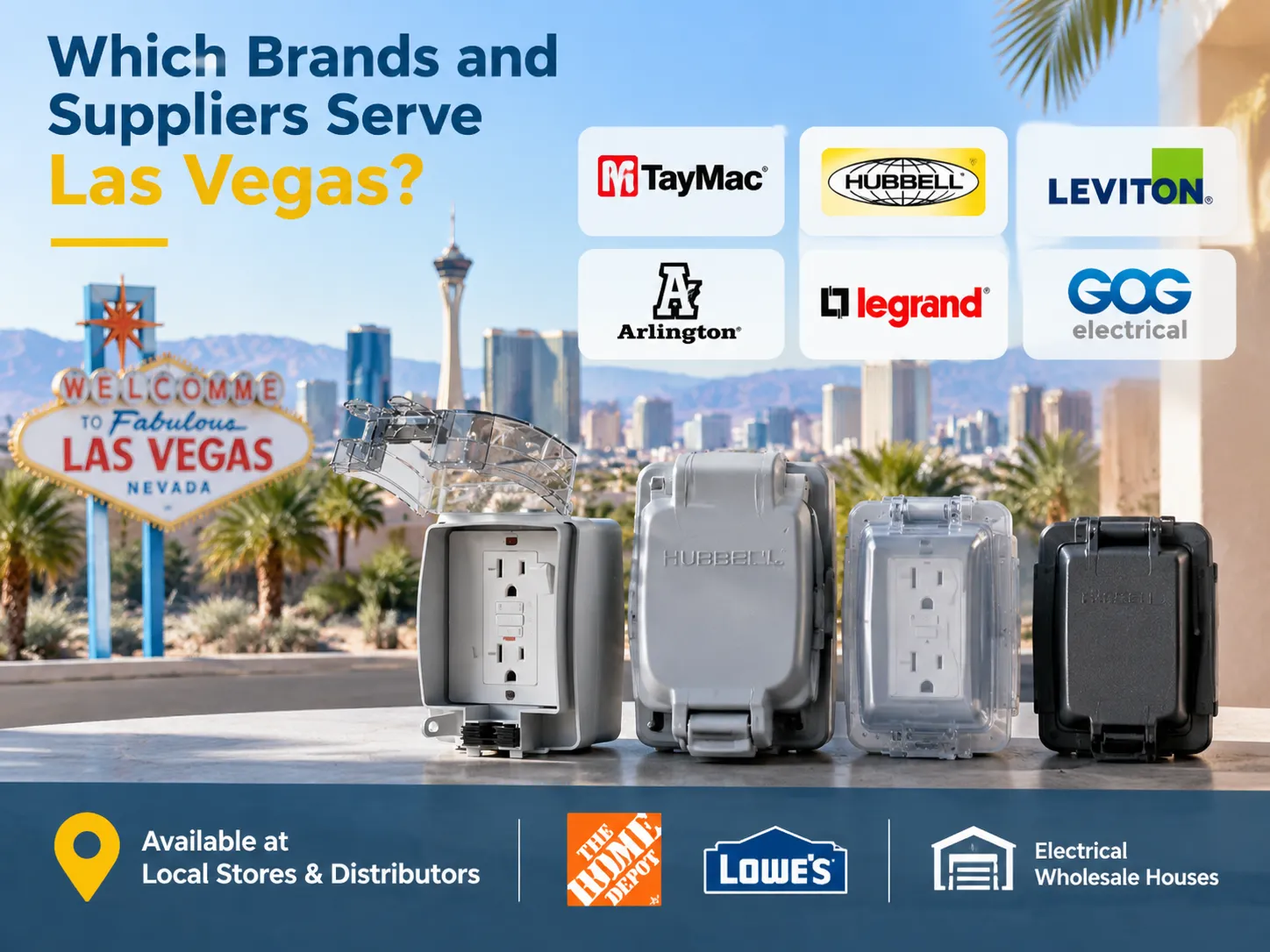
In Las Vegas, the suppliers are the same national outlets you find all across the United States, available in big-box stores, electric wholesalers, and irrigation and landscape suppliers.
| Brand | What they are known for | Typical price |
|---|---|---|
| TayMac | The most common residential while-in-use covers on the shelf (MM410/MM420 series, MX3200 extra-duty); 16-in-1 mounting plates, clear lenses | $10-22 |
| Hubbell / Bell | Commercial and industrial die-cast aluminum extra-duty covers (PVL100 series), lockable, salt-air resistant | $28-45 |
| Leviton | Full system approach: WR receptacles, GFCI/WR devices, and mid-range covers; heavy-duty 5981 series | $15-30 |
| Arlington | Siding boxes and specialty mount solutions that keep covers flush and drained on exterior walls | $18-28 |
| Pass & Seymour / Legrand | Spec-grade WR and tamper-resistant devices with matching enclosures | $12-35 |
| GOG and other certified wiring-device manufacturers | Complete ranges of weather-resistant receptacles, GFCI devices, switches, and sockets engineered to UL/IEC standards, sold through distributors | Value tier, typically 20-40% below the premium US brands at the same specification |
Where do Las Vegans purchase these products? In practice: at Home Depot and Lowe’s for TayMac/Leviton retail purchases; at electrical wholesalers (such as Platt, Border States, and CES-related branches and local counters working with licensed electricians) for Hubbell and Arlington products; and via the Internet for volume and specialty products. Licensed contractors get wholesale materials while most homeowners shop at retail stores or online; however, both of these types of retailers sell UL-listed products, and Clark County building inspectors pay attention to the listing.
It should be hence noted that the outlet itself is just as important as the cover. Using a $15 cover on a non-weather-resistant indoor outlet that costs $2 will violate codes. That is why specification-grade weather-resistant outdoor devices — like WR duplex receptacles, self-testing GFCI/WR combinations, and anti-corrosion switches — are sold as part of kits that are equipped with covers, and the same certification logic works for both American and foreign goods. For a broader look at how wiring-device brands compare — and where value manufacturers fit in the market — our ranking of the top wiring-device brands worldwide is a useful read before you buy in bulk.
If you need a complete outdoor wiring device instead of just the covers to do a rewire, a rental property, or a commercial project, the same approach applies to selecting switch and socket manufacturers as it would if looking for cover brands: check their certification, verify their materials, and compare technical specifications.The buyer’s guide from switch-and-socket manufacturer igotoele on how to choose an electric switch and socket manufacturer walks through exactly those checks, and it applies to outdoor devices as much as indoor ones.
What do outdoor outlet covers cost in Las Vegas?
Pricing in the Las Vegas market mimics national figures for retail while wholesale prices to contractors are lower:
| Product | Retail price (typical) | Notes |
|---|---|---|
| Polycarbonate while-in-use cover, 1-gang (TayMac MM410/MM420 class) | $10-18 | Residential default; buy the clear-lens, 16-in-1 mount version for easiest fit |
| Extra-duty while-in-use cover, metal (Hubbell Bell PVL class) | $28-45 | Commercial/pool work; lockable options |
| WR duplex receptacle behind the cover | $6-20 | Leviton 5262-W class at ~$8-10; spec-grade higher |
| Self-test GFCI/WR receptacle | $17-30 | Required on outdoor circuits; test monthly |
| 2-gang or 3-gang covers, metal extra-duty | $35-70 | Multiple outlets or switch+outlet combos |
The economics make the case for doing the job the right way — a cover costing somewhere in the range of $10-15 that is complemented with a WR/GFCI receptacle at a cost of $20-30 will ensure against the presence of water that can cause circuit trips, corrosion, and possibly fires or an electrical shock. The cost of buying the components is practically negligible in comparison to the expenses incurred with a service call. Buying covers for all the external outlets at once (owner can save significantly by making the purchase in packs of three) constitutes the cheapest form of insurance that homeowners can get in Las Vegas.
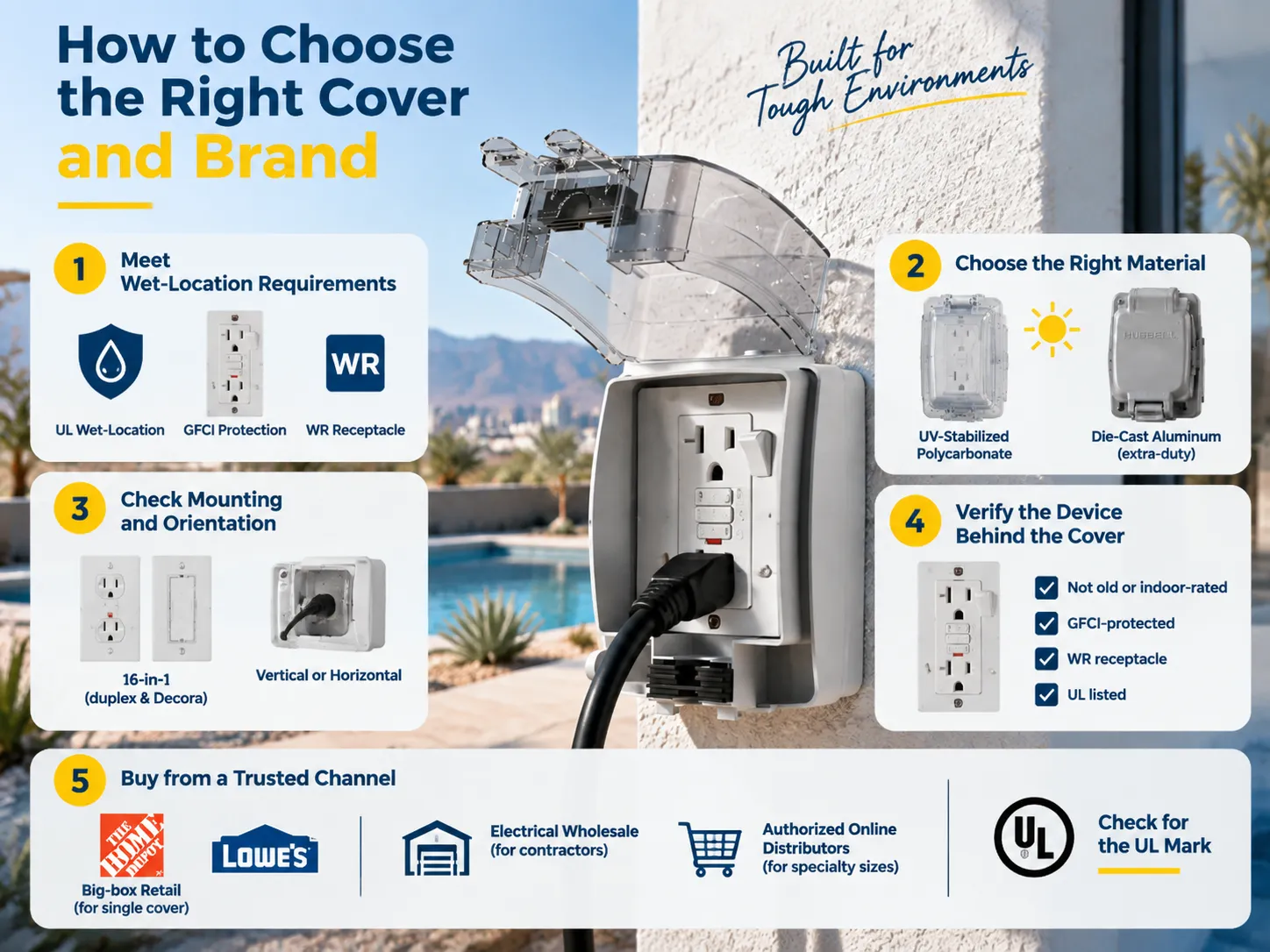
How to choose the right cover and brand
Ensure you follow these steps to be successful in this weather.
- Review wet location requirements. If there is an outdoor outlet that can get rained on while being plugged in, an extra-duty while-in-use cover with UL wet-location listing and GFCI-protected circuit must be used. There is no way around this rule since it has to do with Clark County inspections and the laws of physics.
- Make sure that the materials match exposure conditions. If it’s full sun exposure, choose UV-stabilized polycarbonate or die-cast aluminum; bare cheap plastic should not be used. For pools and commercial places, only extra-duty metal and impact-rated plastic should be considered. Coastal-grade protection against corrosion is overkill in the desert, but aluminum units can withstand children, hail, and pool equipment as well.
- Check the mounting plate orientation. Most covers are 16-in-1, so they will fit standard Decora and duplex outlet, but some are horizontal or vertical; measure your box and outlet type. The cover must completely shut over the plugs being used. If using bulky transformer plugs, make sure bubbles are deep enough.
- Check the device behind the cover. If the current receptacle is old, rated for indoor use only, or there is no GFCI protection, replace it while the cover is off, as there is very little difference in cost, and the effect of inspection is real. The selection logic for choosing any wiring device — certification, ratings, and brand credibility — is laid out in our how to select wiring devices guide.
- Purchase from a reliable source. Use a big box retailer for a single cover, access wholesalers for contractor volume, and authorized online distributors for special sizing. Check for UL mark on the box as there is an issue with counterfeits and unlisted “weatherproof” covers available online, and unlisted cover is guaranteed to fail at the worst time possible when there is a monsoon.
Installation and maintenance notes for desert homes
Cover installation takes less than ten minutes, but three things distinguish a dry outlet from a wet one once the job is done:
- Seal only the top and the sides, never the bottom. The National Electrical Code requires wet location enclosures to be draining condensation, so once you’ve completed the work on the outlet, run a bead of 100% silicone along the top and side edges of the gasket up against the wall and leave the bottom edge open or clean weep holes out. Sealing all four edges prevents water from draining and causes corrosion.
- Match the gasket to the base material. If you are working with stucco or uneven block (the common exterior in Las Vegas), cover the back of the gasket with sealant, so the cover attaches tightly; if the surface is smooth, usually, factory gasket is already sufficient.
- Position the cords expressing down. Bring the cords out through the bottom notch, allowing the water to slide down the cord and fall away instead of getting into the plug. This is what the bottom position of the cord notches is for, so please respect the design.
Maintenance is performed twice per year, including opening any cover, inspecting the gasket for cracks, and clearing the weep holes; remember about tightening the screws again (the wind in the desert will make them loose over time) and pushing the GFCI button on the receptacle behind.Cracked or yellowed polycarbonate, a gasket that no longer seals, or a hinge that has lost its spring means replacement — the same moisture-entry failures that show up as the classic outdoor-outlet problems are catalogued in our common switch and socket problems guide.
FAQ
What is the best weatherproof outdoor electrical outlet cover?
The TayMac (MM410/MM420 models) UV-stabilized polycarbonate while-in-use cover is the best option for most home owners because it complies with the NEC extra-duty wet-location standard, maintains its weatherproof characteristics during use, and can withstand years of exposure to sunlight. For more extreme situations like pools, spas, and commercial applications, invest in extra-duty die-cast aluminum covers from Hubbell/Bell.
What is the best cover for an outdoor outlet?
The top outdoor outlet cover for a Las Vegas outdoor outlet is the extra-duty while-in-use cover made of UV-stabilized polycarbonate or a die-cast aluminum cover which is UL-listed for wet locations and which is used in conjunction with a weather-resistant receptacle on a GFCI-protected circuit. Note that the cover is only one half of the solution since the WR/GFCI device behind it provides the electricity safeguard while the cover offers protection from the weather.
What is the best weatherproof cover for an outdoor plug?
If any cords will remain connected, including sky-high power ones (holiday decorations, irrigation devices, pool pumps, charging stations), then you will require a while-in-use cover with an entrance hole in the bottom. The TayMac units provide wonderful solutions for plugs with transformers while the Hubbell metal extra-duty ones are the benchmark for all commercial solutions. It is critical that the cover close entirely over the plug while still being weatherproof in the closed state.
How can I protect my outdoor electrical outlet from rain?
In order to make a weatherproof cover effective, one requires an extra-duty while-in-use cover, a circuit protected by GFCI, and a WR receptacle behind it. The upper and sides of the gasket must be sealed, while the bottom needs to remain hinge-free in order for condensation to drain. It is also necessary to install drainage holes in both the upper areas of the cover and the outer edge of the cord, plus GFCI testing must be completed on a monthly basis.
References
- NFPA — National Electrical Code (NFPA 70), Article 406
- TayMac — Weatherproof Cover Product Lines
- Hubbell — Bell Weatherproof Boxes and Covers
- Leviton — Weather-Resistant and GFCI Devices
Conclusion
Outdoor outlets in Las Vegas are bound to see every trick Mother Nature has up her sleeve. Thanks to 115-degree heat and a high concentration of UV rays along with sporadic torrential rains that take the cover off any outdoor equipment, some basic rules apply based on electrical code dictated by Clark County enforceable by inspectors – each outlet must have an extra-duty while-in-use cover, along with cord-connected devices under GFCI protection. Thus, answers in choosing the hardware used are straightforward with the right rules: TayMac or Leviton UV-stabilized polycarbonate while-in-use covers for nearly every application, priced at $10-20; die-cast aluminum models made by Hubbell/Bell for industrial tasks at $28-45; and WR/GFCI devices at any point made by manufacturers such as GOG, which provides high standard quality at low prices. The bottom part must be open for drainage, wires must appear at the lower part, and the GFCI mechanism must be tested regularly.