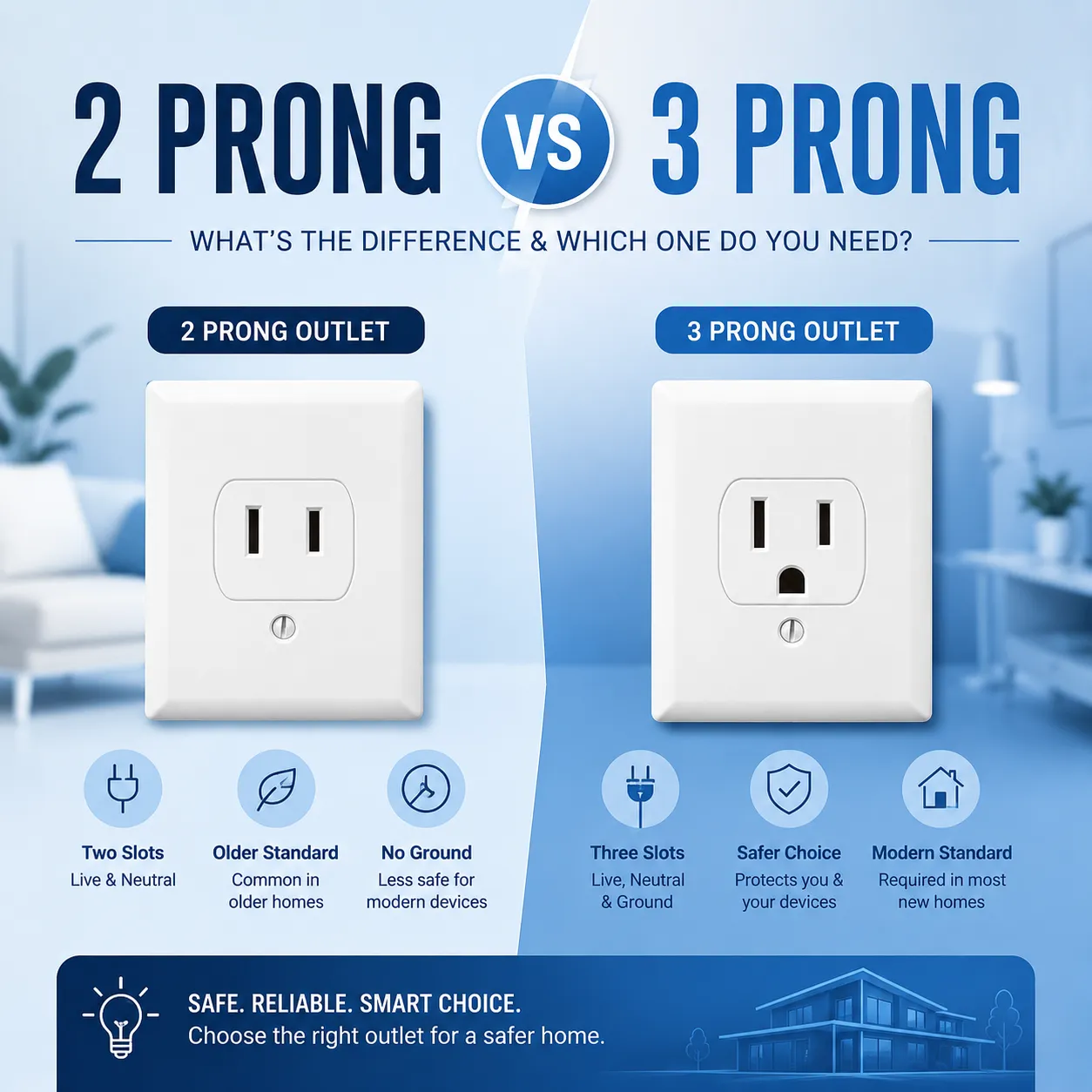
If you live in an older home, you’ve probably encountered the two-slot face of a 2 prong outlet and wondered whether it’s safe to keep using it. In modern construction, the 3 prong outlet is the standard. That third, round hole isn’t just for show — it’s the ground connection, and its presence (or absence) directly affects the safety of your appliances, your electronics, and your family. Understanding the difference helps you decide when an upgrade is overdue and when a simple adapter might buy you time.
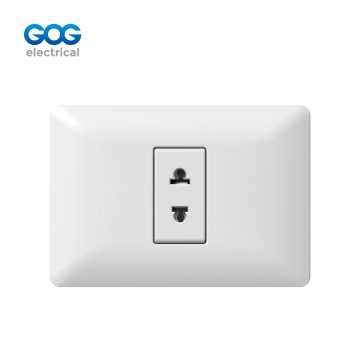
What Is a 2 Prong Outlet?
In a 2-prong flip, there is one hot and one neutral slot, both going to the same 120V circuit; however there is not a dedicated route for fault current to safely flow to the ground. 2-prong outlets provided a valid circuit and associated loads prior to the adoption of the grounding requirement in 1965. You can use 2-prong outlets to run lamps, charge phones, and power simple 2-prong cords; but a problem will arise if there is a loose wire in a metal toaster or if a frayed cord on an old refrigerator shorts out and energizes the metal housing. There is not a service path to ground through a 2-prong outlet; therefore, somebody who touches the metal of the appliance can become the path to ground.
What Is a 3 Prong Outlet?
Three-prong outlets include an important third hole: the ground connection. Internally, this ground connection is connected to a bare or green ground wire which runs all the way back to the panel and then ultimately to a buried ground rod. When a three-prong appliance is plugged into a three-prong outlet, the metal chassis of the appliance is bonded to the ground circuit. If a fault arises and causes the metal chassis to become energized, the current will follow through the ground wire, and not through you as the user, along the path of least resistance, thereby tripping the circuit breaker and providing an important measure of electrical safety according to all modern electrical safety codes. Our guide to the best electrical outlets and switches for modern homes covers the full range of three-prong options, from basic duplex to GFCI and USB‑integrated models.
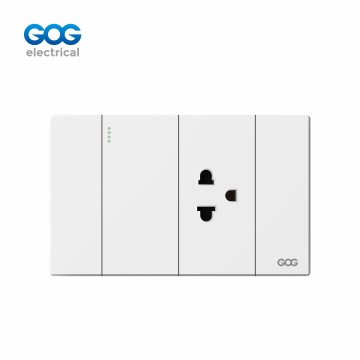
Key Differences at a Glance
The table below summarizes what separates these two designs and why the third prong matters.
| Feature | 2 Prong Outlet | 3 Prong Outlet |
|---|---|---|
| Number of slots | 2 (hot and neutral) | 3 (hot, neutral, ground) |
| Grounding | None | Dedicated ground wire to panel |
| Shock protection | Minimal; user can become the ground path | High; fault current shunts to ground, tripping breaker |
| Appliance compatibility | Limited to 2-prong plugs | Accepts all standard 2‑ and 3‑prong plugs |
| Code compliance | Grandfathered in existing homes only | Required for all new construction and renovations |
Is It Safe to Use a 2 Prong Outlet?
If you want to run a two prong device like an old fashioned table lamp with a polarized plug on a two-prong outlet that is in good condition it is perfectly safe. However, if you are going to use a cheater plug (a three to two adapter) on a three prong device without properly connecting the adapter tab to the outlet cover screw, you are taking a much greater risk. The tab is supposed to be mounted and grounded to the outlet cover screw, and that will only be grounded if the box is grounded. Many older boxes aren’t grounded, therefore using an ungrounded adapter leaves the device floating without the protection that the third prong offers. This makes for a dangerous situation as there is now no safety provided by the third prong being connected to a properly grounded source. For this reason, most safety organization recommend replacing the ungrounded two prong outlet with the properly grounded three prong outlet if at all possible.
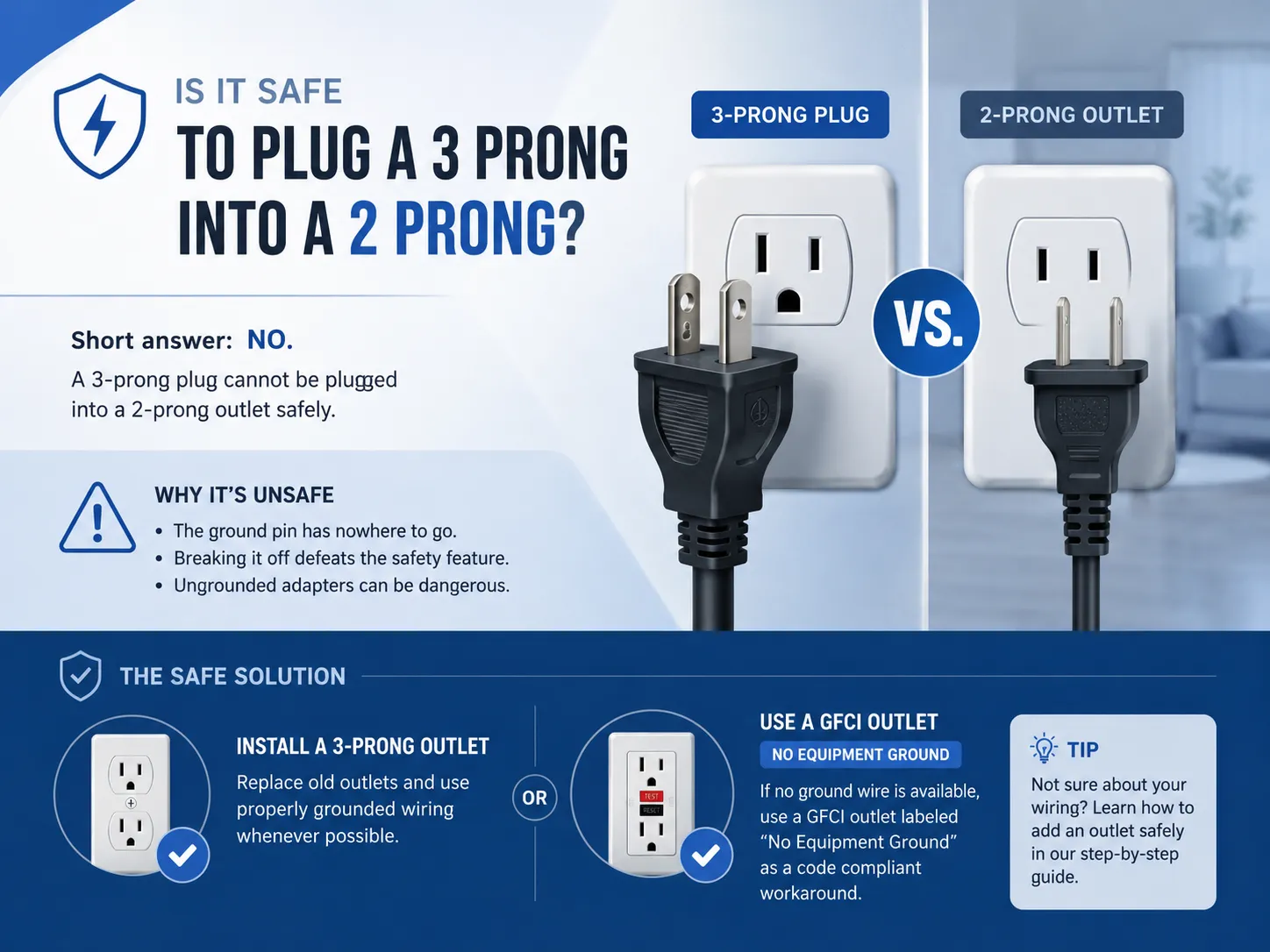
Is It Safe to Plug a 3 Prong into a 2 Prong?
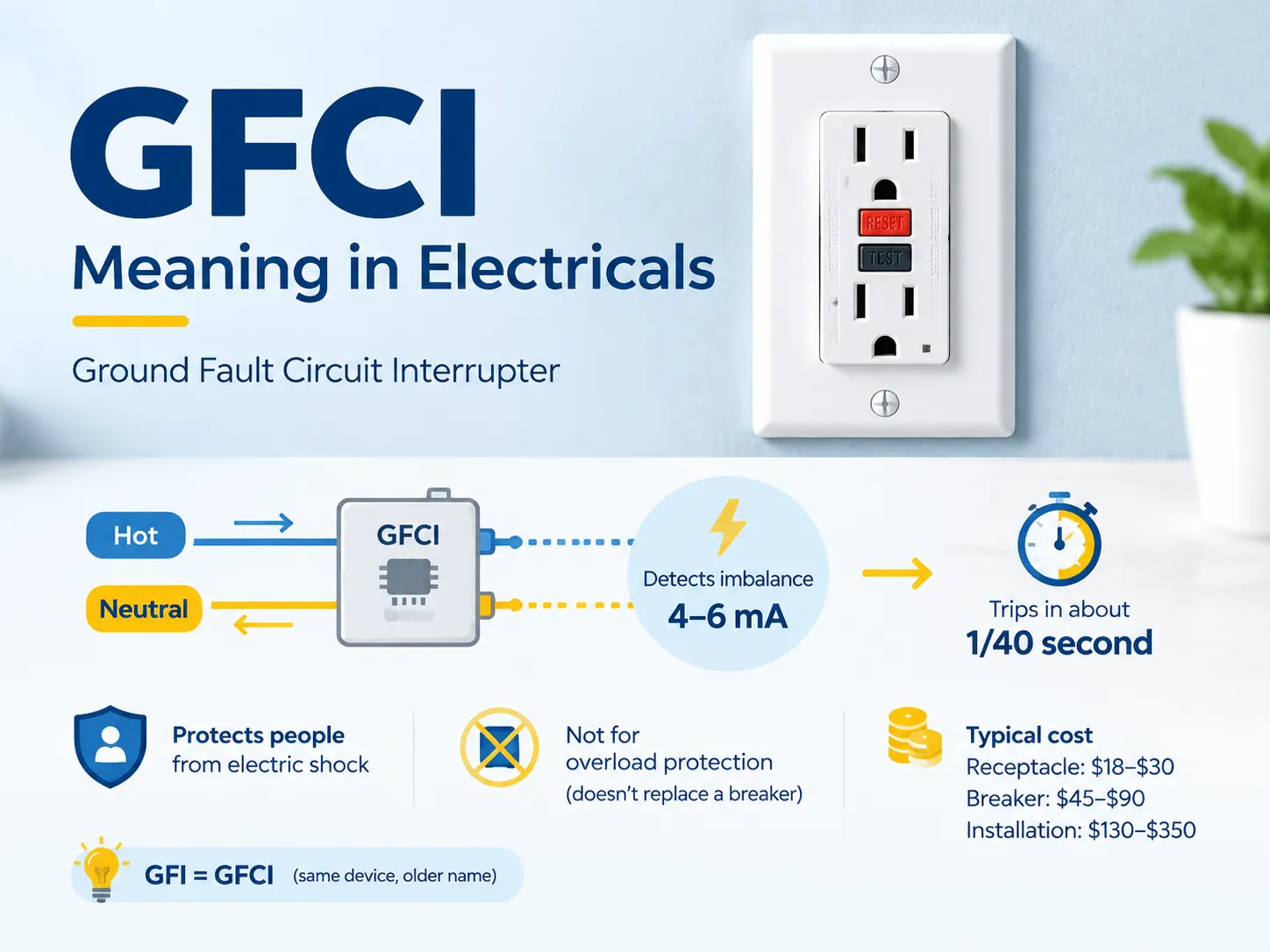
A 3-prong cord cannot be plugged into a typical 2-prong outlet for the same reason. The ground pin has nowhere to go or fit. Some people will break off the ground pin and then use the modified plug with that outlet. Others will just buy ungrounded adapters and hope for the best. Neither of these methods are safe; breaking off the ground defeats the intended safety feature of the appliance and using an ungrounded adapter can be just as dangerous regardless of whether or not it has been tested with a verified ground. The proper way to solve this issue is to install a new 3-prong outlet in place of the old one, or if there is no ground available in the wiring that connects to the box where the 3-prong outlet will be installed, you may use a GFCI that is specifically labeled “No Equipment Ground” as a code compliant workaround. If you’re unsure about the wiring inside your walls, our step-by-step article on how to add an outlet explains the process of running a new grounded circuit.
Upgrading from 2 Prong to 3 Prong: Options and Considerations
If you are upgrading your two-prong outlet to a three-prong outlet, it may not be as easy as just changing the plug. The easiest way to change out the outlet will depend on the existing wires in the electrical box.
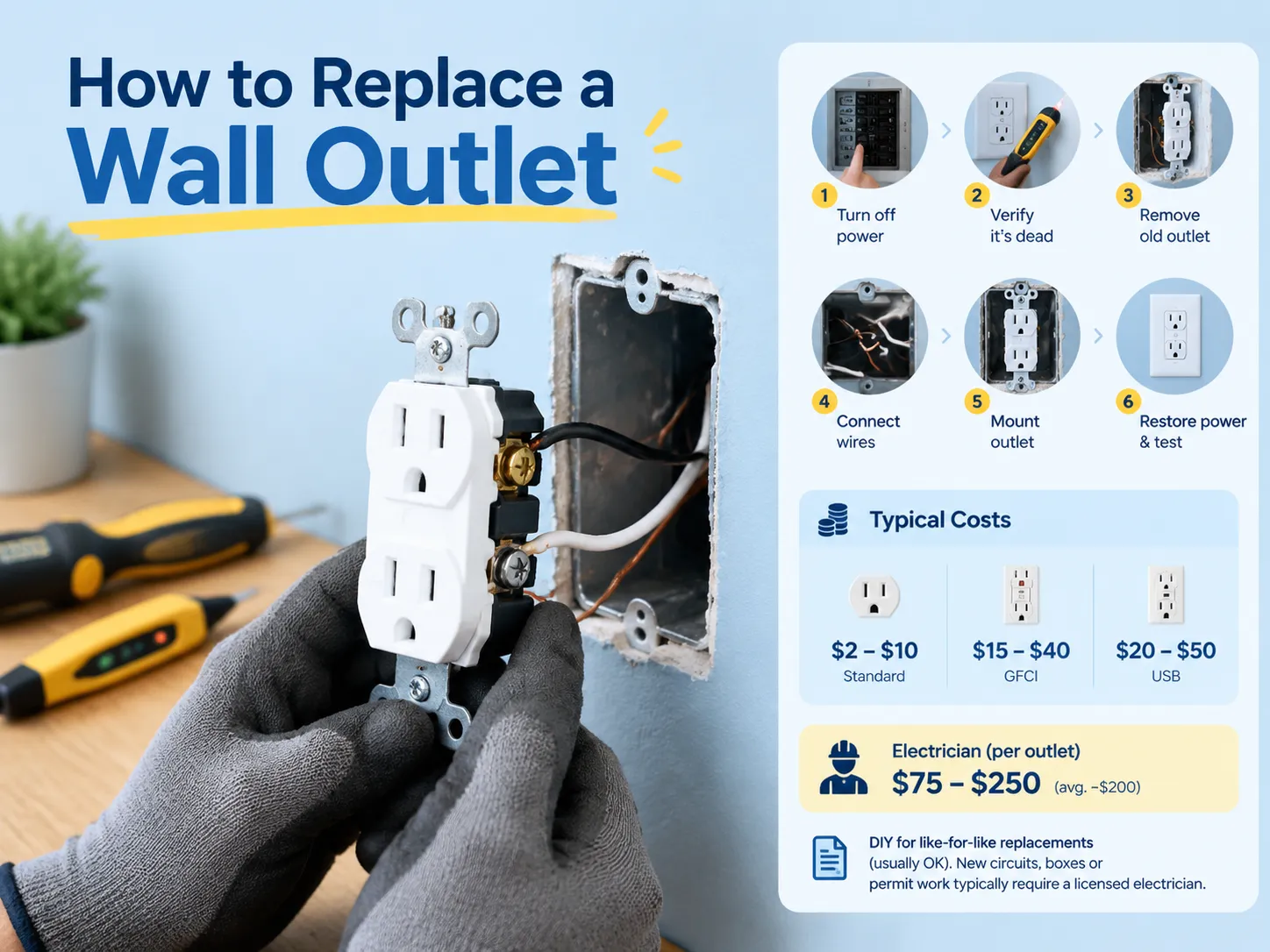
- Ground Wire Available Inside Box: The situation is a simple one. At the time of this replacement, an electrician may remove the two-prong outlet and install a three-prong outlet. He will also connect the existing ground wire to the new three-prong outlet’s green terminal (ground).
- Older houses typically have metal conduit and box that serve as ground paths. This allows the installation of a self-grounding 3-prong outlet wherein the ground connection is made using the mounting screws.
- No Equipment Ground: A GFCI outlet can be installed by the code and will monitor current balance – if it detects any leaking (through a person) it will trip. It must be labeled “No Equipment Ground”, so while it does provide life-safety protection it does NOT provide a true equipment ground (to connect surge protectors or equipment that is sensitive to surges).
- Pull a new grounded 14- or 12-gauge NM cable from the panel (or a grounded junction box), providing both a true ground wire and full three-prong capabilities.
Are 3 Prong Outlets Outdated?
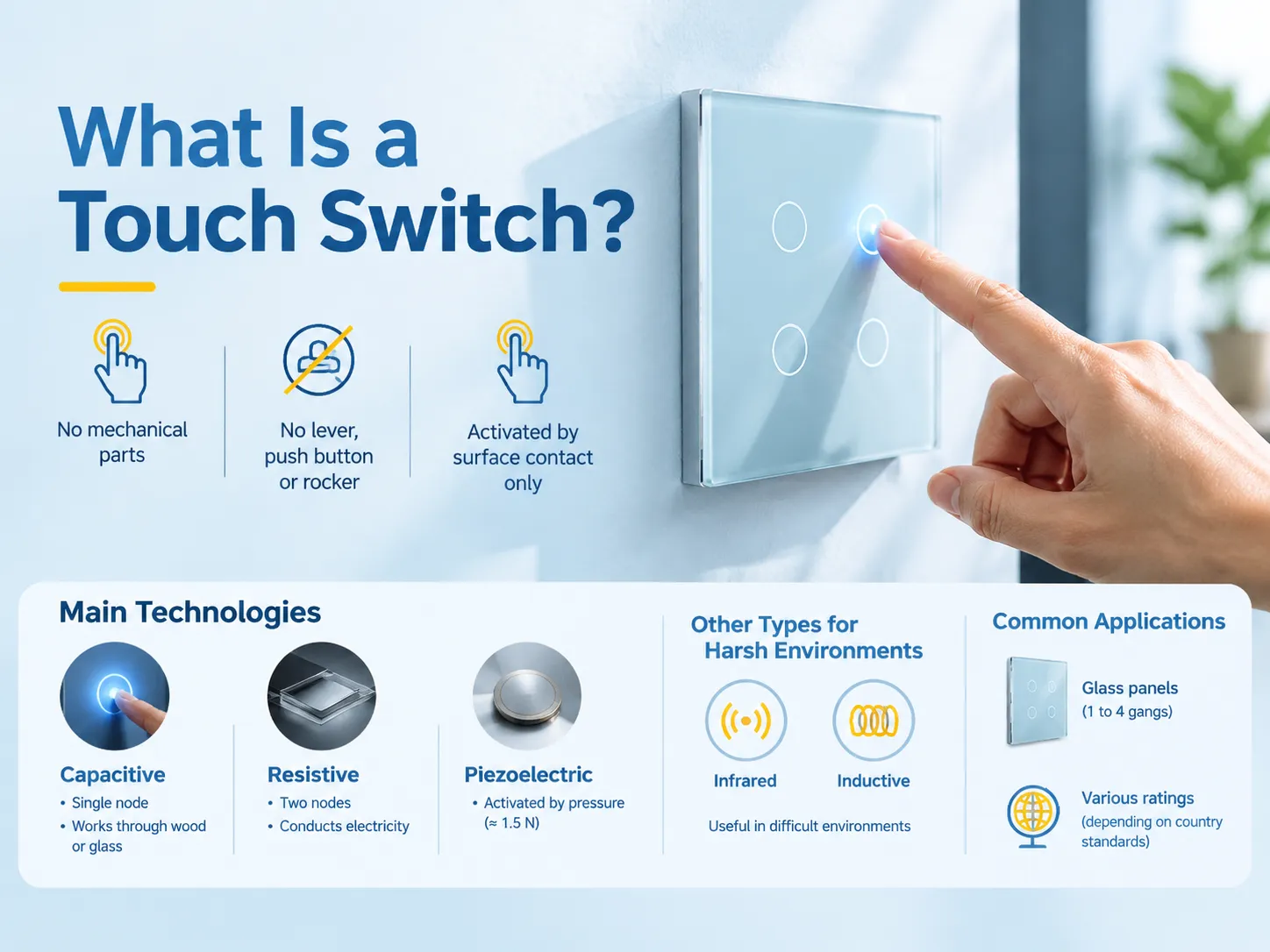
Three-prong outlets are not obsolete; they continue to serve as the standard three-pronged grounded outlet utilized in residential and commercial buildings throughout North America. New methods of improving safety have been introduced, such as GFCI outlets in wet environments, AFCI outlets in bedrooms and tamper-resistant shuttered outlets for residences with children; however, the foundation upon which these developments rest is the original three-pronged grounded outlet design. Thus, even when you see an outlet with a USB charging port or a Wi-Fi connected smart outlet, you are seeing an outlet that uses three-prong grounding technology as its basic element. If you’re upgrading multiple outlets, our overview of how to install a wall socket walks you through the process safely.
Frequently Asked Questions
Is it safe to use a 2 prong in a 3 prong outlet?
The overall response to this query is positive, as plugging a two-prong plug into a three-prong outlet is technically safe, as the ground slot will just remain empty. From a code standpoint, the wiring will still supply the necessary electrical current through the two-prong plug (the ground pole) and will not place the appliance at risk due to the fact that it has been designed to use only double-insulated, or cannot be improperly used without a ground pole. Therefore, this type of connection is permissible and considered the recommended method.
Is 2 prong or 3 prong better?
When comparing outlets, the three-prong outlet is substantially superior when it comes to both safety and enhancing the functioning of appliances. The grounding pin creates a specific route for fault current to protect people from electrical shock and enables a much quicker response time for circuit breakers. The latest electrical codes require grounding for all newly installed outlets.
Are 3 prong outlets outdated?
Three prong outlets are still the most common and safest way to deliver electricity. Although some areas require additional safety features such as ground fault circuit interrupt (GFCI) and tamper-resistant shutters, the original design of three-prong grounded outlets continues to be used today.
Is it safe to plug a 3 prong into a 2 prong?
Three-pronged plugs will not fit into two-prong outlets; however, there are a couple of ways that people might try and alter their two-prong outlets so that they can fit the three-pronged plug into it. Both of these methods present a safety hazard because they remove the ground/earth connection from the outlet so that the person using the three-pronged plug does not have proper protection from shock. The safest and most effective method for retrofitting your home is to simply replace the two-prong outlet with a three-prong outlet or install a GFCI labeled “No Equipment Ground.”
The choice between a 2 prong outlet and a 3 prong outlet is ultimately a choice between an electrical system that runs and one that runs safely. A two-prong outlet can power a lamp, but it cannot protect you when a wire comes loose inside a metal appliance. The third prong is a silent safety feature that has saved countless lives since it became standard. If your home still has two-prong outlets, upgrading them is one of the most impactful electrical safety improvements you can make — and GOG Electric supplies the full range of high‑quality 3 prong outlets, from basic duplex to smart‑integrated models, so you can bring every room up to modern standards with confidence.