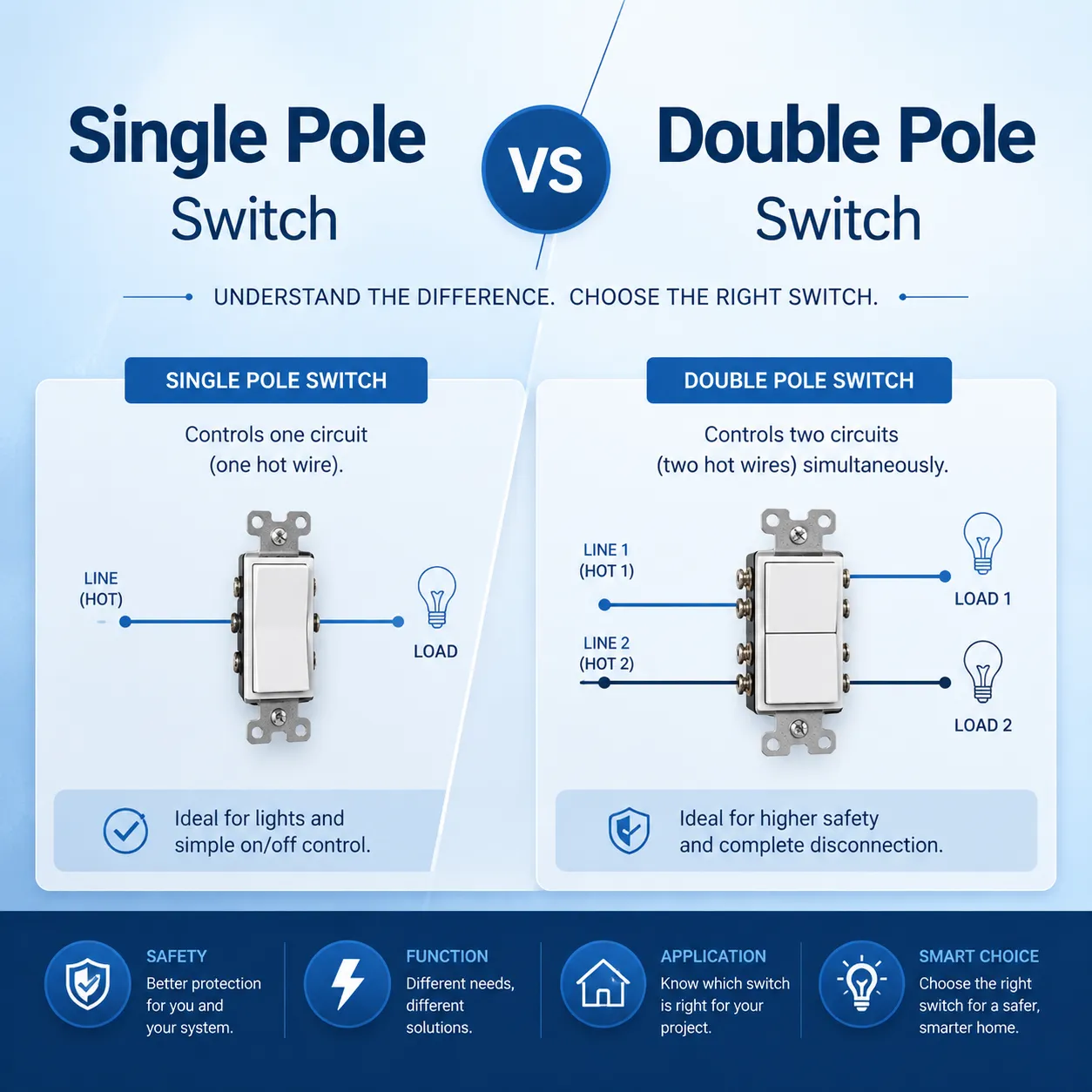
When you’re standing in the electrical aisle staring at all of the switches available for purchase, it can become confusing to see a single-pole switch next to a double-pole switch and wonder if these two items can be interchanged. The answer is no—single pole switches operate from one location on one circuit, rated up to 120V in most residential North American applications; whereas, double-pole switches operate two circuits at the same time and are sized for appliances that operate from 240 volts. Additionally, double pole switches will provide complete isolation in terms of switching both the live and neutral lines, or both of the hot lines. The distinction between these two types of switches goes beyond appearance; it has an impact on what types of devices you can safely operate and how those devices are adequately protected.
What Is a Single Pole Switch?
The standard switch used to turn on and off your room’s light is called a single pole switch. There are two brass screws (or terminal connections for wires) — one connects to the incoming hot wire from the panel and the other connects to the outgoing hot wire going to the light fixture. There is also a green screw for the ground connection. When the switch is turned to the on position, the circuit is completed and allows current to flow from the load and back through the neutral wire. When the switch is turned to the off position, the hot wire has been interrupted, and it physically breaks the connection; however, the neutral wire remains connected directly to the light fixture. This is the standard for controlling a single 120V lighting or receptacle circuit from one location. Our detailed guide on how to wire a single pole switch shows you exactly how to install or replace this basic building block of home electrical systems.
What Is a Double Pole Switch?
A double pole switch has an overall heavier-duty construction with four screw terminals (plus ground). Internally, it has two separate switches that function together with one toggle. In a normal 240 volt circuit both live wires (carrying 120 volts) are connected to the switch, and when you turn the switch off, both of these hot legs are simultaneously disconnected from the load making the appliance completely un-energized. In addition, double pole switches can also be used to switch off both the live and neutral of a single-phase circuit where safety requires complete galvanic isolation, such as in many industrial and maritime applications. Due to their use at higher voltage and usually higher amperage, double pole switches are usually larger and more expensive than their single pole counterparts.
Key Differences at a Glance
Here is a side-by-side comparison to make the distinction clear at a glance.
| Feature | Single Pole Switch | Double Pole Switch |
|---|---|---|
| Number of terminals (excluding ground) | 2 brass | 4 brass (two pairs) |
| Circuits controlled | One 120V circuit | Two 120V legs (240V total) or one 120V with full isolation |
| Switching action | Breaks hot wire only | Breaks both hot wires (or hot & neutral) simultaneously |
| Typical voltage rating | 120V AC | 240V AC |
| Common amperage | 15A or 20A | 20A, 30A, or higher |
| Physical size | Compact, fits standard single-gang box | Larger, often deeper; may require deeper box |
| Price | $1–$5 | $5–$20+ |
How to Decide: Single Pole or Double Pole?
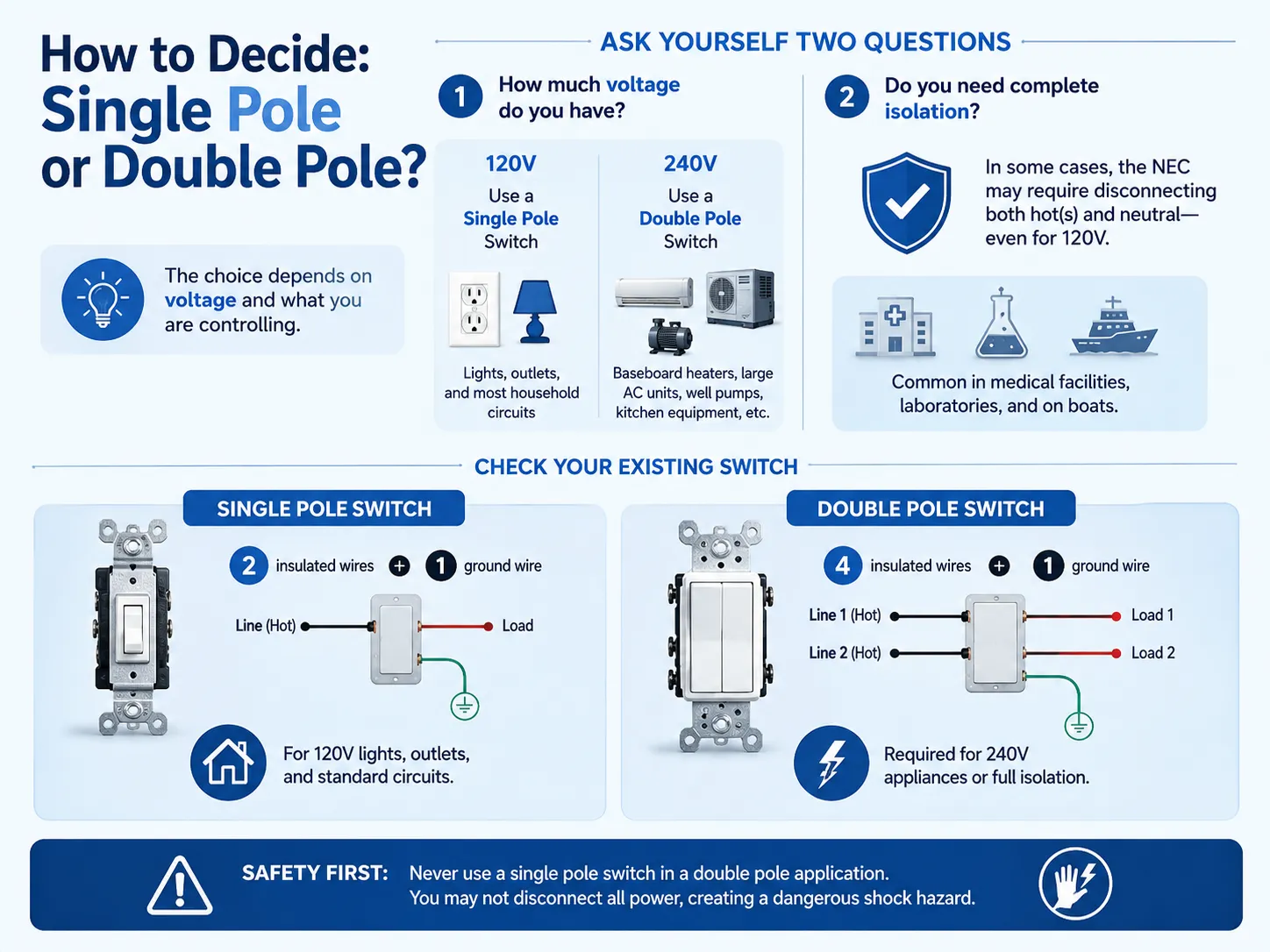
The decision comes down to voltage and what you are controlling. Ask yourself two questions:
- How much voltage do you have? For 120 volt lights (or standard outlets) you will need to use a single-pole switch. For any appliance using 240 volts — like baseboard heaters, large air conditioners, well pumps, and commercial kitchen equipment — you must use a double-pole switch to interrupt both of the hot wires.
- Are you looking at getting completely isolated? In some specialty cases (like I just mentioned), a double-pole switch may be required for only 120VAC (much less than 240VAC) when the NEC requires disconnection from the hot and the neutrals. However, this is not a common practice for residential wiring, but you could find a double-pole switch in some applications such as medical facilities, laboratories, and on boats.
When replacing an existing light switch, first examine how many wires are attached to the original switch. If the original switch has two insulated wires and one non-insulated (ground) wire, than you will be using a single pole switch; if the original switch has four insulated wires and one non-insulated (ground), then you will be using a double pole switch. It is never safe to use a single pole switch in a double pole application; this is because the original switch was designed to only disconnect one circuit from the power source. Therefore, by using a single pole switch in this application, you have created a dangerous shock hazard by not safely disconnecting all circuits.
Can You Use a Single Pole Switch as a Double Pole?
No. A single pole switch only breaks one conductor. Attempting to use it in place of a double pole switch on a 240V circuit would leave one hot leg still energized when the switch is off, which is extremely dangerous. Even if you could physically wire it to break only one hot, the appliance would not be fully isolated and could still deliver a lethal shock. Always match the switch type to the circuit design.
When Would You Use a Double Pole Switch?
In the home, double pole switches are most often used for controlling a 240-volt load that does not require a neutral or when total disconnection is required. Some examples include:
- Electric baseboard heaters
- Large window air conditioners
- Water heater disconnect switches (within sight of the tank)
- Pool and spa pumps
- Welding equipment and heavy power tools in a workshop
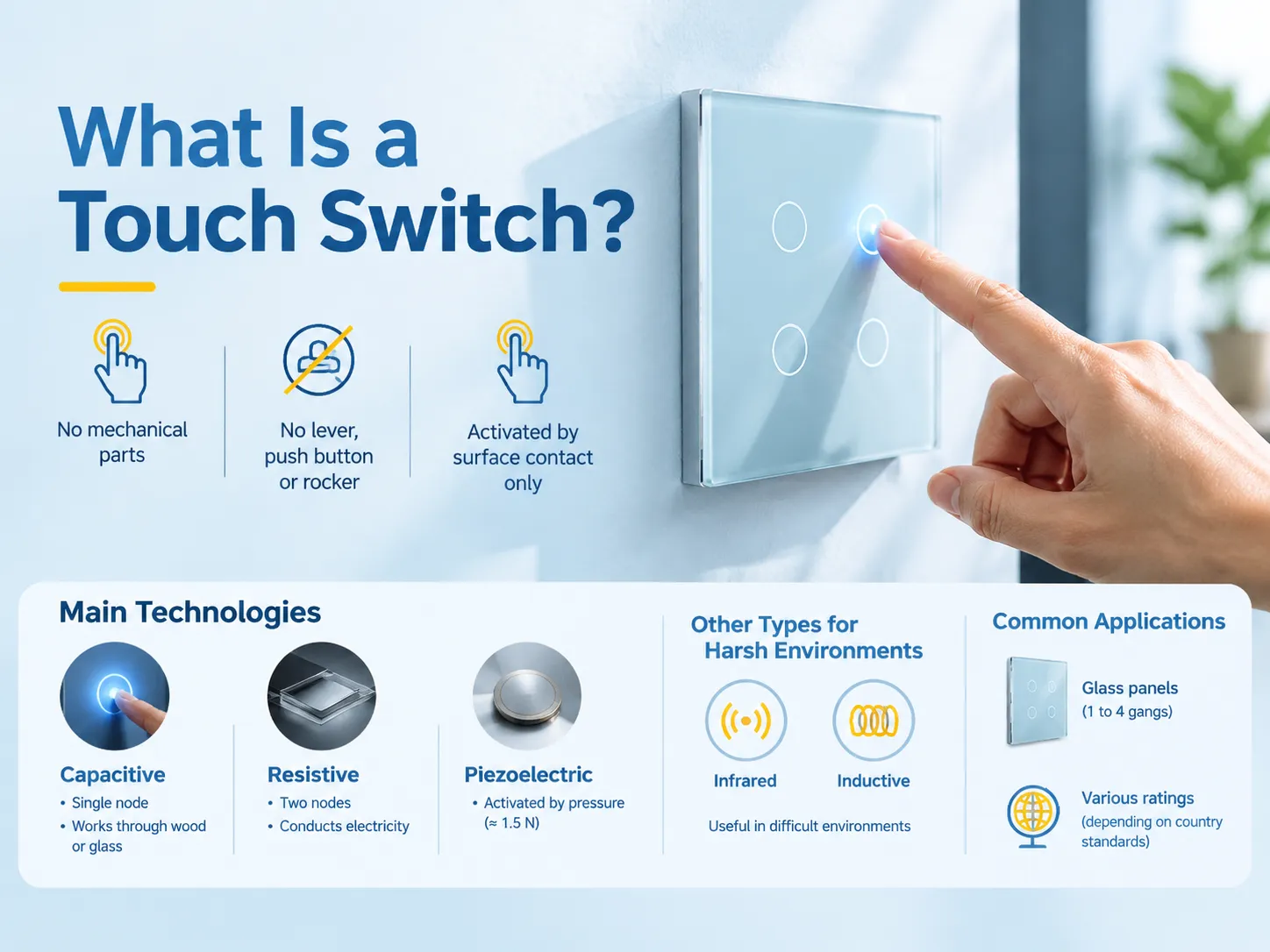
If you are installing smart home devices, be aware that many smart switches are available in both single pole and 3‑way configurations, but true double pole smart switches are far less common. Our roundup of top-rated smart light switches gives you a practical look at what is available and what wiring they require. Also, for a broader catalog of all switch types including the one that commonly gets confused with double pole, our article on different types of light switches clarifies the full range from single pole to 3‑way to dimmer and beyond.
Frequently Asked Questions
How do I know if I need a single or double pole switch?
Verify the voltage of the circuit for the appliance or fixture. If it operates at 120V and you are turning it on from only one location, a single-pole switch is required. If the total current draw is over 240V, for example, for heating baseboard heaters, large air conditioners or well pumps, you need to use a double-pole switch to cut both hot legs. The number of wires that were connected to your old switch can also be used to help determine if the switch was single or double pole, for example; if two wires were connected, then the switch was likely a single pole switch; if four wires were connected, then it was likely a double pole switch.
Can I use a single pole switch as a double pole?
No, using a single pole switch will not work as a double pole switch will leave one conductor (live current) connected and risk a serious electric shock. When replacing a switch, use the same pole configuration and voltage/amperage rating or higher.
Do I need double pole or single pole?
Generally, a single pole switch will control almost every standard (120 volt) outlet and light in a residential setting. The exceptions to this case would be for appliances that utilize 240 volts, per code requirement for disconnected both line voltage conductors, or for use with heavy-duty industrial equipment. If there is any uncertainty, please refer to the appliance nameplate or contact an electrician who is licensed for advice.
When would I use a double pole switch?
A double pole switch must be utilized when controlling any device that operates on a voltage of at least 240V (such as an electric resistance heater, large motors, many commercial appliances) that requires total separation between the two hot wires supplying the device. Additionally, in certain specialized 120-volt circuits where safety requires the ability to disconnect both hot and neutral conductors at once; however, there are few such circuits in typical residential wiring.
When choosing between a single-pole switch and a double-pole switch the decision is not one of preference but one of best fit for the electrical configuration of the circuit used. A single-pole switch is an easy and economical means of controlling all standard 120 volt lighting and receptacles. A double pole switch provides complete and safe isolation for all 240 volt equipment and other safety related circuits that require complete disconnection from the electrical supply. The correct choice of switch is clear and unambiguous once you have established voltage and wire count. GOG Electric has a big inventory of both styles of switches, from standard toggle styles to smart home compatible switches, so that you can confidently and correctly implement your next wiring project.