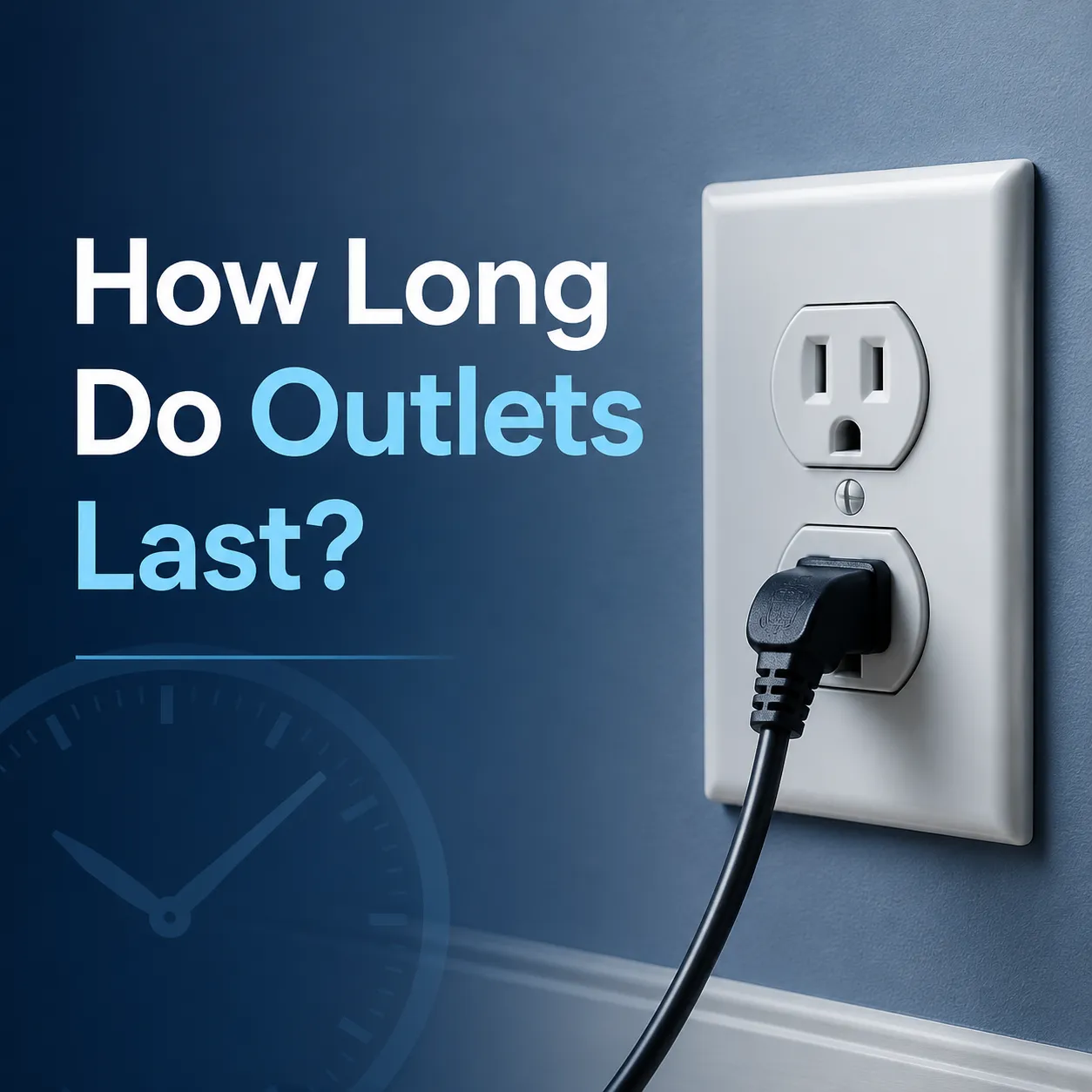
How many times have you thought about how long your outlet has been behind your refrigerator? For many of us, the answer is zero. We plug in and unplug everything without ever considering the receptacle until something happens — like a plug falling out of its loose fitting, a switch being warm to the touch, or a breaker tripping without any indication why. Then, we all start to wonder how long will an outlet last? There is a reasonable amount of uncertainty about this question; however apparently, if you take care of them — use them under ideal circumstances (i.e. dry, cool, lightly used) — you should expect them to last approximately 25 years. On the other hand, an outlet that is located on a kitchen countertop and exposed to heat from steam, and grease and has constantly had plugs inserted and removed from it may only last for 10 years or less. Knowing how things impact that number will assist you to make a decision about when to replace an outlet prior to it giving you a clue it is in need of replacing — either by way of burning it or by way of it stopping working altogether.
The Expected Lifespan of a Standard Outlet
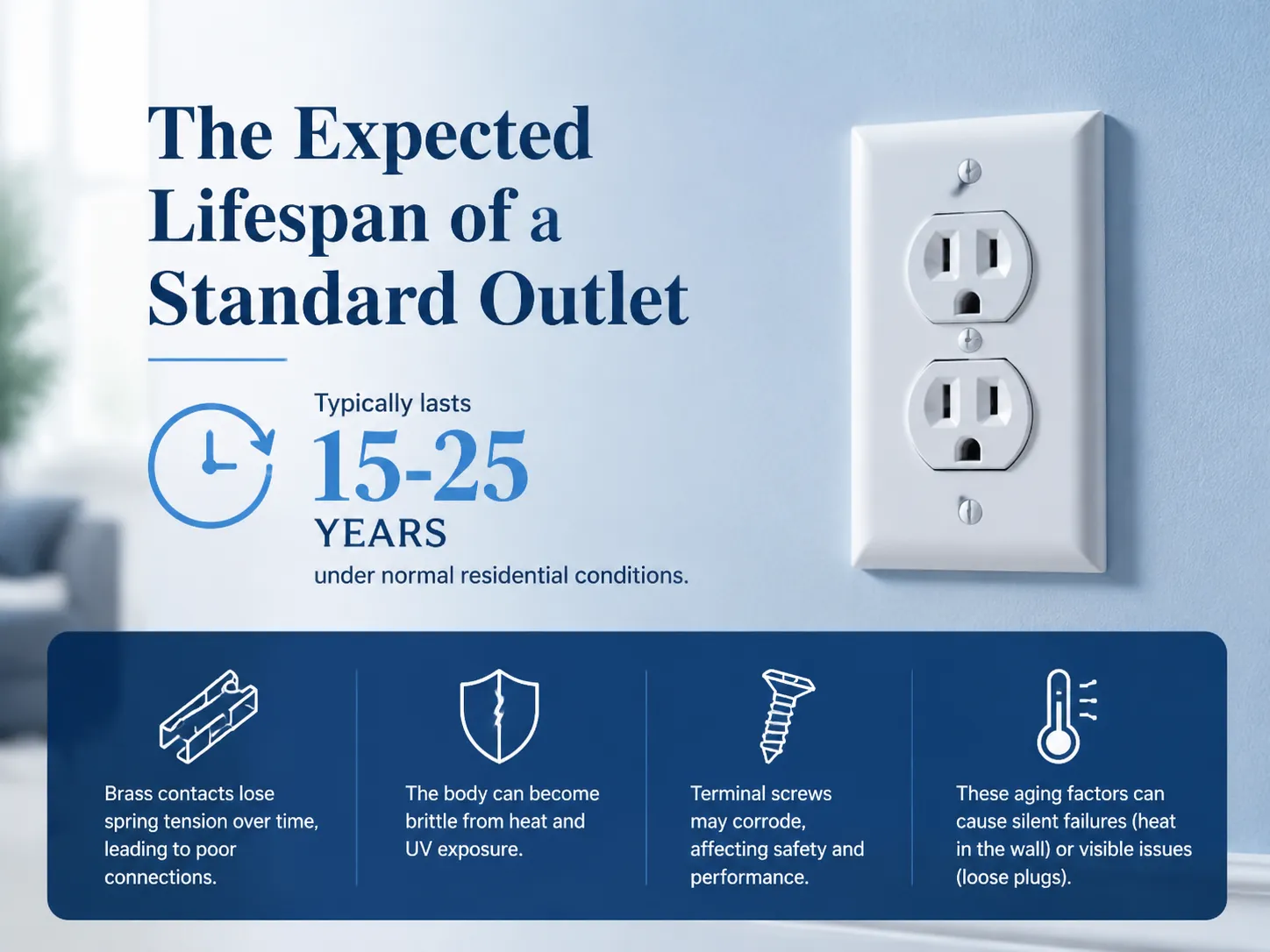
A duplex receptacle with good quality, will typically last 15-25 years under normal residential conditions. While this in not a definitive life span, it has been observed by multiple electricians and is supported by the design life that each manufacturers have placed on their products. The mechanical part of the receptacle, which consists of brass wipers that hold the plug blades, eventually will lose the spring action in them over time. The body will become brittle from exposure to heat and ultraviolet light. The terminal screws will produce corrosion. Each of these different mechanisms for aging will cause the receptacle to fail, either silently (a high-resistance connection creating heat in the wall) or noticeably (a plug that drops out of the receptacle).
Builder-grade outlets are different from commercial-grade outlets. A typical 50 cent duplex outlet (having been installed in the thousands in typical production homes) has thin brass contacts, and is made of thin plastic, while a specification or hospital grade outlet has thick contacts and a stronger nylon enclosure, and is built to operate a large number of insert cycles. The cost of a better outlet at time of purchase ($3.00 to $8.00 more) can result in twice the life of the outlet; this is particularly true for outlets that are frequently used. The NEMA (National Electrical Manufacturers Association) publishes dimensions and performance standards for receptacles; any device containing a NEMA configuration number has been designed to meet all necessary durability standards.
Factors That Shorten or Extend Outlet Life
Not all outlets age at the same rate. The table below summarizes the variables that accelerate or decelerate aging.
| Factor | How It Affects Lifespan |
|---|---|
| Frequency of plug insertion | Each plugging cycle wears the internal contacts. A bedroom outlet used twice a day ages far slower than a kitchen outlet used a dozen times daily. |
| Load and heat | Outlets carrying near their rated 15A or 20A continuously generate heat. Heat accelerates plastic embrittlement and contact oxidation. A space heater plugged into an old outlet is a common fire starter. |
| Moisture and humidity | Bathroom, outdoor, and basement outlets exposed to moisture corrode faster. Corroded contacts increase resistance, which generates heat. A weather‑resistant (WR) rated outlet slows this process but does not stop it indefinitely. |
| Physical damage | A plug yanked out by the cord, a furniture strike, or a faceplate cracked by a vacuum cleaner exposes the internal wiring to dust, moisture, and curious fingers. |
| Build quality | Commercial‑grade outlets with thicker brass, nylon faces, and stronger ground connections significantly outlast builder‑grade units. The initial cost difference is modest compared to the avoided expense of a service call. |
Signs That an Outlet Has Reached the End of Its Useful Life
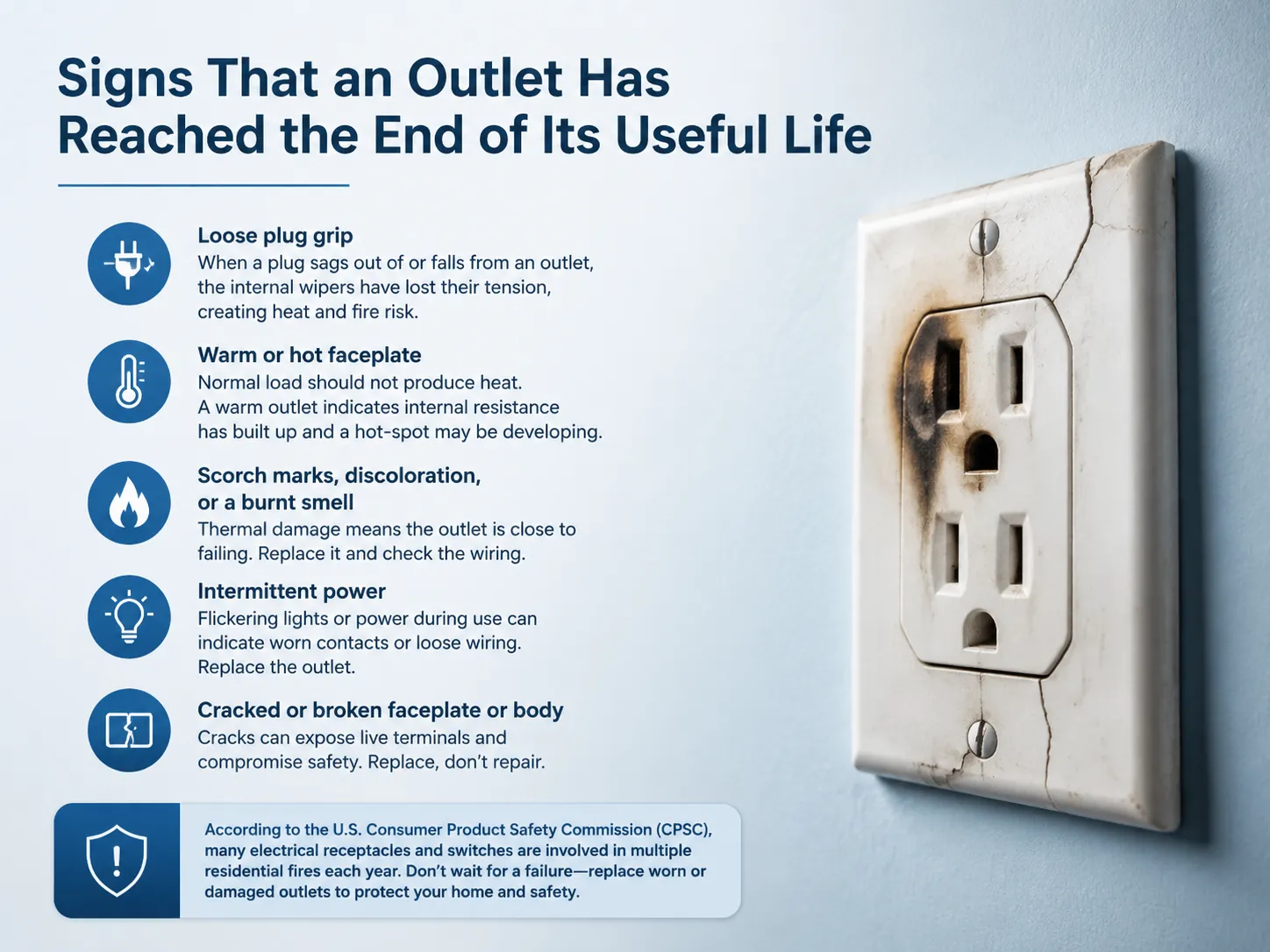
If you’re waiting for a failure from an outlet before replacing it, then you’re not following a proactive maintenance plan. The signs of an outlet that is soon going to fail can generally be seen if you know what you’re looking for:
- Loose plug grip: When a plug sags out of or falls from an outlet, the internal wipers have lost their tension. This is more than an inconvenience; it also creates a high-resistance connection that generates sufficient heat to cause a fire.
- Warm or hot faceplate: Normal load should not produce heat; therefore, if an outlet is warm to the touch, this indicates internal resistance has built up and there is a potential hot-spot developing. Stop using (very dangerous) and get it checked.
- Scorch marks, discoloration, or a burnt smell: If you see thermal damage, it indicates that the power outlet is very close to failing and you need to replace it and check the wires for damage.
- Intermittent power: A flickering light bulb when moving the plug typically means that there is a problem with the outlet (either worn-out contacts or loose wiring) and the outlet is also suspect due to it being worn out. A faulty outlet should be replaced.
- Cracked or broken faceplate or body: If there is a crack exposing live terminals and damaging the insulating barrier of an outlet, it should be replaced, not repaired.
According to the U.S. Consumer Product Safety Commission (CPSC), many electrical receptacles and switches are typically involved with multiple residential fires each year and a large number of these fires are caused due to the receptacle is either old or with regular wear and tear from use or is simply broken or defective. Any outlet that demonstrates either one or more of these characteristics can be considered a potential fire hazard and replacing this device typically costs less than potential loss of property could result from a fire caused by this device. For a broader look at the devices that can replace a failing outlet, our overview of the best electrical outlets and switches for modern homes covers options from basic duplex to USB‑charging and smart receptacles.
How Often Should You Replace Your Outlets?
Wall outlets do not have one mandatory replacement period. However, an interval can be made based on practical guidelines depending on where the outlet is located and how they are in condition.
- Kitchens, bathrooms, and laundry rooms: Be sure to do an annual inspection. Because these high moisture and high usage areas put more wear and tear on outlets they need to be replaced every 10 to 15 years as a preventative measure, regardless of whether they actually work correctly.
- Living rooms and bedrooms: The overall life expectancy of an outlet in a dry, lightly-used room is between twenty and twenty-five years. Replace an outlet if the grip on the plug becomes loose, or it has become damaged.
- Outdoor outlets: Inspect every year and change every 10 to 15 years; or change them as soon as the weatherproof cover becomes damaged or an outlet shows signs of corrosion. A monthly test should be performed on a GFCI (outdoor) outlet.
- Any outlet that trips a breaker, feels warm, or shows discoloration: Replace immediately. Do not wait for a scheduled inspection.
Daily Care and Maintenance to Extend Outlet Life
Most outlets go without any maintenance. By giving it a little bit of attention, it will last longer and reduce the risk of fires.
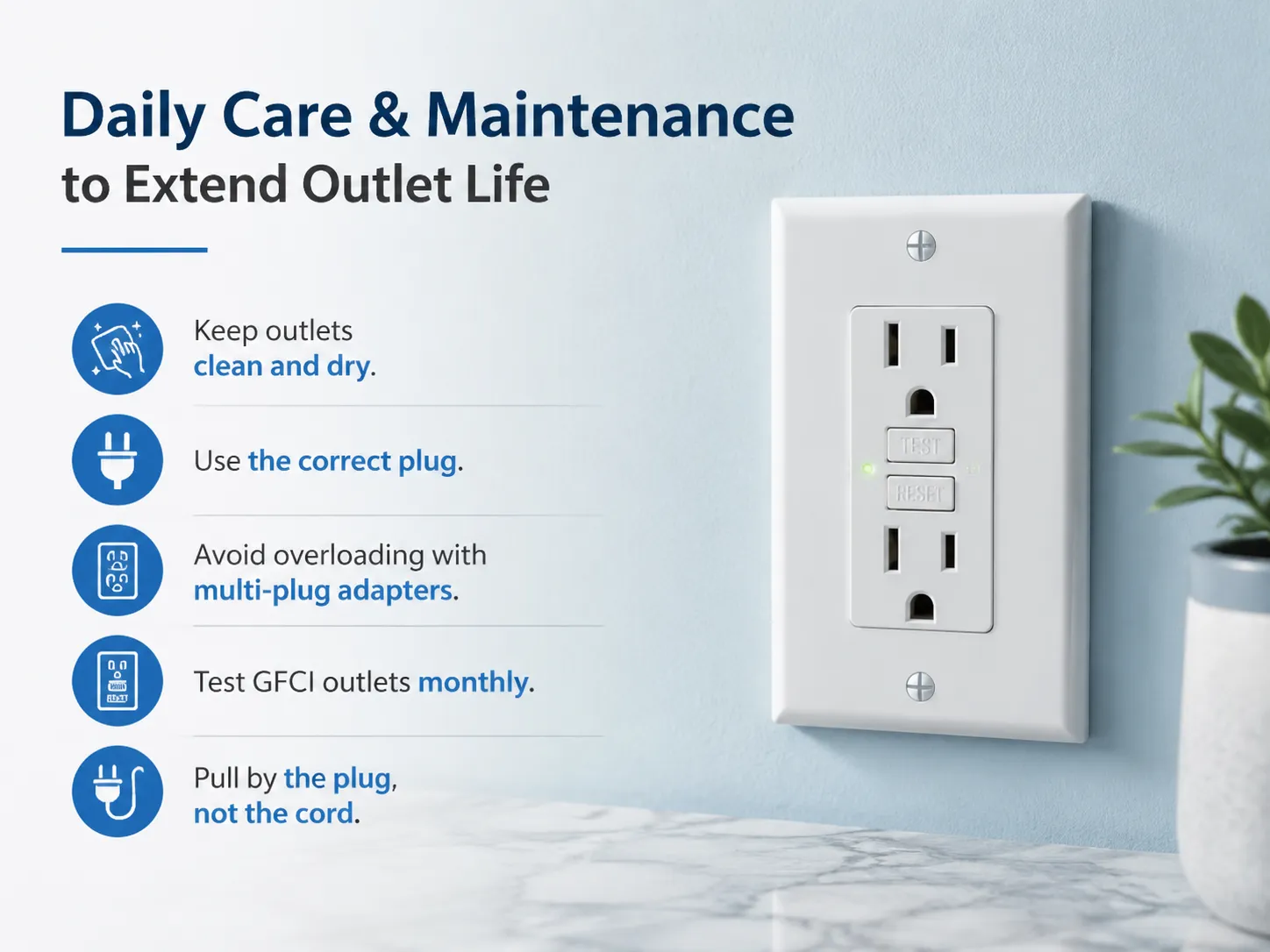
- Keep outlets clean and dry. Use a clean, dry towel to wipe off the front surface of the outlet (the faceplate). Do not spray any cleaning products directly onto the outlet. For outlets in the kitchen that are used infrequently, use an outlet cover to keep out grease and moisture.
- Use the correct plug. Do not remove the grounding pin from a three-prong plug to make it fit in a two-prong outlet; this is not an approved method of bypassing maintenance requirements but is instead a code violation that creates an electrical hazard.
- Avoid overloading with multi‑plug adapters. It is not safe to plug 6 devices into a single wall outlet through a cube tap. To add additional outlets, you should use a power strip with overcurrent protection (usually a UL/cUL listing), and never daisy chain multiple power strips together either.
- Test GFCI outlets monthly. To check whether an outlet is working or not, press its test button—if the outlet has been deactivated after pressing the test button, then the GFCI outlet has tripped. To restore power, simply press the reset button. If a GFCI outlet does not trip after you have tested it, then it has failed its test and should be replaced immediately. You should also test your GFCI outlets monthly as part of your residential electrical safety program, according to the Electrical Safety Foundation International (ESFI).
- Pull by the plug, not the cord. Pulling a cord from an outlet creates stress on the internal connection and on the insulation of the cord. Always hold the plug and pull it with even pressure.
Replacement Best Practices: Doing the Job Right
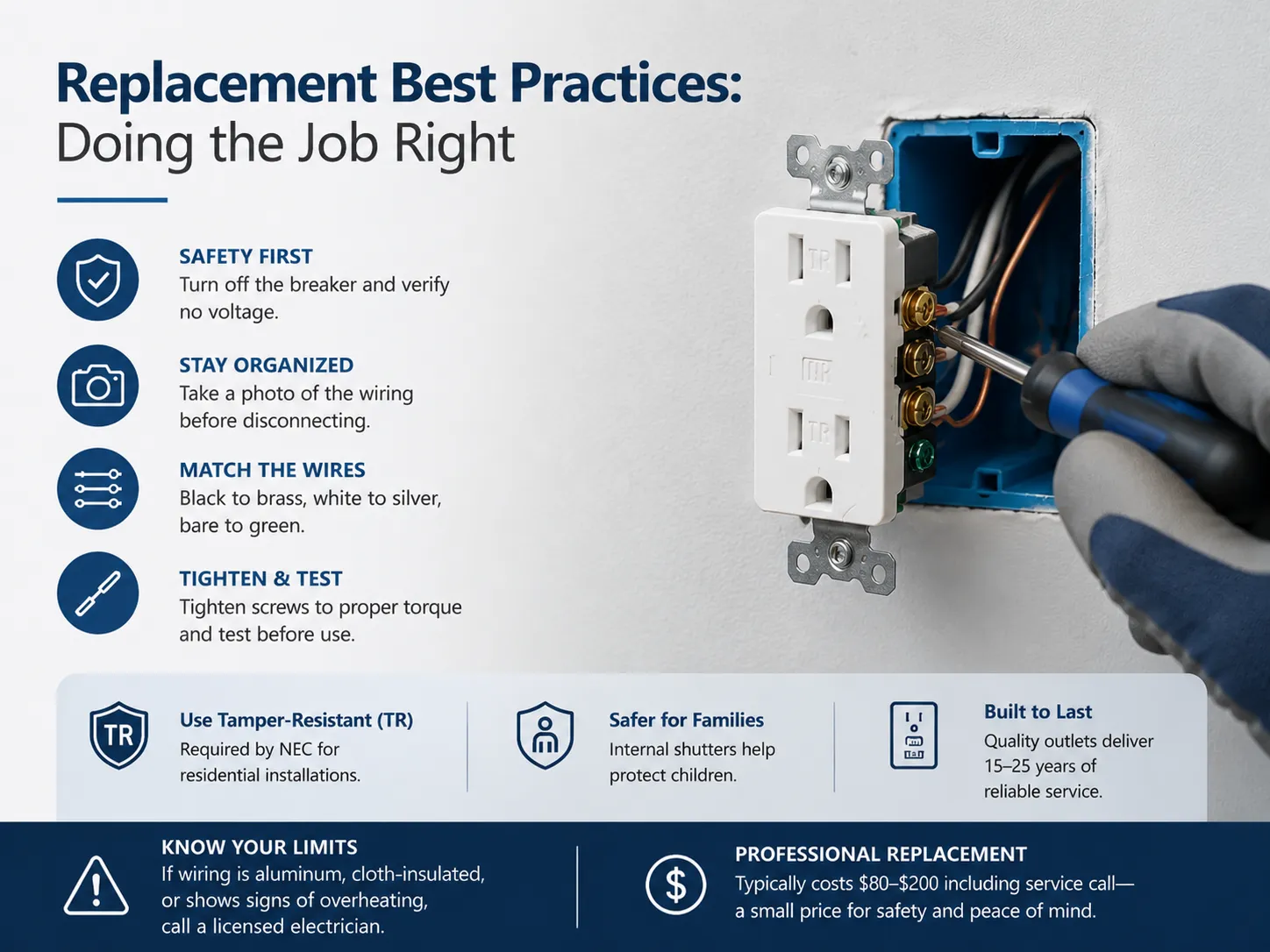
If you’re a careful DIYer and your wiring is modern copper and your electrical box is in good shape, then changing an old outlet for a new one should be well within your ability. It’s a matter of following the steps methodically: turning off the breaker and verifying that there is no voltage present using a non-contact tester; taking a picture of how the wires are connected at the old outlet; attaching those same wires to their corresponding terminals (black to brass; white to silver; bare to green) on the new outlet; tightening all screws down to the proper torque; and testing it before use. Our step‑by‑step article on how to replace a wall socket covers the procedure in detail.
If the existing wiring is aluminum, cloth‑insulated, or shows signs of overheating, stop and call a licensed electrician. The cost of a professional outlet replacement — typically $80 to $200 including the service call — is modest compared to the risk of an electrical fire. When you do replace an outlet, use a tamper‑resistant (TR) model as required by the current NEC for residential installations. A TR outlet has internal shutters that prevent children from inserting objects into the slots, and it adds this safety feature without any change in appearance or cost for a quality unit. GOG Electric manufactures tamper‑resistant duplex receptacles in standard, GFCI, and USB‑integrated configurations, all designed for the 15‑ to 25‑year service life that a properly built outlet should deliver.
What About the “2 6 12 Rule” for Outlets?
Some electricians use the “2 6 12 rule”, which is intended to help place outlets on a wall; however it is not applicable when it comes to replacements of serviceable outlets (it is for new construction only). It is based on the NEC’s standard of providing at least one outlet within six feet of any point along a wall. This means that no two outlets should be more than twelve feet apart. Finally, if you have an opening in a wall that is greater than two feet in any direction, you must have an outlet within that distance from the opening. All of this is being done to reflect current building codes for new construction, and may help you to increase the safety and comfort of your home. If you’re adding new outlets, our guide on how to add an outlet walks through the process from cable run to final test.
Frequently Asked Questions
How often should I replace my outlet?
A high-use outlet should be replaced every 10 to 15 years in kitchens and bathrooms; an outlet that is really dry (e.g. a low-use outlet) can last for more than 20 to 25 years. A warm outlet, scorch marks appear on it, has a loose plug grip, or functions intermittently should be replaced immediately.
Is it common for outlets to go bad?
Indeed. Outlets are mechanical devices with metal terminals that experience wear due to repeated use, heat generation, and corrosion. Outlets found in areas of high usage often experience degradation within 10 years of continuous usage. Routine inspection will help identify any wear before it becomes hazardous.
How can you tell if an outlet is bad?
Signs that an outlet is faulty include a loose grip on the plug, warmth on the outlet faceplate, visible signs of scorching and/or discoloration, intermittent power supply when the plug is jiggled, and a GFCI that does not trip (open circuit) when tested. All of these situations require replacement.
References
- U.S. Consumer Product Safety Commission (CPSC) — Electrical receptacle and switch safety data and fire statistics.
- Electrical Safety Foundation International (ESFI) — Home electrical safety resources and GFCI testing recommendations.
- National Electrical Manufacturers Association (NEMA) — Standards for receptacle configurations, performance, and durability testing.
- NFPA 70 (NEC) Article 210.52 — Dwelling Unit Receptacle Outlets — Spacing requirements for residential receptacles.
A wall outlet is not a permanent fixture. It is a wearable component with a finite service life, typically 15 to 25 years under normal conditions, and substantially less in harsh or heavily used environments. Recognizing the signs of a failing outlet — loose grip, heat, discoloration, intermittent power — and replacing that outlet promptly is one of the simplest and most effective ways to reduce electrical fire risk in a home. The replacement itself takes 15 minutes and costs under $20 for a quality tamper‑resistant device. GOG Electric builds outlets for that replacement moment, with the contact durability, terminal clarity, and safety certifications that make a new outlet a genuine upgrade — one that will serve reliably for the full span of its expected life.