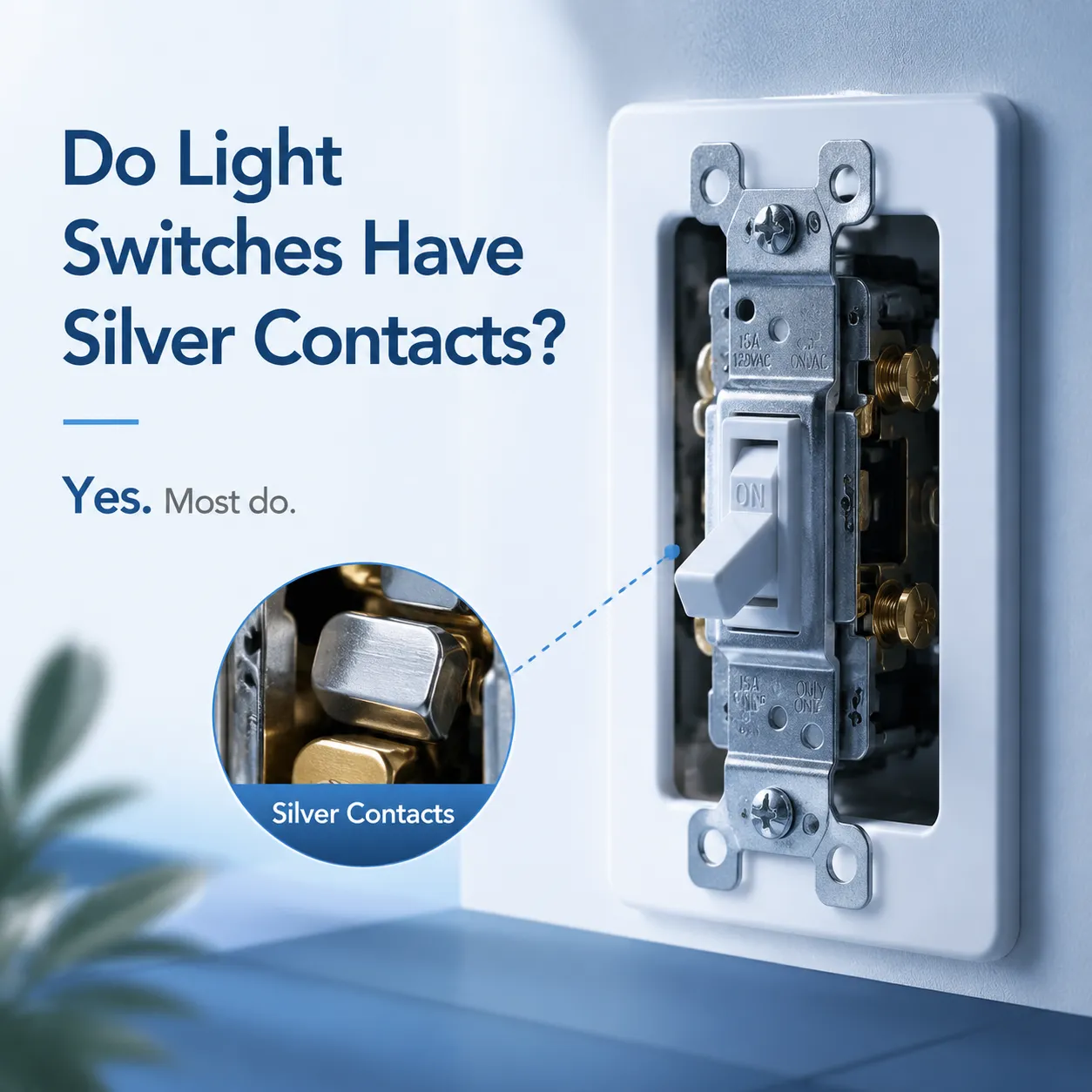
A Brisbane homeowner discovered that his 20-year-old light switch wasn’t working anymore; after replacing it, he found that the original switch contained a metal disc, which he could tell was not made of either brass or copper, but instead was a silver alloy — the same substance used to complete & disconnect circuits inside switches for over 100 years. Thus, we may ask: do light switches contain silver contacts? Yes—most high quality switches do contain these contacts for sound engineering reasons.
Why Silver Sits at the Heart of a Light Switch
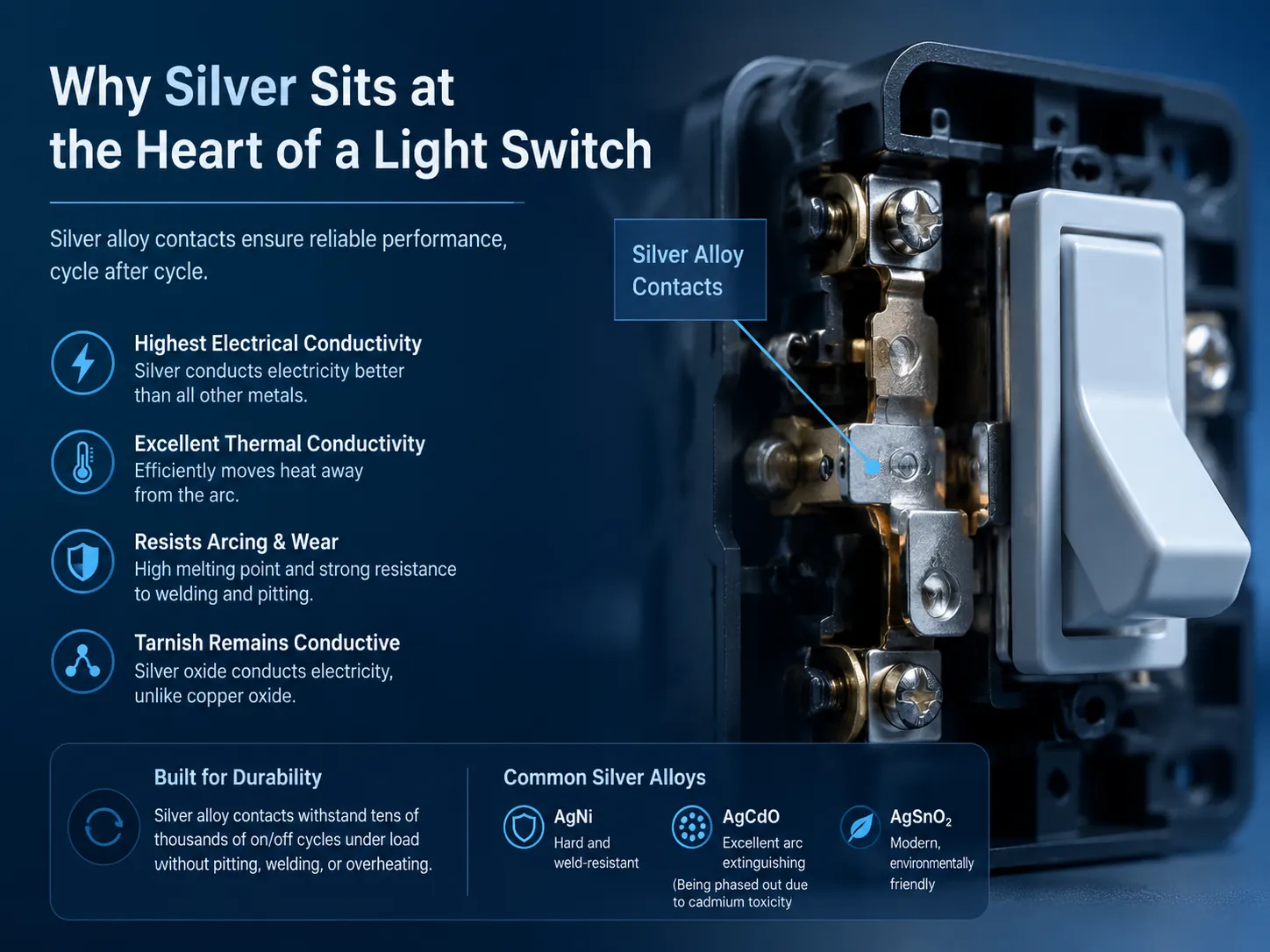
An electric switch or light switch is just a device that moves two metal contact surfaces together to complete an electrical circuit, and separates them to open the circuit. Each time the contacts are separated under load, a small electrical arc jumps between the two surfaces when they make or break contact. These arcs are very hot, sometimes reaching temperatures well over 1000 degrees Celsius at the arc’s core, and they erode the surface of the contact. The metal selected for the contacts must be durable enough so that after tens of thousands of on/off cycles, it will not have developed any pitting or welding or a layer of resistive oxide that could create excessive heat.
When it comes to fulfilling all of these criteria, silver is the best material at an economical price point. Not only does it possess the highest electrical conductivity of all metals (just slightly better than copper), but it also has superior thermal conductivity, which is important in moving heat away from the arc point. Importantly, the tarnish, or silver oxide, that develops on silver once it has been exposed to air, is still an electrically conducting material. This is in contrast to copper oxide, which has a semi-conductive nature and can ultimately lead to the overheating of a connection due to excessive contact resistance. These properties of silver by themselves are sufficient to make it the default contact material for all switches, relays, and contactors used in the electrical industry.
Pure silver is too soft to withstand repeated mechanical impact, so switch contacts are made of silver alloys. Common formulations include silver‑nickel (AgNi), which is hard and weld‑resistant; silver‑cadmium oxide (AgCdO), which has excellent arc‑extinguishing properties but is being phased out due to cadmium’s toxicity; and silver‑tin oxide (AgSnO₂), a modern, environmentally acceptable replacement. The exact alloy depends on the switch’s current rating and the type of load it will switch. A switch designed for incandescent lighting, with its high inrush current, may use a different alloy than one designed for LED loads or for motor control. For a deeper look at how these mechanical components are built into a complete wiring device, our guide on how to replace a light switch shows the terminal and contact layout of a typical single‑pole unit.
Not All Switches Are Created Equal: Contact Material by Grade
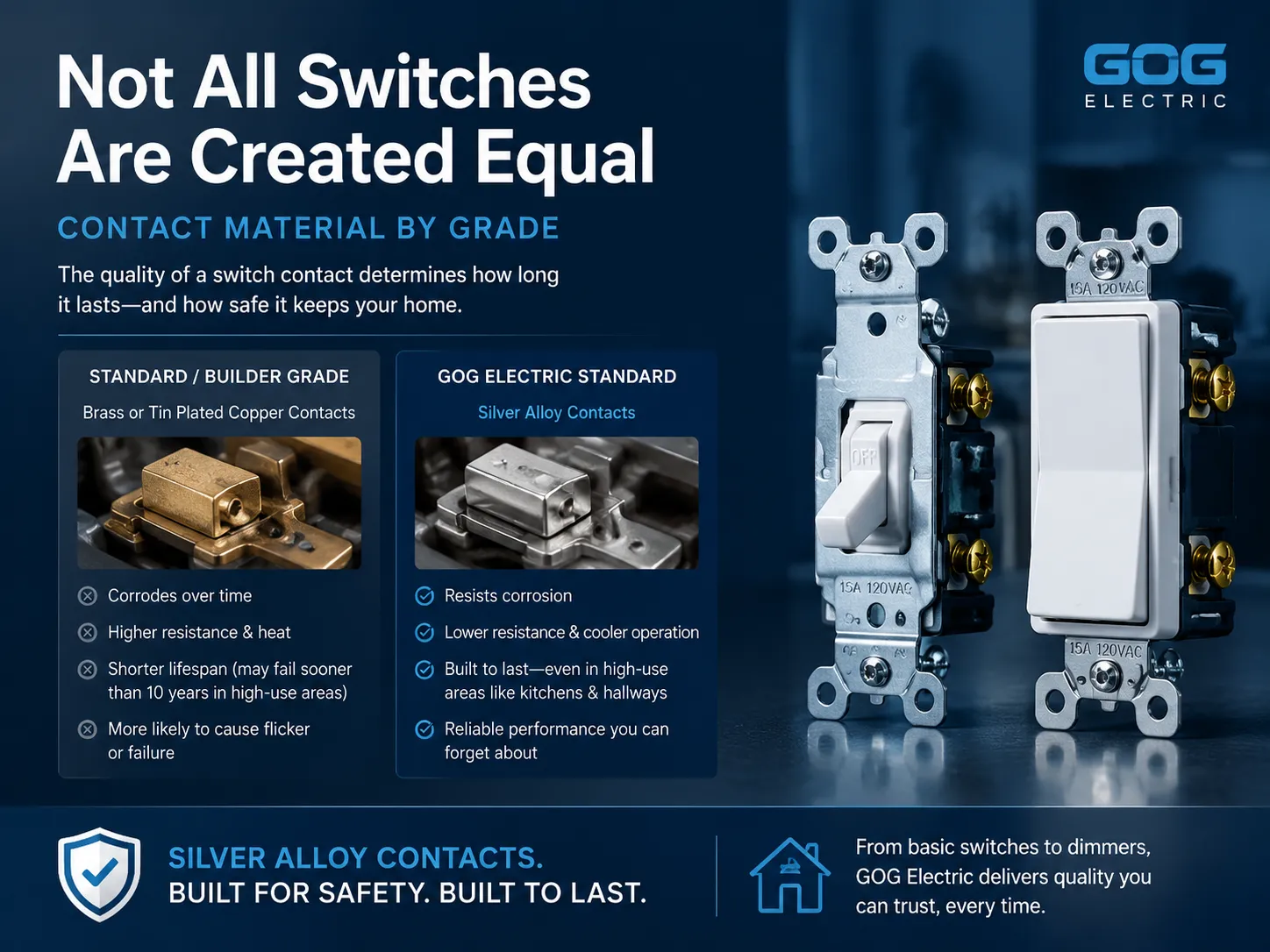
Although reputable manufactures produce quality light switches that utilize silver alloy contacts; simple, cheap, builder grade switches; cost and retail for about 50 cents typically use brass or tin plated copper contacts. These non silver alloys do function properly initially, but corrosion occurs much quicker in non silver contacts causing higher resistance to push current through the switch and therefore generating heat. A non silver contact-based (brass / tin plated copper) switch may last for 10 years in a seldom used bedroom; however, it will fail sooner than 10 years in a kitchen or hallway.
GOG Electric’s standard toggle switches and rocker switches have silver alloy contacts in all of their products, such as: basic single pole switches, three-way switches, dimmers, etc. The alloy used on the contact is matched to the electrical rating of the switch, and the surface area of the contacts is designed to carry the rated current without exceeding the temperature rise allowed by UL. This is what separates a switch that can be put in and forgotten about from a switch that will be thought of every time a light flickers.
How to Tell If a Switch Has Silver Contacts
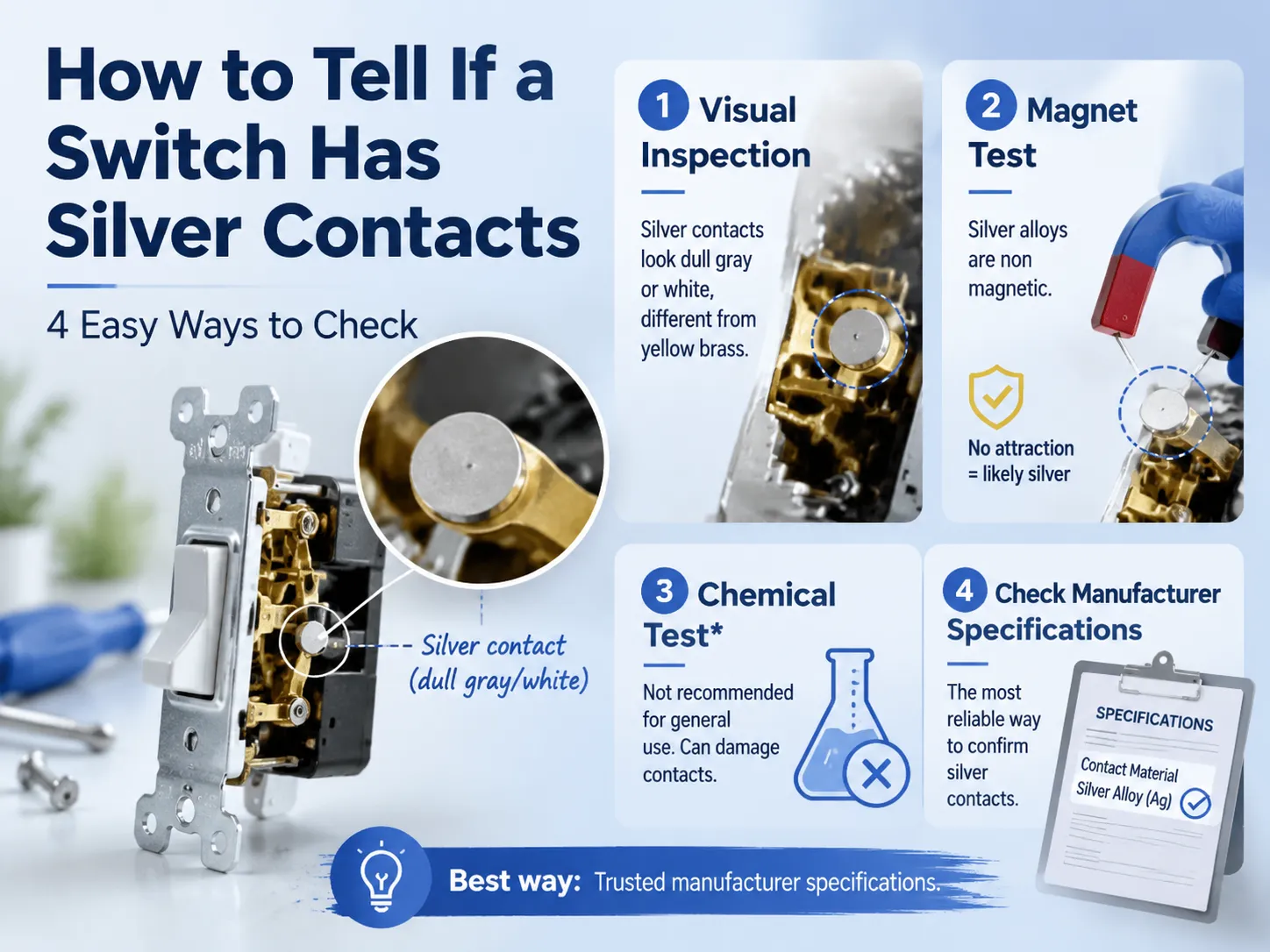
It is often difficult to determine if a light switch has silver contacts without damaging the switch itself; however, there are some indications that can help in identifying silver contacts:
- Visual inspection (with the switch removed and power off). If you find that your switch isn’t actually riveted together, you can usually get inside by removing the screws that hold it together (this is common with older switches). The contacts inside the switch are usually discs or buttons on the ends of the brass arms. If they appear a dull grey or white, different than the underlying yellow brass, likely they’re made of a silver alloy. If they’re made of copper or brass, they should appear reddish or gold, respectively, due to the color of the individual metals.
- Magnet test. Non magnetic Silver alloys; if a magnet is attracted to the contact, then it is not silver and may be a nickel-plated steel. A low magnetic result could indicate a silver-nickel alloy (AgNi).
- Chemical test (not recommended for the general public). The jeweller’s use of acid for testing silver is a method by which the jeweller can test if silver is real, however, the contamination of the contacts and their limited size makes it unreliable. The only way to test the quality of the parts would be to rely on the manufacturer’s specifications. A trusted switch manufacturer will indicate the materials of the contact face in the technical literature for their switches. If this information is not available, it is reasonable to conclude that the switch was made using only price or cost criteria, and not from a performance basis.
Are Silver Electrical Contacts Worth Anything?
Even though silver electrical contacts do have a low material cost, the economics of free-standing scraps are usually not worth the work of taking apart a switch to obtain their metal content. The silver content of a light switch contact might be only a small amount of deep space alloy (at a few cents based on current silver prices), but the labour to retrieve it and the presence of the brass or plastic housing will likely make the effort uneconomical for the vast majority of recyclers. While there are industrial-scale recyclers that accept electrical contacts for recycling, it is generally only with very large contactors, breaker contacts, or industrial switchgear that are most likely to have many grams or ounces of silver per item, versus a couple of thousands of a single electrolytic contact. Finally, while the market does provide data on both the value of silver and the rate at which it is recycled, the value of a single contact for a homeowner is that it is working in an active switch and not sitting in a bucket as a scrap piece of metal.
Frequently Asked Questions
What switches have silver contacts?
GOG Electric, Leviton, Eaton, and other reputable brands provide high-quality residential or commercial lightswitches that are made with silver alloy contacts. Many industrial relays, circuit breakers, and contractors also use silver contacts in larger sizes than those found on light switches. Cheap switches made by unknown manufacturers may use brass or plated steel contacts to achieve a lower price point.
How to tell if electrical contacts are silver?
The best way to tell if the contacts are silver is by looking at them. They will look dull grey/white and won’t have a shiny appearance when compared to yellowish colour of brass or reddish colour of copper. They’re also not magnetic. If you’re able to safely open that switch, take a look; there should be little buttons that are grey on the arms of the brass contacts. The manufacturer’s specifications are your best source of reference for this information.
Are silver electrical contacts worth anything?
Silver electrical contacts are not worth much per unit because their weight is very low (usually just a part of a gram) and therefore make it impossible for individuals to recycle them on their own. They are worth more for their intended purpose of switching reliably than for their component metal. However, industrial-sized recyclers are generally focused on larger devices and do not process small ones.
References
- Leviton Manufacturing — Switch Technical Specifications — Manufacturer documentation on contact materials and electrical ratings for residential and commercial switches.
- Eaton — Wiring Devices Product Data — Information on switch construction and contact metallurgy for Arrow Hart and other brands.
- The Silver Institute — Silver in Electrical Contacts — Industry data on silver use in electronics and electrical applications, including recycling rates.
- Electrical101 — Light Switch Basics — Practical overview of switch types, construction, and contact operation.
A light switch is a deceptively simple device. Behind the plastic toggle and the brass terminals, the silver‑alloy contacts do the heavy lifting — carrying current, surviving arcs, and maintaining a low‑resistance path through tens of thousands of operations. The presence of silver in a switch is not a luxury; it is the mark of a device that was engineered to last. GOG Electric builds its switches around silver‑alloy contacts because the click you hear when you turn on a light should be the same sure click on day one and on day ten thousand.