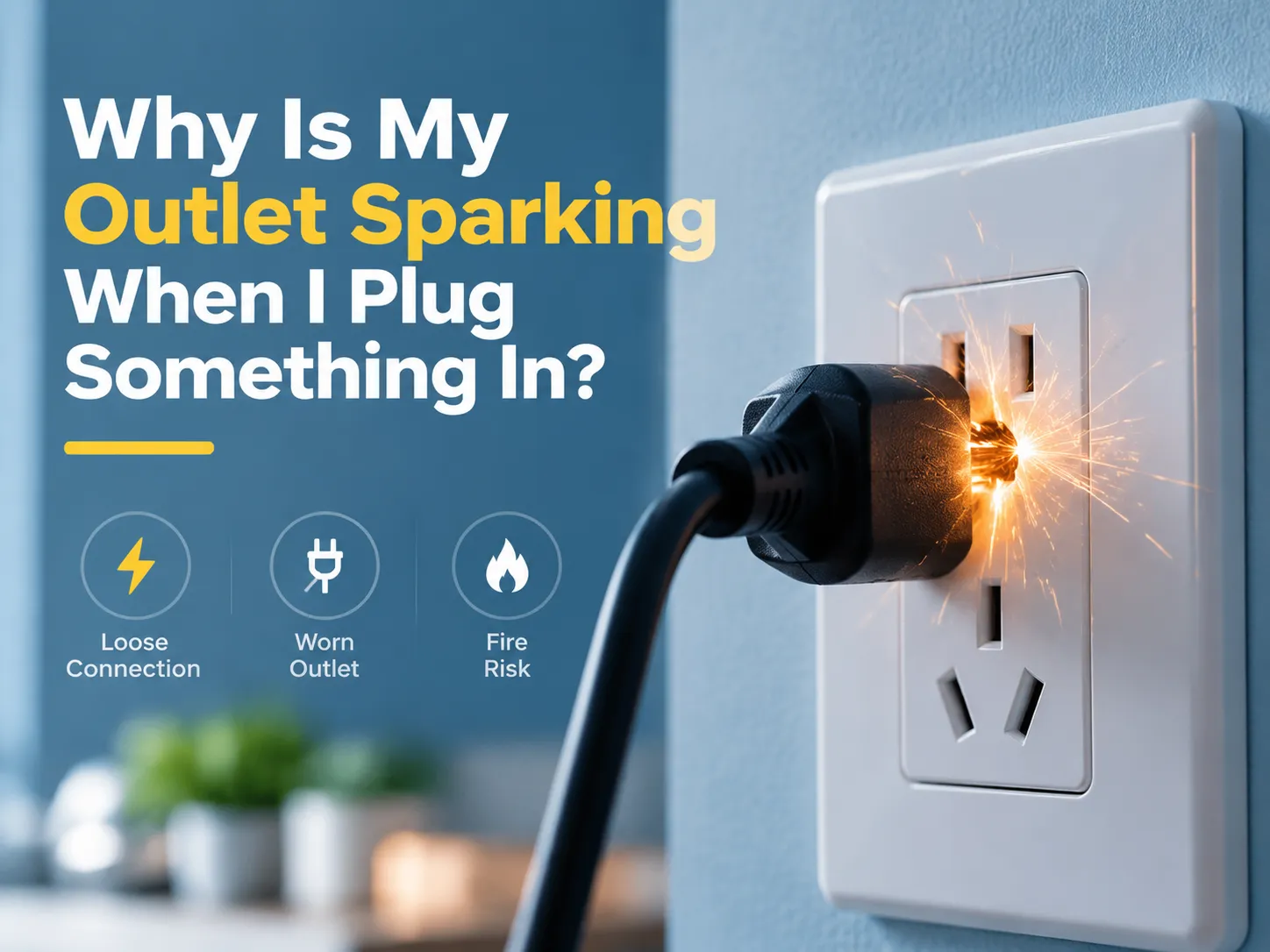
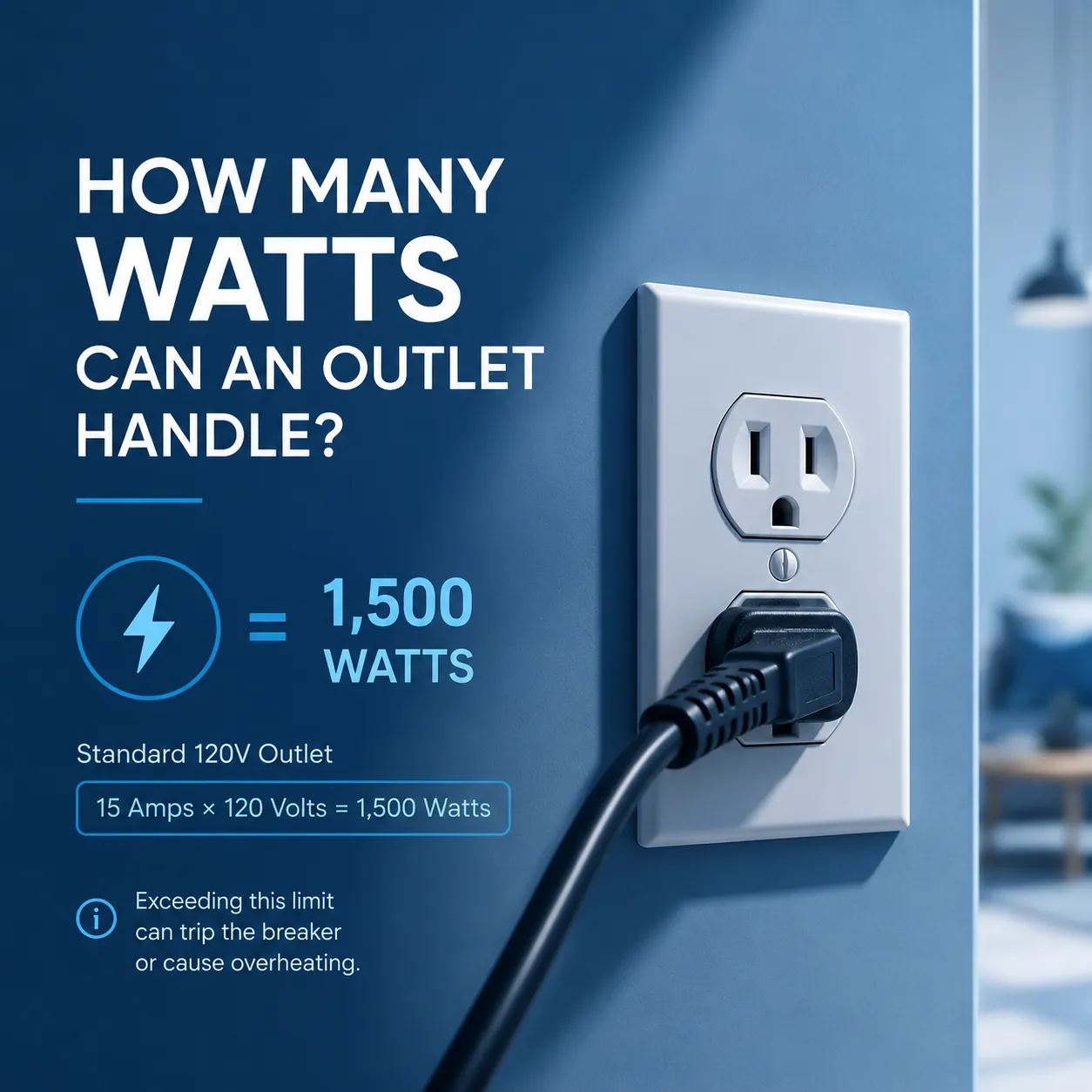
A tenant plugged a space heater, electric kettle, and toaster into the same double outlet in a London flat last winter. After using all three appliances for ten minutes, the outlet was warm to the touch. After about thirty minutes, the plug had begun to change colour, and although he pulled the plug before it was too late, the outlet had already experienced thermal damage. People want be able to understand how many watts an outlet can support. Since this is the primary basis for determining whether an electrical product will operate without causing a fire, it is essential for this understanding to be available.
If you are looking for the maximum power that a socket can supply, the answer is the rating of the socket, which in the UK with a standard 13amp socket, will allow for up to 2990watts (or 3120watts at 240volts). North America has a standard outlet for 15amps (Nema 5-15R) which allows for a maximum of 1800watts. There are also 20amp outlets, which allow for a maximum of 2400watts each. However, this does not provide a complete answer, as there are other factors to consider such as continuous load, which items share the same circuit, and the general condition of the outlet itself. As an example, if a socket is old, worn or loose it will carry less than the maximum theoretical load, as heat from the resistance created by the contacts will have nowhere to dissipate except through the body of the outlet and associated wiring.
The Wattage Formula: Amps × Volts = Watts
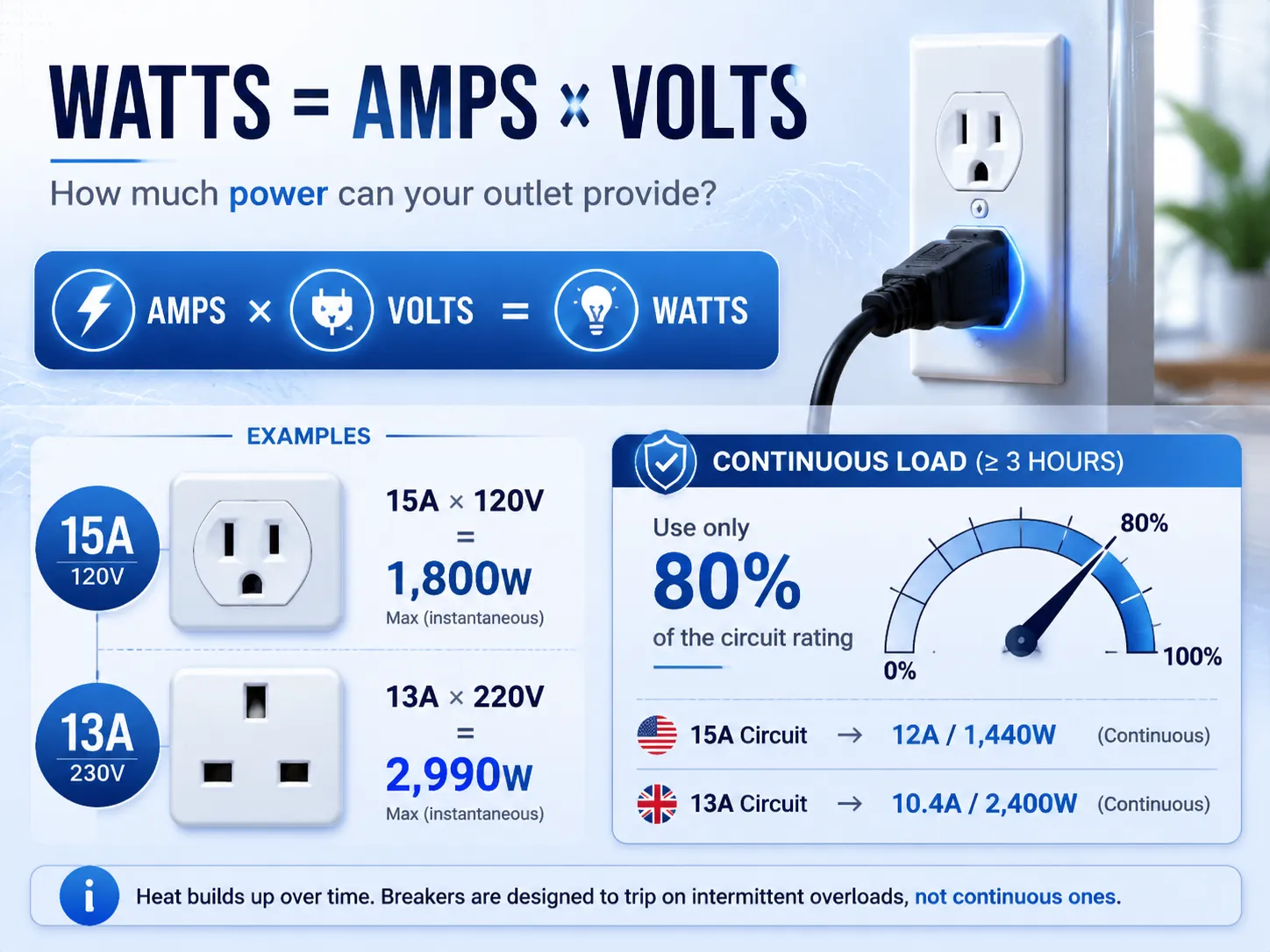
The wattage an electrical outlet can provide is based on the current drawn by the circuit breaker and the voltage supplied to it. To find the wattage, simply multiply the amperage of the circuit with the voltage of the supply: Watts = Amps x Volts. For example a 15 amp socket on a 120 volt circuit can supply 1,800 watts of power. Conversely a 13 amp socket on 230 volt circuit can supply 2,990 watts of power. The maximum watts supplied is instantaneous – meaning all devices connected to that outlet will contribute to the total load of 1 device connected to it at that moment.
In both the UK Wiring Regulations (BS 7671) and the National Electrical Code (NEC), there is a derating factor for continuous loads. Any load which runs for 3 hours or longer is regarded as continuous and therefore must not exceed 80% of the circuit’s rating. A 15-amp circuit must therefore only carry a maximum of 12 amps on a continuous basis (1,440 watts), and a 13-amp UK socket must carry a maximum of 10.4 amps on a continuous basis (approximately 2,400 watts). The basis for this 80% rule is the heat being generated over time, as well as the fact that the thermal trip mechanism of the breaker is calibrated to operate on an intermittent basis. Resources from the Electrical Safety Foundation International (ESFI) consistently reinforce this continuous‑load guidance as a cornerstone of residential electrical safety.
Common Appliances and Their Wattage: What You Can and Cannot Plug In Together
To know whether your outlet can handle a specific combination of devices, you need the wattage of each device — usually printed on a label on the back or bottom. The table below lists typical wattages for common household appliances.
| Appliance | Typical Wattage (Range) | Safe on a 15A Outlet? (1,800W Max / 1,440W Continuous) |
|---|---|---|
| LED light bulb | 5–15 W | Yes, multiple bulbs easily |
| Phone charger | 5–20 W | Yes |
| Laptop charger | 45–100 W | Yes |
| Television (LED, 55‑inch) | 60–150 W | Yes |
| Microwave oven | 600–1,200 W | Yes, but avoid sharing the same socket with other high‑draw devices |
| Toaster | 800–1,500 W | Yes, but near the limit for continuous use |
| Electric kettle | 1,500–3,000 W | Near or over the limit on 15A; fine on a UK 13A socket |
| Space heater (portable) | 1,500 W (typical) | Yes, but rarely anything else can share the same socket |
| Hair dryer | 1,200–1,875 W | Near or over the limit on 15A; fine on a UK 13A socket |
| Window air conditioner (medium) | 900–1,500 W | Yes, but it consumes most of the outlet’s capacity |
Two high-wattage appliances plugged into the same outlet (i.e., a 1500-wtt space heater and a 1200-watt microwave) can create a hazard; their combined wattage (2700 watts) is more than the maximum rating of 1800 watts for a 15-amp circuit. When the combined total wattage exceeds that of the circuit, the breaker will trip. If it does not trip due to age, malfunctions or due to being replaced with a higher-rated breaker, then the wires in the wall will act as the fuse.
One Socket, Two Appliances: The Double Outlet Trap
A typical duplex outlet has two outlets but both are on the same circuit; this means that the total load on both sides combined cannot exceed the circuit amp rating. A 15-amp duplex will support a total of 1,800 watts (total) and not 1,800 watts (per side). If you plug in a 1,500-watt heater to the top outlet and a 1,200-watt microwave to the lower outlet, you will draw 2,700 watts which will trip a healthy 15 amp breaker. If the breaker is an older breaker or the outlet has degraded, the first indication of trouble may not be a tripped breaker, but rather either a hot faceplate, a burnt smell, or a melted plug. If you are replacing a damaged outlet that has been overloaded to this level, please refer to our guide on how to safely replace a wall socket, which outlines the process step by step.
When an Outlet Cannot Handle Its Rated Wattage
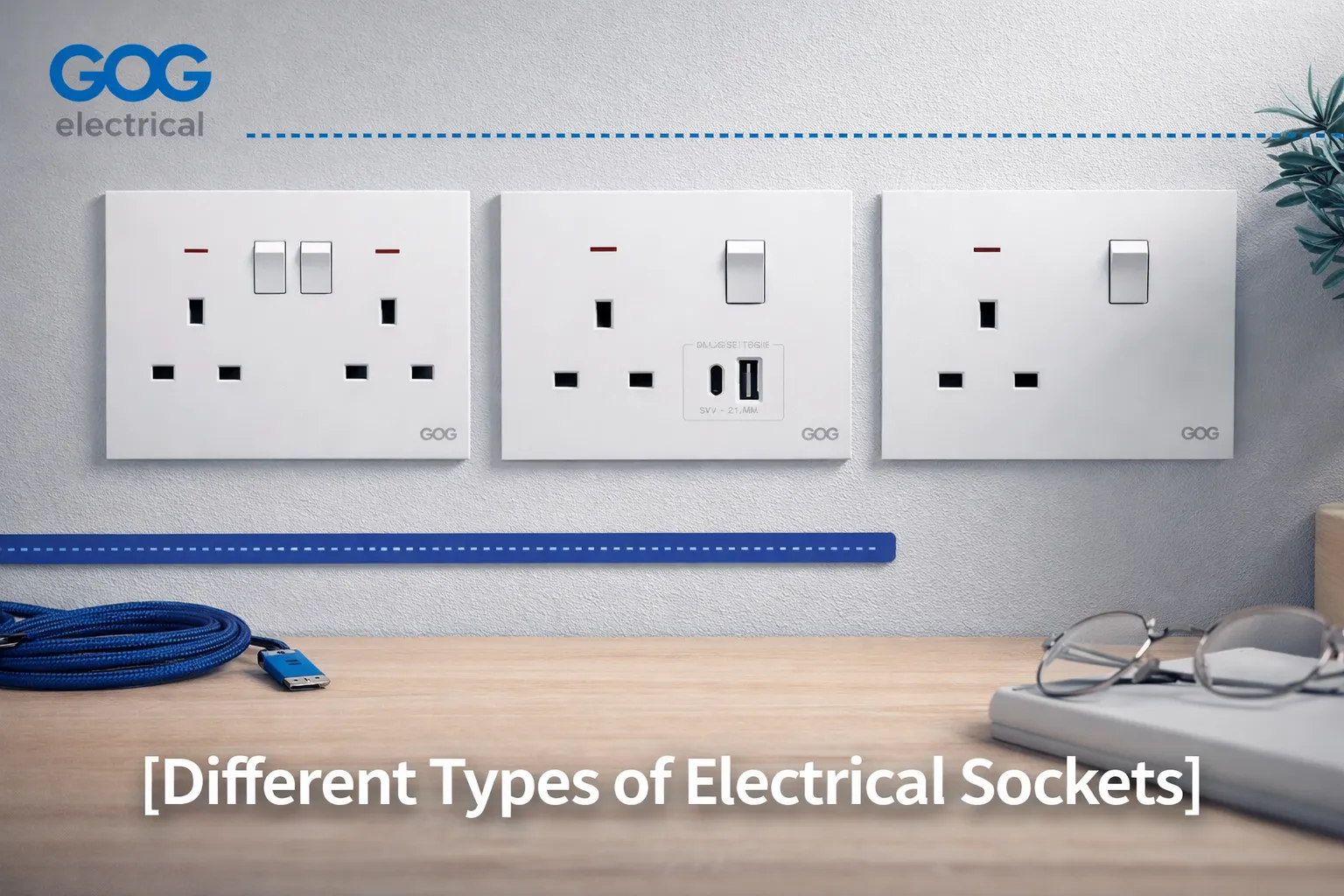
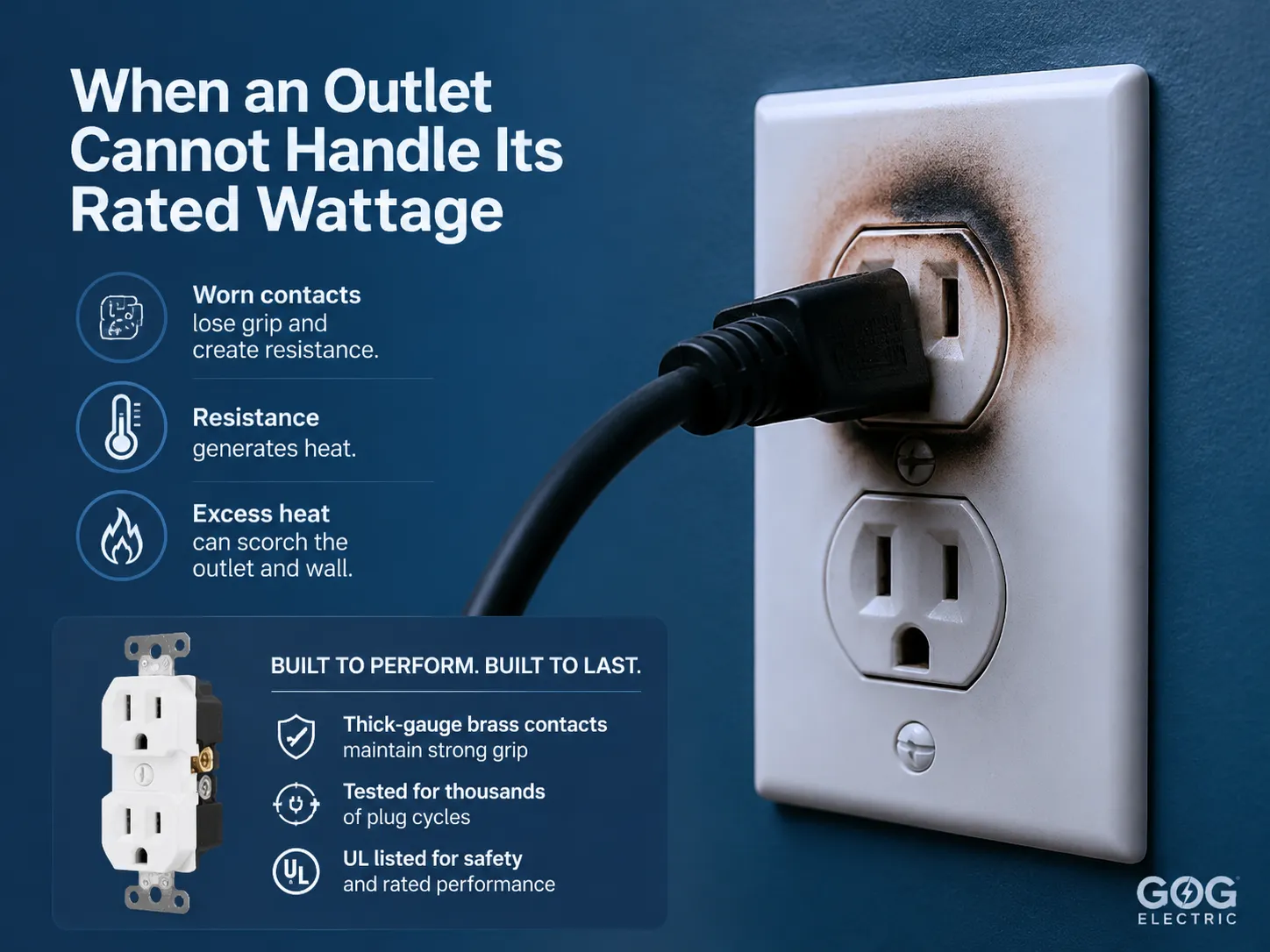
An outlet that is physically worn or damaged cannot safely carry its full rated wattage. The internal brass wipers that grip the plug blades lose their spring tension over time. A loose grip creates electrical resistance at the contact point, and resistance generates heat. A 1,500‑watt space heater plugged into a worn outlet may generate enough local heat to scorch the faceplate even though the wattage is within the theoretical rating. This is why an outlet that feels warm, that shows discolouration, or that cannot hold a plug firmly must be replaced immediately. GOG Electric’s tamper‑resistant duplex receptacles are built with thick‑gauge brass contacts that maintain grip force over thousands of plug cycles, and they carry the UL listing that confirms they have been tested to their nameplate rating. For a broader look at the variety of devices available, our overview of the best electrical outlets and switches for modern homes covers everything from standard to USB‑integrated and smart models.
Frequently Asked Questions
Is 3000 watts too much for an outlet?
You cannot use 3000 watts on a standard 15 amp (1800 watts) or 20 amp (2400 watts) North American outlet because it exceeds the capacity, causing either the circuit breaker to trip or the wires to overheat; however, 3000 watts is the maximum rating allowed by a UK 13 amp socket, which has a maximum rating of 2990 to 3120 watts. You need to check the appliance’s label to see what its exact wattage rating is.
Can my outlet handle 1200 watts?
Yes, a standard 15 amp receptacle is capable of supporting 1,200 watts and has room for additional loads. A UK 13 amp socket can also support 1,200 watts. Both amounts are considered safe to use as a load on either standard.
Is 1500 watts too much for an outlet?
A portable space heater needs 1500 watts, which is a typical load for 15 amps (1800 watts max.). Since a load of 1500 watts will leave little spare capacity for other equipment using the same outlet, it should not be used on an outlet that is providing power to any other large wattage load.
Can my outlet handle 1000 watts?
Yes; a standard 15- or 20-Amp outlet can handle 1,000 watts without difficulty. A conventional 13-amp plug (located in the United Kingdom) can accommodate an entirely normal 1,000-watt load without issue. Thus, any standard 120-volt residential outlet in sound working condition would be perfectly safe for use with a 1,000-watt device.
References
- Electrical Safety Foundation International (ESFI) — Home electrical safety guidance, including outlet loading and the 80% continuous‑load rule.
- U.S. Department of Energy — Appliance Energy Use Calculator — Tool and reference for estimating the wattage of common household appliances.
- Energy Star — Appliance Energy Consumption Data — Wattage and energy consumption benchmarks for home appliances and electronics.
- Family Handyman — How Many Watts Can an Outlet Handle? — Practical homeowner guidance on outlet capacity and safe loading.
The question how many watts can an outlet handle has a numerical answer — 1,800 watts for a 15‑amp circuit, 2,400 for a 20‑amp, and roughly 3,000 for a UK 13‑amp socket — but the number that matters in practice is the 80% continuous‑load limit and the physical condition of the outlet itself. A worn, loose, or warm socket cannot safely carry its rated wattage, and two high‑draw appliances sharing the same duplex can push the total beyond the safe limit even when each individually is within it. Knowing the wattage of your appliances, respecting the continuous‑load rule, and replacing any outlet that shows signs of wear are the three habits that keep the walls cool and the lights on. GOG Electric manufactures outlets that are built to carry their rated load for the life of the device, because the socket on the wall is the last safety check before the electricity does its work.