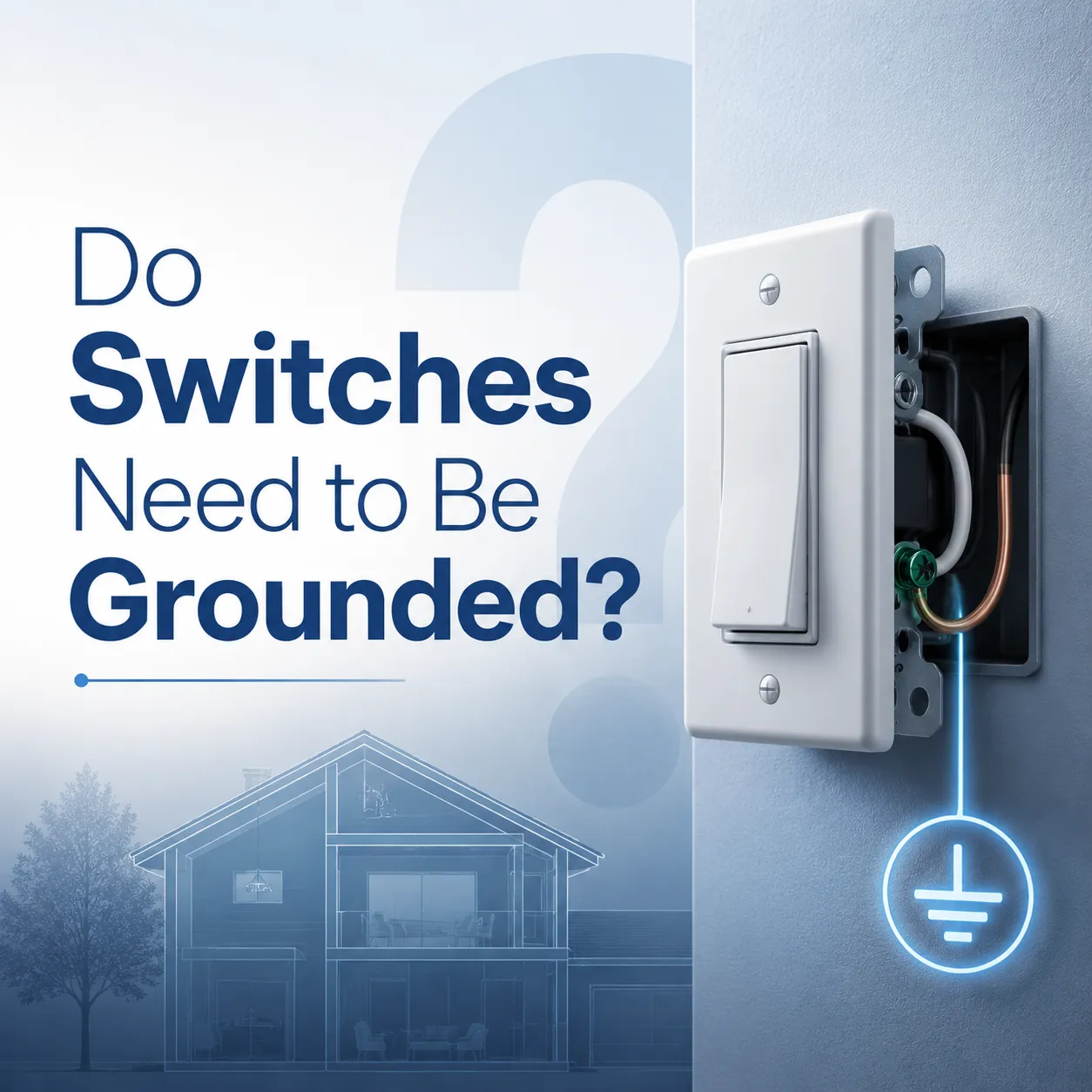
Whether you just swapped out a wall switch or are about to start a home wiring project, one question that you probably have asked yourself is whether your switches need to be grounded? The short answer is yes. The grounding of switches is not only a code requirement, but the grounding of switches is a required and basic aspect of safe electrical systems in all modern residential electrical systems. Grounding of switches provides protection to you, your devices, and your residential buildings by providing a grounded path for the electrical current to go when a fault occurs.
Why Grounding a Switch Cannot Be Negotiated
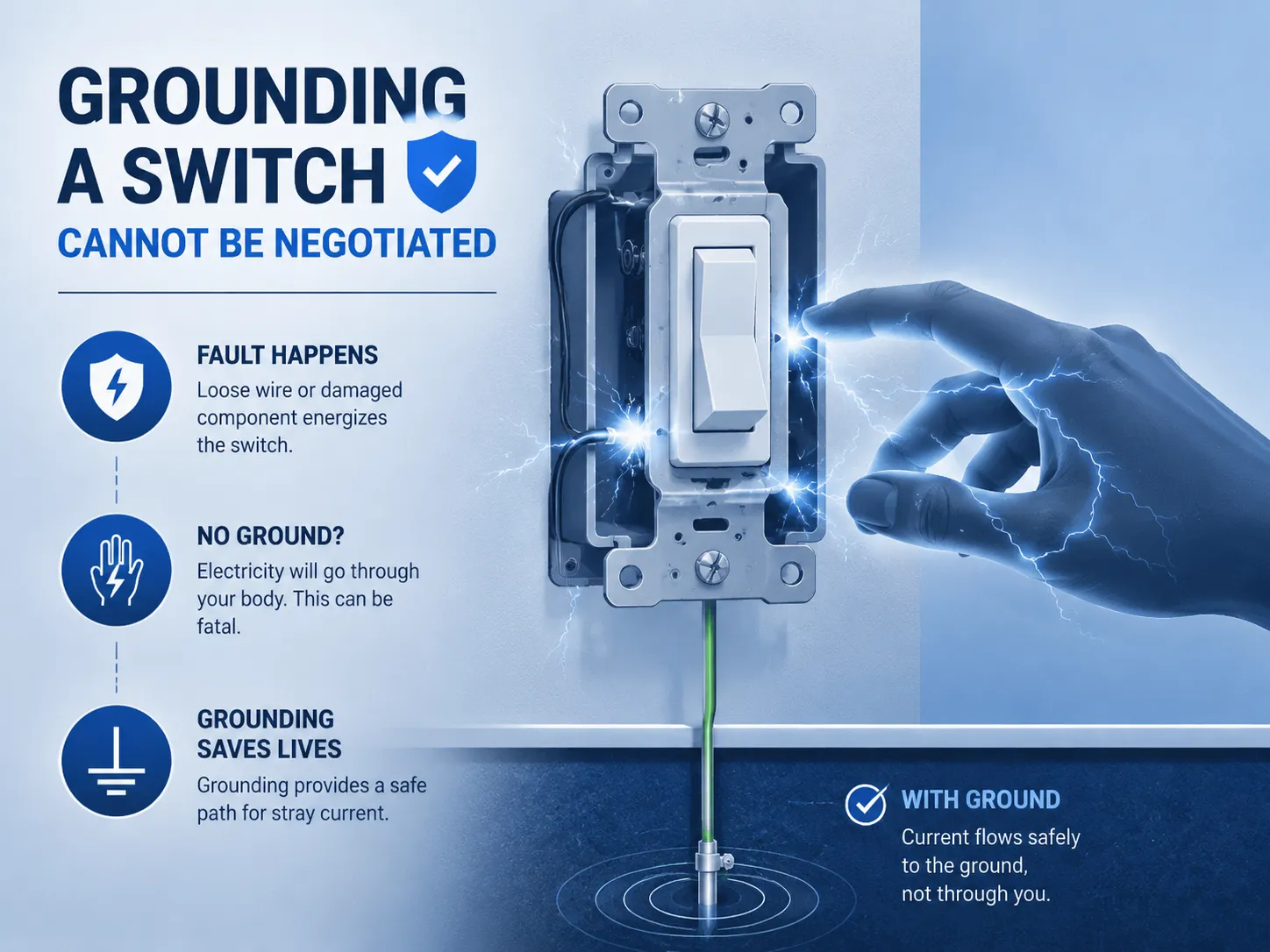
The primary function of grounding is to provide an alternate path for the stray electrical current when a fault occurs. For example, if you have a loose wire or a broken component within a light switch, it is possible for the electrical current to energize the metal yoke of your switch and/or the screws on the cover, causing great danger to anyone handling the switch. In other words, if there is not a ground for the electrical current to go to, it will go through the hand of the person who tries to stop the electrical current.
A ground connection to the electrical system below the switch will provide immediate grounding of the switch when there is a fault, thus tripping the circuit breaker and preventing a person from suffering electrical shocks. If you are doing a self-installation of your switch replacement, click here for our guide on how to replace a light switch. In addition, many of the modern electronically and/or vegetally controlled dimmers, timers, and illuminated wall switches require a ground reference to function properly. If the switch does not have a proper ground reference, the electronic components inside the switch may produce flickering, humming, or could eventually fail prematurely.
The National Electrical Code Requirements
When you ask an inspector if they are required to ground electrical switches, they will refer you to NEC Article 404.9, which clearly states that all electrical switches in residential buildings must be grounded. The electrical wiring rule is clear:
“General use snap switches, dimmers and control switches shall have a means to attach an equipment grounding conductor.” – NEC 404.9(A)
This means that regardless if you are installing new, or replacing an existing switch, all switches have to have a ground at the switch box. If you’re replacing an existing switch, but there is an equipment ground present in the switch box, then that ground must be attached to the replacement switch. Some jurisdictions allow plastic switch plates as an exception for incompatible pre-existing wiring where the wiring is not otherwise accessible, but this is an exception to the rule and does not provide for safe or proper grounding practices.
Are There Any Exceptions?
In older homes, constructed prior to the use of grounded cable, you will find only two wires – a hot and a switched hot – when you open your switch box. The previous code was adhered to in those earlier years and that installation is acceptable under that code. The moment you change any part of the circuit or replace the switch, however, you must follow the current electrical code, including providing a ground if it was not originally installed. If your wiring does not contain a ground, then, while there are several code-approved methods of grounding your switch, these methods are temporary and should not be considered long-term solutions.
How to Check for Grounding of Existing Switches
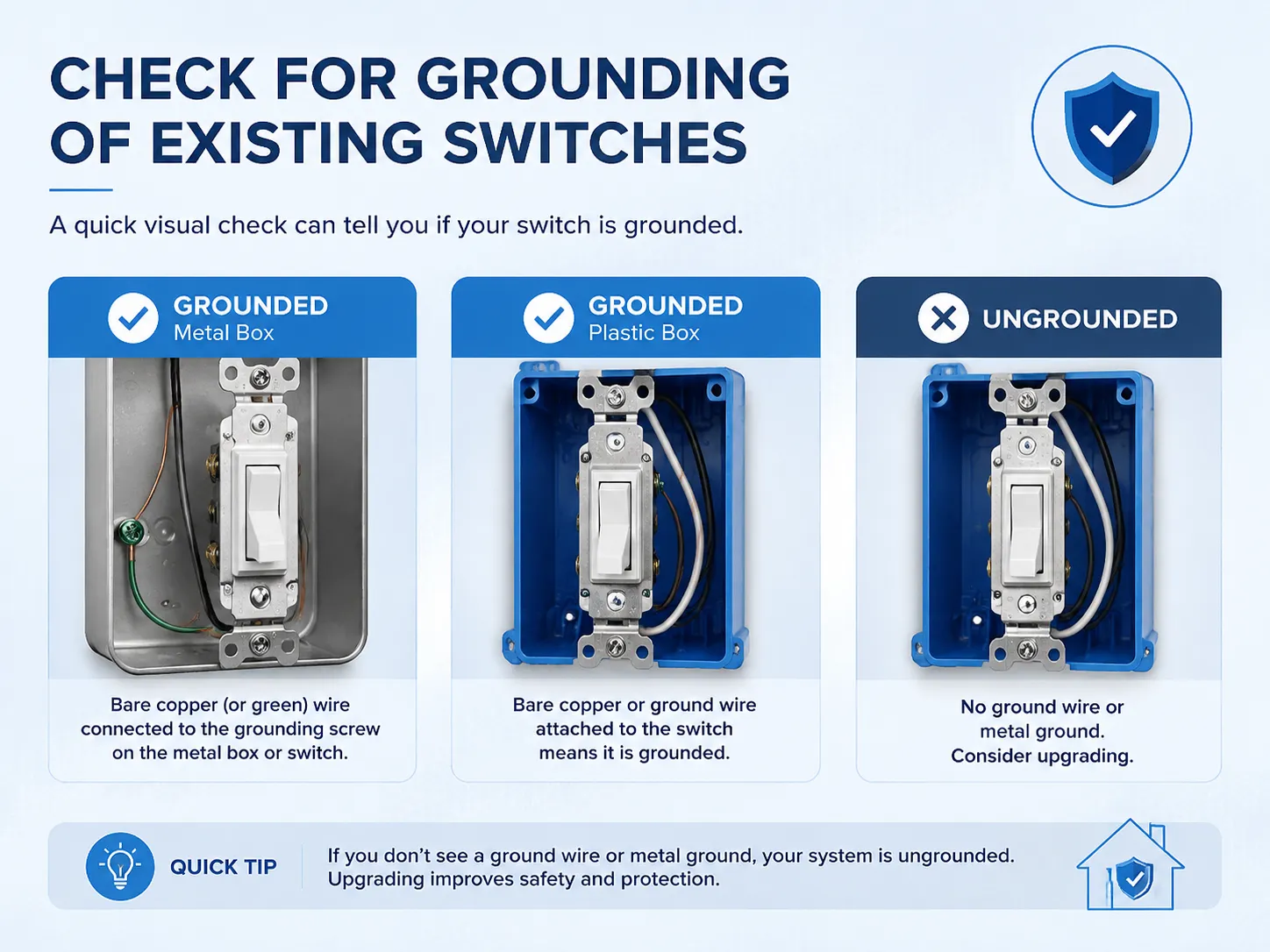
A simple visual inspection should be performed:
Look at the switch box. If there is a bare copper (or green) wire connected to the grounding screw located on the metal box or inside of the switch there is proper grounding. If the switch box is a plastic-type box, and there is a bare copper or ground wire attached to the switch, this means the switch is grounded as well. If you do not see a ground wire or a metal ground, the system is ungrounded. You should consider upgrading your current setup.
What to Do When There’s No Ground Wire
A missing ground wire is not the end of the world, but it demands the right set of responses. The table below summarizes your options, from the quickest fix to the most complete upgrade.
| Situation | Recommended Action |
|---|---|
| No ground wire present, and you need a switch now | Install a UL‑listed non‑grounding switch (often marked “For replacement use only”) with a non‑metallic cover plate. Note that this does not meet current code for new construction. |
| Metal box with armored cable (BX) that acts as ground | Use a self‑grounding switch or run a pigtail from the box ground screw to the switch. First confirm the armor path is a valid ground with a continuity test. |
| You want a safe, permanent, and code‑compliant fix | Run a new 14/2 or 12/2 grounded cable from the nearest grounded junction box or panel. This is the only approach that fully meets modern safety standards. For an overview of the latest safe and stylish options, see our picks for the best electrical outlets and switches for modern homes. |
Commonly Asked Questions
What happens if I don’t ground my light switch?
The primary danger associated with an ungrounded light switch (with respect to personal safety) is electric shock. Any part of the metal switch that makes contact with the “hot” wire can cause the entire switch plate to be energized. If there is no grounding conductor and an individual were to contact the switch after it has been energized, he would provide the path for the current to flow back to ground. Although no one may be harmed by this occurrence, if there was voltage present on the switch plate, the individual would then have the potential to create problems for devices such as a dimmer switch or a smart switch and, therefore, may result in erratic operation or shorten their life expectancy.
Do the switches according to the NEC require Grounding?
Yes, under NEC article 404.9 all general-use switches (including dimmers and controllers) must provide a means to connect to an equipment grounding conductor. This requirement covers any new construction where a grounding conductor is available or replaces an existing switch. If a switch has not been grounded and is not permitted by code, it will not pass the building inspections.
Are all switches going to be grounded?
No, there are going to be many ungrounded switches in homes built prior to approximately 1960 or in residences that have not (or very little) had their wiring updated. However, every new switch manufactured today is designed for an equipment ground and must be connected to an equipment ground in accordance with modern safety codes. Visually checking for a bare or green grounding wire in the switch box will reveal whether an equipment ground is present.
Then, do switches need to have a ground? The supporting evidence (from electrical codes, physics and historical construction practices) is overwhelming. A properly grounded switch is one of the simplest and most effective ways to ensure the safety of your home’s electrical system. Whether you are doing a simple switch replacement or a full house rewire, treat the equipment grounding conductor as a must-have, and complete the steps listed above to assess the condition of your switch boxes. If you require assistance, please use your quality voltage tester along with an electrical contractor to verify for you that a proper equipment ground was established. Your safety is worth much more than the five minutes required to complete the connection correctly.