If you venture into a hardware store’s electrical department, you will find a much larger variety of electrical outlet than just four types. Nonetheless, when a home inspector or electrician speaks of “the four types,” they are typically referencing only the four most commonly used functional categories. Knowing what these four types are, and why you would choose one type over another, is the basis for both electrical safety and daily convenience.
Commonly, there are four basic types of electrical receptacles which are: standard duplex (or wall-mounted); ground fault circuit interrupter (GFCI); arc fault circuit interrupter (AFCI); and USB charging. Each of these different kinds of receptacles serves to address a particular issue. For example, the purpose of standard receptacles is simply to provide electrical power; GFCIs serve to provide protection from electrocution; AFCIs serve to protect against fire; and USB receptacles have been designed to eliminate the “wall wart” clutter associated with many electronic devices. Understanding the differences will help determine what types of receptacles are installed in the areas of your home, such as bathroom, kitchen, bedroom, office, etc.
The Standard Duplex Receptacle: The Everyday Workhorse
In North America, a typical electrical outlet consists of a 125 volt duplex receptacle with 2 (fifteen amp or twenty amp) receptacles. As such, there are two plug slots (narrow hot, wide neutral, round ground). This is an outlet for all lamps, TVs, phone chargers, etc., and in modern construction, must also have tamper-proof (TP) features (this has a set of internal shutters that keep foreign objects out of the receptacle until both plug slots are pressed at once). The addition of simple mechanical devices has substantially reduced the number of children i.e.; childhood electrical accidents due to inserting foreign objects into receptacles. For a broader look at the devices that go alongside standard receptacles in a modern home, our overview of the best electrical outlets and switches for modern homes covers the full range of options.
The GFCI Outlet: Protection Against Ground Faults
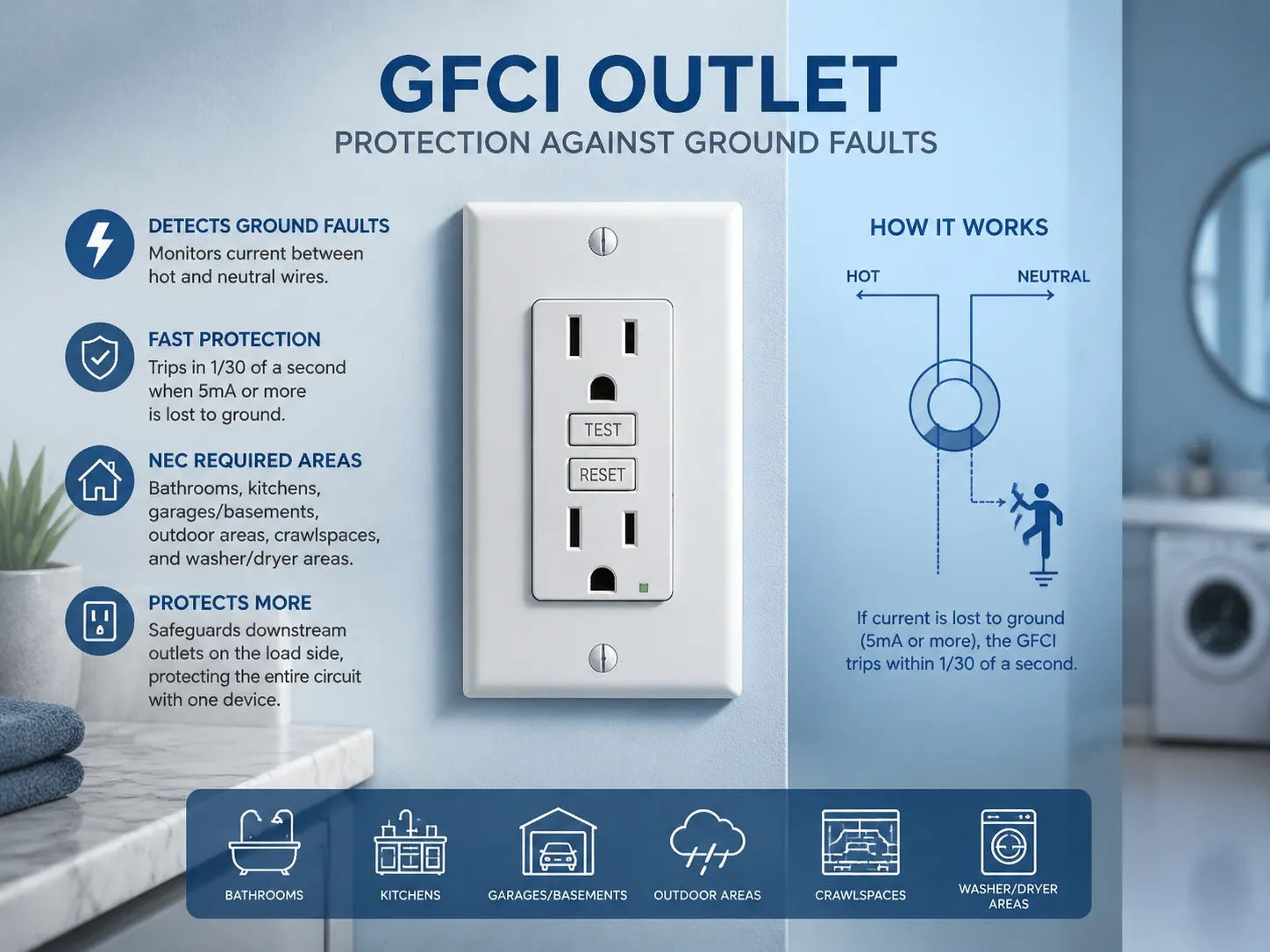
GFCI outlets are devices designed to minimize the danger of electrical shocks due to ground faults. They constantly monitor the amount of current flowing out on the hot wire and back through the neutral wire. If 5 milliamps or more are lost because the electricity is instead flowing through a person to ground, the GFCI will trip within one thirtieth of a second. National Electrical Code (NEC) states that GFCI outlets must be located in bathrooms, kitchens, garages/basements, outdoor areas, and crawlspaces, as well as in washer/dryer areas; each GFCI outlet has two buttons (TEST and RESET) located on the face of the contact. A GFCI outlet can also protect downstream standard outlets from its load side power source and can thus provide ground-fault protection to an entire circuit by using only one device.
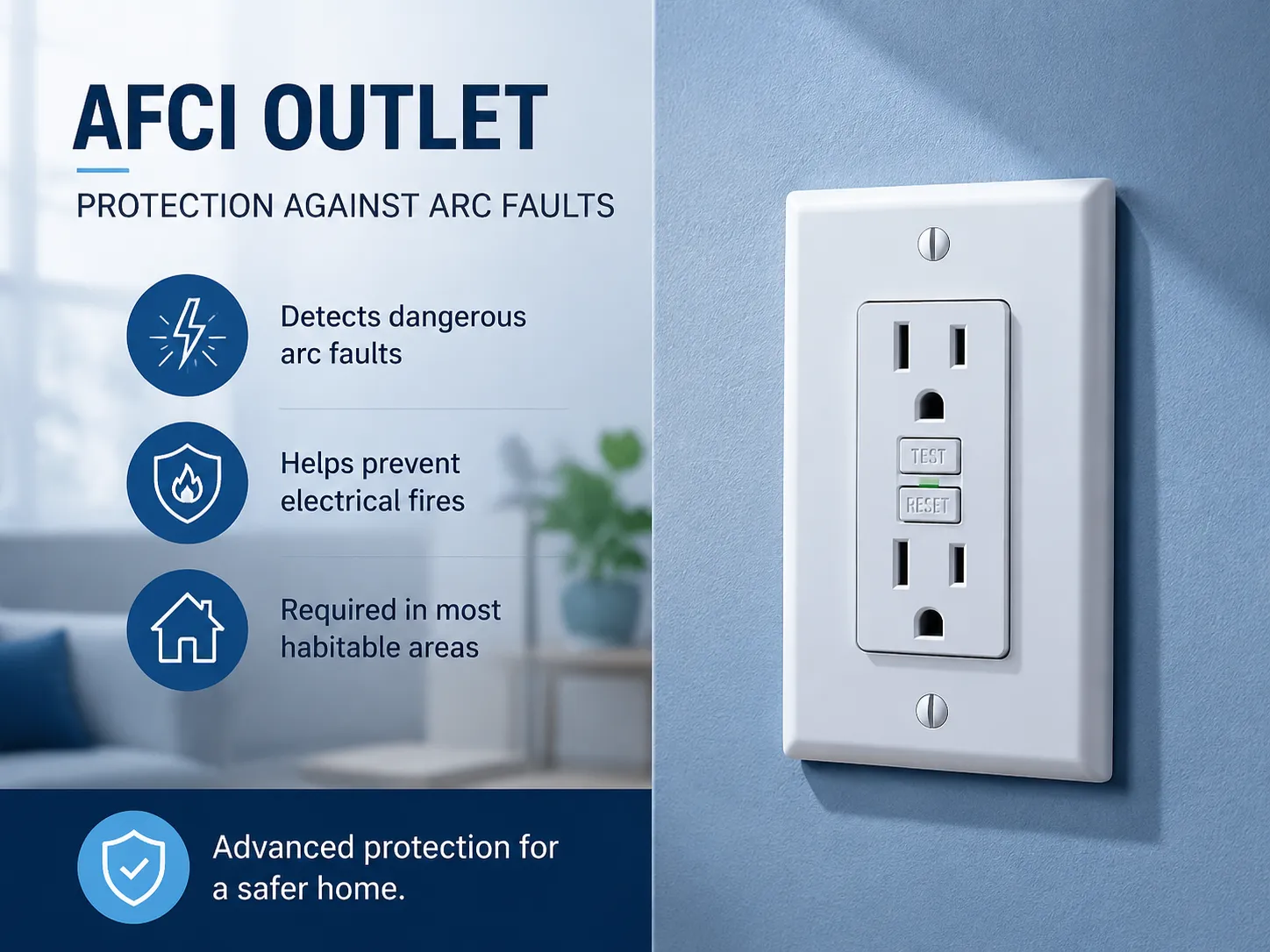
The AFCI Outlet: Protection Against Arc Faults
The Arc Fault Circuit Interrupter outlets protect against another electrical fire source; electrical arcing has the potential to spark a fire. The arcing process can occur due to shortage of electrical wires due to damage, loose connection, or pinched wires. Without drawing enough current to trip a standard breaker, an arc can produce an immense amount of heat and cause a fire once ignited. Thanks to electronics inside an AFCI, they can detect the unique waveform of an arc and disengage the circuit before the arcing has had an opportunity to cause surrounding materials to combust. While AFCI protection is most commonly provided via AFCI Circuit Breakers in the main electrical panel, AFCI receptacles, which can be added to cause arcing protection to any existing outlet on the same breaker, will provide additional arcing protection to the electrical circuit. The National Electric Code requires that every new home contain receptacles with AFCI protection in most habitable spaces throughout the house.
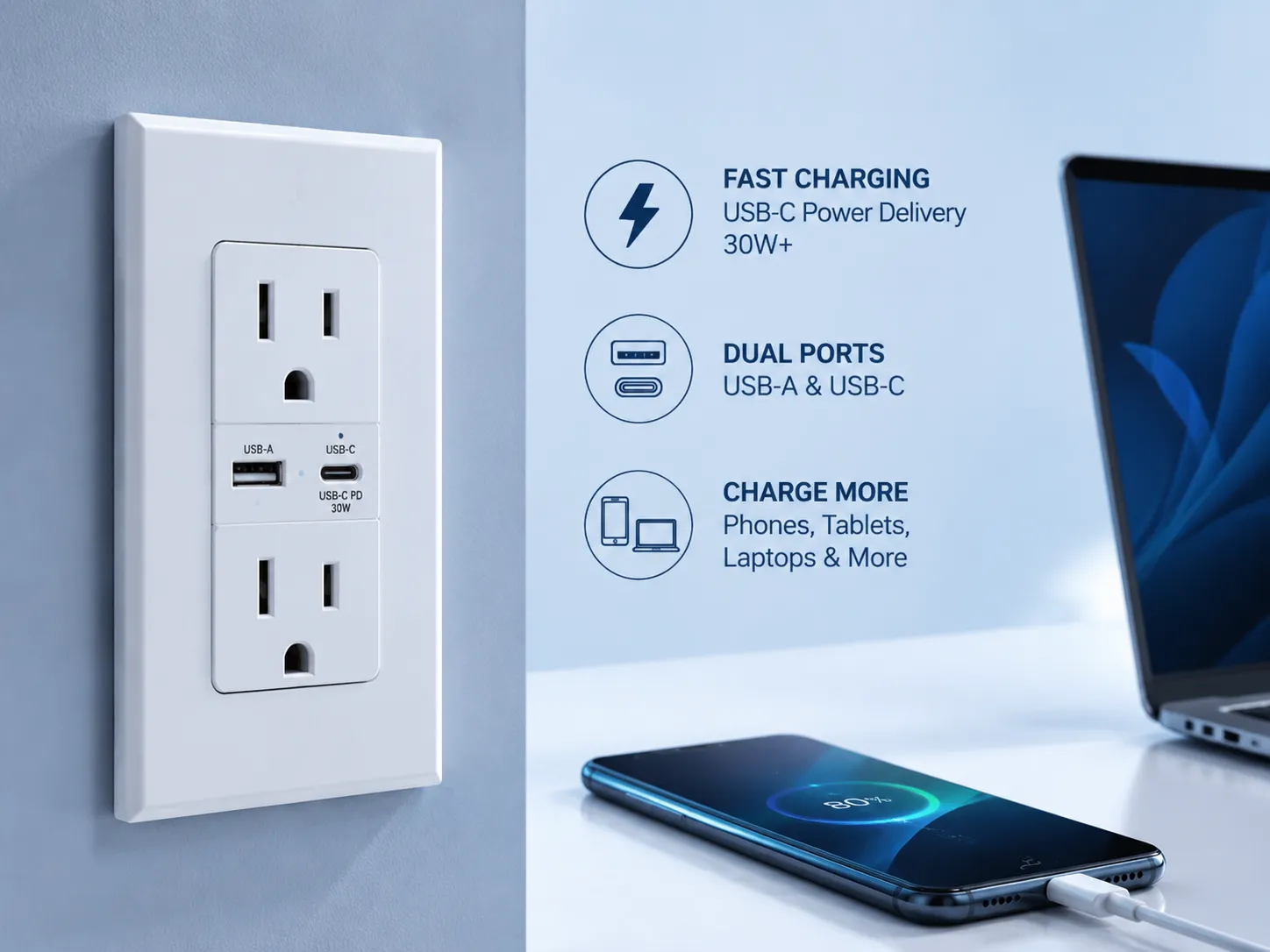
The USB‑Charging Outlet: Power Delivery Without the Adapter
A USB charging surface mount device incorporates USB ports directly into the face of conventional electrical receptacles for easy access. Small switched power supplies inside convert 120-volt AC line to low-voltage DC power to charge phones, tablets, etc., via USB. This makes it possible to charge these devices without having to use bulky charging adaptors that occupy one of the receptacle’s outlets. Newer USB charging devices will provide both USB-A and USB-C type ports, with the USB-C port having Power Delivery (PD) capability of 30 watts or higher, capable of charging both smart phones and laptops very quickly. For a deeper dive into these devices, our guide on USB charger sockets covers the technology, safety considerations, and installation requirements in detail.
Beyond the Four: Specialty Outlets for Specific Needs
The four kinds of outlets mentioned earlier will meet most residential outlet requirements and there may be solutions that offer different outlet configurations to address specialized uses or conditions. This includes WR (Weather Resistant) outlets which are to be used outdoors and have corrosion-resistant (CR) components on the interior and gasketed covers. Hospital grade outlets are made with higher mechanical design specifications and have a green dot to identify them. Floor outlets have a recessed design with a protected cover to prevent the ingress of dust or moisture. Each of these is an adaptation of the standard duplex outlet type designed specifically for the particular application.
Global Outlet Types: A Different Kind of Variety
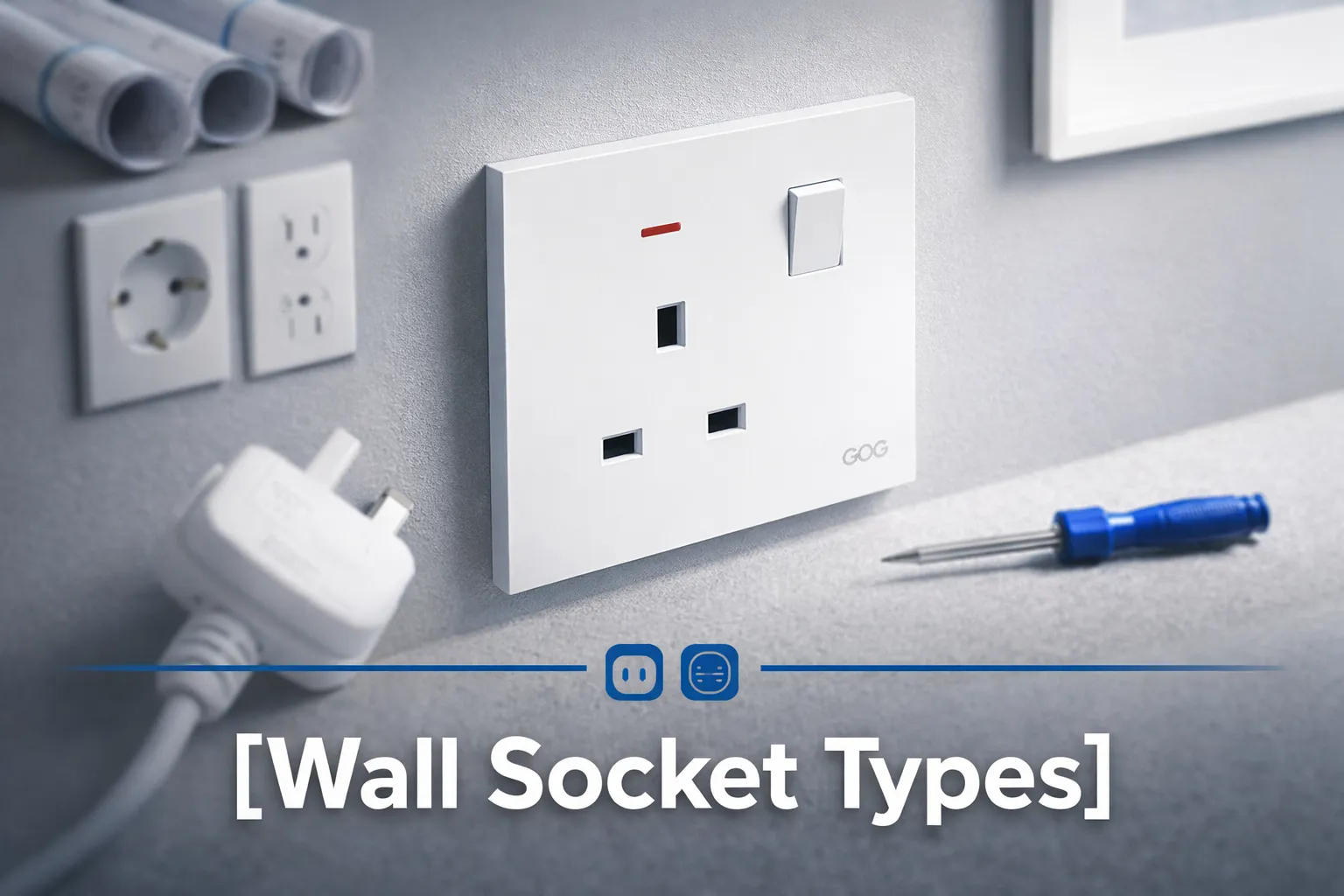
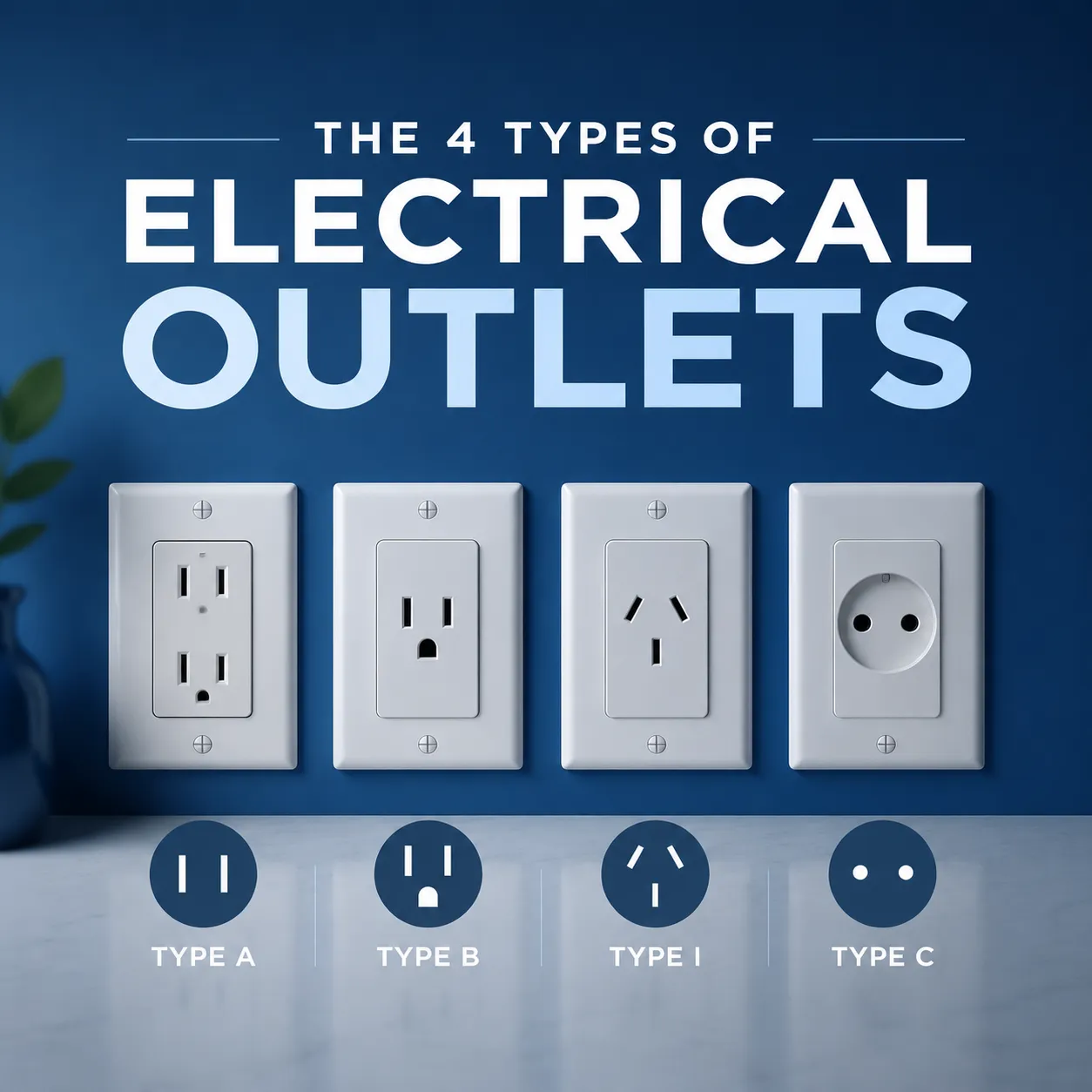
The previously mentioned classifications are functional types of a given national standard; however, if you travel outside of your country or region you will find very quickly that physical shape does not have an international standard. The International Electrotechnical Commission (IEC) categorizes types of plugs and sockets using letter designations; in total, there are fifty-two varieties that are common worldwide.
| Type | Appearance | Common Locations | Voltage |
|---|---|---|---|
| Type A | Two flat parallel pins, with or without a round ground pin (Type B) | North America, Japan, Mexico | 100–125V |
| Type C | Two round pins | Most of continental Europe, South America, Asia | 220–240V |
| Type G | Three rectangular pins in a triangular pattern | United Kingdom, Ireland, Singapore, Hong Kong | 230V |
| Type I | Two flat angled pins and a vertical earth pin | Australia, New Zealand, China, Argentina | 220–240V |
Resources from WorldStandards.eu and the International Electrotechnical Commission provide detailed maps and voltage tables for every country. For a manufacturer like GOG Electric, which supplies wiring devices to multiple international markets, producing a wall switch or a socket that conforms to the local plug type and safety standard is not optional — it is the price of entry. A switch designed for a UK square box will not fit a North American single‑gang box, and a socket rated for 120 volts will fail catastrophically on 230 volts. Knowing the local standard is the first step in selecting a compatible device.
How to Identify a Plug Type and Choose the Right Outlet
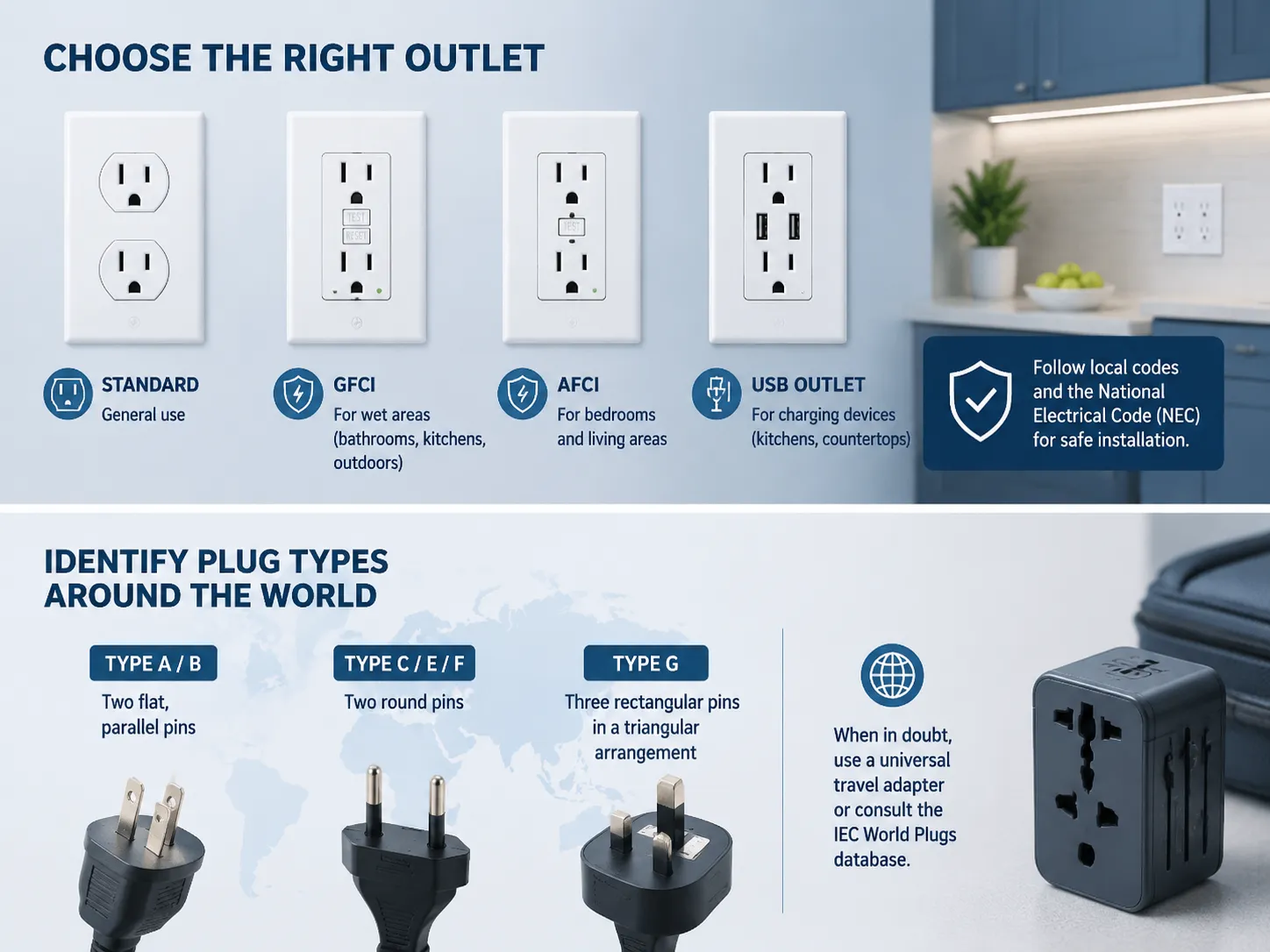
The type of electrical outlet (or the type you may require) can be determined by looking at its design and knowing what the standards are in your neighbourhood. In North America, for example, a standard duplex outlet has 2 oval-shaped slots and is rectangular. A GFCI (ground fault circuit interrupter) outlet has a couple of buttons and an AFCI (arc fault circuit interrupter) outlet has a button to ‘test’ it and/or an indicator light. A USB (universal serial bus) charging outlet will have distinct rectangular holes in the centre of the outlet. When choosing the type of outlet for your particular application, you need to follow the local codes and guidelines that are set forth in the National Electrical Code. For example, a bathroom would require GFCI protection, a bedroom would use either a standard tamper-resistant receptacle or an AFCI, and a kitchen would use both GFCI protection and USB charging outlets on a countertop.
International plug types can be identified based on their design features, such as pin shape. Type A and B plugs are identified as having two flat, parallel pins. Type C, E, and F plugs all contain two round pins. Type G plugs can be identified as having three rectangular pins that are configured in an arrangement that forms a triangle. Should you ever be in doubt as to what type of plug you need or what type of plug to use, consider obtaining a universal travel adapter or consulting the reference charts published by the International Electrotechnical Commission’s (IEC) World Plugs database for a definitive determination.
Frequently Asked Questions
What are four electrical outlets called?
Four different kinds of electrical outlets exist today including Standard Duplex Receptacle (DUP), GFCI Outlet, AFCI Outlets, and USB Charging outlets. All have a specific purpose whether it falls under safety or convenience in today’s homes.
How to identify a plug type?
Determine the plug type by how many pins are shaped and how they are arranged. There are two standard flat parallel pin types (Type A) and there is also one standard round pin type (Type C). There are three rectangular pins arranged in a triangular formation (Type G). The IEC maintains an up to date record of all plug types for different countries on their World Plugs Reference page.
What is the 6 rule for outlets?
The “6 rule” provides general guidelines from the NEC for where to place outlets: so that any point along any one wall does not have more than 6-feet of distance to a receptacle (outlet). As stated from a manufactures perspective: The maximum distance between receptacle (outlet) and appliances using a typical 6-foot cord is 6 feet. So, if you keep this in mind when placing receptacles (outlets), you should have sufficient coverage of receptacles (outlets) around the house.
What are the different types of outlets?
In addition to the original 4 types of basic functions (standard, GFCI, AFCI, USB) there are also many types of specialty receptacles, such as weather-resistant receptacles, hospital grade receptacles, floor receptacles and smart receptacles. Additionally international receptacle configurations consist of more than a dozen different physical configurations of plugs and sockets that are specified by the IEC using the lettered designations A through N and are used in various countries with their different electrical voltages.
References
- IEC — World Plugs — International Electrotechnical Commission database of plug and socket types by country.
- WorldStandards.eu — Reference for electricity standards, plug types, and voltages by country.
- Leviton Manufacturing — Residential and commercial wiring device product documentation and application guides.
- Electrical Safety Foundation International (ESFI) — Home electrical safety resources and GFCI/AFCI information.
The four types of electrical outlets that matter most in a home are the standard duplex, the GFCI, the AFCI, and the USB charger. Together, they cover the full spectrum of safety and convenience that a modern electrical system requires. Beyond these, the global variety of plug shapes and voltages reminds us that an outlet is always designed for a specific place, a specific voltage, and a specific safety code. GOG Electric manufactures wiring devices that meet the requirements of both North American and international markets, because the outlet on the wall is the final point where the entire electrical system meets the person using it — and that meeting must be safe, reliable, and up to code every time.