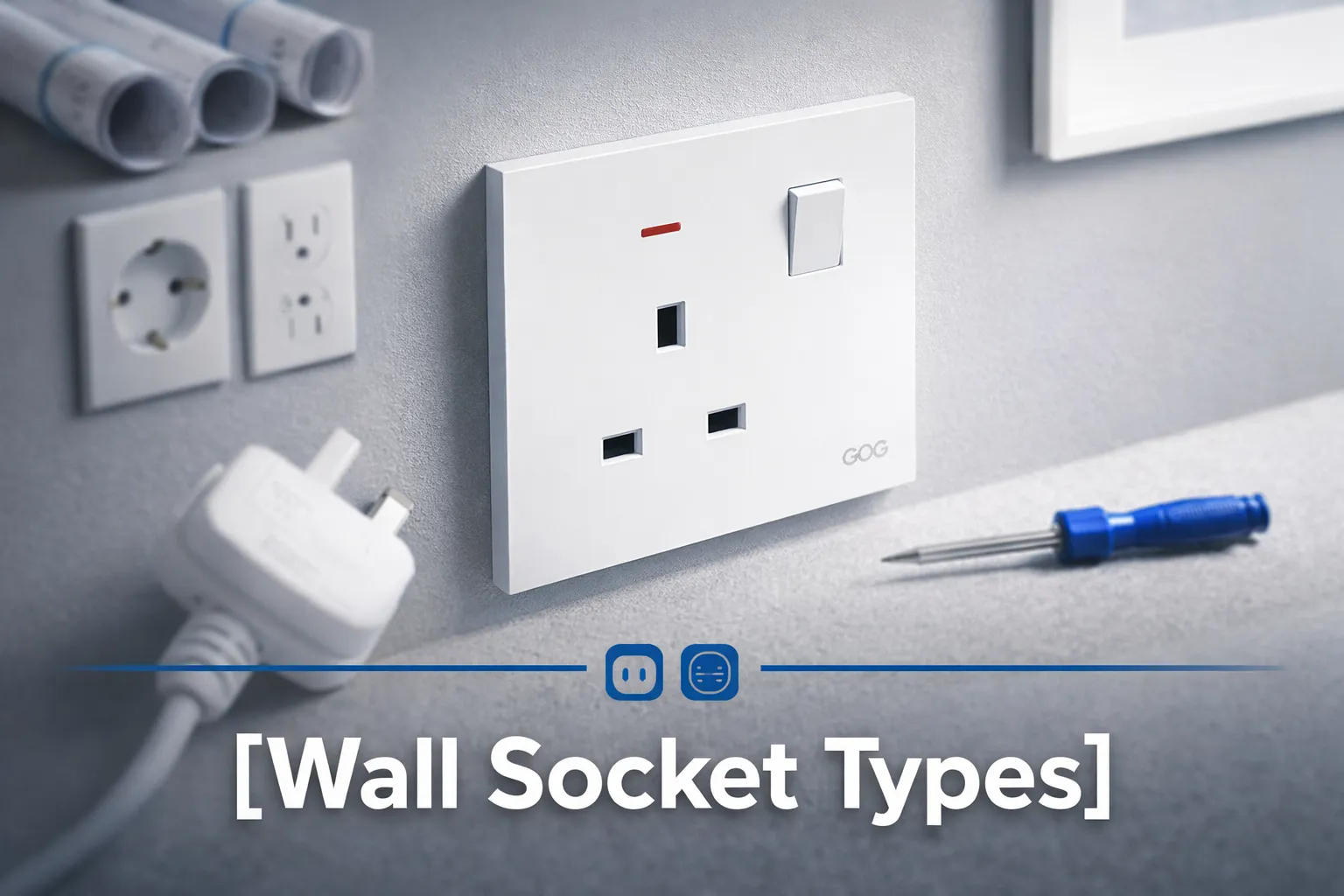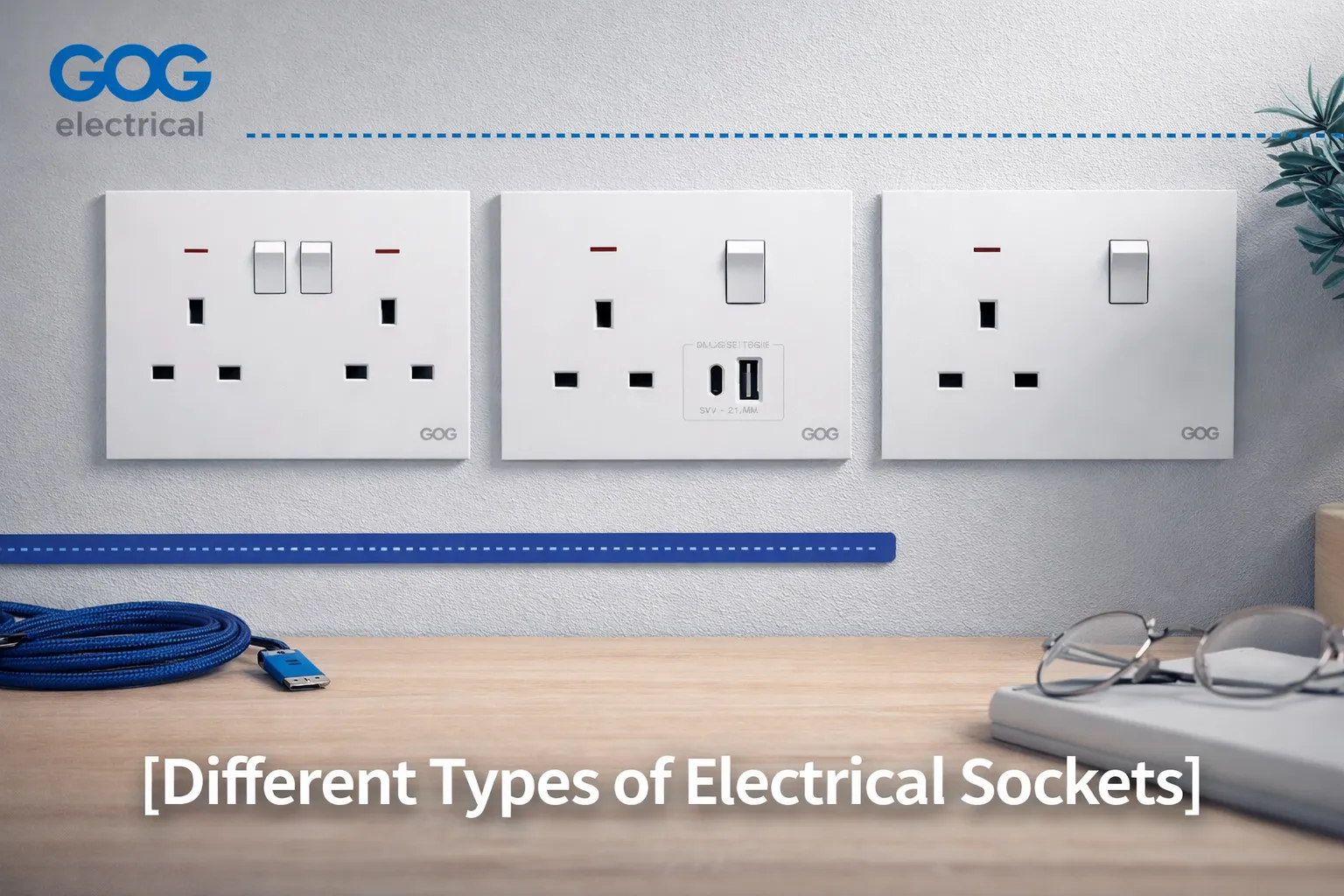
سواء كنت تعيد توصيل أسلاك منزلك، أو تغير منفذًا كهربائيًا، أو كنت فقط فضوليًا حول المنافذ الكهربائية المختلفة في الغرفة، قد تكون مهتمًا بمعرفة النوعين المختلفين من المنافذ الكهربائية. على الرغم من أن هذا قد يبدو كسؤال اختبار، إلا أنه من المهم معرفة هذه المعلومات عند شراء المنافذ الكهربائية، أو تخطيط تجديد المنزل، أو تحديد سلامة منزلك القديم. بشكل عام، تنتمي جميع المقابس الكهربائية إلى عائلتين أساسيتين، وبمجرد أن تفهم هاتين العائلتين، سيكون من السهل عليك التنقل في عالم المنافذ الكهربائية المعقد. بعبارة أخرى، ستجيب هذه الوثيقة على الأسئلة الشائعة المتعلقة بتصنيف النوعين المختلفين من مقابس الطاقة الكهربائية، ومظهرها، والسعر النسبي، وعوامل أخرى مهمة.
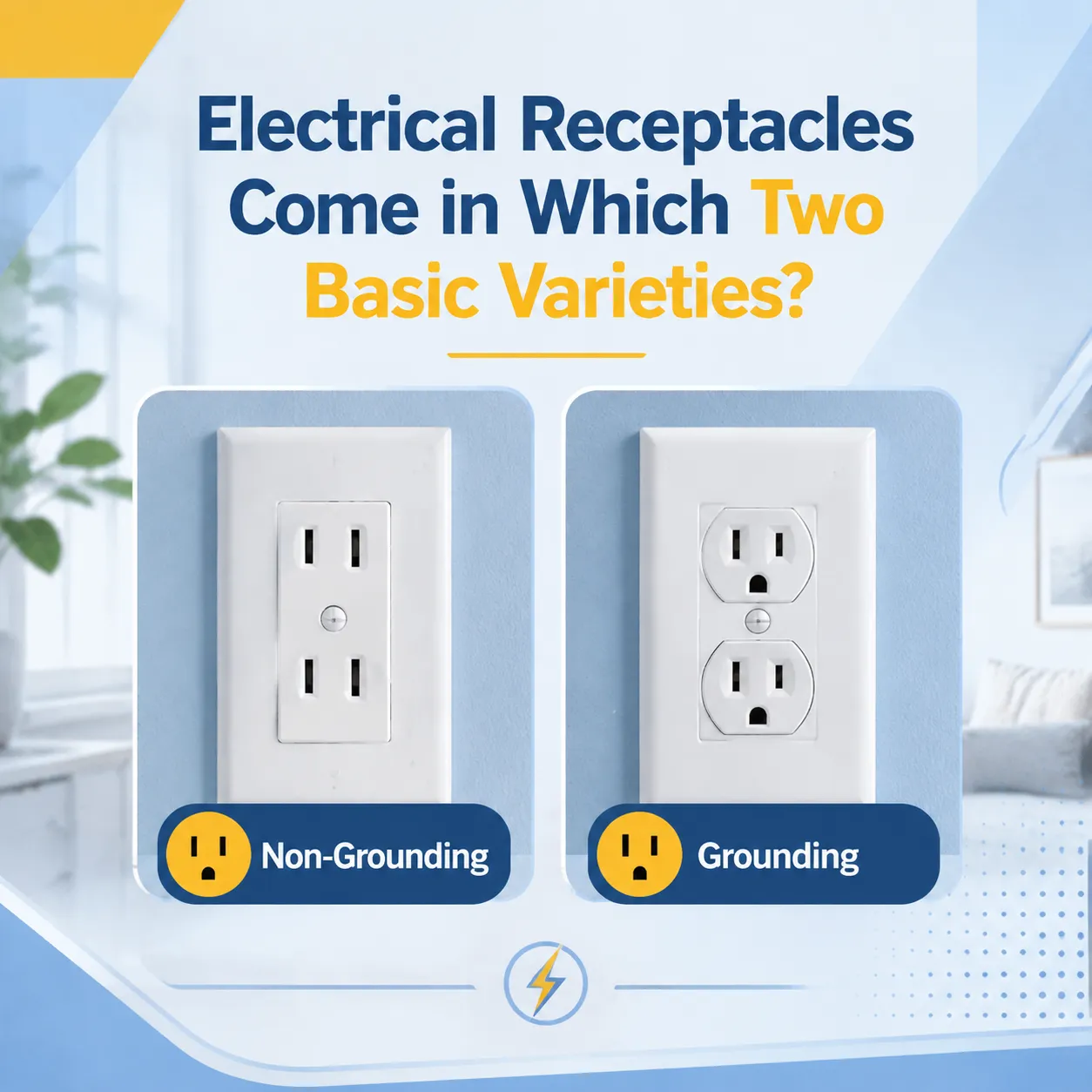
إجابة سريعة: تتوفر المنافذ الكهربائية (التي يُشار إليها غالبًا كنقاط كهربائية، أو منافذ حائط، أو مقابس) في نوعين رئيسيين فقط: مقبس بدون تأريض ومقبس مؤرض. يُشار إلى المقبس ذو الدبوسين بدون تأريض باسم نوع Nema 1-15، والمقبس المؤرض ذو الثلاثة دبابيس يسمى نوع Nema 5-15. المقابس المؤرضة هي مقابس ثلاثية الدبابيس قياسية تحتوي على دبوس تأريض دائري إضافي. تنقسم المقابس المؤرضة إلى عدة فئات بناءً على كل من الجهد والتيار، مثل مقابس 120 فولت (15 أمبير و20 أمبير).
النوعان الأساسيان من مقابس الكهرباء
يُجاب على سؤال “المقابس الكهربائية تأتي في أي نوعين أساسيين” بطريقتين شائعتين، وكلاهما صحيح حسب السياق:
الإجابة 1: حسب التأريض — بدون تأريض مقابل مؤرض
| النوع | الدبابيس | نوع NEMA | الوضع في المنازل الحديثة |
|---|---|---|---|
| مقبس بدون تأريض | 2 دبابيس | نيما 1-15 | قديم — يوجد فقط في المنازل القديمة |
| مقبس مؤرض | 3 دبابيس | NEMA 5-15 (و 5-20) | قياسي — مطلوب في البناء الجديد |
يحتوي على فتحتين مسطحتين، ولهذا السبب يُعرف المقبس ذو الدبوسين بدون تأريض باسم مقبس من النوع A. أما المقبس المؤرض ذو الثلاثة دبابيس، والذي يُشار إليه أيضًا باسم مقبس من النوع B، فيحتوي على دبوس تأريض دائري بالإضافة إلى الفتحتين المسطحتين للاتصال الآمن بنظام التأريض في المبنى. في حالة قوانين البناء الحديثة، هناك التزام بوجود مقابس مؤرضة في كل مكان في المباني الجديدة بالإضافة إلى ترقية أي مقابس بدون تأريض عند إجراء تجديدات في غرفة في حالة التفتيش.
الإجابة 2: حسب الجهد — 120 فولت مقابل 240 فولت
| النوع | الجهد الكهربائي | الاستخدامات الشائعة | التيار النموذجي |
|---|---|---|---|
| قياسي / للأغراض العامة | 120 فولت | المصابيح، التلفزيونات، الهواتف، الحواسيب، الأجهزة الصغيرة في المطبخ | 15 أمبير أو 20 أمبير |
| ثقيل / للأجهزة | 240V | المجففات، المواقد، وحدات التكييف، شواحن السيارات الكهربائية، آلات اللحام | 15 أمبير – 50 أمبير |
تغذي مقابس 120 فولت الغالبية العظمى من الأجهزة المنزلية. تغذي مقابس 240 فولت (بتصاميم دبابيس مميزة) الأجهزة الكبيرة التي تحتاج إلى ضعف الطاقة. إذا كنت تريد فهم الفرق بالتفصيل، فإن دليلنا حول الفرق بين مقابس 120 فولت و240 فولت يشرح ذلك مع أمثلة.
أسماء مختلفة لنفس الشيء: منفذ، مقبس، مأخذ كهربائي
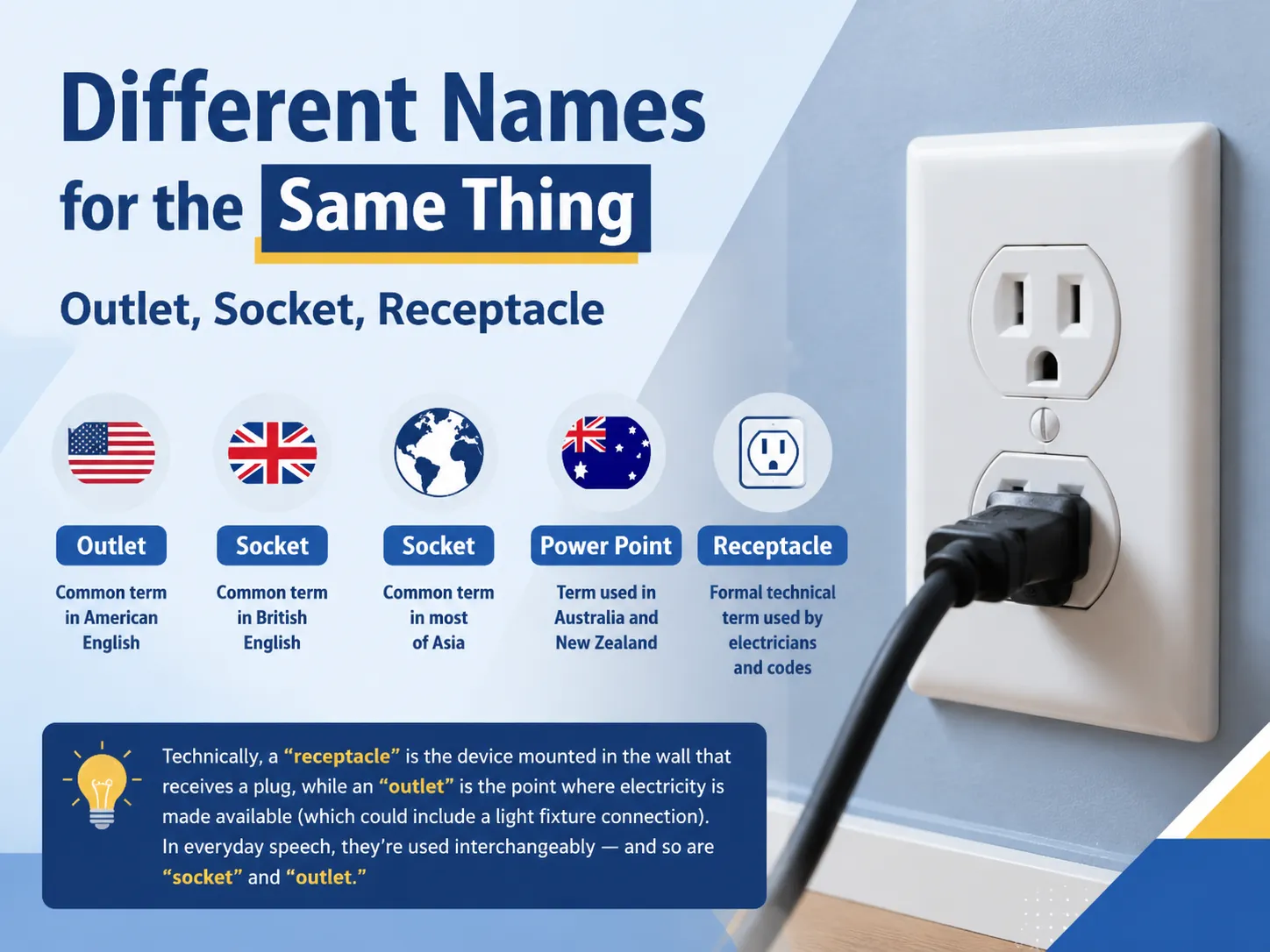
قبل أن نتابع مناقشتنا، دعونا نوضح بعض المصطلحات حيث أن الجهاز نفسه له أسماء متعددة — وكلها صحيحة:
- المقبس الكهربائي — المصطلح الفني الرسمي الذي يستخدمه الكهربائيون والرموز المكتوبة
- مقبس الطاقة أو المقبس الكهربائي — المصطلح الشائع في الإنجليزية البريطانية ومعظم آسيا
- مخرج الحائط أو ببساطة المخرج — المصطلح المستخدم في اللغة الأمريكية عند الحديث عن هذا الجهاز
- نقطة الطاقة — مصطلح يستخدمه الأستراليون والجنوبيون
- مقبس التوصيل — مصطلح شائع آخر يستخدم في الإنجليزية البريطانية
من الناحية الدقيقة، “المقبس” هو الجهاز المثبت في الحائط والذي يستقبل القابس، بينما “المخرج” يعني موقع مصدر الطاقة (والذي قد يشير أيضًا إلى تركيبة الإضاءة). ومع ذلك، في اللغة المحكية يتم استخدامهما بالتبادل وكذلك “المقبس” و“المخرج”. لمزيد من التفاصيل حول المصطلحات والتشريح، راجع مقالتنا عن ما هو المقبس الكهربائي.
كيف يتم تصنيف المقابس: نظام NEMA
نظام التصنيف المستخدم لجميع المقابس في أمريكا الشمالية تم تطويره بواسطة الجمعية الوطنية لمصنعي الكهرباء (NEMA) وله رمز للتصنيف. على سبيل المثال، الرمز 5-15R يتم تحليله كما يلي:
- الرقم الأول (أي 5) يشير إلى نوع عائلة التكوين ويظهر الجهد والتأريض.
- الرقم الثاني (أي 15) يحدد تصنيف الأمبير.
- الحرف يدل على نوع المقبس (R) مقابل القابس (P).
| رمز NEMA | الجهد الكهربائي | الأمبير | الدبابيس | الاستخدام الشائع |
|---|---|---|---|---|
| 1-15R | 120 فولت | 15أ | 2 | المخارج القديمة غير المؤرضة (مهجورة) |
| 5-15R | 120 فولت | 15أ | 3 | منفذ منزلي قياسي |
| 5-20R | 120 فولت | 20A | 3 | المطابخ، الحمامات، الغسيل |
| 6-15R | 240V | 15أ | 3 | مكيفات النوافذ، المعدات الصغيرة |
| 6-20R | 240V | 20A | 3 | ضواغط الهواء، أدوات الطاقة |
| 14-30R | 120/240V | 30A | 4 | مجففات كهربائية |
| 14-50R | 120/240V | 50A | 4 | المواقد، وصلات RV، شواحن EV |
إذا كنت ترغب في معرفة المزيد عن الأنماط المختلفة المستخدمة في المقابس، ألق نظرة على منشورنا حول أنواع المقابس الكهربائية حيث يناقش كلا من أنواع NEMA المستخدمة في أمريكا الشمالية وأنواع المقابس الدولية الأخرى.
مقابس 120 فولت: المنافذ اليومية
هذه هي المنافذ التي تستخدمها يوميًا. جميعها مؤرضة (باستثناء النوع القديم ذو الشوكتين) ومصنفة لـ 120 فولت.
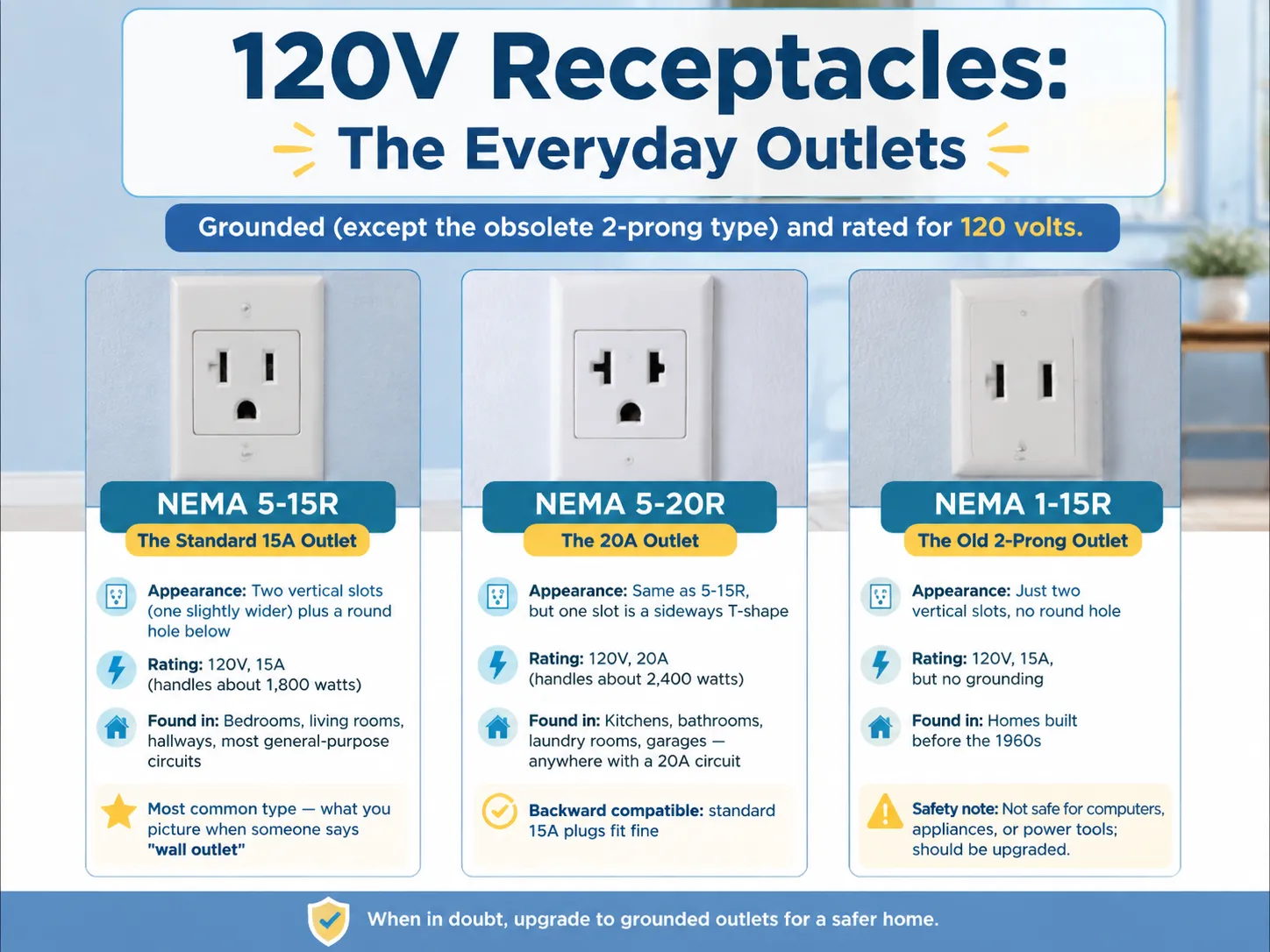
NEMA 5-15R — المنفذ القياسي 15A
- الشكل: فتحتان عموديتان (واحدة منهما أعرض قليلاً) وثقب دائري أدناه
- التصنيف الكهربائي: 120 فولت، 15 أمبير (استهلاك الطاقة حوالي 1800 واط)
- التطبيق: عادةً ما يتم تركيبه في غرف النوم، غرف المعيشة، الممرات وأنواع الدوائر العامة الأخرى
- النوع: هذا النوع من المنافذ هو الأكثر شيوعًا، والذي يفكر فيه الناس عادةً عند تخيل منفذ الحائط
NEMA 5-20R — المنفذ 20A
- المظهر: مشابه لـ 5-15R، باستثناء أن أحد المقابس على شكل حرف T مائل.
- التصنيف: مصنف لـ 120 فولت، 20 أمبير (يتحمل حوالي 2400 واط).
- التركيب: يستخدم في المطابخ، الحمامات، غرف الغسيل، الكراجات، أو أي مكان آخر بتيار 20 أمبير.
- التوافق: متوافق مع 15 أمبير.
NEMA 1-15R — المنفذ القديم ذو الشوكتين
- الميزة: ببساطة فتحات عمودية مزدوجة، بدون أي فتحة دائرية.
- السعة: 120 فولت؛ 15 أمبير كحد أدنى، لكنه لا يحتوي على تأريض.
- موجود في: المنازل التي بُنيت قبل الستينيات.
- الحذر: غير آمن لتوصيل الحواسيب، الأجهزة، أو الآلات، ويجب تعزيزه.
مقارنتنا بين المنافذ ذات الشوكتين مقابل المنافذ ذات الثلاث شوكات تشرح الفروقات الأمنية بالتفصيل.
مقابس 240 فولت: المنافذ الثقيلة
توصل منافذ 240 فولت ضعف الجهد للأجهزة الكبيرة. لديها ترتيبات شوكات مميزة تمنع توصيل جهاز 120 فولت بها عن طريق الخطأ.
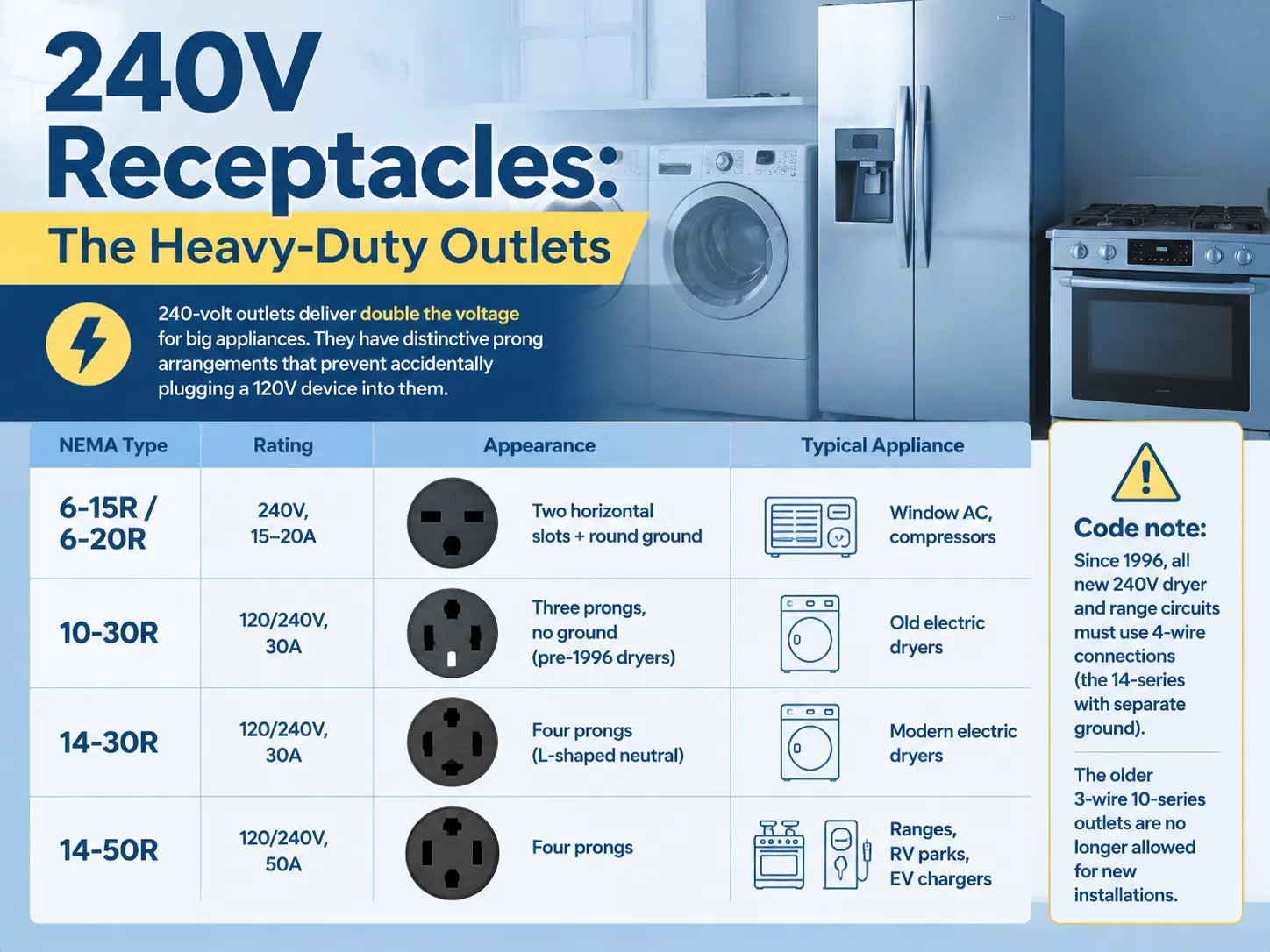
| نوع NEMA | التصنيف | المظهر | الجهاز النموذجي |
|---|---|---|---|
| 6-15R / 6-20R | 240 فولت، 15–20 أمبير | فتحتان أفقيتان + تأريض دائري | مكيفات النوافذ، الضواغط |
| 10-30R | 120/240 فولت، 30 أمبير | ثلاث شوكات، بدون تأريض (مجففات قبل 1996) | مجففات كهربائية قديمة |
| 14-30R | 120/240 فولت، 30 أمبير | أربع شوكات (محايد على شكل L) | مجففات كهربائية حديثة |
| 14-50R | 120/240 فولت، 50 أمبير | أربعة رؤوس | المواقد، متنزهات المركبات الترفيهية، شواحن المركبات الكهربائية |
نقاط رئيسية في سياق الكود: لقد فرض الكود أن جميع دوائر المجففات والمواقد الجديدة التي تعمل على 240 فولت يجب أن تأتي باتصالات بأربعة أسلاك أو من النوع 14-series حيث تكون الاتصال مؤرضًا. لا يمكن استخدام النوع البديل 3 أسلاك 10-series في التركيبات الجديدة بعد الآن.
اختلافات المظهر بنظرة سريعة
إليك كيفية التمييز بين الأنواع الأساسية بمجرد النظر إليها:
| المقبس | الفتحات | السمة المميزة |
|---|---|---|
| 2 رؤوس غير مؤرضة (1-15R) | 2 فتحات رأسية | لا يوجد فتحة دائرية على الإطلاق |
| 3 رؤوس 15A (5-15R) | 2 رأسية + 1 دائرية | كلا الفتحتين رأسيتين، الأرضي الدائري في الأسفل |
| 3 رؤوس 20A (5-20R) | 1 رأسية + 1 على شكل T + 1 دائرية | فتحة T أفقية على اليسار |
| 240 فولت شفرة مستقيمة (6-15R/6-20R) | 2 أفقية + 1 دائرية | كلا الفتحتين أفقية |
| مجفف (14-30R) | 3 فتحات + 1 دائرية | فتحة محايدة على شكل L |
| موقد/مركبة كهربائية (14-50R) | 3 فتحات + 1 دائرية | محايد أكبر على شكل L |
افحص لوحة الوجه إما: أزرار TEST و RESET موجودة في منفذ GFCI؛ منفذ مقاوم للعبث يحتوي على مصاريع منزلقة في الفتحات ومنفذ USB يحتوي على منافذ USB على لوحة الوجه.
مقابس خاصة الغرض: GFCI، TR، USB
بالإضافة إلى النوعين الأساسيين، تضيف المقابس الحديثة ميزات السلامة والراحة:
| النوع | ما يفعله | حيثما يلزم | السعر |
|---|---|---|---|
| مقبس GFCI | يفصل الدائرة إذا اكتشف تسرب تيار إلى الأرض (يمنع الصدمة) | الحمامات، المطابخ، الكراجات، الأماكن الخارجية، الأقبية | $10–$25 |
| مقاوم للعبث (TR) | مصاريع داخلية تمنع إدخال أشياء من قبل الأطفال | مطلوب في جميع الإنشاءات السكنية الجديدة | $2–$5 |
| مقبس USB | منافذ شحن USB-A / USB-C مدمجة | اختياري — المكاتب، الطاولات الجانبية، المطابخ | $15–$45 |
| مقبس AFCI | يكتشف القوس الكهربائي الخطير في الأسلاك | غرف النوم ومناطق المعيشة (مستوى الدائرة) | $15–$30 |
| مفتاح/مقبس مركب | مفتاح ومقبس في جهاز واحد | حيثما يلزم منفذ مع مفتاح | $4–$12 |
لمراجعة كاملة لفئات المنافذ الأربعة الرئيسية المستخدمة في المنازل، مقالنا عن الأنواع الأربعة للمقابس الكهربائية هو مرجع سريع ومرئي.
أي مقبس لأي غرفة؟
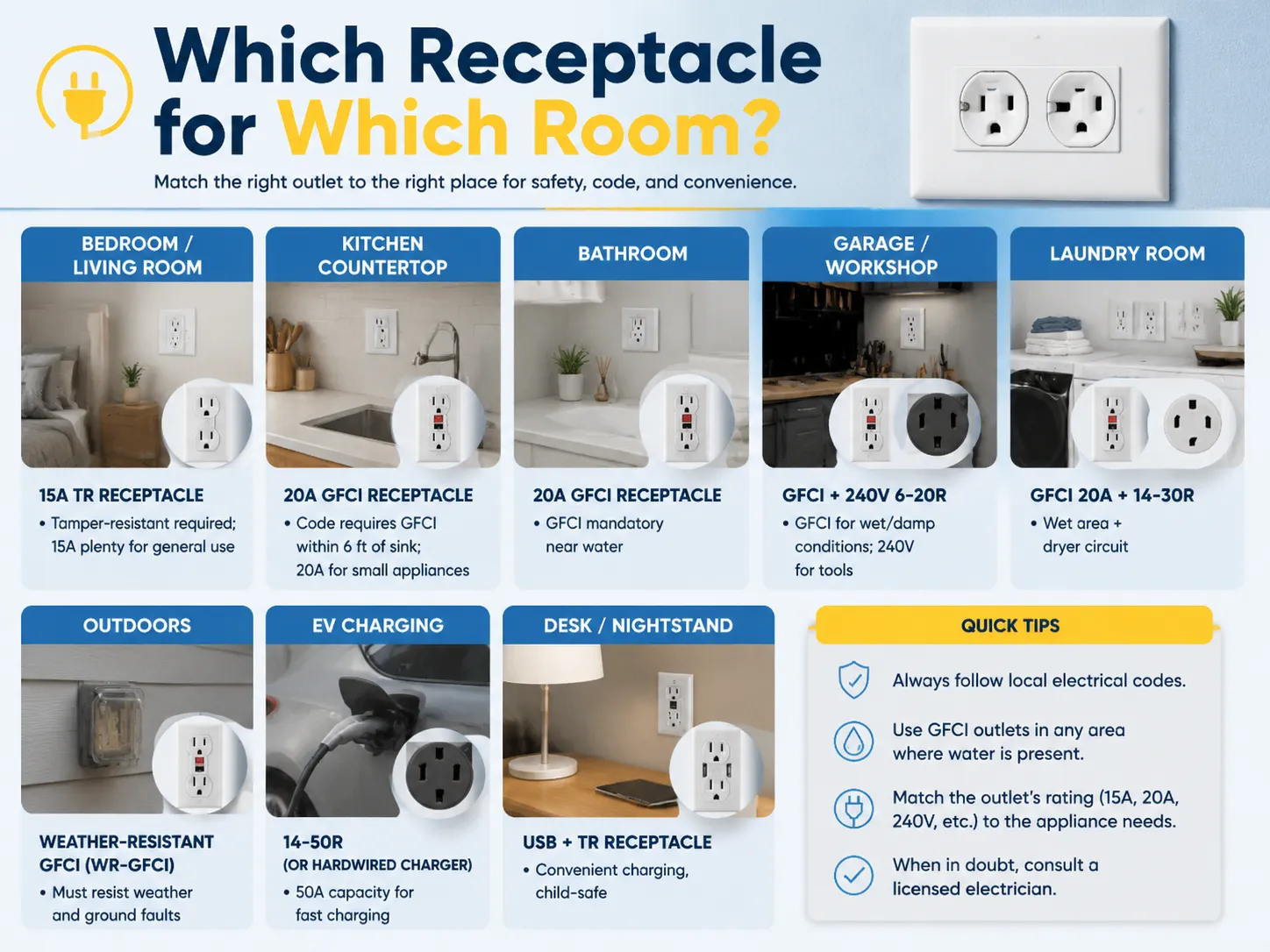
| الموقع | المقبس الموصى به | السبب |
|---|---|---|
| غرفة النوم / غرفة المعيشة | مقبس 15A TR | مطلوب مقاومة العبث؛ 15A كافية للاستخدام العام |
| سطح المطبخ | مقبس 20A GFCI | يتطلب الكود وجود GFCI ضمن 6 أقدام من الحوض؛ 20A للأجهزة الصغيرة |
| الحمام | 20A GFCI | GFCI إلزامي بالقرب من الماء |
| المرآب / ورشة العمل | GFCI + 240V 6-20R | GFCI للظروف الرطبة / المبللة؛ 240V للأدوات |
| غرفة الغسيل | GFCI 20A + منفذ مجفف 14-30R | منطقة رطبة + دائرة المجفف |
| في الهواء الطلق | GFCI مقاوم للعوامل الجوية (WR-GFCI) | يجب أن يقاوم الطقس والأخطاء الأرضية |
| شحن المركبات الكهربائية | 14-50R (أو شاحن موصل بشكل دائم) | سعة 50A للشحن السريع |
| المكتب / منضدة السرير | USB + مقبس TR | شحن مريح، آمن للأطفال |
دليل الأسعار: تكلفة المنافذ
| النوع | سعر التجزئة | سعر اسم العلامة التجارية |
|---|---|---|
| مقبس أساسي 15A بثلاثة أطراف | $1–$3 | $2–$5 |
| مقبس 20A | $2–$5 | $4–$8 |
| مقاوم العبث 15A | $2–$4 | $3–$6 |
| مقبس GFCI | $10–$18 | $15–$25 |
| مقبس USB (منفذين) | $12–$25 | $20–$45 |
| مقبس AFCI | $15–$25 | $20–$30 |
| مقبس المجفف (14-30R) | $8–$15 | $12–$20 |
| مقبس الموقد / المركبة الكهربائية (14-50R) | $10–$20 | $15–$30 |
هناك اختلافات بين العلامات التجارية، والتشطيبات (مثل الأبيض، العاجي، الأسود، النحاس) والشهادات (معتمد UL مقابل عام غير مدرج) تؤدي إلى تغير السعر. كما أن التركيب بواسطة محترفين قد يكلف من 50 إلى 150 دولارًا أمريكيًا لكل مقبس حسب مكان التركيب وحالة الأسلاك.
أفضل علامات المقابس
| العلامة التجارية | Country | فئة السعر | معروف بـ |
|---|---|---|---|
| ليفيتون | الولايات المتحدة الأمريكية | متوسط | خط مصمم Decora، اختيار واسع، موثوق |
| Eaton / Cooper Wiring | الولايات المتحدة الأمريكية | متوسط | متانة بدرجة تجارية، تركيبات تجارية |
| ليجراند (باس آند سيمور) | فرنسا/الولايات المتحدة الأمريكية | متوسط-مرتفع | تشطيبات مصممة، مآخذ ذكية |
| Hubbell | الولايات المتحدة الأمريكية | عالي | مآخذ من الدرجة الصناعية، موثوقية قصوى |
| جي إي (كurrent) | الولايات المتحدة الأمريكية | ميزانية-متوسط | مآخذ يومية، متوفرة على نطاق واسع |
| كوب / بيلانكو | ألمانيا | متوسط | مآخذ بجودة الطراز الأوروبي |
| إيغوتو | الصين | القيمة | مفاتيح ومآخذ ذكية، OEM للعلامات التجارية العالمية |
| شنايدر إلكتريك | فرنسا | متوسط-مرتفع | خطوط Unica وClipsal، معايير عالمية |
للاستخدام السكني اليومي، تُعد Leviton و Eaton أكثر العلامات التجارية تركيبًا في أمريكا الشمالية. إذا كنت تريد تشطيبات فاخرة أو ميزات ذكية، تتصدر Legrand و Schneider المشهد. دليلنا إلى أفضل 10 علامات تجارية لأجهزة الأسلاك في العالم يتعمق في نقاط قوة كل مصنع.
الأسئلة المتكررة
ما هي الأنواع المختلفة من المآخذ الكهربائية؟
تنتمي المآخذ الكهربائية إلى فئتين رئيسيتين، وهما المآخذ غير المؤرضة (بشوكتين) والمآخذ المؤرضة (بثلاث شوكات). يمكن إجراء تصنيفات أخرى عموديًا. تشمل أنواع المآخذ الكهربائية الشائعة اليوم: NEMA 1-15 (التي أصبحت الآن قديمة بشوكتين)، NEMA 5-15 (مأخذ قياسي 15 أمبير بثلاث شوكات)، NEMA 5-20 (20 أمبير مع فتحة على شكل T)، NEMA 6-15/6-20 (أدوات 240 فولت)، NEMA 14-30 (للمجففات الكهربائية) و NEMA 14-50 (للمواقد الكهربائية والمركبات الترفيهية). يوفر استخدام أنواع خاصة من المآخذ مزايا إضافية.
ما هما نوعا المآخذ الموجودان في النظام الكهربائي؟
في الأنظمة الكهربائية، هناك نوعان رئيسيان من المآخذ: مآخذ 120 فولت (المآخذ الكهربائية العامة التي تُستخدم لتشغيل الأجهزة الصغيرة مثل المصابيح والأجهزة الإلكترونية والمعدات المنزلية الأخرى) ومآخذ 240 فولت (وهي مآخذ عالية الطاقة للأجهزة المنزلية مثل المجففات والأفران ومكيفات الهواء وشواحن المركبات الكهربائية). يمكن تحديد النوعين المختلفين من المآخذ أيضًا من خلال التأريض، الذي يشير إلى نوعين من المآخذ وهما المآخذ غير المؤرضة ذات الشوكتين (الموجودة في المنازل القديمة والتي تعتبر الآن قديمة) والمآخذ المؤرضة ذات الثلاث شوكات (المعيار الحالي). يشير كلاهما إلى الطريقتين المميزتين التي تستهلك بها الأجهزة الكهرباء من أنواع مختلفة من المآخذ.
ما هما نوعا الأنظمة الكهربائية؟
يتحدث الجميع تقريبًا عن نوعين من الأنظمة الكهربائية وهما الأنظمة أحادية الطور والأنظمة ثلاثية الطور. تُستخدم الأنظمة أحادية الطور (عادة 120/240 فولت) في معظم المنازل. تحتوي على موصلين حارين وسلك محايد واحد. تُستخدم الأنظمة ثلاثية الطور (208 فولت أو 480 فولت) في البيئات الصناعية والتجارية لتوفير كميات أكبر من الطاقة بشكل أكثر فعالية وتشغيل المحركات الثقيلة. تعتمد التركيبات السكنية تقريبًا دائمًا على الكهرباء أحادية الطور. قد توجد بعض الحالات التي يستخدم فيها المنزل بعض المعدات الكهربائية ثلاثية الطور مثل مضخة بئر مياه، ورشة عمل، أو محول طاقة شمسية.
ما هما الفئتان الأساسيتان للمفاتيح الكهربائية؟
تنقسم المفاتيح الكهربائية إلى تصنيفين رئيسيين: المفتاح أحادي القطب الذي يسمح بالتحكم في حمل كهربائي واحد من موقع واحد، والمفتاح ثلاثي الاتجاهات الذي يتيح التحكم في حمل كهربائي من موقعين. توجد تصنيفات أخرى، منها المفتاح رباعي الاتجاهات (الذي يُستخدم عند التحكم في ضوء من ثلاثة مواقع أو أكثر) وأنواع خاصة من المفاتيح مثل المفاتيح الذكية، المؤقتات، والمخفتات. ومع ذلك، يظل المفتاح أحادي القطب والمفتاح ثلاثي الاتجاهات هما النوعان الأكثر أهمية من المفاتيح الكهربائية. يتكون المفتاح أحادي القطب من طرفين، بينما يتكون المفتاح ثلاثي الاتجاهات من ثلاثة أطراف.
المراجع
- NEMA (الجمعية الوطنية لمصنعي المعدات الكهربائية) — الهيئة المعنية بوضع معايير نظام تكوين مقابس NEMA (1-15، 5-15، 6-15، 14-30، 14-50، إلخ) المستخدمة في جميع أنحاء أمريكا الشمالية.
- NFPA 70 (الكود الكهربائي الوطني) — الكود الذي يحكم متطلبات المقابس، بما في ذلك مواقع حماية GFCI، والمخارج المقاومة للعبث، ودارات 240 فولت ذات 4 أسلاك.
- معايير UL للمقابس والمخارج — تغطي UL 498 متطلبات السلامة للمقابس والمخارج المرفقة المباعة في الولايات المتحدة.
- سلامة الكهرباء OSHA — إرشادات السلامة في مكان العمل في الولايات المتحدة حول المقابس، التأريض، ومتطلبات GFCI.
- وزارة الطاقة الأمريكية — مخارج GFCI — إرشادات عملية حول كيفية عمل مقابس GFCI وكيفية اختبارها.
- كتالوج مقابس Leviton — مرجع الشركة المصنعة الذي يعرض مجموعة أنواع المقابس، من مخارج 15 أمبير الأساسية إلى نماذج GFCI، TR، وUSB.
الخاتمة
إذن، ما هما النوعان العامان من المخارج الكهربائية؟ الجواب البسيط هو المخارج غير المؤرضة (ذات الدبوسين) والمؤرضة (ذات الثلاثة دبابيس)، أو ببساطة أكثر، 120 فولت للأغراض العامة و240 فولت للأعمال الثقيلة. وهذا يجعل الاستنتاج واضحًا جدًا:
- للاستخدام اليومي، اختر مقابس مؤرضة 15 أو 20 أمبير، لأنها رخيصة وآمنة ومتوافقة.
- للمواقع الرطبة (الحمام، المطبخ، المرآب، الخارج) يجب استخدام مخارج GFCI، لأنها قد تنقذ حياتك ومطلوبة بموجب الكود.
- للأجهزة الثقيلة استخدم مقبس NEMA 240 فولت المناسب بدلاً من تعديل مقبس 120 فولت لتلك الأجهزة.
- في حالة تجديد مبنى قديم، تأكد من استبدال المخارج القديمة ذات الدبوسين غير المؤرضة بمخارج مؤرضة (أو محمية بـ GFCI).
لذلك، بغض النظر عن المكان الذي تريد شراء مقبس منه، لديك فكرة عن نقطة البداية.