For example you walk into a London electrical supply store and ask for a two-way switch and the counter clerk will give you a device with three terminals. Now walk into a Chicago home improvement store and ask for a three-way switch and you will receive the same device. The confusion over three-way versus two-way switches has been one of the most consistent challenges for electrical workers – A result of far different naming systems based on location. If you take time to understand that both are referring to same SPDT (Single Pole Double Throw) switch, you can effectively interpret wiring diagrams from any country and successfully wire your Hallway or Staircase lighting appropriately.
What Is a Two Way Switch?
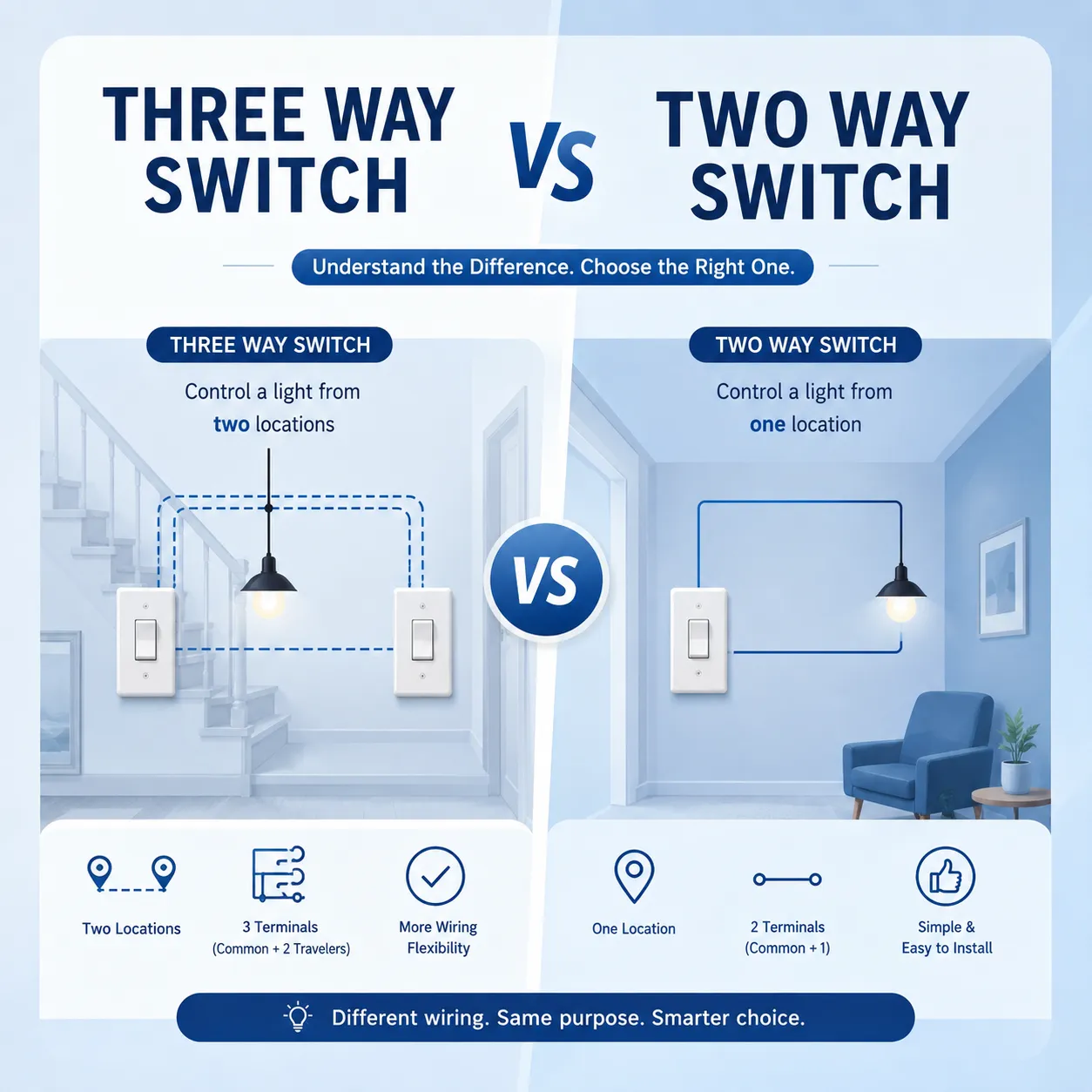
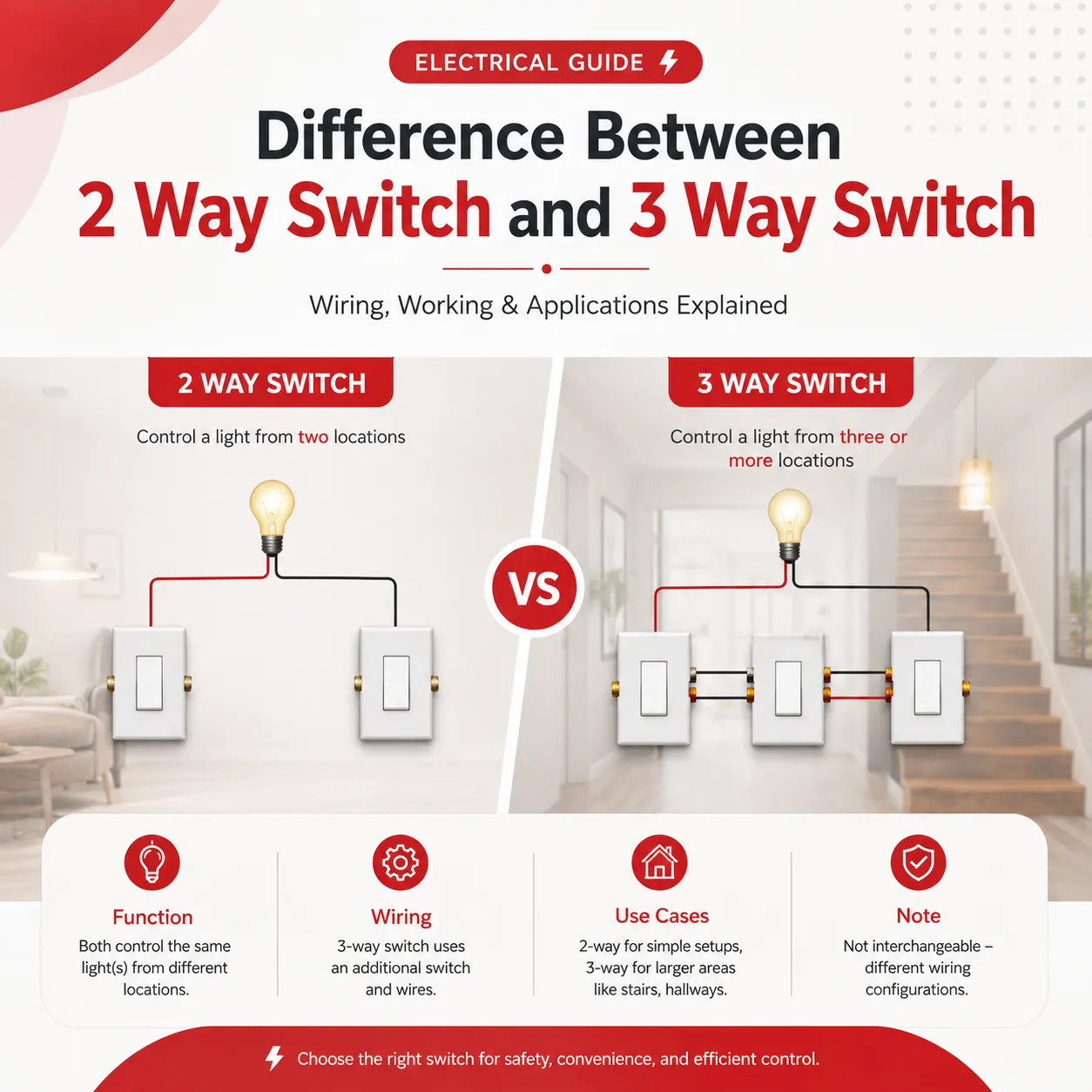
A two way switch in the UK, Europe & much of the Commonwealth is a Switch which has three terminals, typically labelled COM, L1 and L2, and enables the operation of a single light from two different locations. The term ‘two way’ refers to how the circuit functions; the Switch provides two routes for current to travel from the Common terminal to either L1 or L2. If two two way Switches are wired together using strapping cables on their L1 and L2 terminals, then either Switch can turn on or off the light irrespective of the status of the other Switch. This is the normal method of wiring Staircases, long Hallways and all rooms with two doors.
What Is a Three Way Switch?
In North America, the identical switch is named a 3-Way Switch with 3 terminals, 1 Common (usually dark screw), and 2 Hotel Terminals (brass screws). The term ‘3-Way Switch’ refers to the 3 connection points: Common, 1st Hotel Terminal & 2nd Hotel Terminal; not to the number of places it can turn on/off a light. To be able to turn on/off the same light at more than one place, you need at least 2 of them wired together just like with a 2-Way Switch. The only difference in naming between the 2 types of switches is how they are wired are similar and use the same Internal Mechanism which is the same as the 2-Way Switch is a Single Pole Double Throw type of Contact Configuration.
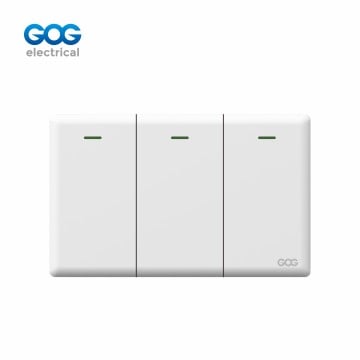
Side-by-Side Comparison
The table below captures the terminology and functional equivalence at a glance.
| Feature | Two Way Switch (UK / IEC) | Three Way Switch (North America / NEMA) |
|---|---|---|
| Number of terminals | 3 (COM, L1, L2) | 3 (Common, Traveller 1, Traveller 2) |
| Internal mechanism | Single Pole Double Throw (SPDT) | Single Pole Double Throw (SPDT) |
| Controls light from | 2 locations (requires 2 switches) | 2 locations (requires 2 switches) |
| Common application | Staircase, hallway, large room | Staircase, hallway, large room |
| ON/OFF marking on toggle | None (state depends on other switch) | None (state depends on other switch) |
Is a 2 Way and 3 Way Switch the Same?
Yes, electrically and mechanically, a 2 way switch and a 3 way switch are the same device. Both are SPDT switches with three terminals. The only difference is the label on the box and the terminology used in the wiring diagram. A UK electrician wires the common to COM and the strapping wires to L1 and L2; a North American electrician wires the common to the dark screw and the travellers to the brass screws. The circuit is identical. If you’re standing in front of a switch and need to identify it, our guide on different types of light switches shows you how to visually distinguish a two/three way SPDT switch from a standard single pole switch or an intermediate crossover switch.
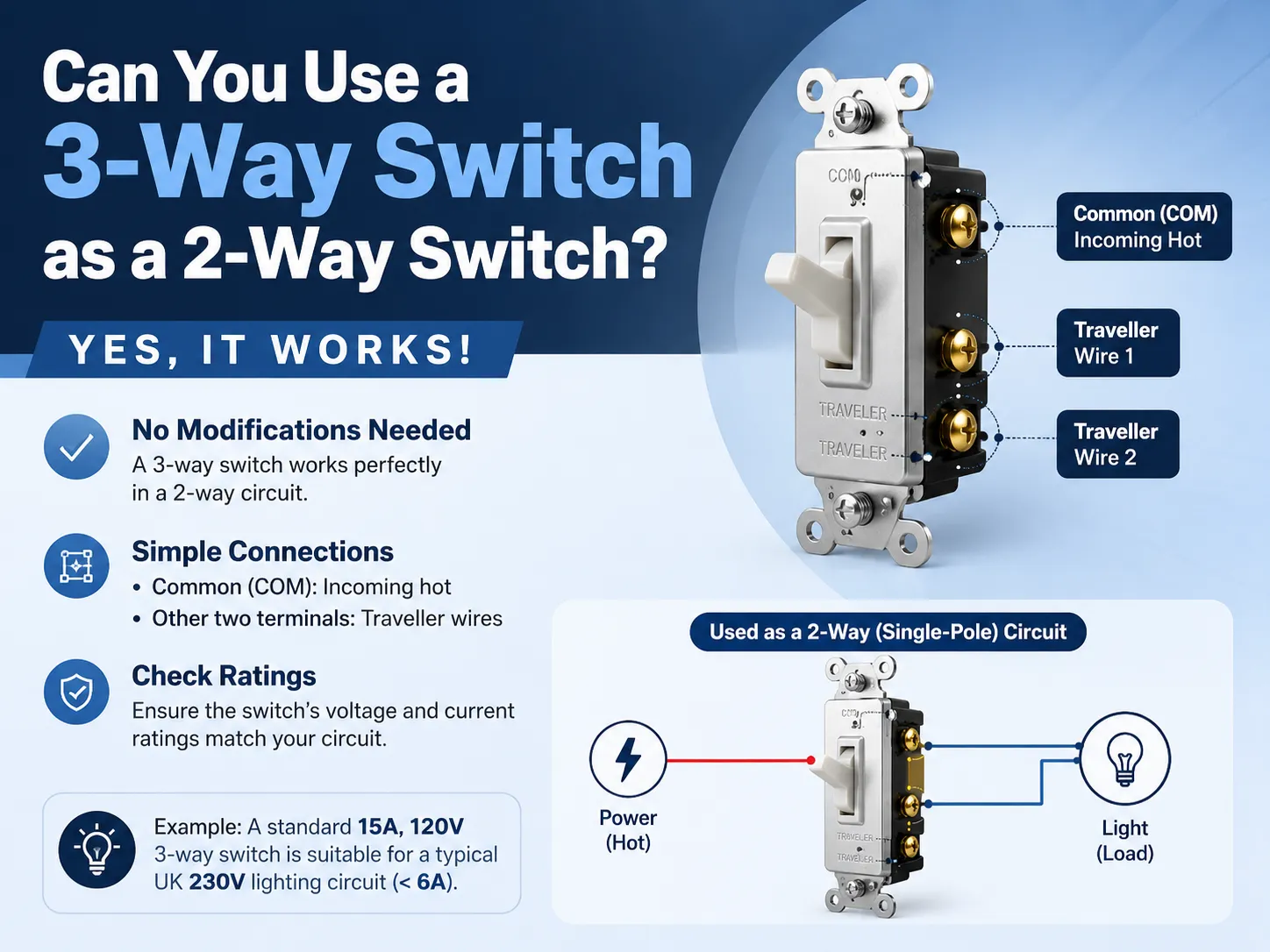
Can You Use a 3 Way Switch as a 2 Way Switch?
Using a 3-way switch in a 2-way lighting circuit is very simple and does not require any modifications. You will need to connect the wires to the right terminals: The incoming hot, or switched hot, connects to the common terminal; and the two traveller wires connect to the other two terminals. Likewise, a 2-way switch will work normally in a 3-way circuit. The switch does not care what the box label says. The only word of caution is to ensure that the voltage and current ratings for the switch are consistent with those of the circuit. For example, a standard 15A, 120V 3-way switch is more than sufficient for use on a typical UK 230V lighting circuit that draws less than 6A.
Why Would You Use a 3-Way Switch?
In order to operate one light or outlet from two different physical places requires one of the following 3-way switch (or 2-way switch, depending on where you are) devices. Although using them to turn lights on and off is nice, it is also an accepted building code for many some stairways and corridors. A good example would be a staircase that has a switch at both the top of the stairs and the bottom of the stairs. Many other uses include long hallways where there are two doors, large living rooms that can be accessed by two sides and garages with an inside and outside door for example. If you want to control a single light or outlet from different locations, then 4-way switches (called crossover switches in the U.K.) will allow an unlimited number of control points to be installed between 2 ways switches.
If you’re wiring a circuit from scratch, our step-by-step guide on how to wire a single pole switch covers the basic principles, and the extension to a two-switch circuit builds on exactly the same skills.
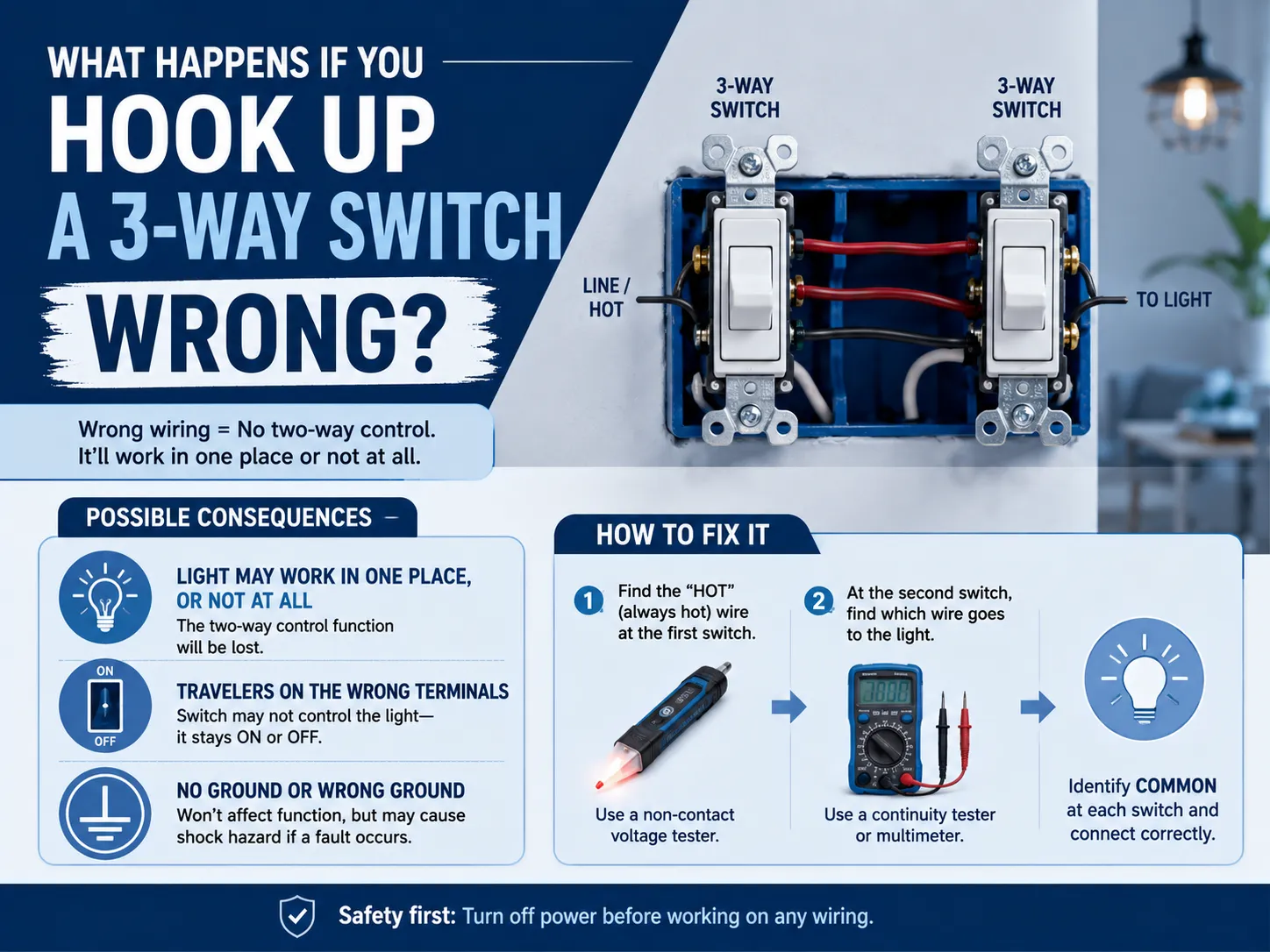
What Happens If You Hook Up a 3-Way Switch Wrong?
The consequences of miswiring a 3-way switch depend on which wire goes where:
- Mistakes that happen frequently and that occur frequently. The light may work in one specific place with the two switches; otherwise, it will not work at all. The circuit will no longer function in both locations – the “two site” function will disappear.
- Traveller terminals: if the hot to incoming and switched hot to outgoing (i.e.) connected to the traveller terminals, the switch would look like it was off, and the light(s) may be continuously ON or OFF, regardless of position for the switch.
- No ground wire or incorrect connection: The absence of a ground wire will not affect switch function; however, it may cause shock hazard. If there is a fault, the metal yoke and screws holding the wall plate could potentially become energized.
A three-way switch not wired correctly causes an improper electrical circuit but rarely causes an electrical short circuit or leads to a tripped breaker. In order to correct it, you need to carefully identify which wire can be considered “common” for that location from each of the three-way switches, and then trace them to where they can connect to the same source and light fixture.
To do this, you should first use a non-contact voltage tester to locate the “hot” or “always hot” (source) wire from your first switch. Once you determine which wire in the circuit is connected to the power source, go to the second switch. Use a continuity tester or multimeter to identify which of the wires going to the second switch connects to your light fixture.
For homeowners upgrading to smart home devices, our roundup of top-rated smart light switches includes several models that simplify three-way installations by using wireless communication between the switches, reducing the wiring complexity.
Frequently Asked Questions
Is a 2 way and 3 way switch the same?
The functional and electrical equivalents of two way and three way switches are identical. The switches are both SPDT switches; they have three terminals and can control a single light from two locations. The terminology “two way” refers to the use of the switch in the UK and the IEC regions, while the term “three way” is used in North America. The only difference between the ‘two way & three way’ switches is the different terminal labeling and packaging.
Can I use a 3 way switch as a 2 way switch?
A three-way switch is actually just another type of switch, that will work as well as a two-way switch. Simply connect the wiring to the available three terminals according to your area’s wiring codes. No special wiring or modifications are needed for these two devices; it doesn’t matter to the switch if it was sold to the consumer as a two-or-three-way switch.
Why would you use a 3-way switch?
If you want to control one light or electrical outlet from two different locations, you would use a three-way switch. This is especially useful when you have to have a switch installed for both ends of stairs (top/bottom); long hallways; large rooms with multiple ways/outlets into/out of them; as well as garages where there are two separate doors going into/out of the garage area. Many building codes specifically require this arrangement for safety on stairways.
What happens if you hook up a 3-way switch wrong?
You will usually miswire a 3-way switch by reversing the common wire with a traveler wire. If this happens, you will either not be able to turn your light on at all or you will only be able to turn your light on in one of the two combinations of switch positions. The circuit will no longer work at its planned location. The circuit breaker will not trip because it is a functional error, not a short circuit. The fix is to identify each switch’s common terminal and reconnect the appropriate wires to each terminal.
Three way vs two way switches are not really a comparison; they simply have different names depending on where you’re at. Assuming you’re working with either a U.K. two way switch, or a U.S. three way switch, both of these switches are single pole, double throw SPDT switches for use in 2-location lighting circuits. The primary obstacle to using two way or three way switches is remembering the name-lingo differences across the countries, as the way to use them is the same. Once you can identify the common wire (the common terminal), you are now done sorting through the names, and you can install your switch. GOG Electric sells both two way and three way switches and has an extensive selection of these switches with clear terminal markings and built to last, ensuring the switches will continue to operate for years to come.